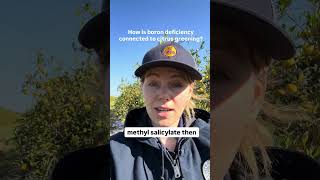
How is boron deficiency related to citrus greening?
28 Feb 2026 · 1 min
0:54
Boron-deficient citrus trees emit more methyl salicylate, a volatile compound that attracts Asian citrus psyllids, the insects that spread citrus greening disease. Weak cell walls from boron deficiency also make it easier for the psyllids to feed.
Chapters
More from John

youtube.com
Episode 186: The Power of Precision Management and Multi-Species Covers with Mike Thompson
2mo ago





youtube.com
Podcast Extra: John Kempf on Soil Biophysics, Plant Immunity & Foliars on the Permaculture...
2mo ago


See all content
