Managing Crop Nutrition (vs. Pest Management) & Sap Analysis | John Kempf | Regen Rev 2021
John Kempf presents an introduction to the Plant Health Pyramid, arguing that managing plant nutrition (via SAP analysis and targeted mineral applications) can produce crop resistance to diseases and insects. He describes four levels: (1) maximizing photosynthesis (quantity and quality) to resist soil-borne pathogens, (2) complete protein synthesis to resist insects with simple digestive systems, (3) elevated lipids/oils to resist airborne fungal/bacterial pathogens, and (4) production of secondary metabolites and activation of SAR/ISR for broad resistance including beetles, nematodes and viruses. Kempf emphasizes SAP (plant sap) analysis as the primary diagnostic tool, gives rapid turnaround examples (insects dead within ~24–48 hours after foliar or fertigation nutrient applications), and lists specific nutrient sets associated with each level.
Questions this video answers
Magnesium, iron, manganese, nitrogen and phosphorus.
Magnesium, sulfur, molybdenum and boron.
Approximately 24–48 hours after foliar or fertigation nutrient applications.
215 bushels per acre (organic corn).
Chapters
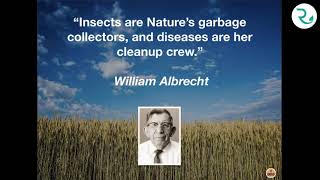
So the discussion for the next 40 minutes or so is really a review of kind of an introduction to the Plant Health Pyramid with an emphasis on how we can manage specific nutrients to give us crop resistance to different types of diseases and insects. And I'm going to be light in conversations of SAP analysis. I know that we discussed it at our exhibit a little bit, and we have shared lots of information already in prior webinars and so forth. So I'm not really going to get into the details of how to conduct SAP analysis and how to use them, other than I can say very simply that SAP analysis is a critical tool because it is the only tool we have found at present that actually correlates with disease and insect susceptibility. We have a tool that is so sensitive that we can match different nutritional profiles with different disease and insect susceptibility profiles, which makes it a very valuable tool. So the Plant Health Pyramid came about as a result of our work working with different growers, producing many different crops in different regions in different climates. We observed that crops became resistant to different types of diseases and insects based on what was happening with plant physiology. And we noticed four fairly distinct stages where there were four different groups of diseases and insects and pests that plants became resistant to. So the phone is buzzing again. And so while I apologize, I want to make sure that everything is fine. All right. Looks like it's all good. So when we look at the different levels of plant health and what's happening, what's going on. The foundational level of Plant Health Pyramid is when we have plants that have complete photosynthesis. And this means two things. It means an increase in the quantity of photosynthesis in each 24 hour photoperiod. And it also means an increase in the quality of photosynthesis in each 24 hour photoperiod. Where the final result of the photosynthetic process is the production of high levels of high quality carbohydrates, so non reducing sugars and polysaccharides as compared to monosaccharides and simple reducing sugars. So the first aspect, increase in the volume of photosynthesis. What we have come to expect as being common and normal is plants that are only photosynthesizing somewhere in the neighborhood of about 15 to 20% of their inherent photosynthetic efficiency. This is profound. Lakey talked about the. One of the foundational principles of the first foundational principle of regenerative agriculture is to feed the system. And photosynthesis is the only method it's the only pathway of bringing new energy into the system. Plants absorbing photonic energy from the sun is the only new energy that comes into the system. All the rest of the energy is being recycled. Water is being recycled, carbon dioxide is being recycled. But sunlight energy is the only new energy coming into the system. And so there, there are these common conversations that we need to keep the soil covered with green growing plants and having leaving roots in the soil to feed the soil biology at all times. And that's true, that is foundationally necessary. And it is possible to also increase the level of photosynthesis of each square centimeter of leaf surface area by a factor of 3 to 4x. So we can increase photosynthesis and feed the system faster by harnessing this photosynthetic engine than almost anything else that we can do. When we look at increasing volume, we should expect to have there are different parameters that will contribute to increased volume. There will be increased leaf size, increased leaf thickness. Leaves can be as much as three to four times thicker. And then what is common, which gives us many more chloroplasts and a lot more chlorophyll per each square centimeter of leaf surface area. We can also have higher chlorophyll concentrations. And all of these factors combined give us an accumulation of much higher levels of photosynthetic activity than what we think of as being common. And this ties to another perspective that I've shared many times, which is that we don't actually know what healthy plants really look like anymore. Because when you increase photosynthesis by 2 or 3x or 4x, then plants begin behaving differently. Their growth patterns change. Their internodes might become much shorter and stockier, their leaf patterns might change. There's all kinds of different changes that happen. Photosynthetic efficiency increases and you also start having different degrees of carbohydrate partitioning. More sugars go into the root system and out through root exudates as compared to plant biomass and reproduction. So at level one, when we have this increased quantity and quality of photosynthesis, plants develop resistance to all of these soil borne fungal pathogens such as the Verticillium and the Fusarium, Rhizoctonia pythium and so forth. And Steve mentioned the. Steve and Dennis mentioned the work of Dr. James White at Rutgers University describing the rhizophagy process and how he described the impact of Pseudomonas species on disease suppression. I was really intrigued. My understanding before having the conversation with Dr. White was that these various organisms let's Take verticillium as an example, that these various organisms were still present in healthy soil, where they served the purpose of being saprophytes, of being decomposers. So if you take straw or hay mulch and you put it onto you, mulch your garden with it, it gets rained on a couple of times and you start seeing this white mycelium moving or growing through the mulch. That white mycelium is very frequently verticillium, and that is verticillium in its beneficial function as a saprophyte, as a decomposer of non living plant residue. And so it was my perspective. What I understood before the conversation with Dr. White and the podcast interview that I had with him is that when you have really healthy biology, it changes these potential pathogens to saprophytes. But he actually described that these organisms will still infect the root system, but instead of being pathogenic, they now develop a symbiotic relationship with the plant and feed the plant nutrients. And the plant exchanges those nutrients for sugars, and the plant feeds the verticillium and the Fusarium and the Rhizoctonia. So the relationship changes from a potentially pathogenic relationship to a beneficial relationship, exactly the same as with mycorrhizal fungi or other organisms. So this is really incredible because it means there is no such thing as a quote unquote pathogen. The pathogenicity of any organism is dependent on the health of the plant and how many sugars and the quality of sugars that that plant sends out through the root exudates, which changes the soil microbial profile in the rhizosphere, and that changes these potential pathogens from pathogenic to beneficials. I'm getting to the point where I really don't like the word pathogen, and I don't like the word pest because I'm learning that there really is no such thing as a pathogen and there is no such thing as a pest. Organisms only express themselves as pests or as pathogens if we create an environment that allows them to express themselves. So this is the step that happens at level one. And it is worth mentioning that unfortunately, most commercial growers and most crops are not even at level one of plant health on the plant health pyramid, they are below the pyramid. So they are in a pre disease state. Or you could, you could actually say in an active disease state. It is common for most crops to have some susceptibility to diseases and insects, which is completely unnecessary. All of this can be mitigated with proper nutrition management. So to reach level one of the plant health pyramid, plants require these five elements to be an adequate supply. Magnesium, iron, manganese, nitrogen and phosphorus. I'm not suggesting that you need to add more of each of these five. I'm suggesting that plants need to have enough of each of these five. Maybe you need to add only one of the five, or maybe you need to add all five. But the key point is that when adequate amounts of these five are present, photosynthesis, the plant now has the nutrient, the mineral base that it needs to increase chlorophyll concentrations, to increase leaf thickness, to increase leaf size and to photosynthesize more efficiently. It might still be limited by water supply, it could still be limited by carbon dioxide supply, which is the most common. It might be limited by sunlight in some climates and regions, but this is the nutritional foundation that is required to increase photosynthesis to a much higher plateaus of efficiency and performance. The second level of the plant health pyramid is when we have complete protein synthesis. And so I'm going to quickly go through and describe what the process of protein synthesis looks like, some of the biochemistry behind it, from a very oversimplified perspective. Because understanding protein synthesis and its inverse protein digestion is foundational to understanding the mechanisms that allow plants to be resistant to all types of different diseases and insects. So what happens at level two is that the plant rapidly converts any form of soluble nitrogen that it absorbs from the soil to amino acids and complete proteins in each 24 hour photoperiod. So the objective and the goal is to have a plant SAP analysis that shows that the plant has generous levels of total nitrogen or total protein, but the nitrates and the ammonium in the plant AAP are at zero. So even when the plant absorbs nitrate or absorbs ammonia from the soil profile, it is rapidly converted into complete proteins. When that happens, we now achieve resistance to all of the insects that have simple digestive systems. So want to take a quick detour and describe what this protein synthesis process looks like and why it's important. So when we go through the. When plants go through the photosynthesis process, they produce a simple sugar called glucose, which is C6H 12:06. And this, you can imagine this as a short chain that has 24 links. This short chain that has 24 links is used as the building block, the brick, if you will, and is converted to glutamine and glutamine. Without getting into all biochemistry, simply think of the simple sugar glucose with nitrogen added to it. Converted into glutamine and then converted to amino acids. So amino acids are these short chains that contain carbon, hydrogen, oxygen and nitrogen. And they usually have anywhere from 18 to 26 links, if I recall correctly. So you can imagine all these as being these very short links. Then these links are bonded together. These short pieces of chain are bonded together into sections of two or three, most generally. And these are now referred to as peptides. So you may have heard of dipeptides or tripeptides. These are combinations of two or three amino acids bonded together. And then there is another set of bonds that gets built as these peptides join together to form much longer, more complex chains that we now call complete proteins. Complete proteins can have hundreds of thousands of links of carbon, hydrogen, oxygen and nitrogen all bonded together. This is a really important concept because when for to build each of these bonds, every time one amino acid is bonded to another amino acid, or a peptide is bonded to a second peptide, an enzyme is required to catalyze that reaction. And enzymes are these crystalline proteins that have a lot of really fascinating characteristics. This is actually a photomicrograph of an enzyme inside a plant leaf. And here's another fascinating photos. So enzymes have several interesting characteristics. They are like an end wrench in that each enzyme can only catalyze one specific type of reaction. It can only bond one specific amino acid to another specific amino acid, or one peptide to another peptide. As a result, there are tens of thousands of different enzymes present within plants because. Because each one only serves one specific purpose. But also like an end wrench, each enzyme can catalyze that same reaction over and over again without being used up. However, for these enzymes to do their work, they need an enzyme cofactor. Without the enzyme cofactors, the enzymes are dysfunctional and they are not capable of building these bonds. So these enzyme cofactors are usually metal, metal, trace minerals or vitamins that are based on metals, particularly the B vitamins. So vitamin B12, for example, based on cobalt. Common enzyme cofactors would be nickel and molybdenum and selenium, zinc, manganese, copper, etc. So there are dozens of different minerals required as enzyme cofactors for plants to have a completely functioning enzyme system. And this is foundational to plants ability to build complete proteins as they desire. Because if an enzyme cofactor is missing, let's say molybdenum is missing, or nickel is missing, then the structure of the final protein that gets built will not be perfectly complete. It will not be exactly as the plant would have designed it, if it had the capacity, if it had those enzyme cofactors. So in essence, it's broken. There'll be broken proteins and incomplete proteins. So having a completely functioning enzyme system is foundational, and that is really a result of having all the enzyme cofactors present that plants require. I like this. Actually, I want to go back. I'm going to add one more piece in here. The reason this is important and the reason I'm talking about this is because digestion in the digestive tract, whether it's our digestive tract or the digestive tract of a dairy cow, a ruminant animal, or the digestive tract of an insect, is fundamentally the same as this process of building proteins inside plants, except in reverse. Instead of having all these different enzymes to build these bonds and to put all these various bonds together, we now have digestive enzymes that break these bonds apart. And similar to the constructive enzymes, these digestive enzymes, each enzyme can only catalyze and can only break apart one specific bond. Dairy cows, ruminant animals, can get energy from grass, from forages, because their digestive systems contain the cellulase enzyme. We can't extract energy from cellulose. We can't have a diet. We can't live and thrive on a diet of dry hay or grass, because our systems, our digestive systems do not have the cellulase enzyme. And in an analogy that is similar to that between a dairy cow and our digestive systems, what is food for us is not food for aphids or for flea beetles or leafhoppers, because they do not have the digestive enzymes that are required to break down that last peptide to peptide bond that gets used to build complete proteins. They are completely dependent on specific forms of sugars and specific forms of soluble nitrogen, whether those be specific amino acids or soluble forms of nitrogen such as nitrate and so forth, as a protein source and as an energy source. So it's really quite simple. If plants are being consumed by insects, then they are not fit for us to eat because they are so unhealthy that natural ecosystems want to take them out of the system before we can eat them. And then historically, of course, in our wisdom, we would spray these unhealthy, sick plants with toxins and feed them to people. And then we can't understand why we have a public health epidemic across the civilized world. But that's foundationally why. One of the significant contributing factors to why, at least I really like this quote from William Albrecht. Insects are nature's garbage collectors, and diseases are her cleanup Crew Fundamentally, these are nature's survival of the fittest mechanisms. They are here to take the unhealthy plants out of the system before we can consume them. That's how it was designed to work. And when we have healthy ecosystems on our farms and within our crops, then we will not have these, these diseases and insects showing up and causing havoc on crops on a large scale. So I want to provide two quick examples of how we have observed this working in the field. This is an organic corn and soybean crop in Pennsylvania. This is about six or seven years ago when we were first. Actually, maybe longer than that now, probably a decade ago. As you can see, these crops are being planted in strips. There are six rows of corn, six rows of soybeans. This farmer, we had just started working with this farmer in the spring, helping him to transition to more regenerative practices. He's organically certified and he called us in a panic because his corn had corn root worm in it. We can see that the plants that are infected, about between 15 and 18% of the plants were infected. So they were quite severely stunted. And it was significant enough to potentially cause significant crop loss. So we made a recommendation for a foliar application that only touched the plant leaves. It did not penetrate into the ground, but only touched the plant leaves for a foliar application of all the minerals that are needed to quickly convert soluble nitrogen into complete proteins. And they took our recommendations, our recommended application rates. They doubled them. None of you ever does that, right? Good. I'm glad that that's the case. They doubled the recommended application rates. And we were very clear in our communication. We said, we've not done this before. We don't know if this is going to work, but theoretically it should work and it's worth trying. So they put on a foliar application that included magnesium, sulfur, molybdenum and boron. I'll give you that list again in just a moment. And within 48 hours. I'm missing a photo on a slide here, but within 48 hours, they went back out and did the scouting again. They were able to find all the corn rootworm larvae in the root system and they were dead. The plant health and the changes in the plant's biochemistry killed the rootworm larvae and the wireworm that were feeding on the root system. It was not an insecticidal response. It was not a plant immune response. It was simply a change in the plant's biochemistry as a result of changing the mineral nutrition. A second example, this was also on Organic corn in Kansas. This is now five years ago, spider mites were identified. And about the same time the crop was being scouted and all the spider mites were being found in the field. We started putting on a nutrient application in the overhead pivot based on plant SAP analysis. And within 48 hours, the spider mites were dead. It's pretty incredible. Insects dying as a result of feeding on plants that have balanced nutrition. That is really what is possible in capable. I'm giving these two examples, but there are hundreds of examples and experiences that we've had at AEA that where we've, where crops have been able to deliver this type of performance. And I'm completely convinced that it is possible for us to grow crops that are 100% resistant to all diseases and all insects based on how we manage nutrition. Of course, that corn crop went on. They had no corn borer or earworm in the entire crop, which is usually a very common problem in the region. And they harvested 215 bushels per acre of organic corn, which is a very significant yield for this region, very high yield. It's also worth mentioning that diseases and insects will be attracted to the unhealthiest plants in an ecosystem. And when you optimize soil health for our domesticated crops, the pioneering species that we call weeds are no longer in an optimal environment. And the diseases and insects will begin feeding on them rather than our crop plants. This is very easy to monitor in the field. You can just. It can be as simple as taking a brix reading of the weeds and a brix reading of the crop and the day and the week that the crops have a higher brix reading than the weeds, Insects and diseases will begin infecting the weeds. It's a ton of fun when that happens. This is lamb's quarter that was being grown at an intersection of a field of tomatoes and a field of green beans and a field with mixed salad greens. There were no aphids on any of those crops, and yet the aphids were consuming the lamb's quarter. It is worth mentioning that when we think about this protein synthesis process, the opposite of protein synthesis is proteolysis or protein breakdown. And protein breakdown can occur naturally as a result of high temperature environments, high heat, and plants being in the photorespiration mode, photorespiration dominant. And that's when they accumulate higher levels of ammonium as a result of protein breakdown, which is what gives them susceptibility to spider mites and some other insects. But this same effect can also be brought about as A result of fungicide or insecticide applications onto a crop. There is no such thing as a preventative application of a synthetic fungicide or an insecticide. That's the stupidest oxymoron in the agricultural industry because whenever we apply a pesticide onto a crop, it actually shuts down the protein synthesis process and triggers the proteolysis process. The plant begins breaking down its proteins and accumulating glutamine and accumulating these soluble amino acids that increase the susceptibility to disease and that increase the susceptibility to insects. It's really very simple. The more pesticides we apply, the more susceptible our crop becomes. So the idea of putting on preventative pesticide applications is, I suppose it's a great marketing strategy, but it's certainly not helpful for farmers. So what happens at level 2 of Plant Health is that plants become resistant to all the insects that have simple digestive systems. So these would be all the larval insects and primarily all the sucking insects. So sucking insects such as aphids and larval insects such as tomato hornworm and corn borer, corn earworm, leafhoppers, etc. To get to level two of plant health, plants require adequate levels of magnesium, sulfur, molybdenum and boron, four nutrients. And there's some overlap. Magnesium is also present in level one. So if you notice, these first two levels of plant health can be achieved purely as a result of nutritional balance, chemistry balance, which means that crops can be turned around very quickly. This is why, and the examples that I just provided, putting on a foliar application or a fertigation application of plant nutrition can cause plants to become resistant to insects and to diseases. In these first two levels of plant health, within a matter of hours or days, 24 to 48 hours, is a very common turnaround because it is a result simply of nutritional balance. This is not quite the case for level three and level four. When we get to level three, what is happening within level three is that plants are producing higher levels, elevated levels of lipids, plant fats and oils. All plants will produce these compounds at a baseline level. When we conduct a tissue analysis, we analyze the fat content on a dry matter basis. Most plant species will have a fat content at a minimum of about 1.5 to 1 and 3 quarter percent, because that is the quantity of lipids they need to form the dual phospholipid cell membrane. However, as plants become healthy, really healthy, and they have a surplus of energy, once they have surplus energy, they store that surplus energy in the form of fats, which is exactly the same thing that we do, or that livestock do, or for that matter, that insects do when they have a surplus of energy. We store the surplus in the form of fat. Plants do exactly the same thing, and we can observe this visually in the field when we have this glossy, waxy sheen on the leaf surface. In order to reach level three, plants need to absorb their nutrition through the rhizophagy process that Steve and Dennis described. And they need to absorb the majority of their nutrition from living bacterial cells or microbial metabolites, right. Rather than from simple ions from the soil solution. So this is how plant nutrition works in native ecosystems. No one fertilizes the forest, no one fertilizes native ecosystems. And yet these plants are absorbing, in some cases, very large quantities of nutrition. And this is coming about through the rhizophagy process. When plants reach level three of plant health, they now develop resistance to all the airborne fungal and bacterial pathogens, various mildews and blights and rust and bacterial diseases and so forth. And this is to some degree, this is partially a simply a physical shield effect, where we have this shield of waxes and oils on the leaf surface that prevents the pectolytic enzymes from. From invading and infecting the plant and each plant cell. So level one and level two are a result of chemistry. To get to level three requires robust biology. I have, I'm not saying it's not possible, because I'm sure that it is, but I have personally yet to observe a hydroponic operation that has reached level three of plant health, because most of them do not have adequate biology. This is why most hydroponic tomatoes do not have the flavor and aroma of soil grown tomatoes because of what is happening here at level three and then on at level four. So what is happening at level four is that the lipids and oils produced at level three now cause or now bring about an increased production of the plant secondary metabolites. So in plain English, we call these essential oils. These are aromatic compounds such as phytoalexins and terpenoids, sesquiterpenes, bioflavonoids, carotenoids. All plants produce these compounds as plant protectants to protect themselves from ultraviolet radiation, from disease attack, insect attack, from overgrazing. Many of these compounds have fungicidal and bactericidal and virucidal and insecticidal properties. They have the capacity to kill on contact. This is where plant resistance changes from being passive in the lower levels of the pyramid level One and level two, we have passive resistance because we're simply removing the food source. At level four, we have active resistance, where we have the active triggering of plant immune pathways, the SAR and the ISR pathway with biology, and this is where diseases, various diseases and insects do not have any opportunity to cause an infection. So to reach level four of plant health, a plant's immune pathways, SAR and ISR pathway, which I mentioned earlier, those acronyms stand for systemic acquired resistance, which is based on, if I get this straight, I think the SAR pathway is based on just monic acid and ethylene, and the ISR pathway is based on salicylic acid, which you might recognize as aspirin. I might have those backwards, but you get the idea. These immune pathways are both triggered by microbes that Dennis and Steve were talking about in the rhizosphere in the root system as well as within the plant and on the plant leaf surface. And they trigger the formation of high levels of these secondary compounds. So it's the same. They are as critical for a plant's immune system as our microbiome is for our immune system. In fact, it's reasonably. It's not difficult to suggest that a significant or the, perhaps even the majority of a plant's immune system is completely dependent on that plant's microbiome, just as our immune system is dependent on our microbiome. At this stage, plants become resistant to all of the beetles, Japanese beetle, Colorado potato beetle, marmorated stink bug, and so forth, as well as nematodes and viruses. So nematodes do not have a chance for plants at this level of plant health. And viruses can be present in the parent plant material, such as in seed potatoes. But when this crop is grown out, that viral infection will not express itself. And in fact, the viral DNA can, can be removed entirely when we have the right mineral nutrition to accomplish that. So to achieve level four plant health, we need to have the correct microbes in the plant microbiome. Not just any biology will accomplish this. This is one of the reasons why in our work we use Tyneo microbial inoculants, because they contain the microbial species that can trigger these SAR and ISR responses within plants. Those organisms may or may not be present if you're producing compost tea. So, in conclusion, the lower two levels of the plant health pyramid are passive immunity, and they are based on balanced chemistry. The top two levels are based on active immunity, where the plants begin actively resisting diseases and insects, and they are based on vigorous soil biology. If you want to dig deeper into these topics. I invite you to please subscribe to my blog. This is a very shameless self promotion. I really enjoy writing the blog and sending it out there and I invite you to sign up john kempf.com will take you to the subscription page to the blog where it's kind of the nexus point where I bring all the things that I'm working on together in one location. And as you can see on this slide, most recently the project I've been working on is Kind Harvest. So that is an overview I want to I'll share a few more thoughts on SAP analysis which is that if you want to achieve these levels of plant health, if you want to achieve resistance to diseases and insects, and to actually let's back up just one step. When Lakey described the potential of regenerative agriculture, I believe one of the foundational pieces is that if we wish to have a regenerative agriculture, we need to have crops that are resistant to diseases and insects and do not require pesticides and do not require external inputs. This is perhaps relatively easy to accomplish with broad acre crops. It's not always so easy to accomplish or doesn't appear to be so easy to accomplish with higher value fruit and vegetable crops. And yet it is in fact very easy on all crops across the board. As long as we manage with good data, we will make very slow and painful process down this pathway of progress down this pathway if we guess what the plants require, if we're going to guess about the nutritional integrity, or if we're going to use inadequate tools such as a refractometer. Let me clarify that comment. I think a refractometer to measure brix readings can be a very useful tool in some regards, particularly useful to evaluate the effectiveness of foliar applications and so forth. However, it has a significant downside in that when we collect a brix reading and it is low, it doesn't tell us what we are going to do, what we should do next. SAP analysis gives us the data and gives us the information about what we should do next. So to begin this pathway and to seek to grow and produce crops that are resistant to diseases and insects requires good data on all types of crops. And for that, in our work at Advancing Eco Agriculture today, we work on over 50 different crops, mostly here in North America of course, but we've been able to consistently, consistently deliver disease and insect resistance because we try to not guess about anything that it's possible to measure. So thank you all for your patience and forbearance with me and my slow start. Please sign up to the blog and I look forward to participating with you more here for the rest of the event.
More from John

Episode 186: The Power of Precision Management and Multi-Species Covers with Mike Thompson





Podcast Extra: John Kempf on Soil Biophysics, Plant Immunity & Foliars on the Permaculture...


