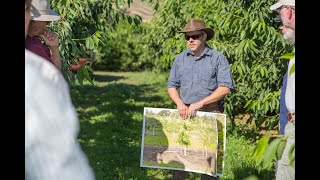
Mike Omeg grows 330 acres of premium sweet cherries in Oregon, exporting mostly to Asia. He switched from foliar feeding to soil-focused biology after working with AEA, improving both the fruit and his bottom line.
Questions this video answers
330 acres
Fifth generation
The Dalles, Oregon
Chapters
I'm Mike Omeg. I farm cherries here in the Dalles, Oregon with Omeg orchards. I'm a fifth generation orchardist. At present I manage 330 acres of sweet cherries for my family, all for the fresh market primarily. And most of those are exported to Asia. The market that we target is the premium cherry market. And so we need to grow the absolutely largest piece of fruit that we can and make it absolutely as firm as we can. We shoot for the top dollar price and that means it needs to be big and it needs to be very firm. So when you bite into that cherry, you get a great big crunch and just a real satisfaction because we want you to come back. Buy more. One of the things that we've always tried to do on our farm is always be willing to make a change if we need to. We're a large operation and we have a really good core team of people that are dedicated to the vision that we all have on our farm, which is to do anything that it takes. That means changing how we grow things. We'll change how we grow things, change what we do so that we can produce the absolutely premium piece of fruit that's within our capability. Plant nutrition to me is an amazingly complicated subject. It's far, far more complicated than just NP and K inputs on our, on our crop. And so the philosophy that I take is I want to make sure that the plants that I have are growing in the absolute best soil that they can, that is filled with microbes and other soil life forms, and that those life forms are doing their thing and have everything that they need. Because if they do, that soil is going to provide everything that the trees need. Before we started working with aea, our overall operation was a very successful cherry operation. But I don't think you should ever get comfortable and say, you know what, I'm doing everything right. So I made a concerted effort to go out and seek information about different ways of doing things. And AEA's way really attracted me, really resonated with the whole biological farming approach. And so I was able to connect with those, the team at aea, and through our collaboration, working together, been able to really further improve upon the good product that we already were growing here on our farm. And so it's been a good learning experience. It's expanded my horizons with how I approach farming, especially in the biological aspect of things. And the nice thing about that is not just are we learning about the biology, but we see an impact on the economic side, which is really important for our success. If I were to pick one thing that AEA has helped us with on our farm in particular, I would say it's in really focusing upon soil restoration. Prior to working with aea, we had a pretty darn good foliar nutrition program, but we'd really ignored our soil and ignored what was going on there. And working with AEA has really opened my eyes to the importance of that soil to the crop that it's growing. And our collaboration has really led, for us, improving the soil quite remarkably here on our place, and that's led to mutual success here.