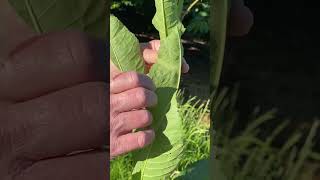
In this field update, the speaker reports on a Pinion trial where Sweetheart cherry trees are grown without any conventional fungicide applications, a variety known for high susceptibility to powdery mildew. Visual inspections reveal two types of mildew colonies: suppressed gray‑brown colonies lacking the white powdery conidia that drive disease spread, and rare healthy colonies that do produce conidia. The no‑fungicide block shows far fewer active, spore‑producing colonies compared to a nearby control block receiving standard fungicide treatments, where mildew is regularly on the verge of overwhelming the canopy. Despite the block’s history of severe mildew pressure, the current observations suggest limited threat to fruit at this stage. The speaker plans to continue monitoring through the season and assess fruit for mildew at harvest in a few weeks.
Chapters
We're here in a pinion trial where we've applied no conventional fungicides, and this is a Sweetheart variety, which is highly susceptible to mildew. And this is a trial we still have to ride the season out before we can draw any conclusions. So this is just an update within the season for us. I want to show you a couple things. Here's a typical water sucker that's up in these trees, and we can see that there's mildew present, but it's not out of control. When we go up in the control block where we're applying conventional fungicides, we see mildew regularly that is being right on the edge of running away on us, which is really typical in Sweethearts. Conventional programs have typically just barely hold it back until harvest, and then it goes poof. So this is what I'm observing here, and it may or may not show up on the camera, but right here where there's a little off-color, little gray-brown color, there was a mildew colony there. It crinkled the leaf, misshaped the leaf, and I can still see barely a little bit of remnants of the fungal growth on the surface of the leaf, but I don't see any of the white powder that's indicative of conidia spores that a healthy mildew colony produces. And it's those asexual conidia spores that really spread the infection and get things going. I can see these kind of suppressed colonies throughout.. And even a leaf like this that I can see there, there's mildew present on the leaf, but I don't see any of the conidia spores going crazy there. And so I don't view that as a, I don't view this as a threat. I view it as just something to watch. Now let's look at a couple of colonies here on this shoot. See this colony here and this colony up here? These colonies have that white powdered sugar look, and those are the conidia spores of that are indicative of a healthy mildew colony, but it's an exception. There's only 2 on this entire tree that we found, but most of the colonies are just like this. They just look grayish brown. They're there, but they aren't doing very well. And I find this to be a really incredible result. I would have never guessed that not applying fungicide on Sweethearts This block has a history of very high mildew and mildew challenges, even under a conventional program, that we'd see these results where I'm not concerned at all about fruit damage at this point in season here. Really interesting, something we're going to keep watching through the season. You know, in a few weeks we'll be harvesting these cherries and we'll be able to see if there's mildew on the fruit, and we'll watch this block for the rest of the season.