Plant Health Pyramid
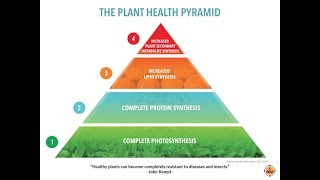
Webinar transcript by John Kempf explaining a four-stage “Plant Health Pyramid” that links plant physiological states to resistance against specific diseases and insects. Kempf outlines four levels—complete photosynthesis, complete protein synthesis, increased lipid storage, and elevated secondary metabolite/immune activation—describes required minerals and biological conditions for each level, and offers practical management (nutrients, microbial inoculants, foliar inputs) to drive transitions between levels.
Chapters
Good evening, friends. Welcome to our webinar on the four stages of plant health. So the topic for our discussion tonight is the four different stages of plant health. And this is based on the context of how we have observed plant health shifting and developing. As we have worked with different growers in different types of environments, growing many different types of crops, we've observed this gradual evolution of plant health where plants become resistant to different types of diseases and different types of insects based on the different physiological processes that are happening within plants. I developed this diagram that we call a plant health pyramid to kind of describe the transitions and the effects that we're observing in plants as plants become resistant to different groups of insects and diseases. And also very importantly, what we can do about them as growers, what we can do as growers and farm managers to develop additional levels of plant health within each of these levels. The first level of plant health is when plants achieve complete photosynthesis. By complete photosynthesis we mean that there are two things happening. One is we see the total quantity of photosynthetic volume increasing in each 24 hour photoperiod, sometimes by as much as three to four times or more. Where the crude analog that we have for measuring photosynthetic capacity, which can be measured in the laboratory, is measuring it with a refractometer in the field measuring brix readings within the leaves. And it's not uncommon to see plants that have levels of 3 to 5 brix move up to being as high as 12 to 15. So it's not uncommon to see substantial increases in photosynthetic volume and increased photosynthase production in each 24 hour photoperiod. But the second thing that we mean when we speak about complete photosynthesis is also the production of complete carbohydrates. Where we have low levels of non reducing sugars in plant SAP, we have much more complex carbohydrates. And all the sugars being produced in each 24 hour photoperiod are rapidly transitioned to more complex carbohydrates. That's what we mean when we speak about complete photosynthesis. There is an increase in volume in quantity of photosynthase production. There's also an increase in quality. Where we have higher quality of carbohydrate production in each 24 hour photoperiod. The second stage is similar to the first. In the second stage we now have complete protein synthesis. And what is happening here inside the plant is that each day in each 24 hour photoperiod, all the Nitrogen that plants absorb in the form of ammonium nitrate, urea or amino acids from the soil profile. That nitrogen is quickly converted to complete proteins, and there is no presence of nitrate or ammonium remaining within the plant SAP. The third stage is when plants develop a surplus of energy and they begin storing that surplus energy in the form of lipids, plant fats and oils. We see that when we have really good biological activity in the soil profile, it's possible to achieve increased lipid synthesis by as much as two to three times, sometimes as much as four times within plant structure. And then the fourth level of the plant health pyramid is when plants begin producing elevated levels of plant secondary metabolites. So all these are compounds such as phytoalaxins, terpenoids, sesquiterpenes, etc. That plants produce as plant protectants to protect themselves from ultraviolet radiation, from insect attack, from disease attack, etc. Using active immune pathways such as the ISR pathway and the SAR pathway. So in over the next 15 minutes or so, I'm going to describe what we observe happening at each of these four levels, what is happening within the plant, and from a physiological perspective, how that contributes to disease and insect resistance. And lastly, what we can do as farmers, growers and agronomists to facilitate the transition from one level to the next. And I'll also speak about the specific groups of diseases and insects that we observe plants becoming resistant to at each of these stages. So the first level, level one of plant health, what we're observing, is that the volume of photosynthesis increases. I alluded briefly to our capacity to measure this with a refractometer, that it's actually possible to measure photosynthetic capacity within a lab. But based on conversations that I've had with many plant biochemists and plant physiologists, there seems to be a growing consensus that what we have come to accept as common and as being normal is plants, which are photosynthesizing at only about 20 to 25% of their inherent genetic capacity. Now there is the potential, the capacity to have greatly increased photosynthetic volume in each 24 hour photoperiod, when plants are supported with the right nutrition and they have all the needed and necessary enzyme cofactors. The second piece, in addition to the increase in photosynthetic volume, is that we also observe an increase in photosynthetic quality, where we have a shift in the carbohydrate profile. And by the way, this is routine. These shifts in carbohydrate Profiles are. It's common to observe different shifts. We have this idea that the carbohydrate profile of a plant can be is fixed or is a steady state. And we now know that this is not the case, that in fact carbohydrate profiles can vary quite substantially. We can observe it when we're doing forage analysis and we do actually look at different carbohydrate profiles. So it's possible for the carbohydrate profile of a plant and the sugars within the plant SAP to change quite dramatically. And one of the places that we can observe this actually through the effects of genetic modification. One of the unintended consequences of genetic modification that we're just learning about or learning to understand better is the shifted amino acid profile and carbohydrate profile that can be present in genetically modified crops versus non genetically modified crops. That's a whole other conversation in and of itself. So what we observe happening at level one, once we have a plant that is photosynthesizing really well, has high volumes of sugar production in each 24 hour photoperiod and has good quality carbohydrates, then plants seem to become much more resistant to all of the soil borne fungal pathogens. This would particularly be the pathogens such as rhizoctonia, verticillium, pythium, etc. Fusarium as well, and also Phytophthora. Phytophthora isn't technically a fungal pathogen being an US borer, but we also see an observed resistance to Phytophthora at this level. There's a number of different explanations for possible mechanisms, a couple different hypothesis about how this effect might be working. But I think from my current understanding of soil biology and plant interactions and what is happening in the plant microbiome in the rhizosphere. The foundational pathway to resistance of these soil borne fungal pathogens is the quality of the carbohydrate profile, the ratios of reducing versus non reducing sugars, and the carbohydrates that are sent out through the root systems as root exudates determine the microbial profile in the rhizosphere and they can develop either what is termed a disease suppressive or disease enhancing microbiome. So we understand that each plant has a group of symbiotic microorganisms, bacteria, fungi, etc. That it has a symbiotic relationship with. What I have learned is that that microbial profile that plants have a quote unquote symbiotic relationship with can shift and change completely based on the quality of the carbohydrates and other compounds. Not just carbohydrates, but the quality of the photosynthesis that plants are sending out through the root system as root exudates. An example of this is is the shift that has occurred in oats and the this is a story that was relayed by Don Huber personal communication in the late I forget the exact time frame, but I want to say the late 60s, early 70s there was a major oat disease. If I'm I'm just recalling from personal conversation, I want to say it was called silver leaf blight or gray leaf blight. Perhaps it's gray leaf blight, gray leaf mold and this disease caused the loss of most of the North American oats crop for several consecutive years. It's a very devastating disease. Breeders were very actively working to develop resistance and when they eventually achieves a strain of oats that were resistant to resistant to gray leak mold, that strain was adopted across all of the North American continent very very quickly. Prior to the development of this resistant strain, oats had what was referred to as a disease enhancing microbiome in the rhizosphere. They had an oxidizing they had a microbial population in the rhizosphere that had an oxidizing effect soil minerals and many of the biology in the rhizosphere had the effect of leaving oxidized minerals and oxidized anions behind them as a result of their microbial processes. After the development of the new strain, the new strain produced much higher concentrations of glucosilanates which gave them increased resistance to this gray leaf mold. And at the same time the microbiome also changed completely and it switched from being a disease enhancing microbiome to being a disease suppressive microbiome. Where now the biology and the bacteria all had the effect of reducing trace minerals and reducing anions behind them as a result of microbial processes. From that experience and from other stories as well, other examples that we've observed and learned about, it's possible for a plant's microbiome and the symbiotic microbial community in the rhizosphere to shift completely based on the quality of photosynthes being sent out through the root system. This is the one of the in my understanding today, this is one of the foundational hypothesis for how plants can become resistant to these various soil borne fungal pathogens based on the quality of photosynthes being produced and sent out through the root Systems. To achieve this level, this foundational level of plant health, we need to address these five minerals. We need to have adequate levels of magnesium, iron, manganese, nitrogen, and phosphorus. Each of these, the first four, are directly involved in the photosynthesis process. Magnesium and nitrogen are a part of the chlorophyll molecule, and we can substantially increase chlorophyll levels within the chloroplasts of leaves. Iron is not a part of chlorophyll, but is needed to put chlorophyll together. Manganese is also not a part of chlorophyll, but manganese is the foundational enzyme cofactor that is needed for water hydrolysis. So if you have a plant that has an optimal environment, optimal sunshine, adequate water, a generous supply of carbon dioxide, photosynthesis should be at a very high level. All the nutritional support and everything is present. If manganese isn't present in adequate supply, photosynthesis will still be blocked. Because the first step in the photosynthesis process is when plants absorb water. That water molecule needs to be split from H2O into H and OH. This process is called water hydrolysis. Water hydrolysis is completely dependent on manganese. So even if we have everything else being optimal and ideal, the plants don't have adequate manganese, water hydrolysis won't happen, and you will have limited photosynthesis. In our observation, our experience across most of the North American continent and for most crops, unless growers are addressing iron and manganese, crops will have functional deficiencies of iron and manganese. Even in cases of where soil analysis show that we have high levels of iron and tissue analysis show that we have high levels of iron consistently, SAP analysis will show low iron levels. And plants respond very strongly to iron applications because much of the iron that is present in the soil profile that's showing up on tissue analysis is iron in a form that is not physiologically active. It's present, but it's not active. And thus we see very strong crop responses, both health responses and increased photosynthesis responses from applications of reduced iron that is chelated so that it remains in the reduced form. And the same what I just described for iron also holds true for manganese. Phosphorus has historically not been thought to be a part of the photosynthesis process. There's some new research emerging which suggests we may need to revisit that. But what we have observed is when we address these other four minerals and we get a tremendous upsurge in photosynthetic production, that can mean that the plant now has to metabolize a lot more sugars, which can put a much greater strain on the phosphorus supply, since plants need phosphorus to metabolize photosynthesis as ATP, so there is a greater demand for adenosine triphosphate when we have this tremendous increase in sugar production. So the important thing is that I'm not suggesting you need to add each of these five elements. I'm suggesting you need to make sure that plants have enough, that your crop has enough. So if any of these elements is going to be in limited supply, it will directly lead to a reduction photosynthesis and a reduction in sugar production and an increase of this plant susceptibility to all the pathogens. At this level one of plant health and everything that is above it, everything that happens above this level 1, 2, 3 and 4 are all dependent on level 1 functioning and photosynthesis functioning within the plant as it is intended to do. Without photosynthesis working, none of the other levels of plant health are going to achieve their greatest potential. So when we look at level two of the plant health pyramid, what we observed happening here is in each 24 hour photoperiod, plants are rapidly converting all of the nitrogen that they absorb in its various forms from the soil profile and converting it to amino acids and peptides and complete proteins. On a SAP analysis, we measure nitrate and ammonium levels within the plant SAP. And our objective is to observe nitrate and ammonium levels be at zero and the plant to have an abundant level of total nitrogen. This is very easy to achieve and it will lead to very strong resistance to some of these soluble to some of the, to the insects which have simpler digestive systems and are dependent on these nitrogen sources as to develop their own proteins. So at level two, plants become resistant to a lot of the insects which have simple digestive system. This is particularly all of the larval and sucking insects. So European corn borer, tomato hornworm, corn earworm, cabbage loopers, aphids, leafhoppers, etc. There's a much longer list of insects than we're able to list here. But essentially all of the larval insects, we find that they are dependent on plants having soluble levels of nitrates as a source of protein for them to develop their own proteins. That is what their digestive system is capable of handling and consuming. And similarly, a slight sidebar to level 2, we observe that plants also cordage level 2 plants which have high levels of ammonium are susceptible to spider mites and thrips. So it's possible to, when we get ammonium levels down to Zero. It's possible to achieve resistance to spider mites and thrips in addition to what we have listed here. So spider mites and thrips aren't necessarily attracted to plants in high temperatures. They're attracted to the ammonium levels that show up when plants are being grown in high temperatures and switch from photosynthesis to photorespiration. To achieve level two of plant health, we find that there are a group of four minerals, four nutrients that we need to address and make sure that plants have enough of. The first three are magnesium, sulfur and molybdenum. We find that when we address those three, when observing a plant SAP analysis report, it's possible to get nitrate levels to zero and have a generous supply of total nitrogen within the plant SAP when we have the presence of adequate magnesium, sulfur and molybdenum. If we have adequate levels of two of them, but the third is low, we will not. We do not observe this effect. So if we have adequate magnesium and molybdenum, but sulfur remains low, then we will still have high levels of nitrates showing up in the plant SAP. The fourth element that we've added to this list is boron. Boron is not, in our understanding, is not an essential enzyme cofactor for converting the various forms of nitrogen on the nitrogen metabolism pathway and protein metabolism pathway. But it does seem to contribute very substantially to increased pest resistance and insect resistance. So we find that when we add these four elements together into a foliar application, we get a very strong insect resistance response. And in fact, we could even say that many times, particularly for all the larval insects that I mentioned, we often will see very strong insect resistance effect that manifests in 24 to 48 hours. And often after foliar application within 24 to 48 hours, we find that the insects are completely gone or that they're still present, but they are dead. It doesn't happen all the time, but it happens often enough and consistently enough that it's worth talking about. And this is a result of the plant's biochemistry and protein profile completely changing. And we're essentially removing the food source for the insects that are present. So when you think about these first two levels of health on the plant health pyramid, what I've described are essentially chemistry solutions that if we apply this group of nutrients, we can shift plant health very substantially with within this overall pyramid. But this conversation changes when we get to level three. Level three is when plants begin increasing their lipid levels. So we will always. Plants always have a foundational baseline level of lipids because they're needed to form the cell membranes and the dual phospholipid cell membrane. So when you look at most plants, there's variations from crop to crop. But many crops will have a baseline lipid concentration in the neighborhood of about 1 1/2 to 1 1/3 percent, sometimes as high as 2% for brassicas and other crops that have a higher oil content. When plants become really healthy, these levels can increase to as much as 4% and 5% are relatively easy to obtain. And even as high as 6% fat content on a dry matter basis is relatively easy to achieve. These increased lipid levels within plants can be observed in the field when we have this glossy, waxy sheen on the lead surface as a result of strong biology in the rhizosphere in the microbiome. So level one and level two of plant health can be achieved by making certain that we have the correct nutrients and the correct mineral attrition. Level 3 and Level 4 require very strong biology. We don't observe these increased levels of lipid synthesis and plant secondary metabolite synthesis in a hydroponic situation or when we have soils that have a dysfunctional biology in the rhizosphere at level three. To achieve level three, it is required that plants begin absorbing the majority of their nutrition in the form of microbial metabolites. So let me give you an example of what this means for the plant in terms of energy efficiency. When a corn plant absorbs 80% of its nitrogen requirement in the form of nitrate, it requires 16% of its total photosynthetic energy in every 24 hour photoperiod just to convert nitrate to amino acids. So that's a tremendous energy drain on the plant because it's now consuming a lot of photosynthetic production just for nitrogen metabolism and nitrogen conversion. And nitrate is the form of nitrogen, which requires the greatest amount of energy for plants to convert on one hand. On the other hand, plants can also absorb amino acids, which are a result of bacterial activity and microbial activity in the rhizosphere. So when plants absorb amino acids, they require none of that energy consumption to convert to amino acids, because they're already in amino acid form. In fact, not only do they not require any energy for the conversion process, but they actually contribute energy to plant growth and development. So on one hand we have a form of nitrogen, which consumes a lot of energy. The other hand, we have a microbial metabolite which contributes energy and adds energy to a plant and this is the difference between plants, which are very energy efficient and store higher levels of lipids, and those that don't have a surplus of energy. So there's a lot more behind this and what is happening in plants as well. But that's the foundational. It's the equivalent of the plant being able to use prefabricated parts. When plants begin absorbing amino acids and organic acids directly from the soil profile, we now know that plants have the capacity to absorb molecules from the soil profile up to a molecular weight of about 1,000. So we're speaking about very relatively large, complex compounds that they can absorb enzymes and proteins from the soil profile, as well as amino acids and peptides and a broad range of different compounds. When plants begin absorbing these microbial metabolites, they now are absorbing the equivalent of prefabricated parts. That allows them to be very energy efficient. And then they begin storing that surplus energy in the form of lipids and fats and oils. What we observe in the field is that when plants have higher levels, elevated levels of these fats and oils, they develop an increased resistance to all the airborne fungal and bacterial pathogens. This includes downy and powdery mildew, late blight, fire blight, angular leaf spot, bacterial speck, bacterial spot rust, and kind of all of these different organisms that land on the leaf surface and release a, what is termed a pectolytic enzyme. I see it's spelled incorrectly on the slide, but a pectolytic enzyme is an enzyme that is intended to break down pectins in the cell membranes and allow the bacteria or fungal pathogen to invade the cell and use the cell nutrients as an energy source and which consequently leads to an infection. It seems there are a couple of possible mechanisms occurring here, one of them being that we have such an increased layer of waxes and oils on the leaf surface, combined with an increased density lipid layer in the cell membrane, that we actually have a shield effect and prevent the enzymes, the peculiar enzymes, from accessing and connecting with the pectins in the first place. In addition, we've also observed that when we have these high levels of fats and oils and lipids within the plant, there seems to be an analog with increased calcium absorption and increased silicon absorption. And we know that when we have increased calcium levels in the cell membranes, calcium also, these calcium, high levels of calcium also have the effect of neutralizing the peptolytic enzymes and preventing an infection. And we also observe increased silicon levels, which also have the effect of significantly and substantially increasing cell membrane strength. So it could be a combination of all those three factors or other perhaps as yet factors that we aren't aware of that are leading to some of the resistance to these airborne fungal and bacterial pathogens. When we have increased lipid levels, this, of course, leads us to the actions that we can take, what we can actually do. Plants need to have a very aggressive microbial community in the rhizosphere, and they need to begin absorbing the majority of their nutrition in the form of microbial metabolites. We observe that level four when we have increased plant secondary metabolite synthesis. This can often occur in the field. We put together this pyramid in four distinct stages to describe what is happening within plant physiology and how that correlates to different types of disease and insect resistance. But of course, there aren't any neat boundaries and neat lines in nature, in natural systems. And from a management, a pest management perspective, we've observed that it's fairly common for Level 1 and Level 2 to occur in about the same time frame. So level one and level two can happen concurrently with each other almost. Let's say we have a plant that is susceptible to both the pests in level one and level two. It's possible to supply any nutrients that are missing, let's say, with a foliar application, and to observe plants shifting through level one and level two of plant health within a matter of 24 to 48 hours. So it's possible to see that, to see both Level 1 and Level 2 of resistance occurring almost concurrently. They happen at about the same time. And we see a similar effect with level three and level four. Once we have really strong microbiology, producing a lot of microbial metabolites, and plants begin absorbing them. Level three and level four can almost happen concurrently. We don't see this throughout the entire pyramid. So there's this gap, there's this shift between Level 2 and Level 3 halfway through the pyramid. So it's very uncommon for us to observe level two happening at the same time as level three. It has happened occasionally, but it's usually there's a much clearer boundary between the lower two levels and the upper two levels. The point that I wanted to mention, though, is that at this stage that we often see level three and level four happening concurrently or very close together, the plant moves through these, these two stages relatively quickly. When plants begin producing elevated levels of these plant secondary metabolites, these are compounds that in plain English we refer to as essential oils. They are phytoalexins, bioflavonoids, terpenoids, all various compounds that plants produce to protect themselves from ultraviolet radiation, from overgrazing, disease and insect attack, et cetera. Many of these compounds have incredibly potent antibacterial and antifungal properties. They are the plants protection mechanisms in the co evolutionary arms race. At level four, what we are observing is that the plant's immune pathways, there's two different immune pathways. The SAR pathway, which represents systemic acquired resistance, and the ISR pathway, which stands for induced systemic resistance. Both of these immune pathways, one of them mediated by jesmonic acid, the second by salicylic acid. So both of these pathways can be triggered by biology in the plant's microbiome, both on the leaf surface as well as in the rhizosphere. And they can also be triggered by applications of some immune triggers. So for example, one of the products that is now being recognized for having this effect and has been registered as such is Regalia Japanese knotweed extract, which basically triggers a plant's immune response and immune pathways. And it's essentially the equivalent. You can think of it almost as being a vaccination for plants. It triggers their immune responses and keeps them elevated at much higher levels, which is going to give them a much greater degree of resistance to many different diseases and insects. And the important piece to consider is that these immune pathways are intended to constantly be stimulated by symbiotic beneficial microorganisms in the rhizosphere and the phylosphere. And it's possible to have these immune pathways functioning at much higher levels than what we've come to accept as being common or as being normal. If we simply begin managing plants differently and managing biology a little bit differently. What we've observed is that at level four, plants become resistant to the beetle family. Japanese beetles, marmorated stink bugs, Colorado beetles, cucumber beetles, squash bugs, etc. And also at this stage we see that they become resistant to nematodes, root knot nematodes, which I see is also misspelled on the slide. And then there's a note here about viruses. Is it possible for plants to become resistant to viruses? I'm not an expert on viruses and I'm not a geneticist. It's not my understanding that plants are ability to actively resist viruses. However, what we've observed is that when plants get to this level of plant health, it seems viral expression becomes dormant. Where we have had plants that the presence of a virus was known and observed and testable, but there were no physiological effects that had been there. Historically, we've observed this with a number of different variety of viruses in potatoes and tomatoes in a number of different crops. So we don't fully understand the mechanism or how this is working, or if this is something that is repeatable on scale. But we have observed some interesting effects that I'm hoping to learn more about in the future. So what is required at level four in order for plants to get to level four plant health, is for plants to have the necessary, the correct microbes, the disease suppressive microbes in the microbiome, both the phylosphere and the rhizosphere, to trigger this immune response. And this is one of the tools that we speak about a lot. We use a lot of Foliar Applications of micro 5000 and soil applications of spectrum microbials because they contain some of the bacteria that are known to trigger these immune reactions, trigger SAR and ISR pathways. And we also there are a number of different ingredients that are known to trigger these pathways as well. Chitosan and chitin applications, for example, are known to trigger these pathways as well as seaweed applications, some types of fulvic acid, etc. There's different types of organic and naturally occurring materials that can produce these types of immune triggering effects. So I'm going to switch to Q and A. But each of you will receive in addition to this, these slides that we've put together, the video which will be posted online. We've also put together an infographic that describes all these different pieces that we're observing at the various levels and how to manage them. So you receive an email after this webinar with a link where you'll be able to download the complete infographic and be able to look at that. And also I've just shared a very high level overview of what we observe happening within the pyramid in the last 45 minutes or so. 40 minutes. But I've put together a much more in depth and detailed course on the Plant Health Pyramid, described a lot more the biochemistry and and what is happening within plants at each of these levels that we've put together as an online course which will be launched at Academy Regen AG in the next couple of weeks. So really excited to see that launching and if you want to learn more in depth information about the Plant Health Pyramid, you'll be able to learn more about it there. So we have a number of questions coming in. So the first question that came through is can I give an example of the stage of plant growth, how large the plants are at each stages of plant health? There isn't a direct Correlation and connection to plant growth and the level of plant health. So it's possible to have a seedling that is 6 inches tall be at level 4 of plant health and be completely resistant to insects, to diseases, to when plants reach level four of plant health, they are essentially completely resistant to all disease infestations and all types of insect attack. They're incredibly resilient and that can happen at any stage of plant development from when a seedling is 6 inches tall or in the spring when buds develop and emerge on perennial plants, all the way through to the eventual harvest. So there isn't necessarily a correlation between the stage of plant growth and the level of disease and insect resistance. John Meredith asked a question. Hi John, where do insects that feed on the wood of trees like scale or borers fit into the health pyramid? John, that's a good question. My. I would say that based on the research that I'm aware of, they would probably fit at level four because many of the plants resistance mechanisms that against scale and borers that have been documented are based on triggering of the immune pathways and plant production of some of these specific plant secondary metabolite compounds. So I think it would be at level four. Then of course some of these organisms have developed symbiotic relationships. So some boars, for example, developed symbiotic relationships with certain groups of fungus where the fungus will neutralize the plant secondary metabolites that the that could kill the pores and allow the borers to still invade. There's a number of different interactions that are happening here, but my understanding is that borers and scales would be at level four of plant health. Question from Rika Henderson about Japanese knotweed extract assumptions. Not something that you could make yourself? I don't know if it is something that you could make yourself. I suspect with the right equipment and knowledge that it would be possible. But it can be purchased as it is a branded labeled product called Regalia from Marilla and Bioinnovations that is available commercially. An anonymous attendee asked the question, besides ensuring proper plant nutrition, what can you do to help increase the level of plant health? And I would say that is it. That is the answer. You don't need to do anything besides ensuring proper plant nutrition. The only modifier that I would add to include to that when I speak about ensuring proper plant nutrition, for me that automatically means we also have to apply really strong biology. Increasing levels of plant health is all about making sure that you have the right biology in the rhizosphere in the plant microbiome. And the proper middle nutrients. That's it. That's where it begins and that's where it ends. Those are the only two things you need to do to increase the levels of plant health on the pyramid. Michael Grove asked a question. Have you heard of using a solution of black weeping willow branches soaked in water to improve plant growth? If so, what is the mechanism that cause improved plant growth? Michael, intriguing question. I haven't heard of that, but it wouldn't surprise me. One of the things that we know about Willow is that it was the original. It is the plant that in my understanding it has the highest concentrations of salicylic acid of any plant which is the trigger for the ISR pathway induced systemic resistance. So that would trigger a plant's immune responses and could lead to increased plant growth as a result of the salicylic acid that is present. There's some interesting research that was done decades ago on applying aspirin to plants with some really intriguing results. Sometimes performed very effectively and at other times it actually had a major negative effect. They found that the application rates were very sensitive and it was very easy to over apply. And applications the plants requirements or responses to aspirin varied dramatically at different stages of plant development. So the research was eventually abandoned as being too temperamental. Another question that has come through. Can the plants get molybdenum from the mycorrhizal fungi for level two? Not necessarily. Plants can only get molybdenum when there is adequate molybdenum in the soil profile. So it doesn't matter if you have mycorrhizal fungi. It doesn't matter how much biology you have or what type of biology, whether fungal or bacterial. In the rhizosphere, if the soil mineral matrix doesn't contain adequate molybdenum, then there is not going to be enough molybdenum absorption. Rob Jones asked a question. Hi Rob, glad to see you here. Are there any metabolic drawbacks to artificially stimulating the plant's immune system? Not in my understanding. So think of it this way. When you artificially stimulate the plant's immune system. Well first of all it depends on what you define as artificial. Remember that in optimal ecosystems and optimal environments, these plants immune systems are being stimulated constantly by bacteria in the rhizosphere and on the end of the phylosphere. So what we are, what you may be thinking of as being artificial is actually a natural presence that is supposed to occur constantly. So from that sense it's not necessarily artificial, it's Something that is intended and supposed to be happening now, when the immune system is triggered by biology, etc. Then the plant will divert energy, photosynthetic energy, sugar production energy, to the formation of these immune compounds. These plant secondary metabolites, these essential oils are very energy dense, energy rich compounds. So if you have a plant that hasn't yet reached level one of plant health, that isn't photosynthesizing well, and you simply put on, let's say you put on Regalia, you are going to get a much reduced response from the Regalia than you would if you had plants that were photosynthesizing very well. Now you're going to get a much bigger response. So in the case if you had plants that were not at level one of plant health and they were not photosynthesizing well, and you put on an immune system stimulant such as Regalia, then it's possible that the plant would divert energy to an immune reaction and you'd have less vegetative biomass and less growth and possibly less yield if there was a severe energy crisis and depending on which stage of plant growth it happened. So it's possible that you might have a negative plant growth response from stimulating a plant's immune system when the plant doesn't have good photosynthesis. As long as the plant has good photosynthesis, then there aren't any negative metabolic drawbacks at all. It's a very good question. Rob, another question. Is there ever a case when soil is too dead to revive? You know, that's one of the things that I'm amazed about is the incredible resilience of nature and natural ecosystems. We have worked with soils which are essentially sterile for all practical intents and purposes. There is no biology remaining in the upper a horizon of the soil because of continued intense fumigation. And it's possible for those soils to revive extremely rapidly when they're supported with when biology supported with a food source and with good microbial inoculants. So I'm really intrigued by the incredible resilience of nature and I don't believe there is ever a case when soil is too dead to revive or concurrently. I don't believe there's ever a case when soil contains too many toxins to be revived. It's possible for us to remediate a tremendous overload of toxins and regenerate very quickly. So I'm very excited to find that possibility. Actually, Ryan asked the question, do you have routine recommendations for aiding a plant to reach level three and four of plant Health. Ryan, this is a good question and you would think, considering that I addressed specific nutrients and specific minerals for level one and two, could we give similar general recommendations for level three and four? I can describe what we do as a company. We make sure that all the crops that we're working with are treated with biocode, gold and spectrum in the rhizosphere so that we have the right biology to trigger those immune pathways and to provide all the microbial metabolites. And then we also add micro 5000 as a foliar and because of wanting to have the proper biology in the phosphere to trigger strong immune responses from the presence of biology on the leaf surface. In addition to that, we also have developed foliar sprays, particularly Fotomag and Accelerate and a couple of others that are intended and designed to be used as a foliar to trigger these immune responses. A very good question, Ryan. Greg Pennyroyal. Thank you Greg. Glad to see you here. In the process, is the process of bringing an older established vineyard to a higher trophic level, functional level, different from starting a new vineyard from a practical management perspective? Greg, the answer is no. We would use the same tools and follow the same pathways, achieving those results. So we still be using the same microbial inoculants. In some situations we've observed older established trees or vines to actually respond faster than a new planting. And in a few cases we've observed the opposite. So at this point, I don't have a clear answer as to which is the fastest, but I will say that it's possible for vines and trees that are decades old, that have gone into decline and are rapidly getting worse. And we're at the point of, and grow managers, the point of wanting to doze them out and start over, it's possible to regenerate those in a matter of months, sometimes in a matter of weeks. We've observed in as little as six to eight weeks to get very rapid regrowth and new growth, new shoot development by regenerating the biology that's happening in the rhizospheres. It's amazing how rapid it can happen. Katie. Hi Katie. When plants reach level three and four, they tend to stay there, barring major changes in soil or climate. What conditions will knock a plant's function back down to level one or two? Aki, this is an awesome question. This is kind of an off the cuff answer just based on observation and mentally thinking about the different experiences that we've observed. This when you see plants declining from level three or Four, it's usually because of severe stress either to the plant itself, which results in it. Not basically, it's a result of the microbial functioning in the soil and on the leaked surface being substantially degraded. So that can happen as a result of severe stress either to the plant or to the biology directly. So let's say we have soils that become flooded and saturated for an extended period, a period long enough that the soils become anoxic over. Let's say you have soils that are saturated for a period of five days. That can be a level of stress that you've impacted the biology enough that it'll depress the plant's ability to achieve level three and four. And that would be a direct effect on soil biology. And then an indirect effect on soil biology by affecting the plant would be when you have a plant that is really stressed because of a high temperature environment, let's say you have a plant that isn't able to photosynthesize and is in photorespiration mode for two weeks because of constant temperatures above 95 degrees Fahrenheit. A plant in that state is essentially catabalizing its proteins and a lot of its carbohydrates and a lot of lipids, and it doesn't have any carbohydrates with which to feed the soil biology. So now the soil biology doesn't have a food source. And at that stage, when you have these plants that are really stressed, that can also knock them down from level three and level four. So it's really a question of how is the soil biology doing? And when you have really good biology and adequate food source, plants will tend to stay at level three and level four relatively indefinitely. That's a very good question, something that I'm going to continue thinking about. Zoe asked the question, is diversity of microbiology more important to level 3 and 4 than specific microbe and fungi populations? I would say the general answer is yes. There is so much that we don't know and don't understand about bacteria, fungi, protozoa, nematodes, etc. At level three and level four, the quantity that we know we don't know so greatly exceeds what little bit that we do know that it's almost farce. The best answer that I have at this moment is that our understanding is that diversity is more important than specific microbes. Now, there are a number of microbes and fungi that we know to be generally important, such as mycorrhizal fungi, Trichoderma, and some of the bacteria such as Pseudomonas fluorescence and others that are known to have plant growth promoting rhizobacteria effects. So there are some that we know to be important, but I'm just as certain that there are for everyone that we know that we believe to be important. There are probably 100 plus others that we don't know about yet. So diversity and maintaining diversity is absolutely critical. Michael Grove asked a question. Can we apply amino acids and fats to the soil or do they have to come from the bacteria and fungal activity in the soil? An intriguing question, Michael. The answer is yes, you can apply them to the soil. I think to some degree that may be a waste of energy. You can also apply them directly to plants. And we have growers who have done so with very strong effects and very positive effects. We see a very strong energy contribution when growers foliar apply amino acids to plants. We have less experience with growers applying fats to plants, but we do have some. And in every case that it's been tried and experimented with, there's there have been very positive responses. I'm not aware of any negatives ever at this point of fat applications directly to plants. So you can use those tools as foliar applications to support plants through a transition period or to help them achieve a higher level of plant health. But I think ultimately the quantity that you can apply cannot begin to compete with what the soil biology can deliver. So from an economics perspective, the reality is that you need soil biology to deliver hundreds of pounds or 100 plus pounds of amino acids to a crop, to most crops from the soil profile in a single year. And making those applications as foliars to plants would be cost prohibitive in most cases. The same is true of fats, et cetera. So the short answer is yes, you can apply some as a band aid, but that they shouldn't. We shouldn't rely on those tools when the bacteria and the fungi can produce them for free for us essentially when we're giving them the right food sources. It's a very good question, Michael. Actually related to that question. I'm going to begin perhaps giving a little bit shorter answers because lots of questions are coming in, which I appreciate. Thank you guys. I love the questions. Greg Stach asked the question, what is the preferred delivery method of using accelerate or fish oil to achieve improved plant lipids for a grapevine as a foliar or on the soil surface? I use ozone spray. So I don't know if this will affect foliar or will affect microbial activity on leaf applied fish oil. Or accelerate. Very good questions, Greg. So ozone applications in my understanding, I believe will affect the microbial population of microbial activity on a leaf surface, but you can still apply nutrients and minerals to the leaf surface. They may not be absorbed as effectively as efficiently with the limited microbial activity, but they still will be absorbed by the leaf surface. So I would still prefer to use a foliar application rather than a soil surface application. I expect you'll still get a substantially bigger response. Don Smith asked the question is it most economical to start with treating your seeds to build a healthy microbiome from the beginning? And the answer is absolutely yes. Using biogold or microbial inoculants at planting as a seed treatment. The least expensive, most cost effective, greatest ROI application that almost any grower on any crop can use. And this is true of perennial crops as well. If you use a root dip at planting at transplanting, it's the least expensive product application that a grower can apply that delivers the greatest economic response. We observe that over and over and over again. Dennis Demel hi Dennis, if we have an earworm invasion, can we analyze previous SAP analysis and data foliars to improve our actions the following year? Yes, absolutely. This is a very important use of SAP analysis is not to just use them as a tool for current year corrections and what has happened the current year, but actually to prevent imbalances from happening in the future. So it's we can look at nutrient trends in SAP analysis and see how they trend during the growing season. It can sometimes we can glean very valuable information from just doing that for a single year. But particularly once we have two years worth of data and we observe nutrient trends over the course of an entire year, it's possible to use that data to prevent any nutritional imbalances from showing up in future years and to give us the disease and insect resistance that we're looking for. It's a very good question, something that's a very important management strategy. Darren Petzer asked the question, are you aware of any in season cover plants that can aid in improving the reduction oxidation phase of minerals and hence plant growth and health? Darren the we have a list and I also am putting this together in an online course that will be a part of the Academy Regen Ag, which I encourage you to check out and sign up for. The brief answer is that all of the forage legumes, clovers, etc. And buckwheat and oats would all fit into the profile that you're asking about of warm season annuals that would have that effect. Noah Bresler asked the question. On the west coast we have trouble with carrot rust. Fly growers either use row cover or distance rotation to prevent the flies finding new carrot planting. In your opinion, if growers are able to get their carrots beyond the second level plant health pyramid, can plant health replace these practices? Noah the answer is absolutely, unquestionably yes. No hesitation, no reservations, no question marks. The answer is yes. The reason for my confidence in stating that comes from two places. One, the tremendous field experience that we have had with achieving resistance to all types of diseases. When you have a field once you have two fields of potatoes and one field is being consumed with Colorado potato beetles and the next field of potato plants 20ft away has no presence of potato beetles and has not been sprayed with any insecticides, that tends to give you a lot of confidence. You multiply that experience 100 times, that gives you a lot more confidence. And the real cherry on top of the sundae for me was when in a personal conversation with Tom Dykstra, an entomologist friend of mine who I interviewed on the podcast, shared an observation experience that he had in Africa where fields who were managed with sound nutrition and plants had good nutritional integrity were being avoided and not being consumed by hordes of locusts that were decimating everything around them. So there's some of these fields in the middle of total crop decimation with no locusts present. When you can achieve that, it's pretty easy to expect you can achieve resistance to carrot rust fly. So that's the reason for my confidence. Even though I have no experience with that particular insect. These these principles have performed and have delivered on so many different crops, so many different types of insects that from my perspective diseases and insects are simply they're nature's survival of the fittest mechanisms. They're here to take unhealthy plants out of the system. And when we have really healthy disease and insect resistant plants, when we have really healthy plants with functional immune systems, they're going to be resistant to just about everything across the board. Nicholas Segner asked an intriguing question. Molybdenum was mentioned in a molecule in the PGPR plant growth promoting rhizobacteria pathway as well as vanadium is Vanadium is referencing an article that he read. Is vanadium something worth monitoring? Nicholas Such a fascinating question. There are now I haven't paid close attention to recent lists, but I think there are now something like 20 additional minerals that are acknowledged as functioning as enzyme cofactors within plants in some capacity. It includes the listing includes vanadium and rhodium and iodine and tin and silver. And the list goes on and on. 20. In addition to the 16 that are considered to be essential, there's now a list of 20 or 22 additional elements, including vanadium and including arsenic and other elements that you might not guess, lanthanum, for example. There's, I think there's a lot left in the mineral nutrient area that we don't know yet as well. And until we know more, until we get to a spot where we have more information, I think that our best approach is to use natural materials such as ocean water concentrates, such as seaweeds, such as humic acids, and various rock powders that have some of this broad array of trace minerals present in very small concentrations, because I would expect with many of these, the active rates are likely in terms of grams per acre, similar to molybdenum and selenium. We're talking about only needing grams per acre, and so we don't need very much to supply what our plants requirements are. Lisa Iskamp asked the question, have you seen resistance to spotted wing Drosophila susceptible crops? Yes, we have. We've observed resistance to SWD in blackberries, red raspberries, black raspberries, strawberries, cherries, and blueberries. Not sure if there are other crops. I think those are the most of the susceptible crops and we don't have a good explanation for when we think about swd, we do not have a good explanation for what exactly the resistance mechanisms are. Our current hypothesis is that the flies are still present, they're still laying eggs, but when the larvae hatches and begins feeding on the fruit, it immediately dies as a result of the protein and carbohydrate profile that is present. We have observed there is a greatly reduced presence of flies, but there is still a limited presence in crops that are resistant. And so even when the flies are present, we're not able to find any of the larvae in the fruit. And when we ask when growers ask the question, well, how do we achieve that? The short answer is we don't have any specific nutrient or combination of products that we can point to that achieve that because we did everything, we used SAP analysis and we addressed every possible deficiency to make sure that we were doing everything across the board to achieve that resistance. So we have achieved it on a large commercial scale by addressing plant health across the board. Alfred hall asks an interesting question. How drastic of an effect does overwatering or underwatering have on the stages of plant health. Water deprivation will definitely affect also excess of soil saturation to the point of excluding oxygen and excluding gas exchange will both have a negative effect on the soil biology and both have an effect on. The levels of plant health, particularly level three and level four. So I would say that in terms of having a negative impact on plant health, soil saturation and maintaining soil saturation to the exclusion of gas exchange is probably, is not probably, but is definitely much more damaging than having dry soils. Plants can tolerate and biology can tolerate dry soils much better than they can tolerate constant saturation. Malcolm Ledbeater asked the question with the magnesium sulfur molybdenum and boron foliar sprays, would this in any way impact soil microbial activity? Is it microbe friendly? Yes, it will impact soil microbial activity tremendously, positively. Why? Because when you increase the plants protein synthesis, that means you're changing not just the carbohydrate profile but also the amino acid and protein profile of the compounds that plants are releasing out through the root system as root exudates. And plants are also releasing enzymes and other compounds, protein compounds, out through the root system. So in that sense it will have a positive impact, a substantially positive impact on soil biology. Chad Wall asked the question fields with Roundup ready crops that have a history of glyphosate application for a number of years, would you expect a tie up of manganese to prevent moving up the pyramid? If so, how would you address that? The answer is generally yes. We do observe manganese deficiencies in soils that have a history of glyphosate application and you need to address that in two ways. One is you need to address it by putting on applications of microbial inoculants which are known to be able to remediate glyphosate and take that out of the system. And secondly and immediately, you also need to address manganese supply to the plant, not to the soil. It will not be beneficial to add manganese to the soil until the problem with glyphosate has been addressed first. But to apply foliar or infertile applications of chelated manganese the plants can absorb very quickly. Abe Mok asked the question applying this knowledge to pasture production comprised of diverse legumes, grasses and forbs, can we expect to avoid major infestations of grasshoppers and army worms? And are there additional challenges managing many crop species together rather than a monoculture crop? So in my understanding a But the answer is yes, you can avoid major infestations of grasshoppers and army worms, as well as leaf hoppers and alfalfa weevils and etc, etc. And there are benefits to managing a diversity of crop species rather than a monoculture crop. So when you have this diversity crop species, there are a number of benefits to the soil microbiome that again, that we don't fully understand, but when we have, we understand that different plants have symbiotic relationships with different microbial communities. So let's just making up hypothetical numbers, let's say that a clover plant has a symbiotic relationship with a thousand species and a ryegrass plant has a symbiotic relationship with a thousand species. When you bring the two of those together, you would think that the soil microbial community would now contain 2,000 species, but it doesn't. It might contain 10,000 species. So you get this tremendous algorithmic effect, almost or definitely a nonlinear effect of increasing the soil's microbial population and microbial diversity as plant diversity increases. And then of course, when you add a third and a fourth different plant, it just, it continues to expand even more. And all of those, that is a positive considering that many of these, particularly the upper level, the plant health pyramid, are dependent on biology. So it's possible to achieve all the things that you're asking about with an even easier to achieve those in a diverse setting with a diverse number of species with monoculture crops. John Meredith asked the question, following up on Katie's question, you mentioned stress bringing a plant level down. Do you have any thoughts on dormant pruning being stress inducing? On trees, pruning seems counterproductive to trying to get the most amount of photosynthesis as I will have less branches with leaves during the pregnancy stage. Although pruning seems necessary to maintain tree structure and accessibility. Do I have any thoughts on dormant pruning being stress inducing? I would say that from my observations, I don't really think. Yes, obviously pruning has a slight level, does produce a slight level of stress on the trees, but it is offset by other increased positives. And I don't actually perceive pruning as reducing photosynthesis. It can if it's overdone, if it's very severe. But in many cases, pruning can actually increase photosynthesis because it increases light penetration to leaf layers lower on the canopy. So unless you are pruning so severely that you're substantially limiting the number of leaves that a tree would have, I could see that being a negative. But for the most part, most of the pruning management that I see in commercial operations, you're not substantially limiting photosynthesis because the sunlight is penetrating deeper into the tree canopy and you still have the same quantity of photosynthesis that you would have otherwise. Rob Jones asked the question, how do you manage late season plant health stages three and four in the context of desired senescence, particularly in the case of organic potatoes. So Rob, I'm not sure I completely understand your question, but you don't really manage it any differently than you do at any other stages. So if you have really strong biology at earlier stages of plant development and plant growth, as you're developing tubers, and during vegetative and blossoming and bloom stages, those plants will remain healthy. And I think perhaps the question that you're asking is how can you will that delay senescence and how can you ensure that it doesn't delay senescence too much so that the, that the plants still dry down earlier? If you want plants to dry down and to mature earlier and to increase senescence, because it's one of the things that can happen. So it's possible to manage plant nutrition in such a fashion as to increase or to delay senescence, postpone it and keep plants green for a much longer period of time. It's also possible to speed up senescence based on the plants nutritional profile. So if you want to speed up senescence, it's relatively easy actually. Just make sure that plants have a generous supply of boron, because boron, a generous supply of boron will trigger rapid movement of sugars and carbohydrates from the leaves to the plant sinks, which in this case will be the tubers. So you can actually trigger very rapid senescence just simply by making sure that plants have adequate levels of boron. On the, on the inverse side, you can delay senescence by making sure that plants have a generous supply of cobalt because of the role that cobalt has in ethylene synthesis and ethylene metabolism within the plant. I hope that answered your question, Rob, Greg asked the question, how do you measure lipid levels in the leaves? Is this part of the SAP analysis report? Do you have a recommended lab, Greg? Very good question. We're not currently running this as a part of SAP analysis. My experience, much of my experience in looking at fat content on leaves comes from forage analysis. So it's very common within dairy and livestock feeding to submit samples to the laboratory where they will measure fat content as one of a number of metrics. So many dairy labs will measure fat content. That's what I'm familiar with and obviously we can submit any plant matter for a four age analysis. So that is the laboratory analysis that I would recommend that I would look for. Dan Beale asked the question, can level one be achieved with an in furrow application? So Dan, the question is can you supply adequate levels of magnesium, nitrogen, manganese and iron, phosphorus with an in furrow application? And the answer is yes you can. But the follow up question becomes for what period of time so you can achieve level one for let's say the first six or eight weeks of plant health or a plant development. But then what happens for the remainder of the growing season? Can you supply enough manganese and enough magnesium and enough of these elements to last for an entire growing season? On some soils the answer may be yes. On some soils the answer is probably no. We need to think about the length of the time period that you're speaking about. That's a very good question. Thank you. Michael Grove asked the question in Pennsylvania. We have a problem with cwd, chronic wasting disease in Whitedale Dear. Is this an indicator of low levels on the plant health pyramid? Michael, My understanding of CWD is that it is present when, particularly when deer are consuming a lot of GMO crops, specifically leading to imbalances of manganese, copper and zinc. And there's some research, I forget exactly where I read this, but it was in some peer reviewed published papers and that research and information should be out there. Rob asked a follow up question to tubers. We have fungal diseases that attack potato tubers after vine kill. How can we control those diseases with microbe health after the plant is dead? Gotcha. Rob, thank you for clarifying my understanding. I'm not sure exactly what fungi you're referring to, but my understanding is that we could theoretically remove the food source of those fungi by altering the carbohydrate profile. Specific the carbohydrate, perhaps also amino acids, but I would guess specifically the carbohydrate profile within the tuber itself. And that will go back to probably the minerals, the five minerals that are at level one of plant health. And I'd be happy to explore that more in depth with you in an offline conversation, but I expect that those would be the places that we would be looking. It's a very good question. Thank you for asking. We have a couple more questions and then I'll be wrapping up in just a few minutes. Do you know of any side effects of starting or growing plants under LED grow lights in regards to plant health or plant nutrition? So essentially I don't know of any negative side effects immediately other than we know that plants can consume a broad array of wavelengths in the photosynthesis process. And we see that we get, when we have the full spectrum of wavelengths that are needed for photosynthesis, we get increased production of the plant secondary metabolites. So I think a broader wavelength is more beneficial in general. Two more questions that I'll take and then we'll going. We'll go to wrap up. What do you define as Zoe Finn asked the question, what do you define as the right or proper biology? I don't. Zoe, I don't think we know the answer to that question completely. The tool that we are using that seems to be the least inaccurate is the Haney analysis that was developed by Rick Haney. There's a number of different laboratories that are conducting this analysis at this point. While it doesn't measure specific biology, it measures the level of biological activity of what is happening and what's going on in the soil profile. And then one last question. Michael Grove asked a question you mentioned that level one and two are chemistry and is done in hydroponics. Does this mean that hydroponic growing cannot reach level 3 or 4 of the pyramid? So my point was that level 1 and level 2 can be achieved in hydroponics. Not saying that they necessarily are, but they can be achieved in hydroponics. And I personally haven't experienced any hydroponic production that reached level three and four on the plant health pyramid, but I'm not going to suggest that it cannot be done. What I think would need to be done in order to get there would be to have good biology in the rhizosphere and on the Leeds surface. And if that is done, it may be very possible for plants to achieve Level 3 and Level 4 of Plant Health on the plant health pyramid in a hydroponic growing environment. I haven't. I don't have a tremendous amount of experience with hydroponics. The limited experience that I do have suggests that that isn't commonly achieved, particularly on fruit and vegetable crops. I think the one area where that probably is achieved much more reliably and consistently is with cannabis production. There are cannabis growers who are growing hydroponically who have probably achieved that level of plant health to some degree. And I believe that many of them are also using compost teas and using different forms of biology in their systems. So I do think it is possible, but it's a largely. It's an area that I'm personally not very familiar with and I think it's probably largely unexplored. So I want to say thank you to all of you for attending. Many of you have stayed on for all the way through. I'm just realizing I went half an hour longer than I expected. Thank you particularly for all the questions that came through. I really enjoy the interaction, the questions, and I enjoy having the dialogue. So thank you very much for attending and I look forward to seeing you with the online courses at Academy Regen ag. And I hope that all of you have an awesome evening and enjoy the cold as best you can. Talk to you soon.
More from John

Episode 186: The Power of Precision Management and Multi-Species Covers with Mike Thompson





Podcast Extra: John Kempf on Soil Biophysics, Plant Immunity & Foliars on the Permaculture...


