Regenerative Practices for High Yielding Cotton
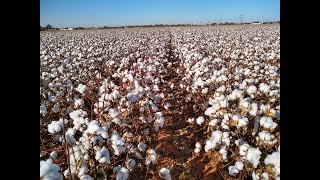
John Kempf and Chad Wall discuss how targeted nutrient strategies and reduced plant growth regulators produced high-yielding cotton in Texas. Chad's no-till fields hit 1850 lb/acre with premium grades at 55-57¢/lb, earlier maturity, and less trash, even in a difficult 2019 season.
Chapters
Hi friends. Welcome everyone. Hi Chad. How are you doing today?
Hi John. I'm great. How are you?
I'm awesome. I'd like to invite everyone and welcome everyone to this webinar where we will be talking about how to influence cotton and produce high quality, high yielding cotton and how to manage plant nutrition differently to produce a completely different outcome. I'm very glad to be here today with Chad Wall, who we've been working with for the last year in Texas. And Chad, love for you to tell us a little bit about what your experiences are, what you've observed. And then we'll also get into we want to talk about how we think about how we managing plant nutrition differently and how we apply that in the field. What are the actual practical applications and what are the outcomes and results that we've observed this last year and what might we expect in the future? So, Chad, I'd love to hear a bit about your story and what you've observed.
Sure. Okay. So a lot of you who are on this webinar are familiar with me. I mean, we've grown up together or worked together for a long period of time. But for those of you who don't, I was raised in Yoakum county, which is where a lot of people say is a good place to be from, not necessarily to be at. And so through that experience growing up, growing cotton and looking for ways to improve that system, ultimately to try and be more profitable like everyone else, I adopted no till practices about 20 years ago that led me into soil health and really pursuing understanding what makes a soil function well and thereby support the plants that are growing in it well, led me on a journey that provided lots of information but also raised lots of questions. So through the pursuit of that that finally culminated in 2018 when I came across some things that John Kemp was publishing, who is the founder of Advancing Eco Agriculture. As I listened to some of the material that he had published in webinars and podcasts, I realized that based on his background and understanding of plant health and just general agronomy and how plants relate to the soil, I knew that he had some answers that would be very beneficial for me and people just like me who had been trying to understand these interrelationships for quite some time. And so I reached out to John and the team at AEA and started on a journey to learn as much as I could about all of the things that they are well versed in. Obviously the region that they come from. Being in Ohio, they were not very familiar with cotton, but after A few conversations. I was very confident that based on the understandings that they had of other crops, and particularly tree crops, that their understanding of the nutrient relationships and how all of these things worked would be very applicable to cotton and it would be able to fine tune the things that I had been pursuing for a number of years. And so that's where we began last year. And then I worked with several producers in the area implementing those practices and technologies into their operating systems. And we were able to produce some amazing cotton. And so not necessarily amazing in a good cotton year, but based on the fact that we were able to produce comparable results to a good cotton year in a year as bad as 2019 was, speaks volumes to this. This understanding of how we actually can manage the plants, and particularly the nutrition of the plants to make them healthy so that they can maximize their photosynthetic capacity, which allows them to actually maximize the growing season that the plants are getting. So even when that season is very short, not only due to the time window, but then also the cool wet conditions, coupled with the extremely hot conditions and all of those things that really shortened our growing window. Maximizing the, the period of growing days that you get is very important. And so that's what our whole system has been focused on, fine tuning what things to avoid and then what things to spend more time really paying attention to so that we can influence the plants at those critical points of influence to help produce a high quality and abundant yielding crop. So, and that's, that's essentially what we did. So our theories were proven to be accurate.
Chad, I know that there are many people here from your local area, but also many outside of the area. For those who aren't familiar with what you observed, can you tell us a little bit about what were the results that you saw? We know we manage nutrition a bit differently. What were the outcomes? What did you see this year?
Well, the biggest thing that I think will, will help people understand where we are in that understanding is that again, with, with really poor conditions, we were able to produce, you know, 18, 50 pound plus cotton. In one of our trials that averaged over 56 cents a pound, which compared to what most cotton production did on the high plains. That's very significant, not only for yield, but also for quality. And combining the two in a, in a less than ideal cotton year was substantial. One of the things that I knew would have a huge impact on that and going back to my experiences from, you know, 15 or 18 years ago, was that PGR's plant growth regulators to help get A reproductive response from the plant is somewhat effective. And that's what most of us are very common in our rhetoric of being able to use. But I had found some research that had indicated that every one of those applications actually costs us four to eight days of growing days based upon what the rate of that application is and what the timing of that application is. And so when we consider that we're generally trying to optimize our growing season, and particularly in the fall, whether or not we get a good open September to actually turn the fruit that has been put on the plant into mature Lent, then it's critical that we don't give up any of those days. And when you consider in high production irrigation practices that we might be making, you know, three to four of those applications in a year, pretty simple math, that's costing us, you know, anywhere from 20 to 30 days of our growing season that the plant is actually not metabolizing at all. And then it responds with a reproductive response. And so some of the things that I had come to understand was how the micronutrients actually have energetic responses related to vegetative versus reproductive growth, and how we could balance those things particularly well with the SAP analysis to actually just give the plant what it needs to reach its genetic potential, rather than us trying to manipulate it into maximizing its production. The genetics are there. I mean, we really, the things we've been doing genetically in the last several years to assist the plants in being able to withstand disease or insect pressure or all of those kinds of things, you know, we're not, we really haven't been doing anything to enhance the genetic capacity that was already in the plant for producing high quality yield. It's just a matter of giving the plant what it needs and helping it to do what it wants to do, rather than pushing it to get good reproductive, I mean, to get good vegetative growth and then shutting it down so that we can get a reproductive response because we know we have to put fruit on. So essentially we were able to accomplish that.
Four to eight days loss per application of PGR seems to me to be really significant, particularly when you. Does that accumulate with cumulative multiple PGR applications?
I'm not sure, you know, the, the research that I have been exposed to did not go into the detail of whether that was cumulative. I think depending on the rate of application, the plant is able to metabolize that back out. And so, you know, it starts, it starts photosynthesizing at whatever its capacity was likely after it clears that application. But I don't know what the cumulative effect is. We were making those estimates based on each individual impact.
So how did you, when you managed nutrition a bit differently this last year, did you use fewer PGR applications? What did you do differently?
We actually did not use any PGR applications. And the reason being is that when we set the plant up for success with what we did with an in furrow treatment at planting time, we actually get gave the plant a good balance of available nutrients to balance that reproductive energy with the vegetative energy that we were inherently going to get. And so the plant actually was set up for success so that it didn't try to grow vegetatively very quickly. It actually started fruiting and keeping the internodal spacing pretty tight without ever getting into a situation where we actually needed the PGRs. And so in some, in some comparisons of, you know, field side by side, it was very apparent that the growth, and we have some pictures that we can share of that, that the growth characteristic of the plant was very much like you want to see as a cotton producer where you don't have a really spindly tall plant. You actually have a somewhat of a bush where your inner nodal spacing is very tight. Your, your fruiting positions within those fruiting branches is very tight. And you know, and when the plant is doing that, you know, we know that it doesn't really need any PGR application. It's actually doing what it needs to be doing, which is putting fruit on while it's growing.
Did that increase tightness in node spacing result in any differences in bowl size and number of bolls per plant?
Yes, and we know that yield is, you know, yield can be quantified somewhat in boll counting by knowing how many locks your bolls have and then obviously how many of those bolls are on the plant. And there's some, there's some pretty good guidelines we have for yield estimation that, that give us, you know, the parameters for which bolls need to be counted and, you know, how much that's attributing to the total yield. And so as we see the plant developing that way and we're getting multiple fruiting positions on those fruiting branches while the plant is growing, then obviously that's very encouraging. The second thing that that's doing is that it's keeping that plant very compact rather than getting long and spindly, which makes harvest much more efficient and much more effective. We're able to get a lot of the trash and stems and sticks out of it when that plant is much More compact as well as it just, it goes through the harvesting equipment much more efficiently.
I was just about to ask that question. What happened at harvest and did you see any, what were the differences during the harvesting process, if any?
Well, one of the, one of the reports that I had from one of the growers was that, you know, the man who was operating the harvester said that it was easily, and this was in a, where we had treatment side by side, one that, that we treated our way and then, you know, a traditional treatment right beside it where they had practiced all of their, their normal practices, including PGRs. You know, one might could argue that they didn't use the PGRs as effectively as they could have. But I think had there been more applications or had they been more diligent in that, it would have created more of a problem, which is what we saw in lots of places here on the high plains was that traditional practices, especially aggressive traditional practices in this growing season, actually produce the worst results. And we can go into why that is the case for this year and help guys understand why those practices all stacked up to work against them this year. But in any event, in that, in that side by side trial, not only was the crop that we had treated ready, you know, hard to say exactly, but at least a week to 10 days, maybe two weeks earlier maturity in that crop. And so it was ready to be harvested earlier. You know, oftentimes during cotton harvesting time, we're getting showers. You know, we're into that time of the year where we're getting part of our annual rainfall and that delays harvests anyway. And so, so there was actually a couple of weeks, maybe even, you know, close to three weeks difference between the harvest of those two blocks, part of which was due to the maturity, they were not ready to be harvested at the same time. We were well ahead. And then, you know, secondly, we had inclement weather come in and you know, it just didn't work to harvest the second one as quickly as it was ready. And so that could have, you know, that could have contributed a little bit to the quality differences that we saw between those two blocks. But there was no doubt the maturity. We were gaining maturity throughout the entire season. And there wasn't any question in looking at the plants that that was true. Our bowls were, you know, were sizing a lot quicker than, than the traditional treatment that was right beside us. And then back to what I was saying about the harvester, you know, his testament was that even though we yielded more and our quality was significantly better, ours stripping was at least twice as easy to strip as the other, just due to, you know, to how the, the plant was actually positioned such that it had the long branches that were very spindly and you know, you just can't run the equipment through there as effectively and efficiently as you can. A really compact plant that is just full of bolls and, and particularly that doesn't have trash on the top of the plant. A lot of that late season trash that, that's just there through a defoliation or a frost or a desiccation. You know, a lot of that, that upper leaf and, and small square and immature bowl trash doesn't go away. And sometimes even with burr extractors on the harvesters, you just, you wind up getting a lot of that to the gin, which contributes not only to some of the quality problems that we had this year, but it also contributes to more trash that the gin is having to separate. That's costing you more for what the gin is doing for you.
So you're saying we actually had less trash?
That's correct. Much less trash.
And what do you attribute that to? Was it because the plants were more compact? Did they stop growing sooner? Did they mature and senescence sooner? What were the contributing factors?
Both our plants were actually beginning to senesce before we got the early freeze. And so that was the other contributor to the season being really tough, is that we got an October. In most areas we got an October 11th or October 12th freeze, which is, you know, easily 20 days ahead of our average freeze point. And so the plants that were physiologically mature and ready to senesce, because that's what we had been encouraging them to do, they were able to shed a lot of that leaf that was already ready to come off as opposed to the plants that were still in a very vegetative state. You know, early freezes produce that. A lot of times you get when your plant is still very vegetative and it freezes, that sticks the leaves and it sticks those small squares and bowls that they don't fall off like they should. And so there's no way to get them off except through the harvesting process. And then they're mixed in with the lint that you really want to be pure.
Just for context, Chad, for the people who are not familiar with the local area, you mentioned being a really challenging year producing 850 pound 56 cent cotton. What was the context of the regional yield averages? What were most people looking at most.
All of the gins where we were really getting a lot of attention because of our grades still being in the 55 to 57 cent range. I know at one gin in particular when, when our cotton was ginned and it was averaging $0.57, it, it got a lot of attention because the highest grade the gin had seen at that point in time was 52 cents and the average was closer to 45 or 46 cents. With a lot of cotton being all the way down in the 30 cent range. Which that's, that's what contributed to huge number of acreage here on the, on the high plains actually being destroyed at harvest time. Because it was, it was not until the crop was ready to be defoliated or have a bowl opener applied to it that, that the producers came to realize that the fruit that had been put on was actually not mature and there was nothing there for a bowl opening application to even open so that it could be harvested. It just wasn't worth harvesting. There was very little mature lint in the field. And that's where I'm saying that all of the things that worked against us, particularly with traditional practices this year culminated with cotton that was typically high yield. And fields that, that had the resources they needed to typically produce high yielding cotton was actually destroyed at the end of the season with a know with a complete season's worth of inputs being put into it and nothing worth harvesting. So that's a, you know, that's a really, really tough situation to be in.
For those fields that were harvested. Do you have any idea what yields you mentioned quality and the quality parameters? Do you have any idea of what yield ranges were like?
Most of the, of the treatments that we had ranged, I don't. There's very little that was below two bales or £1,000 on irrigated production. And that was all the way up to 1850, quite a bit around the right at 3 bell range, which for a lot of growers who are accustomed to growing three bale plus depending on the year. I think again that speaks well to what we were doing was maximizing the plants capacity because our window of opportunity was very, very small.
Chad, I'm sure the question that a lot of people have in their mind is what exactly did you do? What were the tools that you used, the applications that you used and why did they work? So I'd love to get into that a little bit. What did you do differently from what you've done in the past?
Well, traditionally what we've done and I'll kind of outline a traditional practice that is what we did on my operation previously and what I think a lot of growers are still implementing is, you know, do some soil testing, maybe, maybe not. Seems to be hard to correlate to actually producing consistent changes within our production. So, you know, a blanket approach to fertility coupled with PGR applications, typically starting at a known place that.
More from John

Episode 186: The Power of Precision Management and Multi-Species Covers with Mike Thompson





Podcast Extra: John Kempf on Soil Biophysics, Plant Immunity & Foliars on the Permaculture...


