Regenerative Systems for Growing Hops
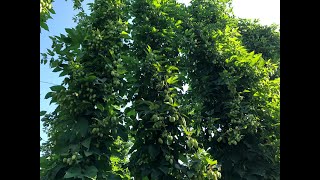
Webinar (Feb 11, 2020) led by John Kempf with Jim Dunlop and Kevin Tully about regenerative/higher‑quality hop production. Covers stage-specific managed nutrition (spring biological primer, vegetative, reproductive switch, cone fill, establishment of baby hops), microbiome-driven conversion of inorganic N to amino acids, and use of SAP (sap) leaf analysis to guide foliar/fertigation decisions for yield, quality and pest/disease resistance.
Chapters
Good morning, everyone. Hi friends, and welcome to our webinar where we're going to talk about hops. As you can see, I'm joined here by Jim Dunlop and Kevin Tully, our team from the Pacific Northwest who's worked with hops quite a bit in this last year in particular, and we've learned a lot, we've had some interesting experiences and as usual, when you start learning about new things, you learn that it's not what you don't know that is challenging, it's what you think you know that isn't. So. So I'm just going to jump right in to the presentation. I'll have some thoughts I want to share. And then for the two of you, I wanted you to also speak a little bit about some of the things you've done in this past year, of what you've observed and what we are recommending to growers so far based on what we learned this last year. So we're just going to jump right into it. Alright, so obviously here's an example of what we're looking for. Plants that are fully loaded with cones, that are very large and that dry down very well, that have very high terpene and alpha acid content and that have low levels of nitrates and low levels of powdery mildew and aphid susceptibility. So that's the objective, that's the goal. And when we think about what we can achieve, it's our, of course, our history, our background at advancing eco agriculture is thinking about managing plant nutrition a little bit differently. How can we manage nutrition to not just get the highest yields possible, but to get the highest yields and the best quality at the same time. So some of the characteristics that we're looking for, we want to have young plants that establish very quickly and give us very robust root systems and very rapid vegetative growth in the first season when we have mature plants, obviously we're looking for higher cone yields. We're looking for both a greater wet weight and dry cone weight at harvest and after drying. We're looking for the ability to delay or eliminate fungicide applications based obviously on improving plant health. And of course, increased terpenoid content and alpha acid content. Lower nitrate levels, I know is something that several growers have spoken to about having the desire to produce. And it is very possible and very easy actually to produce low nitrate levels. And we're going to talk specifically about how we can accomplish that. So when we look at producing exceptionally quality, high quality and healthy plants, in addition to high yielding plants, what that Often means for us with the different crops we're working with, is we try to evaluate and identify what are the critical points where we can influence nutrition and have a really significant impact on overall plant development. So we've developed this concept called CPIs, and we've identified there are four major points for the hops crop that we need to focus on. Managed nutrition at each of these points very well. The first point is what we just referred to as biological nutrition supply. And the idea here is that as the plants emerge from dormancy in the spring and they take off and get this very. We desire to see this very rapid growth flush, very, very rapid vegetative response in spring at Greenup, we can get that response and that reaction with nitrogen applications, or we can get it with other nutrients. And when we get it with nitrogen application, that predisposes those plants to a specific nutritional profile, disease and insect susceptibility profile for the rest of the growing season. And I want to talk a little bit about how we can use a different nutritional profile that gets the same speed of green up, the same speed of vegetative growth, the same quantity of vegetative growth, but without having those negative health impacts for the remainder of the season. Then of course, the second major point is when we have vegetative growth. The third is when we switch to reproduction as we start approaching the wire, and even before we get to the wire, for that matter. And then of course, lastly, Conefield. There's a couple of ideas that are represented in this idea of biological nutrition. The first is that it's possible for plants to absorb not just ions from the soil solutions, let's say nitrate ions and ammonium ions and calcium and potassium ions. But for them to also absorb what we just generically refer to as microbial metabolites, such as amino acids like glycine and lysine and leucine and so forth. The soil profile, peptides, enzymes, much larger, more complex compounds than, let's say, a nitrate or an ammonium ion. And this is really significant because when plants absorb these amino acids, when plants absorb nitrogen in the form of amino acids, it actually gives them a lot more energy than, excuse me, than when they absorb nitrates and ammonium. You get a much bigger growth response, a much more faster growth response, and you get high quality, and you get disease resistance and insect resistance at the same time. The second idea, so that's the first idea, is plants can absorb not just simple ions, but also microbial metabolites. And the second idea that matches with this is that there are four different nutrients which give us a very rapid vegetative growth response. Nitrate, which you're all very familiar with, Chloride, potassium and calcium. So it's possible to produce this very rapid green up and very rapid vegetative response early in the spring by using nitrate, nitrogen or by using potassium. But when we use either nitrate or potassium or chloride, each of those three nutrients has a symbiotic relationship with the plant hormone auxin and gives us these very rapid shoot growth with widely spaced nodes. Conversely, calcium, when we get this rapid growth flush from calcium, calcium has a symbiotic relationship with the plant hormone cytokinin. And we can achieve the same volume and the same speed of vegetative growth, vegetative biomass, and have our binds be growing as rapidly. But because calcium has a synergistic relationship with cytokinin, we now get nodes that are spaced half the distance apart, 3 to 4 inches instead of 6 to 8 inches. And as you can imagine, this is a really big deal as the bind matures and lengthens, because when you have more tightly spaced internodes, that leads to more arms, more cones and higher yield. So I do want to expand and talk a bit more about those nutrient interactions in the future. Of course, the other really significant piece is that when you change plant absorption just of nitrogen, so this is nitrogen specifically, when you change plant absorption from being primarily nitrate to being primarily amino acids, that completely changes the aphid and powdery mildew susceptibility profile as well. Our goal for a really healthy crop is to have total nitrogen on a plant SAP analysis be abundant. We want abundant total nitrogen. So we're not suggesting that we shouldn't have adequate nitrogen or we shouldn't apply nitrogen, but we want all the nitrogen that the plant absorbs in every 24 hour photoperiod to be quickly converted to complete proteins and to amino acids in the plant SAP. We want there to be zero presence of either nitrates or ammonium in the plant SAP. And a little bit here we'll look at an example of what a SAP analysis looks like. But the idea is that as rapidly as the plant absorbs nitrate or ammonium from the soil profile, which we prefer, they wouldn't, but if they do, we want in 24 hours, we want 100% of the nitrate and the ammonium to be converted to complete proteins and to be converted to amino acids. When that happens, that reduces your susceptibility to aphids and powder mildew by greater than 80% because those organisms require plants that have that nitrate and ammonium profile. When plants absorb nitrogen in the form of nitrate, it requires three times more water for that plant to convert nitrate into in the plant tissues to amino acids, as it does if it is converting or absorbing organic nitrogen, such as amino acids, or even ammonium, for that matter, it requires three times more water to convert nitrate than it does to convert ammonium. So you can have a really significant impact on water use efficiency and then vegetative growth quality. Already spoke about the impact that we can have on nitrogen node distance. So how do we impact this critical point of influence? The goal is to provide plants with an abundant source of nutrients that is microbially friendly and can be easily absorbed by the root system. To accomplish this, we often put on, we do a spring application of what we call our soil primer because it gives us a flush of these rapidly available nutrients. Jim, can you speak a little bit about soil primer applications you've observed in the past that were done in the spring and kind of what's happening, what's going on, how we apply them and the results that we see?
Yeah, in the springtime, we're usually doing application that's about half the rate of the primer that we do in the fall. And that's just to kind of bump up that biology. The main difference in hops is that across all the hoppers, SAP reports that we look at, we see low phosphorus. Sometimes we'll see decent phosphorus early on in the season, but for the most part it's low phosphorus. So in that case, we're using spectrum psp, which is a spectrum that has a higher, higher ratio of phosphorus solubilizing bacteria. So we're using that as our inoculant, typically in hops.
And Jim, in the experiences that you've had in the past, past applying these, what have you observed in terms of plant development?
Well, it's still kind of early days for us on hops. We're just in our second year out here in the pnw. But what we are seeing, I think the main thing that we're seeing and what we're getting from our soil biological applications is lowered nitrates. So we can reduce nitrates with our foliars, but the best way, I think, and kind of the more fundamental way to do it is in the soil. So that's the main thing that we're seeing in hops is the ease of lowering nitrates in the hops throughout the season.
Yeah, so I didn't perhaps make that clear when I was describing it, but how does a primer application to the soil reduce nitrates in the plant? And I think the answer is fairly straightforward. Many growers are applying significant nitrogen applications in the spring for the green up flush response. And what the primer application does, it doesn't contain any nitrogen or qualities that are such infinitely small, it doesn't really matter. What the spring primer application does is it really triggers biology, particularly bacteria, to consume a lot of the nitrogen from that early application and convert it to amino acids. So now, instead of having a soil profile where you have a surplus of ammonium and nitrate, which can have damaging influence on disease and insect susceptibility later in the season, all gets converted to amino acids in the soil profile, which are still plant available. Plants can still absorb them, but they don't leach and they contribute energy to plants. The next major critical point of influence for these mature crops is vegetative growth stage. Our goal here, which I described a moment ago, is that we want to have very tightly spaced nodes, so it's possible to achieve the same speed and the same volume of vegetative growth, but to have nodes be spaced only half the expected distance apart based on how we manage the nutritional profiles. And this, of course, is a really big deal. So the bottom line, very simply, is that this is not a question of limiting nitrogen or limiting potassium and chloride. Those are the three nutrients which give us very rapid vegetative growth and long, very widely spaced nodes. So it's not a question of limiting the supply of those three nutrients. It's more a question of making certain that the plants have adequate calcium to balance out with those three nutrients. So we have to start looking at ratios of nitrogen vs potassium vs calcium supply Chlorides as well, of course, and make certain that we have adequate calcium and not excessive potassium and nitrogen and chloride compared to the calcium that give us these widely spaced nodes. So this is really what we're looking for during the early vegetative growth stages. We're trying to make certain that we supply adequate calcium and we maintain cytokine and dominance within the plant so that we have these tightly spaced nodes typically. Kevin, how are we managing this when we work with growers? I think we're putting on a couple of foliar applications. What do these typically look like as.
Far as the vegetative growth foliars? We're starting to use a combination of the seashield sea stem, manganese and holofoss, and we're starting to think a little bit more about potassium during this vegetative growth phase. And just making sure we don't get too low as we approach the wire. This year, we saw on SAP that everything came out of the ground high in potassium. But then as we started to go up the wire, everything started dropping down. So we're thinking a little bit more about having that potassium on hand and being prepared to have it where we need it, and then backing off right around reproductive switch time. So that's the main thing. We're putting out the C products and micro pack to just keep pumping our micronutrients, thinking about that potassium and watching the phosphorus. And, you know, during this time, we're taking SAP. So it's all about what we're seeing on the SAP.
Yeah. Making application decisions based on actual data and not based on guesstimations. Kevin, I know we're. I think we're often doing fertigation applications. Are we doing both fertigations and foliars? How many foliars? What's typically happening during this vegetative growth stage?
Yeah, we've done our early season, you know, our spring soil application, and then we follow it up, you know, about the time we start doing our vegetative growth foliars, we start also just small fertigations that keep things moving along in the soil that we're doing throughout the season, you know, up to maybe six throughout the season. So we're definitely doing those along with the foliars kind of hand in hand.
All right, here's where the fun really starts with hops is when we switch from vegetative growth to the reproductive switch. This is a pretty significant hormonal shift for this crop. When we manage this transition well, we can have a really significant impact on future yield and the quality of that yield. And of course, it's often at this stage when plants shift from vegetative to reproductive growth, when we start seeing really significant disease in insect susceptibility, our susceptibility to powdery mildew goes way up. Susceptibility to aphids can go way up if we're not using insecticides to treat those. So managing the nutrition at this stage and even leading up to this stage is really important for what happens for the rest of the season. So obviously, we know that we can really influence the number of buds that is present. We can influence the uniformity of those buds, which is a really big deal, obviously, because it's possible to have all the cones on a single arm be almost completely uniform in size. That's the objective, to have a very high degree of size. Uniformity, because when you have a few that are close to the base being much larger than those further away, that has a significant impact on yield really quickly. Then, of course, overall bud size, energy was. Leads to blossom and cone size, and timing, again, comes back to the uniformity piece. When we have a high degree of uniformity from the bottom of the plant to the top of the plant, then that makes harvest easier and also has an influence on yield when we don't have a lot of immature or overly mature cones. So when we look at the reproductive switch application, this is something that we're actually beginning to do a bit more early, I think, than we have in the past. Jim, can you tell us a little bit about how we're managing the reproductive switch application now compared to what we have in the past and kind of what we're doing?
Yeah, in the past, we were starting a week before the wire, more or less. I know it's hard to determine out there because the binds are at such different stages. Even in the same. In the same yard there. Yeah, just trying to go a little bit earlier. I think we're gonna start two weeks earlier this year, or two weeks before.
We hit the wire.
And then once again, we hit the wire with the full application. And at this point, we're really pushing our reproductive nutrients. We're pushing phosphorus and manganese, and we're also pushing C stem, our cytokinin promoters. And this year, we're able to do that in with one product, our accelerate product that has seastem, seashield, phosphorus and manganese all in one product. And we also want to make sure at this time that we have really adequate calcium levels so that we can produce all the cells that we need to fill in conefl.
That's a good point, Jim, because calcium at this stage really influences cone size, because essentially, the number of cells formed during the cell division stage is going to limit what that future cone size could look like. And calcium at that stage is very important. And then we get to the fun part, cone fill. So obviously, we can set a lot of buds, we can set a lot of cones, but we now actually need to fill those with cones, terpenes, and oils, and the various acids, organic acids, that we're looking for. And all of this is predicated on the quantity of energy, the quantity of sugars that can be transported to the cone. So there's a couple of different pieces that are going on here. One is we can influence the quantity of sugars produced in the leaf. But then even when you have a Lot of sugar production in the leaf, then actually moving that into the cone as well is really important. It's possible to have either one or the other of these processes working well, but not the other. So in some cases, we've observed where we have really good photosynthesis in the leaves, but the sugars are not being transported into the cone. In other cases, we've observed where we have the nutrients that are needed for really good sugar transport, but we don't have good photosynthesis occurring. So when we have both of those occurring at optimal levels, we can move. We can produce sugars in the leaf and. And move them into the cones very efficiently, very effectively. And of course, this has an immediate and direct impact on all the quality parameters that we're looking for. Oil content, terpene content, and alpha acid content, all these various pieces. And also connects to cone maturity and uniformity of maturity, where we don't have a lot of cones on both ends of the spectrum, some being immature, some being overly mature, but we have a very high degree of uniformity at the harvest period. What are the applications that you're putting on at this stage?
Oh, yeah. During cone fill, I think the place where we could have done a better job this past year was to kind of anticipate the high need for potassium at this time. So that's what we want to really hit this year, is make sure that we have enough potassium, and we probably have to be a little earlier than maybe when we see it on SAP. So just keeping an eye on that. And the other thing that we. That we see across the board in hops is low boron. So we want to make sure that through the vegetative period, we've been bringing up all those nutrients, those micronutrients, so that we have enough boron during this period to kind of move things out to the exterior of the plant and fill those cones. Yeah, I think that's. That's about it.
I'd add that hops are. I can't think of a more voracious crop than hops. You know, the amount of biomass that is produced in such a short amount of time is absolutely incredible. And watching the SAP throughout the year, we saw how much nutrition these plants utilize and suck up. And we've put out a lot of nutrition to some hops and seen it get used up relatively quickly. So I think during the whole process, we have to be continuing to add fairly small, significant amounts of micronutrients. We'll see them come up, but then we'll see them get used up. So it's a little different than how we see the SAP react in other crops. So we're just continuing to think of that in cone fill that it's not over. This plant is still doing a lot, and as it's filling those cones, it's using a ton of energy and still creating, you know, a ton of biomass.
I think there's a few points that emerge from this conversation. I think both of you made excellent points. The entire foundation for your comment, Kevin, is based on the premise that we are looking at data through the growing season. We've had a lot of successes at aea, which we're very grateful for and which we've also worked hard for. But I think the foundation of our success is, one of the foundations is that we don't guess about anything that is possible to measure. By conducting SAP analysis throughout the growing season, we're able to actually measure how many nutrients the plants are actually absorbing and what their requirements are, whether they have enough or not. And that's a very powerful learning tool that I would encourage all growers to work with. And we'll talk a bit more about SAP analysis. But I think that having that foundation of having the data and not having to guesstimate about what the plants are actually absorbing and what their nutritional integrity is, is an extremely important foundation to have to manage ruta well. And then Jim mentioned boron. I also want to comment on that a little bit. Boron is tremendously underappreciated for its capacity to move sugars around in the plant. So I spoke about two different processes having one process of synthesizing sugars in the leaves, and the second process of moving those sugars from the leaves into the cones or into the fruit, if you're producing other crops. And that process of carbohydrate transport, of sugar transport is mediated by boron. There's kind of this synergistic relationship between boron and calcium and auxin in this context. But what we can just say very simply is it's a bit of an oversimplification, but still accurate to say that the quantity of sugars move out to the furthest tip. Boron has the effect of it. It moves sugars out to the furthest tip, the farthest away from the plant. So if you have a big range in, let's say, in cone size from the base of the arm to the furthest, most tip of the arm, that is a signal of inadequate boron, because when you have an abundance of boron, it will rapidly move all those sugars out and you have this high degree of cone uniformity all the along the arm. That's really one of the things that we're looking for is to have this high degree of uniformity because ultimately that uniformity is going to translate to improved yield. So, Jim, your point is very appropriate at this stage that we need to have abundant levels of boron. I'm going to pause for just a moment and answer some of these questions that have come through. First question is why is foliar application of nutrients favorable in hops as opposed to fertigation? Jim, you want to take that one?
Yeah, gosh. Well, we do both, so I think they're both really important. We use the foliars because we see they work and when we pull leaf samples we can see that the nutrients are getting in. We're actually experimenting with doing a lot more fertigations and less foliars and to see how that works. We already know the foliars work, but we want to find out if we can do a lot more with fertigation. So it's a good point. We can do a lot more fertigations, but gosh, you got all that biomass and all those leaves to suck up those nutrients. It's a pretty easy decision to put a foliar on.
I would add that certain things we can't really put through the soil. You know, our iron and manganese are going to get tied up in the soil. So certain things are more effective putting through foliars.
And again, the ultimate metric of success is measuring on a SAP analysis of do you actually have nutrient absorption and to the point that you made, Kevin? I think for some of our trace minerals, we historically see that when we apply them to soil, the plants don't absorb them very well because of other things that are going on in the soil profile with the soil's biology or reduction oxidation. It's possible for some, depending on the soil type, of course, and everything else that's happening and going on. But it's very possible in some soil types to apply some of these trace minerals and not see any improvement in plant absorption or actual measured plant levels. When we put on a foliar application, we get an immediate response. So those are good comments. And then there's a follow up question. What advice for optimizing nutrition to alleviate pressure from potato leaf hoppers? From Stuart Farr. Hi, Stuart. I would say that the answer is. I give this answer in the YouTube clip on the webinar that we did on the plant health Pyramid. So that's really where, if you want a more in depth answer on leaf hoppers and on aphids and on various different insects and diseases, go look for that. But the bottom line is that when you have no more nitrates and no more ammonium in the leaf and all of it is being converted to complete proteins, you're susceptible to leaf hoppers disappears almost entirely. And that can be accomplished with a group of four. Magnesium, sulfur, molybdenum and boron. And there's more information, more details of why that works and what's happening and what's going on with the protein synthesis process that I described in the Plant Health Pyramid. All right, we're going to keep moving through some of this and then we'll answer any follow up questions that have come through as well. So moving on from cone film, how we switch to looking at establishing baby hops for the first year, we know that it's possible to establish seedlings and have them grow strongly enough, quickly enough that we can harvest them in the first year. This is much easier in some environments than it is in others. And for those environments which are challenged with having a long enough or warm enough or rapid enough growing season, we want to talk a little bit about how we can speed up this process. So, of course, the goal for establishment and planting baby hops is that we want a few things to happen first. When we plant these crops, these seedlings, we want the root system to be colonized immediately with symbiotic bacteria and fungi that develop what we call being a very disease suppressive soil. And this also is going to have the effect of giving us increased nutrient availability. So we want to foster really rapid root establishment, because when we have really fast establishment, of course, that leads to very fast vegetative growth. And the key point is that we want to establish cytokine and dominance. This is so easy at this stage of seedling development and plant development, to set up a plant for the biggest success for the rest of its life. Really healthy plants will always have more growing root tips than they have growing shoot tips. And that is an expression of cytokine and dominance. We want that to occur at this stage. And that can happen when we put on nutritional support and microbial inoculants at the planting period. So this last year, we conducted an experiment to see how rapidly we could help baby hops establish at a yard in Oregon. Jim, do you want to talk a little bit about what we did there and what we saw happening?
Yeah. So we kind of jumped in late On a hop trial that was being conducted by Oregon State Extension, and they already had six different treatments that they were going to do on baby hops. Each treatment was able to get three applications, so a root diplomatic and two fertigations. And gosh, we were competing against all kinds of different plant stimulates, stimulants and trichoderma and mycorrhizae and a lot of different things. And what did we do? We did micronutrients, we did mycorrhizae and bacteria and a package of, you know, food in the form of rejuvenate and phosphorus, I think was in there, but just. Just a whole package for the root dip. And then. Yeah. So we're competing on three different things. It was biomass, total biomass, getting to the wire first, and total plant height and wet hop cone weight. And we won in all of those categories and won by a lot in the hop cone weight.
I think it's worth pointing out that this trial got off to, what was it, a month later start than expected or something like that.
Yeah, it was a month later than they would typically plant baby hops.
Yeah. So lots of room for improvement on this in the future. But I think what we came away with, if I'm not mistaken, this trial is perhaps being repeated or extended this next year. And I think the conclusion is that if we don't have. If we wouldn't have had that month delay, then we're approaching a point where it's economically viable to harvest a crop the first year.
Yep, that's right. In the Willamette Valley, typically they don't even string the hops because they're not going to harvest them the first year. But I think we made a pretty good case that we could produce a harvestable yield in year one.
Kevin, are there any important elements that we missed in speaking about this?
I would just add that this trial was really well done. The guy who was managing it seemed to do a really great job. It was really professional. They had a really cool setup that was designed specifically for doing trials that I think they're expanding. So they had the ability to vertigate each row individually, and each product or each treatment had three rows that were spaced randomly and mixed amongst each other so that everything was spread out and randomized. And it was really cool. It was a really cool trial to see. And haven't seen anybody doing hop trials with that kind of detail. So it was a cool thing to see. And I'm excited to see what happens in the next couple years as we, as we Continue to do it.
Something to add to that is that our binds were so healthy that you could see our rows from across the field. And typically you don't see that in one of these experiments. You know, we're just looking at the data and statistics to try and figure out who won. But you could actually see it from across the field. So it was pretty cool.
Yes. And a big thank you to Coleman AG for conducting the trial and for sharing the data with us. We really appreciated that very much. We're very grateful for that. And I'm very excited by the. By the implications and potential, because if we can grow this crop to the point where we can have an economic. Produce economic value and produce a yield in the first year, of course, that's a really big deal, and that's one of the things that we really care about. So we spoke a bit about our use of SAP analysis. Kevin, do you want to describe a bit about what the process looks like for when you first begin working with hops yards and how you conduct SAP analysis through the season?
Yeah, sure. So we'll work with different farms in different ways. We will sample the hops ourselves, or the farm may prefer to sample them on their own, and it's just dependent on what everybody wants to do. So we order labels ahead of time. Labels are like tickets. So we'll work with the farm to determine what blocks, what management areas we want to sample, and how many times throughout the season we'll take samples on hops. We're typically doing it every two weeks, and so maybe eight times, seven or eight times throughout the season per management area. And if the farm is sampling themselves, we'll come out and do a training with the manager and whoever is sampling. And what the actual sampling looks like is we walk through the yard with a hop pole. We just use a big, long pole with a bent wire at the top. And we've gotten really dexterous at plucking the new leaves off the top and then pulling an old leaf off the bottom. And we basically fill a Ziploc bag with a hundred grams of new leaves and 100 grams of old leaves, and then we ship them off to the Netherlands. And either Jim and I can, you know, will come by and pick up the leaves and ship them, or we can train your team to ship them to the Netherlands. And we have some great cheap ways of shipping through FedEx. And then once the sample comes back and it gets emailed to anybody on the farm that wants to receive it, and then Jim and I, we are committed to turning around that SAP data within 24 hours, typically even faster than that. A lot of times we get it done in the same day, so it shows up in our email super early in the morning because it's coming from the Netherlands. And we will analyze it, review it with the farm, and make a recommendation for what corrections need to be made at that point. If there's any product that is needed, we'll ship it out from our warehouse and that can be there the next day in most cases. So our turnaround time from taking SAP to getting product on the farm and applied is between 7 and 10 days in most cases.
Thank you, Kevin. That was an awesome overview. For those of you not familiar with SAP analysis, here's an example of what a PDF report looks like. And of course, you can also get all the data in an excel sheet as well. The numbers that I'd like to point out just very briefly. Obviously, on each of these, you have, for each mineral, for each nutrient, you have a separate report, a separate number for the old leaves and the new leaf. So the new leaf data is the first number that appears, looking at it from the top down and with a light green bar. The older leaf at the bottom of the plant is a dark green bar, the second number that appears for each element. These tests are incredibly revealing, give us a lot of information about what's happening and what's going on. And just to give you a quick example of some of the information that we look at when we get these reports back, so we start at the top. I'm not going to comment much on sugars, ph, electrical conductivity. Those are important in some cases, but acquire a bit to explain. Let's just move on down to here. We see potassium levels, calcium levels, potassium to calcium ratio, magnesium levels. But I want to move down here looking at ammonium and nitrate. So here we have ammonium at 199 parts per million on the new leaves, 79 parts per million on the old leaves. And there's no desired. You can see there's no bar graph here. There's no desired value because the desired value for ammonium is zero. And I know, just looking at this test report, that we have the presence of ammonium in the crop, which is going to correspond to spider mite susceptibility and perhaps to aphid leafhopper susceptibility as well. And when we looked at ammonium, we have ammonia, or, excuse me, nitrate, 279 and 63 parts per million. The goal here again, here we have a desired value stated of 55 to 165. But in reality, for a really healthy crop, we want that to be a none detect as well. Less than 20 parts per million. And then when we move on down to look at total nitrogen, here we have total nitrogen of 1287 and 592. This is a crop that is pulling nitrogen out of the old leaves at the bottom of the plant and moving them up to the top. This crop doesn't have enough nitrogen anymore. And here we get to the fun one. Let's look at chloride. Chloride is 2143 on the newbies at the top of the plant, 2119 on the oldies at the bottom of the plant. And the big problem is that chloride is higher than and greater than total nitrogen. We've got total nitrogen 1287 and 592. This is one of the ratios that we pay a lot of attention to because this ratio corresponds directly to insect susceptibility. If we have a crop that is has susceptibility to aphids, one of the big ratios that we pay attention to is the nitrogen, total nitrogen to chloride ratio. And so I know that this crop right now has these high chloride levels, and that's going to give us tremendous susceptibility to aphids. And if we want to correct that, then we have to figure out a way to reduce the chloride levels in the future, prevent them from getting this high again next year, and also make sure that we have abundant levels of total nitrogen without having the nitrates, without having ammonia. And of course, there's more that we could describe as we go through this test, but that's what Kevin and Jim are there for through the growing season. All right. And there's an example of what Kevin was talking about with sample collection. I think this is actually some organic hops in Washington, if I'm not mistaken. All right, so first question here from Rick Peterson. Hi, Rick. My SAP analysis is usually high in the old leaves and low to medium in the young leaves. How do I change this? So, Rick, it varies a bit depending on the nutrient that you're speaking about. Let me just give you a quick rundown. It's very common for calcium and magnesium to be higher in the old leaves than in the young leaves. Particularly in high temperatures. When we have really warm conditions during the summer, those tend to accumulate in the older leaves and not migrate up to the new growth very well. When that happens, particularly with calcium, it's often the challenge of not having enough boron, because when we have a generous supply of boron, we see that happening less. It can still happen a little bit, but calcium moves up to the upper parts of the plant much more easily. If you're speaking about okay, yeah, I see Rick just responded, said he is asking about calcium. So what happens is within the plant calcium follows the water stream and when you have cooler temperatures and hops being a C3 photosynthetic pathway plant when the leaf temperature is below 76 degrees Fahrenheit, the new leaves at the top of a plant use more water, a higher percentage of the plant's total water use than the old leaves at the bottom because they're most actively photosynthesizing and most actively growing. So the majority of the water flow goes to the upper parts of the plant and therefore the majority of the calcium goes with it. If, however, you have very warm temperatures and leaf temperature, this is not air temperature, but leaf temperature goes above 76 degrees Fahrenheit, the plant switches from photosynthesis dominant to photorespiration dominant. And now the older leaves, the more mature leaves that are often larger in size now they lose the majority of the water flow because of the respiration process. And because of this, most of the water flow goes to the older leaves and therefore most of the calcium goes to the older leaves. So this can be limited and curtailed somewhat when you have when you supply abundant boron and that can help move calcium up to the new growth a bit more easily. Follow up Question from Ben I've heard some of your presentations where you've talked about using AMS and humic acid or other carbon sources with UAN28 applications to improve conversion of nitrate and ammonium into amino acids. Can you talk about rates and ratios per application to achieve this? Is this still a simple and cost effective way to push nitrogen without accumulating excess of nitrate and ammonium in the plant? Ben, this is a very good question and I'm actually going to be writing a blog post about this in the next couple of days and putting it out there. Here's the bullet point. Synopsis the most efficient form of nitrogen for plants to absorb is amino acids. The second most efficient is urea. Third is ammonium and significantly the least efficient, so inefficient that it costs the plant a lot of energy. Is nitrate the bottom of the list? You do not want plants to be absorbing nitrate for a whole host of different reasons. My preference is to have soil applications be of urea, liquefied urea or dry urea. Ammonium sulfate is also an option. Liquid 28 and 32 are also options, although they're less preferred than liquefied urea. When we are applying any nitrogen source as a liquid, whether this is in a fertigation system or banded or whatever the pathway might be, you can add microbial food sources and stimulants to rapidly convert any of that applied nitrogen into the form of amino acids. Formula is pretty simple. 3% of the total solution as humic acid. We use humicarb 3% of the total solution. This can be either on a weight, weight or volume. Volume basis should be carbohydrates. We use rejuvenate which contains 50% molasses. A little bit more a 10 to 1 nitrogen to sulfur ratio. Using ammonium thiosulfate as the source of sulfur and an application rate dependent on soil and plant SAP history. A pint to a quart of molybdenum per acre. So those four applications, humic acid, 3% carbohydrates, 3% sulfur, 10% of total nitrogen on a pound per pound basis and an application of molybdenum. The combination of those four things will trigger the soil bacterial population to quickly convert any applied nitrogen into the form of amino acids. And there are dozens, in fact probably hundreds of farmers that we've worked with at this point who tried this combination or something very similar to it and have reduced their nitrogen applications between 30 and 40% and get the exact same or bigger crop response. So it's pretty amazing what it does to the soil microbial profile and to overall plant health. And then Ben asked a follow up question. To what extent is this temperature dependent? And the answer is it's not. It's really soil biology dependent. So even in very cool soil conditions where you have, if you consider the two extreme opposite ends of the spectrum, if you have soil conditions that are above 110 degrees Fahrenheit, obviously you're not going to have very active biology. And that shouldn't be common except perhaps on the very soil surface. Of course you don't want to have exposed soil surface as much as possible. So extremely high temperatures. We have very low temperatures where the soil is still quite cold in the spring. Obviously that's going to slow the process down but not stop it completely. So it's not particularly temperature dependent.
Hey John?
Yes, Jim.
Yeah, I just might add that we're seeing a lot more farms doing this. Even farms that we don't work with and we're just starting to talk to are doing this. They're adding carbon and sulfur to their.
Nitrogen applications because it makes so much sense. It's not expensive and it works. You can reduce your nitrogen applications in a very straightforward manner and produce a significant crop response and a significant quality response. Question from Marisa Porter. Hi, Marisa, have you explored using SAP analysis labs that are closer and can produce a quicker turnaround time? From our perspective, my thoughts are that yes, we have. We're constantly looking for what the best options and alternatives are out there. I'm really excited. I believe that in the future we're not that far away, maybe a couple of years away, two years or so from having handheld tools in the field that will be able to measure nutritional profiles in the field. So I'm really looking forward to that. But until that arrives, there are a number of SAP laboratories that are seeking to establish a consistent testing protocol or testing process, I should say. And we have conducted experiments with a number of these labs side by side. We're constantly evaluating them. Something that the Netherlands seems to have figured out that other people haven't figured out as well yet is consistency. And it's an interesting challenge is how do you consistently extract the same amount of plant SAP from a cucumber leaf or from a really dry almond leaf? Some are really wet, some are really dry. And how do you get that consistency across species all the time, over and over again? That's something that other laboratories are still working on and still need to improve. Kevin, any comments that you would like to add to that?
I would just agree with what you're saying, John, and I would add that, yeah, these labs are getting closer and closer to being as good as the lab that we're using.
We've got one last question here. Question from Rick Peterson. In a rain based production area with loamy soil, shouldn't there be more emphasis on soil analysis? So, Rick, we didn't really speak about it very much here in the webinar, but we do use soil analysis on every yard. Every block gets a soil analysis every year. And so we do use those and we make recommendations for soil amendments based on those soil analysis also. At the same time, we've observed that there is no correlation between the presence of nutrients in the soil analysis and actual crop absorption. It's possible to have soils that are very high or very low on some nutrients and not have adequate crop absorption. What we've really come to appreciate about SAP analysis is from my perspective, the plants are the final report card. They're telling us what's actually happening, what's actually going on, and what nutrients they're actually absorbing from the soil. Profile. So we favor SAP analysis a lot for our metric of progress through the growing season, whereas soil analysis are useful and necessary tool, but we're using it completely differently from what we are the SAP analysis. Those are all the questions that have come through. We are up on the hour. I want to thank all of you for attending and participating. I hope that you found the information useful and valuable. And I look forward to speaking with you again in the future. Have a wonderful day and a great growing season. Thanks, everyone. Thank you, Jim. Thanks And Kevin, for your contributions.
Thanks, Sean.
Bye.
Thanks.
All right.
More from John

Episode 186: The Power of Precision Management and Multi-Species Covers with Mike Thompson





Podcast Extra: John Kempf on Soil Biophysics, Plant Immunity & Foliars on the Permaculture...


