Successfully Using Regenerative Agriculture Products in Conventional Farming Systems
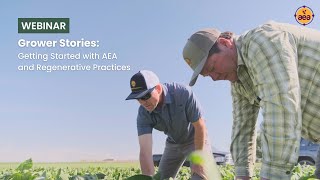
John Kempf and three farmers discuss moving conventional operations toward regenerative practices. They share how feeding plants better nutrition reduces synthetic nitrogen dramatically, why frequent SAP testing guides in-season decisions, and walk through real examples: a high-yield corn operation on minimal N, and a Honeycrisp orchard's budget.
Questions this video answers
April 14, 2023.
About eight SAP samples through the season.
About 20 lb N per acre.
About $1,500 per acre per year (management/testing).
Approximately $20,000–$25,000 per acre per year.
Chapters
Welcome, friends. Welcome to this AEA webinar. We are going to have a pretty awesome informal conversation today with two, three good friends of mine. Yeah, you're all good friends. None of you is being excluded. And Jim, you'd probably be the longest having known each other longest. You'd probably be on the short end of the list if there was a list, but there isn't.
So almost 10 years now.
Yeah, yeah, it's been a while. So welcome everyone. We have, I have, joining me here today, Jim Dunlop, who is, we've been working together now for almost 10 years, as you just heard, but it's probably been half that time as an AEA consultant. Previous to that, he was managing to manage an orchard operation that we worked with. And Beau Clausen and Steven Beerling, which many of you I think have heard of both of them before in other webinars and other presentations. So, really excited to have all you guys here. Thank you for being here. The purpose of the conversation today? Well, we were given some direction. We have the liberty of choosing to follow it or choosing to ignore it. But what we were asked to talk about is what does transition look like? As we all know, we're all on our own journey. I had my own journey of getting the 2 by 4 in the face moment of having successive crop losses and crop failures and then observing the opportunity and observing the potential to grow plants that were resistant to diseases and insects. And that, that really drove my transition. But all of us have a transition. And I think the conversation we want to have today is there's kind of twofold, two aspects to this. What does a transition or step by step journey to regenerative agriculture look like just in general overall? And then how does that look like specifically when you're working with advancing eco agriculture? And what does that, how does AEA help that transition and how do we support you along that pathway? So that's the point of the conversation. You're welcome to ask any questions at any point. Just type them into the Q and A. I'm going to be monitoring that and asking your questions out to the folks that we have here. And with that, I'm going to ask three guests that we have here with us to introduce themselves and tell them, tell us a little bit about their journey and their transition of what that looked like and what the key drivers were for them. So Jim, I'm going to turn it over to you. Tell us a little bit about what your journey has been like in participating with regenerative agriculture in general and aea. In particular.
Yeah, well, I was lucky enough to work with Mike Omeg on his cherry orchard. And Mike, I was basically managing a lot of the more biological farming things that Mike was doing. And he was working with AEA at the time. So I got to meet all you guys, and, you know, I'm not much of a salesperson, but if I believe in something and I know it works, it's not hard for me to sell it.
And.
And so we had just huge successes out there at Mike's in the Dallas, Oregon. It would seem like almost every, every week during the season, Mike would be calling me to tell me about some thing that he had never seen before in the orchard. And after working with Mike, I came on with aea. I've been here about five years. I live in Moser, Oregon. I do a lot of my work in Eastern Washington in person with these two guys here and other folks. And then we do a lot of work in Idaho, Montana and B.C. on Zoom and just talk, you know, working remotely with those guys. And out here now, we work on a lot of tree fruit. Our team here, we work on apples, cherries and pears, and a lot of blueberries, a lot of organic blueberries. We're getting into a lot of dry land, wheat and potatoes. And I like working on potatoes. They're one of my favorites. And now I'm into corn. I'm into corn. Now that we're working with Beau, we hadn't done a whole lot of corn out here in the pnw, and we started with Beau this last year. And I think it's fair to say we're off to a good start on the corn.
So.
And then we've done some great stuff with Stephen, too. I'm sure he'll talk about that. Stephen had started working with us before I came on, so he had been working with Jason Stoll for a couple years prior to. To me coming onto the team. And I was lucky enough to take over that account and work with Stephen and share in some of the glory that we've had out there with just incredible, you know, yields on honeycrisp and really good quality and that kind of thing.
Jim, I'm going to throw you a curveball before I move on. My favorite, as you help farmers who are just getting started or just going down this pathway, what are the important things that you look for as a consultant? Consultant. What are the important things that you look for that you believe are indicative of a farm's potential for success?
You know, you can kind of tell if Somebody has a well organized farm and whether they're the type of person to get it done. For the most part, if we work with a grower and they do the program, they're going to have success. And the times that we don't have success are when, when growers just basically aren't getting the program done, they're not getting the foliars done in a timely manner, that kind of thing. So a lot of it is just, you know, kind of innovative guys that already have kind of a good program going and have, you know, you can just kind of tell when you drive up to the farm are things organized. And both these guys have, you know, pretty amazing farms. They're, they're very different, but, you know, real really nice farms.
Thanks, Jim. Bo, we'll go over to you. What Tell us a little bit about your story of your introduction to regenerative agriculture and your process of starting to work with AEA and what some of the highlights have been for you.
Yeah, my process started, I got to say, not searching for regenerabac, but issues with nutrient availability. So we have a feedlot and manure is our main source of nutrition. And besides that, we're mostly using nitrogen sulfur for fertility. But like I say, we're still having great success with manure, but noticing there were some of the micros and some of the nutrients that were not available, and we're kind of questioning why they're not. And in reality is we don't have a good understanding of our soil's health and that it's a living being and we weren't treating it as such. And so. So going down this longer road then we are in our operation, we're calling it hay grain cattle operation. We swap ground with the neighbor farm for many, many years, over 25 years for potatoes production. So about every five years a neighbor would put potatoes on our ground and in so doing they would come in and fumigate the ground and grow a potato crop and so on. And so once out of every five years, our ground was fumigated and it was just kind of standard practice for area. And so we accepted that and. But we noticed that having issues where they call it even earthworms is a simple sign that we did not have earthworms until just prior to potatoes going in the ground. And we would typically see them in some of our fields or alfalfa fields particularly. We would see earthworms coming in and then they would disappear again. And we just kind of accepted we just don't have that high of earthworm population in our area and that was it. It just you know, you look across the fence and that's the way the neighbors looked and you accept it. But so in the same time being started questioning that it did not like the idea of fume again. The potato grower was working with Jim in AEA and so the farm manager there sent me a link to a podcast and then I remember sitting there listening to it and in question and I think it was on the fallacy of potassium applications mainstream nitrogen potassium applications. And I listened to it and it's like man, this made sense. But it was just totally opposite of what I've been taught from my local agronomist and area what we've been practicing. So anyways, I don't know how many times I listened to that and then I started to listen to more and more of those podcasts when I had time running around the farm and then it started striking a nerve on quit looking above the plant, started looking underneath at the roots, started looking at you know, soil till life. And and so that that was I'm going to say my inspiration there is start is. Is start digging down in the soil and same time as putting my head down in the soil thinking okay, this is what I got to fix. Then John Kemp comes up with another podcast is talking about foliars. No, no. Feed the plant and the plant will feed the soil back up again. And it says now where do I go? So, so but anyways as you listen it made more and more sense on the direction of plants are smarter than we are and they know what they need. And as long as you treat that plant well in a short term it will treat the soil well. And if the soil is treated well the biology will do well and then the circle of life continues. And, and and so that's it's been I'm going to say I think I'm starting to get the full picture of the principles and how to apply them but. But it's a never ending learning process. So. So that oh yeah quick not so quick how I got to where I am from a call it a more of a heavy manure conventional farmer to going to just almost I probably on some of my fields went to less than 10% of my inputs on my fields and basically trying to cut out all most of my pesticides are all being cut out and my macros of fertility are being cut out other than manure. But on my most successful fields I had on the call my wrinkle seed peasants beef triticale human pasture ground cover crops and of course corn as basis. I, my, my volume of nutrients I applied last year were probably closer to 10% and half, half of that was in financial value. So I cut my inputs by half and, but only a tenth of the inputs. But the kicker is my soil health on my soil fertility as a standard is not diminishing. It's actually still coming up to this day. I took soil samples a couple of weeks ago once in my fields. My fertility levels are coming up, are still coming up and I've heard that and people talk about it and all that and I have not done anything drastic in my mind. I've only done the simple, I've only reached called picking out the low fruit, low hanging fruit of reducing my volume of inputs and just focusing on, with the help of like say chimp on these steps and focusing on inputs that just to balance that plant for the even just call it a short term. But when you get a plant balance for a short term it can it just priming the system and it can take off on its own then and that's all it needs. So that's kind of where I'm at today.
Yeah. Bo, the podcast episode that you referred to was the one that I in which I interviewed Rick Molten was titled a Potassium and Nitrogen fallacy or something like that. And one of one of the listeners to the podcast sent me a message after and he said he thinks that's the single most influential podcast episode for agriculture ever recorded.
Wow.
It's changed some operations in some very significant ways up in the Canadian prairie. So it's really had an impact. Yeah. Bo, I want to come back and ask you in more detail about some of the specific practices that you've done and I'd love to get your thoughts and dig into that a bit deeper. But let's go to Stephen. Stephen, tell us a bit about your operation and obviously you've. Stephen, for those of you who haven't listened to Steven before, he's one of those guys whose mind never stops asking questions. He's always wondering what if we did stuff different?
Yeah, that's right. I was thinking about that earlier actually. And where, where does that, where does the inquisitiveness come from? And I had a fourth grade teacher and I, I've always remembered this. She would not allow us to say I can't in class. And that really irritated me as a 10 year old. But I think that mindset has, has carried a lot of how I think now. So when I, when I Ask somebody, well, how do you do this? And it's a standard answer, especially for a lot of things in ag. They'll say you can't. And then my attitude to that is, well, watch this and let's find a way. There is a way. So focus on the solution after you figure out what the solution is and then figure out the means to get there. And don't accept things like you can't. And I think that's what led me to John, because I was looking for other people who would say the same and think the same. And that's, that's really where, where it started. I wasn't happy with the results I was seeing, the packouts I was getting and the, the general lack of explanation. Basic education in agriculture. I don't want to demean an ag degree by any stretch, but it's very different than once you're on the farm. I don't have an ag degree, but I would say I've been able to learn just as much, at least in what I do by doing my own research. And that's why I'm such a big proponent of people doing their own research and finding out for themselves. And it's not, then again also that consultants are not perfect in every way, and neither are we. But it's our responsibility to try to. As farmers, we have to be the best at what we do for the crops we grow on our ground and with our management styles. And so a lot of it is trying to figure out how do I write my own instruction book for my crops on my farm with my practices. And it was an easy way to have AEA fall into that for me because it was results based, it was data based. And we're, we're looking at all the results with a critical eye rather than just saying the book says this is what the results should be. This was looking at the actual result and then saying, how did that happen? Does it make sense? And then how do we adjust so that we can get the desirable results in the future, regardless of what the book says? And John, you. I think it was on a poster that. Or maybe it was just a saying that you had said at some point. But yeah, when, when what you see disagrees with what the book says, you throw the book away.
And that is very uncomfortable for a lot of people.
It is. And that's what, that's what's difficult is it takes an incredible amount of energy to critically think for yourself and to open yourself up to the idea that you may have very likely done something wrong in the process. But by doing that, then you can identify where the problems were and figure out a way to do it better. So SAP analysis is a good tool for that because you can see the results, figure out how you need to adjust, and then coming up with new ideas rather than looking at something and saying, well, what does the book say about this? It's like, well, most of the books aren't going to have stuff about regenerative ag, and if they do, it's going to be a short section and it probably won't be very historical in terms of formal education. You know, formal education in ag goes against a lot of regenerative practices. And that was. That was the pushback that I found when I was first looking into AEA and talking about SAP analysis, asking questions to people that were educated at university level and they were very dismissive of it and that made it really difficult to find information. But there was an obvious aura around it and legitimacy to it. So it seemed to make sense to look into it a little bit deeper. And that's when I made some calls. And we've seen some great successes since then.
Stephen, hearing you describe the process, a few thoughts come to mind. One of them is that several of my mentors who come from an academic background have very clearly communicated that, John, you could not have learned what you now know in an academic environment.
That's right.
There is no replacement for actually learning about what's going on in your operation. I think the comment you made about this philosophy or this approach seems to make sense is fundamentally, it boils down to first principles thinking, like understanding the foundational principles of plant physiology and soil and plant microbe interactions and nutrient interactions. When you have those foundational principles, you say, well, wait a minute, this picture is painted over here about how nutrition works. But I can take these exact same colors and the exact same interactions and come up with a very different picture. And it takes some intellectual rigor to develop that and to follow your own pathway in describing what that new vision should look like. Stephen, for those of you who, for those of our listeners who haven't listened to you or heard of you before, which I. I'm imagining, there's a few. Can you give us just a quick context of your operation, crops you're growing, and your transition, what your transition pathway has been like over the last half a dozen or more years?
Yeah, it's 75 acres of apple orchard and probably 400 acres of row crop. That's alfalfa, sometimes wheat, sometimes corn, sometimes beans. It's just whatever fits the bill. I started noticing a long time ago that while I enjoy doing row crops more, there was not the profit margin available in comparison to fruit. And I did not want to have a massive orchard. So I thought can I maintain relevance with a smaller amount of land and doing a better job by paying attention to more detail since I'm detail oriented anyway. So I started doing that. Didn't, didn't get the results I wanted even with all the data and all the details. So by incorporating regen practice practices, you know, products and info from AEA and making that as a whole, I was able to get to a point where now I would say the orchard, even though it's, you know, 20% of the acres, probably covers 85 to 90% of the total revenue. And that means that I should be spending 85 to 90% of my time there. So like I said, I still really enjoy doing row crop stuff. There's something nice about being in a tractor and going back and forth and whether it's working dirt or cultivating corn or whatever, there's. I like adjusting equipment to and things like that. But the what I'm better at than that is management practices in the orchard on a detailed level. So AEA has really helped me do that by having the right products, by having the right information through SAP analysis and its interpretation. I think BO touched on that. The interpretation of the data is very often more important than the data itself because it doesn't matter how much data you have if you can't crunch it. So knowing how to do all that has really helped out. And then as you gain a little bit of success in that area, after you try something that you want to be detail oriented, a few small successes come. That's what provides the motivation and the confidence to continue on that path and go farther with it. And then it's this positive feedback loop. The higher the successes get, the more confidence you have and the more ideas you're willing to try. And so at this point it's still in this really great beneficial positive feedback loop. And I don't know what the potential upside is for the future. That's why it's a really exciting time to be in ag and to be part of this regen thing is we don't know the limits of. And it doesn't matter if it's just apples. It could be, it could be any crop. But the goal could, could be, well, we just want to make, you know, healthier products for people. Or the goal could be we want more money but those are the same thing. A better, more quality product is going to store better. It's going to, it's going to be better everywhere.
Yeah. And it's better not just for the producer, it's better not just for the consumer, but it's also better for the, for the supply chain, the distribution supply chain. Like when we think about the amount of fresh produce that gets lost in the supply chain due to spoilage, it's. What is it? I think upwards of 40% for most fruits and vegetables. It's a big number.
Yeah, that's, that's very significant when you're dealing with something that can provide 90% of your income.
Yeah.
Yeah.
Thank you, Steven. Beau, I'd like to come back to you. As you have been going down this pathway, what surprised you or what was unexpected? What's been unexpected on your journey?
Nitrogen use and needs is, that's the big one. I mean that's. My whole farm was based off of nitrogen demand when I had, I call it a plenty manure. So my, my P and K numbers are always great. Nitrogen was my biggest needs and all of a sudden I felt my biggest shortcoming that I had to needed on my farm was nitrogen. All of a sudden, yeah. Meeting up with Jim and he's, he starts explaining, oh, you don't need it, you don't need it. And it's okay. I, I'm sure we were over applying too much one time in that and then, but for the reality to go from what it tried with applying, I'm going to say 300 plus pounds of nitrogen applied in a season on the corn crop to £20 applied in the same results from my commitment compared to it in the same year, exact same yields. And it did not make sense. So, so it threw me off. So, so, so yeah, when I looked at nitrogen, that, that was, that was the biggest factor because that's, we're all taught just to follow nitrogen. So, but, but luckily, like say Jim, I remember we had him pull SAP and start reading it and, and looking at the numbers and saying, no, you're fine, your total nitrogen's fine, your total nitrogen's fine. It's like, well, usually we were putting on 100 pounds of nitrogen now and, and he's like, nope, nope, wait, wait. And then finally the corn's at B10 and at the rapid growth stage and we should have had 200, 250 pounds plus nitrogen to fight for that crop available for it to take off and go. And he says, okay, yeah, let's, I think you can go ahead and pull your pie a little bit. And I said, well, okay, how much? What do you think in like 10, 20 pounds? It's like a couple pounds. Good. Maybe no more than £5. It's like £5. I mean, that's. It's not even to know you did anything. It's like, no, it'll be fine. And so. Okay, so we. We went ahead and tried it and we. Then we kind of nervous. So I pulled tissues again, still doing tissues. And then it pulls out to look at it and all of a sudden numbers take off and it was. And where they need to be. And it's like, man, okay, as long as. Well, how do you put it? He was interpreting the numbers in where they should be. I didn't understand that, but he could look at him and say, okay, well, where we need to be. And it's like, well, it could have been smoke and mirrors. And he could have told me that. That I could have been way off and didn't even know it. But I still go back and look at the crop, and a corn crop visually will tell you when you're shorting a nitrogen. And. And we did that all season or. And never seen the deficiency of nitrogen until the very end of the season, until into early October. And the crop was just pretty much done before we could see a little bit of nitrogen deficiency showing up. And usually we're getting a little bit of senescing at that time on the lower leaks. And that's what was showing up. So it was nothing out of the ordinary. And so that was odd.
So, Beau, if I put on the hat of a skeptic, I haven't been to your farm. I don't know anything about your soils and what you've been doing there. But I think the obvious question that a skeptic would ask is, well, did you have a history of. Of surplus of nitrogen in that soil profile? The crop was tapping into that. You were able to pull that nitrogen out.
Yes. So the, the. I mean, so the one crop that I say. I'll say that was simple was following alfalfa hay. So we followed it. We had three years of alfalfa hay and basically call it virtually no nitrogen applied on alfalfa. There was a little bit of diasol to get a little bit of saltburst one season before, I think 4 gallons of Diasol otherwise. But if you look on the soil test, my. My total available nitrogen was between 45 to 75 pounds available in the soil prior to planting in that. And so And I did take two and a half ton of alfalfa off prior to putting in the corn. And then I took, you know, 7 ton of dry corn off. So, so I took off nine and a half ton of dry matter and in the, in one season. And my inputs were, yeah, call it 20 pounds of nitrogen to maintain. And I call it.
Did you say £40?
22, 020. Yeah, £20. So when you look at that nitrogen use deficiencies, kind of a nice keyword too. I'm under 10, so I got call it yet between 250 to 300 bushel on this 280 acre fields. And we had applied 20 pounds of nitrogen. So anybody can do the math. And then if you wanted to add that, I had took total soil available nitrogen and utilized that also. I'm still under 0.4. But then I took soil samples after the crop. You know, all my nitrogen was still there. So it was down to a certain level called getting between 45 to 75 pounds of total available nitrogen. That's, I'm gonna say that's probably a balance point in my soils that that alfalfa crop had done that, balanced it out. And that's where it needed to be with the lagoon crop. And so it's maintaining there. But, but then the next thing was, I took soil samples again here a few weeks ago and just out of curiosity, and they're come up. Three out of the four were higher, one was equal and three out of the other four nitrogen values are coming up higher than they were prior. So it's, it's, it's changing my whole.
Mindset on when you say they're higher than they were prior, as in higher than they were before you planted a crop or higher than they were after the crop?
Both. Well, sample is fine. And then I took a fall sample of 22 and then a spring sample in 23. And my nitrogen levels are been rising each time they're rising. And say I took also on removal rates, I took off nine and a half ton of dry matter that I removed from dry alfalfa hay to dry grain corn. And with only 20 pounds of applied nitrogen. Yeah.
The perennial skeptic says how many years can you do that before you exhaust the supply?
Right.
Yeah.
No, but it's. So, yeah, so like I said, I threw my books.
John.
John, I have a question for you. I don't work on a lot of corn, so this seems pretty far out to me. But you know, you've worked on a ton of corn. What do you think of this. 20, 20 pounds of nitrogen and 250 to 300 bushels of corn.
I think the. The context in the environment is important. I've observed similar results a couple of dozen times, but in every single. Every single case, in fact, there's a. There's a couple of. I might even have a couple of short video clips on YouTube from a farm that I visited in Kansas a couple of years ago. It's an organically certified farm. They're dry land, so they're doing no cover crops. It's corn, summer fallow corn, summer fallow corn, no cover crops, no manure application, no compost application. Like, there is no source. There's no way for nitrogen to get into that system except through biological fixation. And they're growing. It's very moisture dependent, of course, but anywhere from 125 to 215 bushels of corn per acre in a season, depending on moisture levels, with no nitrogen application. Well, when I say no nitrogen application, they might be getting a gallon or two of seashield. That's the extent of the nitrogen going into the system. And in every single case, when. When you have these farms that have these exceptional nitrogen fixation stories, the ones that I'm personally familiar with, all have a history of intensive manure application at some point in their past, just as the situation that you had beau, this farm in Kansas hadn't applied manure for, I think, 12 or 15 years, but prior to that, they had really intensive manure applications for the better part of a decade. So I think there's something going on the background there. We don't tend to get quite as significant of a response when there isn't that history of historical manure applications. But so, Jim, it's in soils that don't have those manure application history, we still see nitrogen applications cut down by 70% or better.
Yeah.
So this is still not a surprise. See what we have to remember about corn. Corn is a C4 photosynthetic pathway plant, and it fixes carbon and moves sugar into the root system in a volume that is unmatched by most crops. There's very few crops that move as much sugar into the rhizosphere. And so that means it can feed biology to fix a tremendous amount of nitrogen.
I'm speaking on that. I believe I heard it from you that you mentioned that it could be up to £30,000 of sugar root exudate from a corn crop.
Possible, yes, I heard that.
I've been looking, searching and searching for it here. This last month figured out where, and I believe it was, I heard it from you anyways, but, but that was, that's something that I'm going to say that has struck me as.
Just out of hand. So there are some chemicals we use to try to try to help keep those at bay without completely killing them off. We just want to hold them back. But I think having having root systems there not just helps open up the soil, but it, it creates, you know, some, some synergistic qualities with the microbiome in that area. And then if it's an annual, then it's going to die off. Those roots will degrade, that will leave some voids along with earthworms and other, you know, microbes breaking things down. And then for me, the help of soil specific microbes and then putting food for the microbes to make sure those populations stay healthy without overfeeding them so they don't become, you know, sugar hung hungry, you know, fat little microbes that don't want to do job anymore. It's like no, you don't get to sit on the couch and eat Cheetos. You got to work. So that's, I think that helps. We've tried in the row crop stuff to move more towards no till scenarios and that definitely helps. Especially after alfalfa, the top of the soil can seem very hard. Excuse me. But even if it's hard because it's dry, as soon as you can get water back on it, everything seems to loosen right back up again because the profile is still there. So that's, that's been a big thing for me is using microbes and less tillage in general to try to guarantee that there, there are some voids left by, you know, a dying root system after its annual cycle is done. In terms of the orchard where the drive row is and your tractor tires always are, that is a very difficult situation because as I said, we're, we're spraying every other day for a long time. There's a lot of trips through there and that's going to compact it. During the fall I go through with a ripper and it's a small tractor, so you can't go very deep. But we're injecting specific soil microbes in the drive row behind the shanks and going as deep as we can go with a small tractor to re. Loosen that area up and to help those microbes digest whatever's there and to build that tilt back up. It only lasts for the winter, so it might be five or six months, but it's better than not doing it at all. What happens frequently in orchards is you just get these wet tire tracks and the water never goes down and that becomes a problem for a lot of people. But being able to go through once a year and do what we do there, we don't really have any of those issues anymore. So even though those aren't maybe directly related to the fruit production because the drive row is in better shape and there are roots from the trees that go into that drive row, it is an overall benefit, even if it's not something that's specifically quantifiable.
Yep. Thank you, Stephen. This next question, Jim, I'm going to direct it to you for your initial take and then I'd love to get follow up from Bo and Stephen as well. It's a question from Donnie saying that Mr. Beerling can mention data crunching. What kind of systems do you use to track all this information and is it easy to use? So, Jim, I'd love for you to just speak a bit about what is the, what's the scope of data analysis that you provide as a consultant for the growers that you work with? And then Bo and Stephen, I'd love to get your perspective on that as well as any additional tools that you use above and beyond.
Yeah, so we're pulling SAP through the season. Like on Apple Orchard with Stephen, it would be probably eight times, I think is a round number that people do about eight SAPs, something like that. And then so through the season everything's happening really fast and we're just getting the data and giving Stephen recommendations. And then at the end of the season we can make a line graph which has all of the points that we've taken this data, the SAP analysis and we can track each nutrient and what it did throughout the season. And then we spent a lot of the time through the winter looking at soil reports and those SAP reports and coming up with our plan for the next season. That's, that's the major part of it is just kind of seeing what the uptake was for different nutrients throughout the season and thinking about how we're going to do it the next year.
And Jim, is a lot of that being done with, with software in house? What kind of tools are you using as part of the question that's being asked as well?
Oh yeah, that's just our in house software in order to make those graphs and that kind of thing. Yeah, there's not much more than that, although we're always improving our, our software and our tools and things to make it better. One of the things that we want to do is have it. So when you look at that line graph, you can actually kind of click on it and see what was applied at each date and that kind of thing. We're not quite there yet, but we're getting closer and closer to that and that makes it way easier to sit down and, and discuss it and you know, click on it and see, oh, here's where we apply cobalt and here's where it came up and here's where we applied Molly and here's where it came up and the nitrates came down and that kind of thing.
Yeah, thanks Jim. BO and Steven, what are your bo? I guess we'll start with you. What has your experience been with data analytics and what tools do you use to manage data and do data crunching?
Yeah, data analytics is key definitely. So utilize tissue testing SAP like say Jim Hea. They provide a nice breakout graph of when you do the SAP and where you're at the baselines, whether you're in, you know, high sufficient or short. And so that, I mean that's the, the simple starting point basing off that soil sample tissue SAP analysis. But as later on in season or applications I I utilize a system called Climate Field View. It's on my iPad. So when I whenever I plant a crop it is all recorded spatially. So whether I'm all my inputs that are going on, whether the fertility crop variety specific seeds are recorded and spatially in those fields and any applications I do will be recorded on the same app and all the way through harvest. And so when I do like my corn varieties, those will be harvested with a combine and they're all harvested spatially in the same idea and so everything is compiled and then so I will put all that data together from along with weather data is collected on that app also. So we are seeing the weather data and I'll call it aerial imagery data also on that. So yeah, it's a lot of data collection going on and like I said, like Jim said, at the end of the season when it's all said and done, we get to sit down and start evaluating the successes and the failures on what we do. But like I say, Climate Fieldview app is what I use. But John Deere has an operations center, John Deere equipment that is phenomenal that man, they'll record anything. There's a lot of options out there. But for me I'm utilizing my phone and iPad to record all my data inputs, applications, my tissue SAP, everything is on there. So it is in my pocket. So when I'm out in the field looking at anything, I can even take pictures in the field and analyze and mark points and then come back later and either take issue SAP or soils in those areas and so on a map it's nice in a whole season you can sit there and record the process and then I like taking pictures and early on in the season of the crop health and mid season, late season and anomalies out there, you see these odd plants, different things and so I like to take pictures and record them where they're at and then analyze them later because we are so busy in season that we tend to, if we don't take care of that issue right away, it gets away from us. But at least in the wintertime we can go back, reflect. And it's amazing with having conversations with like minded people and you start reflecting where you got aha moments. Okay, I had a similar scenario and you can bring up a photo or, or data on it and analyze it and it's a lot of fun when you can start pinpointing things going on. When you can start reading your crop before there's serious issues is wonderful. But it's hard to mentally keep it all in your head. So yes, data collection is key.
Steven, do you have any thoughts on data crunching?
Yeah, that's actually something that's been really difficult for me to figure out over the years because you have to figure out first what data do I want. And then I had a certain set of things that I thought was really important to me. And then after a few years I was like, wait, this hasn't done anything. Okay, fine, then throw it out and try again. So I've gone through many forms of how to do things and in terms of digital data crunching, I mostly use Google Sheets. It's just a little bit simpler version of Excel. And the reason I use that is because it crosses all platforms and it's available anywhere. So I can, I have an Android phone so I can do whatever I want on there and view any files that I want to on there. But I've also got an iPad, so if I want to look at it on that, that's fine. And then when it's time to enter large swaths of data that I find relevant, I especially have that for the fruit nutrient analysis that I do weekly throughout the season. I'll enter all that with a desktop and a keyboard because you can move around with that so much easier. But then once all that information's in it's still accessible on any other platform, and that really helps. So the accessibility of the information is really important. Even if I get data in a different format, I'll oftentimes transpose it to Google sheets just so that it's all within one app. I don't want to have five different apps that I'm using, and I try to format them all to have the same look, even though the organization of the data might be a little different. Just so that I'm very familiar with how to move around and scroll through the data in an effective way. On something as small as a phone, if there's a lot of data there to look at, it might be easy to look at something on a desktop. But if it's not easy to look at on your phone, is it really that usable? So it has to be quickly accessible, and it has to be usable. Something that you can, you know, zoom in and zoom out on your phone if you just want to do a quick look. And then there's other things that I still do manually. The old auto pad, just a legal pad and a pen. And sometimes that's the best. So I have all my spray racks that I write printed, and then my spray guys fill them out manually because I don't want to deal with trying to get. Get them to do it online. But what that does for me is I have a binder now with a backside that has no writing on it. And that binder goes with me to the orchard every time I get out and look at things. And when I ride a block or walk through a block, I will grab that, especially if it's, you know, during thinning season. And I can write notes on that specific application. And it's for what I'm thinking or what I'm feeling is happening at the time. And that's really important to write down right then, because there are so many thoughts that can come in and go straight out that I'll stop at the end of each block and do notes on that block and then go to the next one and then write the notes on that block. And it's very frequent that I will go back and refer to those notes. And sometimes it's a panic moment because you're like, oh, I chemically burned everything off, and I'm going to have no problem. Well, good. I'm glad I remembered that, but only because I went back and was able to read it. So if I didn't write that down right then, and the easiest way to do that for me is to actually put pen to paper. So everybody has a different technique for how they want to manage the information. And I think that's why it's so important for each individual to come up with their own plan for what works for them. Because if it does work for you, it doesn't matter what it is, it just matters that the information that you find relevant is easily accessible and quantifiable for what you're doing. And that may not be the case for the farm next to you. And that's okay. It's just whatever works for you.
Steven, there's a follow up question here from TIA on your actually there's two questions directed to you, one from tia, one from Mike. I'll offer some context because I think the way you may respond to this question might be different from what folks expect. We started working 15 years ago with a group of very sharp pencil pushers called Amish Farmers in Lancaster County Pencil, Pennsylvania. And they one of they did a lot of financial analysis of their performance and their expenses and the inputs they were putting in what revenues they and they were expecting. And they came up with a rule of thumb that across a broad range of different crop types and crop species, the rule of thumb is you need to spend at least 10% of your expected crop revenue on nutrition management, on inputs. And what they discovered to be happening is that as growers started pushing up to the 10% and really focusing on nutrition management really intensely, all of a sudden the trend would reverse and rather than spending closer to 10%, they would be spending a lot less. There were many farmers that went from spending 8% down to 5% or less. Not as a result of spending less per acre, they were actually spending more per acre. But because the revenue took a significant jump, they cross the threshold where their crop performance really went up. And so ts the question, if you don't mind sharing, what is your nutrient program cost per acre?
For Honeycrisp specifically, that's definitely the highest. And it's probably I don't want to wildly overestimate because it's been a little while since I've ran the numbers, so I'm a little bit rusty. It's also for context, something like honeycrisp is incredibly intensive. So just in terms of management, not including product, that's that's a really difficult cost to quantify because I'm the one doing all the data crunching generally myself. But there's a cost to something like say SAP analysis and fruit nutrient analysis. And I would say that's a very low percentage. Probably, probably 2%. It's very small. But as a standalone, that, that's. As a standalone cost per acre, it's probably around 1500 dollars per acre per year.
Stephen, just so I understood you correctly, you're saying your, your nutritional inputs are running about 2% of total revenue?
No, the management of that. So it'd be SAP analysis, fruit analysis and data crunching, testing equipment for testing. And then if I wanted to pay myself a few bucks for my own time, which it's not like I write myself paychecks, but you know, if I could do all those things, I would say it's probably around fifteen hundred dollars an acre. And that sounds crazy, I know that. But my total cost for something like Honeycrisp is between 20 and $25,000 an acre per year. And that also seems way extreme. But it's all within context if you look at it percentage wise. And it obviously depends on if you're on an up year or a down year and what prices are doing. So everything's subjective. But my costs are generally way higher than most growers. But on a cost per unit, it's definitely lower than most growers.
Yeah, I think that's the key point. But we do have changing context though, Steven. We have a changing environment, which is leads to Mike Omeg's question. For tree fruits and many other crops, labor is the grower's single biggest input. Stephen's every other day spray program makes me nervous when looking strictly at the expense side of the balance sheet. And labor availability and profitability aside, sometimes the labor force necessary to conduct more aggressive application programs are not available, regardless of a willingness to pay for it. Would any of you please comment about labor on your operations as you move towards regenerative practices? And Steven, you'll go first and then Bo, I want you to comment on that as well.
Yeah, that's. It's definitely tough to make sure that you can get those applications on in time. So what we've done is we build our own sprayers. Now they're pulled with a four wheeler and they go probably around usually at seven to eight miles an hour. So that's significantly faster than most tractor sprayer combos. And they're also a lot cheaper. We can build a full setup for around 12,000. And if you think of that in comparison to an orchard tractor, even a used orchard tractor and a used sprayer, you're probably into that somewhere around 40 to 50,000 new. You'd be looking more like 80 to 90,000 for a setup like that. So that helps the cost a little bit. And then the other side of that is I'm loaded pretty heavily on tractor drivers that are able to do all sorts of other things. So even when they're not doing jobs that, that dictate their pay rate, you know, it's not like the, the standard worker that's going to be doing, you know, low, low skill stuff isn't going to get paid as much. These guys get paid the same amount when they're doing those jobs. So it's finding, you know, the, the multiple use type worker that you're willing to pay the same rate doing the easier jobs specifically so that you can have them when you need them for the more important ones. So I have, we spend a lot of time training people on exactly what to do with that so that if we do have turnover or if we do have somebody that can't show up for a few days, there's somebody that can come in and take their place. So there is a higher cost to those employees because of that. But making sure that they're adequately compensated for the times where their experience isn't necessarily needed makes them available when they are needed. And I think the cost offset for not using their full skill set sometimes, but still paying them as if they were is pretty minimal in comparison to the, the, the benefit that you can gain from doing those applications on time. So I, I never look at, you know, how can I save a few bucks? It's going to be well, if I have to spend $100 to make a hundred dollars, that doesn't make a ton of sense. But if I can spend a hundred dollars to make 101 and if that makes it workable, then I can increase profit margin a little or if It's a spend 100 to make a hundred, but it's more efficient, that makes more sense too. So finding ways to make each individual employee more efficient with their time is a really big deal. And sometimes that means paying more to do that. But the amount that I'm going to pay them over a year isn't going to, that's not going to be a huge effect. But the increase in revenue that that person's labor can provide is a big benefit. So I see that as, you know, outweighing the costs. But again, that depends on each individual scenario, the availability of labor and how well you or the, or a manager can get along with other people and find the right people to do the right jobs. And yeah, it's hard to do. It's not like you can hop on LinkedIn and find a great tractor driver. That's not really a thing. So it's, it's a, it's a different dynamic here and a lot of the culture is, a lot of the worker culture for this area is Hispanic and they have a specific culture. So having my, my main orchard manager is great with people and so he has a huge degree of freedom to, to choose who, who he hires and who's going to work within our system. Because we really try to press that we're working, we're working here as a team and everybody's, everybody's playing their part, but we're all trying towards a common goal and so adequate compensation and having the right people that fit for your operation. It's not just always about experience or skill. A lot of it, a lot of it is about the drive of the individual and what they're, what they're capable of learning in a short period of time. So there's a, there's a whole separate conversation we could, we could have on that. But that's kind of the mental process that I go through if, if I'm trying to figure out whether or not something would be worth it.
Thanks, Stephen. Bo, what are your thoughts?
No labor is a huge consideration in ag anymore. I mean, Washington state, minimum wage, 15 bucks. Standard labor to get ag help is probably about 17, 18 bucks. And plus we got ag overtime now, you know, next year will be 40 hours. Anything over 40 hours, it's a time and a half so in overtime. So labor is huge. But honestly, going into call this regenerative ag program, I think I'm going to be reducing my labor hours. It's getting harder and harder to find the workforce. But I think with being able to reduce tillage, reduce fertilizer frequency applications through, typically through fertigating pivots, I think I will be able to manage labor better. Most of my fertility is probably going to be sent with a helicopter. So I will, you know, like say, get a fertility recommendation, put a blend together, load up a truck, send it to my pilot and with a helicopter and he will apply it. So it's, it's quick, easy and efficient doing that way. Yeah, there is an expense on the flying, but the ROI is huge. And when you look at hiring it out somebody to get something, a job done quick, get it done right and fast and timely means more sometimes than us having, call it two or three more guys running around and doing it haphazardly and trying to get the job done. So no labor. Labor is a huge influence on what we're doing. But in this, call it, transition period here, I believe we will be able to farm or maintain our acres with less people. And that's kind of where we've gone from say 15 years ago, we were probably close to 3,000 acres farming with call it 12 full time employees. And now we're closer to 5,000, you know, so we have bigger piece of equipment, we're more efficient with it, with our time, and we're not making these unnecessary passes in our applications. So we're finding with our soils when they're getting right, we do not need to do as many passes with tillage or cultivations. Or I could find that soils are more resilient and we can get by without doing them. So where in the past it was habit, we always had to do things a certain way because that's what our neighbors did, our fathers did, and we all did that. And we're finding out that with resilient soils, a plant can overcome a lot better in the long term with us not messing with the soils. And where I see in the short term, we always see this really short term gain with the plant that tilling the soils, adding the oxygen, it looks great, we feel great, but the long term resiliency is where it's at.
Yep. Thanks, Bill. Jim, I'd like for you to. Let's go back to the budget question for just a bit. Now that you've been doing consulting work with growers and you've been with AEA for five years, what has been your general experience? I know there's going to be some variation from crop to crop, but what has been your general experience and how do you see budgets shifting and evolving as growers begin implementing and adopting and using AEA programs?
You know, sometimes it's a wash and sometimes they save money, but it's just moving the, moving the money around. In conventional crops. It's a lot of taking that nitrogen money and putting it into micronutrients. So reducing nitrogen, putting that money into micronutrients, and then typically reducing fungicide and insecticide too, because they don't have all that nitrogen out there, and then using some of that money for biology, whether it's leaf surface biology or soil primers, fertigations, that kind of stuff. Let's generate what we see.
Bo, are there any concluding thoughts that you'd like to share?
I think the main driving point is focusing on plant health and feeding the plant over, call it mass nutrition and pesticides, fungicides. And that's what I found with you guys is focusing on that, I call it even that short term immediate plant health and taking care of that. And you guys have been phenomenal on, on guiding me to that, to that path anyways. And so, so yeah, so where I have been able to, let's see on my wrinkle, cps, eliminate most of my, I'm going to say all of my fungicides, insecticide passes with wrinkle seed peas, just everything instead of insecticides, pesticides. Most of this stuff you're finding out can be done nutritionally and that's phenomenal. So why not improve the plant health and let it do its own fight rather than us trying to fight more. And so it's been very rewarding that way.
Well, I want to say thank you to all three of you for participating. Jim, Bo, Stephen, thanks for being here. I want to be considerate of all your time. I've enjoyed this conversation. I hope you have as well. I hope all of our listeners have. And let's you know, it's really important for all of us to stay connected, to have our own peer community to bounce ideas off of and exchange ideas. So feel free to reach out. I'm happy to introduce and connect people. You're also welcome to participate on kindharvest Ag. We have lots of fun conversations there and if you have any follow up questions or would like to get started working with us here at aea, give us a call. We're happy to work with you and we love making a difference. So thanks everyone. Have an awesome day.
More from John

Episode 186: The Power of Precision Management and Multi-Species Covers with Mike Thompson





Podcast Extra: John Kempf on Soil Biophysics, Plant Immunity & Foliars on the Permaculture...


