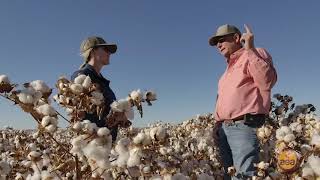
James Johnson (Carzalia Valley Produce Inc.) describes transitioning to a regenerative program for cotton and onions after learning from John Kempf's podcast and the AEA team. He reports initial cotton yields up 40–70% this season while using about 20% less fertility inputs, no insecticides or growth regulators, and an entire fertility program cost below $140. He credits use of a soil primer begun last fall and frequent consultant communication (texts and calls) for operational improvements and increased interest in converting ground to organic production. Johnson also notes market interest in cotton with a regenerative story.
Questions this video answers
40–70% (initial yields, this season).
About 20% less than in the past.
Less than $140.
No insecticides and no growth regulators were applied.
Last fall (prior season).
Chapters
Well, right now we're just now getting started on our cotton harvest. Initial yields are probably looking from 40 to 70% increase in this season on less inputs. So our total input of fertility was about 20% less than it has been in the past. We applied no insecticides and no growth regulators. So the journey that I've been on has been a long one, trying to get into a regenerative type program. Tried to do it by myself for several years with COVID crops and other things. Finally, whenever I started listening to John Kemp's podcast and met with some of the AEA team and actually had one of the AEA team members visit here on the farm, things started coming together. The program started making more sense. AEA taught me, really, one of the biggest things that we can do is cut out unnecessary inputs. So especially in fertility, there's a lot of things that we were applying just because it was what dad did and what granddad did. And it doesn't have to be that way. When the consultants actually brought out and said, hey, we want you to apply this soil primer, the initial shock of that is, wow, that soil primer is expensive. But when you get to the end of the season and you see what other inputs you saved versus that soil primer cost, it's cheaper. The entire fertility program on this cotton crop was less than $140. So. So we started using the soil primer last fall, and we didn't tell our field hands, field laborer, that we had done anything different. They came to me and said, look at the difference in the way the texture of this soil is and how much easier the crop comes out and cleaner the crop comes out. So especially with a bulb crop like onions, cleanliness when it comes out of the soil is very important. So that helped immensely. Our consultant we've worked with on a weekly basis, we probably are in communication five, six, seven different times throughout the week. And it might be a quick text message with a picture attached saying, hey, this is what I'm seeing. And this is what we might want to talk about when we get on our conference call. And the communication with the team is phenomenal. And the fact that if we could have made a few minor input changes and been totally organic, has actually encouraged us now to start looking at starting to convert some ground into organic production. The other thing that we realize now that we've gone regenerative and we've started telling our regenerative story is there's consumers out there, there's retailers out there, there's mills out there that are looking to buy cotton that actually have a regenerative story attached to it. And that's an important part of everything that we're.