Webinar: How to Manage Microbial Biostimulants - by AEA's John Kempf
John Kempf explains how to use microbial biostimulants effectively. They work best on solid mineral nutrition and need to match your management style, combine with compatible products, and time to crop stage. One organic corn grower saw rootworm mortality within 48 hours after a combined foliar spray.
Chapters
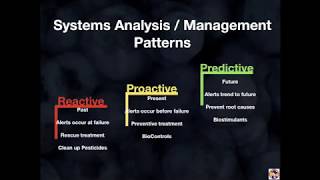
Well, good evening friends and thanks for joining us tonight. This is John, and our topic tonight is how to manage microbial biostimulants. So when we have a conversation about microbial biostimulants and how to fit biostimulants into an overall agricultural ecosystem and a farm management system, there are a lot of questions today about how to fit biostimulants into an integrated agronomy system and how to position them to get greatest cross bonds. This is a conversation that dialogue that I personally find very intriguing. Over the last 10 years with our work at advancing eco agriculture, we have done a lot of work with biostimulants. And it's become a very natural process for us to think about how we integrate them and how position them to get the greatest crop response. So we've been working with biostimulants for a very long time. And as biostimulants are becoming more adopted by mainstream production agriculture, we've discovered that many growers have a lot of questions about what is happening integrate biosimilars to get the greatest crop response. So our discussion tonight we hope to be what we what I want to talk about is to help give you a framework and a thought process framework to think about how to position biostimulants on your operation to get the greatest economic crop response and you really integrate them with the other things that you are doing and make sure that you don't sabotage your efforts in the process. So I'm going to start a screen share and share a presentation with some of my thoughts. So the key when we think about managing microbial biostimulants, microbial biostimulants are, and just as well as plant biostimulants and biostimulants in general are these very intriguing materials that often can have synergistic interactions or can have very intensely. When of course, when we think about, when we ask the question what is a biostimulant? There's today a very broad ranging definition of what defines a biostimulant. So they can be anything from materials, humic amino acid blends and essential fatty acids. There's this broad array of hundreds, actually even thousands compounds that can be considered to be biostimulants, both microbial biostimulants and plant biostimulants. And so when you consider this broad array of both naturally occurring compounds as well as synthetic compounds, and you start wondering about how they could possibly interact with each other to produce the greatest crop response, it becomes, it can become Very complex, very complicated, very quickly. And yet at the same time, from our observation, from our experience, it can be really simple to put these pieces together as long as we approach them from the right framework. So I think the key question that we need to ask is how can we achieve exceptional product performance? How can we get the greatest crop response from any products that we might apply? And I think the key to defining, when you ask, well, what defines exceptional product performance, the key is I believe that we need to manage for economic results. So. One of the interests that I've had personally, one of the things that we've seen a lot at AEA is paying attention, paying very close attention to how we can produce the greatest economic response. I believe that we integrate biostimulants with our synthetic nutrient applications or historical fertilizer applications. The combination of the two is when we partner them correctly and we put together, we can put together integrated system where we are integrating biostimulants with typical nutrient applications and produce the greatest economic crop responses in those ecosystems. And want to describe the framework that we use, the thought process that we use to put these pieces together. So there are a few fundamental concepts that are important for us to think about right at the beginning. And the first is that biostimulants perform best when plants are supported with the proper nutrition. And this is a very, very important work where we sometimes are, we sometimes participate in a dialogue where there is this idea that we don't have to pay as close attention to nutrition. Calcium and potassium, calcium, magnesium, sulfur. Nutrition is important. But if we are limited on a farm economically and we're not able to address some of the major nutrient imbalances, we can just put on these biostimulants, we can put on these microbial inoculants, or we can put on these biostimulants and they're going to stimulate plant growth and plant development and we don't can overcome that will allow the plants to overcome some of the inherent nutritional imbalances. We have not found that to be true in the field. Instead, we find that we have plants that are really well balanced from a nutritional perspective and growers are already paying attention to calcium and magnesium and sulfur, making sure the plants have good mineral nutritional integrity. And we then combine that with biostimulants, add stimulants on top of the nutrition, that is when we get the greatest responses. We've had many growers who have used biostimulants in the past without paying attention to the nutritional foundation, and they report that they're not getting the crop response that was promoted by the manufacturer of the biostimulant. And in our experience, the foundation is that we need to have good mineral nutrition. And then when we add biostimulants on top of that, we get the greatest possible crop response. So this is a very, very important piece that I think is often missed by manufacturers and people who are promoting the use of biosimilars. I think biosimilars are very powerful tools, can be very effective tools, but they need the right environment and they need the right foundation in order to get the best performance out of them. So when we think about using microbial biostimulants, we think about positioning these products within an integrated system in a framework where we want to position these materials relative to three specific segments. One is, we want to position them relative to the management pattern of how the overall crop is being managed. And I'll describe in a moment what I mean when I, when I say management pattern. Second, we want to see how these biostimulants are positioned relative to other products, perhaps pesticides, fungicides, insecticides, or to other fertilizer materials that are in the system. And third, we want to position these biostimulants relative to the crop development stage and where the crop is in terms of reproductive development, if it's a reproductive, and how we position that for the greatest crop response. Because we have learned that there are for many different crops, there are specific windows that critical points of influence where a biostimulant application, or for that matter, any product application, can produce a tremendous crop response. So when we look at each of these three pieces for the rest of this discussion tonight, I'm going to be talking about each of these three pieces and how we position products relative to each of these categories. And if you have any questions, comments, things that you would like for me to discuss, you can type in your question down below. You'll see a little green button in the Q and A box. Type in your questions at any point and I'm going to quickly move through framework that we have put together and then I'm going to open it up for Q and A and we'll talk about any questions or comments that you might have, as I'm sure some really valuable input. So let's look at each of these three pieces. The first is the management pattern. So what is management pattern? As we've worked with biostimulants and microbial inoculants and work with growers who are managing disease and insect Pests with bio controls and trying to reduce pesticide use. We've observed that the most successful growers use a very different management style for how they think about potential pests, potential pathogens, how they can prevent them from happening in the first place compared to many mainstream growers. So been thinking about how we can describe the different management patterns that these various growers and farm managers used. And I discovered management pattern outline that was first developed, first developed for lean manufacturing and Six Sigma that I think is very relevant to describing how growers work with cues and signals that they're getting on their farm. So this is management pattern that is referred to as systems analysis for thinking about the entire operation, the entire farming operation as an integrated system. So the first management style is what is referred to as being reactive. So when we are managing reactively, we are managing things that have already happened. So perhaps we're looking at the crops visually and we're looking for visual symptoms of nutrient imbalances. So we're really managing in the past, we're managing what has already happened. And the alerts, when we get an alert about something that is going wrong, such as we have a pathogen infection or we have a spider mite infection in the crop, the alerts occur at the point of failure. So it's already happened and that's when we first found out about it. So in that type of management pattern, we are dependent on rescue treatments by using cleanup pesticides, so using very strong insecticides or fungicides that have the capacity to clean up problem once a problem already happened. The second management pattern is referred as proactive management. So proactive management is working within the larger environment of things that are happening around us and trying to manage what is happening in the present moment. So the alerts will occur before the actual point of failure. So perhaps working with a crop scout who might notify us that there are spider mites in the region, in the area. And even though we don't have spider mites on our farm yet, we know that they're likely to be there at some point. And so we are able to use preventative treatments using bio controls or using softer treatment modalities to try to prevent prawns from actually showing up in the first place. And then there is the, the third level of management, which is referred as predictive management. So predictive is towards the future where we know that we had this. We're growing a particular crop in a particular environment that is susceptible to spider mites, and we have spider mites present in the crop. Four Years out of five. So we know that it's very probable that we will have spider mites in our crop again in the future. And we want to prevent that. We want to prevent spider mites from ever becoming a problem. I'm just using spider mites as an example. So our goal with predictive management is to prevent the root cause of the problem from ever becoming a problem in the first place. So if we continue with the spider mite analogy, our goal is to try to understand why the spider mites are attracted to a given crop change that crops nutritional profile or change the environment in such a way that we remove the potential for an infection. So this is the framework where biostimulants really fit. Because we can use biostimulants to change a crops nutritional profile or to change a crops energy so that can be much more resistant to diseases that might show up in the future. And so I want to describe a little bit how that can fit. So my point here is when we think about positioning biostimulants relative to management patterns, when a grower or a farm manager is managed very reactively and is in constant reactive mode to challenges that are happening, disease control and pest control and so forth, then it is much more challenging to get a strong economic crop response using biostimulants. We start moving into proactive management and predictive management where we're trying to identify and address the root causes of problems, where biostimulants produce the greatest crop response and where they're the most valuable. So this is important thought process. This is of course dependent on the farm manager. But really successful farm managers will use biostimulants to try to prevent problems long before they occur and to address root causes. So what we have observed when we work with all the various farm managers that we work with growing a broad variety of different crops, is that the most successful and the exceptional managers are those who first try to they try to identify the root cause and prevent problems from ever happening in the first place. And only as a last resort will they try to use chemistry and pesticides as needed. So the second thought process that we think about how to manage or have biostimulants is relative to other products. And this is very important. In fact, it's perhaps the most important part of this entire discussion. So we've found that biostimulants can have very strong, very exceptional synergistic effects with other biostimulants or with other nutrient products, or they can have very antagonistic effects. And so I want to just highlight some of the most important and most influential synergistic and antagonistic effects that we have found. So we find that many biostimulants have very strong synergistic effects with other biostimulants and that we can stack different products together to get maximum impact. For example, when we stack seaweed, which might contain cytokinins and Oz and a number of other compounds that stimulate and enhance plant development with pgprs, which is plant growth promoting rhizobacteria with mycorrhizae. So here we have, we're combining a seaweed product with a bacterial inoculant with mycorrhizal product. When we stack those materials together, we produce a much greater response than either those products individually. It's a compounded response. So it's almost a little bit like using a black box, like a black box mathematical equation where I've described some of the effects that we've observed on plants is that one plus one doesn't always equal two. Sometimes with these biostimulants one plus one can equal 11. And it's a lot of fun when that happens. When you apply small amounts of biostimulants and you produce this tremendous compounded crop response that is much bigger than you expected. It's a lot of fun. Lots of amazing things can happen with plant development and plant growth and yield and quality when we achieve those results. So how do we do that? So I want to give you examples of synergistic materials that we have worked with and that we've seen. So we have learned that there are very strong synergistic effects when we combine mycorrhizal fungi and trichoderma. So mycorrhizal fungi, I'm sure many of you are very familiar with them. Colonizing root systems and being able to absorb water and various nutrients, particularly phosphorus, and access them. Even plants can't access them. And having a symbiotic relationship with plant roots. And Trichoderma are known for developing a very disease suppressive rhizo and strongly antagonizing a number of potential soil borne pathogens like Phytophthora and Rhizoctonia, Pythium, Verticillium and Fusarium and so forth. And we find that when we combine the two of these inoculants, and we will together, we get a much greater response than we do with either one of them alone. We see a similar effect when we use SAR triggers. So products that are SAR triggers, SAR stands for systemic acquired resistance. And there are a number of biocontrol products and as well as biostimulants that trigger effect. So if you think of chitosan for example, or the chitinase enzyme as well, and to some degree chitin also are known to trigger, trigger the jasmonic acid pathway, which is the systemic acquired resistance pathway in plants. So they're producing, they're triggering this immune reaction. And there are also many of the PGPRs, plant growth promoting rhizobacteria that have this same effect where they trigger a SAR response. So when this, when we apply a product that triggers this SAR response and we combine it with seaweed, which has a variety of different compounds that have a synergistic effect with the sars, we actually get a much bigger immune response in the plant. So for example, one example of this is a farm we work in central Pennsylvania, perhaps, I don't know, five or six years ago. And this was on row crop organic corn, food grade corn about two weeks or so after germination. So the corn seedlings were about V4, V3 to V4 stage, anywhere from 8 to 12 inches tall. And this farmer, this entire field had severe problem with corn rootworm and wire worms. So the farmer, this was an organic farmer, he didn't have the ability to put on any pesticide applications. And he wanted to know if there was anything that he could do to allow the plants to overcome and overpower and outgrow the root worm and the wireworms. So we made a recommendation for combination. There were three products. One of them was an AEA product called Fotomag. The second was a product called Seashield, which is essentially a liquefied crab shell and shrimp. We have the chitosan effect which is a SAR trigger. And the third material was Seastem, which is a seaweed product. So we have seaweed, Cayden and Fotomag which contains a very strong. It's a mineral supplement that contains magnesium and sulfur and cobalt and molybdenum and boron. And I feel that our particular importance in that combination were the molybdenum and boron. So here was a combination of a nutritional support, a chitosan material that would trigger a SAR response and seaweed. And I told the grower when we made this foundation, I told him, I have, I have no idea whether this is going to work or not. I've not tried it before. We don't know whether it's going to be successful. They put on a foliar application of this material and 48 hours later the corn rootworm larvae and the wireworms in the root system were dead. There was such a strong compounded effect that the plant produced such a strong immune response in the plant that the plant actually produced compounds that killed the corn rootworm and the wireworm. And that's a lot of fun. It's a lot of fun. These are the types of effects that we have seen all the time, is that we can actually use these biostimulants to produce such a strong immune reaction within the disease resistance and insect resistance. And this is one of the pathways that we have seen be very effective. So other examples of synergistic materials for biomerolins would include bacterial inoculants and fungal inoculants. So when we combine an inoculant which is primarily bacterial, such as the plant growth promoting rhizobacteria, and we combine that with fungi such as mycorrhizal fungi or trichoderma, there are. It's unfortunate that many of the products available in the marketplace today are only one or the other. They're either only a fungal inoculant or only a bacterial inoculant. And we find that when we combine the two and put both together into the same application is when we get the greatest crop responses. And this is. We've developed a number of our own materials, such as biocoat gold, using this principle. Other examples of synergistic materials include microbial inoculants, either fungal or bacterial inoculants combined with humic substances. So using humic acids and fulvic acids can increase the microbial inoculant response to an even greater degree. And one very large area of biostimulants that holds a lot of promise. It already is well understood to some degree, but there is still a lot of un potential I believe is with using phytohormones and more deeply understanding cytokinins and auxins, gibberellic acid and so forth. There's a lot of untapped potential in the use of cytokinins and auxins. And it is fascinating to me how these plant hormones can have such intense synergistic effects with the proper nutritional support. So for example, just a very brief example, is the the synergistic effect of applying cytokinins with calcium and cobalt. So when we apply a cytokinin product, let's say for the sake of discussion, a seaweed that is known to have a specific concentration of cytokinin such as 400 parts per million. For the sake of discussion, if we apply that cytokinin product by itself, we can produce, let's say we're growing a tomato crop and we want to produce a very strong reproductive response and trigger flower formation and a lot of new bud development. If we put on a cytokine application with seaweed at a rate of 2 quarts per acre, we might increase the bud content on the tomato crop by 30%. I'm just making up a hypothetical scenario based on some of the observations that we've had. However, when you combine that seaweed product and the cytokine application at the same application rate of 2 quarts per acre with calcium and cobalt, let's say we add a quart of liquid calcium and small amount, let's say a couple ounces or a pint per acre of a cobalt application, of course, is all dependent. We get, you might get a 60% or an 80% increase in bud development. So there is an quantity of flowers. So there is the tremendous additional response when we combine plant hormones with the right nutritional support. And this also goes back to an end, which was that these phytohormones and many of these materials, actually these biostimulants produce an even greater effect if and when the plants have the needed and the necessary nutritional support to begin with in the first place. So now you can produce an even greater crop response. So if you think about all these various synergistic materials that we use, but the way that we think about combining these biostimulants is to develop term synergistic stacks, where we stack products in these various categories together to produce the greatest response. So if we stack and combine a bacterial inoculant with a fungal inoculant, and then we add a microbial biostimulant, which would combine, which would stimulate both bacteria and fungi. This could be an enzyme product, it could be microphobic substances. There's many things that could serve as a microbial biostimulant. And you combine with a plant biostimulant, such as seaweed or a phytohormone, you combine that with plant nutrition, such as calcium or cobalt or whatever is needed by the plant at that stage of development. When you combine all of these things together into the same application, the same sprayer solution or the same fertigation, you get this tremendous crop response. And this is truly where one plus one can equal 11, where you get this tremendous root development and plant development that you don't see when you apply any of these materials on their own. So let's also speak for a moment about some of the antagonistic materials. So the antagonistic materials that we've seen that do not work well together at all.
More from John

Episode 186: The Power of Precision Management and Multi-Species Covers with Mike Thompson





Podcast Extra: John Kempf on Soil Biophysics, Plant Immunity & Foliars on the Permaculture...


