DEFINING YOUR BRAND THROUGH PURPOSE (Part 1 of 4)
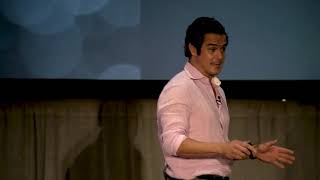
John Bohan argues marketers should lead with purpose instead of differentiation. Apple sells advancing humanity, not computers. Nike's Kaepernick ad worked because the brand spent decades aligned with social causes, not because it was edgy.
Chapters
Next up, we're going to welcome John to the stage to continue this fascinating conversation about purpose and what we should be doing better and why we're doing it. Welcome, John. Yeah, right over here.
I'll sit here. Okay. I first started in advertising and marketing when I was in my 20s. It was early '90s, and I got a job at the Weather Channel. Now it was my job at the Weather Channel to sell advertising. And at the time, the Weather Channel was very small. It was just starting out. Now everybody knows the Weather Channel. It's a big network. But then it was small. It was about— had 1/10 the ratings of all the large cable networks. To make matters worse, I was in Los Angeles. So if you want a tough job, try and convincing people in LA that they need weather forecasts, right? Tough job. But we happened to be very successful in the early days of the network because we didn't think about what we couldn't do. We think— we didn't harp on the ratings so much. We thought big. We thought about big ideas because the only way we were going to convince big advertisers to come on the Weather Channel was with a big idea. So what we did is we thought about how we could create content that was customized for the advertiser. Content like the Skier's Forecast by Jeep, or the 5-Day Business Planner by United Airlines, or the School Day Forecast by Crayola, or Waking Up Weather by Folgers in Your Cup. It was really pretty fun. We were just coming up with programs. We'd say, "What can we create?" This is the only way we're gonna make money. So the reality is the company became very successful, but it was a really difficult job. But I think that my job back then is very similar to all of our jobs right now. It is really, really difficult to be in this industry, right? I mean, they're long hours. I know we all work weekends. Everything's changing all the time. Clients are demanding certain things. CMOs are asking questions from their CEO. It's very, very difficult. But at the same time, if we look through a different lens, if we look through a lens of the big idea, then it gets invigorating because there's so much at our disposal. There's AR, there's AI, there's 360 video, there's live video instantly. There's all these consumers that have televisions in their hands. There's so much opportunity. So it's interesting this conference is about the big idea, but the problem is, is that a lot of these big ideas come and go, right? Just yesterday in the session, there was kind of a, a little bit of frustration that the big ideas are really difficult. You heard earlier that they're scary, right? But the reality is they're not scary if we do it differently. If we start to think about purpose. What is the purpose? What is the purpose of a brand? What is the DNA of a brand, right? Does the brand really know itself really well? And who's it speaking to and why, right? You know, if you think about, I think the people that we like the best, They're usually people that are really comfortable in their own skin. They're people that know who they are. And they're like, "Yeah, that guy's cool." You know, "She's really neat." And you gravitate towards them 'cause they're not trying to be somebody else. And I think a lot of brands today haven't quite figured that out yet. You know, it's about positioning products and features. It's about differentiating from their competition. So I think what I'd like to ask you as marketers What if we stopped asking how do we differentiate so much? What if we stopped asking about how do we sell products and features and benefits and price, right? And find the lowest CPM or the lowest cost per click. What if we started asking Simon Sinek's why? Why are we doing this? You know, what about if we said how do we serve instead of how do we sell, right? How do we serve better instead of how do we sell better? And if we think about the best marketers in the world and what they did, it's kind of interesting. 'Cause that's what I like to do when I think about this and I think about these big ideas and I think about where marketing needs to go. I'll say, well, who did it well? What about this guy? He did it pretty well. So was his goal to sell more computers? Was it to sell more iPads and iPhones and iPods and— that type of thing, was it, was his goal to create the most valuable company in the world, which he did, right? No, it wasn't. His goal was to advance humankind. In fact, when he took over the company in 1997 and the stock price was a dollar and the company was running out of money, what most CEOs would do is they say, okay, we need to double down and we need to do direct response and we need to measure every single dollar, right? That's what most CEOs would have done. But Steve Jobs did a presentation to his company and he said, you know, what do we really do? He said, yeah, we sell boxes pretty well. He meant computers. We sell boxes pretty well. But really what we do is we advance humankind. And together with Shai Day and Lee Kraut, Lee Cloud, he came up with Think Different, right? He dug deep. He dug deep, and we're all familiar with this campaign, but the difference here is he didn't, he didn't have computers in these commercials, right? He inspired us with these iconic thinkers, people that are changing the world. He said, think different, be amazing, be an incredible musician, be an incredible scientist, be an incredible humanitarian. Just go out and do it, and by the way, use a Mac. Right? That's the implied thing. And then what happened? Right? Apple boomed. But like we're doing today, and we're looking back at Steve Jobs, Steve Jobs didn't do this alone. He said, "All right, who's done this really well?" And he started watching a lot of commercials. And he spent a lot of time with Nike commercials. And he spent a lot of time thinking about what Phil Knight at Nike did, right, in the '70s. And what he found when he watched Nike commercials, it's not so much what he found, it's what he didn't see. He didn't see a lot of sneakers. He didn't see, you know, the products pushed in front of him and say, hey, buy, buy now, right? I mean, you have the shoes in the commercial, but this is not really about shoes, is it? It's about be like Mike. Be like this incredible human being that is doing things that we can't imagine. And it's about his goal was to inspire athletes, to help and inspire athletes, and to celebrate athletes. So when you think about Nike's commercial today, there's no sneakers in them. It's really quite remarkable. And I don't think it's because Nike is one of the best brand names ever. It's people-first marketing. It's providing content that people want to listen to, they want to engage with, and they want to share that touch their hearts and touch their souls. And the brand rides along with that. but the purpose of the brand needs to be very directed in terms of they need to know themselves very well, and they need to know their message, and they need to spread it. So if you think about, again, Nike, it's about not only celebrating the athletes, but in this case with Serena Williams, it's about evoking thoughts of your own hometown. Girls from Compton don't play tennis, they own it. Naturally I'm thinking, I'm from Brunswick, Maine, I'm representing Brunswick, I need to own the things that I do. So it's bringing up emotions. Again, no sneakers. And yes, I'm gonna show the Colin Kaepernick ad. This is an ad that was decades in the making. Yes, a few folks, a lot of folks spent, sat around, looked at the data, got to know their customers, but decades in the making. 'Cause Nike knows themselves so well, they were able to come out with this ad. And you obviously, you know, it's been incredibly successful. Now I'm happy to say that we have two amazing minds here to my left that are going to continue this conversation of purpose. Mark Rampolla, who's my neighbor, I have to say, he ran Zico Coconut Water for 9 years, started in 2004, and he's going to tell you the reason he started Zico was really based upon purpose and reached for higher hanging fruit. He sold to Coca-Cola in 2013 and now runs a fund based upon purpose. And then after Mark, Ian's going to speak. And Ian, who's a client— and I'm not just saying this as a client, I think he's one of the greatest marketing minds in our industry today. He has a very effective way of looking at purpose and distilling it down to actually execution. So that turns into profit. Because at the end of the day, we can talk about purpose all day long, but the key is to actually generate profit. Once Mark and Ian are done speaking, we're going to go into a 10-minute Q&A. So please get your questions ready because I want to go right to the audience. Mark? All right.