Episode #4 - The John Bohan Podcast w/ Brian Sheehan, the Newhouse School | Syracuse University
Brian Sheehan from Syracuse's Newhouse School argues brands must build lasting equity while driving immediate sales through digital channels and memorable characters like Duolingo's owl. He cites Oatly, Liquid Death, and Ryan Reynolds' brands as examples of meta-marketing that turns ordinary products into cultural icons, and emphasizes that values, personality, and essence matter more than surface attributes in today's attention economy.
Chapters
Everything's happening now in the moment. So to build a brand over time, you've got to be winning in the moment. You have to keep reminding people you're there.
When you think about the title, the 2025 Brand Playbook: Why Your Brand Matters Most, what are some of the thoughts that come to mind?
Well, you know, first of all, if you're in the business of selling things, Branding is everything. We are in a capitalistic society. That society is driven by competition. And your brand managers see that every day. I mean, whether that's on price, on positioning, on placement, and all, you know, the 4 Ps of marketing. And what that really is, is ultimately a race to the bottom of price. Meaning if we can't create a brand that's differentiated and adds value to consumers, Competition just drives the price down to becoming what you don't want to be, which is a commodity, which is you're selling your product at the lowest possible price, the lowest possible margin, and ultimately giving the consumer the lowest possible value. So that's my reaction to your title. I think it's incredibly relevant, not only this year, but for every year.
So in terms of building the value of the brand, I think that's a blurry area for a lot of, again, C-level executives. Even blurry area for a lot of experienced agency executives. You know, there are clearly different types of tools. You know, I think Meta provides one of the best affordable tools where you can measure brand lift by running ads to a controlled audience and exposed, you know, some people, some audience sees your ads, other audience does not see your ads. They're very similar demographic psychographic audience and you see what the lift is in one versus the other. So it's the brand lift of that campaign. Yeah. But what are the metrics that you would show to the board to prove that your advertising marketing is working?
So I would never say to a, to a board that sales aren't right away. So the problem is too many people look at this as mutually exclusive. We're either building the brand for the long term or we're selling today, to the detriment of the long-term building of the brand. And I believe you can do both. So for example, building the brand doesn't mean doing lots of soft, fuzzy television commercials on terrestrial TV that make people feel warm and fuzzy. They might, you know, Coca-Cola just did one for Christmas, right? You know, we do stuff like that. Some brands, you know, can do it on live sports over time. Some brands have $100 million, $200 million, $300 million. They can do that. So my point is, I would like to look at some of the brands I admire today who understand we live in a digital world. We live in a Google world. We live in a Facebook world. We live in a TikTok world. And what they do is they're creating immediate sales while building long-term value for the brand. So I'll give you some examples of brands that I admire today. One is Duolingo. Okay. Duolingo is doing some of the coolest work in the industry. So, you know, what they're doing is they understand it's not about building this long-term point of differentiation. They understand, particularly today for anyone under 40, let's just admit the terrestrial TV and that, that sort of thing is dead for people over 40. And even when it's alive, it's alive for sports and perhaps reality TV. And so in a world where people are Googling, Facebooking, Instagramming, and TikToking in particular, how do I build a brand for the long term? And it's not by doing big soft fuzzy brand ads. It's by understanding that the key in a world where when I look at my students, They're inundated with all the stuff. They're trying to avoid advertising at all costs, and they're trying to avoid anything that doesn't add value to their social media stream. Duolingo's out there with their owl mascot doing funny little crazy stuff that make people laugh, right? And it becomes content that people want to devour, while at the same time reminding you, if you ever want to learn a language, Duolingo— the brand is being established. And it's being established through their owl character. Right? So that, that character is working as a mnemonic device to remind you.
I love the fact that you brought up Duo. And, you know, there's a, there's a couple of things I think of when I think of Duo. I go, one, they have a $7 billion valuation. Right? And, and a lot of that happened in the last few years.
Which is insane, by the way.
Which is insane. Right?
Right.
Every, in every way. And, you know, what, what we oftentimes chat about in these conversations and, and with our clients is we're in an interesting world, right? Where right now where marketing can be your differentiating factor that scales your business to—
Absolutely.
—billion dollar plus. Or, or even if you're a Chipotle and let's say that you have already massive valuation, you saw their valuation increase, I think it was 20, 30% in the last couple of years, which is huge when you're at that scale, simply because they have amazing social.
So to your point, isn't that a great thing to tell your CFO about the value of a brand and how it can build and scale quickly and you don't have to wait 30 years. When I talk about a horizon that's forever, I don't mean we're going to build it. I mean our band is going to keep building forever, but we can build it really quickly while we're making sales today. And that's a perfect example. I'll give you some other examples that I really like. One is Oatly. Okay. So, you know, Oatly is by definition a commodity. It's oat milk, right? But what they've done is through their marketing, they've become the oat milk. Right? And they do marketing that's kind of what I would call meta marketing. It almost makes fun of the marketing that they're doing while they're doing it. Another brand, Liquid Death. Yeah. You know, Liquid Death is basically, it's canned water, right? That's it. Talk about a commodity. And they've been able to, through marketing, to create an incredible valuation. And it's just fun to sit in a room and drink Liquid Death. It just is, right? Another one would be e.l.f. Cosmetics. I mean, I could go on and on and on and on, right? These are brands that have, to your point, scaled marketing as an added value very, very quickly. And which, if they do it right, will just keep building and building, or at least sustaining that brand value over time.
You know, influencer marketing has hit in a pretty big way 2015-ish or so. Obviously, it's around before, but it started to get popular in 2015. Now we're almost 10 years later. It wasn't an, an immediate hit. When Facebook started advertising in 2008, a lot of people had jumped on it in 2009. I, but influencer marketing is kind of this moves slowly. So why is it now? Let's just say, let's say 5 to 10 years later after it became popular that there is this window of amazing opportunity that brands can jump on. Please answer that and then tell me, look in your crystal ball and tell me when this window is gonna shut and a lot of opportunity is done.
That's gonna be harder. So, you know, obviously influencers are very big. One of the reasons is because, as we've said, people's lives are frenetic in terms of communication. Right? And again, when I say people, I spend a lot of time with people in their 20s. Right? And so you've got all this frenetic stuff going on. They're trying to avoid boring advertising and they're trying to avoid marketing. And what's cutting through, because they spend most of their life in social. I mean, their life is built around social. Even the entertainment they watch is driven by social and things like TikTok. So what they're looking for are a number of things. They're looking for authenticity, meaning if you're in, if you're trying to get me through social, you need to belong here, right? And influencers belong there. So they see that as just an inherent part of product information they're interested in getting. But through an authentic source that they trust. Okay, the other thing they get through that is entertainment, right? So, you know, we used to lean back and watch television. They lean back and look at their phone. So branded content is really important. And the important thing is that that branded content be in and of itself informative or entertaining first and foremost and may or may not say anything about the brand. But would clearly be relevant to the brand and its positioning. Does that make sense? So this gets to another thought. So everything's happening now in the moment. So to build a brand over time, you've got to be winning in the moment. You have to keep reminding people you're there. So you used to be able to do that through television by just having, you know, X amount of GRPs. Now, what you have to do is you have to find little moments, little events, little pieces of content that just keep reminding people how relevant you are, right? So, I'm going to— I'll just tell you why this—
Hold that for a second if you don't mind, Bryan. That was beautifully said. You need to be in the moment. You need to be kind of— you need to be top of mind. And sounds like you're referring to the content you have— you're creating needs to be highly relevant.
Because it may only, it may only hit for 2 days. Yeah. Right. It might hit and be forgotten in 2 days. Yeah. And, you know, and then some of your stuff isn't gonna work because it doesn't because you're doing it in the moment. But if you hit them, if once a month or once every 2 months, you've got something that goes, oh, cool. That's good enough. Yeah. As long as you're doing it on a regular basis and I've hit you 5 times a year with stuff, you go, that's cool. Oh, that's—
I think that's it. I mean— Oh, that I like it. 100% where you need to be relevant in, in your feed consistently and then you need to have some hits.
You know, it's like, that's where, you know, we still tie into the good old-fashioned purchase funnel. And what people have forgotten, marketers have forgotten because they're so absorbed in Google and aspects of Facebook like clicking on ads. They're so absorbed in being close to the bottom of the funnel because in Google I'm already searching, right? Or in Facebook, I can click on the ad and get down the funnel quickly. They've forgotten The funnel only starts with awareness. And frankly, awareness only starts with attention, right? So, you know, we've been talking about the attention economy forever. We are now in the attention economy.
So, one of the things that I love so much and I'm talking to the audience, obviously, Brian, you're familiar with this is, you know, Ryan Reynolds has become a billionaire not because of his acting, but because of his ability to, I mean, not because of his brilliant product, development, you know, Mint Mobile is a great brand, but it's marketing and advertising.
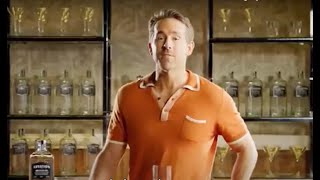
Brilliant is a great word. I mean, he's had a major impact on the ad industry in a very short time just through his attitude. Yeah. Remember before you can differentiate based on image, attitude, or propositions? And to your point, you know, his products aren't necessarily, you know, Aviation Gin, how much better is that than any other gin? But it's the attitude with which he brings to that advertising that people go, cool, I want to be associated with That I dig that 100%.
And those— that's one of the things that we're doing with our clients is how do we mimic one of the things that he's done is fast advertising. How do you jump on a cultural trend right as it happens the way he did with Peloton Wife? And all of a sudden that entire scene, like in a day after the news came out, which is phenomenal. We did something with our client Pilot. There's a a young gentleman, 13 years old, that dances, that started dancing at one of the University of Tennessee football games. And he actually had some moves. His sister's a dancer. He copies his sister. So all of a sudden, this kid's on the Jumbotron. The crowd goes absolutely crazy. And this is one of the most enthusiastic stadiums in all of college football. And every time the cameraman went away from him to show somebody else, the crowd would boo. So they went back to him. The crowd would cheer. This kid was like insta-famous. And so what the client did, and we supported in this, is generate a fast advertising campaign. So prior to the next game, that Friday, they shot a piece of Kaysen Kegel, is his name, and put it up, and it just blew up. It's just those moments when you tap into culture, and they happen to be a sponsor of the University of Tennessee football team. So feeling a little like the Pop-Tart. Yeah. Yeah. 100%. 100%. So, you know, it's fast advertising is interesting. But one of the things you mentioned about influencer marketing or the creator economy, I think brands like to connect with them because it allows them to play in the social media space safely. Yes. Talk about that a little bit more. And versus a brand going, going out and doing its own, it's, it's a lot easier when you're, you're you're with people in the space. It's kind of like going to a cocktail party, I suppose, and you already have friends there immediately you're in versus trying to prove yourself from day one. How important is that for major brands, multinational brands? How important is it for emerging brands to connect with variety of influencers in order to play in the space? It's funny.
I am, I was at an ANA conference. This is now about a year and a half ago. And we were, there's a whole presentation on creator economy influencers. And there's one quote that I took out of that that really hit which was, and I forget who he worked for, but it was a very big, very big company. And he got up there and he said, if you don't have an influencer strategy, you don't have a strategy. So the reality is it's become, it's not a cornerstone. I mean, it can be a cornerstone depending on what brand you are, particularly if you're a cosmetics brand or something like that. But it's a key piece of any marketing plan. And if you don't have an influencer or creator strategy, you're missing out on one of the great opportunities of advertising. And not only that, your competition's probably there beating you like a drum.
It's how much you're in tune with today's culture. And, and how do you support, how do you support the culture that you serve? You know, when I think about it, how do you support the culture that you serve? When you think about Nike, you know, their influencers are originally Michael Jordan, Gabby Reese, and obviously it's, it's blown up from there. So when, when when you, when you think about that is how do you serving that culture? They, they're, they're supporting the athlete. Uh, when you think about Liquid Death, it's, it's, they basically have, uh, anybody with a sense of humor. That's what they say. So who's your target audience?
Anybody has to be a dark, it has to be a dark sense of humor.
Yeah, yeah, very dark sense of humor. When you think about Patagonia, it's about sustainability, and that's how they lean into, to, to, to their lane. Um, so when you think about influencer marketing, the creator economy, content creation, and you think about how brands aren't controlling the influencer, but then again, at the same time, giving them room to run. How do you create that balance? Is it through creative strategy or the brilliant creative strategists out there, one of your most important elements to connect the two, or are there other ways to basically do that dance so it works? Well, I mean, the first one is contractual.
So before we get anyone with creative brains in the room, we need to be clear contractually how we're engaged with that influencer in terms of we're gonna be paying them a lot of money and we are going to leave them fairly unfettered. But there are certain things that may be red lines for us. Beyond that, yes, I mean, we, you know, where does the idea come from? Does it come from creative? Does it come from strategy or a combination of both? A lot of agency time either is or should be spent deciding how to maximize this union in the most organic way possible, coming first and foremost in a way that adds value to the influencer first, right? By adding value to the influencer, we get brought along in a slipstream. By adding value to the brand first, we destroy the value of the influencer.
I agree with you 100%. It's beautifully said. At the same time, if you're supporting the right influencer, you're supporting yourself because you are providing education, inspiration, entertainment. Absolutely. For the travel industry. Absolutely. Or for sports or for food, depending upon who your target audience is.
And, and what we also have to recognize is that influencers come and go, right? You know, influencers who are seen as, as organic can sometimes be seen as sellouts. And unfortunately, we're part of that process. Yeah, right. So, you know, we either need to do it in a way that they don't seem to sell out, or when they do sell out, I hate to say this, we need to rotate into some, someone else who's got more organic value to our target audience. So we might find this is kind of like, you know, I'm at Syracuse University and the biggest thing in college basketball and football right now is the NIL and the transfer portal. So we never know what our team is going to look like any given year. Right? It used to be we had the same players out there except the ones who graduated. This year, we're lucky if we have 1 or 2 guys we've ever heard of going to the new season. That's kind of like influencer marketing, right? Every year, we've got to reassess and say, who are the best people to be bringing our message to our people? And some of them may not be the people from last year.
We've talked about a number of different issues. Thank you so much for being here. I have one more question for you. If, as you're planning, let's just say 2025, because there's a lot of people planning 2025. Some people are in 2026. They're very, very similar timeframes. What's the most important thing that you can provide in terms of advice? Let's say 1 or 2 things that the brand managers, CMOs, CEOs should think about as they're, they're building their brand over the next 12 to 24 months.
So I think it goes back to a very simple tool that almost every marketer uses. Which I'll call the brand wheel or the brand onion. You know, we start on the outside with attributes and benefits and we work our way into values, personality, and essence. So in the old days, most advertising was driven by the attributes and benefits of whatever new product introduction we have. And we still have ways to communicate that. But in a world where authenticity is the most important, your values, Your personality and your essence should be what drive all of your marketing decisions. And connecting yourselves to influencers, for example, who have those same values and personality and essence is gonna be valuable for you. Doing things online that bring entertainment or interesting content that are consistent with your values, personality, and essence will go a long way to building your brand. So that's, that's what I would advise. It's a tool we've had forever. It's just the middle of the tool is a lot more important than the outer part of the tool in today's media world.
So you heard it here first. Values, personalities, and essence, focusing on those 3 criteria as you're moving forward into 2025 and beyond to make sure that you can create the most brand value as possible. So thank you, Brian. Really appreciate your time.
Hey, John, I really enjoyed being here today. Thanks.