John Bohan Breaks Down the Influencer Marketing Landscape
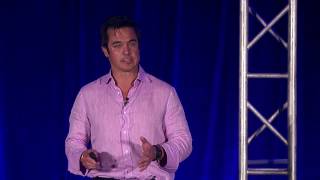
John Bohan argues influencer marketing needs to return to word-of-mouth basics, but data-driven. He breaks down the ACT framework: Audience, Authenticity, Content, Transparency. Real examples like Miranda Sings for Coca-Cola and Paige Hathaway's gaming audience show how deep insights and genuine affinity beat celebrity transactional deals.
Chapters
I'm gonna break down the influencer marketing landscape in about 20 minutes, but I just say listening to all the complexity and the challenges, it's very weighty, isn't it? It's very weighty, it's scary. I was surfing this morning and the surf was a little bit outside my league and I feel like I was hit by a wave and kind of crushed. But what I'd like to do is talk about influencer marketing because I think it is one of those bright lights that we have in our industry. In fact, I've been in the digital media industry now for, I hate to say it, 21 years. I couldn't be more excited about where we are today as an industry. I'm gonna talk about 4 4 things, global changes that are happening right now, which honestly have already been spoken about this morning. But what I find really interesting is the pace in which things are changing. Now I mentioned traditional media woes. What I'd like to do is talk about traditional media in the way that we've thought about it and the pace in which it's changing just in the last year. Monday Night Football, the ratings are down 20%. Unbelievable that it's changed that much. Secondly, ad blocking. Ad blocking obviously is, is a huge topic we're gonna talk about today. 86 million of us in America will be on ad blockers next year. Continued growth in social, 2 billion people are in social now. And the rapid drop in production of content. So you can create a Facebook 360 now for about $1,200. Just a year ago, it talk— cost about $40,000 to $50,000. To create a really highly produced piece. Now, why am I mentioning all these things? Because I think what they're doing is they're changing the world we live in. So what does that point to? I think it points to the fact that the more change happens, the more it stays the same. I think we are going back to the way that we used to market all the time. I'm not talking about 15 years ago, even 100 years ago. I'm talking about millions of years ago. The caveman. The original form of marketing, the first marketing is word of mouth. You imagine when that guy created the wheel and he told his buddy about it, what happened? His buddy probably said, "That's an amazing idea. I'm going to go tell all my friends." So back then, the people were the filters of ideas. If you had a great idea, it got passed along. If it was a bad idea, it died on the vine. So today with social media, with our phones, the greatest ideas, the greatest stories get shared. So, how do you create a great story? How does that influence us as people? How many of you have read "Contagious" by Jonah Berger? Okay, highly recommend it. He came out with another book, it's a New York Times bestseller, another book called "Invisible Influence." And what he talks about is how incredibly influenced we are by other people. In fact, what do you think the 4 most said words in a restaurant are? 4 most said words. "what are you getting?" Right? "What are you getting?" Foremost said words. And, and the most ordered plate? What your friend just ordered. So we are influenced by what other people do, not just by what they wear, what they say, where they work. It's unbelievable. So what is the future of good marketing and how is word of mouth gonna play into this? So I like to take a look at two things. Before we look at good marketing, let's look at the marketing that we have done today. Is usually the way in which marketing happens is a brand will think about its benefits and features, right? Let's say, okay, how do I take those benefits and features, how do I distill that down into a story, and then how do I find the right media to essentially place that story to get the right eyeballs? So that's the way it's been. It's been top-down. That really needs to change. As Gloria was mentioning, people don't care about, you know, what the brand is saying necessarily. But what they do care about is they care about great stories. I think marketing needs to start with the story. What is the story that my consumers really care about? What are they already talking about, and how can I authentically work my message into that story? So I think it needs to be flipped on its head. So how has influencer marketing done that today? Well, I think it's done a lot of great work. How many, how many people in the room have run influencer marketing campaigns? Okay, quite a few. Not as many as I thought, but quite a few. How many of those campaigns have focused on the celebrities, say followers of a million or more? Okay, quite a few. I think influencer marketing today is really focused on the celebrity. It's been the person that you see in the news, the person that has not just a million, but oftentimes 5, 10, 20 million. And I think it's been very transactional. It's lacked a little bit of depth and longevity. It's kind of moved from influencer group to influencer group. So where is it going? I think 2017, it essentially goes to 4 things. I like to call it ACT, with a double A, standing for audience, authenticity, content, and transparency. So with regard to the audience, most influencer marketing is really focused in upon the influencer, you know, who that person is, who the persona of that person is, and the type of content they're creating. Now, this is Paige Hathaway. She has a following of about 2.3 million people. She may be good for GNC, Under Armour, maybe a health food brand, and that's basically how influencer marketing is run. But what gets interesting, you take a deeper dive now, and this is gonna happen more and more, is who her audience is is completely different than you think it might be. Her audience is actually 70% male, age 23. They're interested in gaming, wrestling, rugby, MMA, and football. So very different than what you might expect. Second thing is authenticity. You know, it's interesting about Ellen DeGeneres not being a Samsung owner, but then doing the content. She did an amazing job. It's one of the most famous photographs out there. But I think that what's gonna happen is more authenticity needs to play into the influencer space. We need to actually tap into people that already love our brands, right? So that, what do they already buy? What do they already love? What do they already promote? Because I think to date influencer marketing feels a little bit like traditional media. It feels like a lot of people are hawking products because they are getting paid to do it. I think that's gonna change. There are actually databases now where influencers are filling out what brands they actually like. Okay, moving on to content. In terms of the content, I mean, we hear a lot about millennials not liking commercials. I actually have 3 millennial kids, 14, 16, and 18, and they don't watch TV. They spend the most of their time looking at their phone. I feel like I need to rip it out of their hands now and that— But what they're doing is they're communicating with their friends. You know, they're seeing stories and they're seeing ads. And I ask them, you know, "Do you mind when you see an ad?" They don't mind it as long as it's a good ad, as long as it tells a story, and as long as the messenger telling that story is good. I think the messenger really matters. So if you get Miranda Sings, as we did for Coca-Cola, to do an advertisement on behalf of Coca-Cola, it works. She essentially sang about Coke for 2.5 minutes. I said, "Unbelievable. This is the most commercial ad I've ever seen." But then I went in and read all the comments. There are hundreds and hundreds, possibly thousands of comments, all positive, 'cause they love Miranda Sings so much. Who knows Miranda Sings? Okay, quite a few. I didn't know about her before the campaign, but these celebrity influencers are so popular to their constituency, but a lot of people outside of that don't know them. When we shot the piece at Jack in the Box for Coke, there were some teenage girls that showed up there and they were just in tears, you know, that they got to see her and they got her autograph, etc. OK, so what I want to do now is show you a video with Swaggy P of the LA Lakers. It's something that we actually shot for Jack in the Box. And so what we're trying to do as a social media agency is create the— commercial/non-commercial, to create a commercial that doesn't feel like a commercial, to create a piece of content that really connects with the user and its content they would go to and share and be excited about it, and at the same time be transparent about, you know, what we're trying to market, because the last thing we want to do is try and fool the user. So this is the piece that we shot for Jack in the Box with Swaggy P. Can you roll the video, please?
My peoples, man, you know we right here. So you said the Jack's Brew Burger, where is that? That's what's up, man. I might try that. You want that? Welcome to Jack in the Box. What can I get for you guys today? You want two? I want two of them. Yeah, give me five of your finest Jack's Brew House Burgers. All right, and to drink, a reminder, Jack in the Box offers Coke Freestyle, so even if you're in the drive-through, we can offer you a 150 different flavors. Being asked about all 150 flavors, we just want 3 Cokes and 1 strawberry lemonade. Great, uh, would you like that strawberry lemonade in a children's cup, sir? Oh man, kids in this car. Oh, can you get some churros too? Hey, hey, hey, churros! Me and churros! You pumped it up too, you was right with it. I saw, I saw the I seen the commercial too. Oh dang! Oh! He's psyching me up. Hey man, how you doing? I'm good, man. How you doing? You all right? Well, I work at Jack in the Box here in the NBA. How do you think I'm doing?
How tall are you?
You look really tall, but everyone looks the same height in this arena. Wait, what you just say? I said, man, like, you're so tall, but like, when you're sitting on the bench, the height line of everyone is always like—
The bench?
What you mean? Wait, wait. I heard you threw up like 20 burgers last night. 37. Yeah, you broke the record. I hear you rapping now. Is that a thing? You know, I do my thing. Hey, come on, you gotta, you gotta freestyle a little bit. Give me a little bit, a little taste. Uh, the Dry Dude Worker always talking, need to get them burgers, so get the walking, get them Brew Burgers now, cause I'm hungry, I need something to eat. All right. All right, but just make sure you do it right, okay? Because like the last NBA player that tried to like branch out too much, like MJ was an actor. We don't want another Shazam, dude. Nobody, nobody wants another Shazam, okay? Clean, man. This is on the house, right? This is, this is on the house. The thing I'm wearing, Jordan's back here. Yeah, man, entourage number 3 is hungry. He's hungry. Hey, did they give you that? They give out some visors though? Yeah. Prices? Yeah, it look kind of cool. Get one.
Your brew house burgers right here.
Come on, man. How's this look? It look just like the commercial. Thank you, my God. Let me get through first. One more. We got another one. Oh damn, yeah, there you go.
Get one.
Y'all not swaggy. Y'all not swaggy. Y'all not swaggy. Go enjoy those brew house burgers. All right, thank you, my man. Thank you.
[FOREIGN LANGUAGE] All right, pretty cool, pretty cool. When I first saw that, I had a bunch of kids around me. They kept playing it over and over and over. And again, it's the commercial/non-commercial. That piece was actually 2 and a half minutes long. We cut it down to a minute for the conference. But what's funny is the kid who we cast in that was dissing on Swaggy. He goes, "You know, when you're sitting on the bench, you look really tall, but you're not that tall." He goes, "What? Sitting on the bench?" So there's the celebrity roast thing came into play really well, because what we're trying to do with a non-commercial is hit things that are trending, hit things that are familiar. So celebrity roasting is very familiar these days, obviously very popular. The other thing is car karaoke, right? I mean, it's hot as can be right now, so we wanted to tap into that too, because that's something that the— the Jack in the Box customer, i.e., the young male, is very familiar with. So getting him to— getting Swaggy P to rap about the brew house burger was kind of key. And he was actually really cool about the whole thing. OK. When I watch videos like this, I wonder what I do for a living. How many people have seen the Apple Pen? OK, good. Just a handful of people. I'm just going to roll this and tell you that it has 150 million views in about 6 weeks. Kind of ridiculous, right? That's what I do with my life during work. Fortunately, I have, again, 3 kids that are my filters to tell me whether this is cool or not. And it is actually pretty amazing. Someone in the meeting yesterday said, you know, with all these numbers, you just got to trust your gut. Oftentimes, right? You look at the numbers, you gotta trust your gut. I wish I'd trust my gut 4 years ago when my kids were raving about Snapchat, and they were all about Snapchat, and I was just too busy with other things. But these types of things, I think advertisers need to trust their gut. You know, why is this thing blowing up? It's 150 million. Honestly, I think it's funny, but I think a lot of people don't think it's funny. But though, how do you capitalize on things that are hot and that are trending? 'Cause that's the world we live in. You know, it's here today, gone tomorrow. So what's really amazing is not just the video, it's all the parodies. If you put Apple Pen into YouTube, you get 2.4 million results. Insane. 6 weeks. OK. So there are Asian stay-at-home moms with their kids. There are dads in tree forts with his twin daughters, all doing the parody of the Apple Pen, right? It's the music in the back. They do it. OK, the guy on the right, does anybody know what that is? OK, somebody knows what it is. It is a guy in a semi-gorilla suit that actually did a parody on the Apple Pen. But the crazy thing about it is this thing is actually launched 5 days ago. As of yesterday, it had over 11 million views on Facebook and YouTube. And the beauty about it in this room is it's an ad. Netflix— Netflix has a movie coming out called Death Note, and this is the death spirit in Death Note. And they're actually bringing a lot of awareness of this particular character, and it says Death Note at the end. So jumping on these, these types of videos from a creative storytelling world, getting into conversations that your customers are already having, are already interested in, is I think a lot of the future of marketing. OK. The T. The T is transparency. Any nascent advertising medium always goes through this period of immaturity to maturity. And usually in the immature stage, there is a lot of stuff going on that actually shakes itself out. I mean, it happened with advertising networks when the ad networks were taking probably 60%, 70% of the advertisers' dollars when they ran the programs. It happened with paid media, which I was, am in, and, and still have been with paid, paid social media. Facebook launched in '08, and a lot of the dollars up into 2013 were arbitrage. I, and essentially the, the PMDs were still taking 50%, 60% of, of the advertising. That's where it is with influencer marketing now. $100,000 buy, as little as 30% could actually go to the influencers, and it's based on a CPE or CPC. Now, that's going to change and I'm going to tell you how it changes in a second. But to do that, I just want to break down the influencer marketing industry, the name of the talk. There are basically 4 different divisions in influencer marketing. We created this infographic after meeting and talking with most all of these companies. And this is really how the industry shakes out. On, I guess, the far left is the talent agencies. Okay, everybody knows the CAs and the ICMs and the new companies like Viral Nation that have sprouted up. Those guys are the owners of the top influencers, right? Their job is to get the highest price and to get their influencers to do as little work as possible for the most amount of money. Those guys aren't the folks that I think are the best people to negotiate with, unless you're living and breathing in the space. CAA is not going to cut you any breaks. They're going to try and, you know, get as much as possible. That's their job. Influencer marketing networks and influencer agencies are in the middle. Okay, these guys are identical in many ways, in terms of having deep expertise of the influencer marketing space, having technology that they've built or licensed, and also being able to, you know, come up with creative ideas that make a lot of sense. The core difference between the two is influencer marketing networks are on a CPC, CPE basis, They're an arbitrage. They're non-transparent. The agencies are transparent. So there's a— there's probably about 100% difference in the ROI going with the networks versus going directly through an agency. And the last part is technology. There's a ton of technology in the space. And most of these companies are just, you know, 2 and 3 years old. To break those down, we essentially broke them down into 3 areas. Analytics, search, and management and reporting. Now, the analytics is key because we need to find out who the followers are of the influencers. And what I thought we might do is have a little fun with our host, Josh Messenger, here and take a look at who Josh's followers are on Twitter. But I want to get permission. Can I do that? OK, here we go. So these are the followers of Josh. Because if you see Josh and you say, I want him to be our influencer, he's a good-looking guy, right? Bright and tall. Intelligent, but who are his followers? So we go to the next slide. Okay, so who's, who's who they are. So this is Josh's followers on Twitter. So Josh Mess, his handle, followers work as senior managers, entrepreneurs, event planners, consultants, authors, and writers. Sounds about right. This may be describing us, right, if we follow Josh on Twitter. In their spare time, they particularly enjoy wine, beer, and political news. I've seen thousands of these and they don't actually start out with wine and beer, and, and, and which is amazing. Those are the top interests. It's like reading the ingredients on a package. So wine and beer and political news. So tonight is the night we get drunk and we talk about politics. But the, the fifth part about this is comedy and humor. So they have a lot, they find it very comedic. And then the other thing about their— you can go really into deep analysis on the followers of the influencer in terms of seeing what their interests are, who they're influenced by, the brands they're connected with. So I think this is gonna be a huge part of what we do moving forward. The other part is looking at the information with your analytical tools to essentially give you some guidance on the creative opportunities you should come up with. So for example, the car karaoke idea that we mentioned, the Miranda Sings piece, a lot of that was done, we did a lot of analysis before that. So for example, Panda Express, one of the things that we found out when we were doing this analysis is that people go to Panda Express when they're having a really bad day. I'd go somewhere else, right? But I guess it's that orange chicken or whatever it may be, 'cause if you looked at their social media, It's littered with posts like, "Feels like every time I have a bad day, I find myself at Panda Express eating my sorrows away." When your boyfriend drives all the way to South Bend to get you Panda Express because you're having a bad day. In fact, an overwhelming amount of the intent to go to Panda was associated with a bad day. So, naturally, the idea is to build a campaign around happiness. And then there's influencer search. This part of the business has become very, very sophisticated in the last couple of years. There's search among defined networks of 10,000 influencers or so where they've been vetted. There's also search for, you know, you can search, you know, 3 million, 4 million influencers across keywords. So obviously another key area, as opposed to just gravitating towards a celebrity because you've heard of them or a friend ran the campaign. I think we're gonna move more into mid-tier and micro influencers. This just feels a lot more authentic. And the last piece on the analytics is the management and reporting. I— these tools are incredible in terms of tracking all your campaigns. Just, you know, with the dashboard, as many of you have seen, you can say— you see exactly how many impressions you got, how much engagement you got, you know, what's clicking, how individual influencers are doing, etc. The other thing that I like to say about influencer marketing is as worried as we are about digital marketing because of Augustine, our famous speaker, with influencer marketing, it's not something that, as I talked about Augustine, that the bad guys can make money on, unless they're creating their own influencer persona. The influencer marketing to date is untouched by a lot of the bots, which I think is great news. So in conclusion, I'd just like to say again that I'm incredibly bullish about our future with marketing, very excited about influencer marketing. I think that 2017 is gonna be the time at which it matures, and I do believe in 2018 and 2019 it's gonna explode even more. So thank you very much.