Master the Art of Questions to Unlock Meaningful Conversations

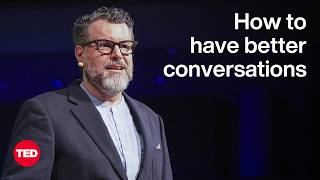
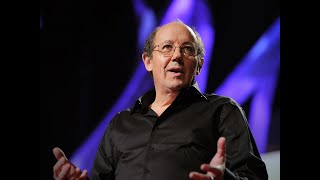
In this interactive keynote, Phil (the speaker) demonstrates how ordinary questions can either shut down or deepen conversations, illustrating the difference between efficient language (quick, surface‑level answers) and effective language (answers that open space for richer dialogue). Through live audience participation, he shows how moving from a Level 1 response (e.g., “I’m great”) to Level 2 (a follow‑up that invites more detail) creates opportunities for connection and sales. Phil emphasizes the power of active listening, strategic silence, and the skill of asking follow‑up questions that uncover deeper information. He then shifts to the concept of value perception, using a simple pen‑pricing exercise to show how context, presentation, and associated “things that go with the thing” transform a low‑priced item into a high‑value offering. Throughout, he stresses that word choice is a practiced skill—not a script—and that professionals must repeatedly rehearse questioning, listening, and framing techniques to become more persuasive in real‑estate and loan‑originating contexts.
Chapters
I want to ask some questions of you folks. Questions that you've been asked before. Let's see if we can play along. Who do I want to pick on? I'm gonna ask you questions you've been asked before in your life. You should be ready to answer. Your name, sir, is? Dave. Hey Dave, how are you? I'm great. So I just asked Dave, 'Hey, how are you?' A question he's been asked before. And Dave's little voice kicks up in his head and says, 'I know this one!' And he says, Great. Questions create conversations that lead to relationships that create opportunities. That's what drives actions and change. Dave has just proved to me that we are so efficient with language, we fail to be effective. Because what he did is he answered the question and shut the conversation down. You gave me a level 1 answer. That was exactly what I was looking for at this part of our time together. You did it perfectly. Let's see if I can get somebody to get me to level 2 on this question. Who's got the power to get me to level 2? I think you can get me to level 2. Your name, sir, is? Lawrence. Lawrence, hey, how are you?
Awesome.
Great event. See, what we got is we got level 1.1. So efficient with language, he fails to be effective. He's like, 'Awesome, great, let's run this straight down to a period.' You got level 2 for me, right? Your name, sorry? Kimmy. Kimmy. Hey Kimmy, how are you? I don't have any other answers for you. The collective incompetence of this industry is embarrassing. All of you. I'm not picking on one of you, I'm picking on all of you. You, sir, hey, how are you? Great, how are you? We got level 2! Level 2! Great! He got, I know this one, great, then he realized that questions create conversations, so he's like, what question can I ask at this point? So he repeats the question to me, and he's great, so therefore how am I? Funny that, right? Funny that however the other person is feeling is the same way you're feeling. What a coinkidink. And did you know in this 'Hey, how are you?' exchange, there are only two levels, that is both of them. Yet we are so efficient with language we fail to be effective. Are any of you leaders in this business? You wander through your office on a Monday, and you're seeing people in the office, you're like, "Hey, how are you doing?" They're like, "I'm awesome." And you're like, "Hey, how are you doing?" They're like, "Awesome." You're like, "Awesome, me too." "Hey, how are you doing?" You're like, "I'm—" I love how much I care about my people. I'm so compassionate. I'm so kind. They don't know shit. You know nothing. Because we're so efficient with language, we fail to be effective. It happens all the time. I'm gonna show you something else we do. Young man, you're gonna help me with this. Your name is? Austin. Austin, will you tell me about the last place you went on your vacation?
Sure. So I went to Sedona, Arizona, stayed at the Wild Resort. We swam in Oak Creek and, and I just had a great time.
Oh man, I love it out in Arizona. I get to go there a ton. It's a great venue for events. A lot of people are using Arizona, I think, as an event space right now because of the tax advantages in AZ. And I was there recently actually for an event in Phoenix. I wasn't out as far as where you were, but I was like in Scottsdale. It was a cool resort. I can't remember the name. I you I'm a professional speaker. I travel all the way around the world. I go to all these different places. I wouldn't say Arizona is my favorite. I'd probably say maybe, maybe Sydney is where I went that I liked the most. I was there for a big event with a company called Volkswagen. They were, they were, they were pretty awesome. And yeah, I've been all around the world. I've worked in 60 different countries. I've worked in 6 different continents. I've written 11 best-selling books. I'm not sure if I told you how freaking awesome I am. That was fun for you, right? Yeah, Austin's like, "Wow, wow." At what point is he like, "Where's the exit?" Right? Where's the exit? Austin, can we try this again? Sure. Tell me about the last place you went on your vacation.
Well, I went to Las Vegas here for a mortgage conference, and it was just fabulous. You know, a lot of great keynote speakers. Yeah. And like drinking from a fire hose, like you mentioned earlier. Sure. So it's great. Yeah. How about for you? Where's the last place you went?
Oh man, I get to travel around a ton as well. I know Vegas well, but what are some of your favorite things to be able to do when you're in Vegas?
Oh man, well, I always like to come to a concert or just get out in the community a little bit. Yeah. And maybe visit the Old Town Strip or— Oh wow. Local— the resort has to offer.
Yeah. What are some of the concerts that you've seen in Vegas then? What are some of the concerts? Yeah.
The last one was Journey and Def Leppard.
Oh wow. What, the same event? Same event. Wow, that's a combo. Who was better, Journey or Def Leppard?
Like, who was it? Oh man, they were both so So good. Def Leppard was still big hair, the whole night.
Like, I, I can't stop believing that. That's amazing. It's amazing. And who were you traveling with? Who were you there with?
Oh, I was there with my wife and the in-laws, and, uh, it was their first— my first concert ever, actually.
So, oh my goodness, my goodness. How long you guys been married?
Now is, uh, 7 years. Okay. I've just had a 9-month-old baby.
Oh, congrats. Yeah, congrats. Boy, girl? Baby girl. Oh, beautiful.
Aria, like the resort.
Ah, is that what you named her after? That's where she was conceived? You're good.
But no, no, my wife actually had a dream that we named her that, so we did. Ah, okay.
Same moment though, right? Yeah. Got it, got it. See, this is just Austin and I in a very casual, natural conversation, right? Surrounded by a couple of hundred people, it's fairly, fairly casual. But how much more information did I get second time round? How much more information? A lot more information. It was a touch more fun as well, right? How many questions did I prepare? Where did the rest of my questions come from? His answers, right? Which meant I had to do what? Actively listen. Possibly one of the most underrated skills in this profession is our ability to listen. And let's just take a look at the word together, the word 'listen,' because it's interesting. The word 'listen,' look at it, it has an L, an I, an S, a T, an E, and an N in it. Here's another word. It has an L, an I, an S, a T, an E, and an N in it. Coincidence? Well, yes, actually it is. Makes one heck of a point though, right? I wonder how many times that you folks, for fear of being salesy, become sales prevention officers. That you deliver too much information. You don't leave a pause long enough for somebody to sit in it. You don't create a space that is open enough for people to tell you their truth. And that you think that you win by sharing how much you know. Silence is a superpower. Your ability to listen is the same. You're probably hearing from me at this point in time I care a lot about this information. I care a lot about your industry. I could sit and talk to you folks here for days, but I think perhaps the most important thing for us to think about when we finish our time here together is this point. In the market that we're in right now, Our job is to give people enough information to make a decision. There's one word up there that I believe is worthy of the most focus. What do you think the word is? The word is the word 'enough.' How much information is enough? The answer is it depends. This was perhaps put best to me by a huge mentor in my life. My late grandma, my nan. My nan once said to me, she said, Phil, if everybody thought in the exact same way, then wouldn't the whole world like to marry your granddad? See, we need our information packaged in slightly different ways. Enough information is different for different people. But for our realtor partners right now, and for yourself, one thing that we've got to get really good at talking about and delivering enough information is the money conversation. We're going to be able to talk about money with confidence. If I have the word 'price' written in my right hand and the word 'value' written in my left hand, and price comes out ahead of value, which one looks bigger? And if I get the word value out ahead of price, which one looks bigger now? Who in this room has spent more money on something than they thought they would? And we think budgets are real? Articulating our value is the most important skill that exists for real estate professionals and loan originators today. And I'm going to try and just show something in a very simple exercise before I bring us towards a close. And who do I pick on? Who do I pick on? Who do I pick on? Young lady, your name is Laura. Can I borrow your pen, Laura? This is Laura's pen. I want you to imagine Laura's pen is just thrown on a table, a Yard sale. How much is the pen? It's a nickel, 75 cents. Wow. Now I'm going to take Laura's pen, the exact same pen. This time what I'm going to do is I'm going to place it in a stand. Stand is made of acrylic. I've got 10 adjacent compartments in it, other pens from the same manufacturers. It's all beautifully merchandised. Manufacturer's name sits across the top of the stand. Stand sits on the counter of a mid-priced department store like a Macy's. In the stationery department. How much is the pen? $20. It's the same pen! What I'm now gonna do is I'm gonna take Laura's pen, the exact same pen. This time I'm gonna lay it down on its side. I'm gonna place it in a box, and the box is made of mahogany. Mahogany box is velvet-lined. So I have a pen in a mahogany box, it's velvet-lined. This sits in a cabinet, and the cabinet is made of glass. The glass cabinet is spotlit. This too sits in a department store, not just any department store, department store is in London. It's not anywhere in London, it's in Knightsbridge, and the store in question is called Harrods. So I have a pen in a mahogany box, it's velvet-lined, sits in a cabinet, cabinet's made of glass, glass cabinet is spotlit, sits in a department store, not just any department store, department store is in London, it's not anywhere in London, it's in Knightsbridge, the store is called Harrods. And to get to the pen. 'I need to speak to a member of staff.' Member of staff is wearing a black tuxedo, has white gloves on, and his name is Pierre. How much is the pen? It's the exact same pen. What is the difference in each of those scenarios? Perception. Value. Environment. What is the difference? Representation. See all the things that you're muttering right now? They're all true. All of them. Did you know the thing is never worth the money? What's worth the money is the things that go with the thing. So the clearer you can get on the things that go with your thing, the more money people will value your thing. Got it? That's the work to be able to do right now for you and your realtor partners is what are the things that go with your thing that make your thing unique? So Laura, this is your £1,750 pen. Enjoy, don't lose it, it's very precious. I know that I've jumped a little over on time. I've had fun out being here with you folks, and I know that some of you are probably wondering like, yeah, but what do I do from here? What do I do with the words? How do I turn this into 'cause it's something that I master.' You can't. You cannot master word choices. You cannot master scripts. It's like, 'I crushed my yoga today.' No, you practice yoga. You practice meditation. You practice your word choices. What professionals do is they practice. The best golfers in the world aren't like, 'I'm great at golf. I'm just gonna try harder on Sunday.' They practice and practice and practice, so on game day when it really matters, They've got their best game face, and they're working on something specific. So my invitation to you is that if you are coming from this presentation realizing how important words are in moments that matter, and realizing that there's a skill gap between where you are and where you'd like to go to, do this for me and decide to elevate your practice.