4 Analytics for Sales: Analytics for Salespeople - DataSelf / Tableau
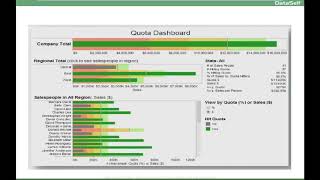
Salespeople who are competitive and numbers-driven perform best when they can see their metrics easily. Use dashboards showing quota progress, leaderboards, and activity details to spark competition and coaching. Learn from your top reps and build knowledge-sharing into commission structures.
Chapters
Forward, let's talk about the critical role of data for maximizing sales. And now we're talking about the salesperson perspective. The first part was about the sales manager, the people who manage sales teams. Now we're going to talk specifically about salespeople. And it's a different perspective. It's a different kind of needs, a different kind of, you know, things they'll be interested from an analytics standpoint to do their job better. So let's talk about the sales rep perspective. So first of all, what are the main traits of great sales reps? First of all, they're very competitive. You know, they want to do more, they want to sell more, they are excited. Usually they're numbers driven, of course, commission driven, I would say. But they like to hit quotas, they like to see numbers to do better. And overall they are curious. They're curious about what's going to market, they're curious about what's going with the clients, what you're doing. So, so they can do better. So these are three great traits of salespeople. And the idea is by understanding their traits, see what kind of metrics, analytics information you can create to help them be more competitive, more numbers driven and more curious. So let's take a look at some of those ideas. So what is important for a rep? What can motivated them from a analytics or data standpoint? So first of all, one thing that I always tell people, usually you have to pay attention to the high performers. There's always a small number of them that are so ahead of everyone else and you have to do your best to learn from them. Sometimes they don't like to share much their secret sauce, but you should overall try to learn from them and try to share with others whatever you learn. And it's a process. Again, many people don't like to give away the kind of special trick that they have. Sometimes they don't even know why they're so efficient. But if you talk with them, cool. Usually you learn certain things that some other people are not doing. I also found in our client base one thing that has helped a lot these organizations learn from reps to help the other reps to be more efficient is be sure that a commission component is based on team performance or company performance. So the more that the team sells, the more that the company sells, anyone will make better. So high performers, sometimes if they get nothing from other people selling more, they're going to say, I'm going to be sharing what I know. It's working for me, I'm great. But if you do this kind of commission component base from other people, they'll be more inclined to say, wow, I'm one, there's another, I don't know, 50 reps. If I get 5% from their sales, that makes a big difference. It's a soft approach that will help you get your team as a whole more to share things. And you don't even need to be the person or the managers doing the actual sharing. You can actually influence them to talk with each other. Hey, high performer or whatever the person is, you're doing so great. And as a team, we can do so much better if we learn from things, talk with other people, give them some tips, just try to influence positively with a soft approach to get them to be sharing what they know and help other people to do better. From an analytics standpoint, make it very easy for them to monitor their progress against their goals. This is kind of looks like obvious, but quite often as you learn what metrics are important for your sales process, the activities, objectives and the, the results make it easy for those metrics to be in a place in a way that managers and salespeople will find them right there. They don't have to dig it through, they don't have to go to different complicated places. Just make it easy. Check what other companies are doing. Try to learn from your peers, same industry, sometimes you learn from the competitors, pay attention to them. That can help your sales team to do better. So that's also very important. And we have been working or we have worked with hundreds of organizations doing analytics. A lot of them, they use our solution for sales. So we have learned a lot from these organizations. We have built a lot of out of the box reports that look at different sales metrics. Like Mr. Jordan mentioned that, you know, 300 metrics that he found in these large organizations, we have 3,000. Of course, many of these 3,000 are variations of the same thing. But there's a lot of things to look in our out of the box to get inspiration to see if some of these metrics would be really relevant to your own sales process. So let me show some examples of dashboard that have proven to be valuable. This is another one of our clients that they found out that they want to make it easy for their sales team to see how the whole company and the whole teams are doing from a sales standpoint. So there's a very simple quota dashboard that they see the company total the bar, the line is the actual goal and the bar is the actual. And if it knows if it's Green is above the goal. If it's not, green is below the goal of the target. Then they have the same information by region and then they have information by individual sales reps and some other overall metrics. Now, one of the reasons why they did this quota dashboard, and it's actually a big screen on the sales team room, is because they understand that, you know, salespeople are competitive and they're curious. So if someone else is doing better than them, they'll be pressured to do better, they'll be pressured to talk with other people, they'll be pressured in a way to just see why they're not doing as well as the others. So sharing high level numbers, if it's not something proprietary for each individual overall works great towards those competitive and curious traits of great salespeople. Right here you can tell, you know, some people are doing really below the goal, some are doing really great. So it's good to share that information. Now, not only that for this organization, they also allowed each salesperson of the same region to be able to see someone else's second layer of metrics. So let me show the next dashboard. This dashboard is to show more like details about the kind of opportunities they're working on, how many activities they're doing last week, this week, this month, this quarter, and some other metrics. So these are not proprietary information. They're not showing which clients they're working with because that's individual for each salesperson, but it's showing metrics that show activities and objectives of each salesperson that can give hints to other salespeople of why they're doing so well or why they're not doing so well. And this is a journey, this is a process. You know, it's interesting that sometimes some people with lower number of calls and emails get higher sales than others. Right, right. Because it's not only throwing a bunch of emails, calling a lot of people, it's actually a matter of calling and leaving the right message, being contextual in the message that you leave in your email that you send. And then as you see those trends, you say, hey, this junior salesperson is doing so many activities, but he's not getting much sales. Well, you see those trends early on and you go talk with them and start with her explaining, you know, it's not just a matter of getting more, is about a balance of quality and quantity. And look, you know, then you can look at no show examples of the top performers of how much they're doing how many activities, but how much they're getting. The job done and getting sales. So it's a process that the account manager and the salesperson can go through discussions to learn from others so the salesperson will be more efficient.










