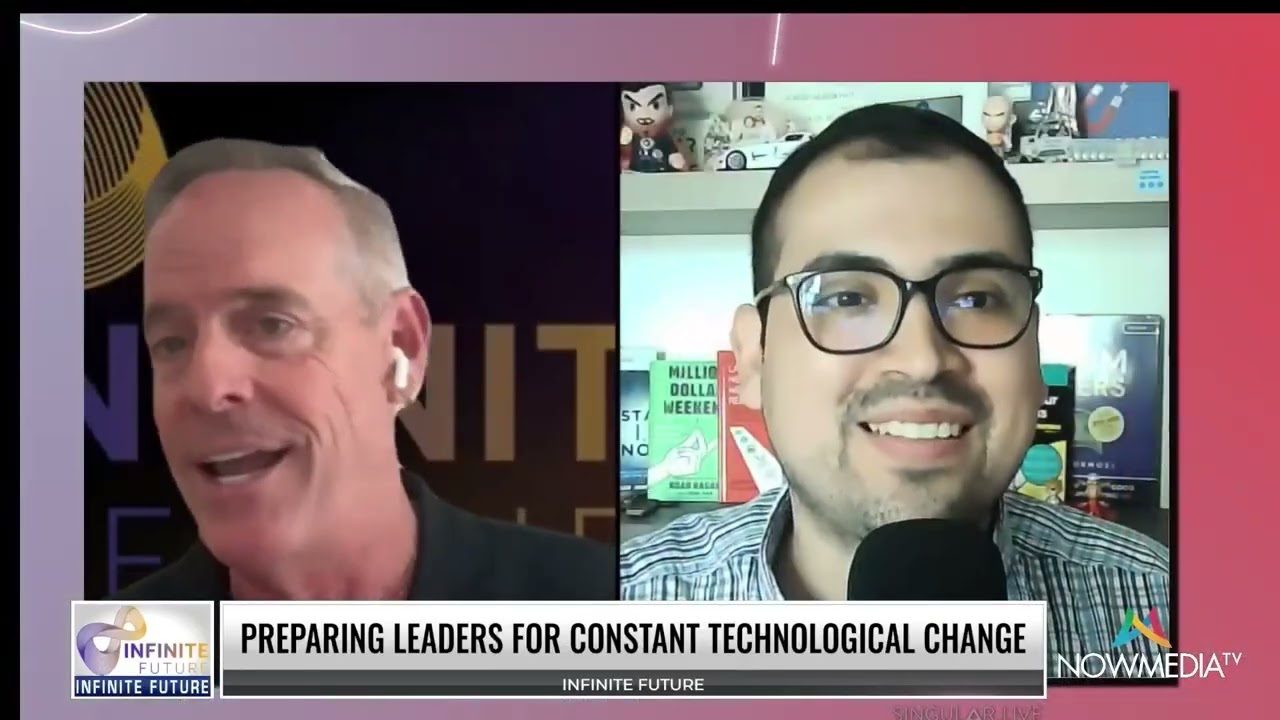
In this interview, host Todd Thomas and AI‑focused consultant Jorge Fuentes Zapata discuss how organizations can adopt an "agentic AI‑first" mindset to redesign workflows. They argue that AI should not merely automate existing steps but can eliminate unnecessary human actions, distributing workload (e.g., AI handling 30% of a task while humans handle 70%). However, they stress that accountability still often requires a human in the loop. A key differentiator for successful firms is having a concrete AI implementation plan that maps AI onto real day‑to‑day processes, rather than chasing the hype of being "AI‑first" without understanding internal SOPs. Data quality is highlighted as the foundation: poor CRM or database integrity will be magnified by AI, leading to amplified errors. They warn against DIY or low‑cost replacements for critical systems like HubSpot, Salesforce, or Microsoft Dynamics, citing compliance, cybersecurity, and legal risks (GDPR, etc.). Jorge emphasizes continuous learning—staying current with rapid updates to LLMs and SaaS platforms—as essential for consultants and marketers. Finally, they highlight the emerging trend of tightly integrating AI agents with existing tools (Gmail, Calendar, HubSpot, Apollo, project‑management software) to create unified, AI‑driven operational workflows. The conversation blends practical advice, cautionary notes, and optimism about the future of AI‑augmented marketing operations.
Chapters
But that really the way to really see a substantial improvement is to rethink your entire workflow really from an agentic AI-first mindset where there are potentially human steps that can be not just automated, but completely eliminated to create a simpler workflow that is then automated. Is this your experience and how do you walk clients through that?
Exactly right, Todd. And, and I would agree with, with that statement as well. We're thinking about how processes can be simplified with AI and, and parts of that process could also be delegated. I, I would go as far as saying that any process that requires some form of accountability, that still requires a human in the loop for, for that whole process to take place or, or be implemented, right? But AI can help with the, a distribution of, of the workload for, let's say, instead of 100 being done by human. You could have the AI agent help you with 30% and you, you do 70% of that, right? So, so I would say that that's kind of the, the mindset moving forward for sure. It's not so much as AI actually replacing a whole role, right? Because that, that might be hard to achieve, especially if accountability is required. And, and today as things stand, you still need accountability for a lot of things in business for sure. But I would say that if you think about AI agents being part of a process and how that distribution of that process is being set, then yes, it can really power that workflow on a day-to-day basis for absolutely any individual in the organization. It could be not only top management, but even just employees. Employees can actually leverage AI and the agentic workflow of it in a very good way for sure.
So Jorge, what separates organizations that Adapt well to new technology from those that stay stuck?
Absolutely, Todd. So I guess the— well, in my view, those companies that have an actual plan for how they're going to be implementing AI, those are the ones that can get ahead even faster or that should actually go the way of doing that, right? I think a lot of companies right now are wanting to be AI-first, AI-focused, AI-powered, right? Just because it's kind of like the new thing right now or it's It's the roadmap, the general roadmap at the moment, at least. But I do think that those organizations that actually take the time to dissect, as we were mentioning in the last segment, for sure, that workflow that happens in their day-to-day activities from different departments, from different department employees as well, those are the companies that are going to get ahead for sure because they're going to be able to see, well, actually AI fits this way into the picture, not in the way that I was maybe thinking about it, right? All of those blind spots that sometimes management has on how things are actually working, on how people are actually following the SOPs, right? If there are SOPs, assuming there are, right? Those are important. Those are actually sometimes very pivotal in the sense of like, if we do not consider or take those into consideration, When implementing AI, AI is only gonna magnify the mess instead of actually helping us get to where we wanna go for sure.
And even, you know, maybe improve their data quality before they can realistically expect AI to deliver results.
Oh, absolutely, Todd. And, and I would say that it starts with whatever we don't fix right now before we go full AI on things. Right? And, and talking about a database or a CRM. Right? If you got data quality or data integrity issues within your portal at the moment. Those are only gonna be magnified with AI. The AI is not gonna be able to, to do any better than what's already in there. The context is actually gonna be brought from there. Right? So there's a lot of—
Sorry. I gotta jump in there. That, that's a really important thing that you just said there. Right? AI is not going to solve your bad data problems. It's going to magnify your bad data problems. I think that's really important. And I think a lot of people think, Oh, we'll get AI, it'll solve it all. But it all is reliant on that data. So yeah, I think that's a really important statement. So I appreciate you saying that. Sorry to interrupt you. But I just, I want to magnify that because that's an important piece.
Totally. So that's, that's pretty fundamental, right? And any business that overlooks that, that side of it, right, especially when thinking about CRMs, databases, and the contact segmentation that needs to take place so that we can scale our marketing efforts, our personalization efforts, our sales efforts, even, I would say those would be— those businesses can't be left behind by AI in the sense of like AI is just not going to work for them because it's only going to scale the mess, so to speak, right? Instead of actually helping them achieve anything meaningful with it for sure.
The nerd statement out there, and I want to clarify, in my world, that's a big compliment. Data nerds, particularly data nerds, is a huge compliment in my book. Nerds rule the world. Right? And in particular, in today's world with, with all the technology we're talking about, as you said, you know, the data is the foundation of all of it. So, yeah, more, more power to the data nerds.
Absolutely, Todd. I, I always say it's never been a better time to be a nerd than right now for sure. Like, it definitely is. Sure, sure.
What are some other mistakes that companies will make, particularly around, you know, potentially buying tools, even buying AI tools, Before they have a clear strategy.
Oh, absolutely, Todd. And, and it all comes down to those blind spots that we were talking about. Right? I think those are some huge mistakes that companies are making. Right? And even not only when acquiring new tools. Right? Also when thinking about cutting, you know, their, their budget because, you know, they wanna replace HubSpot with a Vibe-coded option that they can do for I don't know how much amount, you know, a one-time purchase of maybe Lovable, Replit. And while all of these These vibe coding tools are great, right? So, and by the way, when I mean vibe coding, definitely coding with AI, right? Something that almost anybody could do. I'm actually a fan of vibe coding for sure. But with systems as sensitive or as important as CRMs, right? Databases. Those are things that the pros like HubSpot, Salesforce, you name it, Microsoft Dynamics, et cetera. They already have a journey in a lot of different areas that we're not seeing when we're just looking at the interface, right? So for example, when talking about compliance risk, when talking about cybersecurity risk, when talking about like the legal side of actually storing people's data there, the GDPR, all of these different laws that we have to comply with, that is when live coding a CRM solution on your own becomes a little bit of a scary endeavor and for sure something that is not worth pursuing, right? So that is pretty much how I would say, Todd, that businesses need to think about, you know, when adapting to new tools or trying to get new tools and implementing AI with that. They definitely need to get clarity on the strategy that they're going to apply moving forward. And they're going to be at a disadvantage, disadvantage if they're going to want to just cut costs for the sake of cutting costs, especially with SaaS or software in general, that is actually doing something useful for them for sure.
In your personal approach, how does ongoing learning and experimentation keep you current?
Absolutely, Todd. I would say that just like I said, it's never been a better time to be a nerd than right now. I also think that it's never been a better time to be a lifelong learner than right now because things are changing just so quickly. Like even from a month ago, there are some updates that, you know, ChatGPT, Claude have made. In the case of a CRM like HubSpot, you know, I'm a, let's say, a CRM specialist, CRM consultant, but I gotta be, you know, on top of what HubSpot is releasing on a monthly basis. And they actually release weekly updates to their platforms, weekly betas, right? To their software that I sometimes get questions asked on, right? By clients. And I need to be looking into those as well, right? So I guess the learning portion of a career is now extending to the whole journey of it rather than just, let's say at the beginning, I'm getting my degree, getting a couple certifications here and there, and then I can go into this company. And, and work there forever. That's not really how we have to think about things anymore because AI is also being knowledgeable on all of these things. But technology and the way that even the way that customers are purchasing out there right now, specifically when talking about marketing initiatives, those are changing very rapidly. And what worked maybe even just 2 years ago might be having issues right now, or it may have evolved in ways that we need to continue to learn about for sure. Yeah.
Yeah, I think that's absolutely true. Uh, just an example of Woodchuck, you know, Woodchuck is still a fairly new startup. We launched 3 years ago and we launched as a native AI company. We were using AI image recognition and generative AI from the get-go. And now we're 3 years in and we're redoing the whole platform. Uh, agentic AI has changed everything. So we just, we just recently took the entire team through an agentic AI intensive. And now we are re-architecting and redesigning the entire platform from an agentic AI-first vantage. And it's making some real improvements. So, you know, even, you know, if you are in technology and you're specifically in AI, things are changing so fast and staying abreast of the latest technology and making sure your team stays abreast of the latest technologies and the latest tools can have such an impact on the value that you can bring both to your internal teams, but probably more importantly to your clients, and to stay ahead of your competitors. Because if you're not embracing these new agentic AI tools, well, your competitors are. So you'd better be ready. Jorge, this is a fantastic conversation. We're gonna take one more break and then we'll be right back. So everybody stay with us. We're gonna get some more gems from Jorge in our final segment. So Jorge, what trends in AI, HubSpot, or marketing operations are you most excited about that you're watching the most closely right now?
Oh, yes. For sure, Todd. I would say that the unification of those systems is quite interesting. You know, at some point, you know, during my day-to-day, sometimes all I have to do is open a new chat window with ChatGPT or an LLM. And then since it has HubSpot integrated, my Gmail, Google Calendar, any other go-to-market platform like Apollo, et cetera, I can actually have it do stuff on it or get me context on those systems without me having to open any of them or log into any of them, right? So that's what I find pretty exciting about it, that it has empowered my own workflow and definitely my client's workflow as well, for sure. So I would say that's where those are the trends that I'm watching even more closely, how the integration of AI agents into actual operational workflows that call these traditional software systems like a CRM, a project management tool, a communications tool, etcetera. That, that is pretty much where, where the excitement lies, at least for me, for sure.
And thank you for sharing with us really such a practical, real-world, and still forward-looking view of AI and marketing operations. I think you've really given some, some practical advice on future scalability of business systems.