181. From 55 “Failed” Episodes to $23M Raised: The Pitch Story Josh Muccio @thepitchshow
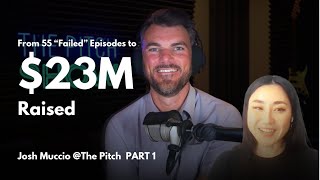
This is a transcript of a 2025 YouTube interview with Josh Muccio about the origin and evolution of The Pitch podcast. Josh and his wife/co‑founder Lisa launched the show in 2015, produced 55 early episodes (which produced no direct investments), then pivoted in October 2016 to in‑person recording events (12 companies invited, >$1M committed that event). Over time the show enabled founders to raise over $23M (and approaching $24M) and led Josh and Lisa to start an investing fund; the interview also covers their partnership dynamics and practical tips for co‑founder couples.
Chapters
So how did you meet these people?
That was the hardest part in the beginning. There are actually 55 lost episodes of the Pitch published between 2015 and 2016, and no one ever got investment on those. In those first 55 companies, even though a couple of them went on to be billion dollar companies in late 2016, we're actually building about ready to just throw in the towel. There was like, I think we had 5,000 people listening per episode, which was meaningful, but not enough to build a big business on. And so we were thinking about throwing in a towel, but then me and Lisa sat down and said, like, well, what if we give this one last, like, big push and we try to get a different cast of investors who are actually interested in investing on the spot and we bring in companies and we do it all in person. And so that happened in October of 2016. We invited 12 companies to this tiny studio in the Tenderloin in San Francisco, and we had over a million dollars committed to the companies. Those 12 companies that season.
Yes. So the first question, tell us about yourself. What do you do in Miami? Because our audience are from Japan or Asia, so.
Yeah, so we're actually not based in Miami. Our last recording event was in Miami, so that was a lot of fun. But the way our show works is we record in different cities across the United States. So far, we haven't taken the show internationally, but not rolling it out. It could happen. We've recorded in New York, San Francisco, San Diego, Chicago, I think that's it. And then Miami. Yeah. So, but the way it works was we host these recording events, we have a bunch of startup founders. Typically about 20 companies come and it's a three day event and each founder gets like 30 to 45 minutes, sometimes longer, in the pitch room pitching a panel full of early stage investors. Early stage investors like Elizabeth Yin with Hustle Fund, Charles Hudson with Precursor Ventures. And these are just prolific early stage investors. And we record the whole process. Founders have raised 23 million, close to 24 million, I think now on our show over the years, and that number has gone up significantly. Most of that has come in just in the past couple years since we started our fund. So, yeah, that's kind of the pitch in a nutshell.
Thank you. The PT show is a. Your shawl's name and then it's your 10th year's anniversary, correct?
Yeah, we're coming up on 10 years. We, I think, yeah, we started in 2015.
Wow.
Amazing. Yeah. So I believe there are tons of, like, crazy things happen or many challenges Right, right. So I want to deep dive into about your P show. So why did you start your pitch show?
Oh, gosh, yeah. Back in 2015, we had just sold our company, our first company, which was. It was a small exit, but meaningful for us. And it was an e commerce company. It was a business we really, really enjoyed, but we knew it was time to sell and move on to other things. And. And so with one company under our belt, me and Lisa, my co founder slash wife and now general partner at the fund, she, we were just trying to figure out what was next and felt like, you know, I want to do something this time around that I'm going to want to do 10 years later. Like, literally, we were like, let's pick something that is going to be enjoyable enough. Let's find something where the customers we're working with are enjoyable. Like, we enjoy working with them and we'll want to do this for the long haul. And so we actually stumbled on podcasting first. But the pitch didn't come around until a year later when someone else was listening to the first podcast I started called Daily Hunt that four people listened to. He was one of those four people as an investor out in Silicon Valley. And he reached out and said, hey, I've always thought that, like, Shark Tank is a bunch of bs. What if there was a show, we'll do it in podcast form that told the true story of how these deals get done. I don't actually remember how he said it, but that's the way I describe what we set out to create with the pitch. And his name was SHIELD Manat. He's now the general partner at Better Tomorrow Ventures, a fintech fund in San Francisco. And that was kind of the genesis of the pitch. The previous podcast, the Daily Hunt, didn't really have very many people listening. We thought, hey, this. This idea for the pitch sounds a lot more interesting, so let's go with that. So that's how it started. We just always thought, like, hey, like, founders and entrepreneurs, like, they deserve to know the true story of how venture deals get done. And we kind of felt like what was happening on Shark Tank was like misinformation for people looking to get into startups and entrepreneurship. Like, that's not actually how these deals get done.
And.
And so that was the motivation. And 10 years later, many ups and downs here we are still doing it. But the funny thing is, in the very beginning, we thought, you know, we want people to be able to listen. We don't want to just, like, democratize the access we want people to also be able to listen and then invest in the companies on our show. And it took us a long time to be able to figure out how to do that legally and what platforms to use, because at the time, there really wasn't the framework. There wasn't enough precedent set for founders or for companies that were doing that. And so we weren't able to really add on the investing part until just three years ago.
I see. Amazing. So in like your early stage or initial stage, how did you find your potential guest speakers? So, you know, two type of people. Right. We have to invite the people who want to pitch and also the past, the people who want to help judge. Right. So how did you meet these people?
That was the hardest part in the beginning. There are actually 55 lost episodes of the Pitch published between 2015 and 2016, and no one ever got investment on those in those first 55 companies, even though a couple of them went on to be billion dollar companies. One of them, I think, is called Ironclad. And we. Nobody was ever investing, and we just didn't have the right cast of investors. The. The format of the show was. Wasn't quite right. And what we realized is the problem is that everything was happening remotely. See, we thought when we started it that VCs were too busy to appear on podcasts. And so what we would do is we would record pitches with founders and then send the MP3 to the investors and have them record a voice memo. So we wouldn't even get on the phone with these investors. We were just like, let's go for the biggest name VCs and they'll just record a voice memo for us. It was silly. And nobody ever got investment. So in 2016, late 2016, we're actually about ready to just throw in the towel. There was like, I think we had 5,000 people listening per episode, which was meaningful, but not enough to build a big business on. And so we were thinking about throwing in the towel, but then me and Lisa sat down and said, like, well, what if we give this one last, like, big push and we try to get a different cast of investors who are actually interested in investing on the spot, and we, we bring in companies and we do it all in person. And so that happened in October of 2016. We invited 12 companies to this tiny studio in San. In the Tenderloin in San Francisco. And we had over a million dollars committed to the companies. Those 12 companies that that season. One of those highlights is a company called Fight Camp. It's a. It's yeah, it's like Fight Camp is like a peloton, but for boxing. And I think the company's valued at several hundred million. We don't know exactly yet, but when they were on our show, they were raising at a $3 million valuation. So it was that and you know, some other companies we had later on that made us realize like, wow, we really missed out by not investing ourselves in those companies. And that's eventually what led us to start the fund. But yeah, that first. Getting to that first season and getting that first event with that million dollars in commitments was. Was really a hard journey. But from there, things really took off. That's when we joined Gimlet Media. The show really started to take off and by that point, like it was easy to find companies and it was easy to find investors. It continues to get easier over time as our reputation builds and, and we become a kind of a known quantity. People like, oh yeah, I know the pitch. I, you know, either I listened a long time ago or I'm listening now. Either way, like it doesn't matter if they're listening actively now. They know who we are and that brand gets us to yes a lot of times.
Amazing. I love you. And Lisa didn't give up and like enjoy the moment and like step by step kept working. It's amazing. So how did you meet with your wonderful co founder slash your life partner Lisa from a college or same school or.
I mean, Lisa. I met Lisa in college actually my freshman year of college. We didn't start dating for a few years after that, but met her there and became friends and then eventually yeah, got engaged, had a bunch of kids and started business together. Several businesses I guess at this point.
Great. It's kind of super ideal situation like having a partner but can talk about business. This is separated to the just romance. Right. So you guys are managing the business and also your family. It's amazing. I know only like Canva co founders, they are couple. I believe so.
Oh, the Canva co founders. I didn't know that.
Yeah. So if I know there are many, many like couple slash like co founders. If you have some tips how to keep in managing business and also family with your partner slash co founder. If you have tips.
Yeah, the best tip I have is when you're feeling like frustrated or like the conversation is not going well or you're feeling mad at your spouse. Co founder. A lot of times like I have to ask myself like okay, what role am I playing right now? Am I the co founder in this moment? Is this is my partner wanting me to be their spouse and life partner and support them and just listen and not try to solve their problems or do they want me to actually try to figure this thing out? And so sometimes I'm actually not sure. So I'll just ask Lisa, do you need me to be the co founder now? Like do you want to know what, what I, what I think from that perspective or do you want me to be your husband? So that's been helpful, but it's still definitely hard. Um, but I think overall the benefits outweigh the, the difficulties. Especially if you've been with someone for a long time and you, you kind of know what you're getting into. So it's not like it's a mystery. Um, a lot of investors, for whatever reason, don't like investing in family members or spouse, you know, co founding couples. And I think that's crazy. I mean, maybe if someone just met like six months ago and they're, you know, just just starting to like build their relationship together and they're building a company, I would hesitate with that because there's not a track record. But if you, if you're investing in a co founding team and they've been working together or managing a family together for a while, I'd say that's probably one of the most de risked co founding pairs you could find. So we actually famously invested in a pair of twins on a couple seasons ago, Thoris AI One of the best investments we've made so far.
Amazing. Thank you. And as you mentioned, when you have something ideal, you said you gonna ask to yourself, so how do you have this moment? For example, many people do journaling and also many people do meditation. Tell us about your. How do you manage or asking yourself.
Oh, good question. I mean it's not really meditation or anything like that. It's probably just learning to be just patient and calm when the emotions get potentially get in the way and just learning not to, not to say the thing you're thinking. So I don't have any like tips or tricks in that realm. It's just I guess being together for a while and learning how to hopefully communicate well.
Communication.
Yeah, I don't, I don't know that we, I don't know that I communicate incredibly well. But we've learned a few things over the years, so that seems to help.
The three key takeaways from a conversation with Josh Part 1 1. Persistence pays off. Even after 55 lost episodes, Josh and Lisa didn't hit success overnight. In fact, their first 55 episodes had no investment and they nearly gave up. But instead of quitting, they reinvented the format, brought investors and founders together in person and that changed everything. Take away don't quit too early. Sometimes all it takes is one bold format shift to unlock your breakthrough. 2. Building a company with your life partner takes clarity and respect. Josh co founder is also his wife. This are their secrets asking what role do you need me to play right now? Husband or co founder? That question helps them separate love from work and work from life. Despite what some investors say, he believes co founder couples with history are actually less risky. Take career roles and honest check ins can make couple little startup not only possible, but powerful. 3. The pitch was always about truth, not drama Josh created the pitch as an honest answer to Shaq Zank. He wanted founders to understand what fundraising really looks like, not just scripted drama. It took years patience and creativity like demo fairs and legal puzzles. But today their show has helped founders raise over 23 million takeaway. Great media builds trust by telling the truth, not just putting on a show. Okay, thank you so much for watching our episode today. We hope today's conversation will help your future and career. If you like it, please subscribe us and give a like. Okay, the next episode is the Conversation with Josh Part two. Stay tuned. Bye bye Matane.
Ciao.
More from Josh
182. From Podcast to VC Fund: How Josh Turned The Pitch to $6.3M Raised Josh Muccio@thepitchshow

The Pitch: Rewards of Media Entrepreneurship and fund raising with Josh Muccio