182. From Podcast to VC Fund: How Josh Turned The Pitch to $6.3M Raised Josh Muccio@thepitchshow
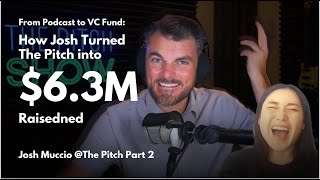
This YouTube interview (May 27, 2025 upload) features Josh Muccio discussing scaling a podcast into a media company and an audience-funded venture capital fund. Key points: podcast ad revenue is difficult for mid-size shows; Josh reframes podcasting as middle-of-funnel (nurturing relationships) and stresses experimentation for top-of-funnel growth (newsletters, paid marketing, podcast swaps). In 2022 they purchased the show back from Spotify (after Gimlet/Spotify deal) and used that ownership to launch a fund, publicly raising from listeners (announced on episode 101). Fund-one raised about $6.3M, accepted ~230 investors from ~800–900 applicants using AngelList and a 506(c) structure; they plan fund two for 2026. Monetization includes Patreon subscriptions (ad-free/extended video), merch, occasional pitch coaching (historical), and fund management fees subsidizing media. Upcoming plans include an on-location winery recording (late August, possibly invite-only / LPs). Personal notes: Josh brews beer, keeps chickens, owns a 1973 Corvette, recommends Andrew Wilkinson's Never Enough (From Barista to Billionaire), plays pickleball, fasts intermittently, and has a toy poodle.
Questions this video answers
2022
Episode 101
About $6.3 million
Approximately 800–900 applicants; 230 accepted
AngelList using a 506(c) public solicitation structure
Chapters
It's hard. Like, the business model for running a podcast by itself is really hard. So just the business model of making money on ads is not, it's not a great business model. As, as I've learned, it's certainly gotten us to where we are today. But at this point, you know, the fund, having the fund and the media company working together, we seem to have found our sweet spot. And it, it works really well. There's like a flywheel between the fund and the media company. Like, I think in the beginning I thought the podcast was top of Funnel. I thought the podcast was the thing that brought in the audience. And then, you know, lower down in the funnel, we can figure out how to convert them to either investors or founders that come on our show, or you can think of any other type of product that we might be able to launch to serve people. Right. But I thought the podcast was top of Funnel. And it's funny, it was just a couple of years ago I realized, no, the podcast is not top of Funnel. The podcast is like middle of the funnel. Nurturing those leads, like, building those relationships. And. But you do have to figure out what that top of funnel is, and I think that's tricky in podcast form.
See? Thank you so much. It's great. Okay, next. Yeah. So in the table, 10 years of history, so what was the biggest challenge?
Yeah, I mean, it's hard. Like, the business model for running a podcast by itself is really hard. You know, you think of big podcasts like, I don't know, we'll say Joe Rogan, the stereotypical big podcast. That's easy to make a business model work because he's got millions and millions of people listening, tens of millions of people listening to every single episode of a show. And so it's pretty easy to slap some ads on that thing and make some money, you know, for a lot of these smaller shows. Our show is like a mid size show. So we're not huge and we're not like a super small niche show either. Like, we've got a good critical mass of people listening, but still, even then, it takes a lot of time, time and effort and a lot of people to make a good episode of the show. It's, you know, cheaper than film to make for sure, but it's still not cheap. And so, so just the business model of making money on ads is not, it's not a great business model. As, as I've learned, it's certainly gotten us to where we are today. But at this point, you know, the fund having the Fund and the media company working together. We seem to have found our sweet spot and it works really well. There's like a flywheel between the fund and the media company. And we're really excited for where this thing goes from here. But, you know, to answer your question or to dive deeper into the hard parts of scaling a media company, podcasting in particular is just a long game. It's just like you don't unless you're, you know, publishing off topic, you're, you know, colorful takes on news or pop culture or, you know, controversial takes on things. Like, your stuff's not going to go viral. But I'd argue that, like, it doesn't need to. Like, in podcast form, you're building relationship with people that are sitting down and listening to you for 30 minutes an hour, and that really compounds over time. It's hard to grow a big audience episode after episode. Consistency, you've. I'm sure I've heard a lot of people talk about how important it is to be consistent. That's really key. But then just having some sort of, like, I think in the beginning I thought the podcast was top of Funnel. I thought the podcast was the thing that brought in the audience. And then, you know, lower down in the funnel, we can figure out how to convert them to either investors or founders that come on our show, or you can think of any other type of product that we might be able to launch to serve people. Right. But I thought the podcast was top of Funnel. And it's funny, it was just a couple years ago I realized, no, the podcast is not top of Funnel. The podcast is like middle of the funnel. Nurturing those leads, like, building those relationships and. But you do have to figure out what that top of funnel is. And I think that's tricky in podcast form. If you're get into getting into podcasting, you have another like maybe a blog or a newsletter or something that has traction. You see a lot of people doing that or you see influencers getting into it. Famous people, right? Like, they already have their own top of Funnel, and so they just convert them into mid funnel. You know, I, you said I'm a rock star. I appreciate that, but I don't think think I'm that famous actually. So, you know, I need a different top of Funnel. I can't. It's not just me. So, like, we have to find a way to market the show. And over the years we've done that just by working with different podcast networks. That's, that's worked really well. We do swaps with other podcasts and things like that to, to grow awareness. But even now we're trying to think of like, okay, what else can we do? Is it a newsletter? Is it, is it paid marketing? So we're doing a lot of experimenting this season on different growth channels to see what, see how we can boost the top of Funnel for, for what we do at the pitch.
So experimentation is so important, like startup, right? So we can try and we can do, test, maybe not do this, maybe we have that to go. Plan B, like that. So so far, what panel or what way is good for like you feel comfortable to get revenue as a media company?
I mean, we do have like a subscription and other things behind the scenes for folks. I don't, we don't, you know, we have a decent number of subscribers to our Patreon. We've tried, you know, we give away the full video episodes on our Patreon. It's without ads. We send like extended uncut versions of the show. And that's gotten a decent amount of traction. It's nice, but it's still not the majority of the way we make our revenue. I think, like, if you have a really large audience, that can be a really great, like additive way to diversify your revenue streams. But again, like, it's not that. That's, that's another bottom of Funnel, you know, way to make money. In the beginning, a long time ago, we used to sell people pitch coaching services to founders. So we did that for a little bit, but that obviously took a lot of time. Time I'd rather be spending making new episodes of the show that a lot of people listen to rather than, you know, just one on one coaching sessions. What other ways have we made money? Oh, we sell merch. I mean, it's the classic stuff that, you know, everybody says you should do if you've got a YouTube channel or podcast. So. But yeah, I mean, other than that, the fund itself is what the fund and, you know, brings in its own revenue or management fees and that, that helps subsidize, I guess, the revenue on the media company side as well.
See? Thank you. Yeah, it's great. You did many, many experimentation. And three years ago, 2022, you guys started to have a pitch fund. It's kind of a game changing moment.
Yeah, it was, it was crazy because we, that year we had purchased our show back from Spotify. Spotify had bought Gimlet Media, I think in 2019, which was another meaningful exit for us, which was wonderful. But then in the aftermath of that, there was Covid and a bunch of stuff happened, and we looked to buy our show back and take it out of Spotify and make it independent again because the show was exclusive to Spotify for a while. So we were able to purchase our show back From Spotify in 2022, take the show independent, made it available on all platforms again, and that was the moment we finally got to start a fund. We had wanted to start a fund years ago, years earlier, but we didn't own the show. We didn't own the IP to our show. Gimlet owned it because we had sold it to them years prior. And so purchasing it back, getting our own IP again, we got to do some of these things that we'd wanted to do for a long time, and that's when we were able to open it up. But instead of raising our fund from family offices or institutions like, or know, endowments, like most venture funds do, we raised it from our audience, we raised it from listeners. And that was on episode 101 of our show, where we just got to tell the whole story of starting the show, getting the show back, and the mission of the fund and what. Where we were excited to take this next. That's what kicked things off and got us most of the funding. So, yeah, bought the show back, started the fund, raised it from listeners. So that was. I think the fund is up to 6.3 million or something like that right now, which is great. So it's a nice first fund to kick things off. And we're planning fund two for next year for 2026. Yeah, I mean, it was a. It was a long process buying our show back from Spotify it. But it was pretty simple, really. I mean, we just had people there that we were able to talk to and say, hey, you know, we want to take the show elsewhere. And they sold it to us. So it wasn't. It wasn't too difficult. It just took time. Let's see. And then starting the fund, I mean, that was funny because it was not something we thought, oh, we need to start this right now. It was like, we're going to get the show launched, we've got the show back, let's start publishing, get back into publishing again, hire a new team. We're starting from scratch again at this point because it had been about a year and a half since we'd published an episode. And in talking to investors, asking them to actually invest in our media company, we kept talking to investors who were like, I'm excited about your media company, but this fund that you're planning to start I'm even more excited about. And they were one VC I think it was Christy Pitts is her name was just like hey, you know what if the next season the show you have a unicorn, like one of the biggest success stories, you know, massive company gets built and because you didn't start the fund early enough, you completely miss out. And I was like, yeah, that would really suck. And we already have a bunch of stories like that that we missed out on. Companies like Pepper and Bounce. Gosh, there's a bunch of, bunch of others. I'm. Their names aren't coming to me right now, but like really amazing companies that we'd worked with previously. So I was like, wow, like I don't want to miss out again. And so we started the fund and I mean that process was pretty easy. We just talked to Angellist, they run a fund admin product. It's great for first time fund managers. And they also do they handle the pipes in the back end. Allow us to raise publicly legally. It's something called 506 C is the term and it allows us to publicly solicit investment. The only thing is like we have to actually verify the people that end up investing in the fund are actually accredited and Angellist handles all of that so that we can, you know, raise from the public legally without having to worry about that extra complication. So yeah, I mean we, we had probably 800, maybe 900 now people apply to BLPs in our fund and then in the end we accepted 230 of them and that's what got us to our, our six six and Some Change Fund one Amazing.
Thank you so much for sharing such a wonderful story. Yeah, yeah.
I'm glad you like it. I'm glad it's helpful. Yeah.
So last question. So this is a special year for you, right? Because of the 10 years anniversary. Do you have some special event or special something?
Well, we have not been framing it as 10 years of the pitch. I have not thought about that. That's a great idea. I mean we do our next event we're planning to record in a, in a winery in either Napa or Sonoma. It's the first time we've ever done a, an on location kind of destination shoot which should be really fun. But we're actually still trying to secure the winery who will let us come in and kind of take over for three days. So it's a big ask and it's like during season for wineries. So um, that's our, that's our goal. We didn't really think about it as a ten year celebration, but we might. That's a, that's a good idea.
I see. So the next event is in late August. Our audience want to go to this event. How can we like apply to go to this event?
Gosh, we don't. Last one was not open to the public. It was just for LPs and our fund and then a few invite only folks that we, we invited it. We're thinking about opening it up this, this season. The best way to find out is to listen to the show. If we end up doing, inviting it to or opening up to the public, we'll, we'll do an announcement on this show.
I see. Thank you so much. So please check Josh's show, the paid show and also maybe you gonna post information, event information via the including or other social media. Right?
Yep. Usually LinkedIn these days.
Thank you so much. Okay, just like few last question. Lightning question. Lightning lightning question.
Okay.
Yeah, yeah. What is your fun fact?
Oh, gosh. Fun fact is I brew my own beer in my garage. Really? And I have chickens.
Wow. Amazing.
And I own a 1973 classic Corvette.
Classic what?
Corvette classic car. Yeah.
Wow. Amazing. We have to check his Instagram.
Nope, it's not on there. No, I don't think I've shared it publicly. It's a beauty.
Okay, thank you. Next Terrace. The book you really like recently.
I have not read very many books recently that I've really liked. The last one I really liked. Last business book I liked. Dang it. What is the name of that one? Oh, here it is. It's Andrew Wilkinson. The book is called Never Enough From Barista to Billionaire. We actually talk about this a lot on the show. We have a couple episodes called the Exit where we interview founders after they've exited their business and kind of unpack the myths that people believe about what's in this pot of gold at the end of the rainbow. And this book is probably the quintessential answer to that question. What do you do when you, you know, sell a company for billions of dollars? And it's for a lot of folks, it's like the end of their identity. It's like a pretty existential, troubling time. So I think what I like about it and why I encourage people to, to read it is just it gets you in the mindset to realize like, okay, this, like all my problems are not going to be solved when I exit my company. Like they're still going to be there. And in Fact, they're probably going to be even more complicated. Yeah, I'll maybe have more free time. But the problems, there will be new problems to solve and they're not going to be the ones I'm used to solving. And I might not be capable of solving them if I throw my entire life into building this company. So it's really interesting, I think, to think about that balance and be. Be aware that the grass is not as green as we always think it is on that side. So anyway, it's a great book, actually. Really, really written. Well, I'm not sure what editor Andrew Wilkinson used, but I was highly impressed with the way that book was written.
Thank you. I gotta check. It sounds so interesting. Yeah. So, next question. You look so healthy. So tell us your secret. How to keep your healthy, like physically and also mentally.
Boba tea? I don't. I don't have a secret. And I probably need to pay more attention to my health, actually. So I'm not like in. In bad health, but I don't know. I play pickleball, I play sports. Try to stay active, try not to eat too much every time. I fast, breakfast a lot because I hear that's good, you know, intermittent fasting and all that. But now I don't have any magic elixir. Elixir. Fountain of youth. Secret, if there is one. Sleep is so great. I love to sleep, so that's not a problem for me. I'm always sleeping. If I'm not on the podcast, I'm asleep. I'm just kidding.
With your puppy dog.
With my dog, yeah. The dog, yeah. She sleeps at my feet, keeps me warm. I try not to kick her off. She's a tiny little toy poodle.
I see. Thank you. It's great sports and also, like sometimes you fast. You do fasting. Many fasting and also sleep. It's good. You can have a great conversation with your partner and also your family. So. Okay. So, Josh, thank you so much for your time. I really enjoyed the conversation with you and I learned a lot from you.
Me too. Thank you, Kaori. I really appreciate it.
Okay, let's talk soon.
All right, I'm here. Talk soon.
The three key takeaways from A Conversation with Josh, Part 2. 1. Building a podcast business takes grit and time. Josh shared that podcasting isn't a fast growth media business unless you're already famous. It took years of iteration, consistency and experimentation with formats, monetization and partnerships to build the pitch into a sustainable venture. For smaller shows, podcasting is made funnel, not a viral growth engine but a way to build deep trust over time. 2. Buying back the show and launching a VC fund changed everything. A major turning point was in 2022 when Josh and Lisa bought the Pitch back from Spotify, regaining ownership of the ip. This gave him the freedom to finally launch a venture fund, something he had dreamed of for years. The fund now has over 230 LPs and 6.3 million raised, many of them loyal listeners. 3. The power of authenticity and audience relationships Josh believes founders deserve to hear the real stories behind how they happen, not just the dramatized version like Shark Tank. His long term success proves that honest relationship driven content can resonate deeply and unlock new business models like raising a fund from your podcast audience. Okay, thank you so much for listening our episode today. We hope this conversation will help your future and career. If you like it please subscribe us and give a like. Okay thank you so much. Bye bye. Ciao Matane.
More from Josh
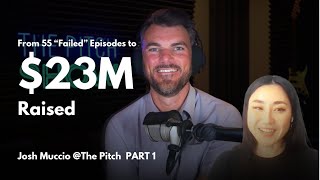
181. From 55 “Failed” Episodes to $23M Raised: The Pitch Story Josh Muccio @thepitchshow
The Pitch: Rewards of Media Entrepreneurship and fund raising with Josh Muccio