VC Secrets Revealed: How Startups Get Funded | Lisa & Josh Muccio (The Pitch)
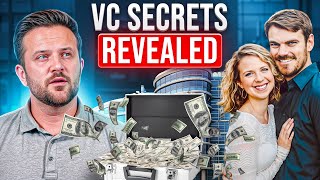
This content was created by tender-avalanche. This content was uploaded by tender-avalanche. This is a YouTube video titled "VC Secrets Revealed: How Startups Get Funded | Lisa & Josh Muccio (The Pitch)" created on December 8, 2024. It features a conversation between Rich Smith and guests Josh and Lisa Muccio, discussing the intricacies of venture capital, including the process of funding startups, evaluating founders, and managing investment portfolios. The discussion provides insights into the venture capital industry and the Muccios' unique approach to investing in early-stage companies.
Chapters
Have you ever wondered what it really takes to get a startup funded? Or better yet, how venture capitalists decide who gets the big checks? Today, we're diving into the world of venture capital with the experts who live it every day. What if I told you that understanding just a few insider secrets could change the way you think about funding your next big idea? This isn't just about raising money. It's about knowing what separates a great pitch from the rest and how you can position yourself to succeed. Oh, and stick with us until the end for an invaluable tip on avoiding the single biggest mistake even seasoned entrepreneurs make when pitching to investors. This insight could be exactly what takes your pitch to the next level. I'm Rich Smith, and I specialize in helping entrepreneurs and business owners gain the knowledge they need to grow and succeed. Today, I'm thrilled to be joined by Josh and Lisa Muccio, the powerhouse duo behind the Pitch, a top podcast and YouTube channel that gets hundreds of thousands of downloads each month. And not only do they feature incredible founders on their show, but they also run their own venture fund. Having already deployed millions of dollars across nearly 50 companies each year. Thousands of startups pitch for venture funding, but only a handful break through. For most entrepreneurs, getting it right is the difference between rapid growth and another missed opportunity. Today we're going behind the scenes with Josh and Lisa to uncover what really happens in a pitch meeting, what venture capitalists are actually looking for, and how you can improve your chances of landing that investment. If you're serious about leveling up your business, understanding the VC world is key. So let's jump into this exciting conversation with Josh and Lisa Muccio.
Can you briefly explain what venture capital is and how it's crucial for the startup economy?
Yeah, I mean, I think venture gets a bad rap because there's a lot of just rumors and, like, news and actually what venture capital is, particularly at the early stages. Like you. You're investing in the next generation of like, category defining tech companies, category defining brands. You're, like, investing in the future in innovation, like, in the idea that, like, people with an idea and a vision for how the world can be better and an idea on how to make it better could actually do it. Like, they could actually make it work and, like, we get to basically be a part of many different journeys like that by investing our Money and the LPs that trust us with their money into these companies.
Yeah, I, you know, I'm someone who has always wanted to make a difference in the world, and I think it was when we started the pitch fund. I, I think I finally realized like this is one of the best ways I could actually make a difference in the world. Because money is what changes things. Like even if we don't want to believe that money is what it takes to change things. And so we get to determine, you know, what companies we back, what founders we back and, and what companies actually get to exist because we're investing in them and making sure that they do exist.
You guys have probably viewed over thousands. I'm guessing I'm going to make up a number, like 5,000 different startups, you know, in all your years.
Yeah, that sounds about right.
Yeah. Essentially, pitches, pitch decks, meet founders. So how do you differentiate between a startup that has potential and one that's likely to fail?
So I mean, first of all, companies have to be venture backable. And so you have kind of like a few check boxes, if you will, that like is the market size big enough that this company can turn into a billion dollar business? Because in venture you have to be able to return the money to LPs. And it's not gonna work with every company because we're investing so early. Many companies will fail. And so you really have to have the big winners to return an entire fund. But then beyond that, because we're investing at such an early stage in a company, we're investing at pre seed and seed size rounds. The company is going to change and pivot so many times before it actually becomes the company that it's like destined to be. And so we are very focused on the founders because that's what's going to stay consistent. Does this founder have what it takes to build a big company? Do they have the passion to solve this problem? Because if they're passionate about the problem, they're going to keep going even when it gets hard. And it's gonna get hard. And then the other thing that I really look for in founders is a humble founder, which is not something that you hear in venture a lot, but that's specific to our fund and our thesis. A humble founder will ask for help when they need it. And somebody who has ego is not gonna be willing to ask for help. And so it really does take a village. You know, like startups are like babies. So just like it takes a village to raise a child. It takes a community to build a company and you need willing to ask for help. And also founders become leaders of a company and as startups grow, they become big businesses and it becomes less about running a company. And a lot More about people management. So having a leader in place that can earn the respect of people that work under them and follow them is crucial. So we really think that a startup will succeed based on the founder. So our, our philosophy is very founder focused.
But another way to answer your question might be talk about how we diligence founders and how we get to know them so well that there is that like trust and what we believe is a way to de risk the portfolio over time just by investing in great people and building such a strong relationship with them where like, we know at the end of the day who we're investing in, what their character is, that's where we spend a lot of time behind the scenes is just in how do we make that process even better season after season?
Well, Josh, you use that term diligence and I know there is an entire due diligence process and it could be months long. And you're getting to know these founders. So to both of you, what specific metrics or indicators do you prioritize during the due diligence process?
So I really prioritize looking at the founder. And we have a few different, I guess, pillars, if you will, that I am looking for. And the first is, are they a humble founder? Are they easily offended? Are they gonna ask for help? Like these are things that will literally make or break a company based on who the person is leading it. The second thing we look at is a passion for the problem they're solving. You know, we have a lot of companies we've invested in that are just trying to make healthcare accessible to people who don't have access or, you know, college admissions accessible for those that don't have access. And so these people are very passionate about a problem they're solving because they have a lived experience where they felt that problem. And so, you know, like someone that's working on that is not going to give up at the first, you know, bump in the road. And this is, it's a long time that it's going to take to build a company into something that's venture scalable? Um, ultimately you're looking at probably 10 plus years of being on a journey with this founder. And so also is this someone that we like and trust because we're gonna be with them for a long time?
Yeah, I mean, I think our process is probably one of the most unique processes in venture. We didn't realize it because we weren't, we didn't create our process for a fund, we created it for a show. And it slowly morphed into a fund. But it starts actually with Peter Rich, who you've met at our recording events. And Peter looks at about a thousand deals every season of our show, if not more. And then he gets on the phone with, I want to say, 200 plus people leading up to an event, and he's just kind of screening for, like, are you. Do you know what you're talking about? Like, are you, like, kind of BSing me or do you have, like, a real company you're building? Because, like, I mean, there's a lot of BS out there, unfortunately. And so then he, you know, takes the best founders. I don't know, maybe the best 50 he talks to out of those 250.
I would say more than that, probably. I think I take about 70 phone calls from Peter.
Okay.
And then after I talk to those 70 founders, I pass on. I would say probably about 40 to you.
Yeah, Those that pass the Lisa test, our process, like, it's just so different. And like, at the end of that, like, after they talk to me, we don't cut the check. Then that's when we start working with the founder and preparing them for the show. So, like, we were taking our very best companies and then we invest, like, months of our time working with them and then we meet them in person at one of our events. And that's where the VCs on our show get to, like, you know, tear the business apart. And, you know, we get to kind of stress test our assumptions on the business, like, because we're not individual industry experts, because we're not on fund four, five, six. Like some of the VCs on our show, we're only on fund one. We really listen to these VCs and like, like, what is their take on this market? Like, we, like this founder. We think there's a real opportunity here, but, like, fill us in on our gaps, you know, where we don't understand maybe this industry and the intricacies of it. And boy, do they. I mean, these, these investors have hundreds of companies in their portfolio, so they can always tell a story about a similar company they've invested in and that, that goes into our diligence process and then we cut the check after that.
Can you walk us through the different stages of venture capital investment and what you look for at each stage?
Yeah, so I love this question because this is where, like, people get really confused about venture. People see the headlines about Andreessen Horowitz and some of these other, like, big name venture capitalists investing in Twitter or Uber or, or Whatever. And some CEO billionaire fighting with the CEO, Bill. Like that's the stereotype of venture. And like we don't actually play in that arena at all. Like we're investing so early. Like we're investing in companies years before Andreessen or Sequoia or these other firms are going to come in. We're investing in the pre seed and seed stage, which if that doesn't make any sense, uh, it's just a complicated way of saying like first checks into these companies at the very, very beginning. And I think it's a massive opportunity. Right. And then at that point it's, you're just evaluating the person. Like, do they have the right background? Like Lisa was saying, like, are they the kind of person who's going to stand the test of time and turn this into a massive company over ten plus years? Uh, and then we also operate at the seed stage. So this is just the next notch up. So like they've probably already raised a little bit of capital from somebody else. So we're not the first VC investing. But at that point they usually have a product live, they've got customers. There's a sense of like churn. Are they losing a lot of customers each month? How much does it cost to acquire a new customer? Customer acquisition costs. Like there's a lot of meat to dig into. And that's more the classic, like what you would think a VC diligence meeting would be about. So we do seed stage as well. That's usually a little bit more expensive. Basically the prices of these companies, the valuations are a little bit higher. But then after that, that's when you get into the growth stage. That's series A, series B and beyond. And we don't operate in that realm. That's not our expertise. What we do really, really well is find people and companies that are, they're building amazing things that are just super, super early and there's like some value that like nobody else has seen yet. Like that's, that's what we do. We don't do the growth stage stuff.
Yeah. For people who are completely new to this, if. Would it be safe to say that an angel investment and almost like a friends and family investment are kind of on the same wavelength? Or would you clarify that a little bit? Okay.
I mean, oftentimes people have raised a little bit from friends and family or they've got their own money that they've invested in the company to bootstrap over a couple years. So even in that environment, by the time they're first raising from VCs or external investors like us, that's still often considered pre seed. So even though they might have a product, it's just like it's still so early or the first check in, prices are lower.
Yeah, and I think people can probably recognize that term like a series A. So when you see that this business has been around, they've raised and in some cases for our listeners for this interview, that's already too late.
Hopefully we funded that company previously, years before.
Yeah, I will say too, you'll notice the valuations change right from stage to stage. So this is not necessarily standard, but you could probably say anything with a valuation cap, sub 10 million is probably pre seed, but like a valuation cap maybe in the 10 to 20 range is probably a seed stage investment.
Yeah, obviously there are exceptions to that rule, but generally most of what we see, yeah, it's in those ranges.
Given the high failure rate of many startups. How do you manage risk within your portfolio?
You just make a ton of smart bets on really smart people who are super passionate about a problem. And the numbers say like 30 or more companies in a portfolio is smart. Typically like that's how you diversify risk. You can actually be really great at company, at picking founders and picking companies, but you just didn't take enough shots on goal. There's something that happens and this is all just advice we've gotten from, you know, fund managers that are on Fund 3 and 4 and beyond who say like basically, you know, just like you have to have 30 is the minimum you have to have at this early, early stage, growth stage like we were talking about earlier, it's different. Like a lot of these growth stage venture capitalists, they'll pour tens of millions or hundreds of millions of dollars into like 10 or 15 companies and that is a fund or even fewer sometimes. But our, you know, at the pre seed and seed stage, there's just so much risk to have a diversified portfolio. You have to take lots of shots on goal. So for our fund, Fund 1, we're targeting closer to 50 companies just because that increases the statistical likelihood of having an outlier in the portfolio. And this is a game of outliers.
Yeah, makes complete sense to me. Well, what is the typical timeline then for returns on investment? And you know, maybe we could talk a little bit about what investors should inspect in terms of an exit strategy for the companies you invest in.
You know, some people are uncomfortable with this aspect of venture, but we're not in control of when these exits, you know, when these exits happen or when these founders sell because we're investing so early and then these companies graduate to the next stage. As they graduate, we lose control. It's exciting when they graduate because the company is getting bigger, it's growing. It means that what we're doing is working, but it means we lose control of the investment.
What we tell our LPs in the pitch fund is like you could expect to not see a return for 10 plus years. So oftentimes also you see people investing out of their IRAs because it can be like, you're almost looking at this like retirement savings. Yeah, it's a long term, it's a long term play because it takes time for companies to grow.
Yeah. These investments are extremely liquid. They're not publicly. Like sometimes there's a secondary market for these companies where you can sell some shares on the side, but it's extremely rare. So you know, it's an illiquid asset class. So if an LP is like, I want my money back, it's like, well, you can't, there is no money yet. These companies haven't exited yet. So that's why you really have to be down for that, you know, 10 year plus journey.
You know, I'm curious if it takes 10 years, let's say, and I put in $10,000, you know, just something small. Can I expect to become a millionaire or, or is $100,000 at 10x return like, like the best that I could possibly expect? Because there are people out there that probably want to invest in your fun after listening to this. And we need to be realistic about what might be returned in 10 years once they're ready. So. Yeah, can you speak a little bit about what's realistic and what's grand slam pie in the sky? You know, amazement like. Yeah, expect in terms of returns.
Go ahead. Well, I mean, I think it's, you know, nobody ever sets out to create an average venture fund, but it's helpful to know what the average returns are as a starting point. You know, if you take the whole, all of the venture capital funds that have existed over the past 20 years, I think the average return is something like 2x. So if you're pretty average or not that great at your job, you know, you're going to at least.
Well, if we're pretty average and not good at our job.
Oh, if we're pretty average and not.
Good at our job, you'll at least get 2x.
Yeah, you'll get, you'll get 2x over 10 years on, on average. Right. Like obviously There are funds that perform worse than that and some that perform much, much greater than that. That's why it's the average. But it's very rare for a venture fund to say, oh no, all your money evaporated. Right. Because you are investing in like, valuable companies that are solving real problems. So like, there should be some value created in that fund. But on the flip side of that, like what we're doing, our goal is to have a fund that returns between 5 and 10x what investors have invested. And that would put us in the top decile, top, top decile of venture funds. But there's so much about what we're doing that's unique from everything from our process to the media piece that you talk about, to the price of these investments that we're making. I mean, some of these deals, we're investing when the company's valued at less than $5 million. And when you invest in valuations that low, you don't even need the companies to exit for a billion dollars, you know, but if they do, but if they do, it returns the entire fund many times over. And so, you know, that's obviously where this gets really exciting. And when you're running a fund that's investing at the pre seed and seed stage and you don't do any, any of the growth capital stuff later on, you have the potential of truly having what they call an outlier fund, where your fund itself just dramatically outperforms the average. And that's extremely rare. And it, I, you know, it only happens when you like truly break the mold at this point. Because if you're doing the same thing every other venture capitalist is doing, it's driving up the price of those deals. And, and so then to return a higher multiple on their investment, it's just becomes impossible. That's why you see so many venture funds that are at the growth stage and higher. It's so much more rare to see an outlier fund. Almost all of the outlier funds are pre seed and seed stage.
Yeah, I think it's important for people to realize the, what you said is, is the average might be 2x and that's over 10 years. I know that. I feel like you guys have a really good hat on your shoulders in terms of finance. But I love all like the little rules. Are you familiar with rule is 72 and it's okay if you're not.
I could like 72. Is that like the 80 20.
I don't know what the 72 is. Like, it's, it's, it's based on the compounded interest rate annually, how long it would take for you to double your money. And so when you historically look at the stock market, for example, and how taking into account inflation, people say between 7, 8, 9%, depends on who you're listening to, that it would take on average, let's say nine years to double your money.
In the market.
Yeah, in the market. What I think people need to realize when they're talking about venture is that $10,000 that you, that you put in after nine, 10 years could potentially double on average. And it would be the same thing as sticking it into some sort of target date fund and just never having as much fun as we're having.
Right.
But where the upside to that could potentially be, you know, 10xing or having an outlier fund. But also just like that person who maybe initially put in some money once, let's again use that round numbers, $10,000 and it takes nine years to double. You don't have to stop after once. Like for example, if you're liking the fun and you can put more money in the next year, if that's an option, go ahead and do that. There will be additional funds. So as you start to ladder these investments, you know, year one, year two, fund one, fund two, all of a sudden you're going to have a lot to talk about in 10 years and 11 years and 12 years. And I think that's the idea people need to remember. It's not about doubling your money, it's about like growing and growing with the investments as well. So.
And it's about learning. So yeah, so many of our LPs have joined because the access that we give our LPs and the not just like the storytelling on the show, but the emails we're sending behind the scenes. Obviously you come to our events and you get to see these deals happening live. And then we got the email newsletters, we got the Slack group where people are talking and like unless you were a fund manager yourself or an extremely prolific angel investor with extremely good deal flow, there's no way for you to experience this level of darkness. Deals and like deal analysis on startups, like there's nowhere else in the world to get it unless you're literally working at a VC firm.
Yeah, yeah, well said. One of the first questions someone asked me when they were new to the pitch and they were considering joining was how does the fund make money? And I think what they were referring to is that you have the general partners, you have the fund managers, if you will Doing all this work year after year and setting a goal of it maybe taking up to 10 years to see some returns. So how do venture capital firms make money and does the fund size impact that?
There is a management fee, and that tends to be the standard of 20% over 10 years. So every year, 2% of what's invested is paid to the fund managers. Obviously, as you get bigger funds, that means more money, but it also means you probably have to hire a bigger team to support your portfolio and all of your LPs. So it kind of makes sense. The bigger you grow, the more money you make. But also more you have to hire people. And then on top of that, that money is actually technically like borrowed money. So that fee is something that it feels like the LP is paying because, you know, they're paying 20%. But all of that money gets paid back once we start making money in the fund. So if you invest your 10,000, we as the fund managers will invest 8,000 of that. But once that money is returned and you've now 2x your money, we will pay you back that full 10,000. And then any profit on top of that, we also would take a carry on. And so the standard carry for most funds is about 20%. So you now make 80% of the profit that was made on the fund.
On top of the initial investment. Yeah, yeah, yeah.
So if anybody out there is thinking like, well, they have a million dollar fund, you know, 2% of a million bucks, $20,000, you know, like, like a year. Yeah. You know, you're not, you're not eating out, you know, steak and lobster every night, you know, a year.
I don't think you're eating steak and lobster at all.
Right, right, right.
What's a lobster? Right.
Yeah, yeah, that's, yeah, like one tail. Yeah, We've been doing a lot of like, analysis and talking about like, like the processes, but if we look ahead a little bit, it's. You guys don't have crystal balls. So I'm not going to hold you this, but what current market trends are you observing that could shape the future of venture capital?
I have lots of thoughts on this because everyone wants to predict the future. Yeah, VCs love to talk about that, and I'm just not interested in playing that game.
Oh, wow.
Good clip right there.
Well, I mean, I think the obvious answer to this is AI, But I think what is unique is that my, my answer is AI, but probably not in the way that you think. I mean, I mean, in the sense that, like, people are investing so much in AI now, but as far as like actual returns for a venture fund, I don't know how beneficial that is because like as it just becomes more prolific, I don't know that the valuations of those companies stay very large. So I don't know how good of an investment it is. And I think it depends obviously on how AI is being used in a company. So I would actually say like one of the market trends. I don't know. This isn't a market trend, but it's like a place, a space where not a lot of people are playing and that's in cpg, like in consumer products. Because there's so few people who actually are so few venture funds that invest in consumer products. It's kind of this like big open spot where we're playing. And I think we can see a lot of just have the potential for a big return there because so few people are looking at it. And again, venture is about outliers and it's about following in the places where no one else is going. And so it's not exactly a market trend, but it's a market trend that VCs aren't investing here. And so we are.
Yeah, if it's a hot market, I'm probably more inclined to look the other.
Way because it makes a lot of sense.
Like if you think about about it, like, I mean, yes, it's glorified venture investing. It's like high stakes billion dollars or nothing. Like that's the vibe. But also buy low, sell high, that's really all it is. So like you find companies that are undervalued. So like CPG is one of them. Right. Consumer products that tech investors don't like because it doesn't sale at scale as sexy as hardware. Well, let me tell you what' great about consumer products. When they do pop off, they tend to pop off very quickly. And so maybe you don't have to wait 10 years to get your money back in our fund because one of our consumer companies is more likely to return money to shareholders in five to seven years. It might not return the whole fund. But wouldn't you be happy if you got half the money you invested back in five years so then you're less worried about the remaining half. Right. And we've still made a bunch of investments in a bunch of other industries like hardware. VCs don't like hardware. It's messy, it's really, really hard. Except there are going to be massive companies that build hardware in the next 10 or 20 years. There are going to be big companies. So it's just our job to identify those exceptions to the rule and you can look at that same principle across any industry. So like that's where we're going to look. We're not going to follow AI and.
We have the opportunity to find the best in category because there's so much available. Like the great deals aren't getting like eaten up by other VCs and so we can look at everything and say, oh wow, you're actually really amazing. You're ex Apple building this hardware product. You know what you're doing and you have the team to do it. Okay. Like it's not just, well, here's what's left over in hardware, right? Or in cpg. Same, same thing. You're from a location like that's not Silicon Valley, so nobody's seeing you and taking you seriously. But actually you have a really great product and you're already making amazing revenue and you've been bootstrapped to this point. Okay, you're a good bet. So we're gonna, we're gonna put our money in you, but no one else has because they haven't seen you, you.
Know, so yeah, so people are listening and they want to invest and they never have before. They're accredited investors. They, they have the funds, they can do it. But what are some of the key tips you have for accredited investors that are considering investing in a venture capital fund?
I mean it all comes down to like, do you believe in the thesis of the managing partners that you're investing in? So I mean after you've answered the core questions, which is like, do you want to invest in the asset class? Do you care about innovation and investing in the next generational companies? Do you think like potentially creating alpha in your overall portfolio in this asset class is something you're personally interested in? Then you want to try to evaluate fund managers to decide which ones you want to be a part of. And like there are lots of different funds, lots of different approaches. Like some of them are sector specific. There are so many fund managers out there. But what I will say is really interesting is if you're new to it, it's actually worth looking into emerging fund managers, which might sound counterintuitive, but historically emerging fund managers building fund ones outperform all other vintages of funds. Because what happens is on fund one, the general partner is most bullish on their strategy and they're least, they're the least risk averse. And the way you make money in venture is by making Risky bets. So over time you learn maybe some of it's confirmation bias and you shouldn't have learned those things, but you do and that factors into your decision making. And then the other thing is you end up having taking in more capital. So you tend to grow your assets under management over time. And the more money you raise, the harder it is to return those funds to VCs or to your LPs. So for us, our fund one is 5 million bucks. It's never going to be that low again. But it's a lot easier to return $5 million to investors than it is a hundred million dollar fund. So something to be, you know, it's like there's a lot of emerging fund managers out there and they're all going to have a really interesting thesis and it's likely that they're the ones that are going to be willing to get on the phone with you and talk to you about their approach. These more established funds are more conservative, their processes are more built out and they also probably aren't taking new LPs.
For someone that has a more long term in investment strategy. You mentioned this earlier, but, but what's the mechanism or what's the process for taking something like a funds in an IRA and investing in a fund like yours?
Yeah, yeah. Unfortunately it's not as easy as just, you know, signing into your Fidelity account and saying, hey, I want to invest in the pitch fund. There is a separate type of IRA account called a self directed ira. There are lots of different providers out there. You just got to make sure that you find one, at least in our case that's compatible with AngelList. So AngelList is a fund management platform that lots of funds like ours use to handle the back office. So they handle like investor accreditation. They actually pool the funds together in a bank account and like keep that, you know, money secure and then help us like invest in companies and actually direct that out. So for the investors wanting to invest out of an ira, they just need to basically create a self directed Iraq. We have a blog post about this, you can link to it. There's several different providers. And yeah, you put your money in that self directed IRA and you say, hey, I want to invest in the pitch fund and voila, you have an IRA invested in venture capital.
What an incredible conversation with Josh and Lisa Muccio. Josh and Lisa, thanks. Their insights on venture capital are truly invaluable for anyone looking to grow a business. So what do you think about venture capital investing? What do you think makes a startup investment worthy. Let me know in the comments. And if you're interested in learning more about the Pitch Fund, I'll leave a link down below in the description in full transparency. I am both an investor in the Pitch Media company and the Pitch Fund. Personally, I love helping out, so if you have any questions about investing in venture capital, then leave me a comment on this video and be sure to check out that link in the description.
More from Josh
182. From Podcast to VC Fund: How Josh Turned The Pitch to $6.3M Raised Josh Muccio@thepitchshow
181. From 55 “Failed” Episodes to $23M Raised: The Pitch Story Josh Muccio @thepitchshow

The Pitch: Rewards of Media Entrepreneurship and fund raising with Josh Muccio