The Pitch: Rewards of Media Entrepreneurship and fund raising with Josh Muccio
This is a transcript of a YouTube interview (Lifestyle Mastery) with Josh Muccio — co-founder of The Pitch podcast and GP at The Pitch Fund. Josh recounts his entrepreneurial start (phone/iPad repair business), pivot to media/podcasting, selling The Pitch to Gimlet (2017), Spotify’s acquisition of Gimlet and later buying the show back (~2022). He explains why he prefers building media (relationships, community) despite harder monetization, how The Pitch became a deal-flow engine (matchmaking and ~$11–12M invested into featured companies), and the strategy behind raising a micro fund from listeners (~$1.7M interest in 7 days; fund target ~$4.5M; roughly halfway closed). He discusses portfolio construction (50–100k checks, ~1% ownership target), evaluation of AI (prefer specific vertical AI use-cases), tips for founders on selecting investors, podcast distribution strategies, and lessons learned about focusing on your audience.
Chapters
Hi everyone, this is Rohit from Lifestyle Mastery. And today I'm excited to have Josh Muchio, who's a co founder of the Pitch, a show which features entrepreneurs in need of venture capital funding. He's also GP at the Pitch Fund, which is a generalist fund that invests at pre seed and Seed stage. Welcome to the show, Josh.
Oh, thank you so much for having me, Rohit.
Awesome. So you know, I hack actually got to know about the show and the fun through Elizabeth Yin, who also was one of the guests on my podcast. And I'm quite intrigued about your journey. You built and sold two startups, one in E commerce and in media. But how did your journey start and what got you interested in this world of media and venture capital?
Yeah, I had a very strange journey into entrepreneurship. But actually I'm sure a lot of people would, would relate to this. It started in school. I had a pro professor, the dean of the school of business where I went to school at Oral Roberts University in Tulsa, Oklahoma. And he had us start a business for our senior paper. And so I came up with this like silly idea that I would repair phones. This is back in like 2010, the iPad had just been released and I thought I would repair people's phones and so I'd meet them at Paner or any coffee shop and try to repair stuff on the spot. So it's very like cottage, you know, kind of scrappy entrepreneur endeavor. But we did it. We turned a profit and like the goal of the business school was like, you got to turn a profit profit in three months. So it was like quite difficult. But that was like my first foray into it. And if I were honest, like why I chose to start the business is because the college professor told us that if we started a business, our senior paper would be shorter, it would only be 25 pages. So it was like pure laziness, college laziness that drove me to start a business. But that actually like little test I did. I bought a website during that time and it was rumored that Apple was starting. You know, they were going to come out with a slate or a tablet device and it was either going to be called iPad or the isolate. And so I asked my fiance at the time, Lisa, now wife, like, what should I, which one do I buy? I don't know which one it's going to be. And she's like, you idiot. They cost like $10. Buy both. So we bought those domain names and then it was announced that it would be called the iPad. And I put up a little WordPress site just to get some SEO juice. And then graduated from school and went and got a job in accounting. And I didn't touch that website for a year. But then a year later, I was about to get laid off from my job. It was in manufacturing. And I was like, you know, this like, fresh out of school guy trying to run the books, and the company was going downhill. And so I saw the writing on the wall and then logged into this WordPress site and we had a ton of traffic on the website every single day. And I was like, oh, shoot, I guess I have a business here. So we flipped on, we put WooCommerce on the WordPress site, and then we had our first few iPads being shipped to us within the week. And of course, I'd never fixed an iPad before, so had to learn real quick. Made a ton of mistakes in the beginning, but then ended up building that business. And we had basically a national presence where people were shipping us not only iPads, but, you know, phones and tablets and computers, all of that. And we rode that wave until the time when, this is about 2014, when they were shipping or like repair, you know, ifix phones repair sites basically on every street corner. And we were like, you know what, let's get out of this industry. It's getting really, really crowded. So found someone who appreciated our national online presence and, you know, they, they bought our brand and we moved on to podcasting. So that's kind of how I started.
Got it. And you know, you built and sold e commerce business and a media business, which was easier to do. And you know, what did you enjoy more?
The E commerce business was easier, was it? Well, I mean, because it was a, it was a physical product that like, people needed, Right, but media is different. Like, like finding something that people need, right, because you think about, like news, right? Like, that's the most. I mean, or maybe people think about Netflix, right? But like all of it, it's like really competitive and you're like competing for people's time and attention, so you really have to earn it. But yet it's just as expensive to acquire that customer. But because you basically have no budget to acquire them in the first place because you're just charging. There's just an advertising basis. On the other side, you don't have the funds to be able to justify some high user acquisition cost. So then you just have to use free methods, right? So this is why, like people building newsletters rely so heavily on like viral growth loops or like hacks like that where they can grow their audience or they do like promo swaps where you find another newsletter or another podcast and you like trade audiences and basically, you know, tell your audience about this other thing, hey, go subscribe to this other great show, that kind of thing. And so you just have tons of that stuff. Whereas if there was a ton of money flowing through the media company, you could invest and basically compete at the same level as an E commerce business. So. But which one do I love more? I love building the media company so much more because people like, I'm actually able to build relationships with people at scale and I actually don't know the people I'm building relationships right now. But I suspect that from this conversation I'll meet somebody down, down the line and they'll say, I first heard you on Rohit's podcast and like I binged your season and I loved it. Right. And now they want to reach out and be part of our fund or now they're starting a new business and they want to pitch on the show and then they pitch me. Right. Like those are the kinds of things that when they end up working, feel really special. And it's because it's relationship based. So that's why I love the podcast. Even though the, the business model isn't as juicy.
Yeah, no, absolutely. I think I love running the podcast. It's so difficult to monetize it, but. Yeah, but I want to understand, you know, how difficult it is to raise funding for media companies. And do you think media companies can be venture backed and they can have a big outcome?
Sure they can. I, I mean, but you can't pitch your typical VCs. You got to go to media, you know, funds that pitch or, sorry, funds that back media companies. And there are a few of them out there, not a ton because not a lot of people understand media and how to build a really big brand. We haven't raised from media VCs because honestly, I think what we love so much is the relationship aspect. We raised a little bit from angels, but mostly people that like, care about the show for some other reason and want to be involved. For them, it's not like they aren't expecting a billion dollar exit from our media company, but then it allows us to do other things like start a fund which arguably is a much better way of extracting value or creating value from the thing that we're doing.
Got it. And you know, you know, how did the pitch start with your, with your wife? Did you, once you caught an exit, that's when you decided to build a media company where you wanted others to pitch, how did the, you know, the idea came across?
Yeah, you know, I would love to say I've got, I'm, I've got this real entrepreneurial mind where I think 10 steps ahead and I just plan the whole media empire. But unfortunately that's not how my brain works. Like, I think I'm just one who likes trying stuff and likes, I'm definitely the like shoot, ready, aim kind of person where like I'll follow my gut instinct to do the thing. I think what I realized after that first exit is that like in, at least in America, like I can literally do anything besides like really hard sciences, like, you know, becoming a, a doctor or something like that, where I need years and years of schooling. For the most part, the world's my oyster. And so then if I can build anything. I realized from the first business, like I built value, but I didn't love the industry, I didn't love the customers I was working with. And so then when picking what we would do next, I just knew I wanted to love it. I wanted to build something where 10 years later, if I woke up and I was still working on the thing, I would still enjoy it. And so I dabbled in some consulting for a little bit. That wasn't the thing. I tried starting a couple businesses with my friends. I blame my friends. I think that maybe they weren't entrepreneurial. No, I'm just kidding. They were probably bad ideas. So those, those didn't go anywhere. One of them was like actually a WordPress hosting company. Highly competitive space. I don't know what we were thinking. And then I ran into Alex Bloomberg's podcast. I don't know if he ever listened to Startup.
No Alex Bloomberg, No.
Yeah, so this is the guy from npr. He did Planet Money and then decided he wanted to start a venture backed podcast company. And he was actually able to raise a lot for a media company. I think they ended up raising 15 or 20 million, something like that, and built a whole suite of shows. But one of them was Startup that documented the journey of starting this company. And on his very first, very first episode of the show, Alex Bloomberg pitches Chris Sacca, the guy, you know, from lowercase capital.
Yeah.
And this actually the story ended up getting turned into a, a sick, not a sitcom, but a TV show. I think it was called Alex Inc. Totally flopped. But the podcast version of this show is outstanding. It's called Startup. And I listened to the show when it came out in 2015 and was I had listened to a couple other business podcasts and they were really, really tactical, but extremely boring. Yeah, I'm going to totally throw shade here. But like, Pat Flynn, his podcast. Yeah, very tactical. Sorry, Pat. Very boring. He would get on and do these just long monologues about some thing that, you know, was going to help all of his listeners make money. Anyway, I found it interesting and listened. But then I heard startup and there was a narrative arc and this, there were stakes and there was beautiful editing and sound design. And I was like, oh, a podcast can sound like this? This is amazing. And then I heard the sponsors that they had on the show, and it was these big brands and they weren't doing the whole, you know, athletic greens, 20% off your order today by using coupon code. The pitch. I don't actually. That code won't work. Don't do it. But, like, it was not the direct response. They were doing these big brand campaigns and I thought, that's cool, I want to do that. And so then I'd actually already started the pitch at the time, but that was the moment where we started to pivot the idea. And in the beginning, it was just like a talk show, like me and you right now, and you would pitch me your idea, and then we would do this thing where we would basically cut down your pitch, Rohit, and we would like, send it to Dave McClure or Bradfeld or some other big name VC and we would have them record a voice memo that they would send to us, and then we put their voice memo response about whether or not they were going to invest in the episode. Of course, they never invested, because who invests off of a recording someone sends them? Like, there's no relationship there. There's no relationship to the founder and there's not a relationship to me. I'm just a guy that, like, sent them an email and said, listen to my show. Anyway, that was the first version of the show. And. And did they respond back?
But did all of these respond back?
Oh, yeah, they would respond back. But our theory, which was completely wrong, was that VCs were too busy to do podcasts. And we've since learned that, like, VCs not love nothing more than to appear on as many podcasts as possible.
Yeah, true.
Yeah, that's how it started.
Interesting. And, you know, two. Two years later, you. You sold it to Gimlet, and then it was then acquired by Spotify, but you also bought it back from Spotify. I think I'm more interested on why did you. You know, buy back from Spotify. What was the reason?
Yeah, I mean, you can. The story of what happened to Gimlet whoops. Inside of Spotify is well documented. There are semaphore articles that talk about how Spotify struggled to make podcasting work. And they're, you know, they. They have a few studios. I think the ringer is doing pretty well. But most of the studios that Spotify bought have struggled. And I think a lot of it has to do with some politics inside of Spotify and the direction to take the shows that they had purchased. Of course, at the time, it was exhilarating to be a part of that acquisition and. And to join Gimlet Media. That story I was talking about Alex Bloomberg's podcast startup, that was Gimlet Media. And so I eventually pitched our show to Alex and we ended up joining Gimlet and obviously we sold to them. But that was, you know, because, I mean, like, speaking of relationships, that was because I'd listened to his show. He was the first person we pitched. Right. So then buying the show back then. This is fast forwarding a hundred year. Sorry, 100 years. No, a hundred episodes of the show. Five years about. Because Gimlet sh. Bought us in 2017. So 2022, we had just. The pandemic had kind of messed with our show because, you know, in the beginning it was all just like, remotely. But then what ended up becoming the catalyst for the show and what brought us to Gimlet and all this growth was we brought everybody together and we actually brought the investors in the room and Match became matchmakers for founders, and we got really good at it over the years. And, you know, I think we're at 11 or 12 million dollars have been invested in the companies on our show. And it sounds maybe small, but at the pre seed and seed stage, early levels, these are, you know, this is meaningful. And so, you know, we've been doing this for a really long time. But then because of COVID we couldn't meet anymore. The studios at Spotify had shut down. And so then finally, you know, this was in 2022 when everything reopened again for the studios. That's when, you know, we started having conversations with them and just saying, hey, can we just buy the show? There's a lot going on inside of Spotify and, you know, Gimlet and yada yada, you know, like our show, as big as it is, it's small for a Spotify who's got like Joe Rogan, right? Like, they're worried about Joe Rogan. And making their money back on that deal. So there wasn't a lot, you know, it didn't make a lot of sense for our show to continue inside of Spotify. So we offered to buy the show back and they agreed. And here we are.
Super, super interesting. And how was the experience of pitching your own company on the pitch? What was something you thought you listened to?
Episode 101? Yeah, yeah, that was something I did not want to do. Everyone joked when we bought the show back, they were like, oh, you're raising money, you should pitch on your own show. And I was like, I know you think it sounds like a great idea, but it's not. I would say, have you heard the VCs on her show? They're ruthless. They're going to tear me apart. They don't want to invest in media. Turned out to be right. Actually we did, we did get a couple angel checks from these VCs so that we appreciate, we appreciated that. But pitching on our show, it was a last minute thing. One of the founders dropped out last minute. And then Lisa, this is my co founder, she was like. And wife, she was like, we should do it, you should pitch on the show. And I was like, you're right, we need to. So we did. And on a just, it was just a spur of the moment thing, we winged it. I pitched on the show, but I think luckily I'd coached so many founders on how to pitch before and the blueprint that I coached them on was problem. Introduced the problem. Yeah, well, introduce yourself first and then tell us the problem and a story about that problem. Why do you care about it? And then like one line about your solution and then like four lines on your traction, how much you're crushing it and then the closer, which is, you know, how much money you're raising. And so I just applied that formula to our show and pitched it and it turned out well. Actually started to cry during my pitch, which, yeah, I didn't think I was a crier, but apparently I am. And I mean, it was nerve wracking, but so much fun to pitch on the show. And the VCs, they're, they're really like good at their jobs, but we've collected like some really thoughtful human beings over the years and we've kind of gotten rid of the sharks that we've had a few sharks on the show and we don't, we don't invite them back. And so we've got really thoughtful, like good VCs that will literally invest in anyone from anywhere and in any business model, there is some matchmaking on the back end, but like, pitching that group was a real pleasure, but I'll never do it again. It's a one and done thing.
Got interesting and you know, 2023 was a, was a difficult year for startup founders, but also for emerging, you know, fund managers. Well, what was the, you know, fundraising process for you?
Yeah, yeah. People don't know this, but like, there are a lot of funds that are closing up shop right now and I suppose we'll hear about them in the coming years. It's kind of weird to close down a fund because you technically still have obligations for the previous funds that you raised and deployed. Right. Those are, that's a 10 year journey from when you close that fund, if not longer before a lot of these funds like actually, you know, realize their gains. And so you have all these fund managers that haven't been able to raise subsequent funds. And so they're, they're closing down, but they'll be kind of like dead men walking. Right, for a while.
Yeah.
So, yeah, it's a real bad time to be a vc, but I think in some ways it's also a great time to invest in companies. There are just so many great opportunities. So we launched our fund in the worst possible market to launch a fund. But our cheat code is we have this massive audience of entrepreneurs and as it turns out, a ton of them are accredited investors that are now investors in our fund. Part of that episode 101 where we pitched the investors on our media company, we also mentioned, not in passing, we mentioned that we were starting a fund, but that's all we did was mention it on that podcast episode. And then after that episode aired, we had 1.7 million in interest within seven days. And it took a while to actually close and onboard that which, you know, there's some lessons learned there. But now we've got, I think we're halfway to our goal of four and a half million dollar fund one. But it's raised entirely from listeners. No institutions, no family offices. Well, except for the one family office who listens to our show. And I think we're going to just keep raising from our, from our audience and it allows us to stay really aligned. Actually there was some concern from the investors that like starting a fund would become this conflict of interest and it might change the sensibility of the show, but it hasn't because I've always, for the show, we've always been so focused on the founders themselves and like providing value for them and telling their story. And, and it's valuable for the VCs, too. But, like, for us, the founders are the ones whose voices during the fundraising process aren't always listened to. And so now that we're investing in companies, we're still aligned with the founders, we're still looking to elevate great voices and great people building great companies and solving real problems. So in some ways, I think many ways, the show's only gotten better since we launched the fund. I don't know if there are any haters around who will say otherwise, but so far I haven't heard from them. People really, really love the fund and the podcast because it's a really cool experience. And listeners get to hear the host of this show that they love from all these years now investing in the companies that we bring on the show. And it actually feels really good and actually feels really organic. So, anyway, of course, I'm very biased, so.
Yeah, no, absolutely. I read a tweet where you put all roads lead to VC or podcasting. So I love that because I'm passionate of podcasting. I do bit of angel investing, but it's such a great story that you piss on your show and you've been able to raise your entire fund from your listeners. And I think I, I, I met you before and I asked about the distribution process because you get, you know, millions of downloads a month. What, what's the distribution process for? For, for newbie podcasters who would want to, you know, promote their podcast. Any, any advice for them?
Yeah, it's. In a lot of ways, it's, it's harder to grow podcasts these days than, Than it was. Yeah, because everybody has a show. You know, in the beginning, you could just email Apple and be like, there was, like, one guy at Apple that ran the whole podcast. We used to call him the Mad King. Oh, gosh, what was his name? And he's the king of podcasting because, like, he chose what shows got elevated. Right. And once you made it on the front page of the podcast app, you know, you'd get, I think, something like 8, 8, 8 to 10,000 new listeners. And then, you know, it could just grow from there. Today, you kind of have to be everywhere. You kind of have to make your YouTube shorts. You've got to have the, you know, the blog version of your podcast. And, you know, and information travels so differently and on so many different mediums. And I think that's actually our struggle still to this day is, like, reliably growing the show when all I really want to do is just keep making an amazing podcast. I don't really want to do the 10 things that I need to be doing to grow the show. And so what ends up happening and what model has worked so far is, you know, joining a network like Gimlet Media or in our case now we're a part of Vox Media's podcast network. And you know, we basically get to promote our stuff across their network of business shows and then in return we promote the network. And, you know, what better way to find out about a podcast than by listening to another podcast? So, you know, that's been our main way of growing up to this point, which is still hard because, you know, there are only so many networks. So I think there are some platforms you may know of, some where you can like, you know, independent podcasters kind of, kind of collude together and do promo swaps and things like that to promote each other's shows.
Yeah, no, absolutely. I think their relationship based platforms like podcasting, SMS and community based platforms and then the discovery platforms like YouTube and Twitter, I think you need to have a balance of having a relationship platform and then promoting it online discovery platform. So I think you're absolutely right, it's becoming difficult. But you just need to be every day with TikTok and Instagram, I'm still learning the ropes on how do I distribute content everywhere.
Yeah, I'm not like a huge fan of those platforms and the short form content because I think that it just, you know, sometimes the best version of the thing is not the most viral. That's just the most viral version. That's just that one that makes the algorithm happy. But like, what's the best version of the story that's going to make the most impact on people? That's often different. Right. And so having to optimize for what the algorithm wants. No, I want to optimize for my audience, my people. And maybe sometimes they're the same, but I find it slightly intolerable that I have to cater to some mysterious algorithm instead of just doing the thing that my audience knows. Right. And so that's what I love about at least the show is I can be authentic. And maybe it doesn't scale us to, you know, a billion listeners, but the people that listen really, really care and really value the thing that we're creating.
Yeah, yeah, no, absolutely. And you know, the pitch fund focuses on pre seed and seed startups. But. But have you seen seed ever been this competitive, especially in the last year or so?
So what's interesting is we don't get up, we don't get caught up in a lot of the competitive deals.
Okay.
And I, I agree. I mean, by the numbers, Seed has gotten more competitive, especially with these later stage firms moving earlier and looking to make investments at Seed. But because our show is so unique, we get a lot of deals that nobody else is really paying attention to.
Yeah.
And you would think that that's adverse selection, but actually it's opportunity because oftentimes those deals are priced better. And so if I meet a great founder who maybe isn't, doesn't pattern match for all the things that all these other VCs care about, but they're actually building a great company and they're a great founder, we're going to make investments at a better price than everyone else who's fighting over the same deals. So maybe I can give you an example of this. We've got a company coming up in our, our upcoming season that's in ed tech.
Yeah.
And you know, vcs hate ed tech because the sales cycles are long. Well, this founder has an edge on ed tech because of her backstory and how much she cares about solving this problem for students. And you literally meet this founder, you're like, this founder is going to stop at nothing to solve this problem. They care about it. There's no way there's another founder that cares about this problem more. And that's the instinct you get when you hear her pitch. And you know, even the fact that like, this founder's a woman, like, there's less capital available to her, but it's a, it's a damn good business. And so those are the types of opportunities we get to see. And we get deal flow from all over the country because of our show. So I think it's going to be an outstanding fund for. But like, no, we don't compete on the same axis as every other VC fund. So I don't, I can't tell you if, if Seed feels more competitive because on the deals I'm doing, you know, it's not.
Got it. Interesting. And what advice would you give to founders? You know, trying to get brand names on the table, especially when it comes to pre Seed. Do you think such brand names are.
Important or do you think, oh, VC names.
Yeah.
No, I, I mean, brand names matter. But I think at Precede and Seed, there's so many different firms. Like, I mean, I would actually encourage founders not to have the big, you know, you don't want Sequoia's scout investing in your seed round. You don't really want a 16s z's scout fund investing in your round because then if they don't lead your next round, everybody's asking why, right? So you wanna, you wanna find a VC that like, is actually going to get in the trenches with you. And I mean, a lot of times, even at the seed stage, you don't need to give away board seats. Like a lot of people are giving away board seats because they don't think they have an option. You don't have to give away a board seat at the seed stage. Right. Like keep, keep hunting around, keep getting those offers. Find someone who's gonna really partner with you and then actually talk to the founders that they've worked with in the past. Not just the ones they refer to you, but the founders that maybe whose companies went under. Right. But they were backed by this vc. Talk to those guys, see how they talked about the VCs. Because you find out someone's true character when things don't go well.
Yeah.
And so, I mean, especially in this market, right, like, don't go for the brand names like find a partner at that VC fund. And like, I know people throw that term around, but like, really make sure there's someone that you want to be in relationship with over a long period of time because they're in so many ways, they're going to be the ones that help you raise that next round and introduce you to their next, your next vc. And you know, or they might be the ones that lead it. So it's good, Good question though. I like that.
Yeah. And you know, obviously the pitch has a great distribution network, millions of listeners, but how does you know, other vcs help startups other than, you know, capital? What other ways have you seen them really add value, the startups?
I mean, introductions are the ways that VCs really seem to, you know, want to throw around things a lot of times, like even introducing you to other portfolio companies can be super valuable. You know, I think so much of VC actually is trading information.
Yeah.
And trading tips on what's, what's working right now for your marketplace business, for example. Right. What are these 10 other companies that might be adjacent or they might be competitors, like what are they doing? What's the like test that they're running? And maybe it'll work for your business. Right. But to get that information, you actually need VCs who are investing across industries in all different business types. Right. And you know, you have to ask specific questions to get those kinds of insights. But if you're the founder asking those questions. And it's not just like, hey, can you introduce me to this person? Or can you introduce me to that? Although that's great too. Right? Like, founders do that all the time because that can get you some other strategic information. But really going in depth to be like, these are the things we're struggling with. These are the things that we're testing. Is there anything else we're not thinking about? Or what have you seen from other companies who are two steps down the line from me? What are the problems I need to be thinking about now? And just like, I think a lot of founders just don't communicate enough with their VCs. And they just talk about, like, top line, this, we grew this. And they're just like, we're. We're crushing it. That's great, but I can't help you if you're crushing it. Right?
Yeah.
Like, tell me how we can help. Like, that's the thing that you want to get out of your VCs. So I don't know if that quite answers your question, but it seems like the VCs that I've worked with in the past that provide the most value are the ones that will get in the trenches and, like, actually troubleshoot stuff with you. But don't wait till, like, you're, like, out of money to ask for help. Like, ask for help as you're deploying the cash, making the hires, and, you know, considering what tactics to use as you grow the company. Right. Like, just be in just constant communication with your VCs, and, you know, the good ones will really appreciate that.
Got it. And, Josh, with the new fund, how do you look at portfolio construction and, you know, what is your required level of ownership? Or do you. How do you look at it?
We, you know, we, we kind of occupy this space in fund size that is just beautiful and pure. It's a micro fund. You know, when you're only raising $5 million, you really only. And at the cut check sizes we're cutting, you just need one company to really blow it out of the water. And then as long as the rest sell for something, you've got a, you know, you're at least a 2x fund. Right. Then if you get two that really outperform, you know, you very quickly can have a 4, 5, 6, you know, X fund.
Yeah.
But, you know, for us, like, we only cut, you know, our check sizes are 50 to 100k. And the higher the valuation, the higher the check. It kind of scales up and down and we just have to make sure at that valuation that if that exit, you know, let's say that company sells for a billion, it needs to return the entire fund. That math is really easy, right. Do we at our current ownership level. So for the math for us it ends up being right around 1% or a little bit less is our ownership at the precede and seed. But it's great because we get to invest as far as portfolio construction. It allows us to just. And it's not hard to get allocation when those check sizes are that small. And because of our, our fund thesis is we get to co invest with the VCS on our show. But because we're casting and becoming matchmakers for all these VCs, we can invest in any type of industry. We just have to be smart and put the right VCs in the room who are experts on that industry so that we can get the proper vetting. So it's almost like how most funds will invest in a founder and then introduce them to their next round of capital, but we do it in reverse and that we meet the founder, decide we want to work with them, introduce them to the VCs and then if those VCs cut the check, then we invest.
Okay.
So we get to kind of test them on the market, in this case VCs to see which ones, you know, pass the test. And then we, then we invest.
Got it. And you know, you're also a media founder and you know, when you speak to founders, what is it that they most want in the cap table? And do you see like a generation of, you know, operator led funds or founder led funds going forward?
Yeah, I mean so many of them are happening right now. And I think in some ways those are great opportunities because they don't have the bloat that some of these really big VC funds who have hundreds of millions in capital and partners and junior partners and you know, all the different flavors of partners and you know, platform like all of that, those are all great things, but it's just, they're just very bloated and in some ways inefficient. Like how do you provide all this value to founders at scale? Whereas some of these owner operator led funds, you can really be specific about how you invest and only invest in companies where you yourself can provide that value for that founder. And you know when you're like in out of your element. Right. And, and you shouldn't be investing in a deal. So do I think we're going to see more of that? Absolutely. But also Just because like those funds are easier, I would think easier to raise because clearly this person has a track record of building companies, they should be able to recognize themself pattern match for themselves in future, future businesses and then it's clear how they can provide value. Right. And a lot of those, you know, funds like they have some of them, the they don't even charge a carry. Right. Or they don't even charge a management fee because the founder's like, well, I'm going to be making these angel investments anyway. Do you want access to my deal flow so I can cut bigger checks? And so some of the economics on those funds are really, really great. And in this market where every LP is kind of critiquing the cost structure of their VC investments, yeah, I think those opportunities tend to stand out. The risk is that if you invest in one and their real thesis or expertise turns out to not be in favor with the overall market. You know, their investment is in E commerce brands, their specialty is E commerce. And then you know, E commerce is in the dumps. Right. Then that's gonna not be great for your fund. So I'm sure if you're doing that, you should probably cut small checks and invest in a lot of specialty owner operator run funds then in that case. So which is a good pitch for a fund of funds that invests in owner operators. I wonder if anyone's doing that.
I think, I think a couple of them who are doing in Europe, I just read about it and sifted. But yeah, I need to look into this deeper and you know, I think 2023 was a year of OpenAI and ChatGPT. I mean they've done some great numbers, a lot of drama as well. But a billion dollars in revenue, I think that's great. But do you think you've seen a lot of AI pitches in the last couple of months or do you think this year almost, you know, there's another view from VCs, like 95% of all AI companies go to zero. Or what is your opinion about AI? I think that is something which is quite interesting.
Yeah, I'm not that interested in general AI and I might be using the term improperly because there are people certainly smarter than me in this. But I think where we look is for people building very specific use cases for AI where someone really knows a customer. Okay, so I'll use this example. There's a founder on our upcoming season that's building AI tools for big E commerce brands, right. Who do these huge photo shoots and bring in models for a new, you know, clothing line that they're launching or a new makeup line. And these photo shoots for these big brands costs, you know, five, $10 million. And they're, they're big and they end up in, you know, thousands of photos for this entire product line that they're launching. You know, and this is a great case where if you could use AI and generate 10,000 images instead of 1,000, but they're more diverse, right? And there's so many more sizes, right? Like, this is because it's really hard at scale to do photos of all of the different types of, and shapes of humans. Right. And so they're using AI to, to help E commerce brands scale their product imagery. They've got some early data that like, it's really working. A card abandonment is down, conversions are up, returns are down. Like all of the, the metrics, they really matter to E commerce companies. But like, if you look under the hood, right, they're using Midjourney, applying some of their own kind of special models and ways of applying and like using Mid Journey to generate these images. So there's something proprietary there. But then under the hood, right, like they're using Mid Journey like a software developer would use AWS to, you know, power their app. I think they're building something really interesting, going to be super competitive, but there's, it's not a question of whether it's like going to go to zero. Like they're building real value for real customers by applying AI in a really specific and interesting way. So that's, you know, when I say like general AI, like I don't know what to invest in, like what might be the next Mid Journey or the next chat GPT.
Yeah.
And I think I'd best not try to predict what that is. I should look more for those, like, really specific use cases where I know the pain is real for that customer because then, you know, then making it sticky on the back end is another conversation. Right. And that I think is about, like providing more than just a, you know, chat GPT or a Mid Journey wrapper, but really having something proprietary and then creating either analytics or a SaaS platform that's combined with it that creates additional value. That's where I think it can get really sticky. So hopefully that helps answer the question.
Yeah, yeah, it does. I mean, it needs to be seen this year. You know, what's, what's going to happen with, with AI and all those tools. But I want to do the top three. What's your favorite business book?
Favorite Business book or a newsletter that you read? Oh, gosh. What's my favorite newsletter these days? Gosh, I forget the name of that newsletter. I'm reading a lot of. Apparently the branding on this newsletter is not that great. It's, it's some like, niche. Oh, it's like a work week. It's one of the newsletters from work week. The founder, Ryan, Adam, or Adam Ryan, something like that, writes this newsletter for media operators. And I find it really interesting as a, you know, as a media founder. As far as books, there's like a negotiation book called Never Settle or Never, something like that. Does that sound right?
Yeah, I can't get the name, but I think Never.
Don't split the difference.
Yeah, don't split this. Yes. Yeah.
And I thought it was really fascinating. I don't agree with everything in the book because I think it assumes a zero sum mentality and I think so much of negotiating is going in it with good faith. But because this FBI negotiator goes into so many circumstances where there's not good faith in the other side and how do you negotiate with that person? How do you negotiate with the craziest? Of course, from my perspective, I'm just like, yeah, find someone else to negotiate with. Don't negotiate with crazies. But his model for actually negotiating with them is just wild. And it really, it kind of made me understand the world differently and it did help me in some negotiations to just like stand firm and stand my ground. So actually I think a lot of the. There's a lot of truth in the title, but the nuance of the book itself, uh, it's not, a lot of, it's not particularly useful to me anyway. Maybe I'm like selling myself on, maybe not liking this book. I don't know. It's. It made me think and I like books that make me think even if I don't agree with them. So.
Yeah, no, absolutely. I think, I think in, in schools and colleges they should be taught about psychology and negotiation. And I think these things are really important. But yeah.
How many young people don't know how to negotiate because, like, they just don't have that model? Rather they haven't been taught.
Yeah, true. It. Absolutely. We'll put that in the show notes. And what's your favorite online tool? For example, Gmail, Slack Zoom.
Does have to be like workplace utility.
Yeah, no, it could be anything like fitness or anything that you use quite often.
I'm a huge fan of podcast AI, so it's another AI company that's diving deep on the needs of podcasters and like applying, you know, that, you know, ChatGPT technology for our specific use case, which for me, you know, being everywhere, as I mentioned earlier, as a podcast and like repurposing our content for all these different platforms is like such a chore. And so often I just don't put the resources into doing it because it's the last thing I think of after hitting publishers. So to have a platform that like gets me 90% of the way and I just go in and kind of edit the chapters and edit the transcript and edit the shorts it generated. Like to me that's, that's what I need in my life. So I just discovered this tool and I'm currently training it on all of the hosts voices in our show so that eventually people can go to our website and chat with me and the VCs on our show and ask questions. So I'm very hyped about that. But yeah, that's a little bit down the road.
Yeah, I'll put down the show notes and I'll definitely check it out later. And you know, if I could go back in time, when you started the pitch show, what is the one thing you would have focused on or done anything differently?
When I first started the pitch show, I was really, I was really focused on copying other people. I really wanted my show to sound like all the other shows I admired because I loved them. But I was so focused on that and so distracted by what other people were doing that I missed the opportunity to build something really unique for us. And so for a long time we kind of floundered, you know, in running the show. We were still like a very big podcast. But I was kind of lost in my identity as the host of the show. And since buying the show back, I've really doubled down on the things that I care about and like finding out what is unique about our show and what our listeners like as opposed to what, what do other listeners. I don't care what other listeners like. I only care about what my listeners like. And it's small stuff, right? Like what you cut in an episode or what you title, you know, the, the shows. Like, it's little stuff like that, but it really matters. And it's like once you've dialed, you know, I don't know. People talk a lot about product market fit, right? And I don't know if this is what it feels like being a founder, but like so much has come from starting the fund and doing all these other things as a Part of the show, as opposed to just focusing on, like, being a podcast that just sells ads and scaling that. Right. Like, to me, it's about all of the other things that we're doing as well as the podcast. That's just really. It's all like, we just threw this event in Miami, and I'm telling you, I'm. My energy level right now on this call is probably so different from when we chatted a month ago. It's because I. I've. I spent time with the community of people that have been listening to our show at an event where we were recording the next season of our show. And it was. It was so just life giving to. To me to be. To be with those people. And like, we have this incredible community and I'm just now meeting them just now. Seven years. But it took starting the fund and doing all this other stuff to open up this opportunity. So really long way of saying, like, figure out your own thing. Stop paying attention to what everybody else is doing. Focus on your people.
Yeah, no, absolutely. I love, love the lesson. You know, focus on your thing and focus on your listeners. And Josh, I want to know what's the best way people can reach out to you and know more about the pitch fund and the pitch show.
Yeah, you should start maybe with episode 101 of the Pitch. See if you like me and Lisa's story. And then if you do skip to the new episodes, don't go back to the old stuff. We were learning back then. We're still learning now, but we've. We've come a long way. So you can search for the pitch on any podcast player. We're everywhere. But then also, if somebody just wants to reach out to me, I'm Josh. The pitch show. That's my email. I love. I love talking to people over email. I used to do Twitter, but then Twitter became not fun. So telling you, I don't know about you, but my Twitter is just like a bunch of spam notifications. Like, all these people minting things. I'm just like, when did NFT Twitter take over? It was after. I mean, I don't hate Elon, but I am not enjoying Twitter.
Yeah. I mean, they call it. Yeah, X. Twitter is so different. Well, my engagement is really falling down. I don't know.
Everyone has. Yeah, I'm talking to, like, the VCs on our show that have huge Twitter followings, and you look at their tweets and you're like, man, they are crushing it. Why do my tweets suck? They're they're feeling the same thing. They're like our reach is so much lower. It's because just the people aren't like, I know they say the engagement numbers are up. I think Elon's lying. Like they're not up. People are not on Twitter anymore.
Yeah.
Anyway, anecdotal email me.
Awesome. We'll put that in the show notes. Josh, thank you so much for taking our time and speaking to us. I really enjoyed.
Oh, wait, don't put my email in the show notes. I only want people to list that listen to the end of this podcast to find me. Please make that request.
Yeah, yeah, yeah.
I don't want my email everywhere but I want listeners to know my email. It's Josh at the pitch show.
Awesome. All right, thanks, Josh. Thank you so much for your time.
Thank you, Rohit. I really enjoyed it.
More from Josh
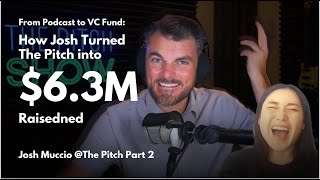
182. From Podcast to VC Fund: How Josh Turned The Pitch to $6.3M Raised Josh Muccio@thepitchshow
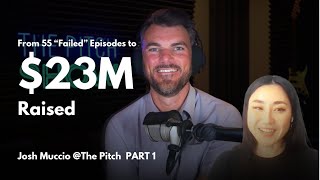
181. From 55 “Failed” Episodes to $23M Raised: The Pitch Story Josh Muccio @thepitchshow