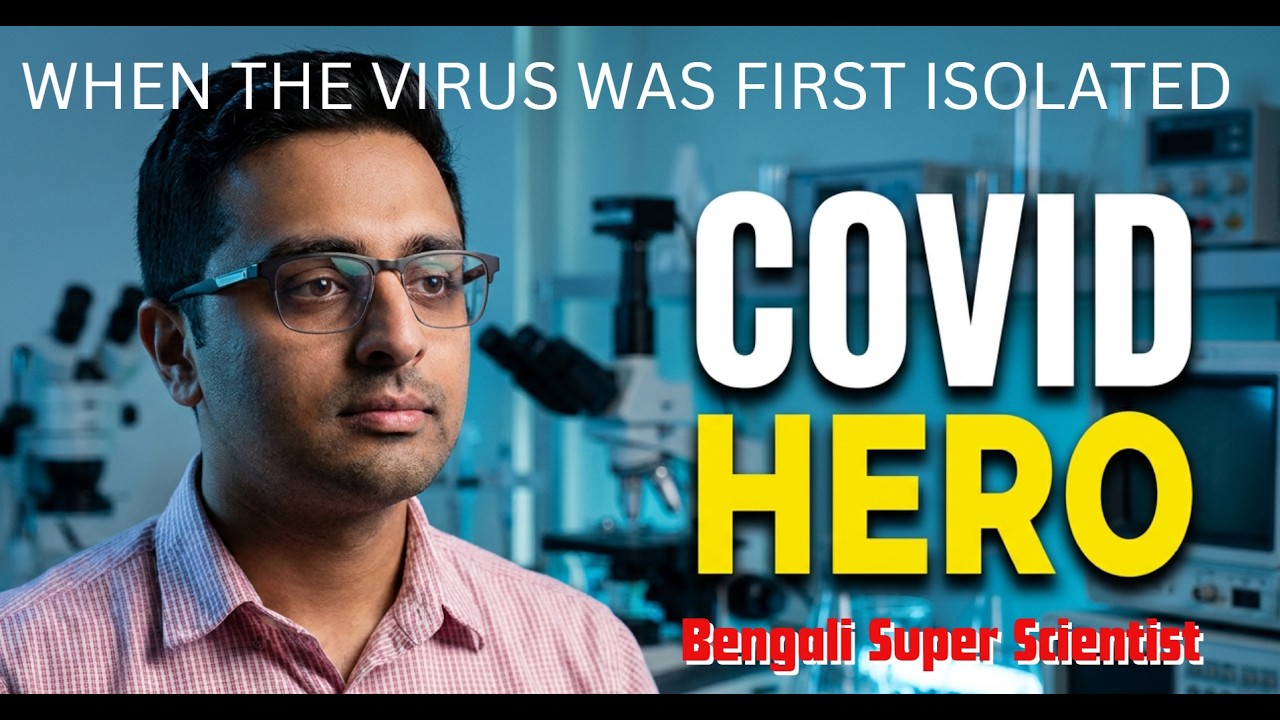
In this interview conducted by Indian Express Bangla, a Bengali virologist explains the early steps of COVID‑19 vaccine development, focusing on the isolation of SARS‑CoV‑2 from patient samples and the creation of two viral isolates that will be shared with other labs for vaccine and therapeutic testing. The scientist also describes a separate line of research on why bats tolerate coronaviruses, highlighting the role of a serine residue in bat IRF3 that, when swapped with the human leucine counterpart, reduces antiviral protection in bat cells, whereas inserting the serine into human IRF3 enhances antiviral response. The interview touches on the realistic timeline for a vaccine to reach the market, the collaborative nature of sharing isolates, and the researcher’s background at the University of Saskatchewan and McMaster University. The conversation alternates between lay explanations in Bengali/Hindi and technical details, illustrating both the scientific challenges and the hope for rapid progress.
Chapters
me from Indian Express, Bangla and we are very, very proud of you that you have made not only Kolkata and Bengali proud, you made India proud by being a part of the team which is so hard, working so hard to, for mankind, basically for mankind. You guys are working so hard and this is a massive outbreak and it's been declared pandemic, the COVID-19. So I would like to first of all thank you for getting into, for even trying to develop this medication, this vaccine. And I just want to know how far are you there? What is the procedure? Can you give it in a very layman's term? Because we are not scientists.
Yeah, sure. Thanks for having me. Like I've been telling other news outlets, this is just the first step. So there are lots of steps that are involved in making a vaccine. And making a vaccine is not as easy as making therapeutic drugs. So, you know, when you have a vaccine or when you have drugs, what you really need is the real virus to test on, right? So you have to go back into clinical specimens and you have to isolate that virus. And that's what we did. We took patient samples and we put them on cells in a petri dish. So in a lab, we had human cells growing. आप वारस करते हैं और वारास पर्वार्स प्राप्केल करते हैं. अगर आप वारास करते हैं, आप के लिए वाक्सीन प्राप्केल कर सकते । आप के लिए आपके वाकसीन प्राप्कील कर सकिए और आपके उप्प
इसे क्योंकि अपने मम्मालों के लिए बात्स के लिए जुनोटिक विरुस प्र स्पेसीस और नहीं करने करने के लिए साइन्स ेसीस । So, to counteract this infection with viruses, bats have evolved enhanced mechanism to limit the virus replication. In this study, I just need to know, get to the right point. आप नहीं करते हैं, आप नहीं करते हैं I will just give you the exact point question which my question is replacing the serine residue in bat IRF3 with the human leucine residue decreased antiviral protection in bat cells while the addition of the serine residue in the human IRF3 significantly enhanced antiviral protection in human cells. So, can you give a more like can you elaborate or give a like and shed a light on that particular thing.
Yeah, so this is what you're reading is one of the latest manuscripts from a lab where we've looked at bats have a stronger immune response than human cells. And this is something that I've been researching for the last six years. I've looked at how bats can coexist with coronaviruses and if they have improved and better immune responses. And we've found that. So what we've done with the study is we've tried to figure out why bats have a stronger immune response. So one of the key molecules that runs our immune responses is RF3. That's the molecule you were talking about. Now, RF3 is a protein, right? And every protein is made up of smaller blocks of amino acids. And one such amino acid in RF3 is a serine residue. Now what serine does, serine is critical for RF3 activation, right? So when a cell sees a virus, the serine residue is phosphorylated. So I'll just say the serine residue is activated. और अनने आपने Rf3 करतके है, इप्पे नेप्प अंटिभायो रेॸ्पान्स। एगर बात सेल्स, बात Rf3 में एक्स्ट्रा सरीन रेजिड्यू है, ेপनে नहीं है। हमारे � अगर इसने जीन थेरापीजा के लिए करते हैं, यह एक पर्स्। प्रस्थेप और पुर्स्थिय।।
So, what is the time zone that you said before this vaccine is brought to the market?
So, this study was a different study that we were working on before the outbreak even happened. So this study has got nothing to do with the vaccine that groups are working on. What will help in the vaccine is the isolate that we've got. So we've got two isolates. We've got two coronavirus isolates that we've isolated from clinical specimens. And we are working with different people, working on paperwork so we can get these isolates out of the lab, share them with people so they can test their vaccines, test the therapeutic drugs.
Okay, so... एबार एखानिक टे इंटुबियों में बांगलाई कोरी, क्योंकि तो बांगली न्यूस्पेपर, तो आपनी बांघली, आमादे बांगली दे गर्बो, तो इरमोद दे आमी जीगश करते चाही जे एइ करोना वाइरस आउट्ब्रेकेर आ
बादूर आर करोना बारस लास्ट, अमर पीछ्टी थीसिस आमा जेता में कोरेची, University of Saskatchewan सास्काडून तेके, आ मी उठाने, bats की भाबे करोना भारस संगे ठाके, करोना भारस की भाबे bat र immune response के affect करे, करोना भारस की भाबे man पिएश तो ताइ देखेची जे बैट सेल्स क्यानो एक strong immune response generate करे और human cells क्यानो strong immune response generate कतते पाड़ेना तार पर आमें जगर McMaster University ताई आशी आमें इसे ताए translate करा चेस्टे परे human cells है असे ताइ आपनी जे बोल लेन आरे 3 paper इसे ताइ आम्रा दे
तो आमरा इतर vaccination दिके आखुनो एगोई नी, we have just been able to isolate the strain, but we have not been able to isolate the virus. But we have not been able to actually create a vaccination that immediately that is effective to people. ताइ कि आमी ज़ेटा बुढ्जी से ताई की?
ताइ की? आमा इखनर researcher रा जेवार काछ करचे, एकता भालो जीनी सोच्चा, अम्मा सबाय कुछ collaborative आपना काछ जोदी एक वाक्सीन बना, आपनी एक वाक्सीन ता की भाबे टेस्ट करूँगे? आपना काचे एक वाइल्ड टाइप वारस बाता जे वारस मानुशे डिजीस कॉस करे, एक वारस ता आपना दर्खार। करण आपनी एक माॉस मॉड तो इरते दूटो जीनिस आछे, एक तो अच्छे वैक्सिन क्यांडिटे, जारा वैक्सिन बनाच्चे और दूतियो जीनीस इता अपना तरकार होगे, अच्छे आशल वाइरोस, जेता मानुशे डिजीस कास कुर्छे, तो आमर शे वाईरोस तक
ठीक अच्छा, अमन मुन हो इते-इते अनेकता आमादेर सुबिदो होबे अपनी एबारी जानते पर चाहेबें, आपनी कोलकाता ेन कोठार थेके? कोठार आपना बारी कोलकाता है? कोलकाता है ना कोठार आपॆना बारी?
हनेक लंबा आच्छा, आच्छा, आच्छा, अच्छा, आच्चा,
अच्चा, आच्छा आचछा, शेता खुब-खुभ असादारन गल्पो।
अमर जा होईछे आजदी जा करेची, सब नेक्रोकिंगे थूर रियली। तो, आमी जखन बम्बे ते अंडरग्राज्यूट कोर छिलाम, तर पर आमी नाशनल इंस्ट्रीट वाइरालोजी ते तामिर जबन बुर्लिन गेलां जर्मणी ते एक टा स्कॉलर हिशेबे समर कैम्पे, उकाने एक जन प्रोफेसर बोत्तु तली छिलें बैट्स और बैठ्स ेर वारिसेज उपरे। तुनि अनेक अनेक वारिसेज उपरे बापरे बोलेन इबोला, ता Seh meeting er, Germany to meeting er pare, ami onar kachege bollam je ami kub intrigued, ami kub interested e itinishta dakha che bats ki bhabe. Bats are mammals, amader matam. So, bats ki bhabe ato barsa shange beche takht bhare jakon manushe ato shangatik disease hai, ebola baras diye, krona baras diye. Tundi bollam tumi master's thesis ama shange bharo. So, tapore dakha jabe. So, ami NIB dege bollam je amar ekta opportunity eshte. Ami Canada e giye amar master's thesis karbo. शब रखमेर अनग रखमेर जिनिश पत्तर जेनेरेट करोगा जेता माके bats के research कोते सुबिदे हाबे तो मैं इसे देर करला मास्टरस इर जनने तापरे आमर कमर्शिलाइजर करलाम अने बाट सेल लाइन बाट तके जामेर सेल्स गुले एक्स्�