Is LGBTQ2S++ a myth?! Wait till you hear the science behind them
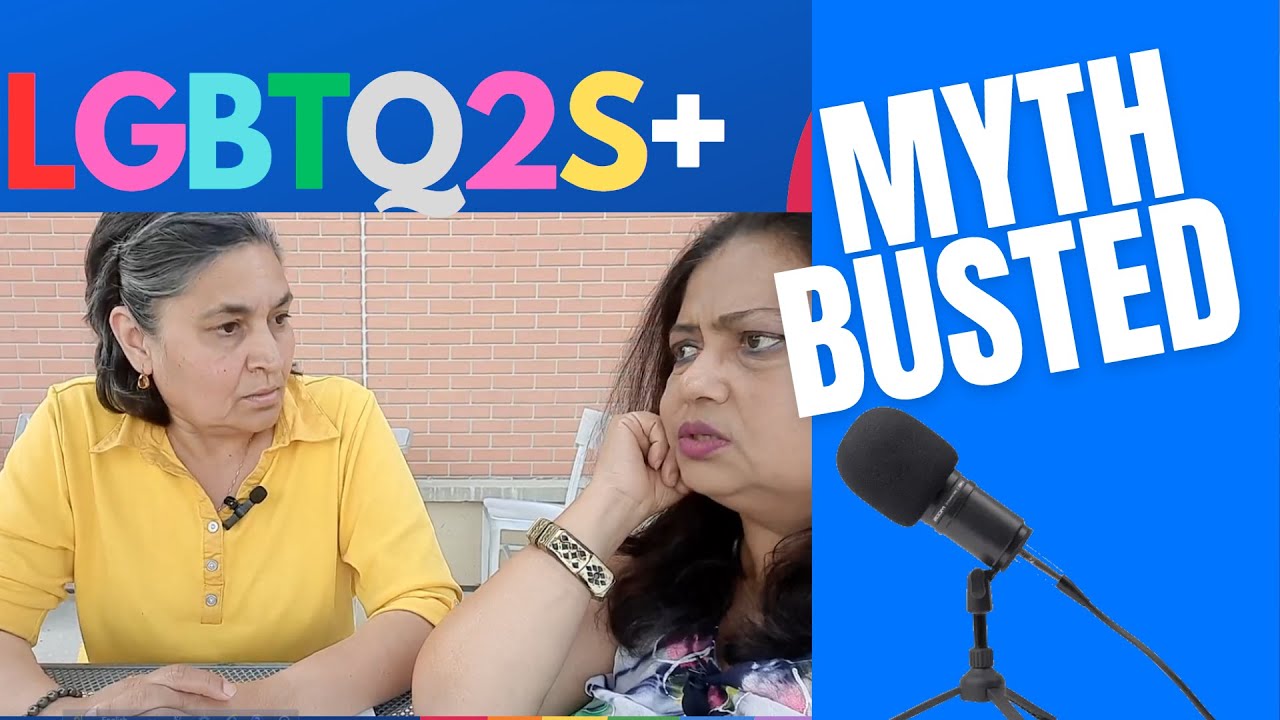
This content was created by Kaberi Dutta Chatterjee. This content was uploaded by Kaberi Dutta Chatterjee. This is a YouTube discussion video titled "Is LGBTQ2S++ a myth?! Wait till you hear the science behind them" (uploaded 2023-07-18). It features a conversational interview between Kaberi Dutta Chatterjee (host) and Anju Rajan (a community health worker based in Canada). They discuss gender identity and fluidity, LGBTQ2S+ terminology, biological sex vs gender, cultural and mythological examples, practical issues (bathrooms, legal rights, parenting, surrogacy) and future possibilities (technology/AI), mixing English with occasional Hindi phrases and skeptical layperson questions.
Chapters
Students at the University of Waterloo are still in shock after what police are calling a senseless act of hate. Police say the suspect walked into a classroom filled with about forty students and asked the professor what was being taught. It was a second-year philosophy course on gender issues. Good afternoon. And authorities say that played a role in the attack that came next.
मनुष्य एक बार तो तुम्हें trans man, किंतु अलेवा शादी नहीं कर रहे हो कुत्ते चाहिए। हमने सुना थे rules सोते नहीं मनुष्य। हमारे क्या हमारा कौन बैठता है?
Organ what should I say diversity also exists and it is as diverse as you can believe. Like, you could have people with both kinds of organs. Yeah, you could have people with no organs, like neither sex, or there could be so many things. Like, now with the society and social media and whatever is going on around us, a lot of our generation is also questioning. Sometimes women don't feel safe.
That's, that's what I'm saying.
So that's why, yes, we need segregated washrooms till everybody gets onto that same page.
Like a woman and she's attracted to another woman who also feels like a woman, They're 2 lesbian women. I am really learning a lot, believe me.
And actually there is no time for anybody to understand themselves. You could understand yourself at 70.
Like, how do we describe? Supposing there's a woman walking by, so we say there's a girl walking by. So we cannot say that. We said you have to say the person, there's a person walking by.
Very soon they'll be neutral because people who identified as them or they are not referred तो ऐसी योशा योशी तो क्या करेंगे?
Like supposing you understand that okay, how do you understand what there are multiple quizzes on online like I've seen. So when I look at the quizzes and I see oh my god this is also matching with me, this is also matching with me. Hello everybody, thanks for coming to my tuning into my channel, and today I have with me Anju Rajan. She is the community health worker, and she's based in Canada, and she's going to be here with us, us answering the most difficult question today. That is, you know, in the society, we need to address it now. We have to address the elephant in the room. So what is the science behind this gender fluidity that we So talk about them. Please explain to, uh, we are of, as you can see, we are of a very, uh, old generation. We are not of the new generation, so we have not come across this when we were kids, right? So it's, it is a completely new concept for us, and our children are very used to this concept. So they're getting used to this concept. So what is this concept? Explain to people who are as old as us? Please explain it in layman's terms.
Thank you for having me, Kaberi, and I'm glad you raised this topic. Not many people actually will talk about it or address the elephant in the room. Most of us, and when I say most of us, a lot of people in our generation whom I have spoken to have actually become aware of gender fluidity or gender identity as the younger generation rappers to add through their children or through the younger generation. And of course it's on media and everything, and now they, uh, they just can't deny its existence anymore. They have to understand it, or they have to at least acknowledge that it exists, whether they like it or not. But when we say what is gender fluidity and what is this LGBTQ2S++ all about?
Yeah.
I will like explain it in a very simple way. We all believe human beings are the most evolved species. Like, we are evolved mentally, we are evolved physically, we can invent technology, we can do so many things.
Hmm.
So when we are such an evolved species, how can we not be evolved gender-wise? How can you say human beings are just bound in 2 genders, but we are the most evolved species? So if there is so much of diversity in human beings and thought, in physique, in performance— like we have people who are engineers and we have people who are artists, like so many, so much diversity within the human mind, human cultures— how come genders are bound in only 2? That's not just possible, right? So similarly, there's so much diversity when it comes to gender, and that is how we can describe fluidity.
Most people think that this is all passing phase, you know. This is a, this is a fad. Like, uh, when you said that, uh, we are, we are constantly evolving, but we are definitely of different race, different cultures, different, uh, we have now an AI-dominated society. Everything is evolving, but we have the same blood color, for instance. So we have certain There are things which are constant. We have different DNAs, we have different fingerprints, but we have the same organs. Like we have 2 eyes, 1 nose, 1 mouth. That is not evolving. So when we are looking at this, when I'm talking from the point of view or opposite point of view, this is not— it's not something we can evolve. Suddenly somebody cannot come tomorrow with 3 eyes.
Yes and no. Human beings are evolving as a biological species too. For example, we had muscles in our ears which moved. They don't move anymore. They're called vestigial organs. Similarly, we are evolving on every aspect. But yes, you're right, when you talk about gender, what you're trying to say is that this has been existing forever.
Yeah.
Right, which is true. And that is again where we should look back. If we even look back at our own, let's say, Hindu culture, gender fluidity has existed forever and ever. And I will just keep 2 simple examples. Everybody is aware about Shiva. Shiva is the Adi God, and we have all worshipped a form of Shiva called Ardhanarishvara. And Ardhanarishvara is like Shiva and Parvati together, or man and woman together. We even have statues dedicated to Ardhanarishvara, which is basically a concept of that 2 genders can exist between the same— within the same person.
Yeah.
And this is just like going from Shiva. There's another very popular— you've heard of Bhagirath, the King Bhagirath, who's credited by having brought Ganga down to earth.
Yeah, so it seems according to mythology, Ganges or Ganga, the River Ganga, had been stuck in heaven. To get proper funeral rites, Hindu sages and kings tried to bring Ganga down on earth. However, this was easier said than done because despite severe penance done by the several kings, Ganga stuck to her place in the heavens. This crisis worsened when King Dilipa, who was the reigning king at that time, I guess, died without an heir. In the heavens, Brahma became very worried and consulted Shiva, who told King Dilipa's 2 widows That with my blessings you will now have a son. The women were perplexed. How? they asked. Without a man, how can we conceive? Shiva told them that with this, his boon, they would have the power to bear a child without a man. The 2 women should copulate, he said, and leave the rest to the gods. The 2 women, who shared a close, close friendship, and upon the god's assurance, waited till they both knew the right time had come. And then they united sexually, and in the 10th month, one of them conceived and a son was born. Since the child was born from the union of 2 women, from 2 bhagas— that is called actually the female organs— he was named Bhagirath. And he was the son that finally brought the river down to earth and released the trapped souls of his ancestors. This is why one of the tributaries of Ganga is known as Bhagirathi.
And he was the first one who actually went through, uh, like when he was growing up, he was bullied for having 2 mothers and like having a very different birth. So I think that is something that our modern generation, a lot of kids can identify with when they are bullied for whatever reasons.
Yeah, 2 mothers or 2 fathers.
And that happened like eons ago.
Yeah, in the Hindu religion.
Yes, we can say it's mythology, but it's been there, right?
Yeah, mythology is something which we kind of— humans write. If you are writing about it, then it has to exist somewhere. Either exists or people have thought about it. So it's in our minds or it's been written about it somewhere. So that's how mythology exists.
The concept was there.
Concept was there.
So many gods. Indra took the form of a woman, Vishnu took the form of a woman. Like there's been—
In Mahabharata there is Shrikandi.
So we've had this forever.
Chikandi is a transgender in Maori.
And if we even look at our local culture here, the indigenous culture of Canada, they believe in the two-spirited people.
Yeah, two-spirited.
And two-spirited is such a unique concept. Like these elders of the indigenous community could actually think like a man and a woman together. Like they were credited as being a person who can talk to the Men and women of the community, like, as one person. So they are called two-spirited people.
Okay, because we've seen this kind of indigenous people who neither look like a man or a woman. They have 2 pigtails and they— you can make— you cannot make out whether it's a woman or a man, right? Here I put you this very, very strange question, Anju, which is, I'm sure, is on everybody's mind. What happens to the sexual organs? Because we We are born with either having a penis or not having a vagina. So transgenders, as far as I remember, when I was doing a study on transgender hijras in India, that was way back in 1990s. So I was doing a reporting on that. When I was doing the study, they had both the organs. They had like pen— penis, at the same time they grew I've seen them actually in real life. So that is a transgender, what we call hijras or eunuchs in India, and they are looked down upon and they're ousted from the society. But what about the organs, sexual organs? How are they— how are the, you know, LGBTQ2S, how are they different? Like when you look at a person, you cannot make out whether person is a male or a female. What sexual organs do they have?
So talking about the anatomy of a person is a actually a totally different thing.
Yeah.
Being two-spirited or being lesbian or gay or any of those community people doesn't actually mean that they have a different kind of organs. A person could have female organs and feel like a man. A person could have completely male organs and feel like a woman. A person could have any one of those organs and still feel that he's attracted to both the people. A person person could not have sexual feelings at all. Like, person could be a man, but then he feels trapped in the body of a man because he always felt like a man.
Yeah, so, um, Anju, I'd like to tell you that, uh, the Chief Minister of West Bengal, Buddhadev Bhattacharya, he was a communist leader. I don't know whether communism and capitalism has any effect on the LGBT. So his daughter has recently Decided to change her gender to being a man. मनुष्य एक बार में कौन है trans man? किंतु हमें वो शादी नहीं करने हो मतलब चाहिए। हमने समझे मूल सोते नहीं मनुष्य। हमारे क्या आलादा कौन बन रहा है? I remember her and now she has become suchetan, so she's become a man now. So what do you think like communist or socially being a socialist person or being a capitalist? Does it affect any kind of being homophobic? Is it any cause for homophobia?
I think that political, religious factions also promote homophobia. They don't believe in this gender fluidity and they think it is a sin. But it is not like we can't say that all Christians or all Hindus or all Muslims are homophobic. It is just always some faction Which is this homophobia.
Yeah.
And what is homophobia? Homophobia is basically, uh, not accepting the fact that gender can be fluid, people can have different genders, or they can perceive, uh, other people in a different way. And it's not just man attracted to woman. And it is also being actively aggressive against anybody who does not conform to their way of saying, okay, gender is only male and female.
Okay.
So it has nothing to do with the organs. But yes, when you're talking about organs and you were mentioning hijras, they also don't come in one form. This organ, what should I say, diversity also exists. And it is as diverse as you can believe. Like, you could have people with both kinds of organs. You could have people with no organs, like neither sex. Or there could be so many things. like, uh, sometimes the testicles haven't descended. That person is a man, but no, okay, it's this inside, but then he's classified as one of those people. There could be a lady, a woman, who doesn't have the opening. She has a vagina and uterus, everything, but she doesn't have an opening. So I'm just giving you some examples.
Yeah, we need to be very, very biologically graphic, you know, for some people to really understand.
So Again, because I would like to make a point that when we look at this community, we say LGBTQ+, we straight away start thinking of the physical or the anatomical aspect of it.
Yeah.
Which is not important here. The anatomy can be anything. You could look like a transgender, which is again diverse in so many different ways. You could be a man, you could have the male organs, you could have the female organs. It is all about what's here, how the person feels. And a person can feel like— again, they're so diverse. Like, a man could actually be attracted to a man and woman both. Like, they are called bisexuals, right?
Mm-hmm.
And then there are degrees. Like, this person could be more attracted to men and less to women, or vice versa. And there are some people who are questioning. We call them cute queer because they don't even—they're not sure what they are.
Yeah, so this is where I would like to be like ask you a very personal question because people are going to want to know. So the let me first tell the viewers what is this LGBTQ2S means. So LGBTQ2S means lesbian, gay, bisexual, trans. Gender, queer, or questioning, and two-spirited. So where it comes— where this questioning is, I'm sure a lot of people like our age, we've been questioning what were we like.
Interesting, because when we say questioning, a lot of people, especially people of our generation, yeah, we are constantly actually started questioning themselves now because We were put in a slotted society, ABCD. You grow up, you will find a boy, you will get married to a boy, and then you will have children, and this is how it will work. Yeah. So we never thought outside the box. But now with the society and social media and whatever is going on around us, a lot of our generation is also questioning.
Yeah. And actually, supposing you understand that, okay, how do you understand what— there are multiple Quizzes online, like I've seen. So when I look at the quizzes and I see, oh my God, this is also matching with me, this is also matching with me, so what am I?
Well, internet is the devil's advocate. Internet will make you think you have cancer. Yeah. If you look at symptoms now, you have cancer. How do you find out? Let's say a 60-year-old tomorrow finds out that all his life he has been one Like lesbian or gay, that's fine. You just didn't know about it. That's fine.
Yeah. How do you find that out? That is my question.
Ah, well again, I will go back to what my children said, and our generation learns a lot from our young children. So they will sometimes meet an uncle or an auntie, and later they will say, "Mom, that uncle was gay." How would you know? And mostly they will say. or that auntie is lesbian. And you will say, how do you know that? And this, they base it on a few assumptions, like what we used to call in our generation, we would say effeminate men, or kind of effeminate, or very masculine women. And then also, uh, children will base it off, uh, the fact that a lot of men who actually They get married, they have children, they have normal lives as we see normal life is, but they're not very close to their wives.
That nobody is. What is a man-man? What is the definition of— again, how the person—
how do you have to feel to be a complete woman?
And how do you have to feel to be a complete man?
Again, I would ask a woman that. Like, if there was a woman who says, I am a woman, I have never been attracted to another woman, and I'm very happy being woman and she's actually very comfortable in being a woman in her body and all, she is a woman.
So being attracted to the opposite sex makes you bisexual? I mean, same sex makes you bisexual?
Being attracted to the same sex would make you gay, lesbian, or bisexual.
Yeah, that way. Yeah, yeah, I should include gay and lesbian. So, but I would, if I would say if a woman feels like a woman and she's attracted to another woman who also feels like a woman, they're 2 lesbian women. I'm— I am really learning a lot, believe me, guys. I am learning like you are. I would say I think this is the hardest part. I think evolution is already there, it's happening all around us, but Accepting it and realization of it. What do you think is the next thing for the next next generation to accept? Like, what do you think can come up that can surprise us? Like this thing had surprised us right in the beginning.
Well, again, I'll just go back to my children and they say next generation could have AI partners. They could have an AI girlfriend or an AI boyfriend or AI animal, whatever. It could It could be just AI, not a human being at all.
It could be animals also. Guys, it's like, uh, it's like a, you know, it's very interesting. The world is very interesting.
Just what, as human beings, because we are evolving and diverse, I think we should just keep an open mind and accept everything for the way it is.
Yeah, so even if you do get shocked, like everybody's getting getting shocked to accept it. Acceptance is the final thing because we are looking into a society now which is, as I said, unisex spas, unisex— because you'll be then not looking at that person in the spa but looking— learn to not to be rude when we go into a unisex bathroom, which is going to slowly come up because probably they're going to be a women's bathroom, a men's bathroom, and a unisex bathroom. Most most people.
Maybe that's the way to start.
That's the way to start, yeah. So that's going to come up very soon, I guess. Soon, and then we are looking at gay marriages are everywhere. We're looking at every all those things. We could be looking at a next to next generation of people getting married to AI or having AI as a partner. You know, like AI is getting married. to AI.
Yep, because intelligence can evolve to anything.
We are coming to a point where we cannot have the fluidity, that is, uh, bearing a child. So male— again, biologically male people cannot bear a child. Biologically females bear a child. So that's very, very strictly identified, you know. We cannot Cross that. There's no fluidity over there. It's like a Great Wall of China over there. So far, technology will change. Technology might change that. Put an uterus in a— put a uterus in a male, whichever way, whichever way. So bear the child. I'm not saying, uh, adopting a child or having a child through surrogacy or whatever, whatever science has evolved into. I'm saying bearing a child in your own own stomach, with your own, you know, body juices, feeding it with your own body juices. That natural thing is not allowed with men.
Right.
So there is— there, there where— that's where nature stops. So how do we do— how do you think the transgender, when people are becoming so fluid in the recent times, how do you think they're going to adapt to this Natural separation, natural.
So, uh, men, if they— if there is like a couple who are men, they will normally just get a baby through surrogation or adopt one. And when— if it is 2 women, one of them decides to have the baby and it's both of their baby. And science also now allows you to have chromosomes from 2 same-sex partners be in a baby.
Okay, so that happens. How does it happen? Because we know that one ovum and one sperm—
Yeah, but then they, they will— they mix up the genes in a way that it works. And they actually— this is very interesting, and I was reading about it recently— there are women who have XY chromosomes.
Yeah, that, that is where I was saying that women who have more of Y chromosomes are actually— they are like eunuchs, or have more of YXY chromosomes.
So that is possible too. So science will actually change all of this.
So what happens to the very literal, very basic things in society which, uh, which is changing? But which bathroom do they go to, for instance? Which spa do they go to? Which gym do they go to?
So again, in, uh, and I would say in more tolerant societies and more accepting societies as the one live in, that is changing very rapidly. Now you have unisex washrooms in most of the public spaces.
With unisex washrooms, there has been a lot of outcry about having unisex washrooms.
Yes, because whenever anything is changed, there will be an outcry. And the first place where they changed all the washrooms to unisex washrooms were actually government offices and all that, where all the washrooms were changed to unisex. Yes, we still have segregated washrooms, and the segregated Segregated washrooms are still needed because not everybody is on the same page, and sometimes women don't feel safe.
That's, that's what I'm saying.
So that's why, yes, we need segregated washrooms till everybody gets on that same page that washroom is just a facility that you need for your bodily needs and shouldn't be for any other purpose. So do you think the society will evolve to that extent? It is already doing so.
People are going to constantly take advantage of this, you know, having a— we already had— we all— I have never seen in my childhood, I've never been to a salon which is unisex. So I have evolved and we see now we are going into a salon which is unisex, which is, which is just, you know, maybe, uh, there is a, there's a women's section and a men's section. And what about death? For instance, these people Will any of the transgender, since you said there is the organ sexual organ is separate, they can be any any sexual organs but they evolve to become a man or a woman or whatever they feel like. So when they die and their bodies are exhumed for some reason, how would we identify as a male or a female?
Because actually that would depend. Do we need to identify the gender of the body? Supposing you need to.
There has been a murder, or supposing—
So, if there has been a murder, then the identity already exists, that ABC person died. What did this person identify? Because, right, these days, even when you sign, you say he, she, or these are the pronouns I'm using, right? So, if you have all that and you are the person being looked at, they already have the identity.
They have the they identity, yes. But supposing that they assume somebody else, which is, which is a male. So they do not know that, uh, person, this person is the they who's being murdered, right? Right.
So you're talking about an unidentified body?
Unidentified body. What happens to that?
So now, is the— see, they will know the sex of the body from the organs when they exhume a body, but is the gender of the body actually important to murder investigation?
Yeah, no, maybe it's like, maybe they'll go. And coming to that, from that we come to this point. Can you explain what this difference between sex and gender?
So sex and gender are 2 separate things. Sex is something that you're born with, okay? I'm— these are my sexual organs, whereas gender is what you feel like.
Okay, what do you feel like?
Like I could have like sexual organs of a woman, but then I could feel like a man, or I could feel like nobody. I could feel like non-binary. I don't feel like a man or a woman. And that's another concept, and we don't even actually— we don't have N in the LGBTQ+. There are people who call themselves non-binary, and non-binary, what it means is non-binary is They do not believe in the sexual segregation. They do not believe that I am a man, so I should behave in a particular way, I should dress in a particular manner, or this is how a man behaves. Or if I am a woman, this is how I should be wearing a saree, or I should be wearing makeup. Why can't a man wear makeup? Like, why can't a man do whatever? So they just don't believe in this segregation based on sexual organs, and they say, I'm not Right, so that also exists.
So that, that would be included later on. And what about those people who don't have sex at all?
Asexual. So there is a term for them. They're people who just, they're not interested in sex. And asexuality is something that can come over time. Like, there's been research that a lot of women, especially from traditional societies like ours, become asexual after After 40. After 40, they just lose interest.
So that is— that's okay to be asexual?
We don't have interest, that's fine.
But then they suddenly have an affair and suddenly become interested again in somebody.
Could happen.
So most of the people lose interest in their husbands, or husbands lose interest in having sex with their wives after a few years of time. That, that is all right.
That's all okay.
So with that, we come to the last question. How is this going to be? What kind of legal rights will they have? Because legal rights to the known society belongs to either male or female. Like, it is husband's property goes to the wife, wife's property goes to the husband, okay? And they go to the children.
Mm-hmm.
Now, when there is this kind of fluidity and marriage is no longer, you know, what happens to the legal rights of the So, so far, wherever the gay marriage has been legalized, they have the same rights as any other couple.
But wherever, whichever country or whichever place does not recognize the gay marriage, they don't have rights. So it goes actually with institutional marriage.
With the country where it is recognized or illegalized. So yeah, I think that's about it. Okay guys, so I think if you have any questions, any more questions, I've been able to ask as many questions as I could from devil's advocate point of view. And also, um, like being a very skeptical person myself, you know, questioning this whole thing and treating this to be a fad myself. I'm asking Andrew. She is, uh, we are of the same generation and she has children of my children's age and she is a health worker and she has substantiated that this is all okay. So guys, I think, you know, like we can take this as a cue and if you have any questions, do let me know in the comment section. And see you guys. Bye bye. Take a take a look at it.
It's a beautiful day.
I know. One of the best days.
Best days. Bye bye.
More from Kaberi

Real Life #blackmirrorvibes | Gen Alpha Will Be The Dumbest Of All Generations!


My 1995 Planchette Story | The Science of Ghosts | Author Kaberi D. Chatterjee's story

60-Yr-Old Breaks Down To "Earth Song" | Fan From MJ's Cassette Era #michealjackson

#micheal #michaeljackson I can't believe we actually saw these created in real time!