Agile Mindset and Decision Making – Kaihan Krippendorff Keynote Speaker
Kaihan Krippendorff argues that outthinking competitors comes down to mental agility and breaking limiting beliefs. He traces the pattern behind innovation through John Boyd's OODA loop (Observe-Orient-Decide-Act), which underlies Scrum and Lean Startup, and shows how chess grandmasters use narrative structures to recognize patterns faster than novices. He identifies 36 strategic narratives that drive high-performing companies.
Chapters
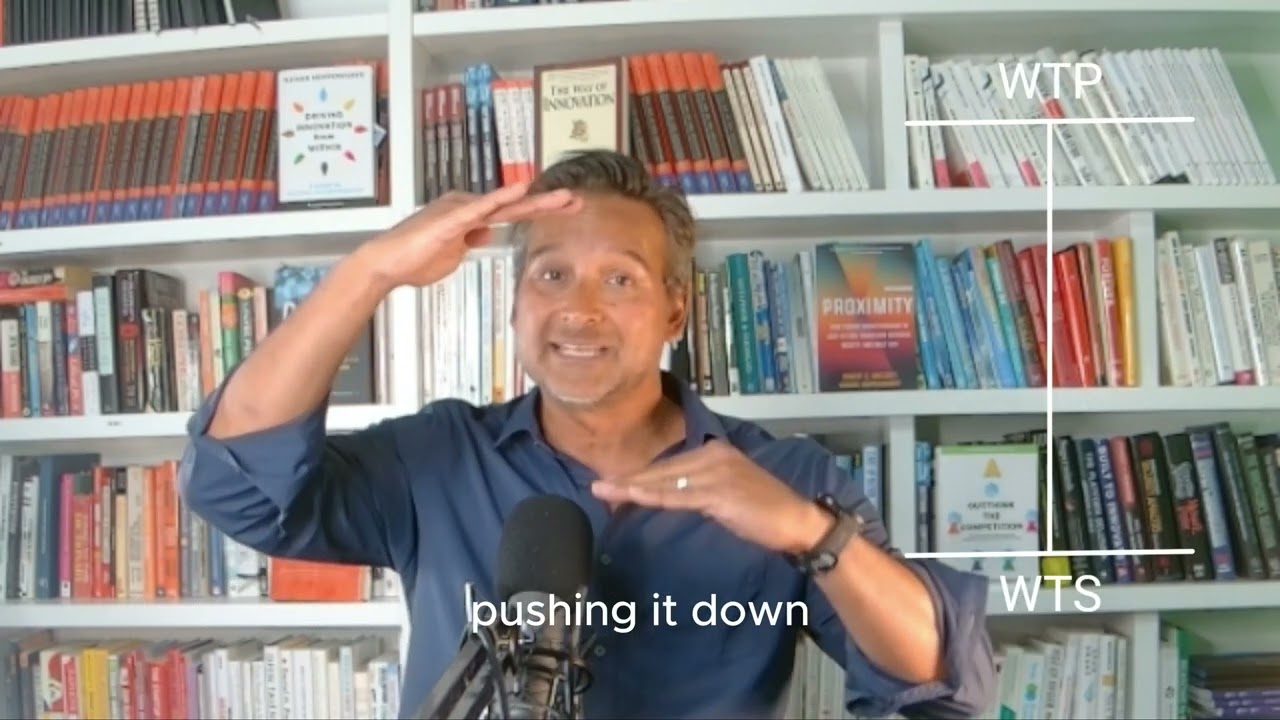
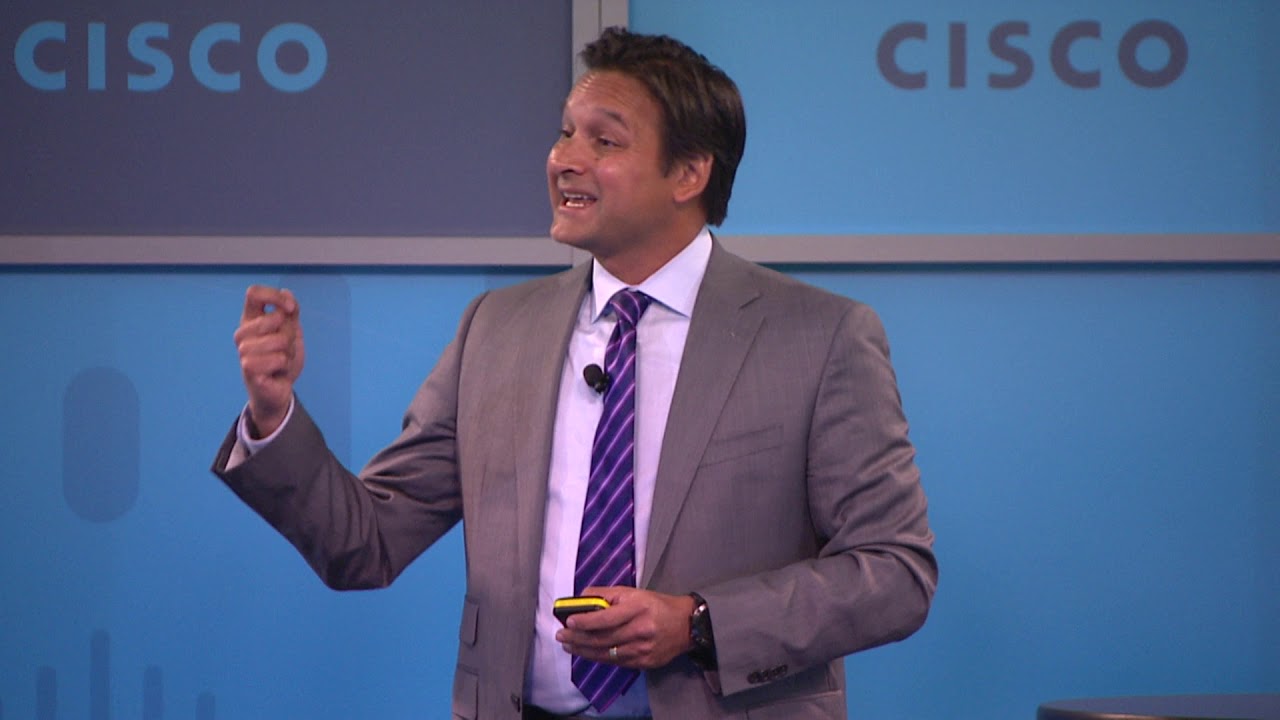
If we look at how great historical innovators talk about how they innovate, and great social innovators, and new generation of innovators, what we'll see is they look to this outthinking, I call it. Outthinking the competition through mental agility. This is Ray Kroc, founder of modern-day McDonald's. He said, my attitude was that competition could try to copy my style, but they can't leave my mind— read my mind. So I'll leave them a mile and a half behind. It's not only about you outthinking, it's about enabling people broadly to outthink. Steve Jobs talks about innovation not as only R&D, but as people behavior. Innovation comes from people meeting up in hallways or calling each other at 10:30 at night with a new idea or because they realize something that shoots holes in how we've been thinking about a problem. But there's a very specific way that they look to introduce this mental agility. They all describe it in different ways, but I think the clearest explanation for me is that of Gandhi. He said, first they ignore you, then they laugh at you, then they fight you, and then you win. If we break down what he's saying, he's not offering a random list. This is an intentional strategic sequence. You are going to do something that when it is in the market or it is the way that Cisco does things, our competitors will ignore us. and laugh at us. And we want them to ignore and laugh at us, because as they're ignoring us, we're growing it. And by the time they wake up and say, wait a second, that bet, that move that Cisco took actually works, it's too late. We've already won. Today, we could call that disruptive innovation. That's a term that's been around for about 20 years. You could call it blue ocean, if you're familiar with Blue Ocean Strategy. 2,500 years ago, Sun Tzu, the Chinese general that wrote The Art of War, called it taking whole. We step in and our enemy just lets us take— takes us whole. So what I like to do is I study the emergence of strategic concepts. And I think this is the fundamental benefit of mental agility, is doing something that others will not respond to, which creates a bit of a dilemma for us. Because if our competitors will view this idea as impossible, and we live in the same belief structure as our competitors, we and our team and our organization will also see it as impossible. Heavier-than-air flying machines are impossible, is what Lord Kelvin of the Royal Society said in 1895. Harry Warner of Warner Brothers Pictures said, who the hell wants to hear actors talk, before his brothers convinced him to release the first talking movie. CEO of Digital Equipment Corporation, Ken Olsen, famously said, there is no reason for any individual to have a computer in their home. Nobel Peace Prize winner in physics says, there's no likelihood man can ever tap the power of the atom. And even the great innovator Thomas Edison said, the phonograph is not of any commercial value. So what holds us back from being able to think and act with agility are the conflicting beliefs that the action will be in opposition of. But there are ways out of it. So agile came from the Korean War. And there was one pilot. He was known as the 90-Second Boyd, John Boyd. And he was called the 90-Second Boyd because he had a running bet his entire life that if he got into the air with you, within 90 seconds he'd have you locked in his sights. And he never lost his bet. He trained his pilots to have an extraordinary highly high success ratio against the competition. And the military asked him to break down his theory for how he's able to do it. And it's a very complex theory, but we can simplify it by just remembering the word OODA. How many people have heard of the word OODA? Great. OODA— observe, orient, decide, and act. What he says is what we need to do is we need to observe the environment, orient ourselves to what's happening, make a decision, and take action on that faster than the competition. We need to get inside the competitor's OODA loop. And so I'm going to walk through each of these steps and just offer you some exercises and tools for how to apply this to your thinking. So this, by the way, is where what we call Scrum or Agile or certain elements of human-centered design or design thinking or the spiral method— I think these are all concepts that spring, they're permutations of a core concept that was introduced with this OODA loop. This is Jeff Sutherland, he's the creator of Scrum. He said, Scrum is not an ideology. Scrum comes from fighter aviation and hardware manufacturing. Or Steve Blank, who planted the seeds that became the Lean Startup approach, right? He said, the customer development model with its iterative loops, pivots, may sound like a new idea for entrepreneurs. It shares many features with US warfighting strategy known as the OODA loop. So this is the source. And so we're going to do a few exercises to walk through this. First, we go from observe to orient. The way John Boyd would describe it would be this way. He said, imagine 3 scenes. I'm going to give you 3 scenes. I'm going to take an element out of each scene. I'm going to put it together. And if you see what the next scene is, I'd like you to just call it out in the room. Don't raise your hand or wait. Just call it out. So imagine a bicycle scene. So maybe there's a family, and they are on bicycles, and they're kind of biking through Connecticut, where I live. And you got the parents and the kids. You gotta visualize that scene. Now imagine a ski scene. That same family, maybe they're in Colorado and they're skiing down the slopes. And now they go home and there's a little boy in the family and he's in the backyard. He's playing with a little toy tank and you have the little plastic soldiers around him. I'm gonna take an element out of each one, put it together, and when you see what the next scene is, I'd like you to just call it out. OK. So take the handlebars from the bicycle scene, take the skis off of the ski scene, take the treads off the little boy's toy tank, and what do you have? Snowmobile. Snowmobile, right. Who said that? What's your name? Kathy. Kathy. So Kathy sees the snowmobile. And that's where it begins. You make unexpected connections. Kathy sees the snowmobile, she jumps on the snowmobile, she's riding off into the horizon while we're trying to make sense of these seemingly unrelated pieces of data or information. So that's the first step, is to make unexpected connections. Then taking decision, making a decision of how to act on that insight. What are we going to do when we recognize that what's happening now is a snowmobile? Now we can learn a lot about how strategists make decisions by studying chess players. This is Alexandra Kosteniuk. She's the reigning Women's World Chess Champion. What she'll do as a marketing stunt is she'll challenge a whole town to play chess. She'll line them up and she'll go from board to board to board to board, each time seeing the winning move. Now, she's going to win all of these games. And you could be sitting there for 20 minutes as she makes her rounds, like this guy with the curly hair, staring at the board asking, what is Alexandra going to do? And you won't see it. And like that, she can see it. How does she do that? Well, research into expertise and expert performance gives us a very clear answer. It has to do with the fact that she remembers differently. So she has access to hundreds of options when you and I only have access to 7 options because the short-term working memory capacity of a human is 7, plus or minus 2. How many people have heard that before? People can remember 7 things at once. Great. So our RAM, if you will, are 7 slots. And because we don't have enough RAM to calculate all the possible moves, we don't see all the moves. Now she remembers differently. And so she isn't bound by that. So I'm going to give you a little exercise and you're going to experience what it's like to look at a chessboard as if you were a grandmaster chess player. Now, I'm not a great chess player. When I look at a chessboard, you could represent what I'm looking at by the number, let's say, 3305. Now, you could remember that number. Don't write it down, but notice how you're remembering the number. Half of us will be using our phonetic loop, which is we're repeating silently to ourselves, 3,305, 3,305, 3,305. How many people do you hear yourself doing something like that? OK, great. And half of us will be visualizing something. How many people are visualizing something? Great, excellent. Now there might be— you might be combining things. How many people are chunking? Means like 33 and 05, so you're remembering 2 things. Is someone doing something like that? OK. And for how many people is that chunking a story, like a sequence? 33 leads to 05, something like that? Anything? So this is what Alexandra does. She looks at the exact same board. But I'm seeing it for the first time. She recognizes it. Re-cognizes it. It means she's seen it before and she's cognizing it again. And she looks at the board and instead of seeing the number that we just memorized, she sees a different number. 33. She sees two four six eight. Now look at how you're remembering that number. You're probably not remembering four things; you're remembering one thing, and that one thing isn't two four six eight. It's two four six eight what? Ten twelve. How many people are saying who do you appreciate right now? It is. It's a it's a story. It's a it's a it's a it's a song. It's a It's a sequence. And what you're using now is your episodic buffer, episodes of memory events. And when you pull one up from your hard drive, it tells you also what to pull up next. It's a little bit like if you listen to an album, if you still listen to albums, and you reach the end of a song, you know what the next song is. Kind of an intuitive thing, right? So what she does is she uses her episodic buffer and she looks at the game and she recognizes the game and she says, ah, this is the 2-4-6-8 game. The next move is 10. Oh, this is the 1-3-5-7 game. The next move is 9. And so I propose the way that you and your team will make decisions and create options to choose from is not through logic, but through asking yourself, what game does this remind me of, and what happens next in that game? So much of my work is about studying the narratives that are told by strategists. It's been measured, not by me, but measured by others, that master chess players recognize twice as many narratives as experts, or twice as many games. Grandmasters recognize 10 times as many. And that's why they're able to see the winning move in more situations. So what I do is I study the narrative. So I would take pairs of companies. I look at companies that are outperforming others in terms of revenue growth, profit margin, total return to shareholder or shareholder value creation. And I would take pairs of companies and say, outperformers talk differently than underperformers about their strategy. They cite different narratives. I apply something called narrative analysis. So I might take that one page that is the Cisco strategy and say, what are the narratives that are being told? I believe there are 36 fundamental narratives. If we had more time, I could go into what these 36 are. I'm happy to get you a list of these 36, but I think there are 36 fundamental strategic narratives. All of our strategic concepts today, from first mover advantage to economies of scope to economies of scope to disruption, all of these map to one of these 36. And what I do is I look for how the winning narratives shift over time. And there are a few narratives that what we're seeing is that companies that are thriving in today's faster-paced world are adopting. And I'm going to walk you through 3 of these. And I invite you to
More from Kaihan
#856 (Video): CRMC Keynote Kaihan Krippendorff on making your brand a disruptor not disrupted