Big Tobacco Didn't Disappear (They Just Started Feeding Your Kids)
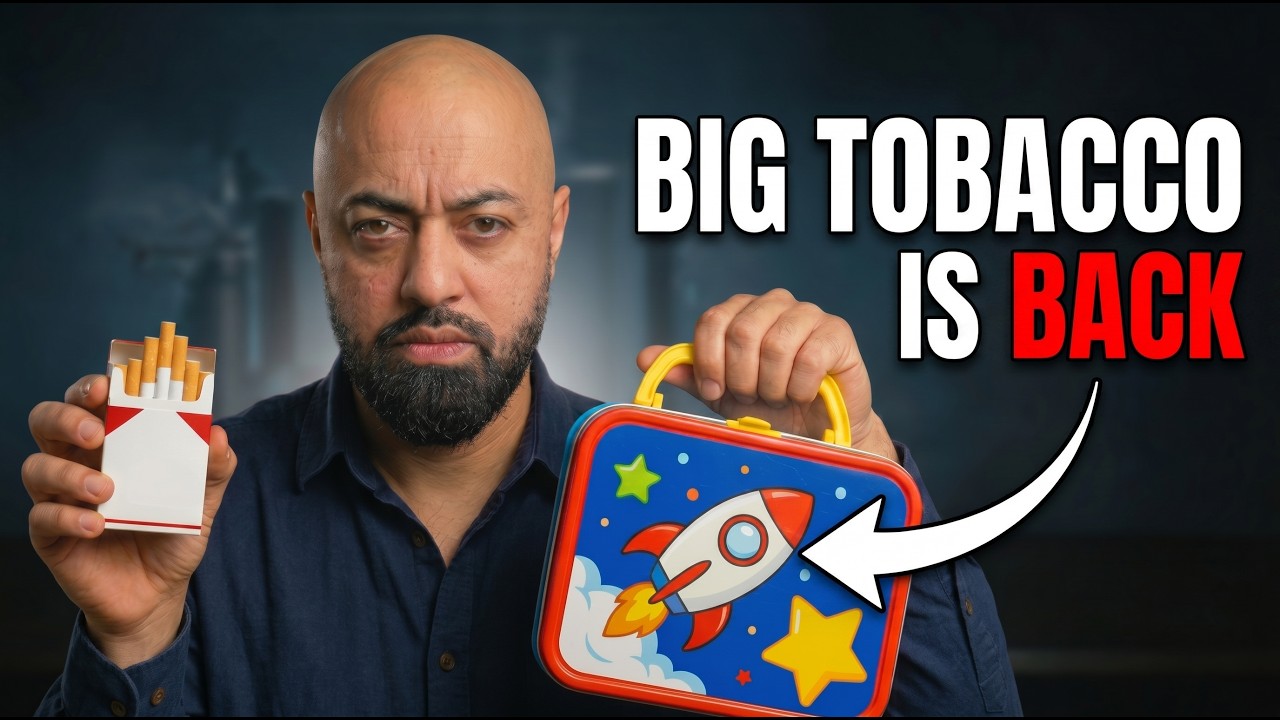
In this video, Kashif Khan argues that major tobacco companies did not vanish after cigarette regulations; instead they repurposed their marketing playbook to sell sugary beverages to children. He traces historic acquisitions—RJ Reynolds buying Hawaiian Punch in the 1960s and Philip Morris acquiring Kool‑Aid in the 1980s—and shows how these firms applied the same tactics used for cigarettes: cartoon mascots, child‑sized packaging, point‑based loyalty programs (e.g., Wacky Warehouse) and pervasive brand saturation. Khan then presents a body of peer‑reviewed evidence—large cohort studies, systematic reviews, and randomized controlled trials—demonstrating that regular consumption of sugary drinks drives childhood obesity, insulin resistance, type 2 diabetes, non‑alcoholic fatty liver disease, and cardiovascular risk factors, independent of total calorie intake. He exposes modern “healthy‑sounding” products (fruit drinks, flavored waters, toddler milks) that hide high sugar levels, artificial sweeteners, and misleading health claims. From a neuroscience perspective, he explains how early, repeated exposure to intense sweetness rewires children’s taste preferences and reward pathways, creating a dependence similar to nicotine addiction. Finally, Khan offers concrete actions for parents: make water the default, scrutinize nutrition labels, educate children about marketing tricks, advocate for healthier school vending options, and stop purchasing unnecessary toddler milks. The video ends with a call to share the information, subscribe, and use the knowledge to protect children’s health.
Chapters
Big Tobacco didn't lose. They didn't retire. They changed the product. It's in your kid's lunchbox right now. They don't see hydration. They see an acquisition funnel. Just sugar instead of smoke. A lifetime customer acquisition strategy aimed at your child. The most effective kids marketing vehicle known. Keep buying, keep collecting. They built a cigarette loyalty program. They reskinned it for kids. We are giving our children liver disease and we're calling it a fun lunchbox treat. Let me ask you something. We beat big tobacco, right? The cigarette ads disappeared from TV. The Marlboro Man retired. Governments dragged tobacco executives into courtrooms and stripped billions out of them in settlements. We slapped skull and crossbone warnings on every pack. We told kids the truth about what cigarettes do to the human body, and we patted ourselves on the back and said, we won. Our kids are safe. But I'm here to tell you that's one of the most dangerous lies we ever told ourselves, because big tobacco didn't lose. They didn't retire. They didn't have a crisis of consciousness and walk away. They changed the product, and the product they switched to—it's in your kids' lunchbox right now. Today, I'm going to show you exactly how the same corporations that spent decades engineering nicotine addiction quietly moved into your child's food and drinks using the exact same playbook: the same cartoon characters, the same loyalty programs, the same precision targeting—just rewritten in sugar instead of smoke. By the end of this video, I want you to be able to look at a juice pouch, a toddler milk, a fun-sized fruit drink, and see what it actually is—a lifetime customer acquisition strategy. Strategy aimed at your child. And let's get into it. In 1964, Hawaiian Punch was not a children's brand. It was a syrup, an adult mixer. People bought it to make rum punches and cocktail bowls at their dinner parties. It's not anywhere near a kid's lunchbox. Then RJ Reynolds walks in. RJ Reynolds, the company behind Camel cigarettes, behind Winston, the company with internal memos about how to make nicotine hit faster. Harder and more addictively. This company just spent decades engineering dependency on adult smokers, and they just bought a children's drink at the same time. Ask yourself, what does a tobacco executive see when they look at a children's drink brand? They don't see hydration. They see an acquisition funnel. Under RJ Reynolds, Hawaiian Punch gets a total rebrand. The adult mixer disappears. In its place, a children's icon. They created Punchy, A cartoon character who shows up on TV during family programming, on school book covers, on cups, on clothing, on promotional toys. And here's the thing about Punchy. He wasn't designed to give kids information. He was designed to give them an identity. This is the word. That is word for word how tobacco companies thought about their mascots internally. You're not selling ingredients. You're selling belonging. You're selling emotion. But RJ Reynolds doesn't stop at the mascot. They bring packaging psychology with them. They roll out a format that will become completely ubiquitous: the individual juice box. Small enough to fit in a children's hand, small enough to slide in a lunch bag. Crucially, it feels like mine, not mom's jug in the fridge. Mine. My drink. My brand. Internal numbers reportedly showed a massive jump in sales. And why wouldn't they? Because now Hawaiian Punch isn't a party drink, it's a daily ritual. It's on the bus, it's in the cafeteria, on the field trip, in the after-school snack. A tobacco company just turned a sugary drink into a childhood habit. Chapter 1 of the playbook. Now jump to the 1980s. Different tobacco company, different kids' drink, same playbook, bigger scale. Philip Morris, the parent company of Marlboro, acquires General Foods, and buried inside that deal is a brand you know very well: Kool-Aid. Most people know the Kool-Aid Man— giant smiling jug smashes through walls, Oh yeah, they know the catchphrase very well. What most people don't know is who was driving the strategy. Inside Philip Morris, Kool-Aid isn't just a powdered drink mix. It's an opportunity to apply cigarette-grade marketing to children. And they go all in. They pump up the Kool-Aid Man, this giant character who literally crashes through barriers. And the message to kids is simple: this drink is chaos, it's rebellion, it's fun. It's more than just something you drink. It's who you are. But the real masterstroke, and what I want you to pay careful attention to, is this: a program called Wacky Warehouse. If you grew up in the 1980s or 1990s, you probably remember the points. Every Kool-Aid packet, every box had little point codes printed on them. Kids cut them out, saved them in jars, stuck them on the fridge, mailed them in. In exchange, you could get Kool-Aid t-shirts, stickers, posters, branded Barbies, Hot Wheels, sports gear, radios, A full catalog of kid bait. Now, when researchers dug into internal Philip Morris documents, documents these companies fought extremely hard to keep secret, here is how one executive described Wacky Warehouse in 1992: the most effective kids marketing vehicle known. And another executive, he called it— and by the way, this is a direct internal quote— our version of the Marlboro Country Store. I need you to stop and sit with that for a second. The Marlboro Country Store was a loyalty program where adult smokers collected points off cigarette packs and traded them for Marlboro-branded jackets, gear, and accessories. It was designed to create identity-level brand attachment to make you feel like a Marlboro person, not just a Marlboro customer. Wacky Warehouse was that for children. The mechanic was identical. Keep buying, keep collecting. Your identity is tied to this brand. The only difference was the age of the target. They built a cigarette loyalty program. They reskinned it for kids and nobody stopped them. So by the early 2000s, you had 2 of the biggest tobacco corporations in American history having run kids' drinks brands for decades using cartoon mascots, behavioral loyalty mechanics, and relentless environmental saturation in ways that would've been illegal if applied to cigarettes. And the whole time, the product they were selling was sugar, massive amounts of it, liquid, rapidly absorbed, delivered daily. And just like nicotine, they knew if you could hook the brain While it's still developing, you don't just have a customer for a day, you have a biological dependency for a lifetime. Which brings me to the point that should make every parent genuinely angry. What did all that sugar actually do to the kids' bodies? Because I want to be very clear here, this isn't speculation, this isn't a conspiracy theory. This is decades of peer-reviewed research, systemic reviews, and randomized controlled trials. The kind of evidence that takes a long time to build and is completely unambiguous. Large cohort studies, thousands of children followed over years, consistently show higher intake of sugary drinks is associated with more weight gain and higher rates of obesity. And critically, this has held even after researchers controlled for total calories consumed, for screen time, and for physical activity. It wasn't just they're eating more overall; their drinks themselves were driving the effect. Randomized trials confirm it. Take kids who regularly drink sugary beverages, split them into two groups, give one group a plan. to replace sugary drinks with water or sugar-free alternatives. And after a year, the group that cut the drinks gained significantly less weight and body fat. In nutrition research, that kind of clean result is very rare. The signal here is unmistakable. Here's where it gets even more alarming, because weight is just the visible part of what's happening. Liquid sugar is absorbed faster than almost any other food form. No chewing, no fiber. It hits the bloodstream fast. Blood glucose spikes. Insulin spikes to respond. If this happens occasionally, no big deal. If it happens daily, multiple times a day, the body starts to adapt in the wrong direction. Cells become less responsive to insulin. That's insulin resistance. The pancreas then has to pump out more insulin to keep blood sugar controlled. And over time, this pathway is directly linked to type 2 diabetes. And here's the thing that absolutely floors me. Large epidemiologic studies show elevated diabetes risk from sugary drinks even after controlling for body weight. Same BMI, same caloric intake, but more sugary drinks correlates to higher diabetes risk. The sugar isn't just making kids heavier, it's doing metabolic damage independently. This next part deserved its own moment because it's still largely unknown to the public. Fructose, the sugar in table sugar and high fructose corn syrup, is metabolized primarily in the liver. When fructose intake is chronically high, the liver converts more of it to fat. Non-alcohol fatty liver disease, or NAFLD, used to be something doctors saw mostly in middle-aged adults with significant health problems. Pediatric liver specialists are now seeing it in teenagers, sometimes in younger kids. And intervention studies show that when children with fatty liver significantly reduce their sugary drink intake, liver fat can drop measurably and liver enzymes, markers of organ damage, improve. We are giving our children liver disease, and we're calling it a fun lunchbox treat. Add to all of it this: higher triglycerides, lower good cholesterol, elevated blood pressure—three pillars of cardiovascular risk—all associated with regular sugary drink consumption in children. Long term, these translate to heart disease and stroke. These are not hypothetical risks. This is documented, replicated, peer-reviewed science. And health authorities worldwide are now explicitly naming sugary drink reduction as one of the highest priority interventions. For preventing childhood obesity and metabolic disease. Now here's where I get really frustrated, because at least with Kool-Aid, nobody was pretending it was a healthy food. The modern version of this problem is more insidious because it's hiding behind the language of wellness. Fruit drinks, juice cocktails, flavored water with a splash of juice, toddler milks are marketed as nutritional support for growing kids. When scientists actually analyze these products Here's what they find: many children's fruit drinks contain 20, 30, sometimes more grams of sugar per serving. They often have real juice content as low as 5 or 10%. And here's the kicker: many of them also contain artificial sweeteners alongside all that sugar. The industry learned a valuable lesson from tobacco. If the public starts to catch on to the danger, don't change the ingredients, just change the health claims on the box. Meanwhile, the front of the package shows you a photograph of a fresh strawberry, the words vitamin C and no high fructose corn syrup, and made for growing kids. So no high fructose corn syrup, just regular table sugar at levels that would make a dentist cry, but the label makes you feel like you're making the responsible choice. And then there are toddler's milks. These are marketed aggressively as a natural next step after formula for picky eaters, for brain development, fills nutritional gaps. Independent analysis show that they often contain unnecessary added sugars Have less protein than cow's milk, more sodium, and cost three to four times as much than regular milk. Expert groups advising the WHO are explicit: toddler milks are not necessary; they are not recommended. A regular diet with regular milk does the job without the sugar or the cost. But the marketing is so sophisticated, and parents are genuinely trying to do right by their children and feel anxious that they're failing their kids if they don't buy. these products. That's not an accident, that's a strategy. The same strategy tobacco used with parents who were anxious about their kids' social acceptance in the 1960s and '70s. Manufacture the anxiety, sell the solution. I want to speak directly to parents for a second because I hear this all the time: my kids absolutely loses it if I don't buy that drink, it's not worth the fight. I want you to know that's not a parenting failure, that is a completely engineered response. When children are exposed early and repeatedly to hyper-sweet drinks, their taste systems recalibrate. They start to expect extreme sweetness as the baseline. Fruits start to taste weak. Plain yogurt tastes sour. Water becomes genuinely unappealing to them, not because they're being difficult, but because their palate has been trained away from it. From a neuroscience perspective, sweet and energy-dense foods activate reward pathways. Repeated exposure trains the brain to seek those hits and to experience something like deprivation when they don't come. Your child isn't being dramatic. Their brain is doing exactly what it was conditioned to do. And the people who designed these products know this. They know it because tobacco companies spent decades studying how to create the same effect with nicotine. So when a 4-year-old throws a tantrum over a juice pouch, the child is not the problem. The decades of predatory engineering that created the product and the systemic failure to protect children From that product is the problem. We are blaming the toddler for the addiction while the pushers are sitting in boardrooms counting the profits. So okay, what do we actually do with all of this? Because I'm not here to make you feel helpless. I'm here to give you information that changes how you see these products because once you can see them clearly, the choices get easier. One, make water the default, not the exception. Put it where kids can reach it. Make it cold. Put fruit slices in it. Make it the thing. That's always there. Plain milk is your other staple. That's the baseline. Everything else is occasional. 2, use the back of the package as your truth serum. Ignore everything on the front. Flip it. Look at the total sugar per serving, how many servings are in the container, and whether artificial sweeteners are hiding in the ingredient list. You'll be shocked at how frequently just a little kid's drink is an absolute sugar bomb. 3, demystify the marketing with your kids. Start young. Point at a cartoon character on a package and say, see him? He's not your friend. He's a salesman. They put him on there so you'll ask me to buy this. You don't have to make it scary or heavy, just honest. Once kids understand the trick, it doesn't disappear, but they can start to have a conversation about it instead of just a meltdown for the product. Number 4, use your voice in your community. Ask your children's school what's in the vending machines. Ask what's at your sports canteen. Ask what's being sold at the fundraiser. You don't have to be confrontational, just persistent. Sometimes administrators are simply doing what's always been done and are generally not knowing the latest evidence. As little as one engaged parent can actually change things. I've seen it happen. Now, 5, stop buying toddlers milks. If your child is over 12 months old and healthy, they don't need it. The WHO guidance is clear: regular milk does everything toddler milk claims to do without the added sugar, the inflated cost, or the manufactured anxiety. Let me bring this full circle. In the 1960s, a major tobacco corporation bought Hawaiian Punch and used cartoon characters and child-sized packaging to turn a drink into a daily childhood habit. In the 1980s, another tobacco giant bought Kool-Aid and built Wacky Warehouse, a kids' loyalty program that was, in their own words, an internal Marlboro Country Store. Since then, sugary drinks have become one of the largest sources of added sugar in children's diets worldwide. And the research is overwhelming. These drinks drive childhood obesity, insulin resistance, type 2 diabetes, fatty liver disease, and cardiovascular risk. Meanwhile, modern marketing for these products still co-opts the language of health and development. It still leans on characters, bright colors, and loyalty mechanics. It still targets children and vulnerable communities more aggressively than any other demographic. Big Tobacco didn't lose, it evolved. From nicotine to sugar, from cigarettes to pouches, From Joe Camel the Punchy to the Kool-Aid Man to the endless parade of kid-friendly branding we walk past in every supermarket aisle. The question now isn't whether we have the information. We do. We have the internal documents. We have the epidemiology. We have the randomized trials. We have the pediatric liver disease cases that shouldn't exist. The question is, will we make the same mistake twice? Because this time we don't have the excuse of not knowing. You don't have to be perfect. You don't have to never let your kid have a juice box again. You just have to stop letting these products be the daily default. Say no to sugar as a background noise. Say no to brands that lie to you on the front of the package. Say yes to kids who know from an early age when they're being sold to. That's not naive, that's powerful. Protect your health, protect your kids. If this video changed how you see something you're buying right now, do me a favor, hit subscribe, because this is exactly the kind of content I put out every week. No sponsorships from the food industry. Just evidence, context, and the kind of honest conversation your doctor often doesn't have time to have with you. Hit the bell so you don't have to miss what's coming next. If you know a parent who needs to hear this, share this video with them right away. That's how we actually change something. I'll see you in the next video.
More from Kashif

The Fat Loss Peptide Being Sold on a Lie About FDA Approval #KashKhan #Peptides #FatLoss

Why Does This Fat Loss Peptide Give You a Tan? Fat Loss Peptides Beyond Ozempic







He Spent $2 Million a Year on His Health. His Stomach Is Eating Itself. #KashKhan #Biohacking

