Is 2020 Happening Again? (This Time It's Food and Energy)
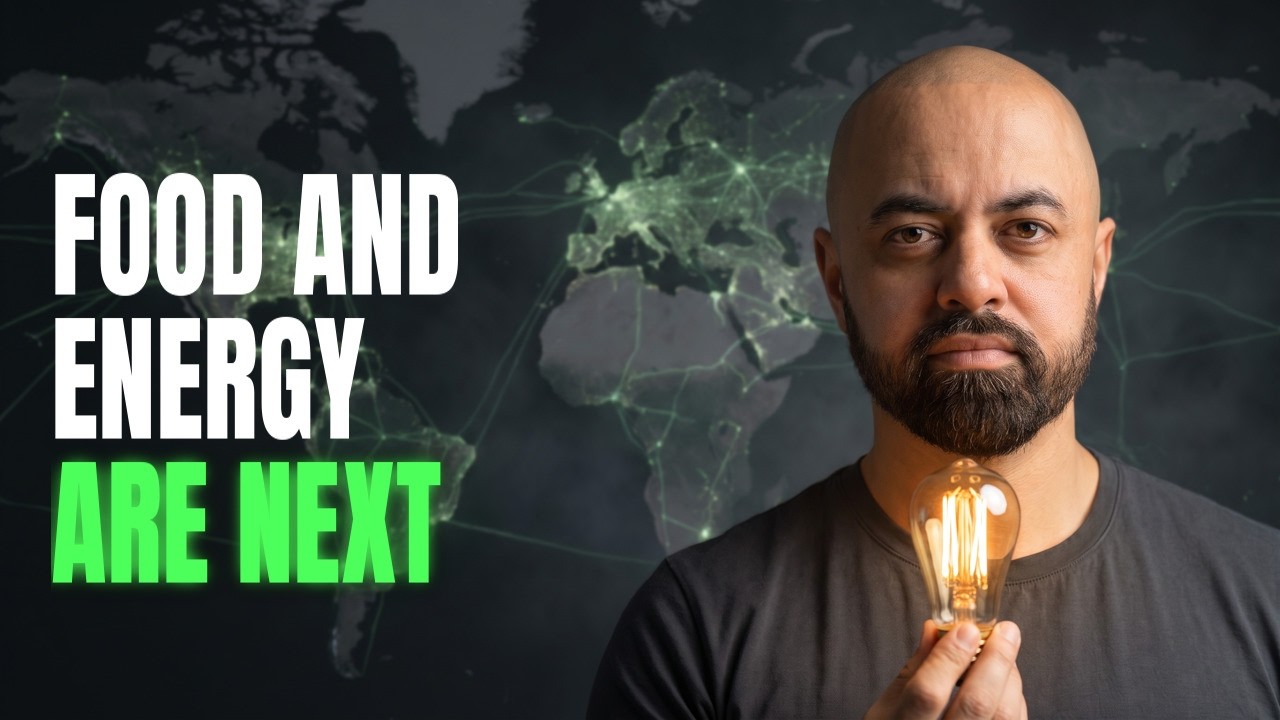
Kashif Khan argues that pandemic emergency powers are being repurposed to centralize control over food and energy systems through UN and World Economic Forum frameworks, despite a 300 million person civil-society boycott. He presents evidence that food and energy insecurity raise cortisol and inflammation across generations, then outlines practical steps for local production, buffer stocks, and neighborhood networks to regain control.
Chapters
Centralized control of your food and energy has measurable biological consequences. 4 years, same complainant, same structure, nothing changed. 300 million people. The compliance infrastructure did not appear in March 2020. It was waiting. No panic, no noise, just the structure underneath the headlines. Think back to March 2020. Within a matter of weeks, governments around the world activated emergency powers that had never been used at that scale. Supply chains were controlled, movement was restricted, businesses were designated essential or non-essential by decision made somewhere above you. And here's a part worth remembering: most of those frameworks were built in advance. The legislation existed, the emergency authorities existed, the compliance infrastructure existed. What 2020 did was activate it and stress test it on a global population in real time. Now here's a question nobody in mainstream media is asking now that it's over. What did they learn from that test, and where is the infrastructure being pointed next? Because if you look at what is being built right now in global food governance and energy transition policy, the architecture is remarkably familiar. This is not a conspiracy video, it's a systems analysis of a pattern that happened once and appears to be repeating. Let's start with food. In 2021, the United Nations convened the first UN Food Systems Summit. The stated goal was straightforward: transform global food systems to be more sustainable, more equitable, more resilient. Those are legitimate goals. Nobody seriously argues against them. But here's what happened around the stated goals. The Civil Society and Indigenous Peoples Mechanism, a body representing over 300 million members across more than 500 civil societies, organizations boycotted the summit. Not a fringe group— 300 million people. Organizations including La Via Campesina, the world's largest international peasant movement, Friends of the Earth International, Slow Food, and hundreds of others. Their complaint was specific: the summit had been captured by corporate interests, agribusiness lobbies, and disproportionate influence over the process. Market-based solutions were being elevated while approaches like agroecology would put food sovereignty back in the hands of local communities were being sidelined. And crucially, the governance structure had no meaningful safeguards against conflicts of interest. The head of Food Systems Summit at the time was also the head of the AGRA, or the Alliance for Green Revolution in Africa, a Gates Foundation-funded initiative. The Gates Foundation was invested heavily in GMO seeds, pesticide companies, land acquisitions, and digital agricultural platforms designed to plug small farmers into corporate value chains. Now, in July 2025, the UN Food Systems Summit held its 4th stock-taking event, and the CSIPM, the Civil Society for Indigenous Peoples mechanism, issued a statement. After 4 years of engagement, no structural reforms have been made to the governance of the summit. Safeguards against conflict of interest remain grossly insufficient. Corporate actors continue to hold disproportionate influence. 4 years, same complainant, same structure, nothing changed, and the summit continued. Now let's add the WEF layer, because this is where food and energy converge. The World Economic Forum has published frameworks on both. On food, their Incentivizing Food Systems Transformation document outlined the mechanisms for shifting global food production to towards a model that required centralized coordination, corporate partnerships, and technological integration. On energy, their 2025 Energy Transition Report frames a move away from fossil fuels not just as a climate initiative but as a managed transition requiring coordination between governments, financial institutions, and corporations. The word managed is worth pausing on because managed transitions require managers, and the managers being proposed are not elected governments accountable to populations. They're multi-stakeholder bodies blending corporate, governmental, and NGO representation without the accountability structure that democratic governments require. This is the same model criticized at the UN Food Systems Summit. Multi-stakeholder governance sounds inclusive, but when the stakeholders with the most resources have the most influence, multi-stakeholder governance becomes a mechanism for corporate capture of public policy. It's not a theory, it's what the 300 million person civil society coalition documented at the food summit repeatedly. Now here's my angle on this, and it's the part nobody's connecting. What does engineered scarcity actually do to your body? Because the health consequences of food and energy insecurity are not abstract, they are measurable, they are severe, and they operate through mechanisms that should sound familiar by now: cortisol, inflammation, epigenetic damage. A study published in PMC examined 624 women looking specifically at the relationship between food insecurity Perceived stress and metabolic health. What they found was direct: food insecurity was associated with significantly higher levels of perceived stress. And in women with elevated cumulative cortisol, food insecurity was associated with high fasting glucose. Now connect to what we already know about chronic cortisol elevation. It breaks down muscle tissue, it suppresses immune function, it drives insulin resistance, it accelerates cellular aging, it impairs sleep, it disrupts every downstream system. Food insecurity is not just a social problem, it's a biological stressor with measurable physiological consequences. And energy insecurity runs through the same mechanism. Cold homes, unreliable power, the constant background stress and not knowing if you can afford to heat your house. That is a sympathetic nervous system activation running consistently for months, for years. The epigenetic research on chronic social stress shows that sustained stress exposure changes how genes are expressed, not just for the person experiencing it, for their children, for their grandchildren. This is a part that makes what's being built more than a policy concern. If the systems governing your access to food and energy are increasingly centralized, increasingly corporate, and increasingly removed from your control, the health consequences are not theoretical. They are the same consequences we see in any population living through chronic insecurity. And here's a parallel to 2020 worth being precise about. The COVID lockdowns did not create the emergency powers used; they activated them. The compliance infrastructure did not appear in March 2020; it was waiting. And what was tested was not whether the governments could respond to a pandemic. What was tested was how quickly populations would accept centralized control of their daily lives when framed as health necessity. The answer to that was very quickly. And the food and energy frameworks being tested right now. Are not hiding their goals. The UN Food Summit documents talks about openly transforming food systems. The WF Energy documents talks about openly managing the transition. Transformation, management, both words describe something being done to systems by entities above those systems, not by farmers, not by the energy consumers, not by you. Because if the pattern is real and the health consequences are real, then the question is not just what are they building, the question is what can you build? Because personal sovereignty over food and energy is not a political statement, it's a health intervention. And the research on perceived control is ambiguous. When people have agency over their basic needs, cortisol drops, immune function improves, mental health stabilizes. The biology responds to the sense of security. So here's the practical framework— not a prepper list, a sovereignty protocol. Food: start with production, even smaller scale, even a container garden. Even herbs on a windowsill. The act of producing something on your own changes the relationship to the supply chain. It's not about feeding yourself entirely. It's about reducing the physiological grip of total dependence. Then storage. 3 months of staples: rice, lentils, oats, olive oil, canned protein, salt. Not stockpiling, buffering. A buffer reduces the stress response to supply disruptions. Then sourcing. Local farmer markets, community-supported agriculture, direct relationships with producers. The closer your food source is to you, the less vulnerable it is to global supply chain disruption. Energy. Understand your actual consumption. Most people have no idea what they use. Knowing creates options. Reduce dependency at the margin, not off-grid fantasy. Practical reduction, better insulation, a backup heat source, a power bank for essentials, and consider distributed generation, solar at any scale, even small, because the political value distributed energy production is that it's very hard to centralize. Community— that is the most underrated one because individual sovereignty has hard limits, but a neighborhood that knows each other, shares skills, has informal reciprocity built over years— that is a form of resilience that no policy document can replicate. It is the exact thing that centralized corporate management systems by their nature erode, because community food systems, local energy cooperatives, neighborhood networks— these are architectures of decentralization. And decentralization is a structural opposite of what is being built above you. Here's the truth. What happened in 2020 was significant, not because the virus wasn't real— it was— but because what activated around it revealed the scope of what can be controlled when the conditions justify it. Food insecurity is a condition. Energy insecurity is a condition. Climate change is a condition. Every one of them is being used to justify centralized management of systems that currently sit partially outside that management. That's a pattern. Whether you believe management is well-intentioned or not, centralized control of your food and energy has measurable biological consequences for the people subject to it. That is not a political claim, that is physiology. And building sovereignty over your basic needs is not paranoia, it's the most grounded health protocol you can run. If these connected dots are something you haven't noticed before, share it, because most people are optimizing their supplements while the systems their biology depends on are being restructured above them. So Subscribe if you want more of this. No panic, no noise, just the structure underneath the headlines. I'll see you in the next video.
More from Kashif

The Fat Loss Peptide Being Sold on a Lie About FDA Approval #KashKhan #Peptides #FatLoss

Why Does This Fat Loss Peptide Give You a Tan? Fat Loss Peptides Beyond Ozempic







He Spent $2 Million a Year on His Health. His Stomach Is Eating Itself. #KashKhan #Biohacking

