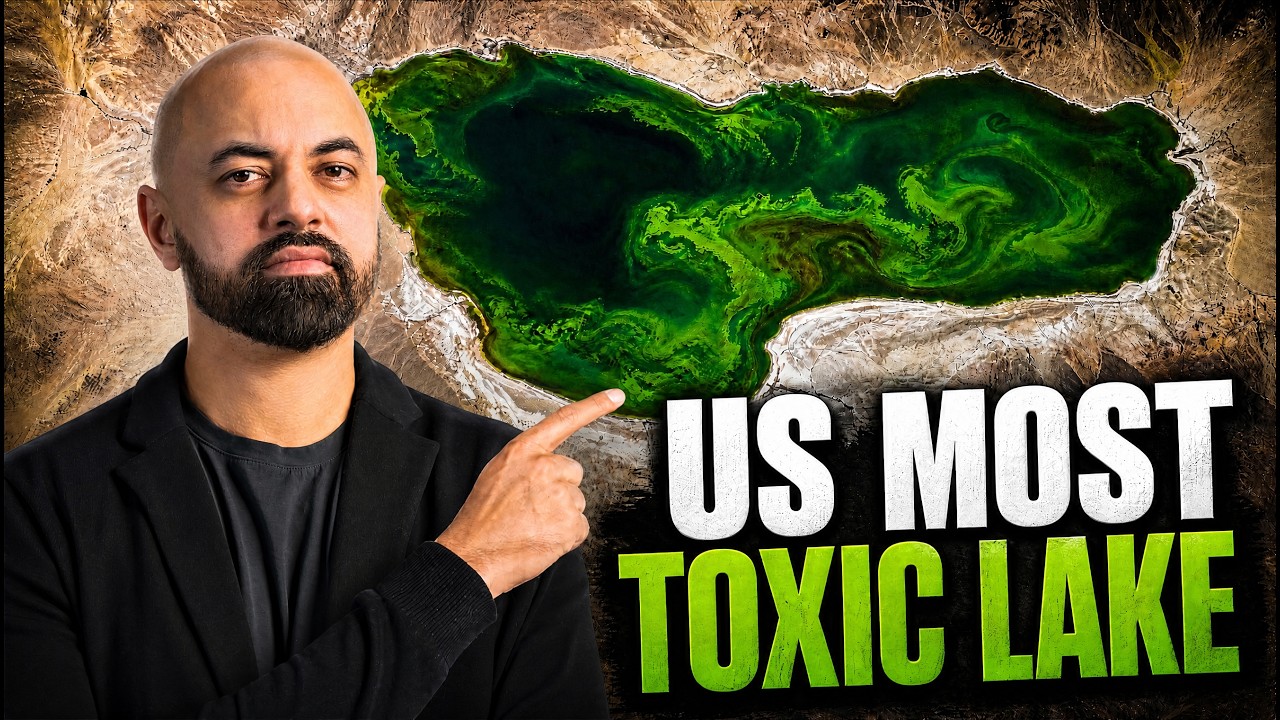
Lake Okeechobee's toxic algae blooms contain microcystin at six times the safety threshold, with toxins becoming airborne and reaching people who never touch the water. The lake receives 500 tons of phosphorus and nitrogen yearly versus its 140-ton capacity, driving blooms linked to liver disease, respiratory problems, and neurological disorders across the region.
Chapters
Because that's not a third-world scenario. That's happening right now in one of the largest lakes in the United States. Toxic algae levels 6 times higher than what's considered safe for humans. That even boiling the water doesn't make it safe, and almost nobody's talking about it. Don't drink it. Don't swim in it. Don't touch it. Don't cook with it. Don't let your kids near it. Don't let your pets near it. Boiling it won't make it safe. You don't have to drink the water to be exposed. You don't have to swim in it. You can just be near it, because these toxins don't stay in the water. become airborne. There are no real regulatory standards for airborne exposure. There's a US lake that is so toxic that even boiling the water doesn't make it safe. Now let me ask you something. How bad would a body of water have to be for the government to tell you don't drink it, don't swim in it, don't touch it, don't cook with it, don't let your kids near it, don't let your pets near it? Even more importantly, boiling it won't make it safe. Just sit with that for a second. Because that's not a third world scenario. That's happening right now in one of the largest lakes in the United States, and almost nobody's talking about it. That should bother you because this isn't just about a lake. This is about a system breaking down in slow motion while everyone treats it like a background noise. Lake Okeechobee, 8th largest freshwater lake in the United States, a central part of Florida's entire water system connected to rivers that carry water across the state. Serving millions of people. This isn't some isolated pond. This is infrastructure. And right now it's being flagged as dangerous to touch. Independent testing found toxic algae levels 6 times higher than what's considered safe for humans. 6 times. Now here's where this gets uncomfortable, because when most people hear algae, they think it's harmless, annoying, maybe dirty, but not dangerous. That assumption is wrong. What you're looking at is not algae, it's bacteria. Cyanobacteria, some of the oldest life forms on Earth, extremely resilient, extremely adaptive, and under the right conditions, extremely toxic. And those right conditions are exactly what we've created: warm water, still water, and most importantly, nutrient overload. Phosphorus, nitrogen runoff from agriculture, decades of it. And for 30 years, nutrient levels in that lake have been rising. And here's the part that should stop you. This system was designed to handle about 140 tons of phosphorus per year. It's been receiving around 500, year after year. That's not a small miss. That's not a margin of error. That's system overload. And here's how biology responds to overload. It adapts. It takes advantage. And it grows explosively. That's what these blooms are. Not random. Not natural in this form. They are a biological response to environmental pressure. And when they bloom, they don't just sit there, they produce toxins. Real toxins. Microcysteine, a compound that targets your liver. Not mildly, directly. It disrupts cellular function, causes cell death, and at high exposure can lead to organ failure. Now here's the part most people don't realize. You don't have to drink the water to be exposed. You don't have to swim in it. You can just be near it. Because these toxins don't stay in the water, they become airborne. They attach to particles. They move through the air and you breathe them in. So now this is no longer a water problem, it's an environmental exposure problem. And here's the most concerning part: there are no real regulatory standards for airborne exposure. Meaning we know it's happening, we know it can be harmful, but there's no system in place to protect people from it. So people living near these lakes are exposed continuously without realizing it, without protection, without warning most of the time. Now let's take this one step further because this is where it becomes Studies have looked at communities living near these bloom areas, and they found something that should get your attention: higher rates of liver disease, higher risk of death from non-alcohol liver disease in areas with more bloom exposure. Think about that. Not skin irritation, not temporary illness— long-term disease linked to environment. Now layer on top of that respiratory issues, neurological concerns, toxins that are being studied for links to conditions like Alzheimer's and ALS. And we're still treating this like it's just a water quality issue. It's not. It's a human health issue. Now here's where things get even more uncomfortable. This isn't rare. This isn't isolated. Over 60% of the counties in the United States have documented cyanobacteria presence. This is widespread and it's growing. Why? Because the conditions are getting worse. More heat, more nutrient runoff, more pressure on water systems. So what you're seeing in Florida isn't unique. It's ahead. It's what happens when the system has been pushed long enough. It starts pushing back. Now here's a question nobody wants to ask. How did we get here? Because this didn't happen overnight. This is decades of decisions, agricultural runoff, fertilizer use, land management, water management, and a system that prioritized output over long-term sustainability. And when the consequences showed up, what did we do? We moved the water. Literally. When the lake fills up, water is discharged east and west into rivers. into coastal ecosystems, into communities. So instead of fixing the problems, we distribute it, we spread it. Now it's not just a lake issue, it's a regional issue, and people downstream are dealing with the consequences. Most of them have no control over it. Now I want you to think about something. If a private company contaminated water at this level for decades and caused measurable health risks, what would happen? There would be outrage, there would be lawsuits, there would be accountability. But when it's a system When it's distributed responsibly, when no single entity owns the problem, it becomes invisible. It becomes complex. And complex problems get ignored. Now, to be fair, there are solutions being worked on, billions of dollars being invested— reservoir systems, water treatment, restoration projects— all necessary, all important. But here's the reality: you don't undo 50 years of damage quickly. You don't remove decades of accumulated toxins with one project. And while those solutions are being built, the exposure continues. The blooms continue. The health risks continue. Now let's bring this back to something simple, because this is where it matters. This is not just about Florida. This is not just about one lake. It is about understanding how environmental breakdown becomes human health breakdown. Slowly, quietly, without headlines, until it's too big to ignore. And by then it's already embedded in the system. So the question becomes, what do you do with this information? Because ignoring it doesn't make it go away. Awareness is the first step. Understanding where your water comes from, understanding environmental exposure, understanding that health is not just what you eat or what you take, it's the environment you live in. And most people are optimizing their diet while ignoring their surroundings, and that's a blind spot. Now, I'm not saying panic, I'm not saying this is everywhere equally, but I am saying this: this is happening, it's measurable, it's documented, and it's not being talked about at the level that it should be. And that's what should concern you because the biggest risks are not always the loudest ones. They're the ones that sit in the backyard until they become unavoidable. And if this gave you a different perspective, share this video because most people have no idea this is even happening. Subscribe if you're new because this is what we do. We look at what's underneath the surface, not just what's obvious. Drop a comment. Did you know about this before today or is this the first time you're hearing it? I'll see you in the next video.