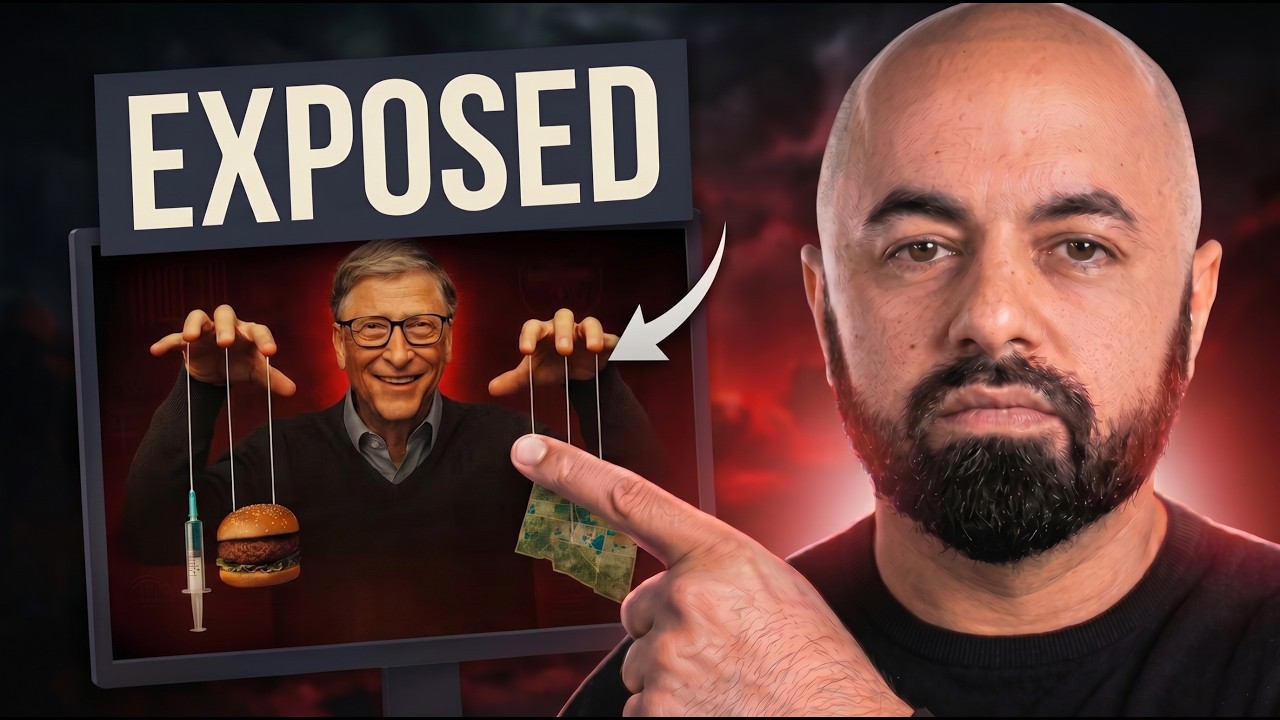
In this commentary video, the narrator (Speaker A) argues that the Bill & Melinda Gates Foundation has become the dominant, largely unaccountable power broker in global health. By presenting documented funding figures, the speaker shows that between 2000 and 2024 the foundation gave $5.5 billion to the WHO, $7.7 billion to the vaccine alliance GAVI, $250 million to major media outlets, $8 billion to university research, and $800 million to the Institute for Health Metrics and Evaluation (IHME). The total disclosed spend exceeds $100 billion, with a further $200 billion pledged. The money is earmarked, meaning the foundation decides where it goes, shaping priorities toward infectious disease and vaccines while neglecting chronic disease, water sanitation, and health‑system infrastructure. The speaker maps this funding across the entire health ecosystem—policy (WHO), implementation (GAVI), data (IHME), research, and media—describing it as a vertically integrated system that functions as “governance without elections.” While acknowledging the health benefits of vaccines and disease reduction, the narrator stresses that the scale and concentration of influence turn philanthropy into de‑facto governance, lacking democratic oversight. The video urges viewers to question funding sources, examine the structural links, and adopt a more critical, informed trust in global‑health institutions.
Chapters
Between 2000 and 2024, the Gates Foundation gave the WHO $5.5 billion. At one point, the second largest funder in the world. The Bill and Melinda Gates Foundation alone is responsible for 88% of the total amount donated by philanthropic foundations to the WHO. That money is not unrestricted; it is earmarked, which means the donor decides where it goes, not the institution, the donor. When they give us the money. They are highly linked to their preferences, what they like. So what gets funded? Infectious disease, vaccines, polio, all of it funded by one private foundation, the Bill and Melinda Gates Foundation.
Bill and Melinda Gates have given more than $29 billion to charity in their lifetime, which boasts a trust endowment of $49.8 billion and distributes about $5 billion a year in grants.
Let's just stop pretending this is normal, because what I'm about to show you should make you uncomfortable. Not because it's hidden, but because it's been sitting in plain sight, and almost nobody is willing to connect the dots. You've been told to trust the system, trust the science, trust the institutions, and most people do because they assume those institutions are independent, that the research is separate from policy, that the media is separate from funding, that the people telling you what matters aren't being influenced by the same source. But what happens when that assumption breaks down? What happens when the same entity is funding all of them? Not one layer, not one sector, but the entire chain. Research, policy, media, data, narrative, all of it funded by one private foundation. Let that actually land. One private foundation. No voters, no public mandate, no democratic oversight. And yet it sits at the center of global health. That's not a theory, that's not speculation, that's structure. And once you see it clearly, you can't unsee it. The Bill and Melinda Gates Foundation has spent over $100 billion since 2000 and has committed to another $200 billion. Let's pause there. $300 billion of influence directed into one domain, health. That is not charity at scale, that is infrastructure. Now here's the part people struggle to understand. Power doesn't always look aggressive. It doesn't always look like control. It looks like support. It looks like funding. It looks like helping solve problems. But at scale, support becomes direction, and direction becomes influence. So let's break this down slowly. The World Health Organization— this is the body that defines global health policy, pandemic response, vaccine recommendations, guidelines that governments follow. Between 2000 and 2024, the Gates Foundation gave the WHO $5.5 billion, hundreds of grants. At one point, the second largest funder in the world. Now potentially the largest at this time. Here's where this stops being neutral. That money is not unrestricted, it is earmarked, which means the donor decides where it goes, not the institution, the donor. So what gets funded? Infectious disease, vaccines, polio. What doesn't? Water sanitation, health system infrastructure. Chronic disease, the things killing most people globally, receive almost nothing. Now ask yourself honestly, is that a scientific distribution of resources or a funding-driven one? Because when the largest discretionary funder chooses where the money flows, that becomes the direction of the institution. Not because anyone is corrupt, because that's how systems work. Now let's take it further. GAVI, the Global Vaccine Alliance created with Gates funding, Over $7.7 billion already invested. This is where things shift because Gates doesn't just fund GAVI, they sit on the board. They help design the strategy. They influence how vaccines are priced, how they are distributed, which markets are prioritized. So now the same entity funding WHO policy is also shaping implementation. Still following? Because we're not done. Now let's move into something most people have no idea about— the media. The institutions you rely on to tell you what's happening. Over $250 million from the Gates Foundation into journalism. BBC, NPR, The Guardian, Financial Times, major outlets. Now again, let's not be naive. Journalists are not sitting there taking instructions. That's not how influence works. Influence is structural. If your newsroom is funded by the same entity you're reporting on, your environment changes, your incentives change, the questions you ask change. And researchers have a name for this, the Bill Chill, where criticism becomes rare, not because it's banned, because it becomes uncomfortable, because people don't naturally challenge the system that funds them. That's not corruption, that's human behavior. Now let's go deeper because this is where it becomes systemic. Research, over $8 billion into universities, more than 20,000 academic papers, and one institution that matters more than most people realize IHME, the Institute for Health Metrics and Evaluation. This is the group that produces the data used by governments and global institutions to decide what health problems matter the most. Disease burden, mortality, resource allocation, all driven by this data. And that institute has received over $800 million from the Gates Foundation. Now pause again because this is where structure becomes undeniable. One entity funds WHO policy, GAVI implementation, IHME data universities, research, media narrative. This is not fragmented influence. This is vertical integration from data to policy to execution to public perception. That's a system. Now here's where I'm going to say something directly. This is not just philanthropy. This is governance without elections, without representation, without accountability. Now, people might push back here, and they should, because this is a serious claim. So let's address it directly. Has the Gates Foundation done any good? Yes, lives have been saved, vaccines have been delivered, diseases have been reduced. That's real. But good outcomes do not remove structural concerns, because when power reaches this scale, intent becomes secondary, structure becomes primary, because structure determines outcomes regardless of intention. Now let's go one level deeper because this is where most people disconnect. They think influence means control, direct orders, manipulation, but that's not how this works. This works through alignment. If you fund the research, you influence what gets studied. If you fund the data, you influence what gets measured. If you fund the institutions, you influence what gets prioritized. If you fund the media, you influence what gets amplified. Nobody needs to force anything. The system aligns itself. And that's what makes it powerful. Now, here's the uncomfortable question. At what point does it stop being philanthropy and start becoming governance? Because governance is not just laws, it's influence over decision-making, it's influence over priorities, it's influence over direction. And when one entity shapes all of that across an entire domain, that's governance, whether we call that or not. Now, here's why this matters to you, because most people consume information without context. They trust the headline, they trust the institution, they trust the narrative, but they don't look behind it. They don't ask, who funded this? Who benefits from this? What is being emphasized and what is being ignored? And that's where the real influence lives, not in what you see, in what you never see, because absence is just as powerful as presence. If something isn't funded, it doesn't get studied. If it's not studied, it doesn't get published. If it's not published, it doesn't get reported. If it's not reported, it doesn't exist in public awareness. That's how direction is created. Now let's bring this back to reality. Here are facts: $100 billion spent, $5.5 billion to the WHO, $7.7 billion to GAVI, $250 million to media, $8 billion to research, $800 million to IHME, and $200 billion more coming in the pipeline. This is not hidden; it's documented, audited, public, and yet there's no mainstream conversation about it. That should concern you, not because of what it proves, but because what it reveals. Because systems this powerful should be questioned, not assumed. Now, I'm not telling you what to think. I'm telling you to think differently, to ask better questions, to look deeper, because blind trust is not the same as informed trust. And right now, most people are operating on blind trust. So here's where I leave you. You don't need to believe me, but don't reject this either. Go look at the data, read the sources, understand the structure. And then decide for yourself. Because once you understand how the system works, you stop reacting, you start seeing. And once you see it clearly, you can't go back to not seeing it. If this made you uncomfortable, good. It should, because that discomfort is where awareness starts. Share this with someone who still believes these systems are completely independent. Subscribe if you want more of this, because this is what we're doing here. Not surface-level conversations, not simplified narratives, but real structure, real influence. And things that most people won't say out loud. I'll see you in the next video.