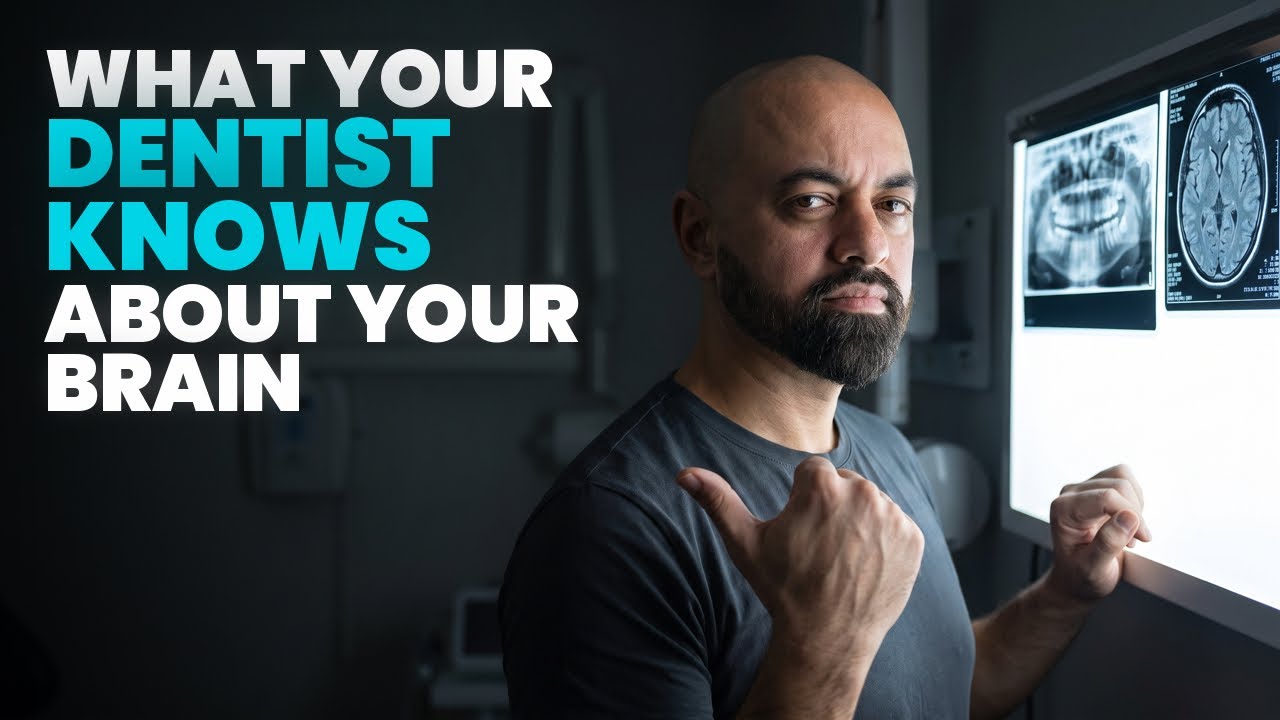
In this 2026 YouTube monologue, Kashif Khan explains how the oral microbiome—home to over 700 microbial species and 100 million organisms per millimeter of saliva—plays a central role in systemic health. He reviews recent research linking the gum‑disease pathogen Porphyromonas gingivalis to Alzheimer’s disease, describing how the bacterium crosses the blood‑brain barrier, releases neurotoxic gingipains, and correlates with TAU and amyloid pathology (Science Advances 2026, scoping review). He then expands the connection to cardiovascular, mental‑health, metabolic, and Parkinson’s disease outcomes, citing a UCLA systematic review (53 studies) on depression/anxiety, the San Juan Over‑80 longitudinal study linking mouthwash use to hypertension and diabetes, and mechanistic work on nitrate‑reducing tongue bacteria that generate nitrite for nitric‑oxide‑mediated blood‑pressure regulation. Khan highlights that broad‑spectrum antibacterial mouthwashes (chlorhexidine, silver‑iodide‑chloride) eradicate these beneficial bacteria, causing a 90 % drop in oral nitrite, a 2–3.5 mmHg rise in systolic pressure, and increased disease risk. He proposes three practical actions: stop routine antibacterial mouthwash (or switch to nitrate‑supporting rinses or coconut‑oil pulling), floss to prevent gum inflammation that fuels P. gingivalis, and consume nitrate‑rich vegetables to feed the beneficial tongue microbes. He frames the dentist as the health professional with the most regular, lengthy patient contact, urging viewers to treat dental visits as systemic‑health screenings. The video ends with a call to share, comment, and subscribe.
Chapters
Your mouth hosts over 700 distinct microbial species. In a single millimeter of saliva, there are approximately 100 million microorganisms. Frequent over-the-counter mouthwash use was independently associated with increased risk of hypertension. The clinician who has the best access to the system sees you every 6 months and spends 45 minutes with you, more time than most people get with their primary care doctor in an entire year. Scientists opened the brain of an Alzheimer's patient and they found mouth bacteria. Not just any bacteria. The specific strain is called Porphyromonas gingivalis. It is the primary pathogen behind gum disease. It had crossed the blood-brain barrier. It had colonized brain tissue. It had released toxic enzymes directly into the neurons. Those enzymes correlated precisely with how much TAU had built up in the brain. If you know anything about Alzheimer's disease, TAU buildup was one of its 2 defining features, right alongside the amyloid plaque that had been found to be the focus of billions in pharmaceutical research. This was published in Science Advances. It has been replicated. A 2026 scoping review confirmed it. This bacterium has been found in the brain tissue of Alzheimer's patients, and it actively promotes the active mechanisms involved in neurodegeneration. And this is just where the story starts. Because the same research has since connected the oral microbiome to heart disease, depression, anxiety, diabetes, and Parkinson's disease. A UCLA systemic review published in September 2026 evaluated 53 peer-reviewed studies on the relationship between the oral microbiome and depression and anxiety alone. And here's the part that really caught me off guard. The product sitting in your bathroom right now, the one you use every morning to kill bacteria in your mouth, may be actively making your cardiovascular health worse. Your mouthwash. Multiple clinical trials have shown that antibacterial mouthwash eliminate a specific group of bacteria that your cardiovascular system depend on to regulate blood pressure. When those bacteria are gone, one study found the oral nitrite production dropped by nearly 90%, and systolic blood pressure rose to 2 to 3.5 millimeters of mercury within days. Today, we're going through all of it. The brain connection, the mental health connection, the mouthwash problem, and what to actually do. Most people have no idea what is actually going on in their mouth. Your mouth hosts over 700 distinct microbial species. In a single millimeter of saliva, there are approximately 100 million microorganisms. Those organisms are not just sitting there. They train your immune response. They protect against pathogens. They perform a function that almost nobody talks about. They convert dietary nitrate from vegetables into nitrite. Your body then uses that nitrite to produce nitric oxide. Nitric oxide dilates your blood vessels and regulates your blood pressure. The entire process depends on specific bacterial species living on your tongue. If those bacteria are gone, the chain breaks. So you can eat all the leafy greens you want. Without those bacteria, the cardiovascular benefit is dramatically reduced. This is exactly what antibacterial mouthwash does. The active ingredient in most prescription mouthwashes is an antiseptic chemical called chlorhexidine. In over-the-counter brands, you'll find something called silver iodide chloride. Different names, same jar. They are broad-spectrum antimicrobials. That means they do not pick and choose. They kill harmful bacteria and the beneficial bacteria together, including the nitrate-reducing species on your tongue that your cardiovascular system depends on. A landmark study looked at exactly what happens when you do that. Antiseptic mouthwash reduces oral nitrite production by 90%. Plasma nitrite levels of blood fell by 25%, and systolic blood pressure rose by 2 to 3.5 millimeters of mercury within days. That is not just a rounding error. That is a measurable cardiovascular effect from a product on your bathroom shelf. The San Juan Over 80 Adult Longitudinal Study followed people for 3 years Frequent over-the-counter mouthwash use was independently associated with increased risk of hypertension, and the same study had previously found an increased risk of prediabetes and diabetes. The proposed mechanism is the same in both cases. Destroy the bacteria, lose the nitric oxide pathway, blood pressure rises, glucose regulation worsens. And your dentist probably does not know this, not because they're negligent, but because this research lives in cardiovascular physiology journals, Not dentistry journals. The two fields are not talking to each other the way they should. Now coming back to the brain connection, Porphyromonas gingivalis does not sit passively in brain tissue. It releases enzymes called gingipains. Gingipains are neurotoxic. They actually damage TAO, the protein needed for normal neuron function, and they trigger amyloid beta production, the sticky protein that forms plaque. In Alzheimer's disease. When researchers introduced this bacteria orally in mice, it colonized their brains and triggered a rise in amyloid beta. A 2026 scoping review found that the presence of this bacterium in brain tissue correlates with a 6 to 10 times higher risk of Alzheimer's. Researchers are now developing drugs called gingivain inhibitors specifically to target this pathway. What started as a dental research project is becoming a potential Alzheimer's therapy. And a 2026 paper proposed that specific oral bacteria common in saliva could serve as non-invasive early biomarkers for Alzheimer's disease risk. A saliva test from a clinician you already see twice a year. The mental health connection is newer, but it's moving fast. The UCLA systemic review published in September 2026 found a reproducible microbial signature in people with depression and anxiety. What that means is this: when researchers looked at the oral bacteria of people diagnosed with depression or anxiety, they kept finding the same pattern showing up across completely separate studies in different countries. Too much of a bacteria called Prevotella. Prevotella is a common oral microbe, but when it overgrows, it's associated with inflammation, and chronic inflammation is one of the most consistently observed features in people with depression. And also not enough of 2 bacteria called Haemophilus These are beneficial species that help regulate immune balance in the oral cavity. When they are depleted, the protective function they provide is reduced. The fact that this same pattern keeps appearing across multiple independent studies in multiple countries is highly significant. It suggests this is not a coincidence or a quirk of one dataset. It is a real biological signal that researchers are now trying to understand more deeply. A 2026 study from UCLA also found that stress and early life adversity are associated with specific oral microbiome differences that increase both mental and physical health risks. They're still associations, not definitive proof of causation, but researchers are clear about them. 53 studies pointing in the same direction is not something you dismiss. So what do you actually do with all this? 3 practical things. Reconsider your daily mouthwash habit. If you're using antibacterial mouthwash every morning as a routine wellness practice, The research no longer supports that. In specific clinical situations like active infection or post-surgery recovery, it has genuine value. As a daily habit for a healthy mouth, the evidence suggests it may be doing more harm than good. The research is pointing toward nitrate-containing rinses that support the oral nitric oxide pathway rather than eliminate it. These are not yet mainstream products, but they're coming. In the meantime, simply stopping the daily antibacterial rinse is a reasonable place to start. If you want to replace it with something, try coconut or try oil pulling. Swish a tablespoon of coconut oil around your mouth for about 10 minutes and spit it out. A 2025 study using advanced DNA sequencing found that coconut oil targets harmful bacteria while leaving the nitrate-reduced species largely intact. That is essentially the opposite of what antibacterial mouthwash does. The evidence is still early, but the mechanism makes sense and the risk was zero. Second, floss. But understand why it matters differently now. Flossing is not really about cavities. It is about preventing the chronic inflammatory environment in your gum tissue that allows Porphyromonas gingivalis to expand. When you understand that untreated gum disease may be doing something to your brain that shows up as Alzheimer's disease decades later, flossing becomes a very different conversation. Third, eat your nitrates. Beetroot, spinach, arugula, celery, radishes, They feed the nitrate-reducing bacteria on your tongue that your cardiovascular system depends on. The health benefit of these vegetables starts in your mouth, and it only works if the right bacteria are there to do the job. Your mouth is the front door of your immune system, the beginning of a nitrogen metabolism pathway your heart depends on, and the home of organisms that in the wrong conditions have been found inside the brains of Alzheimer's patients. We've been treating it as a cosmetic concern for decades, Biology has never agreed with that. The clinician who has the best access to the system sees you every 6 months and spends 45 minutes with you, more time than most people get with a primary care doctor in an entire year. Start treating that appointment like the healthcare screening it actually is. If this changed how we think about your next dental appointment, share it. Send it to someone who skips flossing. Send it to someone whose parents have Alzheimer's and who wants to know what they can do to actually help prevent this. Subscribe if you're new here. Drop a comment. Did you know any of this before today? See you in the next video.