192: Making A Powerful Identity Shift That Will Elevate Your Life, with Anthony Trucks
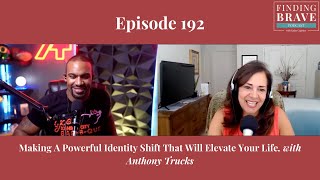
Anthony Trucks went from foster care and abuse to the NFL, then rebuilt his identity after divorce and business failure. He argues that discipline and repeated small actions rewire who you are, and that real power is self-mastery, not entitlement. His book Identity Shift comes out in August.
Chapters
Hello everyone, this is Kathy Caprino and welcome to my podcast, Finding Brave. I've created this show for everyone who longs to create something bold and brave in their life. To rise up, speak up and stand up for who they are and to reach their highest and biggest visions. Each week I'll be speaking with inspiring guests from all walks of business, leadership, entertainment, the creative arts and the entrepreneurial world. And they'll be sharing their intimate stories of Finding Brave and offer their best strategies for building your most rewarding, joyful and meaningful life, business and career. Speaking of that, I'm thrilled to share that my new digital course, the Most Powerful youl is available now. This transformative eight module training course is based on my top selling book, the Most Powerful you and is designed to help you close what my research has revealed are the seven most damaging power gaps that keep 98% of professional women from thriving at the highest level and reaching their most thrilling, rewarding potential. In the course, you'll be taught transformative action strategies and mindsets from me and from more than 30 of the nation's top experts that will help you experience dramatically more power, confidence, communication, skill, leadership growth and authority over what transpires in your work. And you'll be guided on how to take the seven brave pathways to career bliss which are Brave Sight, Brave Speak Brave Ask Brave Connection, Brave Challenge, Brave Service and brave healing. If you're finally ready to close your power gaps and rock your career, visit mostpowerful you.com and join the course today. And if you'd like to learn more about these seven gaps and how to close them, take my free webinar seven ways to rapidly elevate your career. You can find that@mostpowerful you.com elevateyourcareer thank you and I hope to see you there. Hello everybody. Welcome to another episode of Finding Brave. Kathy Caprino here once again. I can barely contain myself. We have such a fascinating guest today who is going to teach us so much about, I think, what is really essential even more today than it's ever been before. And we'll talk about why that is. But Anthony Trucks, thank you for taking time. I know you're racing off to do 500 other other things today. Thank you for being here with me.
No problem. My day is ridiculous fast, but I love all of it. No complaints.
How wonderful. Yeah, it's a happy. It's a blessing, isn't it?
It is. I mean, I can be doing a whole lot of this stuff in my life, but I get to do cool.
Stuff, hang out with cool people like you.
Oh, sweet thing. Thank you. All right, people, again, we are talking about making a powerful identity shift that will elevate your life. I think every one of you in the Finding Brave community resonates with this and perhaps is even on the path to this. So let's hear from Anthony. Let me tell you all about him. And I do want to shout out our dear friend Nishant Garg, who so graciously has introduced me to so many people like you. So thank you, people.
Good people. Find good people.
That's it. When. When my friend suggests somebody to speak with, I don't hesitate. I'm like, I'm on it. Here we go. All right, people, here's Anthony. Anthony Trucks is a former foster child, NFL football player, competitor on American, American Ninja Warrior, author, life coach, and entrepreneur. From foster care to the NFL to successful business owner, Anthony has accomplished what statistics would say is impossible or virtually impossible as a speaker and success. Success coach. Anthony teaches people how to design and build better lives and businesses by learning how to access the power of their identity to tap into their full potential and make shift happen. And, you know, I've just read up everything I could on you, Anthony. And you know, you. You talk a little bit about being given away to foster care at 3 years old and being adopted into an all White family at 14 and losing your NFL career to injury. And so, you know, one thing I adore about your work is you have lived it in your cells what it is to make an identity shift. So. Oh, people, I do want to tell you, as you're listening, your amazing book, Identity Shift is coming out hitting shelves August 24th. Yeah. And this show is airing on September 16th. So people run out and get the book. But can we start with the thing I, you know, I love to talk about, which is we are what our childhood taught us to be unless we unlearned it and healed it. Okay, so let me just. Can I just hear what. What, you know, what I wrote down is we all have messages that we internalize from how we grew up, what happened to us. And sometimes we get those messages in a positive way, but most often, being the human mind doesn't. It internalizes some tough stuff. Can you tell us what that was like for you at the time, those experiences and then how they contributed to who you are this very minute?
Yeah, most definitely there is. What is it that there is? No meaning to a moment except the meaning we place upon it. You've heard that before.
Is that you who said it most.
Definitely not me, but I have a weird vault of random thoughts that pop into my head. A lot of it comes from conversations. But somebody like. Like, you know, no moment has any meaning. Somebody cuts you off in traffic, you give a meeting. If somebody, you know, says something to you, looks at a certain way, you give a meeting. And typically it's from the meaning we've already had inside for how we feel for the day.
So, yeah, can I say Shakespeare said, nothing is, but thinking makes it so. In other words, we think. It's so objective. No, he did this to me. Or no, it's just your mind. Yeah. So tell us. Tell us what? All this. How you internalized.
Yeah. So when I was three years old, my mom gave me and my siblings a way into the foster care system, which in 1986 is a very difficult place to be experiencing that because there's no social media, there's no videos, there's nobody reporting stuff. And so I was pretty much called a paycheck, which what means is as long as I didn't die in those households, they could do anything right now. They would get a paycheck for me.
So.
So they. They didn't take very good care of us kids. I was beaten and starved and tortured and really heinous stuff by a lot of weird people. And so what ends up happening, you start to place this perspective of like, oh, I'm just this piece of, you know, meat how life is. And it's odd, you start to actually normalize and assume that's what happens everywhere. This is just the reality of life, because I didn't know any better any different. All I knew was that. And so, yeah, that was one of those things. If you extrapolate it, you know, way, way on into the rest of my old, you know, called older years, adult years, teenage years for a long time. There are a lot of things that would linger from those areas that would be triggers that you can't, you know, can't really explain. Why do I act this way? Why do I feel a certain way? Why is it that, you know, I have different attachment issues, but they don't come up like that?
It just.
It comes up. It's like, why my life messed up. Like, why is this so effed up? Why is everybody else enjoying this and not me? You know, and so, yeah, you start to start digging into the soul of who you are, and you start finding. You start uncovering things and finding out what's on the other side of the rocks. And the more you can do that which most people go an entire lifetime without ever considering doing this. They just assume that this is so and this is who they are. And at a certain point, there was, you know, way later in life, after the NFL, after, you know, my business was up and down, after divorce, after my adoptive mom passed away, three kids, all these crazy things go on. That's when I finally woke up, was like, what in the hell's wrong with my life? Like, what is going on?
And I realized something catalyzed that. Anthony. Yeah, I'd love to hear that too, if you don't mind.
Yeah, I mean, I skipped a whole lot. So if we go through, like foster care, then I get six years old, I'm with this, I'm put into a family that's an all white family, very poor.
So I grew up in this environment, not really knowing my identity, who I was.
And so there's a lot of, like.
I call it their love there.
A lot of love for my mom.
My first foster dad, not so much. But we had love in the family for my mom. She wasn't the most successful human. Like, she didn't graduate high school, didn't do much. She worked odd jobs. She just did her thing. And so it wasn't this, I'm learning how to be successful as a human. But there was love. It just for me. Still.
I didn't want them to love me.
If that makes sense. When you're in foster care, you just want to go back to your real.
Family because there's no way to understand that your real mom's not good for you. At that time, all you know is like, you're not my mom, you're not my d. And you just want to go back for no logical reason except for that. And you don't actually comprehend that are not the best people. And so it took years for me to finally let this family love me. I'm talking eight years. So 14 years old, I finally get adopted by them, and I'm able to start living my life. So I got to go play football for the first time. I was horrible, by the way. My adoptive mom got diagnosed with multiple sclerosis. So I got this weird dynamic of life happening around this 14, 15 year old age. And eventually I just kind of like the family's focus on mom. I'm horrible at this sport of football that I really wanted to play. But, like, because you're not good at it, you're like, I don't want to do this anymore. She's back.
That was in high school. You weren't good at it.
Yeah, well, the year before high school, then high school, because all most of my peers have been playing for what, six, seven years before, you know, so in the day, it's like, oh, these guys are way better than me. And I'm way behind the ball. And so I'm like, ah, chalk it up. This ain't gonna be my world. And I just was. I was pretty much tucking away into the background of life, to be honest. I was going in the direction of being a statistic. And most people don't know, but if you go to any prison in America, 75% of the inmates are former foster kids like me.
I didn't know that.
Yeah, it's crazy. It's nuts, man. There's a lot of weird statistics around it. Then if you look even deeper, like, half our homeless population has spent time in foster care and less than 1% of us will ever graduate from college, so we're not set up to do well. So, like, I was tucking away, and it was unbeknownst to me, like, that was the statistics at the time. I was heading that way. And then I had this weird moment where some girl makes a statement to another girl and it wakes me up. And I just had this. This really interesting switch. Just flip inside to choose to find a way to be great at the game of football. Like, I gotta be great at that. I gotta figure it out. I don't wanna be a statistics. I don't wanna. I don't wanna be a nobody.
What did the girl say? This guy's a nobody.
Yeah. No, she didn't say anything to me. Oddly, she had no idea I was listening. She was talking to somebody else. What she said is this. And this is where it became this cool thing. That is an amazing gift. And what she says, it's seriously simple. She says, well, the reason I'm so bad is because I'm in foster care. That was it. That was the extent of it. But here's what it was. Whenever you're in any human, this is not just me, any human. When you hear your excuse for giving up out loud and you hear how stupid it sounds, you get like this weird, like, cringe, like, ooh. So I'm going to use that excuse as to why I'm going to be a loser and a bad dad and give up on football because of foster care. I have no control over that. That was nothing I could actually control. And so that was my thought at 15. Like, I'm gonna figure this out, man. I'll figure this out. I'm gonna figure it out. And that's what it was. It turned into me. And I Only thing I did, I just started doing all the things a great football player does before I knew I'd be a great football player.
Like what?
So this is what football players do. They lift weights, they run, and they catch footballs. I just did that all day, every day.
That's pretty simple.
Yeah, it sounds simple. I think that's the crazy part about success is it really. It sounds simple, but I caught the ball 500 times a day or I wouldn't go to bed. I ran routes every day, or I wouldn't call it a day. I would lift every weight I could. I would tell I was dead every day. But here's the thing. It wasn't that I. I got to be faster and stronger here. This is a statement that I tell people is like the key to success, in my opinion. It's when we're looking to accomplish something big, we've got to be able to have the confidence to go big. And the biggest thing we're lacking is that internal monster. But here's the thing. When I went to hit the weights and ran the routes and cut the footballs, I was. Internally, I was strength wise. Outside, I was creating a stronger body. But going through it every single day with people saying, trucks, you suck. Why are you lifting weights? Trucks. But why are you catching footballs? Your butterfingers, bro. What are you out there doing, man? Give it up. All that, you keep going. When you get to the back end and you've created, it creates you. So I tell people what you create creates you. So at that moment, like, I'd done too much work in the dark for you to take what's mine and the light. I owned this. This was mine.
Oh, say that again. Say that again.
I've done too much work in the dark for you to take what is mine and the light. So I had this. This different sense of, like, this is who I am now. And so I showed up and I just had a different edge. I was.
Wait a minute. Questions. Was it really a flick of a switch? Was it, you hear this girl and literally day later, days later, or like seven months.
This is like months.
Thank you. Thank you. You know, you talk about. And I bless you for this. We are so bombarded with gimmicky BS about what sex success is, right? And. And you are not that. And I am not that. I've been at my thing a long time, but it can feel like that. Literally, we're not faking it where it can be literally a look someone gives you or a conversation you hear that. The fire starts, the fire ignites, right?
It does. It goes. And it's not that. It's not that it has to be this emotional push, because here's what. I didn't actually wake up every day wanting to do it. It was a decision I made. And it was just a matter of staying in line with the decision. We call it discipline, right? That's the thing. If you break the word discipline down, it means disciple. To follow plan is like plan, right? So it's to follow a plan, and that plan had to be followed regardless of the emotion I had in the morning. That was just a thought. And to be quite honest, when I talk about an identity shift, that was the first true one I made. Because when you start doing certain things and you've done it for a long enough time, the most painful thing you can experience is to let yourself down by not doing it continuously. So I kept doing it. And I would do it today because I did it yesterday, and I would do it tomorrow because I did it yesterday, would just keep on going. And after a while, it's like, this is who I am. So the things that we, like, look at and go, oh, it's going to be really hard to do. And it is hard to begin with. Eventually, as hard as it is to do it, it's harder to not do it. Like, it's harder to go to bed at night and know I wouldn't have got those reps and I wouldn't have got those weights. I just was like, I can't be. I don't want to know what that feels like. I'm just gonna get it done even when I didn't want to do it. And what happens the more you do it, the more it creates this. This new sense. Like it's not just the same old you. You identify as that person who does those things that way. Because think about it. We as human beings, we will fight for what we believe we deserve. If it's my piece of cake, I'm getting my piece of cake. Damn it, Kathy, don't take it. You know what I'm saying? I'm gonna arm wrestle you down to the ground, right? That's mine. I deserve that. So here's the crazy part. If we've done the work, we'll believe we deserve what's up here. We'll fight for what we believe we deserve. But here's the caveat to it. If we haven't done the work. We will also fight for what we believe we deserve. People fight to stay small. It looks like making excuse. I don't have the time. I don't have the money. That's not the problem. I'm not the kind of guy that does. I'm not the kind of girl that does that. And we'll fight to stay small because we don't believe we deserve more. And so for me, I did the work, and I didn't do it intentionally. But I was 15 years old, man. I didn't know what was going on. I still figured out puberty, right? It's just this kid. So all I knew was like, in hindsight, I had done these things where I believed, I deserve to beat you on every play. That is my football. You will not tackle me. I'm going to tackle every play. I'm going to make the play. I deserve that. Why I did the work in the dark. So most people come go, why can't I get the money on? Why can't I? Because you're not disciplined. Why don't you discipline? Because I don't. I don't. At the end of the core of it, you don't believe you deserve that. If not, you wouldn't settle for less. So we haven't done the stuff to go above this level here.
Typically, I want to dimensionalize this because this is so, so, so important. You know, where do I begin? A lot of people will write me. I mean, I've been writing for 10 years on Forbes. Ten long years, a thousand posts, crazy. It's so much work. And when I look back on how my first blog post, what I was writing, bad, terrible, maybe it got a few. But when people come and say, and I don't mean to be snarky, I just mean to tell the truth. I want. They're, you know, right out of the gate, maybe they have a little bit of coaching training. And they say, I want to be like you, and I want to have 35 million, you know, views. And they'll say something like, will you connect me to your Forbes editor? And I want to be generous. And I say, here's what Forbes needs, you know, to consider you. And, you know, they haven't done it. They haven't done the work. They don't have a following, they don't have a blog, they haven't written anything. Here's what I want to ask you. I think that, yes, you know, I work a lot with worthiness. If you don't have a sense of what you inherently deserve and also what you're going to work for to get, it's not going to work for you. But I do see this other thing, which is there is a sense of worthiness. Worthiness. But it's become entitlement. I don't know I exist, therefore, I deserve to get 5 million views on my posts. So there's a worthiness and a confidence, but they miss the understanding that, look, folks, this is work. Hopefully you love your work. Hopefully you're smiling every day doing your work. But it's not a walk in the park. It's work. What do you think about this?
I think the people that have the entitlement are the ones that are viewing the tip of the iceberg and not the iceberg.
Yeah, they want that, but they have no idea what went into that.
Yeah. Not even just what went into it. But yeah, because, for example, if inherently you say, I want to have that thing, my thought, I go to football, I'm like, well, if you're good enough, they won't keep you off the field to you.
It's very clear now, isn't it?
Very clear.
Right. It's like if you. It's the people always ask, how do I get here and get here, just get good enough. I mean, it's hard to hide phenomenal talent. You have to. I mean, nowadays that it's very hard to hide it. Right. So when I look at people that like, why I have more degrees than that person. I used to have a guy that works for me at a gym that I owned years ago. He came in, well, I got a master's degree. I should make more than you. Even as the owner. I got a higher education. Like, son of a bitch. Do you. Have you seen what I built? You know what goes into buying the equipment, putting together, getting the team, getting the business license, the insurance, funding this thing, keeping it open, getting marketing going, having the sales team, their stuff, front desk, all these little nuances. Right? You think that just because you went to school, because all he saw was the degrees. And I'm like, bro, you have. You're missing the entire point. And what happens is people go into this and there's an entitlement because they're viewing the things that they want to measure up to. I want to measure myself to your degree, and that's what I want to measure. So in that bubble of time, if we just take those two things, yeah, I'm better than you. You don't see the holistic aspect of the bottom of the iceberg. Every Single nuance that went into all this stuff. And so when I express to people, like, who are in that entitlement stage, like, I have people talk to me like I have clients that come on. And why should I have this? Why do you believe you should have that? Well, I went to school and did this. That's great. What else do you think that they might have done that you haven't done that have given them? And when you go down that pathway, well, now the ego gets attacked. It gets all pokey and odd, but then it actually unveils itself. Like, look, you really don't deserve anything. The world is very interesting. It will typically even the scales, man. Like, not all the time. Let's be honest. Majority of the time, though, if you are better, you can't hide the talent. We will see it. It'll show up. But also it comes with you having to do the work that they did in order to get with their act. Here's the thing. Maybe this guy does have a better degree than me. Right. Which means, okay, great, your degree's higher. So if we use that. Well, what else did I do that got me here? Because if you just did what I did, maybe you could outpace me. But the problem is you're missing the rest of the iceberg to help make this tip bigger.
Oh, couldn't agree more. Now, let's dig into this for a minute. You know, I'm just reading this book, Untangling the Mind by neuroscientist and psychiatrist Dr. Ted George. It basically explains everything that goes on in your brain for every response you have. It is incredible. So if you have rage, read this book. If you are afraid you're going to haul off and hit your kid, read this book. You know, it's going to tell you exactly what is happening. But then there's treatment, you know, methodologies. But here's my question. So many people, like, look at the statistics you shared, went through what you went through, but are traumatized.
Yeah.
And you know, part of what I see in you is a undying belief in the fairness of if I do the work, there will be reward. Would you agree with that?
Yeah, internally. And it's people who not a guaranteed. But there is a vastly higher chance. Yes.
And, you know, you seem like a positive person. You seem like you went through true trauma. What you had was trauma. Abuse is trauma. Feeling abandoned is trauma. How do you think you overcame the internal trauma that keeps so many people from putting that equation together? I deserve it, but I'm going to work. I Deserve because I'm a human soul. But I have to do the work to get to the level that I dream of. And when I do that work, it's going to change me. So even if I don't get to that final outcome, like being with the NFL for 20 years, I'm going to be a person of merit, respect.
And I had to battle that, to be honest. I don't think it happened. And none of it happened quickly, and it's not supposed to. I think I find that when the work I do of identity, specifically, like, we are always building up this identity, even unintentionally. It's just always anything we do and we build into it creates more of a sense of who we are. Right. I've done this job for a while, so I know how to work the register better than anybody else. Like, that could be the identity you hold because you. I've done it right. I put energy into it. And what happens is, at certain points in time, we want more, and we're wondering why we don't. Why we don't get it, why we don't feel like we should have. And it's like, well, it's the same thing you already did. You said to go do that again in that direction, and then it'll come to pass. It's very simple at the core of it, in my opinion. But what happens is we don't do the work we expect. Like where we just planted this tree and we nurtured it and watered it and built it and pruned it for years to build this tree. We're going across the street, putting a seed in the ground, going, tree, where's my tree? There's no concept of the law of the harvest anymore. And so for me, it's like when you say, how did you overcome that? Well, I had gone through this journey where this tree had come to pass of this kid who thought he wasn't very good. Like, the work had been done. And so I did things in my life and took actions in my life to make that true. Right. I didn't step out and do confident things. I didn't think I was smart, so I wouldn't show up certain ways. I didn't do homework. I don't. You know, whatever it may be. And then what I eventually did was like, well, I want to be that guy. I want to be something better. So I did it for football. That was the first stage. Did it for football, right. So I built this new identity. It was just in football, we have multiple identities. In different areas. And then I came out of football, and I had like this business mentality, like, I want to be a business guy. I went through the same journey. I was almost bankrupt nine months into my business, right? Didn't figure this whole stinking thing out. And there was that journey. Then my marriage fell apart. I was divorced, right? My wife and I had three kids. Everything came tumbling down, right? And I wanted to come out of these holes. And I carried a lot of that stuff from childhood. Not feeling good enough, not feeling worthy, even after having been in the NFL and after having been a guy that had beat statistics and odds. But I still had that part of me. And the reality was, in 2016, I had this moment where I kind of. I looked in the mirrors, like, I don't like this dude, man.
That's a motivator, isn't it?
Genuinely. Like, I had had my mom pass away a couple years earlier. That started, like, this planting of a seed of, like, I got to do something better. But even that wasn't the true catalyst. It was the moment where I woke up and I was like, dude, I don't like this guy. This. This is a guy who I would not want my daughter to be with anybody like me. I wouldn't want boys to be like me. My mom wouldn't be proud of. My God ain't let me into heaven being this dude. And that was the thing. And what it turned into was me finally looking and realizing that I was the common denominator in all my problems. Me, I was around them all, even, you know, you could be, like, it wasn't my fault. Like, yeah, but you're involved somehow. Let's figure what's going on there.
Anything that repeats, you're co creating people.
He's there somewhere. And then it led to me really unpacking, like, dang. Like, there's some things I do that I'm not a fan fan of me doing, but it's leading to this guy. So what if I did different things? What if I just built into a different direction, like football, but built a better man? And so I started the process of doing things that felt completely out of character but were in line with the place I wanted to go. And I think that's the hardest thing is most people won't do what's out of character. But the problem is what is in your character has created this crap you're in.
Oh, Anthony, you and I are the same people. Not really. But I always say to people, do the thing that you thought you never could do, that's the thing that's gonna change things. Not the same thing you've always done, obviously. A lot of the thing that you say, if I can do that, I can do anything, but it can't be the thing you've always done. I love it. I need to just say this one thing and I'd love to hear what you think, Anthony.
Yeah.
You know, I just wrote a book on the seven most damaging power gaps that professional women face. I believe that women are not men in skirts. I believe women. And I've seen it because I was, you know, in the corporate world and women, I really at times feel that like they're bloodied, wounded soldiers on the battlefield and I'm screaming, where's the Red Cross? So I do want to say this, and I'd love your thought on it. What working with thousands of women has taught me is that there were two things. There are two things that are missing and you need them both. One is bravery to face head on what is not working and take accountability to change it. But that isn't enough. The second thing is power, internal power and access to outside power.
Yeah, yeah.
With. For women. And I'd love to hear what you think, you know, as a black man, as someone who was raised, you know, in some disadvantaged situations. Do you agree with that?
Yeah. It's funny is my company vision statement is something that we actually live by in a certain way. We have to. Because if you don't, then it's all kind of worth nothing. But there is a actual statement. Our vision says this. Our vision is to help ambitious people unlock and access their full potential and make a shift by shifting. Sorry, make shift happen. I'm messing it up. By shifting into a limitless state of ridiculous power.
See?
Yeah, love it.
A limitless.
For they come up with the greatest terms.
This is our vision statement. Yeah, we all together came up with it.
But ridiculous power, Tell us what that is. Just right up my alley here. Oh, my God.
Yeah, it's dead on. Because I think for me, when I operate, my day, my wife, she's like, how in the hell do you hop on stages in front of thousands of people and go talk? She's like, I don't get it. Like, I don't know. But I operate internally. I love it, man. It fills me up, to be honest. But there's a sense of power that I have. Not so much that I have power over people, but it's a power that I have to do what I do to show up in a way that There's a sweet spot of my life and I think we all need to get here, which is, I love to do something and people love that I do it.
Oh, I love to do something and people love that I do it.
Yeah, it's a good little song.
I love the way you say stuff. The other thing I do want to emphasize, women tend to shun, Shun power. Women have said to me, I don't know what this power crap is. I don't want it. I want influence. I want impact. I go, you can't have those without power. But the reason they say they hate it and shun it is that it's abused. And again, it's back to this thing we talked about. Yes, power is abused sometimes, but we are not talking about the power over somebody. No, we're talking about the power to. The power to be a force for good. The power to do what you want to do. That power to uplift others while you rise. Would you agree with that?
For sure. I mean, if you think about it, women like the maternal, the moms, like, you gotta have some power of your kids to be able to raise and do great things. Like, there's powers. And it's not always a power of control. Sometimes the power is do my. Because I think, let it go, mom and dad. But like my wife, I believe that my kids have a different sense of. Of what the world actually is than I did growing up. My wife. Because they see my wife operate in her power. What she creates, what she does, how she shows up, the businesses that she runs, how she handles conversations. And I think that there's most definitely going to be an inherent thing that almost by osmosis, is seen and felt not because of how she, you know, I guess abuses, like you said, her power, or, you know, is using her power. Sorry, but how she just is powerful. And so there's something that human thing. And when I talk about we want to give people the ridiculous power, it's like, I just want you to be in vast control. Because if you think about power, I think power has to do with the ability to control to an extent. Like if there's a powerful leader. Right. They can control the masses. But I think for us, a lot of us don't feel like we're in a great space of control of even ourselves. We don't understand why we do stuff. We don't understand why we can't have stuff. We don't feel like we have the ability to make changes. People actually ask me, Anthony, what do you think success Is most people go, oh freedom. I go, man. I don't think freedom's a thing. I think the problem with freedom is like I have the freedom to choose, but then I can't always exercise my freedoms. I don't have the ability to change my job or leave the relationship, whatever it may be. I believe control is freedom, but it's not control of others. Control of my life. Can I control my emotions? Can I control when I want to get up in the morning? Can I control who I want to talk to? Can I control when I want to take a trip? Right. That is power. It's just a power of my own life.
Interesting. I, I have a reaction to the word control but again it's Shakespeare says nothing is but thinking makes it so. You know what I call what you talk about? I call that self mastery.
Yeah.
I can only control this me. That's it. Can't change the pandemic right now. I can't. I can control this. I can control what comes out of my mouth. I can control how I feel, my thoughts. I am going to have self mastery. When I have self mastery, then at the end of my life I can say I've done everything I humanly can. As long as I have bravery and power, you know, internal and external to make the impact that I want to make and you know I want to highlight and I know you have to go in a minute. You said something that's such a catalyst for so many people. I remember after getting dumped from my high level corporate job after 911 I actually couldn't look myself in the mirror as a leader. I thought I was the shittiest leader ever. And part of it I'm going to blame. When you're getting your. We're swearing here. When you're getting your ass kicked, sometimes you don't know how to handle it. So you a kick down the road. You know junior people, I felt like the worst leader. When you are disgusted with yourself, boy does that motivate you to change. Would you agree?
Oh, 100%. That was my big motivator. Because the thing is as we as human beings we will spend a lot of time trying to be in alignment. There's thing I think we all want to go to bed and sleep, right? I think there's a desire for us all to sleep. It sounds odd but bear with me here. My big goal every night is to go to bed and go to sleep in 30 seconds. I want to have a light heart. And in order for us to go to sleep at night Certain things have to happen in our head. And I think what we do typically is we will go into the world and things will happen, and we'll try to find ways to justify what happened in a way that it's not our fault. I had no control in it. So we will kick off things to other people, or we'll make excuses, we'll blame situations, we'll do all that kind of stuff. And I think what ends up happening is like, we end up finding ways to stay stuck because we don't want to actually see the real problem of what's going on. And for me, when I can get to the lighter heart of actually, like, understand, like, damn, I suck at this. Like, that's the word that. That's the one that moves me. Right? Because before that, yeah, because I think the movement has to come from me accepting that I suck at this. But if I. If I can blame it on something else, I can get through the day. I can go to sleep at night, no problem. But the moment that you can't sleep because you realize, like, it's you, we have a different push, it's a different tick.
But for me, that is. That's when you have control. When you finally say, look at what I am repeating over and over. That darn toxic boss. That darn narcissistic friend.
Yep.
Well, I guess I'm the one that can change that. You know, to me, that's where the excitement and juices instead of always blaming something outside yourself. Right.
It's excitement now, but it begins as pain. And the thing is terror. It is. It's like a journey. The create creation process, I found, has a journey level. It's like, there's like, the first thing you do is like a 10 of 10 of pain. It's like, oh, this sucks. A 10 of 10. And then you go, try to fix it. And it's like, oh, it's a nine of pain. Get out of here. Right? I'm not a masochistic person. I don't want to get myself had to experience pain all day. But successful people, they do it again and again. It's like a 9, 8, 7, 6, 5, and eventually gets down to zero. And we think, I can do this without pain, but it's actually not pain. It becomes a joy. It becomes an enjoyable thing to do this because you realize what the outcome is when you can get through that and get to this level here. So for me and you now, I'm like, yeah, there's control. I feel joy. It kicks me up. I Suck at that. Yeah, let me see. I can figure it out, because I know I will. Most people go, I suck at that. Oh, I must suck as a human. There's something wrong with me. I'm bad. And they tuck away. They don't re engage and improve it. And so it's a journey to it. And I think that's why a lot of people, yes, shame and that feeling of like, I suck is a great driver. I have control, but only if I logically get it and eventually get myself through those. Those levels of pain to get to the joy of it.
I love it. And I also want to point out, folks, dimensionalizing this, you have done something that I think people who have tremendous success some often do, which is you've turned your mess into a message. I think when we have challenges, we tuck away because we think we're crap, we're losers, we're stupid, we're ugly, we're fat. When you. I was just sharing this on a mindvalley with Jason Campbell Mindvalley webinar. It used to be when I'd have something bad, like, I almost lost my house because I stayed in coaching, didn't make enough money in the beginning. I didn't tell anybody that for 10 years. Now when something horrible happens, I'm like, okay. And I'm no saint, don't get me wrong, but I'm like, wow, I didn't expect that. That's knocking me to the floor. But then I literally think, I can't wait for the day where I can talk about this. First I have to process it. First I have to figure it out. But I want to turn the mess into a message. So let's. Let's leave people with. And then there's one other question I have for you. We have four more minutes, right?
Yeah.
Let me hear what you think about turning the mess into a message. And then I want to hear you about social media and followers and how because you are big on Insta 100,000 followers, you're big a lot of places I see it's almost the bane of our existence that we're searching so desperately for vanity. They're not vanity metrics in your case, but so many people just want followers to build them, build themselves up. So let's start with number one, turning your mess into a message. And then what do you think about social media and followers and desperately trying to get that? What do you think?
Yeah, for sure.
So I think that's the thing, is I don't think that anybody should tell you how to run the race until they've crossed the finish line. So there is something about having a mess and turning into. But the biggest thing is, if you're going to have this mess, you got to cross the finish line before you make it a message. But I believe the best people who to teach at or run the race are the ones who didn't hover over in a helicopter, but they were down on the ground stepping in potholes and, you know, and having to climb through the grass. And they did it because they can be like, hey, bro, don't take that left. But it's faster. Yeah, but there's a damn scorpion pit right there. Like, don't do that. You know, there's. So it's like. But you can't do it until you've got to the finish line. Because if not, I'm like, hey, guys, I'm making a left. Let's go to scorpion pit. And I don't know what's coming, right? So, yes, turn your message into a message because you know what to do with it. But cross the finish line after you've.
Turned the mess, after you've done something inspiring and something you're proud of. I'm.
If not, then you're just in the bubble of just being the guy or the girl who's out there leading people astray. And then you'll have an issue internally of like, oh, I'm doing problems to people. And if you have any kind of integrity, you'll feel bad for wasting people's time or hurting their lives. So if you really want to get there, like, solve the problems for yourself first, then go back. And yes, it's beautiful to be able to make anything better from what you've already experienced. There's. There's something that's a spot that's the same thing as get to the point of loving it, the journey, and then go share this thing that you love, that people love you do. Same kind of bubble. Social media is a weird monster. I just think I could create stuff that would get me a whole bunch more followers, right? I can make stuff like, look at my dog. And I can go hang out and jump around and do comical stuff and put, you know, take a bath with SpaghettiOs. I could do this stuff. I purposely try to create stuff that's for the right person. And so I, as much as interesting, the metrics are cool to be like, oh, I got 100,000 followers. I've been at 100,000 probably for the last year. It's not a big deal to Me, it's really. It's just a matter of what's come to pass. And the reality of what I think in our world is we have outsourced a lot of our identity to social media, that this is who I am. The number count I have is who I am and how good I am. Like, there's this one Black Mirror episode where, like, your followership and your likes, that's your credit, that's your life, that you can make money, you can rent cars. Like, it's crazy, but that's like a weird world we might be living in in the future. And so for me, like, I'm very clear on this one thing. I am not for everybody. And that's a beautiful okay. Right. Just because someone doesn't want to hang out with me and be a part of my crew doesn't mean that they're bad people. Doesn't mean there's anything wrong with me or I'm a bad person. Just means we're not a fit. And I think the moment that you can accept that reality, it lets you be vastly more free in the world. And so, like, for me, the followership and social media, it's great to share with the people that you want to share with, but there's going to be a selection of people who don't like your stuff who will tell you that they don't like your stuff. And the funny thing is, I've never had a joyous, incredibly happy person dog me. It typically becomes a person who's like, you know, there's something going on with them. So when I get this stuff, I'm like, bro, I'm not worried about you. Like, you want a hug? Like, I'll give you a hug. Yeah. I mean, you want whatever make you feel better today, but I feel like.
You and I are so on the same wave wavelength. Today I am posting this quote. What comes at you from other people is so much more about them than.
Than you always is. Yeah.
Because it always. If they're coming at you saying, you suck, you're this, you're that. Okay, then.
Yeah.
You know what just happened in your life that is making you try to tear me down? You know, just move on if you don't like it. I love it. I love it. Oh, I could talk to you for hours. You. You're not almost like, you know what? The word came to me. I don't know if you're going to freak out if I say this, but kind of like a prophet. Has anyone ever said that, like, you just speak From a higher level, I think.
Thank you.
I appreciate it.
I really appreciate you sharing with us. Everyone, please let us know what you think of this. You're going to see it on insta. You're going to see it everywhere. Read Anthony's book. I know you walk through more strategies and steps and ideas about how to create that identity shift. I would love you to come on another time, Anthony, and talk about is our identity really in there from the beginning? Some people that I know work with business identity, et cetera, and personal identity really believe that you're in. Your identity's in there. You just have to birth it, uncover it.
I've had some conversations, my pastors. There's two different directions I could definitely expand upon.
So we'll have you back. We'll have you back because I know you're giving a very large talk in about 15 minutes. Where do people suck up all your wonderfulness? Where do they go? Where do we send them?
Yeah, best place just go to go to Instagram at Anthony Trucks is the best way to come find me, listen to me, hang out, whatever, whatever you want to come get more of the weird juju's in my head. I do have a daily podcast that I do. It's called the Shift Starters. If you go to shiftstarterdaily.com I talk for eight minutes every morning. Yeah, I do it. Yeah, just eight minutes.
Just ripping around, just doing this weekly Finding Brave. It's a lot.
It can be. It can.
We will link to that too, as well. Anthony, I wish you all the best. Thank you so much for being such a bright light. It's fun to speak with you.
It is fun, man. I think you just let me come and share and talk about the book and if everybody wants the book, we'll give all the codes and everything. And give people some free stuff, too.
Great. Free stuff. Free stuff. So check out the show notes. Hop on it. I know. I feel. I feel so energized and hopeful speaking with you. Thank you again. Thank you. All right, everybody, if this didn't inspire, I don't know what is going to. So have a wonderful, wonderful shifting week. And all along the way, find Brave and access that power that's waiting for you. But you got to do the work. All right, everyone, have a great week. See you next time. Thanks so much for joining us today. And please don't forget to check out findingbrave.org for more programs, resources and tips. And tune in next time for your weekly dose of Finding Brave.
More from Kathy


Elevate Yourself, Elevate Others, and Amplify Good | Chris Cooper | Finding Brave Ep. 334

Finding Brave Epis #333: How Leaders Can Harness AI Without Losing Their Humanity, w/Bennett Borden

Finding Brave Epis 332- How to Stay Brave, Valuable and Visible in the Age of AI, with Raman Rai

Finding Brave Epis 331 - The Power of Positive Disruption, with Dr. Patrick Leddin


Finding Brave Epis 330 - Being 40: Letting Go and Embracing Who You Are, with Stacey Lindsay

Disrupt Career Reinvention with Kathy Caprino - via The Disruption Lab Podcast w/Patrick Leddin

Creating Neurodiversity-Friendly Work Cultures: Simple Workplace Adjustments Matter

Finding Brave Epis 329 - How To Create a Neurodiversity-Friendly Workplace, with Kristen Pressner

Finding Brave Epis. 328: Reclaiming the Power to Trust Your Own Voice, with Dr. Cindy McGovern