199: Award-Winning Mexican Chef and Political Analyst Hosts Groundbreaking PBS Special La Frontera
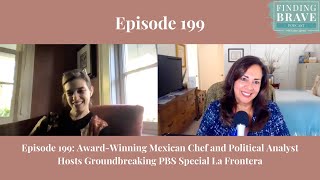
This is a recorded interview (Kathy Caprino’s Finding Brave podcast) with chef/host Patti Hinich about her career arc from political analyst/academic training to award‑winning chef and public-media host. The episode highlights Hinich’s PBS primetime special La Frontera (a culinary-travel journalistic look at US–Mexico border communities), her long-running show Patty’s Mexican Table (10 years), the cultural richness and diversity of border towns (Marfa, Rio Grande Valley examples), and career advice about staying true to identity and ‘trying it on.’ The interview emphasizes humanizing misunderstood communities and using food/media to build cultural bridges.
Questions this video answers
La Frontera with Patty Hinich.
PBS.org or the PBS app — search for 'La Frontera'.
Patty's Mexican Table — she states it has run for 10 years.
pattyhennis.com (as spoken in the interview).
Chapters
Hi, Kathy here.
And I wanted to share some information about my new digital newsletter, your Path to Career Bliss. This monthly newsletter explores one key career, leadership or personal growth topic that is essential for building a happier, more successful career or business. Every issue offers a selection of the most read articles that I've ever written, along with riveting podcast interviews with some of the nation's top experts, as well as career assessments, resource recommendations, a subscriber highlight section and an Ask Kathy column, and more. We've made it as affordable as possible with two tiers to choose from and the first month is completely free and you can cancel at any time. I hope you'll join me in this program. Now check it out@kathy caprino.com newsletter and get your free issue today. Thank you. And here's to your path to career bliss.
You have to know how, but I think with personal finance, it's not enough just to know how. We also then need to be able to take and apply these things and make them real in our lives.
Hello everyone, this is Kathy Caprino and welcome to my podcast, Finding Brave. I've created this show for everyone who longs to create something bold and brave in their life, to rise up, speak up, and stand up for who they are and to reach their highest and biggest visions. Each week, I'll be speaking with inspiring guests from all walks of business, leadership, entertainment, the creative arts and the entrepreneurial world. And they'll be sharing their intimate stories of Finding Brave and offer their best strategies for building your most rewarding, joyful and meaningful life, business and career. Here we go. Hello everybody. Welcome to another episode of Finding Brave. I'm choked up even before we begin this show today because, you know, if you're listening regularly, you know, I interview people who are rocking it at a very high level and are making a very big difference in an impact. And I'm also featuring people like my amazing guest today, Patti Hinnich, who to me, embodies everything that this show talks about, everything that this show hopes to help people do, which is, in my opinion, that I'm going to tell you all about. Patti, Marry up everything that we are, from who we were as children to the trials and tribulations that we had, to the careers that we had that fitness failed or rocked. But we needed to change them to the end point where we're making an enormous difference in the world using everything we are. And that is Patti. Patti Hitch. That's you, Patti.
Gosh. So thank you. You're gonna make me cry. You're making Me choke up. I haven't even said a word and I'm about to cry.
Well, it's so you. And we again, I'm gonna tell you about Patti and we're talking about. I think the name of this show is Mexican chef and political analyst hosts groundbreaking PBS special. I think that might be the title, but you'll correct that for me if that's, you know.
So the title of the show is La Frontera with Patty Hinich.
Yes. I mean the title of this podcast episode. That's what I just. Yes, yes.
Oh, yes. Oh my God, I love that. Oh, tell me again. I want to hear that again.
I'm thinking Mexican shit. And political analysts host groundbreaking PBS special La Frontera. How about it?
Oh my God, Patty. So beautiful. And it really does marry what I was and what I am.
All right, now, people, let me tell you about Patti and then we're going to dive in on some really critical questions. I'm reading you this long bio because I want you to listen for all of the beautiful twists and turns of Patti's career. Patty Hinich is the James Beard award winning Mexican chef who has dedicated her career to building a shared understanding between her two home countries, Mexico, where she was born and the US where she lives currently and is raising her family. Her long running PBS series, Patty's Mexican Table, which is so wonderful, I love it so much, has brought Mexican flavors, colors and textures into American homes and kitchens as viewers have watched Patti thoughtfully and enthusiastically guide them through various diverse geographic regions of the country. Named one of the 100 greatest cooks of all time, Patti has won a Gracie Award for her television work, is the resident chef of the Mexican Cultural Institute, and has been named one of the top five border ambassadors by the Council of America and has authored two cookbooks highlighting Mexican cuisine. Patti's third cookbook, what are you doing with your time? My goodness. Treasures of the Mexican Table releases November and is the culmination of over a decade of travel across her birth country as she showcases the diversity of Mexican cuisine and sheds light on lesser known dishes and recipes. And even more pressing right this moment, Patti makes her PBS primetime debut as the host of the new culinary travel special La Frontera, which highlights the fascinating yet misunderstood that's a key term here. U.S. mexico, border region where countries and cultures collide. Oh, welcome to the show, Patti. Holy crow. Look at everything you're doing now. Everyone wants to know about this show and you can read all about it in the show notes below, people. But I really want, I have so many questions for you that I'm, you know, just dying to know. But for people that don't know how you began and how this was a passion that became such a successful, you know, it's a marriage of entertainment and learning and knowledge and study. It's so beautiful. But you. Can you tell us how you began and how this morphed?
Of course. Well, Kathy, where I began, I, whenever I talk to people and I interview people in my show, I am, I always am obsessed with going back, back, back. Like, just like you're saying, where do you come from? Where did you start? And your parents and your grandparents. And your grandparents. Like, I want to go to the roots. Like I'm going to go back to the big bang with every person I talk to.
Me too.
But I, I come from a long line of immigrants, long line of immigrants who made Mexico their home more than a century ago. Coming from different places, from Poland, from Eastern Europe, fleeing. On all sides of my family, there were people fleeing like political refugees, religious refugees, and they found Mexico to be their home. And I am a second generation Mexican who feels so Mexican, so indebted to Mexico. My entire family's there. I was born and raised there. And then I married, moved to the U.S. i wanted to be an academic. I trained as a political analyst. And I always had this desire to contribute to that country who helped my family make Mexico their home and build bridges. Because I always, since I was a little girl, I felt like I was treading worlds, you know. And then I moved to the us had my kids here in the us, Mexican, American, to add to the identity confusion. And then I realized that rather than doing political analysis, it was by way of the kitchen and cooking and food that it's easier to make sense of who we are, but also to understand other people. And I realized that all those things that are so, so difficult to talk about outside of the kitchen, when you put a bowl of food in the middle, walls come down, veils, you know, are taking off. And people are so much more willing to share and connect and find those common denominators. So, anyway, long story short, it took me a long time to get into cooking. I switched careers when I already had two kids. So I moved from being a political analyst to a chef to now. I mean, I've had Patty's Mexican Table, which is a PBS show, for 10 years. But right now it's my debut as more of a journalistic host in La Frontera, where I step away from the kitchen and just go all out in the field and connect with people and bring them the microphone. So the more that I am on TV and radio and contributing to newspapers and magazines, the more that I feel a bigger responsibility to let people talk and share who they are. And I believe that media is meant to do that, to bring microphone to people who can't share the stories, who are misunderstood, who are labeled misjudged. And I have done that for Mexico for 10 years, in my small way, however, best I could. And I felt this magnetic pull from the border. You know, being a Mexican who continuously crosses between Mexico and the US for work and for personal reasons at the border, I realized that it is these place where there is a continuous treading between worlds internally in a population that enriches not one country, but two and beyond. And so it's been fascinating, and it's been even more fascinating to be able to produce a show that is all about the borderlands and the border communities in La Frontera that takes politics aside and says, okay, who are the people who are living here? What are their lives like? What do they eat? What do they think? What do they cook? What art? What music, what culture to humanize the place. And you realize that it is incredibly rich, diverse. It is people that are so giving and warm and hardworking. And it's fascinating to go into that universe. And you really can't go until you get there. And I'm hoping that with this show, I am being able to bring people there without translation, without going there and saying, oh, this is what we're filming. I'm editing and showing you these. No, I'm hoping that with this show, you're coming there with me and experience experiencing it unscripted, living people's lives. And I think we were able to accomplish that.
Oh, Patty, there is so much. I am totally tearing up. I don't mean to be cheesy, but there's so much in what you just shared in four minutes. Can I punctuate a few things and ask some questions?
Of course. And I apologize, because I talk about a thousand things at the same time.
No, it's so rich.
So rich. So.
I have to. Let's take a career arc, look for a minute, and then I want to talk about the importance of what you're doing. But didn't we. So Patti and I were talking that I first met Patti in 2014, where I did a Forbes interview with Patti, which was so riveting. And we'll link to it below. But don't I remember that your sister had a restaurant. Is that. Right. And what. What I so love about your arc. I'm going to say it the way I think it is, but you tell me. Your sister kind of said, come into the restaurant, right? You did that. You didn't love it. You did. It wasn't your place. Am I wrong?
So. No, no. Actually, Kathy, I come from a family of food obsessed people, and I have three sisters. And my three sisters went into food early on, and we never worked together in Mexico. Well, my oldest sister now has a very successful restaurant in Mexico City called Mido, and it is spectacular. And then my second sister has had restaurants in Mexico City and Miami and now lives in Mexico and is an incredibly talented pastry chef. And then my third sister is all into healing and, you know, connecting to the earth and doing it, you know, so holistically. And she's a vegetarian and makes beautiful vegetarian food and is a lot into fashion. And it is. And she's a lot into connecting to fashion in a sustainable, environmental way. So I was the last one to jump into the food world. I was a political analyst. I wanted to be an academic. So cooking really was their world. And I. But we always cooked and ate together, and it was, you know, it was wonderful. But then once I switched careers and I went to cooking, my sisters were like, wait, what? She's the intellectual one. You know, she's the academic one.
That's it.
You know, that's what I remember. But then they super fully embraced it, and now we're all into food. But I guess in the beginning, not only to my sisters, but to my father and my mother, they were like, what are you doing? We put you through college. I put myself through graduate school here in Washington. I was able to get a merit scholarship at Georgetown to do a master's of Latin American studies. And they were like, why did you, as we say in Spanish, like, burn your eyelashes? Studying so much and now you're gonna rinse pots and pans? Like, they didn't get why I was going into cooking. And, you know, I think I switched careers, like, 12, 13, 14 years ago. But now it's funny, because I jumped into cooking, didn't want to do anything with political analysis. I just wanted to jump into food and connect people through food and our heritage and traditions and break myths and misconceptions about Mexicans and immigrants outside of Mexico. But now with La Frontera, I'm really coming full circle because I'm reconnecting with my historian, political analysis, backbone without being political. Like, I am not out there campaigning for candidates you know, but I am out there talking to people about issues, all sorts of issues. And especially I wanted to go to La Frontera. And of course, you can't ignore the elephant in the room. There is a wall, there is the border, but what is under, over, you know, all over it, like the border in La Frontera. And the border communities are not just about the border. It is something that defines part of what the borderlands are. Of course, but the border is always changing, and the way the U.S. and Mexico deal with the border regions are always changing. But the border communities between the US And Mexico have always been connected and resilient, and they rely on each other to survive.
Oh, questions. Amazing. So one thing I also want to talk to you about. And then we're going to talk about the show and the border and why we need it so much, the, you know, the border communities and why we need this show so much. But I want to ask you this, because I don't really. I haven't had on the show many people that touched on something that I'm thinking I hear from you, but you tell me if I talk about me for one second. I've been writing for 10 years, and in the beginning, it was what I thought. Here's what I think about careers, what I think about leadership. And then at a certain point, I wrote a book. Then I said to myself, I'm bored of my own self. I'm bored of my own voice. I'm not going to continue doing this for 20 years, and I want to learn. And what. And I don't know that I had a conscious, you know, thought right there that that's what it was, but I wanted to grow through writing, not just have a microphone through writing.
Oh, my gosh, is that you saying, like, 100%? I started. I started Patty's Mexican Table because I ran into so many myths and preconceptions about Mexicans. And I saw the Mexican community here in the US So atomized. And, you know, we're not from Mexico. So what?
So what?
Atomized. Atomized, like, broken into many pieces. And I really wanted to connect Mexicans to their roots. I wanted to stay connected to my own roots, but I also wanted to open a window so that America and whoever would watch would understand the Mexico that I missed and loved and that nurtured me and my family so much. So I started Patty's Mexican Table, going back to the things I missed. I knew, I wanted to share, I knew by heart. So what you're saying is, like, this is the Mexico, you guys don't know, right? So I started going to Mexico City Pueblo. As the season went by, it went from, Let me tell you about Mexico to wait, now I'm going to this part of Mexico that I've never even been to. I'm talking to these people that I never met. I'm eating these foods that I didn't even know existed. And it was like a, like a humbling experience of, okay, I've shared all I know and all I missed, which was these limited, you know, but now I want to learn all about my home country and how Mexicans are evolving in the US and it became exactly what you're saying, this fascinating experience where I'm just bringing my audience along to learn with me, to experience with me. And it builds these bond of companionship because I'm not talking to them, they're living with me, what I'm experiencing. And I'm just trying to ask the questions, you know, I'm incredibly curious. I, you know, I want to know it all. And I give people a microphone.
That's it.
Let them share in the eat and explore and, and the combination really, I think is which I'm just getting started. I feel like I had to take my career in these paths so that it would be really much more substantial and meaningful and that I could use these platforms now to bring the microphone to those who don't have the microphone. And it's become incredibly fascinating, humbling, life changing, and just makes me marvel at all of the things that I know, which, you know, the more that you learn, the more that you realize that you didn't know anything to begin with. And the thing is, I went there and I can't say, oh, this is what we learned and this is what you should know. But what I do know is that I had no idea, you know, and these are all the things we found. But I know that this is just a little snippet of it, this is.
Just a little bite, but I. Oh, I love it. What I want to amplify here for everyone though is a few things. Everything you learned as a political analyst, everything you learned as growing up in Mexico and yet living in the U.S. how do I want to say this? It is your lens for what you are going to amplify. So while, and I'm just going to say it, people, I'm hoping this is an educational moment while you're giving the microphone over to others. It is what you are curious about and what you have respect for and what you have passion about. That is going to be the lens and the shaper and the filter for every show you do. For every show I do. In other words, that's why learning and growing and self mastery is so important, even when you're handing the microphone over to someone else. And if I'm really going to be clear about this, what I mean is, you know, what you want people to get out of this. I'm guessing, I mean, I would guess when I even watched your trailer, I was so moved and I immediately had a newfound, you know, in your five minute trailer, respect, appreciation, marvel, curiosity for these people and their cultures that I feel have in fact been demonized. I'm going to say it. I don't mean to be political. Political.
It is so true.
So did anything I say there speak to you?
Absolutely. I think that when you come to it with the curiosity and the respect and the wanting to learn, people just open up because they see you're not coming in with an agenda.
Right. You're not using, you're not manipulating.
Exactly. You're not coming in to say, oh, we seen this happen and you do these. So it was like, show me, you know, feed me what you're eating, like, take me in, show me what you see. And, and it's really these curiosity which I find the more I do, the more curious I get, the less satiated I am and the more I want to know. And when people realize that you want to know what they want to say and you want to help them get that message across without translating, manipulating, they there's these bond of trust where they feel comfortable with you. And, and, and I love the unscripted side of these because you are really going where the people are letting you go. And the more comfortable they are, the more they will go to unexplored, fascinating places. So just like these, I mean, there were so many things that were surprising and interesting. When we were filming in La Frontera, we went to Marfa, for example, which is a huge art place in Texas. But it's this tiny little town in the middle of nowhere. And it used to be a farming ranching town with mainly white American owners and mostly Mexican farmhands. That's, you know, historically what the town has been. But it became a big art scene when Geoff Judd moved there. And then the Chinatti foundation opened. And anyway, it's a very important international art scene. And we went there to eat barbecue with these people who are making the most absolutely amazing barbecue called Convenience West. And we were talking to them, people from Marfa who have Been there for generations and generations. And we started talking about the impact of the international community coming and if they feel part or not of the border, which they don't. It's so fascinating because all along the border, every border town is different. You would think all the Texas borderlands are the same. Well, no, it'll blow your mind. But even Tex Mex in one place is completely different from the other. And the people and the stories and the personalities, like El Paso is very metropolitan. Laredo feels very traditional, but very economically focused and with a crazy drag. But anyway, Marfa, we started talking about the food, and suddenly they started talking about how Marfa has been historically a very racist, segregated community. And they told me the story, which is still today. The Marfa cemetery is segregated, and there's a fence that runs in the middle of the cemetery. But it's not segregation vis a vis black American, African Americans. It's segregation vis a vis Mexicans. And people don't know that much about that. You know, we tend to just, you know, you think certain things in a certain way. And as a Mexican immigrant, as a Latina, it was very important for me to show, you know, what they were saying that we included in the show. And people realized that in Martha. So there aren't African Americans at all, but there are lots of Mexicans. And to realize that that is something that has happened also to Mexicans in the U.S. historically, it's just, you know, to open people's minds. You know, there is racism of different kinds. There is segregation of different kinds. And. And for them, they brought it up themselves, and they, you know, they want things to change in their community. And anyway, so just like that, then we went to the Rio Grande Valley, for example, where we met a Japanese American family who's raising cattle from Akauchi beef, you know, which is wagyu beef. And they have strong Japanese roots. They're third generation Japanese American, and they're contributing these beautiful wagyu bees to this country. And these were Japanese people who came, who were migrant farmers in California who were put in concentration camps after Pearl harbor, then got out, had nowhere to go, went to Texas, became Texan migrant farmers. And then they got into cattle. And now these strong Japanese American women, one married to, you know, Hispanic, like long line of Mexicans, but, you know, the border cross them, they don't even speak Spanish anymore. And the other one married to an American. So it's like a Japanese American Mexican family. And they're growing these beautiful cattle, producing wagyu beef with the strong Japanese Roots. And they're so proud about their heritage and thinking about how proud their grandparents would be about what they're doing. And they're enriching these land in this country with things that they're very proud about from where they come from. And so you. So you eat the most incredible Tex Mex fajitas made with wagyu beef, and you don't know what hit you because you've never tasted beef that delicious. And it's breaking myth. You know, the border is not just Mexican. There's Japanese Americans, too. There's Lebanese, Syrian, too. There's Haitians, there's Cubans, there's Jews, there's Muslims, there's Catholics, there's. So it's saying, you know, you thought this was the border, and this show is all about, you know, let me. Let me give you a slice of the border pie so you would get an idea of what this is. And I don't even know the richness and the depth and the diversity of it. I just had a little slice of it, you know, and I can't wait to go back for more.
Tell me what you think about this, and then I want to ask you another career question. But what you just described to me is not just about the border between the US and Mexico. It's what humanity is. You just shared 10 major themes of what it is to be a human and what it is. In other words, we come, we see what we have, we bring who we are. We shape it so that it's an amalgam of who we are and who we want to be. And that uplifts everyone. Right. I mean, and you also talk about racism, but in a different way than we're used to talking about it in the cemetery. I mean, sad to say, society is hierarchical. There's dominant cultures and there's subcultures, and there's been prejudice against people and discrimination from the beginning of time. I mean, what. Am I right? What. All these themes, to me, show. Yes. How rich this. This specific culture is, but how it's so individual, but it's so universal. That's what I'm getting at. Is that it?
Yeah. And it's evolving. You know, like where two countries meet, where Mexico and the US Meet, has had and will continue to have a historical evolution as both countries continue to evolve. You know, but the people at the border, and many of them are families who were split apart, and then part of the family became American, part of the family remained Mexican. And there's these blood ties between people who are now, after generations living under different habits, customs, laws, legal systems, beliefs, but the connections are so strong in that regardless of anything, they're neighbors and they need each other to thrive economically, to have something to eat, you know, so. No, really, really fascinating. And also what happens to art and culture in a place like these, you know, because some things get very attached, like when people get close to the border, leaving the border, you want to hold on to the traditions and the things that you grew up with that make you Mexican or American. But at the same time, there's this door that opens where new possibilities that couldn't exist anywhere else thrive. So, for example, we met with these female mariachi band. Wow. Incredibly traditional, classic mariachi band, with their suits and their ties and their bows and their guitars and the songs like, so mariachi. But mariachi has always been men, male dominated. There is no possible way that I would have grown up in Mexico City seeing a female, full female mariachi band. That's just not possible. But at the border, it's possible. So there's these.
These border it's possible. That's a tweetable.
Yeah, at the border it's possible. And just. Just like they're trapped, you know, being labeled and misjudged and they're so tired of it. And at the same time, there's all these new things that they can do, because in this place where people have the continuous access to two languages, two cultures, two foods, to. There's the creation of something new.
How wonderfully brilliant.
So really wonderful.
Oh, I'm aware of our time. I want to ask two more questions. Patti, can I.
Yes, of course.
One. One is about careers and one is about the biggest lesson you want us to learn from the show. Let's go there first. The biggest. If you had to choose one thing and lesson might not be the right thing, the biggest message, the most meaningful thing. What do you think from the show?
Well, I think that things that tend to be a third rail, things that tend to be demonized, as you said, misjudged, severely labeled. Most times it has to be because there's so much in that that needs to be unpacked. And I would love for people to come into the show with open minds and open hearts and just watch the show without thinking, without an agenda about the border, without an agenda and just experience, because we really landed there with no agenda. Just saying we want to leave the border. Life. If you open your doors and you open your homes and what you do, just want to be with you for a little while. And when you come to a place like that, just saying, I don't want to show that this is right or this is wrong or this is black or this is white or this is yay or this is nay. You just say I just to want, want to be here. This is what we did with the show. We're experiencing the place.
Oh wow. Beautiful. And just in that act, you'll help us do the same. I love it. Now here's a question that's really career oriented. People after they hear this, they're going to go to your website, they're going to see the article from 2014, they're going to see your trajectory. So here's a question. A lot of people want to be best selling authors, want to reach the top, want to have a TV show, want to be known as the hundred greatest blips. If you are the most humble person, I mean, I'm going to. It's just like digging, you know, pulling teeth to get this answer out of you. But if you were to be Talking to an 18 year old who had dreams of making a difference like you have, and I know you never imagined that this, you would be having a PBS series, you know, 20 years ago, I'm guessing you didn't imagine that 30 years ago. What would you say to that younger you or that 18 year old person who is clamoring to be the 100 best or have their own show, what would you say to them?
I would say that they need to know. And I said these. When my oldest son graduated from high school, I was asked to give the keynote speech. Why do you tell the kids? You know what, it was really hard to write and really hard to talk. And I said two important things. I think if you can let me say two things. Yes. One was you need to know what you are never willing to put on the, on the negotiating table because people will ask you to change. And I was asked, I was asked to change my accent, to change my focus, to change my. And I always knew, you know, I am not going. You need to know what you will never put on that negotiating table. Things that you know, you wouldn't be able to live with 10 years from now. And usually the things that society, people, pressures like whoever you think is going to, you know, that people who want to make a difference or they're trying to find their passion, which I think can be so overrated because okay, find your passion. Now it's like, what do I do? You know, most of the times the things that you're going to be asked to change are the things that you feel the most embarrassed about, the things you feel the most vulnerable about, and things that you don't know how to handle. But if you stick to your guts and you say, this is who I am, and those are the things that you are going to be recognized for. And in my case, it was my heritage, it was my accent, it was my approach to things. And I always thought if I stick to creating fabulous content that feels right, I know that in the long term, I will be able to be very proud about it. And it's really paid off, you know, because I feel like I have built a career with a solid name, where every content that I've done, I can look back and say, I'm proud of it. I'm proud of this one. I'm proud of that one. I'm proud of that. Of course, I've made tons of mistakes, but I think that's very important for young people because they're asked to change so many things, and there's peer pressure to be this or to be that or to be thinner, to be taller, to be popular, to be like, just stick to what feels good to you in that it is who you are, I would say that. And the other advice I would say is just if you feel like you have a mission to do something or you're passionate about it, again, going to that word, passion, or if you're really interested in going into one or another direction, even if it's not the career you studied or the path you intended, but something is pulling you there, don't do the research. Just jump and go. Because if you do too much research, you get frozen. You get frozen. You start seeing, oh, there's all these people already doing these. Oh, there's all these competition. Oh, I don't have the skills that it takes to do this or that. Whether. If you just throw yourself in there, you start figuring it out. But if you think about it too much, you're not going to even try.
Oh, I love it, Patti.
I love it.
I want to. Because Patty's too humble to say this. I want to point something out, people. One thing I was getting at to see what you would say is this. So many people want the fame and the glory and they don't want the journey. Patti is where she is because I feel. Because you stuck with. I want to do work that I'm proud of, and I want to have a solid name. I want to be. I want to have respect for myself. If you hang on to that I'm not saying everyone's going to have a PBS special, but I love PBS so much. But you're going to end up. And I'm 61. Everybody knows that. You know, it's a long haul. And I've done 18 years of not being proud and then a lot of years of figuring out how to be proud of what I'm doing. But I think the goal is just what Patty's saying. Find what makes you proud and keep honing that. Now, one thing I do want to say, Patti, and then I got to let you go, but I'd love your thoughts. I teach people how to change careers. I teach people how to find their passion and work it. One thing I do say is explore it and try it on. So what that means is it is a little research, but in the way of physically trying it on. Because, Patti, people may look at your show and say, I can do that and I want to do that, but they have no idea what it is to do that. They have no idea what it is to write your third cookbook. They have no. It's work, man. It's work. And it's only fun work when you're in the right place for it. So I would try it on. You want to do something in tv? Try, you know, don't chuck everything. Don't necessarily check your finance career. Try it on in small ways. Does that make sense to you?
Absolutely. I think that is beautiful. Yeah. I do agree with you that you have to think about where you want to go and what you want to do. And you and I think we coincide in that trying it on is jump in the water and feel what it feels like. Because if you're only. If you're only staring at the water and you're researching so much about what it takes to go in the water, then googling it. Yeah. Like, don't just dip your toes. Like, how about you take a punch?
You know, I think we are saying the same thing. Oh, Patti, any. So here's. Here's what I'd love. Tell people where they need to. Where we need to go.
Yeah.
You don't have to spell out the links because we'll have them in the show notes. But where do they see the show? Where do they buy your next book?
Book.
Where do they just dive into all things.
Thank you so much. Okay, so just go to patty hennis.com and you will there find my cookbooks and information about La Frontera and Patty's Mexican table. And if you want to watch the show all you need to do is go to PBS.org or use your PBS app and search for La Frontera. The border where not one thing begins or ends, but where new possibilities thrive. Oh.
Oh, my gosh, people, I hope you're inspired by this. I just honestly could talk to you for hours. I feel like I can learn so much from you. Patti, thank you for coming on in the middle of your launch of this amazing show. So grateful for the time with you.
Thank you for your time, Kathy. Know that you've had an impact, really, in my life. I mean, talking to you in 2014, I think it was. And you wrote that article, and you really captured what I was trying to do, and it meant a lot. You. You really gave me a lot of confidence. Really, honestly, it was great. Yeah. So thank you so much.
Thank you, my dear. All right, people, we want to hear from you. We want to know what, wherever you see this, wherever you hear this, write a comment. What you got out of the show, what thoughts theme hit you the most, what lesson, what you didn't know that shocked you, Please tell us. We'd so love to hear it. And I hope you're inspired as much as I am to do what makes you proud. But don't be afraid to jump. All right, everyone, have a wonderful week, and thank you again. Patti, Bye now.
Thank you, Kathy.
Hi, everyone. Kathy here, and I'd love to share that we have a really big milestone coming up. November 4th. It's our 200th episode of Finding Brave. It's because of you that we've reached this milestone, and I'm personally so very grateful to each and every one of you who are such loyal fans of the show and for helping us rank in the top 1.5% of over 2.6 million podcasts. Wow. In honor of our 200th episode, we're thrilled to introduce a new feature of the show. Starting now, we're accepting audio submissions of your most burning questions around careers leadership, personal development, or business growth that you'd like me to answer right here on the show. Please submit your questions@findingbrave.org Ask Kathy. We'll be selecting as many as we can to plan the show, and I'll be giving you my personal take on those questions. Going forward, we'll dedicate one show a month to answering the great questions you submit. I hope you find this a helpful feature. Thank you again for tuning in and have a wonderful week. Thanks so much for joining us today. And please don't forget to check out findingbrave. Org for more programs, resources and tips. And tune in next time for your weekly dose of finding Brave.
More from Kathy


Elevate Yourself, Elevate Others, and Amplify Good | Chris Cooper | Finding Brave Ep. 334

Finding Brave Epis #333: How Leaders Can Harness AI Without Losing Their Humanity, w/Bennett Borden

Finding Brave Epis 332- How to Stay Brave, Valuable and Visible in the Age of AI, with Raman Rai

Finding Brave Epis 331 - The Power of Positive Disruption, with Dr. Patrick Leddin


Finding Brave Epis 330 - Being 40: Letting Go and Embracing Who You Are, with Stacey Lindsay

Disrupt Career Reinvention with Kathy Caprino - via The Disruption Lab Podcast w/Patrick Leddin

Creating Neurodiversity-Friendly Work Cultures: Simple Workplace Adjustments Matter

Finding Brave Epis 329 - How To Create a Neurodiversity-Friendly Workplace, with Kristen Pressner

Finding Brave Epis. 328: Reclaiming the Power to Trust Your Own Voice, with Dr. Cindy McGovern