200th Episode Special - Highlights From Life-Changing Experts
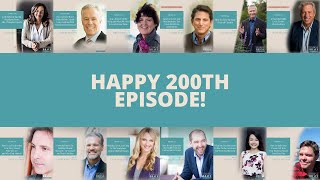
This is a transcript of Kathy Caprino’s YouTube 200th-episode special for her Finding Brave podcast (hosted Nov 4, 2021). The episode opens with host announcements: a paid digital newsletter Path to Career Bliss (first month free), promotion for her book/course The Most Powerful You (eight-module organizational offering), and thanks to her production team and listeners. The majority of the episode is a curated compilation of short excerpts from previously recorded interviews (identified by episode numbers and guest names) that Kathy chose for their strong impact and listener feedback. Excerpts touch on themes including setting boundaries, finding and practicing one’s zone of genius, effects of patriarchy, regrets of the dying, self-leadership, storytelling, turning rejection into fuel, asking intention-driven questions, mastering emotional stories in crucial conversations, building culture via leader maturity, self-acceptance, and building businesses aligned with life goals. Repeated promotional ad spots (e.g., Quick Calm) appear between segments.
Chapters
Hi Kathy here and I wanted to share some information about my new digital newsletter, your Path to Career Bliss. This monthly newsletter explores one key career, leadership or personal growth topic that is essential for building a happier, more successful career or business. Every issue offers a selection of the most read articles that I've ever written, along with riveting podcast interviews with some of the nation's top experts, as well as career assessments, resource recommendations, a subscriber high highlight section and an Ask Kathy column, and more. We've made it as affordable as possible with two tiers to choose from and the first month is completely free and you can cancel at any time. I hope you'll join me in this program now. Check it out@kathycaprino.com newsletter and get your free issue today. Thank you. And here's to your path to career bliss. Know that you're amazing. Every individual on the planet is every individual and the world needs your talents and your abilities desperately. Can you trust and accept that fact that you are special and you are unique? And now is the time to recognize that clearly. Hello everyone, this is Kathy Caprino and welcome to my podcast, Finding Brave. I've created this show for everyone who longs to create something bold and brave in their life, to rise up, speak up and stand up for who they are and to reach their highest and biggest visions. Each week I'll be speaking with inspiring guests from all walks of business, leadership, entertainment, the creative arts and the entrepreneurial world. And they'll be sharing their intimate stories of Finding Brave and offer their best strategies for building your most rewarding, joyful and meaningful life, business and career. Hello everybody. Kathy Caprino here and welcome to a very, very special episode of Finding Brave. We are at our 200th show, which I truly just have to pinch myself. We're so excited you're here and I just want to first send out an enormous thank you to you. Without you, we would not be here and without your support and your listening and your ratings and your reviews and all your sharing, we would not be here. So thank you so much to all of you. We are so grateful and I also want to thank my wonderful team, without whom this would not be possible. It's a very large endeavor to publish a weekly show and huge thanks go to them. So thank you especially to our editor Matt Milinney of podassist.com for his just amazing brilliance. We are so grateful. And to my team at Kathy Caprino llc, Haley and Carrie and Gina. Every one of them contributes their special genius to either producing or promoting or sharing or marketing the show. And I'm so grateful to them as well. So I want to tell you a little bit about what you're in store for what I wanted to do in this special episode is create a compilation of excerpts from shows that, number one, have been the most downloaded in all 200 or 199. But number two also impacted me the most deeply. Either gave me a learning that I needed in that moment or opened my eyes to a new way I needed to look at things or wanted to look at things. Truly, these conversations have been so transformational for me. But number three, also the shows that have gotten the most feedback from you listeners. So that is what you're getting here. A number of excerpts from really transformational, impactful shows. And I just hope you love these excerpts and I hope you'll go back and listen to the full episodes of each of those. All right. I hope so. What else can I share with you? There is one other thing I wanted to ask a favor of if I could very quickly. Nothing to do with the podcast, but many of you know I've just written a book recently called the Most Powerful seven Bravery Boosting Paths to Career Bliss. And I created a digital course that's a companion to the book. And I just wanted to share some news that I am so grateful for. I will share that the largest intergovernmental agency in the world has reached out to acquire several memberships for their workforce. It's a division of that intergovernmental agency. And that really got me thinking that I truly believe, because this is based on 16 years of research and work with thousands of professional women around the world, that if organizations could bring this training, the course the Most Powerful you, it's eight modules, video, curriculum, resources, homework assignments. If they could bring that training into their workforces to support the female managers, leaders, new employees, recent grads to contribute at the highest level and reach their highest, most fulfilling potential. It will transform cultures and it will transform organizations. So if you know anyone who would be interested in this for their organization or anyone in HR or anyone working in dei, diversity, equity, inclusion, I hope you will share the word. You can learn more@mostpowerfulyou.com or feel free to reach out directly to me. Thank you so much for letting me ask you that favor and I truly hope you love this 200th anniversary episode issue and we'll hear from you. Thank you so much. Episode 1 why we need to find brave and 10 ways to start what causes do you care about? What makes you angry in the world that you want to do something about. What situations do you want to change? What stand do you want to take? Right? Find a way to do it even if you hate your job right now, even if your employer seems terrible. Find a way to start being of service. The next way to find brave is protect bravely. So we know this. We're not invulnerable. We can be hurt individually, collectively, as groups, as countries. But we can't live in fear, right? What's the point of that? We have to soldier on and living lives that matter to us. But to do that, you've got to protect yourself. You've got to protect your dreams.
You've got to.
You've got to know who to share your dreams with. You've got to develop boundaries that say no to people that will violate your boundaries. No to people who are against your values or hurting others. You've got to be strong. You've got to protect yourself and your visions and your dreams and what you believe is true. And I'm hoping what you believe is true and what you value is for the greater good of everyone rather than just one small sect, rather than or group or cult or faction. I hope that you understand that we're all connected, that we're all one, really. We're all just facets of each other, aren't we? But we have to fiercely protect our spirit and our dreams. And we do that with forgiveness and compassion and love, not hate. Right? Don't become a hater just because there's haters all around us. Right? So here's my tip. Where are your boundaries being violated either at work or your personal life? Where do you feel beleaguered? Where do you feel angry and resentful and put upon? That's the place to start. And it's time to build a boundary and have a bold, brave conversation that. Enough. This is gonna stop here. Episode 44 how to Live in your zone of genius with Gay Hendricks.
You can't make an outside commitment or vow with your voice if you don't feel it ins a rattle there. And I know sometimes that happens and it always causes a rattle because the important commitment starts with yourself inside. So step number one is make a commitment to your genius, however that shows up. Step number two is make that practical in a very limited way to start. And we start around here with giving people a 10 minute assignment just for 10 minutes a day to devote to their genius. And Everybody can find 10 minutes. You know, finding 10 minutes isn't that hard. And we actually have Them put it in their calendar because it needs to be treated with respect, because your genius will show up to the extent that you woo it. I say woo in the book because it's like wooing a lover or wooing forth. You know, imagine sitting in the park and inviting a pigeon to come over and eat out of your hand. It's about that. Effortless, you know, you don't want to chase the pigeon around the park because that will freak out the pigeon. Same thing with creativity. You don't want to chase your creativity and get desperate about it because that will chase it away. Fear doesn't drive creativity. A lot of times fear drives our resistance to our creativity. So one way of knowing that you're in the creative zone is the absence of fear. And so if you can look for those areas of life that scare you and cause problems, I say that's the quick ticket to your genius. Because if you can transform how you look at your problems and transform that into opportunities to jump into your genius, that's a big change in life about how you go through life.
Episode number four, Gender Power and the Crushing effects of Patriarchy With Terry Real.
Now, things have gotten so reactionary culturally that people are picking up the sword again of feminism. We all live under patriarchy, which is a rigid dichotomy of gender roles. You know, we all know what the dichotomy is. Traditionally, men are supposed to be strong and feel independent and unemotional and logical and competent. Women are supposed to be expressive and nurturing, weak and dependent. And one of the things I say about those traditional gender roles is they don't make anybody happy and they don't make for intimacy. I'm a couple therapist. I work with men and women all day long in both heterosexual relationships and same sex relationships. And one of the things I say, Kathy, is that in order to lead men and women into happiness and intimacy, intimacy with others and really a good relationship inside your skin as well, that's synonymous with leading men and women out of patriarchy. Because the old roles were not built for intimacy and happiness. The old roles were built for stability, for production and consumption. Intimacy? I don't think so. Happiness. Buckle up and do your job. But that's what we're about these days, the bronze mood. And these are good values. Intimacy is a good thing. I stand up for intimacy. And being happy is a good thing. But the old roles are not going to get us there. We need to reconfigure who we are, both as men and as women. And frankly, we need A vision. We need some leadership as to what that looks like.
Episode 105 Top regrets of the Dying and what we need to learn from them With Bronnie Ware.
We have to realize we're allowed to be happy and that we're worthy of happiness. That's a really big thing for a lot of people. But also understanding that contrast is a part of life. We're not going to be happy all the time. We can't realize our potential without the challenges and the struggle to real our strength and to break through all of the conditioning that's actually holding us back and to break through the resistance to our potential, the fear of our potential. And so we have to have those struggles and the contrast and the challenges because they are the things that make us step into our best self to really step up and own who we can be. So it's not about not accepting those times. It is about choosing how long you're going to stay in those times. And so even within, if you're in a whole chapter of growth and challenge, even within that, it is possible to stop for two minutes and watch a cloud go over, or listen to a bird sing, or see a smile from a stranger, or take a few deep breaths and realize your own beauty. So choosing happiness isn't denying sadness and anger and challenges. It's saying, okay, I have all of that, but I am not going to give any more power to that than is absolutely necessary. So I'm in a sad time. For example, I'm in a sad time right now, but I can see a bird singing out, you know, flitting out from tree to tree and out my window. Or a shopkeeper today wished me a nice day, and they may have been having a really lousy time and might be struggling to feed their kid, or may have had to walk two miles to get to work, but they still wish me a nice day. And they still turned up and we interacted and they smiled at me. So happiness is a choice on such a tiny level in so many ways, and yet all of those small choices to focus on something beautiful or something positive is one choice away from the anger and the sadness and one choice closer to happiness.
Episode 5911 essential shifts every Leader Must Embrace With John C. Maxwell, you're right on.
In fact, when people ask me, they'll say, you know, okay, who do I start leading? I say, start leading yourself. It begins with self leadership. In fact, let me put it this way. If I can't lead myself, why should anyone else follow me?
So I'm happy to get my own act together.
Why would I want to transport that to someone else? You see, we can only give what we have. And so what I teach is leadership begins not with the masses out there. The leadership begins here. And it only begins with me, Kathy, but it begins with the inside of me. I want to teach people to be bigger on the inside than they are on the outside.
Wow.
This is all about values. This is all about heart. This is about doing things for the right reason. If I can become bigger on the inside, the outside's going to get automatically bigger. It's only a matter of time. But how many times I see people who never get their own act together and they're trying to build some kind of an organization or team, and it goes up maybe a little bit, and then it collapses. And it collapses because they never answered the hard questions to themselves before they ask the others. You see, it's much easier for me to give direction to others and tell them what to do than to do it myself. But the integrity of my leadership is that I do it first. So I say the leader's greatest words, Kathy, are follow me. Just follow me. Leadership is highly. People do what people see.
Episode 94 how to Tell a riveting story about who you are and why that matters with Tony Vlahos.
What's your story? What's your leadership story? How are you telling people about who you are and the difference you can make for them?
I love it. Can I ask you. I've never asked this question on this. What number are we on this podcast? I don't know, 100 something, I think. Can you tell me how you define. It's gotta have soul. The story has to have soul. Can you define that?
Yeah, I think there's so many components to that. You know, fundamentally, we're talking about a story with characters and emotion. The characters are going to be human. And when we start unpacking what a human is, we're talking about someone who desperately wants to be understood and heard and touch people and find meaning in their lives and hopefully create meaning in the lives of others. Otherwise, why do anything, you know? And I think now we're beginning to bleed into the aspect of soul. You know, the stuff that says this spirit that I have needs to be shared in some way. And we often don't understand that about ourselves. We again, especially. Well, at least in the corporate context that I look at the world through most days, you know, there seems to be no room for that. We focus on other things. We forget that there's something larger about us as people. And I think there's that nature that ultimately the Greatest Story has to unleash and allow to go out and touch people. And that's what we're really focused on.
Hi Kathy here. Are you stressed or anxious? Having trouble sleeping? Is all the stress you're dealing with making it hard to get things done or to feel happy and healthy to be your best? Wouldn't it be amazing if you could dissolve anxiety, boost energy and sleep easier on demand? What if you had reliable ways to get focused, prevent headaches, and improve your mood anytime? Well, I have a fantastic resource for you and it's called Quick Calm. It's the new self paced video series led by my colleague and friend Jordan Friedman, who's also been a guest here on Finding Brave. In this powerful series, Jordan teaches you 10 tested and fast acting stress and anxiety reduction techniques that he's brought to audiences for 25 years, including in his role as director of Columbia University's Health Education program. Test it out for yourself. Jordan's giving our Finding Brave listeners 20% off Quick Commercial. Just go to Quickcom.net and use coupon code Finding Brave to get your 20% savings today. Episode 51 Six Essential Questions to Ask for the New Year let's talk about the three highest goals. How do we figure this out? So let's look at it in five different ways here. What are the outcomes that you want to create? So maybe you don't know how to frame it as a goal, but you can write down outcomes like I want to be a more present mother or I want to be a stronger leader and not say I'm sorry and not winch and whine and question myself. Or this is my theme. I want to monetize what I'm already doing well and easily. So these are outcomes so you don't have to see them necessarily as a goal. It's an outcome I want to get healthier. I want to start using that creative talent of pottery or singing or so outcomes that would make you feel like you're not wasting your time here on this planet, that you're doing something that's juicy and exciting. Right? Another way to look at a high goal is where can you turn your mess into a message? I don't know where I read that term, but I love it and I say it all the time. But one of the things I love most to do is when I really made a mess of something. I can't wait to go wow. I can't wait to learn how to overcome this or turn this around so that I could teach other people how to bypass what I went through. I get a lot of juice out of turning my mess into a message. Could you? For instance, I have one client who's steeped into a job, a senior role in her family owned business. And she says, I want to give back to entrepreneurs somehow, but I can't do that in this job. Yes, you can. Create a workshop on the top mistakes new entrepreneurs make or new small businesses make and go and present it. Present it at the library. Present it at the Women's Forum. Present it at the Chamber of Commerce. Present it. There are so many things you can do to turn your mess into a message. Episode 70 Essential Rules for Building mental strength in yourself and your children with Andrew Whitman.
This is what I do. I go. I go. This is the homework I give them. I gave it to him in Greece too. I said, I won't be. I won't be back to find out for a while because I'm not coming back till next July. So you guys have some time, but go home and look in the mirror and just love you. Accept yourself, flaws and all. Because this is what we do when we look in the mirror, Kathy, is we look at all the stuff we don't like. So, I mean, I do the same thing and I work on the same. This is the thing. Mental and emotional work, or even I'll call it spiritual work, is harder than physical work.
So much harder.
Okay? So every day, every day, every day I'm going to reaffirm my acceptance of myself. Listen, welcome to planet Earth. We all have stuff we don't like about ourselves, okay? I get. I'm looking for eye cream with retinol because I don't like the wrinkles in my eyes, okay? I don't like that my hair is turning. Yeah, see, it works.
Give me the brand later, please.
Right?
Offline. No, but see, this is the stuff. Whenever we look at and look, I was the fat kid and I still, every day, see a fat kid in the mirror. I struggle with that every single day, right? And I'm. I'm a fit nut. I mean, my wife tells me I'm, you know, you're like a freak of nature. I do intermittent fasting. I only one meal a day, right? I eat all my calories between 4 and 8. Like, that's my window. And then I sit down and I'll eat like for 15 minutes or 20 minutes, eat my calories. I work out six days a week. I'm like a Fitness nut and still look in the mirror and have to fight that thought of, you're still a fat kid, so you got to work on it. Like it's not going to just boom, poof, you know, pixie dust. It's good. So you got to commit to like loving yourself every single day and then you can go love your kids every single day.
Episode 585 Ways to Use rejection to fuel your success. You know, I mentioned in that post, and I want to share it with you, that when I was younger, I'd get so crushed by rejection. And so, you know, I had an 18 year corporate career, I had a lot of rejection. In the end, I had the ultimate rejection, which was being laid off in a way that was just so brutal. But I've had rejection of book ideas. My first book, Breakdown Breakthrough, which I adore. I just got rejection after rejection. Agents wouldn't take it, publishers wouldn't take it, until someone did. And it's interesting, with that project, I had no doubt this was a book that needed to be out in the world. So I just thought, what's the matter with these people that they don't understand how important it was? I didn't get crushed too much by that. But there have been other things that recently that I've put out and put forward that haven't gone forward in the way they wanted. And I was crushed. But in the past, I'd get demoralized and angry and defensive and in my mind I'd rail against the person who was rejecting and literally I think they're stupid. Or I hate that word, hate it. But that's what would go through my mind. You're stupid or you just don't understand this idea, or you don't understand the audience. You know, it was all about defensiveness. And now that I'm older, I truly think about it differently. Every single rejection you get. I have learned if you listen and observe carefully without all the defensiveness and the ego getting hysterical, it can unlock amazing doors for you. Episode 43 how to Ask Questions that build trust and connections in Teams with Chad Littlefield.
Oh my gosh. Intentions are such a fuel to the types of conversations and the outcomes that actually come out in those. Because I think so often, most often, we have intentions that affect other people, but so rarely do we actually share those intentions with the people that they affect.
I would go so far as to say I don't think most of us actually know consciously what our intention is. I think we're defensive, I think we're angry. I Think we're insecure. So the first thing is start to understand yourself, right?
Start. Yeah.
Well, I think if for those of.
Us who are left brain who like click on the Listicle article, like, give me the five tips for asking powerful questions, the practical nugget or the tip in this idea is get clear about your intention and state it to the other person.
Episode 186 how to have those difficult but crucial conversations with friends and colleagues with Joseph Grenny.
What you're illustrating nicely is another aspect of a crucial conversation, and that is there's another chapter in the book called Master My Stories. The argument there is that our affect is not a function of what's happening, it's a function of the story I'm telling myself about what's happening. And so it isn't that you and I are talking about vaccines, it's how I'm representing the conversation about vaccines that's jacking up my emotions. And so again, what you nicely illustrated is our tendency during these moments is to tell three kinds of stories that help justify us into moving to either silence or violence. So silence, meaning I withdraw violence, meaning I become aggressive or abusive or even physically so. But in most cases it's not. It's just verbal violence. But still, it's still the same coercive kind of approach. The three stories we tend to tell ourselves are, first of all, a victim story. So I make myself out to be an innocent sufferer. I amplify my own virtues in my mind. I believe in science. I'm a good guy, I'm well informed. I draw conclusions based on careful research. That's the kind of human being I am. Then we tell villain stories. I characterize the other person as an obstinate, obnoxious, valueless, irrational human being. So obviously you aren't persuaded by science. You don't care about that. And furthermore, you don't care about the 10 million lives that you're probably going to affect with your insane opinion. So if I can make myself out to be a victim and you to be a villain, the final story is a helpless story. Helpless stories justify us in moving to either silence or violence. So either saying nothing and just saying, well, I'll never convince them. I'm not going to take a stand on anything or violence, meaning I've got to call you names. I need to try to bring you down. I need to let you know how stupid you are. So I justify behaving in ways that probably morally, I wouldn't really endorse. But in this moment, because you're a villain and I'm a victim. This is justifiable. So those three kinds of caricatures, those three ways of spinning up the world in our minds are what justify our misbehavior during crucial conversations. Conversations. And until we recognize that, until we start realizing I am fabricating reality in my mind in a way that is going to damage this conversation, until we do that, we're not ready to open our mouths.
Episode 140 Building Trust and Unity in the Workplace During Difficult Times with Laura.
Gallaher Culture is from the inside out, like everything is. And so it's always going to start with the self. So in cultures where there's a tremendous amount of dysfunction, what you likely have is the leaders at the top of the organization have failed to do enough self awareness work and they have failed to grow in maturity. So when we talk about maturity, we're largely talking about our ability to regulate our emotions, our ability to not over identify with our work, our ability to not make somebody else's behavior about us, that type of thing. So it's three things. Self awareness, self accountability, and then my absolute favorite thing in the world to talk about is self acceptance. That's foundational in our minds. So the ability for leaders to be able to look at themselves right now exactly as they are today, with all of their flaws and all of their imperfections and be okay with it. So not just feel confident when they're winning and doing well, but being okay with everything about how they are right now without changing a thing that is foundational to developing the maturity and everything moves forward from there. When we have maturity, it's easier for us to be respectful of people with different ideas and that can be a different idea about how to run the project, or that can be a different idea about racism. Right. Or the pandemic, just any sort of different opinion. If I lack that maturity, then I will be defensive in the face of a dissenting opinion. I'm going to over identify with that. I'm going to take it personally and that conflict's not going to go well. It's either going to become hostile and personal or to avoid that because that's painful. Conversation just shuts down. And that's probably what we see more often is conversation shuts down those channels. Close up.
Episode 95 what yout need to Know To Rise to the Greatness yous Were destined for with Dr. Grace Lee so one of my mentors is Robert Kiyosaki and you must know him from Rich Dad, Poor Dad, He Wrote that he's like, he's an investor, you know, he's the stock market guru, right? So he was one of my mentors. And the first question that I learned that you could ask is this. So say there is something that you want to invest in, and it is to help your business or to help yourself in personal development. But the price tag on it is $25,000, right? So rich dad, poor dad, right? Robert Kiyosaki teaches that poor people will look at that and go, oh, I can't afford it. But you say you can't afford it. Everything that comes after I can't, or I am powerful. Words are very powerful because they go right into your subconscious mind. Words are very powerful. So the question you ask produces a different outcome. The question you ask in this case is, how can I afford it? And that awakens resourcefulness because it's never about a lack of resources. It's always about lack of resourcefulness. Episode 91 how to Bake your dream life into your Business Model Day 1 with Richie Norton here's what I learned.
After writing the Power of Something Stupid, and I love this. I realized when I wrote that book that people, successful people, started things. Then I realized successful people started things that other people or even themselves once said were stupid, crazy, weird, I shouldn't do it. It should be somebody else or not at all. Everything from the telephone to the Model T to Twitter, the three T's of stupidity. So then when people would call me and ask me for help to start their stupid thing, I could help them. I knew I couldn't be the expert on their subject matter, right? But I could be an expert on their business model. So I started helping people figure out how to make money with their idea. But I quickly learned, even if they made hundreds of thousands of dollars, even millions of dollars, no joke happens. I learned it wasn't the stupid idea that they actually wanted in the first place. They wanted what they thought would come after the stupid idea was successful. They thought, I want, for example, freedom to travel with my family, freedom of time, financial independence, whatever. And they thought this stupid idea would get them there. And in psychology, it's actually called final cause, that there's actually a term for this I call the success after success. And what I realized was, if I began my consults with final cause. Okay, okay, fine. You want to do this thing. I don't really care what it is. Great, I love your idea. What then? And they'd go, let's just. Let's use the same example. I want to travel with my family. I want to have freedom of time. And then I'll say, well, why don't we just start with you traveling with your family and have freedom of time and build a business around that.
Did that usually change the idea?
Changes everything.
Episode 19 how to Speak up when you feel you can't so you wouldn't believe the rapid, complete transformation of people when they start to be clear and start to say what needs to be said and do it the right way. I mean, life can change, it literally can change overnight. But what you have to be is prepared for the consequences. And if you're not, if you really want to talk to your spouse but just won't, you've got to look at what's in the way of me saying this is what I need and this is what I want. And obviously it's going to go back to childhood. It's going to go back to self confidence, self esteem. I mean your self worth and your self esteem is the bedrock for everything you do and say, for all your boundaries, what you feel you can say no to. It's about what you feel you deserve and how strong you are to get that. So prepare for the consequences. And here's one thing I would say, people are going to be mad at you when you speak up. Like any of you who have parents. One thing I see over and over, parents don't want their kid to be mad at them. They want to be the best buddy. Forget it. That's not parenting. That's not parenting. That's not good parenting. You have to say things that will upset your kid. Honey, you know I've told you these are the things that I need you to do every week and you're not doing them. Let's sit down and talk about this. You're not your child's best friend. You're their parent. And what I've seen over and over and you know my Most viral post, 7 whatever 0.5 million views is 7 crippling parenting behaviors that keep children from growing into leaders. Coddling them, rescuing them, not telling them the truth. Making them a star when they're not a star. Not everybody's a star on the soccer team. It's not helpful. It's not helpful. But I've seen parents cripple their children because they think it all has to be happy. You're actually crippling their ability to be independent, self reliant, successful people. Episode 124 Power gap number one, not recognizing your special talents, abilities and accomplishments. So in the book after every chapter I offer what I call a powerful reframe again, a way to look at your situation in such a manner that fits the facts but allows for hope and positivity and expansion and growth. So here's how to shift the way you're seeing and thinking about yourself. There have been experience and learnings in your life that have taught you to not see clearly enough how amazingly talented you are, how important the accomplishments and outcomes that you've achieved have been. But you can unlearn that negative teaching starting this minute. Know that you're amazing. Every individual on the planet is every individual and the world needs your talents and your abilities desperately. Can you trust and accept that fact that you are special and you are unique and now is the time to recognize that clearly. Thanks so much for joining us today and please don't forget to check out findingbrave. Org for more programs, resources and tips. And tune in next time for your weekly dose of finding brave.
More from Kathy


Elevate Yourself, Elevate Others, and Amplify Good | Chris Cooper | Finding Brave Ep. 334

Finding Brave Epis #333: How Leaders Can Harness AI Without Losing Their Humanity, w/Bennett Borden

Finding Brave Epis 332- How to Stay Brave, Valuable and Visible in the Age of AI, with Raman Rai

Finding Brave Epis 331 - The Power of Positive Disruption, with Dr. Patrick Leddin


Finding Brave Epis 330 - Being 40: Letting Go and Embracing Who You Are, with Stacey Lindsay

Disrupt Career Reinvention with Kathy Caprino - via The Disruption Lab Podcast w/Patrick Leddin

Creating Neurodiversity-Friendly Work Cultures: Simple Workplace Adjustments Matter

Finding Brave Epis 329 - How To Create a Neurodiversity-Friendly Workplace, with Kristen Pressner

Finding Brave Epis. 328: Reclaiming the Power to Trust Your Own Voice, with Dr. Cindy McGovern