211: Stepping Out From Corporate Life to Entrepreneurship By Buying a Business, with Wendy Pease
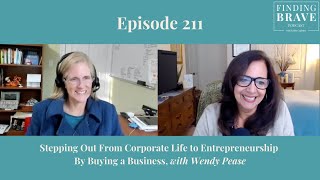
Podcast interview (Jan 20/21, 2022) in which Kathy Caprino interviews Wendy McKenzie Pease about leaving corporate life and becoming an entrepreneur by buying businesses. Wendy recounts being laid off twice during maternity leave, discovering buying a business via brokers, and acquiring a translation/interpretation company (Rapport International) and later a second acquisition. She describes practical vetting steps (business plan, due diligence, functional review: operations, sales/marketing, finance), financing routes (home equity line, SBA loan, community banks), valuation ballparks for B2B services (~2x earnings or ~~50% of revenue asking-price inflation on broker sites), and growth tactics. Wendy also outlines global communications strategy (strategy → process → technology → quality), warns against Google Translate for business use, cites benefits of globalization (≈20% higher revenue on average, higher earnings and valuations), and promotes her book The Language of Global Marketing and The Global Marketing Show podcast.
Chapters
Hello everyone.
Kathy Caprino here. Thank you so much for joining me today on Finding Brave. I truly hope the show has been instrumental in helping you reach your highest, most thrilling goals. Speaking of that, I am thrilled to share the opening of the enrollment window for the winter session of my 16 week amazing career Project course. This session, which starts Monday, February 7, teaches professional women how to take the Most and essential 16 steps to building a rewarding, joyful and successful career. An amazing career, in fact, with the respect and recognition you deserve. Through the four months of the course, you'll get 16 jam packed instructional videos, 16 weekly live group coaching calls with me, 16 tailored homework assignments to move you forward fast, an amazing online support network of members to help you, my hand picked collection of premier resources for additional help, plus great lifetime discounts to my private coaching programs and events. And register as an early bird by January 30th and get seven great bonuses including a $500 early bird savings and a 75% discount off my new confidence and self esteem boosting course, the Most powerful You Truly. This is a fantastic investment in you and your career and there's nothing to lose and so much to gain. I truly hope you'll join me. Visit amazingcareerproject.com for more information and to register now.
So it doesn't matter how old you are, what your experience is, you just have to have that little inner voice that says I really want to do it. And for a woman, I think I can.
Hello everyone, this is Kathy Caprino and welcome to my podcast, Finding Brave. I've created this show for everyone who longs to create something bold and brave in their life. To rise up, speak up and stand up for who they are and to reach their highest and biggest visions. Each week I'll be speaking with inspiring guests from all walks of business, leadership, entertainment, the creative arts and the entrepreneurial world. And they'll be sharing their intimate stories of Finding Brave and offer their best strategies for building your most rewarding, joyful and meaningful life, business and career. Hello everybody, welcome to another episode of Finding Brave. Kathy here, so excited to be with you and this is coming to you January 20th and right now we're in December, so I'm wondering what the weather is for you, but I hope wherever you are, you're comfortable, toasty, warm or cool, whatever you like. We're having a cold snap here and I love it. That's what. That's what winter's supposed to be in my book. Anyway, today I am so excited to have our guest, Wendy Pease Today, Wendy is an expert on something I have not Talked about in 200 plus episodes on this podcast. Not one time have I talked about this. So I have so many questions it's going to be hard to shut me up and make sure we end at a reasonable hour. But I wanted tell you that we are talking about stepping out from corporate life to entrepreneurship by buying a business. And Wende's an expert on that. Wende, thank you for taking the time in this crushingly busy period of time to be with me on Finding Brave. I so appreciate it.
I'm thrilled to be here. It is always so much fun to talk to you. It is my pleasure. I learned so much.
Thank you. All right, folks, let me tell you about Wendy. Well, what a fascinating journey here. Wendy McKenzie Pease is the owner and president of Rapport International, a translation and interpretation services company specializing in marketing, legal and medical life sciences translation. Throughout her career, she worked with hundreds of companies to help them communicate across more than 200 languages and cultures. Wendy has an MBA from the Tuck School of Business at Dartmouth College and a BA in Foreign Service and International Politics from Penn State. Her expertise in international relations grew from working in several international global marketing roles and spending years living abroad. How fascinating. Wendy is a frequent speaker, writer, blogger, trainer, advisor, master networker, Woo. And avid world traveler. I would not be. I would be very surprised if you weren't that right. And she hosts the Global Marketing show podcast, which features experts on opportunities and challenges in increasing multilingual lead generation and revenue. What an illustrious background. Wendy, thank you again. And I'm dying. I got so many questions. Can I dive in here?
Oh, dive in. Ask away.
Now you have a story about your journey in corporate life that made you say, ah, enough, I want out. And you know, I love these stories because I had one too. Can I hear your story about that? Can we hear that?
Yeah, sure. I was in senior leadership roles when I got pregnant both times and during both maternity leaves I was laid off.
We're laughing, but we're not really laughing.
My kids are now 18 and 20, so it was many years ago and I ended up in a much better place. But at the time it was.
I mean, that sounds like discrimination to me. Was it? Or was there some extenuating circumstance that helps us not feel that? That seems incredibly unfair.
I still think it's incredibly unfair. And I don't. Do not think that it should be done to a woman.
How far along in your leave were you like days after having a child?
The first one was two weeks and the second one was at the end of my maternity leave. And don't plan the timing if you're going to do it no matter what time during the maternity leave.
Oh, I know. And actually people I want. And thank you for clarifying that was only because of my interest because not that it's fair anytime during the maternity leave. So any leaders, HR people, CEOs listening, please understand that this is downright mistreatment. It's. It's wrong. It's wrong practice.
Yeah.
And you can be sued, certainly. And be frankly. But I asked because when I was just a few.
Yeah, but you know, you say you should be sued the first time my ex husband and I looked at taking a suit. But it's very expensive and you have to prove discrimination.
Right.
How do you prove discrimination? I mean, so it's virtually impossible to take a suit. And I know other women that have, that have been in situations that are just wrong, like making less money than a comparable guy. But you have to.
Can I make a point about that, Wendy?
Absolutely.
In my book most powerful you power Gap five, Chapter five is acquiescing instead of saying stop, stop to mistreatment. And I interview an amazing guy, Tom Spiegel. Excuse me, he's been on the show. Pardon me? Look, I choke up when I talk about it because I'll tell you why. But he's a former federal prosecutor who now supports in the Spiegel law firm. Supports employees who've been on the receiving end of wrongful practices and mistreatment and discrimination. And this would fit right in. But what he says is don't leave before you've seen a lawyer because you are often entitled for comp to compensation when you've been wrongfully treated. But I'm gonna be just be really forthcoming. When I was laid off in a way that felt really non copacetic, I went to a lawyer and he said, yep, you've got something here. But he said, you won't win in a. You won't probably win in a courtroom. But he wrote a letter, Wendy. And within a snap of a finger I got a settlement. A large settlement. So what I would tell people is, yes, you probably can't prove this in a court of law and it costs a lot of money to do it, but having a lawyer in your corner who represents you can, can make a huge difference in your life. Ah, so two times it happened the same company.
Oh no, no, no. Separate company. One was a venture funded company and this. And then I decided to go to a large global company.
It almost sounds like it was the universe, you know?
And when I say it, I feel a little bit shamed because it sounds like I'm not a good employee, but I had ste. No job experience and reviews and productivity and relationships. And so it's just. It's unfathomable to me. But.
But you're bringing up power gap number. What is it, seven. When this stuff happens to us, and I think this happens more with women than men, but we go to the shame place we go to, even though consciously, intellectually, we know we're not to blame. We got kicked to the curb, and we wonder why. So you're. You're really in. In the majority, too. Oh, all right. So you said, all right, enough. Now can you tell us, did you vet the idea of buying a business versus starting a business? I would love to hear how this happened.
Yeah. So I can remember I was in a new mother support group, and I was driving up.
And.
And it was. It had been summer, and so I didn't have to worry about putting socks or shoes or anything on the baby. And. But I thought, you know, it's a little chilly because it was now September, and I look back and he had. He had no socks or shoes on. And I'm like, what shoes am I wearing? I look down and I'm wearing old, beaten up, ratty slippers, because that's the kind of state you're in after you give birth. So I just started. I started laughing and then crying and then laughing because I knew it wasn't me, but I thought, I have to look for a job when I'm functioning in this state. So, you know, I said, you know, then the baby started sleeping through the night, and I started functioning again because I was getting a full night sleep. But I started networking and trying to think about what I wanted to do next. And I went to a venture capital conference up at the Tuck school, and I ran into another Tuck grad who said, you know, there's a lot of baby boomers retiring. Why not buy a company? And I had been a business owner before I went to business school.
You had that?
Yeah, yeah, I closed that up because I wanted to go back and learn how to take a small business and grow it bigger. And so I had always had the intention of being a business owner, but I didn't know what to start. So when he said that, I thought. Thought, oh, now that's interesting. I hadn't thought about buying a business. So I started, as I say, daydreaming online. And I Found this little translation company for sale.
How would you find that? For the people who are thinking their ears are perking up, they maybe not do not want to go through the process of launching a business, which is a whole thing, you know, from scratch. How did you find this business for sale?
Yeah, well, just buying a business, you have a much higher likelihood for success because most startups don't last beyond two years. But if you buy an ongoing something, you're learning all the knowledge, you're acquiring customers, the know how. So I knew that and I just googled buy a business and there's all these brokers that are on there that have the businesses plastered all over the place. So if you find something you're interested in, you can just sign an NDA and get the information about it and look at the company. So I still, you know, I made another acquisition about six years ago, and so I'm on the look again. I have that one paid off and it's running well. And, you know, we've integrated and merged the two of them. So if I found another translation company for sale that was the right fit, I certainly do it. How fascinating.
Now, can I ask, this translation, the global reach, was that always kind of in your DNA?
Yeah. So here's a funny story about buying the first translation company. We came to a sticking point, you know, and there's always sticking points where the seller wanted all the money up front and I wanted some buyout over time, but, you know, we were trying to work that out and we were just kind of stuck. And I actually had hired a broker to help, you know, just to serve as an advisor for me. And he came up with a suggestion, but in that, you know, so it eventually went through. But while we were in that stuck moment, he said, okay, you know, that one didn't work out. But I got this other really great company for sale. It's profitable, it's doing well. He said, imagine, you know, you're on Martha's Vineyard and the tables are all set fancy and the tablecloths are blowing in the wind. He's like, this company does tablecloths for events. So they go out, they take them out and they, you know, I don't know if they put them on the table or not or whatever. All I could see was delivery trucks and laundry. I was just not passionate about it at all. And here it was a really good, profitable, bigger company than the one I was looking at. Had more assets. It would have probably been easier to get a loan for it. But I wasn't passionate about it. So that is something when you're looking, you can, you can buy a business straight out, you can buy a franchise, but you gotta be passionate and interested in whatever you're looking at.
So interesting. Wendy, hang on a minute. It's getting dark here, so I'm just gonna see if that's better. Great, because one time I just got pitch back. Black while I'm talking. All right, back to the recording. Matt. Now I have so many questions. Wendy. You know, a few years ago, I interviewed Susan, I believe you pronounce it Sabat. And she was the head of Amex Open for entrepreneurs, American Express. And I said to her, what I'm so keenly, and we'll link to it. It was a Forbes interview. What I'm keenly interested in is how are business owners who are men different from female business owners? And she knew in one second. And she listed the five key things, but one of them was when you ask and you know, Amex opened, they were investing in small businesses. If you ask a man, do you think you can scale this? Now listen, whenever I talk a woman or a man, I don't mean every woman. I don't need every man. I'm talking trends, researched trends. She said the men tend to go, oh, yeah, got it down. We know exactly how we're going to scale. You ask a woman, and typically back then, I think this was maybe five years ago, she wouldn't know. I'm not sure. Not sure we want to. Not sure I'd know how to do it. So I think maybe why I'm kind of so stunned to talk to you is do you have any data on how many women actually buy a business versus men? I would love to dig that up. Because when you said, let me buy it, what that implies is that you have the confidence that you can take a business, keep it profitable and scale it or make it more profitable. Right. So many women that I work with, even millionaires who are management consultant partners who know the whole consumer packaged goods field like the back of their hand, are. Are often not in that place where they say 100%, I can take that, I can make it more profitable. Have you intersected with other female business owners and have you recognized that that's different in you? That's a question.
I didn't prep you for Big Quest.
A four hour podcast.
Well, the first thing, Yeah, I mean, that is something that is, that's a, that's communication style between men and women. You know, men will say, ye can do it. Women will you know, go. You know, they don't want to put it out there unless they're absolutely sure they've done it. So they have to stand behind the words, you know, when we're talking in generalities. Yeah. The research also shows that the women led companies, the big companies tend to grow faster and do better and the companies with women on their board are much more profitable. So it's really ironic to me that the women do better, yet they're less positive about the, about saying they can do it. And they're also more ashamed or embarrassed when they don't perform as well.
Right.
100%.
But also, there is a difference between owning the business and being a senior leader in the business.
Yes.
What do I mean? Of course, I believe that women can do exactly what men do and in many ways they can do it better for their communication style, their, you know, their leadership style. But, you know, I, I just think it's, I'm just applauding you that you knew out of the gate I can do this. So let me just go back also.
Okay. I knew I could do this.
Yes.
But it was also, I really didn't want to go back to corporate. I just had had two bad experiences. I had young children. I wanted to be in control of my life.
And did it occur to you to start your own or did you just leave?
I didn't have an idea.
Wow.
There was nothing. And I didn't want a business where I had to be the production side of it. So the first businesses business I owned before business, I represented doctors as expert witnesses in legal cases. This business, I speak some other languages, but I'm not fully bilingual. So I represent bilingual people who are fully bilingual. Experts, quote dictionaries at me, have had training to go out and be face to face interpreters. So I wanted to do the business side of it. I didn't want to also do the production side of it. And I, I just had no ideas. So when I had no ideas and I didn't want to go back to corporate and somebody planted this seed in my head, I was like, oh, well, that looks like a better option out of all three of them.
How fascinating. And I got another question because this I've not researched quantitatively, like I have other things. But you know, when I look at my upbringing, dad was a GE guy. 30 years, seven patents. I mean, he was entrepreneurial within his role of chemist and sales manager for silicone rubber. We had so many things that were silicone rubber in the house. He knew everything there was to Know about, you know, the. What do you call it? Oh, I can't even say it. The rubber that goes around appliances, like your washing machine and whatever. But yeah, yeah. Why do I bring it up? My model for successful work was working for a company like General Electric.
Right.
And he was. Even when he retired, he could have started his own consulting business and just risk averse. So here's a question, just because I'm loving to dig around here. Were your fam. Family. Family members entrepreneurial?
My parents were academics, so both PhDs, both professors. And then they moved into, you know, the, you know, administration. So. No. And I love education, but I didn't want to. I would love to have a PhD, but I kind of figured if I was going after Ph.D. it was to be a professor and I didn't want to be that. Yeah, I, I love business. I mean, to me it's like a fun game. So. And my dad said early on when I was growing up, he thought I'd go into business. And I used to sell all sorts of things. You know, chocolate at Easter and seeds and gifts and so I'm always you on my board.
I gotta tell you, you would probably be able to look at the lay of the land and say, oh, yeah, this has to be tweaked. Wow. All right, now help us understand, if you would, what. What would make a good vetting process for the people listening who say, I'm done with corporate life, or I never was in corporate life, but I want a new, you know, new chapter. And they are vetting the direction. Should I start my own business or buy one? What do we. What does the average person not know about buying a business? What do you have to be great at? What. What do we need to know?
Okay, so during this whole process of looking at the company to buy, I wrote a business plan and I have referred back to that business plan. Now it's dated. Now it's 17 years old, but for the first 10 years, I certainly referred back to that. Now we have other things that we refer to.
Did they have a business plan for you to look at and you didn't want to look at it and you just developed it or they didn't even have a business plan?
No, they didn't have a business plan. And so that's, that's a good idea as you ask for the, the company's business plan and then take that and adapt it to you so you can go online and Google business plan, use that. And what it does is it puts structure around your thinking for what you're going to need to do, and then you have to do due diligence. And so I did hire a bookkeeper or, you know, accountant to go over the books and make sure that everything was all straight there. But again, go to Google and search for due diligence. And then you go down like all the functional groups and you look at it, you know, you want to look at the, the operations, who are the clients, what are the processes, anything documented on there, what, what could you do to improve that? Then you look at the marketing and sales. What are the efforts that are being done now, what content is there? You know, with the first acquisition I made, she, it was just coming into the whole website era and CRMs and she didn't have a website or a CRM. So immediately I could see, ooh, that's what we're going to put in there. So, and then you go down finance. So it's a good way to look at the different functional groups. And then you can get the due diligence questions off the web and those are the kind of things that you want to ask. And then you spend a lot of time talking to the seller about what's the history, what are the clients, what are the danger spots, what are the opportunities, understand why they're trying to get out of the business. You know, are they foreseeing something that's coming in and then look at your skills and say, okay, across all of that, where, where can I get quick bangs for the buck? And what am I gonna to improve upon there? And so then do you feel like.
You, you're drawing on your marketing and sales and business growth experience from the past? Do you feel that, like it would be interesting for me to, to do this process and see what would be my ideas for improving the business. But you kind of have to have experience to even know, know where to look. No, to think these things, don't you?
Well, that's the irony of it. I know a lot of business owners who say you don't need an MBA to run a business. And I was an awardee in the nonprofit Count me. And they ran a business. Make mine a Million dollar business. I won that award too, in Connecticut.
Come on now, that's crazy. You won it in Massachusetts.
Good group of women.
Nell Merlino was the founder. I just interviewed her after all these years on the podcast. What for people who don't know, it's like Shark Tank meets whatever. You have to go up there with your business idea and give a five minute pitch and there's a panel and I think the governor was on the panel. The secretary of state was on the panel, not the governor. You know, you really felt, oh, good for you.
Yes, yes. And there was really, I mean, it's such a great support network. I'm still in touch with a lot of the other awardees. I learned so much from them. But now, you know, count me did a lot of research and they said, what is it about the women that want win? What's the common denominator? Is it, you know, they have education, do they have experience? Is it certain type of businesses? Is it ages? Is it, you know, they looked across everything. The only common denominator they could find is the women who were successful had a business coach. Other than that it didn't matter. So if you're, you know, coming out of college and you want to be a business owner and you have, you know, I, I ended up buying the first one with a home equity line of credit and then the second one, I got an SBA backed business loan. But you know, there are loans out there, there grants, you know, so if you have access to capital to buy something or go work for a company where, you know the owner is going to be transitioning out and try to do some transition, you know, plan. So it doesn't matter how old you are, what your experience is, you just have to have that little inner voice that says, I really want to do it and for a woman, I think I can.
So can you share? And you'll share what's comfortable to share. But you know, you're saying you took an SBA loan. I'm sure it wasn't $5 million. Can you share? And people you've heard me mention, I'm starting to hear from venture capital people that, hey, we saw your business, are you open to selling it? So I wanted to ask you several questions about that, but. Well, let me start with that. When it's a person's name, My business used to be called Elia Communications because I didn't want it to be just wrapped around me. And as time went on, I kind of became the brand. So I closed it as an S corp and it's an LLC now and It's Kathy Caprino LLC. But you know, the URL is Kathy Caprino.com. it's pretty much all me. When businesses are looking to, when venture capital people are looking to buy, I would have guessed that they stay away from companies that are really tied to the one individual's brand. Is that not true?
Yes. Yeah, I would think so with venture capital, because. And that's with any company in any acquisition, if it's so tied to the one person, then is it going to be an ongoing entity? If that person were to leave?
But it doesn't seem to deter all these people coming approaching me. All right, I'm not. They're seeing something that's renewable beyond or sustainable beyond me not being there, I guess. Who knows? All right, now, the second question is, you know, if you don't want to share, I understand, but can you give a range when. When you've just left corporate, let's say, and you don't have a ton of money, you got a 401k, what is the range of pricing that would be considered affordable for someone. For a woman who said, I've had it with corporate.
Oh, that is such an interesting question. I have a book on. I think it was Just Buy a Business. I'm not sure if I have it in here or not, but it's Just Buy a Business. It's a red book. I can't remember the author of it.
If you find it, let me know and we'll link to it in the show notes. That'd be great if you found it helpful.
Okay. Yeah, I thought it was great. So the guy that I ran into at the venture firm recommended it and I wanted something small. And this is. I mean, this is now Merlino and Count me in also said, found this with women is they want something small so they can control it, but they don't realize is they're responsible for everything. And so what their premise was is if you grow it bigger, then you've got people to delegate stuff to and you can still do the thinking side of it. So my first acquisition was small, and then my second one got larger, and now I'd be open to larger. But the benefit is, is if you take a loan, you're using other people's money. You can afford to get a bigger business, you got a higher likelihood of success. And particularly if you're buying something that has assets like the tablecloths and the trucks, there's something that they'll loan against. You know, if you're going into business, to business services, that can be different. But I would say go open a bank account at a community bank. Don't go with the large ones because the community banks get to know you. I work with Middlesex Savings bank here in Metro West Boston, and I love my bank. Who do you know?
Loves Plug Plug? I'm calling them up.
When I broke my leg and I was running the business. They, they sent somebody up here to do my deposits. They came to my house when I've needed loans, when I needed anything. They've been responsive. You know, loans, it's oh, when I refinanced or, you know, I took out the SBA loan, they're always right on top of it. So I heard that advice early on is, you know, get to know your banker. And I'm like, how do you get to know your banker? But find a community bank and build a relationship with them and then they get to know you.
And you don't mean a division of Chase or Citibank, you mean the community bank of Danbury, which is. It has been great to me.
Yes, yes. Cambridge Savings bank is one up here near Boston that supports EO Entrepreneurs organization of which a member. So yeah, they'd be another one that I hear fabulous things about.
So just, just for people to understand and we don't have to talk about your business particularly, but, but generally our prices of businesses, something like 10 to 20% their EBITDA, is that still their earnings before interest and taxes and is it still some kind of rule of thumb like that?
Yeah, it depends on the industry and what the margins are. But for B2B service, it was between, it was about a two multiple times earnings.
Okay, just two.
So yeah, yeah, it can go up if it's a really large business and depending on contracts and stuff like that. But I think I paid around two or another way to look at it is about half of revenues.
Is what.
And when you down know, is the, the price for B2B services, what you, if you go on buyabusiness.com or business brokers, you know, biz Buy sell is another one. If you go on there and you look at the asking price, they're usually way inflated because you know, you've got a broker putting it up there. They're going to make a commission off the sale price and then there's room to negotiate down. But don't start negotiating down until you do the due diligence. And you know, if 90% are based on one client, you're going to negotiate that way down.
How fantastically interesting. All right, now can we talk about what your focus is, which is global marketing. Right?
It's global communications. And one of our strong specialties is marketing. Yes.
So what do you think? We were talking about this the other day and I had mentioned to you, one thing I'm very proud of is that, you know, just doing my own thing here with Forbes and My podcast, whatever. I. The funnels have been such that I've been able to work with women in 26 countries in six continents. And boy, is that rewarding because, you know, even when they're in a group together from many different countries and we're on zoom, there is so much learning and cross pollination from people from other countries. It is so. I am so. And the diversity and the brilliance and the insight, it is so rewarding. But how would you say people that maybe don't have that kind of funnel, that really don't know how to expand reach internationally? Are there any tips you can give people for their own businesses now or their own work?
Absolutely. I wrote a book on it.
All right, we're going to link to that. Give us the title again.
It's called the Language of Global Marketing.
Oh, my gosh. All right, give us the five tips that you think we, most of us don't know. Like, can I have you put your hat on? Like, let's say you were looking at my business from a global marketing perspective.
Yes.
What would you be looking at? I'd love to hear. And, and what would we be doing better if you bought us?
Yeah, that's, that's okay. So what I'd start out with, well, let me boil it down to the overview, and then we can go deeper if you want. So what I say is, is first off, let's talk about your strategy. You know, what are you trying to accomplish by going global? Some business owners want a vacation home in Italy, so they're going to expand to Italy. Other business owners or, you know, their global growth department is looking for what strategically makes the most sense. You know, where are we going to get the highest return? Other people in the United States go to Canada or Mexico because they're geographically close. Other people pick English speaking countries even though UK English is very different than US English, and we've done translations for that, but they start with English speaking countries because they figure they can communicate more. So you have to understand what the strategy is. I know another business owner that we work with was getting inquiries coming in from Germany and he's like, well, if I provide some German translation, I'm going to increase my sales. He was really smart because all the statistics show that people are even willing to. More than half of the people are willing to spend more if they get information in their own language. Okay. So you start with strategy, then you go on to process. Okay. And so once you figure out the process of how you're going to do it, so you Know, I, I focus on the communications. There's, you know, the finance and the other areas that I have lots of connections with people that can help in the other. But if you look at your communications, what do you need to translate? So if you think of the attraction, engage and delight and the pieces of content that you need across all that for content marketing, do you have pieces that can address each part of that and then, you know, after sales support. So you want to translate the key materials, the most popular materials and the most successful materials into the language that you're doing. And then how are you going to translate that? Do not use Google Translate.
Is it terrible?
It is terrible. And there's going to be a big liability case about it sometime because somebody put the plugin on their website and it caused a problem.
Okay. Yeah.
Okay. So you look at strategy, then process, then you go into technology. Okay, are you using a little bit of translation? So you just send it off and get it back and then you do it, or are you going to need more and then are you going to redo it? Because you can reuse your translation from, from your website into your brochures that you maybe need to distribute or into a PowerPoint. So, you know, are you going to use translation memory to capture some of that? What's your website built in? What are you doing for social media? Does your LinkedIn profile need to be engaged? So you look at the different forms of technology. Do you have videos that you need to put subtitles or voiceovers on? And you know, there's a decision as to your target audience, which ones you do. So you get to that and then you look at quality. So there is, you can build out a matrix for what needs to be quality. If I get an unsolicited email in another language, I pop it into Google Translate to see if it's saying, hey, send me money, because you know, I've got something stuck in Canada. I go, yeah, that's not business. But if it's something to do with business, then I can figure out how to respond. If it's your website, you want to do high quality, but you don't need to do your whole website. You can do a landing page or a microsite and so you can plot out the different things. And then there's always telephone interpreting for. If you need to have a conversation with somebody or a zoom meeting, you can have an interpreter on there. So once you figure out your strategy, there's. You can simplify the process, figure out the technology, understand the quality, and once You've got that set up. You just duplicate that for the other languages or countries that you want to go into.
And what would you say? I'm aware of our time here. Got 20 more questions. I'll keep it to two. What would you say is the biggest benefit? I mean, I, I think it's obvious, but maybe there's other benefits. What's the biggest benefit for expanding your reach internationally? What's the biggest.
Well, let me just give the statistics. It's companies who are global have higher revenues on average, about 20% higher. They have higher earnings, they pay higher salaries, they have higher valuations, and they're more stable.
Wow. Because fluctuation in, because the fluctuation in one country isn't going to, you know, isn't going to impact the entire business if you're diversified.
Exactly. When the US Is down, China's up, you know, or vice versa. And the other thing is that there are free supports in the US to help companies export. There's free counselors for the, from the state and federal government. There is grants that you can apply to, to pay for translation.
No way. Yes.
They're the most unpublicized thing because all the people who give the grants out don't want to waste the money advertising the grants. They want to give it to the companies that are going to export. So if anybody's listening and you want to figure out if your state has grants this year, reach out to me and I'll put you in touch with the person at that state.
Oh, my goodness. And do you have other resources? You know, you're going to hear from people, I'm sure. Wendy, do you have other resources that we can link to about even, you know, the names of the sites that you're talking about, anything you can give our people in the show notes? So they're, they're not reaching out to you directly, but if, if you want that, you'll get it if, if you give us your contact information. This is so helpful and it's so, it's, it's expansive to think about it. Like, I have to really be honest, it wasn't until my second book last July that I have an amazing agent and we got a deal for translation to Arabic and Chinese. And I was so overjoyed that this material about being the most powerful you as a woman could reach Arabic speaking countries. Yeah. Chinese speaking countries. And now we have another European deal coming. It's, it's an incredibly powerful thing to know that your messages can reach other cultures, you know, that will Definitely internalize this material differently than an American audience. So I encourage everybody to think about this and you are the person to talk to and you have a podcast all about this. Who's on your podcast? What, what are we going to hear when we listen to it?
Oh, there's some fun stories. So, you know, we always get into cultural, you know, like, what was the biggest surprise or embarrassing moment? You know, what. You know, so we talk about different countries and how people try to fit in or how they're scared when they go over and they don't know how it's going to be, you know, recommendations. So it's all people who, who are either business owners, they're global marketers, they're different consultants. You know, we've had some. The, the guy who runs global expansion for Darn Tough Socks. I mean, he's. His episode's fascinating. We've got somebody who does international sales, Zach Selch, and he talked about how, you know, having your distributor in country can be dangerous because they are not fully bilingual, they're not trained translators, and it can set you back a couple of years if you, you know, make a mistake with your translation. I've got somebody from PepsiCo, somebody from Rotary International that talked about how they globalized Rotary. It used to be more multinational. He's fascinating.
Oh, I love it.
Yeah, there's lots of. Viveka von Rosen is on it. She's a link LinkedIn expert. And we just got into hysterics over how do you translate your LinkedIn. And she shared a story about how she did some translation on that and what happened when she went over to the country. She had done the translation.
She wasn't perfect.
No, she just Googled Translate and got a little embarrassed.
Wow. You have given us so, so much to think about and so many resources. Where do people learn about you? Where do we send them? Wendy?
Okay, so you can go to my link tree. It's just Wendy Pease, and that is you can download a couple of free chapters of the book. You can get the link to order it. You can find me. I'm very active on LinkedIn. If you like hearing about funny words or words that don't have translation or Google Translate goofs or cultural things or holiday, anything global. Follow me on LinkedIn, Twitter or Facebook because we're posting stuff all the time on there. I. It's. We're always coming up with stuff on YouTube. I do speaking the books on Amazon or Barnes and Noble podcast is all, you know. So the book is the language of Global marketing. The podcast is the global marketing show.
Yeah.
Oh, and in our company name reports, I got it. Rapport International. You can just look up rapport translations like the French word R, A, P, P, O, R, T. Building connection.
Right.
Building rapport. Oh, man. Building rapport.
Congratulations on all your success and, and for helping others do the same, you know. Bravo to you, Wendy. It's inspiring.
I am so passionate about helping people communicate across languages. I mean, I really think it's a peaceful and prosperous world if we can speak to clearly to each other, so. Oh, that's my goal. Tweetable. That's a tweetable.
That's going to be a highlight on the show. Notes. Thank you again, Wendy. It's really, really inspiring. And you've got me thinking all sorts of things here and especially don't use Google translation. That's a big tip. Thank you. Yes.
Well, I'm happy to help you any way I can. If you have more questions offline.
Kathy, thank you.
Thank you.
Thank you. All right, people, I hope.
Oh, gosh.
This has spurred so many ideas. If you're ready to leave corporate, the great resignation, you're done like we were. It's not only you've got to become a coach or a consultant, you can do exactly what Wendy's talking about. So I really know that you mean what you say, that reach out to Wendy on LinkedIn. LinkedIn's my happy. You know, I call it the big cocktail party in the sky. I love it. I mean, so reach out, make use of it and ask your questions. I know Wendy will be there to help you. All right, everybody. Thanks again, Wendy. Have a wonderful, wonderful week and we will see you next time. Bye. Thanks so much for joining us today. And please don't forget to check out finding brave.org for more programs, resources, and tips. And tune in next time for your weekly dose of Finding Brave.
More from Kathy


Elevate Yourself, Elevate Others, and Amplify Good | Chris Cooper | Finding Brave Ep. 334

Finding Brave Epis #333: How Leaders Can Harness AI Without Losing Their Humanity, w/Bennett Borden

Finding Brave Epis 332- How to Stay Brave, Valuable and Visible in the Age of AI, with Raman Rai

Finding Brave Epis 331 - The Power of Positive Disruption, with Dr. Patrick Leddin


Finding Brave Epis 330 - Being 40: Letting Go and Embracing Who You Are, with Stacey Lindsay

Disrupt Career Reinvention with Kathy Caprino - via The Disruption Lab Podcast w/Patrick Leddin

Creating Neurodiversity-Friendly Work Cultures: Simple Workplace Adjustments Matter

Finding Brave Epis 329 - How To Create a Neurodiversity-Friendly Workplace, with Kristen Pressner

Finding Brave Epis. 328: Reclaiming the Power to Trust Your Own Voice, with Dr. Cindy McGovern