214 Thriving in Entertainment for 30+ Years Keys to Artistic Success with Siobhan Fallon Hogan
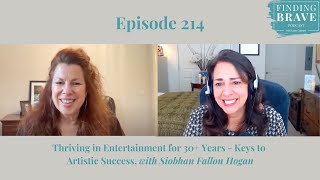
Interview episode of the Finding Brave podcast (host Kathy Caprino) with actress/writer/producer Siobhan Fallon Hogan. The conversation covers Fallon Hogan’s 30+ year career as a character actress, her upbringing and family influence, her shift into writing and producing (notably the feature film Rushed), the film’s themes (parental grief, hazing, revenge, faith and humor), her creative process, team and casting (including family involvement), and practical advice about persistence, humility, and making one’s own luck in entertainment. The episode also includes promotional remarks for Kathy Caprino’s newsletter and course.
Chapters
Hi, Kathy here. And I wanted to share some information about my new digital newsletter, your Path to Career Bliss. This monthly newsletter explores one key career, leadership or personal growth topic that is essential for building a happier, more successful career or business. Every issue offers a selection of the most read articles that I've ever written, along with riveting podcast interviews with some of the nation's top experts, as well as career assessments, resource recommendations, a subscriber highlight section and an Ask Kathy column and more. We've made it as affordable as possible with two tiers to choose from and the first month is completely free and you can cancel at any time. I hope you'll join me in this program. Now check it out@kathy caprino.com newsletter and get your free issue today. Thank you. And here's to your path to career bliss. Hello everybody. Welcome to another episode of Finding Brave once again. I mean, I say this every week, but truly I am buzzing. I am so excited to speak to our guests today. And you know, I've interviewed a lot of people, Pulitzer Prize winners, you know, top leaders. And I have to say, someone who's done what you've done in the way that you've done it is so deeply inspiring to me, Siobhan, I really can't tell you.
So inspiring. I'm so humbled. When you said Pulitzer, I almost turned off the zoom.
Let me go read another book before I go. No. Oh, I love it. I love it. And I think listeners know I'm a singer on the side and was married for many years to a renowned jazz percussionist. So I, you know, I want to dig in. And he here we are talking without me even introducing Siobhan, which I will but living the world of an entertainer or a performer or a true artist. I kind of want to start there because I think so many people envy it but don't really understand the realities of it. Right. Is that right? So can we start there?
But absolutely.
Wonderful. Before we do, people, let me introduce you to the amazing Siobhan Fallon Hogan. I'm going to read your bio for a minute because it's so illustrious. I don't want. I want people to understand. Here we go. For 30 years, Siobhan fallen Hogan has been one of the most iconic and recognizable working character actresses, appearing in blockbuster comedies like Men in Black and as frequently as in independent films like Dancer in the Dark and Dogville. Now, for the first time, Siobhan is appearing in a lead role, starring as the tortured yet deeply relatable and often funny, so true Matriarch in the thriller Roman Rushed, which she wrote and produced. Wow. Siobhan's first role was in Golden Girls. What a gift, huh? And she appeared in or has been featured in many roles in Saturday Night Live, Seinfeld, Forrest Gump and so many more TV shows and films. Rushed, which I just dug into, which is a movie you really don't want to miss, features Siobhan's friends and family, your actual friends and family in your hometown. In her hometown of Rumsey Rumsen, N.J. and serves as a capstone to one of the most unsung careers in Hollywood. For decades, the talents of character actresses like Siobhan have gone overlooked, which is really true, I believe, which is in part why she decided to write and produce this female directed and casted and edited film. I'm not going to read the description of the movie because we're going to talk in depth about it, but thank you again. Welcome, welcome to Forbes.
Thank you so much, Kathy. I appreciate it.
All right. I'm going to go with, as you know, I love to run these like you're over for a drink or a coffee. I. In doing. We just did a Forbes interview which we've linked to below. You can read that. I wouldn't miss it. And in looking at other interviews you've done, you talk about your childhood and the humor that you were surrounded with, I think particularly by your voice. Very larger than life father, it seems.
Yes.
I mean, I literally laughed out loud what he had you do, you know, as an elf, when you're five years old, can you, you know, I'm a former therapist as well as a former.
You could, you could have a field day with my family.
I. Maybe, I think so. But who? Every family. We could have a field day, of course. But immediately when I was really studying your career, I was wondering where did you get, first of all, this incredible sense of humor and your drive and your confidence? Can we just start there from childhood? Can I hear a little?
I was really, really fortunate because I came from this big Irish Catholic family and my dad was hilarious and he looking back, you know, as my life went on and I had no skills, I had to work in mature places like law firms. My father was a lawyer, but he was so such a kid. Always, like, he always had a fabulous, fabulous sense of humor and never acted. He never, he was never really matured. But he was responsible and a great father. But he was a kid at heart. So, you know, like I said in the interview with Forbes, your interview that, you know, when I Was a kid, it was Christmas time. He's like, all right, Shivani. And I was like, five years old, you are going to dress as an elf, and we are going to deliver to people who can't make it to the North Pole. And I believed him. I was like, okay, let's do it. So he and my uncle, David Sullivan would drive me around the neighborhoods. And I remember there was this woman, Mrs. Mooney, and she was in her 80s. And I was like, hello, I'm Santa's elf. And she's like, come in, Alfie. And I was like, yeah, the things are going to the North Pole. And I would act this. Till then, I felt sorry for her.
That she believed me.
And I was like, I have to tell you something. I'm not really an elf. On Siobhan Fallon. And then what did she say? She would laugh and go. She'd say, really? Are you? And I believed it too, that she didn't believe it. I was like, no, no, no. I'm really not. So crazy Things like that always happened.
And this was upstate New York.
You grew up upstate New York? I was from Syracuse originally. My father was one of 11. So I had a million cousins, tons of family. You know, we. We were. You know, there was no Internet, there's no tv, so we just. They really held storytelling and humor above anything else. And my mother would be like, don't be looking in the mirror too much at yourself. You should be other directed. Help other people and worry about developing yourself. I have a couple sisters who are really stunning, one of which should definitely have been a model. And I was like, megan should be a model. And my mother and father were like, that's ridiculous. You gotta develop yourself. You can't be walking around. You can't be walking around having people look at you. But on the other hand, I was kind of odd.
Odd.
Odd looking now.
What do you mean? I read that.
Oh, my God, you're beautiful. I looked at Dandelion. I was skinny with gigantic, gigantic red hair. And this is crazy detail. But in high school, I had a big wart on my knee. And I was like, what is going on? I've kind of like, bad luck. What's that doing? In addition to my other problems. And I remember saying to my mother, oh, my gosh, none of the boys like me. I can't even get a date, like, to the prom. Like, I had to ask my date to the prom, which is hideous.
But my mother was like.
And Ms. New York State lived in my town. She still does. And I was like, mom, Mary Pat Donaldson is gorgeous. My mother's like, siobhan, you're as pretty as she is. You're a different kind of pretty. I was like, I am.
You are. She's so right.
But the combination. I believed what my parents told me, and they just built such confidence that when it came time to get in this crazy business, when people would knock me, I'd be like, huh? You know, you're. What's wrong with you? You got a problem? You're wrong, I'm right. You know what I mean? And I just had this faith, not only in my parents, but in God, that I could do what I wanted to do.
My gosh. So just. Just for the audience and for me, can you. What I'm really curious about is their upbringing, your parents. I mean, one thing I'll share. I adore my parents. Dad's in heaven. Mom is still, you know, doing wonderfully at 97. But there wasn't a lot of humor. Greek and Italian. I mean, maybe not typically Italian, but. Yeah, I don't. I won't go there, but it's more serious, you know, My family.
Anyway, it's extremely interesting because they're both, like I always say, if I was a horse at a horse race, I'd go for top dollar because I'm 100% Irish. But then whoever bought me would really get screwed because, honestly, I have no athletic talent. So they'd be like, hey, I bought this theore bread, but you can't run. But anyway, so my father was 100% Irish, my mother 100%. But two completely different families. Two great families. My father's family was hilarious. They were. There was 11 of them. They told stories as each boy, male chauvinist though, got to be the oldest. They would get the room. Everybody else lived in one room with a sheet between the girls and the boys. In Ireland or in Syracuse, the boys always got the room. My mom's family, my grandfather did very well. He always wore suits, and they were very proper. And they didn't want people to think that they were shanty, so they used to call it the Doctor. The doctor Hyde and. What is that?
Jekyll and Hyde?
No, Jekyll and Hyde. I just lost Dr. Jekyll and Mr. Hyde wedding because my mother was kind of from this, as they say, lace, curtain, Irish. And she. She said. When she went to my father's house, she said, no one stopped talking, and she couldn't believe it. They were so funny. And she said, like, basically her life went from like black and white to Technicolor. Then when my father went to my mother's home, which was very, you know, great humor, but very in control, they'd also, also suffer terribly because they had lost their eldest son, who was a hero in World War II. He did 50 missions, volunteered for 51st and was shot down. He was like an unbelievable guy. So they lived with this terrible loss of this hero of a son. He, he, it's crazy story. He was like the only Irish Catholic that went to Deerfield. He was captain of hockey, football, lacrosse, president of class. They lost him and it was.
Killed them.
So my mother then meets my father 10 years later, which was odd in those days. She didn't get married till she was older. Either did I. So anyway, it was the meeting of two Irish families. And the hilarious humor. My mother was very funny too, but more dignified. She'd say to us, oh my God, you kids, I've lost all my refinements.
But it seems like they were a perfect complement. They needed what each other had, right?
Yes. And when I got on Saturday Night Live, my father, they were, my parents were my cheerleaders, but they were also realistic, like I used to call them from New York. And I'd be like, oh my gosh, what am I going to do? And my dad would be like, figure it out. Why don't you come home and start a dinner theater? And I was like, no, dad, that's not happening. I'm doing this. And my mother's like, you do it, Siobhan. Cream rises to the top. But when I got on Saturday Night Live, you know, Saturday Night Live is very nocturnal. And I found out at like 6 o' clock in the morning. And I called home, my mother said, oh, your father's golfing. So I called the little golf course up in Kansas. Oh, Siobhan, your father's out on the 16th hole. Hang on, it's Siobhan. She's got big news. Send somebody. So they send, you know, this guy out on the golf cart. My father comes in, he's like, yeah, Shivani. I said, dad, guess what? I made it.
They picked me.
I'm on Saturday Live. He goes, that's dynamite. He yells to everybody, my daughter's on Saturday Night Live. All right, honey, I gotta go finish my game. Love ya. And he hangs up.
But see, I adore that. There's something. Let me brag, let me be happy. But I'm not gonna go boast for 700 hours. And well, maybe he did, but there's something Very balanced about that.
Yes. Is that right? Absolutely. It kept you real? Me real. You know, you could walk out of places and there'd be cameras and my parents would be like, now what's that movie you're in again? Everybody's asking, but I didn't care. But you know, you know, in other words, you never, you think you were somebody just because you're an actress.
And that's, I think that's the key. And that's what comes out when we watch you, I think. When, what do you think? Let's talk about entertainment for a minute. Then your movie. But I do want people to hear also how you, you, you said that you were, what were you doing? You were at a law clerk firm. You were a law clerk or, you.
Know, I was, I was a receptionist.
Receptionist. And you were bored out of your mind. Yes. And, and you said, darn it, let me write a one woman show. Which I have to laugh at in that not all of us who are bored can write a one woman show, you know.
Well, someone suggested it, I will say that.
I know, but you, I was in.
A zip rock group. So what I did was because at the time you had a really deep voice, my hair was really big. I don't know what I was. But casting people like, you know, you're really going to start to work in your 30s and 40s. And you know, when you're in your early 20s, you're like, are you kidding me? That's like eons and age. There's no way. Anyway, now those days are long gone anyway. So I was like, okay, I'll do what he said. And so I just wrote all the characters that I would like to play if someone would possibly think of casting me. And the hilarious part is when the reviewers came, they said, oh, I love the theme of those characters, how you strung them together. Well, there was no theme. I just simply, you know, I did like a Midwestern stand up comic. I did a kid, I did Cheerleader. And they're like, oh, there was a theme. I'm like, there was no theme. I just tried to get cast.
It was almost like your demo. Like, let me play.
Yes, yes.
There was no theme, but they saw a theme. But maybe there was a theme that you are so gifted at, you didn't even know.
You know, Kathy, the funny thing is really, I'm not the brightest bulb. When I wrote this movie, Rushed Pete, the director would say, Vibica Musaya, who's this fabulous Danish director? Siobhan Van Den Hogan, when we go from the A story to the B story to the C story. The transitions are so smooth. I was like, what in gods are you talking about? I didn't even know there was an A story, B story to C story. I was like, wait, wait. Hey, listen, I'm not that deep, nor am I that much of a writer. I didn't even know.
Well, could this be? You know, at one time, I started to write a. Try to write a screenplay. Now I'm a nonfiction writer, and it comes easily to me. Forbes. Yep. Books. Okay. This was the hardest. I can't. I couldn't do it. I worked with a coach. But it's an idea of a past life. Image that. Not image, story that. I know that I've lived. And I can't wait to get it out. Absolutely.
Do it.
Maybe I'll hire you as my coach.
But all these labels are overwhelming. Like when I first started writing the film, a friend of mine who's a writer, Patrick Clifton, who's a producer on the film. I've known him since my days at Catholic U. We look alike, we have red hair, he's from. It's crazy. Anyway, we end up being roommates in la. My father thought I was living in sin, but that wasn't happening. But we were just friends. So when I started writing, he said, don't judge it. Don't act like you want to sell it. Don't try to get the end. Just start writing it. And don't think. If you write for five minutes one day, three hours next day, just write. And that's. I listen to him.
Can I ask you this?
Then?
We're talking about Rush. Do you write it as a screenplay or do you write it as a story?
I write it as a short story, maybe two or three pages, and then I have it right next to me, and then I start writing.
That's it. That's how I'm gonna do it. Because not knowing the convention of screenwriting, you get all mucked up in, you know, wait, what's the scene here? Forget it. Write the story. Right? Absolutely.
And you've seen enough movies that you know what I mean? And you're smart and you're a writer, and you can do it.
All right, I'm doing it. I'm doing it, people. All right, now let's talk about rushed. Yes. I just want to say, before we talk about it, how do I want to put it? There are very few movies that I feel you can. While the character might be very different from you, the lead, you relate so much and it gets into your heart and soul, and you grieve with them. I don't feel that that happens very much. And, boy, did it happen. So can you tell us, first of all, we won't give too much away, but what made you want to write this and what made you go to the extreme for the character that you did?
Well, I have three kids, and I say kids now. They're now my daughter.
We can't say. We can't say children anymore, can we?
I know. So weird. My daughter Bernard's 26. As I was telling before, she's a reporter for the New York Post. She gave me a run for her money when she was in college. My son Peter, he's an actor. He's in the film. He's my next film as well. He gave me run for my money. And my daughter Sinead is a junior at Virginia Tech. And, you know, I remember at one point saying to my husband, maybe our kids should sue us because we're both Irish. And they're like wild Irish Rovers. They're like, they're hypers, Irish setters, and they like to go out on the town just the way I did and way my husband did. The problem is with this day and age, we know too much with the cell phone. So we become like, I'm not proud of being a helicopter mother checking in too much. When they go off to college, we're weirdly still checking in. And then you combine that with saying, you know, two in the morning, hey, just make good choices. No hard liquor. Just check in with that. With all the stories you've read about with fraternity hazing, with not only fraternity hazing, but, you know, and the girls too, like how crazy they go. And you start to worry. And then you read about people that.
Live close to you.
I live in New Jersey now. You read about Tim Piazza, you read about all these different horrific incidents, and you think, oh, my gosh, if that's my kid, as I was laying in bed at three in the morning, what would I do? And then you realize when you see the movie, as it's not just a story, a simple, straightforward story, it's a revenge thriller, that perhaps you don't want to encounter me in a dark alley. But, you know, I mean, I've got that fire that if someone crosses me or one of my kids, I will not stop.
You really do have that?
Yes. I think. I mean, when my daughter was in grammar school, there was a teacher that was the best teacher ever. This is a Catholic school, and they some terrible Things happened, and I let a. I led a troop of 320 people over a bridge with signs protesting what was happening, protesting to keep this teacher. And my daughter Sinead, she was probably in fifth grade at the time, she's.
Like, mom, this is fun.
I was like, now I know why bank robbers have a good time. This is like. This adrenaline is insane. I was. I was leading three to 20 people, and I said, now, guys, whatever you do, do not hit the horns because mass is going on. Well, I had some boys that were. I graduated from the grammar school, and they leaned out the horns, and I was like. I felt like I was Bonnie and Clyde plus 3, 320 people. So there's. You know, I like to fight. You know, it's. It's interesting to fight the fight.
All right, now I have a question that, you know, Forgive me if 2000 people have asked you this. And folks, you know, let me just read you. I don't think I read you the blurb about Rush, but let me do it, huh? Just so you know, what we're talking about is the story of Barbara o', Brien, which is Siobhan, an Irish Catholic mother living in upstate New York, who says her rosary daily, then swears profusely as she drives her kids to school. And her life is ruined when her son Jimmy, a college freshman, is involved in a hazing fraternity. Hazing incident. And Barbara results to extreme measures. And what I wrote is it's riveting, relatable, and deeply moving.
There we go.
That's what it is. Now let's dig in.
Well, I was going to tell you, too, Robert Patrick, who you know is from the Terminator and so many movies, played the father, walked the line. Brilliant actor. I've been friends with him forever. And when I sent him the script, he's like, siobhan, I'm all in. And because it's an independent, I was like, are you all in for a dollar or a dollar fifty? But he said to me, because the movie is full of humor and full of faith, even though it's tragic, which is what carries the mom through. And I really do believe that it's. Without patting myself on the back. But it may be more poignant or hit the mark because it's very hard to see very funny. Horrible things happen to funny people. I was very good friends with Chris Farley on Saturday Night Live. And to see someone that brilliantly funny suffer because they're not used to not being funny and they don't like it, it's uncomfortable. So it's very uncomfortable to see funny people in that position. But Robert Patrick said to me when. When he first got the script and read it, he said, you know, I like it because it's. The woman has a lot of faith, but she does swear her head off. So it's not icky. It's not like this icky, preachy movie. It's this mother who really does want to lead a good example, but she's really not doing that great of a job at it. She's like dropping the F bombs. She's telling the daughters to pull their skir or because they look like hookers. You know, the Catholic school uniforms, the old trick all the Catholic school girls know. But anyway, so, yeah, I mean, you know, a lot of. It's a lot like my life. But, you know, you try to be a good person, you do your best at raising your kids, but you're sometimes not doing the best, even though you're considered a churchgoer.
So good. So I have. This is the question I'm dying to know, having been an actress in my younger years and a singer and performer. You wrote this, so obviously it came from your soul. It's not, you know, someone handing this to you, but when you play the grief moments, the rage moments, are you yourself thinking what you could do if this were your son, or are you embodying this character that you created that happens to be very similar to you? Does that make sense?
I think the first. I think first of all, you live with this script for so long and you almost. When I'm writing, I'm thinking sometimes if you really got into it, it's like this cathartic feeling where you're thinking like, up, did that happen? Like, I think while I was writing it, I was even more on my kids, like almost imagining even worse. So, yes, you're living it in your.
Mind, in your heart.
Right. And I am. My training as an actress is the Meisner technique, which is doing what they call as ifs. So if you're in a scene and it's about a robbery, you're like, I can't imagine robbing this person. But say you've ever been in your someone's car and you're like, oh my gosh, if I don't put take the 75 cents and put it in this parking meter right now, I'm going to get a ticket. And you're like, I'll pay them back later. So, you know, you Subs that's a really bad example, actually.
It's like Method Act. Method acting. Is that it?
You substitute in your real. Your life. So, yes, it's very much like how you'd feel. So therefore, the hospital scene is a killer.
Oh, I barely made.
The car ride with the husband is a killer.
The car ride with the husband? Yeah. Why was that a killer for you?
Because you think, oh, driving to the school. Yeah. When you think, I don't know if my kid is dead or alive.
And of course I remember that you said nothing.
Yeah.
You both. And I remember that that's what we would do. We. I don't think we'd be chattering up a storm.
Absolutely, we.
Your eyes were showing that you're. You were thinking all of. Oh, it's just. It's heartbreakingly difficult. I called my son immediately.
Oh, you do? Yeah. That's the way you feel. And you know, my. Our editor, Sabine Emiliani, she's French and she's an atheist, and so we're the complete opposites, but we. We get along so well. I love her to death. She's. She's editing my next film. I just finished, too, and she's, you know, being a big talker. She said to me, she won't let me tell you something. Silence. So much more interesting on film than talk. And it's true. And I learned that from her. Thank God we did it in rushed. But for my next film, and it's a prison story, I'm like, you're a prison guard. Right. I play prison guard, and there's a guy in death row. Robert Patrick, my pal, is in it again. He plays the warden, Dan Castellano. Homer Simpson's also in it, but you realize silent moments tell so much more than someone who's able to talk.
You're right. So right.
But you have to.
How would I put this? What was so chilling about that was the silence, I think, for me. Put me into your body. In other words, it wasn't just. You were sitting there. Obviously you're a great actress, but it was what was going on, even in your eyes.
Yeah.
Made me. It made room for me to feel what you were feeling.
You're actually saying, like, you'd probably be a great director. You're actually saying what Vibica would say, which is, allow the audience. Siobhan van Denenhagen. Allow the audience to get into your mind. Allow them. She go, cut. Don't speak. Don't speak. Siobhan Paulenhagen. Lower your head. Lower your head. Let's go.
Was she instrumental in that car scene, then?
Oh, very. You know, it's a great team. And I have the exact same team for the next film, Shelter that we just finished as rushed. It's Viveka Musaya from Denmark. I called it the international team of women, Sabine Emiliani. But we also have fabulous. Matthias Schubert, art cinematographer. Is unbelievable. Yeah.
Same team. And we do have to shout out, it's Jake Weary. Who?
Oh, Jake Weary. Fabulous.
I wanted to kill him. I had so much rage for this character.
Plays the bad boy, frat boy. And my son Peter plays his best friend.
And that's your son?
That's my son sitting next to him.
On the, on the veranda.
My daughter. Hey, I think.
Or saying, I think you got to go help this kid.
That's right.
Him.
Yeah. He's like. And then my daughter Sinead plays Jake's girlfriend, the blonde.
Oh, gorgeous. And she seemed. I liked her. I'm like, what's she doing with him?
Exactly. She's one of these girls.
Very few things. But I'm like, she. With this monster. I know. Oh, people, I'm sorry. I got lost in it. You have to see it. And I think if you're a mom of any age, child.
Yes.
You will feel so moved, I think.
Yes. And I think it's really important for kids going into college and college age kids to see it. And it's funny, the kids that really relate and come to me and they'll say, are the people who are out of college, like, whew, I made it. You know, I mean, oh, yeah, it was bad. Yeah.
I did say to my son, oh.
You know, it was so bad.
And he said, okay, mom, you know, calm down. We didn't go through. We didn't go through that. However, I think what would he say? I don't think there was terror, but I think when you're put through hazing experiences, I don't care what they are. Eat a tablespoon of wasabi will hold you upside. Whatever they do, I think there is terror.
It's.
Don't you think?
Horrific. And I had the great honor of meeting two moms, Evelyn Piazza and Rand Groover, who have lost sons.
And these are in hazing. In hazing, yeah.
And. And these are two moms that had great lives. And, you know, just one day in. I always say to my kids, it takes one wrong move. And, you know, their lives were turned upside down. And like, oddly, and I met them after the movie that their humor, they both have great senses of humor. But wow, the suffering. And you just don't want to do that. To your parents or your families or your friends or yourself.
It's moving. It's so moving. And it makes you think. And I know you're a spiritual individual. I actually believe that we signed up for this life. Not every little piece of it. Not. But I think our soul. I know people, I'm going to hear from you about this, but I believe our overarching soul has an idea. So what, why did, why do I say that? I don't think we came here on this planet to simply skip along through a garden of, of no challenges and no pain. I don't think that's what we're here about. But what does that mean? It means when terrible trauma hits, I think we have to hang on to something other than I want to die. Do you think so?
Absolutely. And these women are such a great example. I mean, they go around to colleges and they talk to kids and, you know, it's not like they want to get rid of the institution of fraternities. They just want people to be kind, good people and recognize that that kind of hazing is just, or hazing is just wrong. And, and do you want to. You got to think, you know, kids in their 20s and teens, sometimes they're just following the cool guy or the cool girl.
And a million young men can go through drinking that much or imbibing, whatever, and doing things and be okay at the end, but one out of not even a million less than that won't be. So we have to, we not, we can't have so much pressure that, you know, part of what your film talks about. I, I've studied patriarchal societies and interviewed, for instance, Mark Green, who talks about man box culture, what is healthy masculinity and what is not.
Right, Right.
And I cried on the podcast because he talks about research that colleagues have done where they've talked to, say a thousand five year old boys about what is, what's being a boy, what is it? And they all say the same thing. I'm going to swear a little, don't be a pussy, don't cry, don't have girls who are friends. Never show your emotions.
Yeah.
And he says, and I literally cry. This is what men deal with in a patriarchal world. Those parameters mean you're not connected as a human being to other human beings.
Yeah. You know, it's funny though, I mean, you know that when I went to graduate school and you study theater and there's a recurring theme in a lot of the great American plays, Eugene o' Neill especially, that women are Very attracted to that kind of man. And actually, I will say that's the kind of guy that I've always liked. My husband's real guys. Guys played rugby, and when I went to cast the role in Rushed, I was like, who's a real guys guy? Who's a great guy? And I'm like, robert Patrick. I mean, this guy's a great patriot. He's great to the vets. He's an unbelievable guy. I mean, you could be a guy's guy and still be a great guy.
Absolutely.
Or you can be. You can be more of a gentler kind of guy. To be a great, great guy. There's all. It takes, all kinds.
It does.
You know what I'm saying? So.
And his. Oh, sorry. Go ahead.
I said, I'm all for, like, being a guy that's tough as nails and a real cowboy or a real gunslinger or if that's. What if that's your thing. But be a good person.
Yeah. And even your scenes with him in bed, you know, laying there talking, he's reaching over, like he knows you're a neurotic. Yeah, right. He's like, there. She goes. All right. It's. It's all right. You know, he's connected to you. Yeah, you can see that.
I will tell you, speaking on that and jumping ahead, but the film that I wrote that's coming out next year, Shelter in Solitude, is talking about being a singer. I play a wannabe country singer, and she's single, and she's kind of living in the past, and she sang in Nashville once. And so she has a bar, and she loves to sit at the bar. And then Covid shuts it down, and her whole life has no purpose, and she starts to drink too much. And Robert Patrick plays my brother, and he's the warden. And anyway, there's an opening to jail. Why am I getting to this? Oh, because we had a line dancing. We had a line dancing scene in upstate New York, where I grew up in Casanovia. So of course I know everybody, and I know who the line dancers are for my friends. And you picked your friends. Yeah, And I get my friend David, who is a choreographer and in the theater, to be the choreographer, and in come these tough guys in cowboy hats wearing their line dance and stuff. And we had this rehearsal, and afterwards he said to me, oh, my God, Siobhan. I feel like I was a little prejudiced against how they were going to be. I thought they were going to be a bunch of macho jerks and that they were Going to be real.
Like, I know how to do it. I don't need your teaching, you know, that kind of thing.
Real, you know, real macho men. Assholes. Pardon my language. And so he's like, they were such unbelievable guys. But I think now we're coming to this great point where you can be a gentle guy or a mild guy, you can be a tough guy, but let's meet in the middle and just be good people, you know? I love it.
I love it. Yes. We're not saying don't be feminine, don't be masculine. We're saying be a person from. From the heart. That's it. And that looks like a million different things.
Exactly, exactly.
All right, few more minutes with you. We got into but didn't dive in. I'm dying to know what you think. Back to that issue that I think people would look at you and say, I want to be Siobhan. I just want this life. I want it here.
Here. Here's the deal.
What is it, what is it to be you that people don't understand about the entertainment world?
Well, I always tell students, young people is, you know, people be like, oh my gosh, you work all the time. I mean, there are definitely. Because it appears that way as you see a film. But there might be four months ago in between. The reason why I wrote so many one woman shows over the years was. And then they would. Then I would always get films. You know, it's almost like dating my mother. Say, start dating a few guys and then another guy will see you out to dinner. And then that guy lash out. So. So once you. It's like work begins work. So when I would do the one woman shows and suddenly I get a movie. But there were dry periods where you think it's all over. And I have worked with, say I worked with Lauren Bacall in. With Lars. I did a lot of movies with. In Denmark, Lars von Trier. They co produced the movie with me. Rushed. And I remember Lauren Bacall was 82 years old. We're walking up a ramp. We about two days left on the film. She said, siobhan, do you have anything lined up after this? I said, no. We became great friends. Do you know, do you think you and I will ever work again? I mean, she was 82 years old then I worked with.
But she's totally kidding. She was totally kidding.
She's 100% serious. Because you do feel like, you know, every time I'd finish a long film or something, I'd say, I definitely need. I Have to be my kids more. I need. And I would always bring my kids, by the way. I was like a lunatic. My kids were always. If I went away, they came to Australia, they came to Denmark. They came, they saw the world and drove me out of my mind. But I put them in every movie I could. But you always have this feeling like, I need a couple months off. And then that couple months, you'd be like, oh, no, and be careful what you wish for. I put it up like, you know that people believe in the universe. Like, oops, sorry, I take that back. I do that.
I'm like, I'm giving this. I agree.
I remember one time I papered my shelves, and I'm not domestic at all. And there was, like, bubbles everywhere. And I was like, oh. And I couldn't get the tape off the shelf shelves or the paper. And I was like, I'm so into domesticated, I'd make meals. My husband be like, do you mind.
If we order out?
Anyway, so the bottom line is, look. And now I'm 60 years old, and I'm like, I feel like I've raised my kids. I feel like a kid again. I'm like, now I can do all these movies, not have to worry. Now I can create. And I have friends who are like, well, I'm retired now. Not that there's anything wrong with being retired. I think it's great, but we got to keep living and keep kicking it around. You know what I mean? But I've been so darn lucky. I mean, I've met a ton of great people, great directors, really believe what goes around comes around. There's people now. And I feel like if someone bonked me on the head and I got amnesia, I used to say I think I was 24. Now I think I'd be about 35. I don't feel.
Because isn't it crazy? I'm 61. You said you're 60. What is that number? You don't look it. You don't feel it. I don't.
I don't know. I don't get it. I do think that people will turn up. Like, Jake Weary was 19 when I worked with him. Then we worked again 10 years later. JJ Warren, who plays my son in the movie I worked when he was nine years old. I didn't remember it. He's like, siobhan, he's like, you know, I worked with you when I was nine. I was like, we did anyway.
But I was amazing and beautiful.
It's amazing. Amazing that you just treat People great. And you'll eventually, you know, you all kind of comes around. So you have to keep. Keep the good mojo flowing.
I love it. And that's where I want to end. One more thing. I interviewed Christian Bush on his book Serendipity, and that there is dumb luck that, you know, you were born into the family. You were you. Or maybe your soul did have something to do with it, but you know what? You know what I mean? Or you grew up in Syracuse, which gave you. Or upstate New York, which gave you a whole new lens. Then there's luck that you make.
Absolutely.
And when you say you're lucky, I believe you are, but much more. I believe you have made your luck. And you talk about that for people listening who want to write that screenplay, who want to write that book, who want to sing in the band. And they're like, I can't talk about how you make your luck. Will you? And then we'll.
Okay, I have a couple things to say about that. Number one is you have to work your tail off. You can't give up. And a lot of people are going to tell you, you can't do that. You can't do that. When I was in college, I remember people like, you can't be an actress. People have been taking lessons and voice lessons. And in my mind, I was like, you got to keep that inner voice saying, I think I can. I think I can. I think I know I can. I know I can. I will, I will, I will. While you pray to back it up, you got to get the big guy to back you up, or whoever. You believe it, and you just keep plugging away. You don't take no for an answer and believe in yourself because you could do whatever you want. My father said, lars von Trier. My first movie in Denmark was when I was. It was 20 years ago. Speaking of that, I flew out of Denmark and I looked down. I thought, I will be back here. I didn't know how. I thought, I shall return. I've done three movies with him. Then I did the Cannes Film Festival, and he said to me, will you please walk with me down the red carpet? I get so nervous. I was like, oh, my gosh. I sent the movie to them, and they're like, we'd love to do it. Now. I want to tell you one other interesting story. My father always wanted me to be a country singer. I was like, dad, I don't have good enough voice.
Irish country singer.
Yes, you do. Cut to. I write this movie about being a wannabe country Singer. Where was I last month in Nashville. And I'm in a sound booth. Okay. My son's a music supervisor on the film. He's, like, really into music and got me all the rappers, all, like, Fat Nick and all those guys for the last movie. That's why the music was so good for Rushed. I'm in the sound booth. I have no idea. My son is snuck in there. I am singing up close to the mic, and I'm going, rocking it, going. I'm like, I grew up. All you pan. By the time I heard, pretending like I'm Patsy Cline and June Carter, and my son filmed me, and I'm like.
Oh, this we've got to see. You got to put that on YouTube so you can.
I mean, how in God's name am I singing in a sound with Nashville? Because I literally almost pictured it. To the point. Well, not to the point. To the point that I did it. So you can do whatever you want.
You can. But I'm going to add one thing. Given that I'm a career and leadership coach, and you need bravery and you need power. That's my last book.
Absolutely.
You need the bravery to go, I don't know if I'm going to fail like an ass, but I'm doing it. But you also need power, internal and external power. And it comes from. Can I just say this? When people said, what do you mean you're going to be an actress? You were an actress from age 3. So it isn't, you know, I'm an accountant. I've never acted in a day in my life. Let me be an actress, or I want to be a singer in the band. It takes power to get up in front of an audience and believe you can command their attention. So that's bravery and power as well as belief. Would you agree or push?
I agree 150,000%. I'm going to tell you something else. You have to have humility. I'm going to give you an example. See this little card I have? It's my movie on a card. And then it says on it, see it on Apple, Amazon, itunes. I carry this with me, and I have tons of them in my purse. If I see a group of kids, I go, hey, kids, what are you doing? I go, do you like movies? Here. Here you go. I give them my card. My kids are like, mom, mom, mom, mom. No, no, no, no, no. I go, shut up, shut up, shut up. I figure if one of those kids watches and tells five other people, if I go out to dinner I say, here's my car. If I book an airline plane, like, ticket. I go, they're like, how? This is United Airlines. Can I help you? I go, yes. I've been on hold for an hour and a half. Before we start, where are you? They'll be like, Alabama. I go, do you like movies? Yes. Okay, listen, before we start, I wrote this movie called Rushed with an ed Now. I go, you have to watch it. You go, you're going to love it. And you can Facebook me. We'll talk about it. I mean, you have to not be. Meanwhile, people are like, can I have your. Can I have your autograph? And I'm like, okay, yes, but let.
Me watch my movie first.
My sister's like, shawn, you can't be peddling your goods and acting like. And expecting people to think you're, you know, somebody. I don't care. If anything somebody. I want to get my material out there, and I don't believe in somebody. You know, when. When I taught English, I don't believe in somebody.
What does that mean? I don't believe in needing to be somebody.
I don't believe in somebody because I'm on tv and Lovis, there's people, nurses and teachers are a lot more important than I am. I'm just pretending I'm somebody else for a living and not. And writing about it. So when I taught English as a Second language in la, I remember I said to my students, and they were all from South America, and they were, like, 18 to, like, 25, because Ronald Reagan had this program that you could get money if you learned English, but whatever. So I was teaching, and I had. I was down to the end for the Carol Burnett show. And I was, like, a little bit gloating, and I said, hi, guys. Ladies, I will not be here tomorrow. I am down to the end for the Carol Burnett show. Up goes the hand teacher, who is Carol Burnett? And I was like, you know what? I'm an idiot. When we're pushing up the daisies, no one knows who was who, who did what. Just be a nice person. Do what you want. Don't be going around bragging about yourself to your students. Another time, I was at a party, and this. This woman says to me, how do I know you? And I was like, oh, I've been. I start naming TV shows and, like, films like an idiot. And she's like, oh. She goes, what'd you do, Fourth of July? I goes to my Uncle Mickey's party. She goes, oh, yeah, I met you there. I'm Gonna throw up. I'm so gross. I will never brag about myself again. Disgusting.
You've had. You've had times where you get a little slap from the universe. Me too.
When you think you're somebody, you're like.
Oh, don't do that. And as you're doing it, it feels gross, doesn't it? It's like, what am I doing here? Take that back.
I'm so gross. What just happened? I thought I was somebody for about 30 seconds.
Who's Carol? Who are you? Yeah, it was Uncle Mickey's party. Oh, my God. On that note, I don't want to let you go. I'm coming to your house.
I just want to say. Kathy, people, I really want to say this. Please support independent films and independent filmmakers because so much great material comes out. And please, you can watch the movie on Amazon, Apple, iTunes, Redbox, Vudu, and on Demand. And if you like it, please review it because it helps us immensely. And then the next person, and the next person, the next person, the next thing you know, we got ourselves a big audience. We can do the next one.
Oh, I love it. People, we mean it. And you will see this on LinkedIn, Twitter, wherever I post it. We would so love your thoughts about it. You. You're. You heard what? How it moved me. We'd love to hear. And Siobhan's the kind of person that she's gonna retweet it or comment or, you know, I know you're crazy busy off to France, but we would. We would be so appreciative. And where do they read more about you? Where can they dig into your career? Where do we send people?
They can go to IMDb or they can just put my name in. And there's a lot of different articles that were done on the movie. And yeah, I mean, Film Threat, there's a fabulous review. There's ton rot. Oh, I know what they do.
Go to Rotten Rotten Tomatoes. We got that.
We have like 90. I don't know what percent. And Kath, it's so funny. Like you say, I can tweet it. I don't know what I'm doing on social media. My son does all that for me.
He did it. I thought it was you writing it for me today. Facebook.
I know how to do it. No, I wrote back to you because I said, give me that. I don't want to write something weird. Not sound like me, but I'm not very good at re doing everything. Retweeting.
I see. Well, you did beautifully on mine. Thank you for that.
I am so grateful to you and thank you so much for helping us get the word out. And I hope I talk to you next year after the next one comes.
Please come back on. Please do. And blessings to you all. Best wishes.
Yeah.
All right, people, I hope you're inspired. Do it, but do it based in realism that you, you got work to do. Let's face it, you got work to do. And don't brag. That's what look, be humble, right? But not too humble. Some, sometimes women are. So I'm not a fan of humility. I'm a fan of realistic understanding of what we're on the planet for, not getting too big for your britches, pushing opportunities away, thinking we're so perfect.
All right, don't let anyone tell you no because you can do whatever you want. You can do it.
Great. I love it. Thank you. Come back again after your next film. All right, everyone, I hope you're inspired. We love to hear from you. Bye, everyone.
Thank you.
Hello, Kathy here. And thank you so much for tuning into today's episode. I hope you loved it. One quick thing I'd love to share before you go is about my new digital training course, the Most Powerful you, which is the companion to my book the Most Powerful you. Seven Bravery Boosting Paths to Career Bliss. I'm so thrilled that recently a division of the largest intergovernmental agency in the world sponsored several memberships to the Most Powerful U course for members of their staff. And what a powerful move that is in terms of bringing real world effective training to both men and women to help them thrive in the workforce. Coaching so many people, as I do each year, I see that leadership and career growth training programs today are so often not affected because they simply don't go deep enough to address what really holds us back from thriving. Believing in ourselves, understanding our talents and abilities, communicating effectively, asking for what we need and deserve, networking to build a great support community and making the impact we long to so I'd love to make an ask of you and that is to briefly take a look at what I'm teaching in the Most Powerful you course and you can find that@mostpowerful you.com and if you feel that the content about the seven damaging power gaps and how to close those for good would be helpful for you and people at your organization. I hope you'll ask your supervisors, HR leaders, and diversity and inclusion managers to sponsor memberships of this course for you and other staff so that you can all thrive at the highest level in your roles and organizations. Thank you so much. And here's to you becoming the most powerful you.
More from Kathy


Elevate Yourself, Elevate Others, and Amplify Good | Chris Cooper | Finding Brave Ep. 334

Finding Brave Epis #333: How Leaders Can Harness AI Without Losing Their Humanity, w/Bennett Borden

Finding Brave Epis 332- How to Stay Brave, Valuable and Visible in the Age of AI, with Raman Rai

Finding Brave Epis 331 - The Power of Positive Disruption, with Dr. Patrick Leddin


Finding Brave Epis 330 - Being 40: Letting Go and Embracing Who You Are, with Stacey Lindsay

Disrupt Career Reinvention with Kathy Caprino - via The Disruption Lab Podcast w/Patrick Leddin

Creating Neurodiversity-Friendly Work Cultures: Simple Workplace Adjustments Matter

Finding Brave Epis 329 - How To Create a Neurodiversity-Friendly Workplace, with Kristen Pressner

Finding Brave Epis. 328: Reclaiming the Power to Trust Your Own Voice, with Dr. Cindy McGovern