218: Find Your Direction and Fall In Love With What You Do, with Stu Massengill
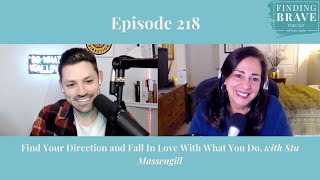
Stu Massengill talks about finding direction and loving your work, drawing from his parents' example of service and his testicular cancer diagnosis at 24. He argues that discovering your path requires internal reflection and trying things rather than endless analysis, plus the self-awareness that vulnerability builds.
Chapters
Hi everyone.
Kathy here.
Do you run a coaching business that focuses on supporting women? If so, I've got some news.
Right now we're opening the enrollment of.
My coach training program called the Amazing Career Coach Certification, which is a 17 week hands on training program that certifies female coaches in my proprietary 16 step career growth model, which is perfect for coaches who want a deeper dive into powerful, proven coaching frameworks, coach concepts and skills that will help you become far more effective in working with women. And through the program, you'll get access to a powerful small business acceleration program called the Rapid Growth Academy, delivered by my friend and colleague, award winning business growth expert, Matthew Pollard. Through Matthew's program, you'll be taught essential business and sales growth information that will help you grow your business success in the quickest way possible.
In my view, there's nothing on the.
Market like this for coaches because it targets the two critical aspects of success, how you support your clients to thrive, and just as importantly, how to grow your own business to the next level. For more information, visit certification.amazingcareerproject.com and check out the details. And don't miss the wonderful early bird bonuses which expire March 12, including $2,000 off the full price. The program starts March 22 and I'd love to work with you. See you there.
We have to be really honest with ourselves, which I think is sometimes the hardest part. Like we have to really ask ourselves, are you actually happy in what you're doing? Are you actually enjoying this? Or do you really not like what you're doing? And like, deep honesty is where beautiful things come from.
Hello everyone, this is Kathy Caprino and welcome to my podcast, Finding Brave. I've created this show for everyone who longs to create something bold and brave in their life, to rise up, speak up, and stand up for who they are and to reach their highest and biggest visions. Each week I'll be speaking with inspiring guests from all walks of business, leadership, entertainment, the creative arts and the entrepreneurial world. And they'll be sharing their intimate stories of Finding Brave and offer their best strategies for building your most rewarding, joyful and meaningful life, business and career. Hello everybody.
Kathy Caprino here and welcome to another episode of Finding Brave. I know you get sick of me hearing, sick of hearing this from me, but every single one of these episodes I am just so excited to have because there is so much learning that we, that we can get, speaking to other people who are rocking it in fields that either you know nothing about, or in this case with Stu Massengill I'm so excited to have you, Stu. We. We cover some of the same topics, but in such a different way with such a different perspective, and I'm just. I cannot wait to ask a lot.
Of questions of you.
So thank you for taking time to be with me. I'm thrilled.
Absolutely. Well, Kathy, thank you so much for having me here. I'm extremely excited to be here. I've been looking forward to this all morning, so thank you for having me.
Oh, thanks, dear. All right, let's get going. But before we do, we are talking about find your direction. I didn't run this by you, Stu, so if you don't like the title, you'll let me know. Find your direction and fall in love with what you do and who you are. How about that? That's your world.
I think I'm all about that. That's beautiful.
Oh, I love it. I love it. And this is coming to you all in early March. So I hope March is going well for you. But let me tell you all about Stu, because it's darn inspiring, I got to tell you. All right, Stu Massengill is on a mission to change the statistic from 80% of people not loving what they do to 80% of people falling in love with what they do. He is a peak performance strategist for Tony Robbins. What a. What an icon. And the founder of Finding Direction. We can see your logo, your amazing podcast, which I've had the joy of being on. Thank you, Stu. Through his company, he helps people go from lost in life to creating a life full of passion and fulfillment. As a high achiever under 30, Stu has accomplished many things, from building an eight figure business. I need some advice there. At 20 years old to beating cancer.
At 24 years old, Stu brings his.
Passion and heart, and you're going to see that right here to create lasting impact across the globe.
Wow.
All right, hang on to your hat. I got questions galore here. Where are my questions? All right, first of all, you know, I'm a. I'm a former therapist, and I do believe that we are what our childhood taught us to be. Unless we unlearned it or healed it or. I mean, some of it has been fantastic, what we learned, but I would love to know your backstory, primarily. What shaped you? What were the key messages? And really what I'm getting at is what do you think you got in early years that allowed you to do so much at such a young age?
That's what I'm interested in.
Love it. Love it. So to give a little bit of my background, I grew up, I would say, in just a really blessed environment. I had two really amazing parents. I have an older brother who's always someone that I looked up to and, you know, did really great things with his life, even to this day.
Where'd you grow up, Stu?
Where was it?
Northern California. So grew up outside of San Francisco, about 45 minutes outside. And, yeah, it was beautiful. I mean, I grew up in a lot of nature. I'm to this day, a big nature person. Even if you look at our Finding Direction logo, there's, like, mountains in it and stuff. I'm just. I'm a nature guy. I'm an outdoor person. So I was, you know, grew up kind of in an outdoor environment. And I think a few of the things, if I really look back on my life that are. What has sort of come into my life today, years later, is I always. So my mom, she's a life coach. She's a master certified coach, and she's been doing it for 25 years now. Really. And I always thought it was so cool, growing up that she would work with people that, like, didn't want to be here for. To say it peacefully. Right. You know, we're thinking about ending their life.
And she would take that as a coach.
Yeah. I mean, she does heavy work. She does intense work, for sure. And. And she would have clients like that, and all of a sudden, she would turn around to this place where they loved life and they enjoyed their life, and they were so happy. And I have this memory of always just growing up and just being like, that is the coolest thing in the world, that you could help someone go from, like, not wanting to be here to loving what they do. And so I think that. Yeah. And so I think that was something that was sewn into me at a young age that I didn't realize till a little bit later on in life. And then my dad was also in a profession of helping people. And so I grew up around two parents that were all about helping other people, serving other people in a really beautiful way. And then. My parents are very, very hard workers. My parents are the type of people that on the weekend, they go fix 300 things in the house rather than sit on the couch and chill and relax. Like, there's a funny joke we have in our family. It's like, our parents do not. They don't know how to chill. They're just always going, doing, moving. You know, I grew up, and my dad worked a lot, and you Know, it was a lot of good things that provided for our family in a good way. But I also didn't see him a lot. So, you know, I think. And I've healed my relationship with them now, which I'm super grateful for. But I think those are a few things. I grew up around parents that served people that worked really hard. And I think those were a few things that were kind of put into me to create some of the things that I've been able to do today. And again, I think I was just really lucky. And someone once told me they were like, you were given a story in your life, or you were given a story in your life, the thing you're supposed to do is. Is read that story to the world. And so I just felt like I was given such a beautiful environment to grow up and that it was like, how could I not do everything in my power to try to help people? Because I was fortunate.
You know, I love it. And I'm going to say, I hear also that. I mean, I think we're given a story, but thankfully, we're the author and the playwright of it, too.
Yeah.
And I think you're so blessed. I was blessed, but a lot of people are not blessed. So one key thing is you can change this story. You can't change what happened, but you can change how you use it. So one example I'm hearing is you saw them working very hard, and that's a beautiful ethic. But that can break down people over time or that can be from driven fear or whatever. So I'm sensing from you with your mountains in the background, you probably have rewritten that story a little. I'm guessing that you work incredibly hard, but you. Maybe you play hard. Do you?
I don't know.
Yeah, balance in life is kind of important. It's something I continuously work on, if I'm being honest. I think we have seasons of life, right? It's like sometimes you have a season where you're like, all right, I'm gonna be working really hard and I'm gonna be putting in extra hours and like you, because I have some things I want to achieve in the season of my life. And then there's other seasons of your life where maybe you're traveling for three months and you're exploring the world. You're not doing as much in the work sense, but I think it's an ever changing balance in life. But I think it's like you said, it's so important to make sure that as you go throughout your life it's not just let me work, let me do these things, let me achieve these things. It's life. Let's enjoy this beautiful experience and an enriching life and in every aspect of our life.
I couldn't agree more. Now tell me, would you mind us going a little deep here and talking about your ex? Let's go. Talking about your experience with cancer.
Yeah. Yeah.
So probably wondering what I want to know. You're like, what does she want to know about that?
There's a lot of different.
Yeah. How old were you when you had cancer?
I was. I found out two days before my 24th birthday.
I would like to know. And do you mind me asking how old you are now or the range?
I just, I just turned 29 two days ago. The two day thing, I guess.
Oh, amazing. All right, so you're 29 now. I think I'd like to ask you. I mean, you seem to be an amazingly positive person. Yes, and, but, but not but never but. And you seem to understand that. I'm guessing, putting words in your mouth. When things happen, we can either break ourselves against them and bloody our bodies and heads or. And souls or we can a little bit more go with the flow and learn and I don't know, I'm making it up here.
Yeah.
I'm interested in your perspective and experience on how you dealt with that internally and externally. Can I hear?
Yeah. So for me to kind of give a little pre. Context. Before I got cancer, I went from a place of doing some stuff that I like, work that I really loved in my life. To save a long story, everything changed. I lost what I was doing and I went into this place where I felt really lost in my life. Um, didn't know why I was here, what was my purpose. And so I went on this cliche idea of I'm going to go travel and find myself. And so I've always wanted to go to New Zealand. I feel like I was lived there in a past life and so I went on a trip and I was going to be there for seven months. I worked probably six months to save up enough money to go for seven months, say this is what I'm going to do. I'm going to live here. I'm going to be able to not have to work while I'm here, but really like enjoy and experience New Zealand. And so I flew away all the way across the country and two days into being in New Zealand to just be vulnerable. I felt this mass in my gentleman downstairs. For anyone gain the context there.
Two days into being there, two days into.
Being there, two days before my birthday of what was supposed to be a seven month trip. And you know, side note, for any guys that are listening to this or for any women, if you have a husband or a partner, this can just be a simple reminder to, if you're a guy or you know, a guy, yeah, tell him, hey, check up on yourself. Just make sure. And so I felt something. I, you know, ended up going to the doctor. The next day I had a skydiving appointment, which I was not gonna miss. So I did that first and then I went to the hospital because I believe in living life regardless. You know, I mean, you could let things tear you down like you said, or you can know it's going to be okay. So I did that. It was awesome. Awesome. Skydive, most beautiful thing ever. And I went to the hospital and after two days of a day, probably going to the hospital, doing all the checkups, it was like out of a movie. I mean, they, like, one lady brought me into a room, she's like, all right, sit down. And she was like, I have some news. You, you know, there's. There's some sort of tumor and it's either benign or meaning it's nothing or it's cancerous. And we suggest you hop on the next plane flight, go home and see your doctor figure this out. As you mentioned, and you nailed it on the head, I am a extremely positive person. And it's not like fuzzy does he positivity. It's just I don't believe negativity serves a purpose in our life. It's a waste of your energy. Someone once told me, every moment you spend sad is a moment of happiness you'll never get back. And I'm like, that's the story of my life. Why sit in it? Because it's not going to do you any good. So I got this diagnosis, I flew home. Sure enough, I saw my doctor. It ended up being testicular cancer. And for me, I think two of the biggest things that served me to get through that, which continue to serve me in my life today is number one, I'm a believer. Everything happens for a reason. And so even though it was like two days into my trip, two days before my birthday, they're like, you got to go home because it's good chance it's cancer. All that played through my head is, okay, this is part of my story. This happened for a reason, and this is for a greater purpose. Right. I think that's another thing is it's attaching it to this is happening for some greater reason than this thing that currently is happening to me, which sometimes when we're in something intense, it feels. Feels like it's the worst thing that can happen to us. But if we can sit back for a second and say, maybe there's a greater reason that this is happening than the pain and the fear that I'm going through now that can carry us through this. And so that was one big thing that carried me through it. And then, I mean, to this day, I can't imagine being a parent and sitting in a doctor's room with your child and having the doctor have the words come out of your mouth that goes, your child, your son, your daughter has cancer. And that was probably the most intense part for me was seeing my parents just, you know, it was like, I can't imagine. And I've had more conversations with them about it after. And you know, we cry every time. It was like, it was. It was gnarly. But as soon as we came out of the doctor's room, I just, I just went over to him and I was like, don't treat me like I'm any different. Don't treat me like I have something that can kill me. Because if you plant that seed in my brain, that seed can grow. And we don't want to entertain that seed. So, like, everything's going to be okay. We're going to get through this. Do not plant the seed that I may die from this. And I went on to tell that to every person that was close to me. It was like, this is part of my story. This is going to be a greater purpose, is going to serve something in my life at a later point. We're going to get through this. It's going to be okay. And for me, and everybody has their unique experience that goes through cancer. And if you are going through it or you know someone that's going through it, maybe this could be helpful for you. But again, you got to figure out what works for you. But for me, it was so helpful to have a severe of people around me that rather than saying, oh my God, you might die, oh my God, are you. Are you going to survive? I had a group of people that went just, wow, this is going to happen for a greater reason. You're going to be perfectly fine. This is all okay. And it just made it so much, I think, easier for me to get through the whole process, you know, because.
Cancer, most inspiring thing I've heard in.
Many, many years thing. And you Know you gotta, you gotta, you gotta be strong when you get through it. But I think really, if you know it's happening for a greater reason, I think, I think that can help you get through it a lot easier.
Let me ask one question. Can I. And I don't think I've talked about this too much on the podcast, so we're going to tread gently. But yeah, I am a hundred percent with you that I believe things happen for a reason and for our greatest good, where the pushback is. And I've known people that have lost children to murder. This is not easily said. And I want to make a caveat. I don't mean we deserve the bad things that happen. I don't mean in any way that it's flip. What, what, what I do mean, and I hope this is helpful, is when, when we look at life not from the human perspective, but from the soul perspective, I think we. Not that, you know, I'm in heaven looking down, but I've done a lot of work on this and you know, whatever, we'll leave it there. But I think that we can see that while your human ego self would never sign up for these things, there's a soul that there's an overarching something spirit soul that maybe has. And I would say to you, if you chuck that idea, it's up to you. I'm not here to change people's ideas, but I know that it helps me and helps millions of others get through the hardest stuff that humans experience. Like, your mom dealt with a lot of stuff. I was a therapist and dealt with people. Rape, incest, pedophilia, suicidality, drug addiction, attempted murder. When you frame it. Not that. How the hell could this ever happen? Woe is me. Other people don't have this. When you frame it differently, like, wow, I didn't expect this on the path today, but I'm going to learn from this and grow from this. I think it changes your whole life experience. Would you agree with that or push.
Back on any of that 100%? I mean, sort of what comes to my mind is as I look back at my Life and I'm 29 years, so not a ton of years or maybe a lot of years, depending perspective. But as I look back on my life, whether it was the cancer or whether it was when I was in high school and I wanted to be an athlete and I tore my acl, I thought it was the worst thing that ever happened to me. As I look at all these different experiences that I've had in My life, which for me fortunately haven't been insane. Insane, I mean, I guess cancer, depending people could say that was insane. But as I've gone through all these things in my life, what I've noticed as I've looked back on my life is in life, you can always connect the dots backwards. They say if I look at when I tore my ACL in high school, thought it was the worst thing ever. When I just look back at my life and I decided to temporarily drop out of college to pursue something I loved, and everybody in the world told me, you're an idiot, this is the wrong thing. When I got cancer and to many people they were like, this is the worst thing that could ever happen to you, health wise. As I look back at all those things in my life, if I really look at them, and I think this is true for everybody that would be listening to this podcast that has gone through something in your life, whether it was an experience you didn't like or something that was a decision that you struggled to make at one point. That if you go back to those moments in your life and you really dig and you really search, there's always a blessing, a lesson and a teaching that you can pull from that experience that simply is just preparing you for the next phase of your life. And again, sometimes easier said than done. But I think we as humans sometimes need to do the deep searching to say, okay, that crazy thing happened to me. What was the lesson? What was the blessing? What was the teaching? Because one, if we can find that blessing, it will serve us as we move throughout the rest of our life, right? Sometimes they say your mess becomes your message, right? It's like that thing that was crazy that happened to you, if you look for it can be a beautiful blessing in your life. And I think the second piece of it is the freeing this you get from it, right? If you begin to find the blessing, the lesson, the teaching from that thing that happened and start going, wow, life happened for me, not to me. Everything in your life will change in.
A moment so damn beautiful.
There's much I want to say and I want to tease out two things if I could. I couldn't agree more. Everything you say is swirling around in my mind too. I would say too, that what we go through, if we approach it in the right way, we become more of who we really are. And that is beautiful. Talented, confident, like when I've had really bad things, like thinking I miscarried my first child as I'm about to run in to run an all Day meeting.
What a story.
I mean, that's. That's too much information. But I was like. And I didn't. Thank God. Julia, there she is. She's 27. But I think when you get through these things in the way you're discussing, you become almost much more unstoppable. Much more. If I can go through that, this.
Little stuff is nothing.
And I think that's one of the key blessings, you know. And I did just want to ask this very quickly. You said you don't believe in negativity, and then you said one day sad is one day lost of happiness. I would say this as a former therapist. I think sad is different from negative. So anyone listening? I think that there are things that make us sad. And that's. It sounds like maybe you don't struggle with a lot of sadness, but I think sometimes like being with a friend who's lost their spouse or their child, it's beautiful to feel sad. There's nothing wrong with sadness. I think, in fact, when we try not to be sad, we're suppressing and suppressing never works. Comes out other ways. You got to let it flow through. So would. Would. I don't need you to agree with me, but would you. Would you say that, sure, I've been sad, but I don't stay in a negative place. Would you agree with that, or do you actually not experience sadness?
No, I would say that's a very correct manner in which you said that. You know, I experience sadness sometimes, and even when negativity creeps in, I think part of what I've trained myself to do. And again, I'm a really happy person. So I don't see this as like, this is me suppressing feelings or things. Like I genuinely a really happy person.
Quick access to joy, I call it. Don't you? Yeah, we can access. It just comes. It pops in.
Yeah. And I even had. And I won't. We won't fully go into the story, but I remember a moment in my life probably a decade ago when I was. I didn't know how to be happy. And it was like. I was like, I need to read a book on happiness because I just wasn't happy. And I've learned that thankfully, how to do it over the last ten years or so. But I think what I've started to train myself to do is if I get in a negative state or a negative place, I train myself to get out of there quickly because I know it doesn't serve me if something bad happens, something negative sometimes if we live in a negative state. We're not going to get the resourceful answers that we need that we could get if we're in a positive state. Like the way your brain's wired is you will be given different answers from your brain if you are in a negative state versus a positive state. So those are some of the things I've learned to do. But I think, yeah, I mean, with sadness and stuff, it's like when things happen in your life, you got to feel those things. You know what I mean? Something that happens, something horrible happens, like, you have to feel that. And like you said, it's in it. It's interesting how you said it, but it's so true. It's like sometimes that sadness and feeling it is like, really is a beautiful thing, you know, because you have to experience and like you have to experience that in life and you know, but. But then it's, you know, eventually getting back to a place of, okay, how do I be happy in my life and how do I enjoy the things what, you know, once I experience the sadness, what's the lesson I could get from that? To move forward into, into a better place in my life.
That's so beautiful, Stu. I'm going to give a tiny example of this in case people are going, well, how the heck do you do it when you talk about sadness? I lost our second dog, our beagle, Lily, when, what was she, 13? In August. And she lived with me in this apartment when I moved here after divorce. Lily meant a lot to me and she was not, not an uneasy. She was ill and nervous. And anyway, she died in a way that we had to put her down. Oh my God, I felt so much grief and loss. But Stu, to your point, there's sadness, but then there's guilt. And I had guilt. Maybe I wasn't a good enough mother. Maybe she didn't look at me crying. Maybe she didn't like, you know, she loved nature. She loves smells, beagles. But I'm in a city. Guilt crushes us. Guilt makes us sick. Guilt drums out joy and makes you feel shame. So what I love about what you're saying and what I'm hearing is you're using everything you are as a human, but you're, you're working it. It's. It's a tool. Meaning, what am I saying? I think we have to be very self aware and we have to go, when am I like, am I feeling sadness or am I feeling guilt? Am I hating myself? Because if you stay in that dark place, bad things Happen.
Yeah. And it goes into every other area of your life. Right, right. Some of the things we sit and we Molon, you know, when we're in a negative place, it's like, it's not just affecting you, it's affecting your spouse, your friends, your work, your. Your health.
Like, exactly.
It bleeds into everything. So I, I agree. Self awareness, I think, is one of the most beautiful things that if we really want to be happy and enjoy our life, we have to study ourselves. We are our. Our coolest project that we ever worked on.
So beautiful. And finally, because I'm. I'm sure other people are listening, you said everything is a lesson. Everything has taught you something. What would one biggest thing that having cancer gave you taught you.
Sometimes they say when you ask for something in your life, you're taught it. You're not given just the answer.
Favorite thing on your website, that sentence.
And I was in a place in my life where I was sort of learning, how do you have relationships with people, like friendships. I went through a phase of my life where relationships were very transactional for a time being. And I wanted to go back to, like, how do you just have genuine relationships with people, friends, like, you know, everybody. And that's part of the reason I went on this trip too, is I was like, let me go meet people and experience other cultures and like, just be like, meet beautiful humans all over the world. And I think the biggest lesson that I got from that was the deepest way to build genuine, beautiful, incredible, long lasting, real relationships with anybody, whether it's intimate or just friendship, is vulnerability. Because when I went through this, I mean, it was testicular cancer to, to a guy, it's the most vulnerable part of you that you.
Pretty difficult.
Yeah. And I shared the whole process. You know, I was like, I'm going to share this with, you know, everybody and like, what I'm going through and if it can help other people, like, I want to use this as a way to help other people when I'm going through it. And, you know, I had to be vulnerable for that. And it built a lot of relationships and helped a lot of people. So I think the biggest lesson and blessing I got from that was like, you got to be vulnerable in your life. Like, one of my friends, James Roblotta, he goes, you know, if. If vulnerability is a weakness, why is it so damn hard? And it's like, oh, right.
It's like, comment.
It's so real, you know, So I just think you got to be vulnerable. You got to be raw. You Got to be real as you go throughout your life. And that's going to bring the right relationships, the right people into your life.
You're a remarkable human being, Stu. Honestly, you got a lot of sage knowledge for a very young person. It's beautiful. All right, now snap out of it, Kathy.
Stop it.
Stop crying. Let's talk. Let's talk about. Thank you for that. Sharing is powerful. We're going to hear a lot from a lot of people. Let's move to finding direction.
Yeah.
So you know, you and I share this. We do a lot of this work. But you know what I'm interested in learning from you? On your show I talked about what I've seen are the seven damaging power gaps. I love to come up with frameworks like you do. Yeah, how do I make sense of this? So that's my current framework. How do we become more brave and more courageous, more powerful? And it's looking at the way we're gapped in confidence. Right. Seven damaging paragraphs. So my, when I work with someone, I'm looking at where they gapped because when we close that, they seem to fly because they have so many gifts and talents on their own. I would love to know from you in working with people about finding direction, what do you think top three things that hold people back the most from? It's not only finding it, is it? It's then being brave enough to stay the path on it. For sure you can go, woo hoo, I know that I'm a da da da. And then four months later you're like, what was I thinking? I'm too scared I'm going to lose all my money. Can I hear from you? What do you think holds people back from finding and staying on that direction?
Yeah, I think one of the biggest things is a lot of people as we go, try to figure out what we want to do with our life and like find our direction. Course, you know, it's too often we, we do it externally versus I think it's an internal process. Right. Where we go throughout it and we go, well, you know, my parents did this or my friends doing that, or you know, society thinks I should do this. And so often we go, throughout our life, we do things externally because this is what we're quote unquote supposed to do. We should be doing the right, quote unquote thing. But the reality is if you do the right, right thing, but it's not the right thing for you, it's not going to lead you to a place that you want to go Right. That you want to be. You may end up at this place and go, what the heck? This isn't what I thought it was going to be. Because it wasn't your path. And so again, kind of, we spoke about self awareness before. I think it's. I think one of the things that stops us is we look external. The second piece with that would be the biggest thing is we never really take the time to actually get to know ourselves. You know, it's like as I work with some people, as we look at, you know, okay, you're doing something and it feels really draining to you. And every single day you're waking up going, man, I don't want to do this. Sunday comes you're, you know, having those thoughts of, like, man, tomorrow's Monday. And I don't want it to be. I think one of the biggest things we start to look at with people is it's like if you look throughout your life and you take a moment to go internal, it's asking yourself powerful questions, because powerful questions lead to powerful answers. And I think a few of the powerful questions to start moving you in the right direction are like, what are the things that you've always enjoyed doing in your life? What are the things that, when you do them, bring you energy and increase your energy versus decrease your energy? What are the things you do when you do them? Time flies by or you feel light versus heavy. And if we can start to answer these questions, and for anyone that's listening to this, that's trying to get to a more fulfilling place in their life, I would say begin to ask yourself those questions. And once you begin to get those questions, listen to them, right? Once you get to get the answers to that questions, listen to them. And then I think the third piece is sometimes as we get these answers and get this clarity and this, like, part of it is one we have to be really honest with ourselves, which I think is sometimes the hardest part. Like, we have to really ask ourselves, are you actually happy in what you're doing? Are you actually enjoying this? Or do you really not like what you're doing? And deep honesty is where beautiful things come from. So I think as we have that honest conversation with ourselves, figure out what are some of the things that we've always been pulled towards to increase our energy, all of these things. It's allowing ourselves to go try these things. And I think the third piece to answer your question, where people get stuck is we get in this place of analyzing or we go, I think I might like that. And from the outside, it looks cool, it looks great. And I might really like it, but, well, what if I try it and I don't like it and then I got to stay there or let me try this other thing. It's like a really simple analogy I give people is it's like think of the first time you found out you liked pizza. It's like, did someone pull it out of the oven? You smelled it, you looked at the toppings. Your friend came by and was like, pizza's awesome. And you were like, oh, my God, I love pizza. That's not how anybody found out they liked pizza. You tried the pizza and then you found out you liked it. You know what I mean? And so I think sometimes we try to analyze and think and wonder what these things are going to taste like and feel like in our life. When I think the truest sense is the way you get clarity in your life is through experiencing, not thinking. You got to experience things, you got to try things, and that'll bring you clarity. And I think oftentimes we get stuck in this place of thinking what it's going to be like, but you got to actually go try it. And as you and I have spoke about before, you can try it in a way that's not super risky. You can try in a way where it's like, okay, I think I like this thing. Let me go volunteer on the weekend and try that. If we even need to. Let me take a week off from work and go shadow someone at this other industry or company that I want to work for and just see what it's like. If we're really not happy, we got to find ways that we can try these other things that think we might like in our life in a way that's not super risky. And then once we try that, that's when we get clarity and then we make a decision from there.
Totally love it. You know, I don't know if I mentioned, but quickly, you know, I have this five step model, step back for an empowered perspective. Let go of the thinking patterns and behaviors that keep you stuck. Say yes to your most compelling visions. And then number four is try it on. Try it on. You don't have to chuck your career. Try it on. And the fifth is you don't create it without accountability, a structure, goals. You know, we're so on the same page. But let me ask you this. You know, I wonder if you see this. There is a time now where I'm hearing from a certain type of person and it's Typically a mid to high level professional woman. Very successful on the outside, not successful on the inside. And here's what they're sharing and they, they're kind of surprised. I realized for my entire career, maybe my entire life, I've done what my.
Parents told me I needed to do.
And I'm gonna say it. There's certain cultures that this is prevalent. Asian cultures, Indian cultures, a lot of Jewish women work with me. You know, I'm Greek and Italian. I had some of that pressure too, but not nearly to this degree.
Right.
Somebody told me on my course, she actually didn't know there were other careers besides being a doctor when she was little because they wanted her to be a doctor.
She didn't know you could do anything else.
So I want to ask you how you approach this, but what I'm saying to you is just yesterday someone on my course said, I want to do something else. I don't even know where to begin to have this conversation with anyone. My parents.
And she's 40 years old.
I don't know where to begin to figure out what I really want. And you know, having been a therapist, sometimes this is the realm of therapy. You're not going to coach through this. I mean, we are because I'm sending her to some therapeutic help. But sometimes the idea of letting down your tribe is so terrifying because you have been indoctrinated that you don't say no to what we want of you. And my gods do.
It's a lot of people.
It's a lot of people. So if someone said to you, I mean, I know how I answer this question, but I'm dying to know how you do. I know that I don't want to do this anymore. I know what I want, but I know it is going to so anger. I mean, I've had people who parents have disowned them because they said, what you want for my life is not what I want. Well, they can't take it sometimes. We've got narcissistic parents, whatever. What would you say to someone who says, I'm aware that this is not what I want. I am just too scared to even try the pizza. What would you say to that?
Yeah, it's a beautiful question. I think as we look at this, we have to understand how do we leverage things in our life so that we can take the actions that support us to create the life that we actually want. So if we look at our life and we go, okay, I know I don't like what I'm doing. And I know what I want to do, but I'm really scared that if I do this, my parents are going to disown me. Whatever it be, that's one thought and one fear that's going to take us into certain actions in our life. What I would guide anybody to do that's going through this process is ask yourself what's another reality that's going to come from that decision that may be more fearful. Right. That you may regret in a larger way. For example, let's say you go, I'm doing something and I don't love this and I know I don't love it and I know I want to do something else, but if I tell my parents this, they're going to disown me. I think another way you look at this is, well, let's say, for example, whether you have children or whether you don't have children, let's say you're child starts to grow up and your child all of a sudden is 17 years old and they're in this place of trying to figure out their life and they're coming to you for advice. They're going, mom, dad, I'm in this place. And because of the experiences you've been through, maybe you're a little bit lighter on them because you go, my parents made me do this thing and I don't love it, so let me be easy on my children. Or maybe you're hard on your children, but maybe your child comes to you and they go, what do I want to do with my life? And they're trying to figure it out and they go, there's this thing that I think I want to do. And you go, you know what? You should follow your heart. You should do what lights you up, you should do what you feel truly makes you happy in life. And anybody listening to this, I want you to imagine your child looking at you in the eyes, commenting back to you and going, but mom, but dad, if that's what you're telling me, well, why didn't you do that with your life? And for some, I think for everybody, that would be a more painful conversation to have than the one that you would have potentially with your parents. And so I think as we go throughout this process, right, we got to see that every decision we make in our life has consequences in multiple different ways. And if we fear one consequence, which could be having this conversation with our family, with the people we care about, the tribe we want to be associated with, that may impact other things in our life. And so we gotta allow Ourselves to gain perspective, right? Maybe it's. Maybe for some people, you don't have kids, you don't plan to have kids. Maybe it's on your deathbed one day and you're sitting there going, man, I spent my whole life trying to make other people happy. And I never really actually asked what do I want in my life? What makes me happy? And one of the things they say, right, it's like in life, the pain of discipline weighs ounces. It could be having those difficult conversations that may lead to some really intense things in your life, but the pain or the weight of decision weighs ounces, but the pain of regret weighs tons. And so I think really what we have to do to move through this is know it's going to. There's going to be some difficult things that come through this. Regardless. You got to pick. Which difficult do you want?
I want to work with you, Stu. I'm sure everyone listening does. It's amazing. And I want to also pick up on one thread. And then I know you have to go, but there was one thread I thought you were about to make, which is. And it's. It's also what you did when you knew you had cancer. You said to your folks, we're not going down this path. We're not going down the path that I could die. Don't go there. Right When. When people say, I can't even tell my parents I lived this. I thought at 41, when I left corporate life, dad was a GE guy and that I was going to become a therapist. He's 81 and I'm 41. At the time, I sat in the car shaking from the Starbucks parking lot to tell my father, yeah, what does he say? Do what you want. I know now he didn't feel that when I was younger, he didn't. He was a scientist. He wanted me to go into something business, science. But all that fear that I had, he's like, kathy, do what you want. You'll be a great therapist. Oh, God. So sometimes having the conversation will not yield what you're dreaded. Dread, you know, living in dread. So unplant the seed. I mean, sometimes it will, but sometimes it won't. Give it a try.
Wow.
Now, here's my final question to you. I had written down, what do you wish your younger self knew that you know now? Well, that's a book, you know, and. And you shared. So that's a book series from st it. But what is it that you want to leave listeners with? Everything you shared here. What would Be the one most important message, I mean, of your life. Forget it. They change. Those change every minute. But that you would want people to understand that you don't think many do, especially the 80% who hates what they are doing. What do you want to leave people?
Yeah, I think it's that, that you deserve to live a happy life. You know, I mean, it's simple, but sometimes we go through life and we make it so complicated and complex and all these things, and it's that you, you deserve a happy life. Sometimes you need to be a little selfish and put yourself first, right? And go, what do I actually want in my life? And if you lead from a place of saying, what do I want in my life and what makes me happy, and you learn to study yourself, you'll live a beautiful life. So I think it's one that, that you really do deserve a happy and a beautiful life. And if there's someone else out there that's created it in their life, which they have, then that means that you can do it too. And then I think the other thing is just study yourself, learn yourself. Work on yourself. Make yourself your greatest project in your life. You're the only person you'll ever spend your life with. And if you really get in tune with yourself and study yourself and learn yourself, you'll easily be able to figure out what makes a happy life. Because you know what makes you happy, you know what makes you don't happy. And I think that's the simple but honest message that I leave with people is you deserve a happy life and a fulfilled life. And if you're not there, do something about it. Do not sit in this place. And I mean, like we spoke about when you were on my podcast.
If.
You know it's not right, don't wait 20, 25 years to realize that it's not right. Make a decision today that you're going to change something in your life if you're not happy, if you're not fulfilled.
It's so simple. But it's life changing and earth shattering and not easy.
Always beautiful.
What a message. Where do we scoop up all the deliciousness of stew Massingale? Where do we go? Send people to what you have.
Where do we go?
I love that I just thought of ice cream scoop up the deliciousness of stew. I was like, what kind of ice cream scoop would I be? But anyhow, I digress. The best place would be, you know, kind of twofold one. We got a podcast, it's called Finding Direction, which you were on. So Would highly encourage people to come check us out there. I mean, I think they should all go listen to the episode you were on. It was beautiful. One of my favorite episodes. So, yeah, people can come check us out. We're on Spotify, itunes. And then if anybody wants to connect on social media, Stu Massingill over there, it's S T U M A S S E N G I L L And they can, you know, if you got any questions, anything I can support you on, you know, please do send me a message there. And. And one thing I would say as well, in regards to what we were saying before, and I believe it was step five of your five steps, is if you're listening to this and you know you're in a place where you're not happy and you're not fulfilled, sometimes what it takes is just sending someone a message and saying, hey, I'm not happy. I'm not fulfilled in what I'm doing. Give me some guidance. And I just say that for anybody that's listening to this, I encourage them to send you a message. If they want to send me a message and they resonated, that works as well. But especially if something hits you in this episode where you're like, I need to make a change, send one of us a message. Because, I mean, I know for you and I both, we feel we're on this earth to really help people do some things that. That they enjoy in their life and love, and we know they're deserving of that. And so if you're listening to this and you're feeling that tug in your heart today, I would just ask you do something about it because your future self will thank yourself.
It's too beautiful. I love it. I wish I could stay on with another four hours with you. Thank you for your time. Thank you.
Absolutely.
All right, people, listen to. Stu, if you're not moved by this, I'm worried about you. No, I don't mean that. That sounds snarky. I want to hear from you. You know, this is going to be on every social media platform. That's the place. See it, listen to it, and write us something. You know, most people listening to these shows want something different. I mean, most of us want something. Something we want different, better. So send us a message. I couldn't. You couldn't have made it more simple, Stu. Thank you. Send it to us. It doesn't have to be crafted beautifully. Just say it. And one of us, both of us will do whatever we can. Send you a resource, speak to you we would so love to hear from you. We want this to move you forward. Stu. It's just beautiful what you have to say and what you've learned at such a young age. My younger self wishes they knew you at 29. My goodness. I would have loved that. You're a gift to the world. Thank you for being here. Thank you so much. And I hope you'll come back again soon.
Absolutely.
All right, everybody, have a wonderful week. I hope this moves you forward and we can't wait to hear from you. Thanks for tuning in. See you next week.
Hello, Kathy here and thank you so much for tuning into today's episode. I hope you loved it. One quick thing I'd love to share before you go is about my new digital training course, the Most Powerful you, which is the companion to my book the Most Powerful seven Bravery Boosting Paths to Career Bliss. I'm so thrilled that recently a division of the largest intergovernmental agency in the world sponsored several memberships to the Most Powerful you course for members of their staff. And what a powerful move that is in terms of bringing real world, effective training to both men and women to help them thrive in the workforce. Coaching so many people, as I do each year, I see that leadership and career growth training programs today are so often not effective because they simply don't.
Go deep enough to address what really.
Holds us back from thriving, believing in ourselves, understanding our talents and abilities, communicating effectively, asking for what we need and deserve, networking to build a great support team, community, and making the impact we long to. So I'd love to make an ask of you and that is to briefly take a look at what I'm teaching in the Most Powerful you course and you can find that@mostpowerful you.com and if you feel that the content about the seven damaging power gaps and how to close those for good would be helpful for you and people at your organization. I hope you'll ask your supervisors, HR leaders, and diversity and inclusion managers to sponsor memberships of this course for you and other staff so that you can all thrive at the highest level in your roles and organizations. Thank you so much. And here's to you becoming the most powerful you. Thanks so much for joining us today. And please don't forget to check out for finding brave.org for more programs, resources and tips. And tune in next time for your weekly dose of Finding Brave.
More from Kathy


Elevate Yourself, Elevate Others, and Amplify Good | Chris Cooper | Finding Brave Ep. 334

Finding Brave Epis #333: How Leaders Can Harness AI Without Losing Their Humanity, w/Bennett Borden

Finding Brave Epis 332- How to Stay Brave, Valuable and Visible in the Age of AI, with Raman Rai

Finding Brave Epis 331 - The Power of Positive Disruption, with Dr. Patrick Leddin


Finding Brave Epis 330 - Being 40: Letting Go and Embracing Who You Are, with Stacey Lindsay

Disrupt Career Reinvention with Kathy Caprino - via The Disruption Lab Podcast w/Patrick Leddin

Creating Neurodiversity-Friendly Work Cultures: Simple Workplace Adjustments Matter

Finding Brave Epis 329 - How To Create a Neurodiversity-Friendly Workplace, with Kristen Pressner

Finding Brave Epis. 328: Reclaiming the Power to Trust Your Own Voice, with Dr. Cindy McGovern