224: Why People Feel They Don’t Belong In Their Workplaces and How to Fix That, with Rumeet Billan
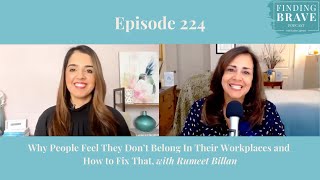
Dr. Ramit Billan explains why people, especially women, feel they don't belong at work even when invited. Belonging requires more than inclusion: it's about people's actual experience. Micro-inequities, value misalignment, and tall-poppy reactions drive alienation and burnout. Leaders can build it through fair-minded allyship, vulnerability, and simple norms like greetings and acknowledgement.
Chapters
Hello, Kathy here. And before we begin today's episode, I can't wait to share with you some news about my upcoming free 90 minute webinar on April 27th at noon Eastern that will teach you all about how to supercharge your success and gain more confidence, authority and leadership impact today. You know, I've coached and studied leadership for years now and interviewed some of the most renowned experts, but I would say that I have a bit of a different take on what true leadership really is. From my view, working with thousands of women around the world, leadership starts with how you lead your own life and how you view yourself, and it expands from there and it takes brave, committed action to close. What I've seen are the seven most damaging power and confidence gaps that negatively impact a staggering 98% of professional women today. In this free webinar, you'll learn leadership and career growth strategies that you won't hear elsewhere on what these gaps are for women, where we got them, and how to close them for good to finally build the reward and impact and authentic success you long for and deserve in your career. I hope you'll join me again. It's April 27th at noon Eastern and sign up even if you can't make it live. We'll be sending out the video replay and training slides to all registrants after the event. To learn more, visit Kathy Caprino.com empoweredleadership22 thank you so much and see you there.
So oftentimes, Kathy, we hear people saying, well, we're inviting everyone. Everyone can input their opinion. Great, that's a step. But that doesn't actually necessarily mean belonging to when you invite them. What happens when they get there? What's their experience? That's belonging.
Hello everyone, this is Kathy Caprino and welcome to my podcast, Finding Brave. I've created this show for everyone who longs to create something bold and brave in their life. To rise up, speak up and stand up for who they are and to reach their highest and biggest visions. Each week I'll be speaking with inspiring guests from all walks of business, leadership, entertainment, the creative arts and the entrepreneurial world. And they'll be sharing their intimate stories of Finding Brave and offer their best strategies for building your most rewarding, joyful and meaningful life, business and career. Hello everybody. Welcome to another episode of Finding Brave. This is coming to you in late April. I hope it having a wonderful month right now. It's a little chilly here, but it's sunny, so I'm grateful for that and I'm so excited to be Speaking to our beautiful, accomplished guest, Ramit Billen about a topic that, you know, just as I was reading and studying Ramit's work, it brought it all back to me. About we're talking about, look, I get choked up why so many of us don't feel we belong in our workplaces and how to fix it. And you, I can't wait to talk to you because you're such an expert in this. And it's not just what you think and feel. You've done so much research on it and you have practical strategies, which is something I think in leadership we miss. We talk about how to be a great leader, how to build psychological safety, but we don't often give the actual strategies. So that is what we're going to be talking about. If you've ever felt like you didn't belong where you are, we're going to learn why and what to do about it. So thank you again for taking the time. So appreciative.
Kathy, thank you so much for having me on your show. I'm so excited to talk about this topic that is so incredibly important, yet we don't take time to actually discuss it and to your point, talk about those strategies and to help create that sense of belonging, whether that's at work or even in our relationships.
Oh, that's so true. And here we go. But before we launch in, people, and write down, while you're listening, write down the questions you hope we will answer and hopefully we will. All right, but let me tell you about Ramit. Ramit. Well, wrong page. Here we go. Dr. Ramit Dillon is an award winning, internationally recognized entrepreneur, researcher, speaker and expert on psychological capital. Her mission is to transform workplace cultures through research, training and experiences that enable trust, foster belonging and build resilience. What could be better than that? All right, let us hop right in and you know, as, as everyone knows who listens to this show, I ask questions that one, I need to understand personally, two, so I can help my clients, but also three, because I think so many of us have struggles with this that we don't know where to begin. So let us start there. First of all, how did you get passionately connected to studying belonging? How did you? Was it because you had a lack of it? I'm interested.
Kathy, I love this question and I'll tell you why. Because this concept of belonging is so, so deeply connected to trust as well as resilience and our well being and topics like trust and belonging. We know that we are motivated towards that connection, towards wanting it. But what we don't see is how much we don't spend time on nurturing those things in the workplace. And what ends up happening is it impacts the workplace culture and there's that relational element that in our day to day, I mean we interact with people whether this it is personally or professionally but yet we don't spend time on it. So this topic of belonging I'm very passionate about because it plays a role in our day to day lives. It plays such a role. So let's talk about how can we foster that to have even better experiences.
I love it. And you know I Remember in my 18 year corporate career which everyone's heard about a lot, I didn't understand that I didn't feel like I belonged. What I understood was these were the thoughts I had. No one knows me, no one cares to know me. I am such a different person on the outside of work than the inside and no one knows it and I don't really respect now. You know, I was just thinking about this earlier. I had a good run in several companies, eight years at one. And what I'm about to say is not, not accurate for them. It was the later years where I kind of lost myself and went for where the money was and where the good benefits were. And they were talk toxic cultures. But is what I just described. No one knows me, no one cares about me, no one asks a question about me. I feel like I have to go underground and, and part of that is the imposter syndrome. Are those the words that you hear people saying like in your latest study which I so want to talk about? Is that what non belonging feels like?
Absolutely. And when we don't belong, what this actually does is it increases feelings of alienation, it increases feelings of burnout as well as underperformance. So let me explain. When you just shared how you felt you weren't able to show up as your authentic self. So what ends up happening is we show up as someone else and that takes energy. So of course we're going to feel burnt out, right. And if we cannot show up as ourselves, we are going to feel alienated and then our walls go up. And so we might go underground, we might do work on our own. We don't feel connected, we don't have that sense of community and we lose the currency of interactions which those interactions critical to earning trust but also those feelings and experiences and moments of belonging. And so what you've shared here is actually quite common, right? Where I can't show up as my authentic self because Underlying that is this fear of not being accepted. I won't be accepted for who I am, so I have to be someone else and that impacts how we show up at work.
Wow. Now another aspect of this I think is values. I'd love to hear your thought, but I would love everyone to hear what your latest study, how many people you looked at, what you asked before, you tell me that when I look back now on the worst moments of non belonging, I think if I had to choose, one thing that separated me or alienated me is that I felt that what I valued, what my non negotiables were, were all being violated. And so I have a deeper question here which is, is it actually true that we are not belonging, that we actually shouldn't be there when we feel that like in this latest corporate job, you know, 20 years ago, the values were not aligned. Honesty, in my view, honesty, transparency, authenticity, kindness, compassion, they literally didn't value those. So when we don't belong, can it also be a sign that we should get out, just get over it and get out? What do you think it could be?
And it does depend when you were sharing, you know, the benefits would be great or it was a higher pay, you have bills to pay. And we shouldn't feel bad about that. We should not feel bad about that. But to your point right now, which is an important one, is if it goes against our values, how much are we willing to put up with? So for example, the study that I just conducted with ipsos on workplace belonging to the number one thing that respondents shared contributed to a sense of belonging, was being treated fairly and respectfully. And if we look at that fairness and respect, those are values. So if we're not treating each other fairly or respectfully, well, that's also going against my values. How much of that am I going to put up with? And I think that's a big question when we're deciding whether or not we're going to leave first is can I manage this? Can I shift this? How can I as a leader, how can I shift this in my day to day interactions with my team, those that I lead or serve. But the other part is if you're continuously banging your head against the wall and you don't feel like you belong, it probably isn't that you don't belong, is that organization doesn't fit or belong with you and your values. So we want to reframe that as well because there's a very big difference between saying I don't belong here versus hold on a Second, these values that are these actions, these behaviors don't belong with me.
I want to just pause and soak that in. I think, and I'm dying to understand, do you see a difference, gender wise, in, in this or racially or any other group or subset? I think, you know, you've taken a look, I think, at my work and my latest book, the Most Powerful you on the seven most Damaging Power Gaps We Face. I believe that women internalize this experience as I don't. I'm not good enough. I should belong. But tell me, you've probably looked at it across gender. Is that accurate? That women internalize it more, that they are the problem, Something's wrong with them?
It could be. I'm going to share a different study that I conducted that really speaks to that. I want to share here though. In this specific study on workplace belonging, we found that one in four women felt lonely at work. That percentage was higher than men. That's something interesting to note that women did feel more lonely at work in comparison to the men that responded. Now, I did conduct a study in 2018 on tall poppy syndrome. What that means is it comes from the metaphor of poppies. The flower poppies are expected to grow together and if one poppy grows too tall, it gets cut down so it's the same size as the rest of the poppies.
You mean the farmers of the poppies cut them down?
Why Exactly? Because they're all supposed to be the same size.
Because they thrive when they're the same size with the amount of sun and light and that kind of thing, they're.
Just supposed to be the same size. Now we translate that, Kathy, into the workplace and we focused on women in the workplace. And it's a syndrome called tall poppy syndrome, which was popular, popularized in Australia. And what this means is when a woman succeeds, gets a promotion, grows taller in that promotion, the success, does she get cut down, resented, ostracized or attacked? And the answer is yes, we majority of women have experienced tall poppy syndrome. Now we know men experience it too, but they experience it in different ways. But why I'm bringing this up here is based on what you've said. When we looked at how this impacted them, it lowered their self confidence and they engaged in more negative self talk. But these are your high achievers. You just got a promotion or a success or an achievement or an award, yet your self confidence is being negatively impacted because of the opinion of someone else. And that doesn't line up because we should be celebrating. And so to your point, yes, we Go inwards, but we're harder on ourselves. And then we are likely not to share our successes with others and less likely to feel like we belong.
Wow. Let me understand something here. And you may not know this data wise, but if not, what's your gut? Is the Tall Poppy syndrome coming from where? Let's face it, I mean, the data shows we're in a patriarchal world. This is not the bash men. It's to look at. Corporate life is dominated at the highest levels by men in leadership positions. So when we're talking tall Poppy, is it that most of the people that this woman, if she's the tall one, are competing with, collaborating with, are men and the men want to cut her off? Or is it women as well?
I do have data for that because I wanted to know the exact same answer. What we found was it was both. Both men and women were cutting the tall poppies down, but where the difference was was in their position titles. It was C suite or supervisors that were cutting women down, and it was peers and colleagues. So men in the C suite, but women in the peer colleague role or their direct reports that were cutting them down. But it was both. There was no significant difference in terms of the statistics and the data that said it was one more than the other. It was actually both.
And so you mean men are cut down just as much and just as frequently as women?
Men are doing the cutting just as much as women are.
But are men men? Who are the tall poppies? Are they cut down?
They are. And they're cut down in different ways. And we know this anecdotally. So Tall Poppy syndrome happens to everybody. And to your point, this is not about men versus women at all. But when we look at the data, who. Who is occupying the C suite positions, the leadership roles, who's being cut down and by who? It absolutely differs.
But it also points to. We have a human, human society problem, don't we? The more I do this podcast and read, the more I think our. Our human brains just have not evolved to the degree we need them to get going. Let's go, people. But what it's saying is anyone who is an outlier in a way that looks more successful, we don't like threatens us. No matter what gender, what race, what position, we don't like it. Is that it?
And so this brings us back to belonging. Do we view different as less than.
And are we're so threatened and competitive that we have to find fault because we're so insecure?
Absolutely. Jealousy, envy, and can I add to that, the scarcity mindset that there's only.
Yes.
Only this big. If Kathy gets a piece of the pie, that means less pie for me. But hold on a second. The pie isn't fixed, right, but it's that scarcity mindset. If you get that less for me. But there's room, there's room for everyone to be tall poppies. We can have fields of tall poppies, but we don't approach it in that way. Whether it's jealousy, whether it's envy, whether it's racism, sexism, whatever it might be as to why it's happening. That scarcity mindset is a big piece to it.
All right? So from my perspective, former therapist, et cetera, what I hear you touching on are a lot of things we have to fix or address. We're not just going to give one strategy and woo hoo, it's all going to be beautiful. I mean, I'm hearing jealousy, competitiveness, insecurity, lack of confidence, scarcity mindset, and the human brain's perception of threat, which is, you know, neurobiologically. Right. We just, we perceive things as threats to our own safety, our own success. Well, where do we go now? What do we do? How do we break this? Sounds like a large problem and we know it is weird. One in four women feel lonely. What percentage do people talk about I don't belong or that's a term that what percentage overall say I don't belong where I am?
Do you know, we break that apart in terms of what is actually contributing to that sense of belonging. So for example, in the latest study that we did, we found that the number one thing that people said contributed to a sense of belonging at work was being treated fairly and respectful. So there was a 17% point difference between that being the number one and what people were actually experiencing at work. And so it does depend in terms of I don't belong. In which ways are my perspectives being valued by my managers, by my superiors? Are they being valued by the organization? Now we know, Kathy, there's been lots of conversation around the great resignation or the great reshuffle. People are leaving. And one of the top three reasons is because they don't have a sense of belonging at work. And so we can talk about it as I don't belong. But let's break that down a little bit more. In which ways do you feel that is there a lack of trust in the organization? Is there a lack of psychological safety where we don't feel safe to share what it is that we might Be thinking, feeling or experiencing. So there are a lot of factors that contribute to that.
I'm guessing too, you know, having spoken to a lot of professionals, what you feel is fair and what I feel is fair, first of all, objectively is different. Secondly, what you are experiencing based on how you speak, how you look, where you're from, is different from what I'm experiencing. So I mean, obviously some people, let's say you and I, feel culture A is not psychologically safe. There's somebody in there who feels it is safe, who's doing the. Probably running it. They feel very safe. So how do we also in research, I used to do market research, qualitative and quantitative. So I'm fascinated how you would do this. Was there anything in the study that showed this group of people, maybe age, maybe how long they'd been in the organization will impact if they think it's fair or not? Is there? Your research did it all. What does it say?
I'm going to actually show. I found it in both research studies. So the most recent one with workplace belonging, the employed American job seekers. So they're employed, they're at their organization, the job seekers, they were more likely to feel lonely and excluded at work.
So the employed American job seekers.
Yes. So I'm in my job, I'm employed, but I am looking for another job.
Okay, well that does make sense, doesn't it? They're like, I'm out of here.
And they were more likely to feel lonely and excluded at work. So there's a connection there. And we found in our study, nearly half of employed Americans were looking to leave their organizations within the next six months. Now the other piece of this is we also found in the Tall Poppy study something very, very similar in that 50% of these high achieving women left the organization. Now let's circle back in terms of psychological safety. Who's feeling psychologically safe and who isn't? So 50% have left. They're more expensive to replace, more difficult to replace. But guess who's staying? The cutters. The cutters. So we're going to perpetuate this culture of it being okay to cut others indirectly, directly, however that might be. Right. Our high achievers are leaving the ones we actually want to stay. And the ones who are staying are the cutters.
And when we say cutters, are they 100% the same people who are not creating psychological safety?
Well, if we think about that, if I'm attacking you, resenting you, ostracizing you because of your success, will you feel safe to share what you're thinking, what you're feeling, your ideas, your next success.
With me, it's a mess.
It's a mess.
All right, now tell us what we can do here. And I'm thinking people listening run businesses, so they're very senior, but they're also lower. I don't mean lower level in a bad way. They're just starting out or they're mid managers. What can we all do? Maybe we break it down. What can we do? If you're managing one person, what can we do? If you're managing, you're the CEO, what do we do?
I love this question. So we're talking about people at all levels and all different levels. And I'll tell you why I love that. Because oftentimes we say it starts at the top, and it does. Leadership matters. But actually it starts with every single one of us. And if we're intentional with how we interact and act and react and how we connect with others, so it absolutely starts with all of us. So there's a number of things that we can do. One of the, the most important things I've come across is this. And we've heard the word be an ally multiple times before. And interestingly, in my latest research, only 34% of employed Americans felt like they had an ally at work. Now, we've heard allyship, we've heard ally, but this is what the research says, this is what the literature says, being a fair minded ally. So what does that mean? If I treat everyone fairly, no one gets preferential treatment that can actually act as a buffer to someone else's exclusionary behavior. So if I have a team of five, I can't control how someone else acts. And if they're acting exclusionary, me being that fair minded ally, treating everyone the same, fairly, everyone is treated equitably, I can actually buffer that individual's exclusionary behavior. The other thing that's powerful is storytelling. For those of us who don't like the term storytelling, throw it out the window. Experience exchange, exchanging your experiences that can help create those belonging moments by creating vulnerability moments and vulnerability. Kathy doesn't mean you need to share your life story, your deepest, darkest secrets. What vulnerability is, is making sure that we catch someone else's vulnerability. But we know that we catch it. We catch it. So if you share something with me, I can catch that by simply saying, thank you for sharing. Because it's, you better darn well keep.
It safe and not be gossiping all over, you know, catch it, but don't throw it back into the arena.
There you go. Don't use it against me. Right? There shouldn't be negative consequence, but if I don't catch it, this is what damages trust, because we dismiss it. We don't acknowledge that person is not being heard, seen or accepted. And remember, with belonging, it's not just about inviting everyone to the conversation, inviting everyone to the conference or the party. What happens when they get there? That's belonging. What is their experience? Do they feel included, accepted, or are they silenced, ignored, spoken over? So oftentimes, Kathy, we hear people saying, well, we're inviting everyone. Everyone can input their opinion. Great, that's a step. But that doesn't actually necessarily mean belonging. When you invite them, what happens when they get there? What's their experience? That's belonging.
I love it. Can I throw in a communication tip about this that I see every day in every personal exchange with a lot of people? How many of us know what this feels like? You're beginning to share something that happened to you, that you. It's hard. And you, you know, whether it's personally, I hurt myself yesterday or I had this bad thing happen in my apartment building, I can't. I would. If I did an anecdotal. Anecdotal study. I'm going to say seven out of 10 people, maybe eight, immediately go, that happened to me. And off they're running. Yeah, I had it the other day. I was going through a very hard thing. I said it to my friend. I was talking about hearing, actually, I've had some hearing loss. And he said, talk about hearing loss. And he goes right to him. And I was telling a friend of mine, you know, you're left with, where am I going to go with this conversation? I wanted to share something with you. And, yeah, I wanted your feedback, but you just. What's the word? Kidnapped? The conversation. Is that what you mean by catching it? Don't catch it. And then move on to your stuff, honor it. Is that right? Am I getting it?
It's acknowledging. And what happened there was this individual was not being empathetic. And I'll tell you why. They weren't using your reference points to understand what you're experiencing. They were using their own. Oh, I've experienced this, I've done it this way, and so on and so forth. So it took away from you and made it about them. But that's not empathy. Empathy. You use the other person's reference points to understand what they might be experiencing. We have to put our own experiences aside in order to engage in practical Empathy. And when we engage in practical empathy, that leads to experiences and moments of belonging.
That's beautiful. So would the tip be if I had to make it up? Let's say you shared something like, I'm going through a physical. I mean, make it as practical as, stay with that person for five minutes. Don't bring in your thought. You know, say, wow, that must be. And a lot of people, Some people say to me, I don't know what to say to you when I've said something like, that's hard because they're not used to me saying stuff like that. I would give you a tip. Simply say, how. How, not what you feel. In therapy, we learned don't ask what you feel, ask how do you experience that? Or, boy, that sound like. I can't even imagine that. That sounds pretty difficult. How are you holding up? Find language. What do you think, Ramit?
Oh, I love that. I just wrote a post about how now is not the time for toxic positivity, where someone is sharing with us, maybe what they're experiencing, and then we just want, cheer up, don't worry about it. It'll be okay. I went through it. It's fine. Now is not the time for that. But it's because people struggle. Their intention is in the right place. They want to be helpful. They. But sometimes being that silent companion is enough.
And I think most often support is letting that person feel what they feel in that moment. And I think we often try to shift them out of it because we're uncomfortable with it.
Exactly.
All right, so there's practical tip number 142 from this podcast. Well, what else? So we want to. When people come, we want to say, sure, everyone come. But what are they getting coming? Are they feeling. They're in the. You know, so you want to include everyone. You want to listen in and catch their vulnerability. What else can we do? What can we do in meetings? What can we do where we're not at the water cooler much anymore? But what can we do on Zoom? What can we literally do to help someone feel fairly treated, Respected? I think there's also those two things. But don't we want to also be appreciated for how we are different?
Yes.
Treating people fairly doesn't mean treating them the same. So can you give us tips on that? How does someone feel appreciated in a way that makes them feel like, ah, they get me.
It's so simple, yet we don't talk about it.
What is it?
It's this idea of showing appreciation, acknowledging excellence. But what we don't talk about is the next part in the way they want to be appreciated, in the way they want to be recognized. Not everybody wants an award or wants to be in the newsletter or anything like that. Not everybody wants that. So it's understanding. How does Kathy want to be appreciated? How does she want to be acknowledged? Because we're now going beyond the kind of virtue signaling of, hey, congratulations, and we put it out there, it's okay. Understanding you want to be appreciated, acknowledged in this way. And no one talks about that piece.
No. That reminds me of the amazing book the Five Love Languages. Maybe I want words. Maybe I want a gift. Maybe I want time with you. How do you suggest we find this out of our employees? Do we ask them?
I was just going to say we ask. We ask and then we listen. So it's not just about asking, it's actually listening. What is it that they're trying to tell us? And when we get there, that's where our relationship and that relational piece can be really powerful because we're trying to get to understanding. And what we're also doing is encouraging dialogue. Now, I also want to share, if it's okay with you, what do you do if you see someone not being treated fairly or being disrespected? What can I do as a leader? Now there's a framework by Dr. Chris Eridas, Behavioral psychologist at the Harvard Business School. And he shares this, this framework, three steps. Start with the facts, share your intention and open it up to dialogue. So if you see something happening, there might be a micro inequity, microaggression, and you want to say something. So if you see something, say something. This is how you can approach it. Person X. I noticed you said this.
You would say it to them privately, independently.
Yes, that's the fact. This is what they said. It actually may have come across in this way. That's your intention. That's why you're having the conversation. Open it up to dialogue. Is that what you intended? And we open it up to get to that conversation. And that's how we can navigate those challenging, difficult conversations. Because a big piece of creating those moments, experiences of belonging, is when we see something to say something, you know.
That'S power gap number five, acquiescing. Instead of saying stop to mistreatment, not just to yourself, but where you see it all around. I would say having worked, having unfortunately been with a lot of narcissists and doing exactly that, not just about what I've seen, but how I'm being treated in public, and if you do that with a narcissist, it's going to go terribly. So we can't. I'm not undermining your research. There are certain types of people don't ever do that. You might need to go to hr, you might need to go to a lawyer, you might need to speak to a coach. You might need a sponsor at that company to say, you know, this is what I'm seeing, this is what I'm feeling. What might be the best way to deal with it. Would you agree with that?
100%. And there are people whose behavior isn't going to change. And sometimes it's not our job to change them. Right. And I'm sure when you said the word narcissist, everyone watching and listening, someone popped in their mind, Right? We all thought maybe a couple. We all thought about those because we have them in our lives and nothing we can say will change that. And that's okay because that's not our job. But to your point is, we want to create that safety, so who can we go talk to? And sometimes we might be afraid to talk to the person that's cutting others because we're scared they might then start cutting us. Okay, well, let's talk to the person that's being resented, excluded. Let's have a conversation with them.
I love it. All right, I need to go back to something you said. You know, let's talk about the five love languages, for instance. Now, how would you want to be shown appreciation? I'm thinking of the times when I ran a large staff. I'm wondering, in your research, your opinion, when is the best time, where is the best time to ask that? To ask, how do you want to be shown appreciation? But here's a deeper issue. I know that half the people listening here who manage people say, or might think, I don't want to ask that because they're going to say, I want money. Because that's what most many research studies show. People feel appreciated when they're given a raise or a bonus or they want the money to talk. Save your little newsletter highlight. I think people are afraid. So how do we handle both of those things? What's the best way to ask someone? And then frankly, though, if you ask, you better, you better know how to deliver. If you're not going to deliver that, you're just going to push them away even more, don't you think? What do we do about this? What do we do about this?
To your first point, we might just want to ask, outside of money, how Would you want to be acknowledged? We just put it out there. But that is not an option on the table at this moment. And then give them different options and put in other category. We might do it in that way. We might not have that conversation with them directly. We might send out something to everyone on the team that's electronic because people might feel comfortable typing it in versus telling you. Right. So we want to make sure we can do it in that way. But you can frame the question as, you know, outside of financials or money, how would you want to be appreciated? What can we do more of? And to your point is then we actually have to do it. But here's the thing. When I've worked with organizations, I remember and this was pre pandemic, I was doing focus groups with frontline staff and we talked about respect, right. Values. We were talking about respect is important for this organization. So then I asked, great, what does that mean?
Right.
What are the behaviors, what are the actions that are associated with respect? And Kathy, you won't believe. So one person raised their hand and they said this. When I say hello to management, they say hello back.
Oh, good grief. You mean they weren't doing that?
Yes.
You mean someone would walk by someone and say hello and not respond?
There you go.
Oh, boy.
And so when you think about that, and I remember putting my recommendations together for this organization and I said to them, this isn't going to cost you a dollar to implement any of these. So if you actually look at the behaviors and the actions that your staff, your team say is respect is being treated fairly, those adjustments aren't going to cost you a thing. But what it's going to do is going to bring to the surface of what might be missing. And I think that's powerful. But you will have to act.
What other ways do people. You know, I'm immediately going to write to my team on Slack and say, all right, I learned so much from me, and I'm going to ask them, how can I outside of money, how can I show you appreciation? You know, more than I already am. But what other ways do people say they want respect and appreciation? Let's tell everyone so you'll be prepared for the answers you get. Like, what are. If I had to say what respect is, I think I would say you would openly, invisibly listen to my ideas. If you didn't agree, you would say it in a way that had compassion in it. You would appreciate and recognize that I'm not like everyone else. I mean, no one is like everyone. Else, we're all individuals, and you would take the time to appreciate and amplify how I'm different. And, you know, it's deep. It's not easy. It's not like who. And I'm answering my. I'm not trying to answer my own question, but I think the biggest challenge here is that human beings are very flawed, and we're not trained in this. Who's ever had this kind of training? You know, the people who have you as a consultant, they have. But humans in general are very afraid, very vulnerable. Their boundaries aren't great. Not everyone, but I think we're talking about a human problem as well as a societal, workplace, institutional problem. What do you think?
You nailed it. When are we ever taught about this and why aren't we taught about this? When it plays a role. Trust and belonging play a role in all of our interactions. It plays a role in the decisions that we make, and we should be taught about this. But we're not, right? We're absolutely not. And so to your point, I think having these conversations is incredibly important, Kathy, because we don't talk about it yet. It informs what it is that we do. Now, to your question about, well, what is respect? What does that look like? And you shared what it means to you, and thank you for that. Now, there's a theme that came out of everything that you said, and that I think is very important. It's about being acknowledged.
That's it.
Being acknowledged.
That's it. Do you think we're afraid to be. To give acknowledgement? Do you think that a senior leader, a manager. We're afraid because, number one, we don't actually want to think we're uplifting the poppy and leaving anybody. I mean, does it ever. Of course it does. But does it come out of a. A goodness that I don't want to highlight this person? I mean, we know parents do this. This is a problem in families. You know, this child is. Is getting straight A's and loves school, and this child is struggling. Well, we're not going to praise this child for that, which is. Is a mistake, in my view, if. Unless it's done, you know, poorly. But where am I going? Acknowledgement. Do you think that we struggle because we don't know how to do it? We're afraid it's going to unbalance the team. Do you understand what I'm getting at?
I do. And maybe come across as favoritism, right?
Exactly.
And the thing is, I think there are multiple reasons as to why we don't. The first One being is we're not intentional about it. There's research out there that says, you and I, we make about 35,000 decisions every single day. Now, what's interesting about that is we're constantly making decisions that sometimes we operate in automaticity. So things fly by. They fly by. They're not on our radar. And so we aren't intentional about it. I think that's a piece of it. And we're also very busy. A little too busy to be honest. Right. And because we're so busy, we're on to the next thing that maybe we don't stop because we're making so many decisions a day. We don't stop to acknowledge. If you look at children, what do children want? They want to be acknowledged, seen, heard. No different than us as adults. Acknowledged, seen and heard. You might not agree with my perspective, and that's okay. Now, that is one piece, I think, to the other piece. Yeah. There could be fear that there might be favoritism and that might create a different dynamic within the team. But then it's also, if we dismiss someone's achievement, what does that then create? So it is about finding that balance. So it's not that I don't think we know how to. We might have a fear of that favoritism, but I think it can also go, and I'm going to go to a different extreme, and it may be even that narcissist extreme of sometimes people don't want to give their validation.
It's right. You're right. Because it's less for them in their mind, scarcity, mindset. So it's so good what you're talking about. It's so important. It's so, you know, I want to give one practical tip, then ask one more question, if I could. I learned this in watching a woman named Ann Dobbs who was a moderator we used in research. I learned so much watching her run a group of 10, a focus group. But she would say this. Here are the ground. And I love it. Here are the ground rules. We've invited you here because you're representative of the audience. We're serving everybody's opinion matters. And if you don't speak, we don't learn. But secondly, you are not here to tell each other they're wrong. So we don't want that. What you could do is if you don't agree, you might say, kathy, interesting idea. I'd like to build on that and build on it. Don't. Then. Then slap it down. But I watched how she set the Stage and she was a tall, formidable woman. You did what she said every. Every meeting, what every focus group was full of respect because she said, this is what that looks like.
Yes.
So I think that you can. If you see your own team cutting people down and let's say you're the manager, I would have a discussion privately, not to humiliate those people and say, you know, can I? Something like, I'd love to talk about some feedback about your communication approach. Some people might experience it as that you're tearing down their idea. And I have a tip for you. And give them the language. What do you think?
So many things to share about that. First of all, I love that she did that because she created psychological safety and she gave you the language so you didn't have to guess. If you don't agree, you can say, I'm going to build on this, this way. Beautiful. So she's giving you the tools to help create that environment. Now, I will share because it's important to share this as well. I was brought into an organization because there was a lot of controversy, a lot of people talking behind people's backs and all of that. And I was brought in for a year just to fix that. Right. So my goal was transparency and cohesiveness. But let me tell you, it sounds great. That is how I operate. I know how to operate in that way. But there's pushback. And where the pushback comes from is from people who have benefited from favoritism in the past. So we have to be on the radar for that. Like that has to be on our radar. That, yes, we want to create this culture of psychological safety. And if that didn't exist before, it's going to take time. Now I'm able to successfully do that through my small, consistent actions over time. And as long as I continue being consistent, even though there's pushback, which can be frustrating, if you want to create that culture of cohesiveness, of transparency, that's important. Your actions matter. And she beautifully gave the language and the tools to help us create that.
I could speak to you for hours and I know you have to go. I would love people to learn how to work with you and how that works. But I have a question. When you said there's pushback, do you find as a consultant, there's pushback? And in other words, I don't like what you're doing here because they benefited from the favoritism. And are they aware why they don't like it?
Usually not. Usually not at all. And they might not be even aware that they're engaging in the pushback. So it depends if I'm consulting with or actually put into that organization for a year. And there's a difference in terms of how people respond. But again, being consistent with my actions is helpful. Now, when I'm consulting with, I find that people are a lot more open because I'm external. Right. And there's less fear, and I make sure confidentiality is stated and all of those things are put into place because internally, that culture might be. There might not be trust there, or there might be a fear or a competitiveness. That's not healthy. So as an external, it's sometimes easier, but internally, I can make more of an impact because people can see my consistent actions over time.
And are you hired as an HR manager? How are you hired in? Can I ask that?
So people can do that as an organizational consultant. So for many different things, whether we're looking at how do we create more belonging or how do we earn trust, we tend to do leadership sessions, training sessions on these areas because they're so foundational to the success of organizations.
What important work. And, you know, I think one enormous benefit is self awareness. You know, as a. I've said it a million times. As a therapist, what I learned is greater awareness equals greater choice. If you're not aware that you're doing these things, you can't possibly change them. So what a gift you are to organizations. Wow. I could again speak for hours. Where do we learn about you? Where do we read about you? Where do we get this amazing, potent information and hire you? Where do we go?
Thank you. And Kathy, thank you for saying that. Because belonging first starts with self, and that's so counterintuitive to what we know because we think it's a part of a group or a relationship. No, the foundation is. It starts with self.
And you need to know that you belong to you. Self acceptance, self trust, self love. That.
Self awareness, that self awareness.
Big piece, right? It can all be what everyone else is doing wrong.
Exactly.
No, can't be. Oh, I love this work. Where do we learn? Where do we read or study? Where? Tell us where to go.
Thank you. I put it all on my website@ramitbillin.com and you can find everything there. Thank you so much.
Thank you for being here. Come back again when you. When you've done your next study. All right, everyone, what do you think? Are you feeling yourself in this? I am. It's making me think, where do I need more self awareness? Where do I need to ask my team how to, you know, we think we know how people want to be recognized and appreciated, and so I do that with a lot of words. Oh, congrats. Blah, blah, blah. Okay. There's other ways. Oh, my goodness. I've learned so much. We'd love to hear from you. Wherever you see this, can you let us know I'm doing this, I'm not doing this, or I know someone who's not doing this, or wow. I need to ask Ramit a question. We'd love to hear. We'd love that dialogue. It would help us. Thank you. I hope you feel inspired to expand your own understanding of what belonging is. Oh, and if you have to take action and it's time to go, go, go. All right, everyone, have a wonderful week and we will see you next time. Thanks again, Ramit.
Thank you.
Hi, Kathy here, and I wanted to share some information about my new digital newsletter, your Path to Career Bliss. This monthly newsletter explores one key career, leadership or personal growth topic that is essential for building a happier, more successful career, career or business. Every issue offers a selection of the most read articles that I've ever written, along with riveting podcast interviews with some of the nation's top experts, as well as career assessments, resource recommendations, and more. We've made it as affordable as possible, and the first month is completely free and you can cancel at any time. I hope you'll join me in this program. Now. Check it out@kathy caprino.com and get your free issue today. Thank you. And here's to your path to career bliss. Thanks so much for joining us today. And please don't forget to check out findinggrave.org for more programs, resources, and tips. And tune in next time for your weekly dose of finding brave.
More from Kathy


Elevate Yourself, Elevate Others, and Amplify Good | Chris Cooper | Finding Brave Ep. 334

Finding Brave Epis #333: How Leaders Can Harness AI Without Losing Their Humanity, w/Bennett Borden

Finding Brave Epis 332- How to Stay Brave, Valuable and Visible in the Age of AI, with Raman Rai

Finding Brave Epis 331 - The Power of Positive Disruption, with Dr. Patrick Leddin


Finding Brave Epis 330 - Being 40: Letting Go and Embracing Who You Are, with Stacey Lindsay

Disrupt Career Reinvention with Kathy Caprino - via The Disruption Lab Podcast w/Patrick Leddin

Creating Neurodiversity-Friendly Work Cultures: Simple Workplace Adjustments Matter

Finding Brave Epis 329 - How To Create a Neurodiversity-Friendly Workplace, with Kristen Pressner

Finding Brave Epis. 328: Reclaiming the Power to Trust Your Own Voice, with Dr. Cindy McGovern