226: Making Your Vision of Impact a Reality with Rachel Mushahwar
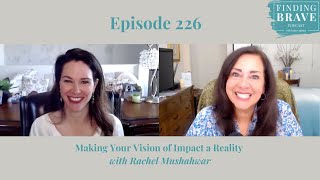
This content was created by Kathy Caprino. This content was uploaded by Kathy Caprino. This is a YouTube video titled "226: Making Your Vision of Impact a Reality with Rachel Mushahwar" created on May 5, 2022. It features a conversation between Kathy Caprino and Rachel Mushahwar. Kathy Caprino introduces her live course and discusses various topics with Rachel, including leadership, work-life balance, and the impact of the pandemic on personal and professional lives. Rachel shares her experiences and insights as the head of North America Partner Sales at Amazon Web Services, emphasizing the importance of diversity, inclusion, and personal growth.
Chapters
Hello, Kathy here. Before today's show begins, I'd love to share some news. In these past weeks, you've heard me talk about my book, the Most Powerful you and the video companion course that we created. Well, now I'm so excited that we are launching a live version of this course, complete with eight weekly online coaching calls with me starting May 12th. This live version allows me to work together with a group of women from around the world to directly expand your leadership strength, communication skills, networking abilities, negotiating your executive presence, and help you overcome the imposter syndrome that impacts 75% of executive women today. If you're facing anything that you feel is in the way of your highest, most rewarding career potential, then this is the place for you. Please do check it out@mostpowerfulyou.com livecourse. Thank you so much. I hope to see you there.
You don't have to be amazing. You don't have to put on this face like everything is great and make it sound that it is easy. You just have to keep going. Crawling is fine because eventually you will get back up.
Hello everyone, this is Kathy Caprino and welcome to my podcast, Finding Brave. I've created this show for everyone who longs to create something bold and brave in their life, to rise up, speak up, and stand up for who they are and to reach their highest and biggest visions. Each week I'll be speaking with inspiring guests from all walks of business, leadership, entertainment, the creative arts and the entrepreneurial world. And they'll be sharing their intimate stories of Finding Brave and offer their best strategies for building your most rewarding, joyful and new meaningful life, business and career. Hello everybody. Welcome to another episode of Finding Brave. I'm so, so, so excited for our guest today, Rachel Mushara. Oh no. Mushuar. I got it. Oh Lord, get it right. Kath. So excited and so inspired. I could barely even press record based on what we were talking about before. I didn't want it to stop. And I know you are in for an amazing treat here and we are going to be talking about inspiration is not enough. What is required to make your visions a reality. And we're going to give you some straight talk and I hope you find this so useful. I do want to tell you you're seeing this in May, I believe May 12th and I've just come off a little time on Miami beach with my son and I just want to throw this in. I think that number one, if we can, I mean many people can't and now is not the time but if we can fit in, travel to a different place and if we can experience different people and different ways of life and different culture and different architecture, it's so inspiring. And for me, I came home committed to making some changes, I'll put it that way. Changes about work, life, balance, changes about my boundaries, who I'm killing myself responding to, when in fact I don't need to. I think that it's an amazing thing to get out of your routine and think about your life in a different way. So I want to start with that idea. But meanwhile, Rachel, thank you so much. I know how busy you are. Thank you for taking the time to be with me today.
Oh, thank you so much, Kathy. And you know, just listening to you, it reminds me of a quote and I'm not sure who said it, but they said if you do not travel, it's like reading only one page of a book.
That's it. That's exactly how I feel.
By the way, it doesn't matter if you travel to a different city city or you travel to a different country or you just decide to take a different way to the grocery store.
That's right.
It's changing up those habits to find something new and to think about things in a different way and to experience.
Yourself in a new way. Right. And that's what change requires. Ah, I love it. Thank you for that. That's a beautiful quote. Now everyone, I want to tell you about Rachel because it's such an inspiring bio and the journey is so inspiring and that's why I can't wait to talk about. We have visions, we have a lot of them, we have missions. But what do we do to create them? Which you've done. So let me tell you about Rachel. Rachel is the head of North America Partner Sales at Amazon Web Services, leading an organization that leverages partners to accelerate, accelerate growth, drive innovation and shape the future. No small vision using AWS technology. She has 25 years of experience developing, implementing and selling technology working at companies including Intel, PetSmart, DHL, American Express, among others. She got her start. I love this. As an award winning engineer in heavy highway construction. I really am dying to know what that was like in what I'm guessing is a male dominated field. But you're going to tell us. Igniting a passion to utilize technology to make things simpler and change outcomes in a meaningful way. From there, she went on to pursue computer programming and began an enterprise IT journey that took her around the world, building data centers. Along the way, she realized her skill set was better suited to Solving customer problems. Problems than writing code. I laugh because you can do all of this. My goodness. And she pivoted to leading billion dollar sales and marketing organizations, developing the vision and strategy to ensure her company's technology kept pace with evolving marketing and organizational demands. One more thing. Rachel is deeply committed to inclusivity, diversity and equity and believes in creating high performing work environments where all, all employees feel represented, respected, valued and empowered. Thank you for being here, Rachel. All right, I have so many questions, but let's start with. You've been at aws, is it a year now? It is. I'm so interested in how you feel your former life, your former roles led to this. And you know, as you talk about that, speaking of vision and mission, I'm guessing that you have an overarching mission above and beyond a particular job, a particular role. And I'd love to hear how all of this ties in. Can you tell us?
So many questions in there, Kathy? I don't even know even know where to start, but maybe we start with just this simple idea that, you know, we talked about inspiration not being enough and what does that really mean? So when you think about what you want to do next or what you want to do in three years, or frankly, you even look at the list that's in front of you of what you need to do this weekend, you can't just think about it. You actually have to have some determination and some direction and then actually application to make it possible. Those things are absolutely key for who I am as a person and how I kind of got to, how I got to Amazon. And I want to share with you a little bit about why AWS, which is Amazon Web Services, In 2020, we were in the midst of a global pandemic. I took a step back, Kathy, and I really started thinking about how can I make a bigger impact, how can I do better, how can I be better and. And how can I create better? And in what type of company wants that? And it's Amazon. Amazon isn't just a company. It's a promise of what the future will be. It pushes the boundaries of smart and connected for every person on earth, but it also also takes its responsibility for creating a sustainable future. And it focuses on how do we do better, be better, and create better. So the more that I learned about Amazon, it just became such a perfect place for me to jump into. And I share with my team. When we think about the terrible pandemic, what I share with them is this. Every year is a mirror for what came before And a window for what is next. While every year isn't going to be 2020, the lessons that we all learned while we were closed up in our homes should make us better every year going forward. And that's part of why I joined Amazon was how do I become a better person? How do I become a better global citizen? And how do I join a company that has got that broad reach and impact? And that's why I'm here, because that's what Amazon is.
I have so much to ask you about or tease out. Can I pick a few themes here and get to the heart of it? Sure. You know, even when we were talking before recording, you have a way of looking at things that's quite interesting and I think, unique. All we hear about is, are we back to normal? And I remember I interviewed Cheryl Hunter and she became a dear friend. She went through a terrible, terrible trauma. You know, raped and abused in as a teenager and when she went to Paris. But she said, when you've been through something like that, there's no going back. There's no let's go back. It's fall forward, move forward. Right. But I think that we need to stop saying let's go back to normal. First of all, I don't even want to go back to what that was prior. Why would we? We've changed and hopefully we've grown. But the way you framed it was. How did you put it? You want to take what we've become. That's what it was. Take what we've learned. Many of us trapped in our homes and, you know, not able to connect all the things we know. But I. The way you see it, tell me if I'm wrong, is maybe it was meant to be, but we've grown into something bigger than we were, even if it was a terrible challenge. And don't get me wrong, I know a lot of people lost their work, their companies, their health, but can you just give us a mindset, a look into your mindset about how you look at these things?
Sure. So for nearly two years, it has been this time of crisis and accelerated change. I mean, look where we're at in the world today. Even on top of COVID with the war in Ukraine and, you know, so many things going on over the past two years, we faced unexpected and unimaginable choices, Kathy, all the while with technology behind the scenes, ramping up businesses and changing how people interact with technology. So for me, when I think about whether it's the impact of the pandemic and the additional Work that got placed on women, or the fact that there were so many children that didn't have access to technology when they were homeschooling and what that impact looks like two years later in schools. All of these are reminders that the world could be different and it is an invitation for all of us to change it. There is no going back to normal. What was normal before. We should never want to go back to. We should never want to go back to a normal where you didn't have children and dogs and cats and parents and caring for elders as part of your everyday presence with your companies. We shouldn't want to go back to the normal where diversity and inclusion and equity weren't part of every conversation. And we certainly shouldn't want to go back to the boundaryless lives that we lived. So for me, this is about that mirror. And what I said was, for me, every year is a mirror for what came before and a window for what is coming next. The lessons from 2020 should make us better every year going forward. I think just based on what you said, 2020 forced all of us to reflect on what was next and what did we want to bring with us into the future and what did we want to leave behind? I really hope that as we go into this new digital world, it galvanizes us back into the physical world, just like you talked about from a travel perspective. But as we get back into that physical world, it's time for us to learn from the past two years and put human back in humanity. I love music and I think this is a perfect quote, as Bono puts it. You too. We are the people we've been waiting for.
Man.
I hope we are. I hope, I hope we live up to it. A little bit of a doom and.
Gloom feeling right now, but I love it. I so love it. You know, there was something I wanted to ask you within that, you know, we're going to talk about your biggest challenges and obstacles that you've overcome. And I would love a lens too, of being a woman in that and everybody. I'll link to it below, but you have a YouTube video on the Wonder Woman fallacy. And boy, I gulped when you shared your story. You'll have to watch it, everyone. But I was, I was sitting on a panel discussion for the International Coach Federation, their business development workshop series recently, and a fellow reached out to me on LinkedIn. He said, My goodness, you. You clearly do so much. I don't know how you do it, but here's my question. If you only had 20 hours a week to work, what would you let go of or what would you keep? And I thought it was such a brilliant question. I'm asking every one of you to do this. Sit down for 10 minutes, 15 minutes. I literally went through and looked at the percentage I spent on everything. And it was very hard for me, although I think I should do it. What the fellow said, let's stop working so hard. But what it did show me was not everything that I find is the most rewarding that I do is the thing that makes money. Some of the most rewarding things I do don't make a cent, will never make a cent. Like being a mentor for the Diana Award in the uk, One of the most rewarding things ever. But let me just ask you this. I'm guessing maybe even work. Life balance is hard. You've got four kids under 16. How do you prioritize? How do you say, and you're at a high level now. In the beginning it's harder. We don't have the clout, we don't have the power, we don't have the authority. But how do you prioritize what you're going to focus on? And I don't mean literally your role, but who you are being, who are you becoming? How do you choose? What makes you prioritize this over that?
Yeah, you know, that's a great question, Kathy. And I want to share some statistics. And this is even before the pandemic, and this is a very US specific statistic, but I think it will help answer your question. Before the pandemic, more than 65 million people. That's 29% of the U.S. population. We're already caring for the chronically ill, the disabled, or the aging family member or friend during a given year. And they spend upwards of 20 hours per week caring for their loved ones.
What percent? 29%.
29%. This was pre pandemic.
Wow.
Pre pandemic estimates also suggest that the majority of those caregivers are female. When you talk about juggling and this balance act between how do I parent as a single mom of four kids, how do I parent and run a $4 billion business? How do you make some of those trade offs? And I'll tell you, Kathy, it's really, really hard. I don't know that there is an answer for what's happening, but what I can tell you is even though there's been a lot of progress for women since the 1990s, real barriers still remain. Getting to where I am took a whole lot of sacrifices. And you don't do it alone. But I think a lot of leaders also put on this picture perfect, here's everything that I am professionally. And they don't tell you about the times that they go to bed crying in a hotel room because they missed a basketball game. I think as a leader we need to start talking about those more frequently and talk about, hey, here's what it's going to take to change. I commonly tell my children what you say no to is as important as what you say yes to. So think about that for a second. Especially as it relates to the 20 hours a week. Well, geez, I just told you that 20 hours a week. Most people, 29% of people are caring for their parents, their friends, their kids. What do you start taking off of your plate and saying no to? The things that I end up saying no to and I have to prioritize are do you choose time with your family or do you choose time with your friends? Do you read a book for pleasure or do you read a book for business benefit?
Right?
And I'll tell you, and you know this, the truth is that that balance and what you say no to and what you say yes to, it's all mixed up there in the middle. One, one week it might be saying no to this and the next week it might be something else. A rewarding life is never going to follow that straight path.
I love it. I want to say two other things and have you think about it, everyone. I'm really interested, Rachel, what you think. I remember as a vice president, my kids were little and again, they're 24 and 27. They were little then. I honest to goodness knew. And it was right after I'd watched two sisters who were CEOs and they were being awarded something. And they both said that at certain their husband stayed at home. And you know, number one, I didn't have that, nor did I want that, frankly. But anyway, the other thing they said, and this is so not casting aspersion, the point is choose who you want to be, not who someone else is. They both said there were times they had to phone in, maybe reading a bedtime story or you know, whatever from they were living in a different coast and their children. I remember saying, I don't want that. I remember saying, I want to be in the fabric of my kids lives. And I wasn't as a vice president, but I knew that what I was about to say was going to stop me from becoming a senior vice president because in my company those people traveled all the time. I Said to myself, and So I was 40 and I'm 61. I don't want to wake up in 20 years and have blown it and blown it in terms of my. My evaluation. And I didn't blow it. You know, I got laid off and then became a therapist. And it was in the fabric of their lives. And, you know, still am, I hope, in a healthy way, they think. But the point is, it's not what I did. It's not necessarily what you did. It's what do you want? What do you not want to wake up in 20 years and say, I blew it. I blew what was important to me. The thing that I think trips people up and I'd love to hear is not only do you have to know it, you have to prioritize it. And you got to make the hard, difficult, unpleasant, perhaps unpopular decisions. Like your Wonder Woman fallacy video where basically you just had a child and you came back in, right? And your boss said, so happy you're back, and next week we'd like you to travel to Blip. And you said, can you tell everybody? I mean, I think this is just words to live by about how you have to manage things. What do you think? Tell us what you think.
Yes. And.
But you didn't say yes. And in the moment you said yes. Went home, probably wept, fell on the floor. What the hell was I thinking? And what is he thinking to ask me that? But then you went back and the and was what? Just so we understand, what was the.
And the. And was. Here's what I need to make it successful, right? So.
And what was that?
Huh? Geez.
A long list.
It was a long. It wasn't a long list. But regardless of. If you, you know, I love the. I love that Wonder Woman story because so, so many of us try to be Wonder Woman and fit into this life that really doesn't exist. And as you said, you have got to come at this and find you. Everybody starts, everybody finishes. But the difference then is what we do with the time in between and how we make it our own.
That's it. And you know, you are going to end up at the end of it. So when you look back, what do you want to have done? And, you know, people are vague about that, Rachel. I have a career path assessment. They're like, I want to be a good mother. Good. No, I mean, what do you really want to have done? Think about it. Anyway, back to you. Back to you.
So that's why inspiration isn't enough.
Well, that's it. So Tell us what you think is required to achieve. And I'm not going to say achieve what you achieve because not everybody wants that, but, you know, you started in a male dominated field. All right. You know, Rachel, I'm really interested. You're obviously at a very, very senior level. I'm interested in the representation of women, you know, at Amazon, at high levels, boards, you know, what, what can you share about that?
Yeah, another great question, Kathy. Amazon really runs its business based on leadership principles and they recently added two new leadership principles around striving to be Earth's best employer. And success and scale bring broad responsibility and those two LPs are really a great step forward. So at AWS, we've made progress with inclusion, with diversity and with equity, but it isn't enough and it's not fast enough. Kathy, we've got so much more that we can do. And I think that ID and E or DE and I, whatever companies say around inclusion, diversity and equity, it has to be not just at the forefront of every conversation and every decision. We have to make sure that as technology continues to evolve at the alarming rate that it is, that we're keeping pace with the changes as it relates to diversity, inclusion and equity. I'll tell you, at Amazon, we actively recruit people from diverse backgrounds and we take steps to ensure that our employees have got a sense of belonging, of value and opportunity. And I could spend the rest of the podcast talking to you about all of the great programs that Amazon has put in place, but for as much as we've accomplished, there's still so much more for us to do. It's going to take everyone to create the future we all need. Right back to that Bono quote. We are the people we've been waiting for.
I hope that's true. Let me ask this, and I'm aware of our time. Just maybe two more questions. First of all, we'll end with how do you think, what do you think people need more of to really create what they want? But we'll get there. What do you think in terms of, you know, you were in heavy construction, highway construction. What do you think has been your key to success, you know, as a woman in these, in these highly male dominated fields organizations? What do you think? I'm really dying to know what allowed you to succeed at this level.
You know, I wish I could tell you it was one thing, Kathy, but it's not just one thing. I think it is. We all go through these different phases in life where you're singled, where you're building Your career, then you get married, then you have children. And it's these ebbs and flows and through those ebbs and flows, what drives people and that determination and that direction changes. But I think a lot of people aren't agile and aren't super flexible to recognize that. We talked about kids. What I say is, when I think about my job, I'm just one person. But to my kids upstairs, I'm everything. And I think every single one of us second guesses ourselves. And all of us want to quit sometimes. But life is kind of like that, right? It's tragic, it's triumphant, it's messy, it's magical, it's sacred, it's spectacular. You've got kids when you know at they're crazy and then they're crying and it's messy. But that's kind of what life is. You've got to just keep going. That's. That's all you have to do ever. You don't have to be amazing. You don't have to put on, you know, this face like everything is great and make it sound that it's easy. You just have to keep going.
I love it.
Calling is fine because eventually you will get back up, but you've got to keep going and recognize that different points in your career and different points in your life are going to require a different version of you.
I love that. It says two things to me. Timing is everything. People sometimes say, come to me, women, and they're eight months pregnant. I want to start a new business next month. And I'm like, you're already starting a business. This. And it's in your belly. And they're like. And often they haven't had a kid before. And I'm like, just wait till you have the kid and then we can talk. And, you know, a year and a half later, what was I thinking? I love it. But timing is everything. You know, we have to go with the critical demands that present themselves. So don't be hard on yourself. But there is another thing that your comments bring up for me. You know, my latest book, Most Powerful youl, is about the seven most damaging power gaps that 98% of professional women face. And men, too. 90% of men. But number six is losing sight of your thrilling dream for your life. 77% say they've lost sight. So what I want to grab ahold of people. Listen to Rachel. Look, there's ebbs and flows. There's horror, there's exhaustion, there's. You break down sometimes there's depression, but there's also gloriousness and talent and brilliance. But don't lose sight of where you the thrilling dream of your life. That's how I put it. And that can be far away. I always say, do what you do what you must to stay afloat, but always plant the seeds for your future self. Don't forget there's a future self. So to that point, Rachel, last point, I know you got to go. How. What's one of your personal greatest tips for manifesting that future self? Not losing sight. Not losing sight of it. How have you done that?
I think for me, right, your life has to be bigger than you. When you think about all the amazing people that you've interviewed, Kathy, my guess is the people that have left the most impact with you are the ones that make you feel something. It's not just about the words or the conversations. It's about how do you make people feel right? And I believe Maya Angelou says, you know, people will not remember what you say, but they'll remember how you made them feel. So for me, if there's one thing that I wake up every single day and tell myself, and this falls right.
Into.
One of the Amazon leadership principles, which is around success and scale bring broad responsibilities. Every single day, we have to wake up to be better, to do better, and to create better. And there is an old adage that I was taught growing up, leave a place better than you found it, to leave the world a little bit better, to know that just one life has breathed easier because you have lived, that is to have succeeded. And that's day one. And that's Amazon.
That's beautiful. I'm so glad you feel that about the place you work. So many do not. But it's a beacon of light to feel that you're at a place where you can be that encourages you to be better, which encourages risk, encourages failure. It can't be better if you're not failing miserably at something to learn.
So, oh, I fail a lot.
But we get good with that. I'm so happy to have spoken to you today. Thank you so much for your candor and sharing who you are. Thank you. Where do we learn about you? Where do people find more about you? Where do we go?
You can find me on LinkedIn, RachelMushiwar and I am on on Twitter, usually after one of my children does something really stupid. And I'll tell you, here's a tip for new parents. You can either have a full drawer of utensils or you can have kids. And I promise you if you understand that tip, then you've had kids because you find spoons in the most random places. So you know, under the bed.
All right, everybody, I hope you're inspired. If you have questions, if you just responded viscerally to something. Wherever you see this, all the social platforms, please leave us a comment. We love to hear and we hope this has been inspiring for you. Thank you again, Rachel. Come back soon. Have a wonderful week and we will see you next time.
Thank you, Kathy. Take care.
Thanks so much for joining us today. And please don't forget to check out findinggrave.org for more programs, resources and tips. And tune in next time for your weekly dose of finding grave.
More from Kathy


Elevate Yourself, Elevate Others, and Amplify Good | Chris Cooper | Finding Brave Ep. 334

Finding Brave Epis #333: How Leaders Can Harness AI Without Losing Their Humanity, w/Bennett Borden

Finding Brave Epis 332- How to Stay Brave, Valuable and Visible in the Age of AI, with Raman Rai

Finding Brave Epis 331 - The Power of Positive Disruption, with Dr. Patrick Leddin


Finding Brave Epis 330 - Being 40: Letting Go and Embracing Who You Are, with Stacey Lindsay

Disrupt Career Reinvention with Kathy Caprino - via The Disruption Lab Podcast w/Patrick Leddin

Creating Neurodiversity-Friendly Work Cultures: Simple Workplace Adjustments Matter

Finding Brave Epis 329 - How To Create a Neurodiversity-Friendly Workplace, with Kristen Pressner

Finding Brave Epis. 328: Reclaiming the Power to Trust Your Own Voice, with Dr. Cindy McGovern