248: Essential Career Strategies for Underrepresented Women, with Octavia Goredema
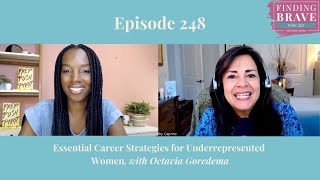
This is a recorded episode of Kathy Caprino's podcast Finding Brave (YouTube/podcast) featuring Octavia Goradima, author of Prep, Push, Pivot. The conversation centers on career strategies for underrepresented women—especially women of color—including knowing and documenting your worth, negotiating pay, defining non-negotiables, building mentorship/sponsor networks, and the need for organizations to invest beyond hiring metrics. The episode also includes Octavia's biographical background (fellow of the Royal Society of Arts; appointed to the Order of the British Empire) and practical takeaways for individuals and leaders.
Questions this video answers
January 12, 2023.
Appointed a member of the Order of the British Empire (MBE).
octaviagorodima.com
She states the investiture occurred 10 years earlier.
Chapters
Money matters. But for me, worth also means more than that. In my book, I talk about the importance of your career, values, how you work, the environments you want to be in, what sets you up for success, how you want to be treated in the workplace, what fuels you and the things that you want to do more of. All of those things matter.
Hello, everyone. This is Kathy Caprino, and welcome to my podcast, Finding Brave. I've created this show for everyone who longs to create something bold and brave in their life, to rise up, speak up, and stand up for who they are and to reach their highest and biggest visions. Each week, I'll be speaking with inspiring guests from all walks of business, leadership, entertainment, the creative arts, and the entrepreneurial world. And they'll be sharing their intimate stories of Finding Brave and offer their best strategies for building your most rewarding, joyful, and meaningful life, business and career. Hello, everybody. Welcome to another episode of Finding Brave. I'm so happy to be here. It is actually October when we're recording this and you're seeing this in January, and I'm looking out at the leaves changing, and I always bemoan the season change, and then I'm so happy it's changed. I don't know about you all, but here we are in fall and loving it and hope you're doing well. And I am so excited to have our beautiful, beautiful guest today, Octavia Goradima, originally from England, now from Los Angeles. And you can see her amazing book, Prep, Push, Pivot, Pivot. And we are talking all about essential career strategies for underrepresented women, which is something that's near and dear to my heart. And you have your own special take on all of this. So thank you so much for joining me, Octavia. Thank you.
Oh, thank you, Kathy. I'm so thrilled to be here.
So thrilled. I always love to tell listeners how we learned of each other. And Octavia, I'm forgetting, I certainly know I have your beautiful book right here.
Oh. So we were both interviewed for an article in Elite Daily. And then we were both interviewed like literally maybe 10 days later by CNN.com and so it was just so much faith.
But it was the Elite Daily. And we will link to those. We were in CNN business, I think, on Quiet Quitting. Was the Elite Daily on that too yet?
No, it was on a different topic. I can't remember now off the top of my head what the topic was. It was completely different topic. So, yes, we, we were both interviewed in very short space of time in two identical pieces. So that's how we.
I want to amplify this whenever that happens. And I see three people interviewed in an article. I'm interviewed, I find them on LinkedIn, and I write them.
Every once.
How often would I say this happens? 30% of the time, the person writes back. And you were so gracious. Gracious. I remember that. And you said, oh, you're, you're looking like you're doing cool things too. Let's chat. And that, people, is such an indication of a generous, warm spirit, a non competitive spirit, a collaborative spirit. And that is you to a T. Right?
Oh, well, thank you, Kathy. Yeah, I, I firmly believe that. I personally get really excited and, and inspired by when people share and when they are. When you see people operating in their zone of genius, it's just, it's just really motivating and exciting to me. So, yeah, I love connecting with people and I love learning and I love absorbing.
Oh, and that's you. That's your heart. I'm so happy you're here. All right, people, let me tell you about Octavia. Originally from England, Octavia is a fellow of the Royal Society of Arts, and she was appointed a member. Oh, no, let me go back. Let me, let me start there. Octavia is a career coach and author of the great book Prep Push Pivot, a career guide for underrepresented women in the workplace. And now we can say, originally from England, you are a fellow of the Royal Society of Arts. And Octavia was appointed a member of the Order of British Empire by the Queen, one of the UK's highest civic honors in recognition of war. Can we even start there? I'm so gob. Smacked in love with England, in love with the Royal family. I cried for an entire day during the Queen's funeral. How does one get recognized in that way? Can you share. Share that with us? Do you mind?
No, I'd be happy to. So twice a year, the Queen and now King Charles recognize civilians for exemplary work. And it's the. The monarch's birthday honors list, which happens in June, and the New Year honors list, which happens at the end of December. And I had no idea that I had been nominated or selected until I received a voicemail from the Cabinet Office, the UK government Cabinet Office, asking me to call quite urgently. And it turned out they'd been trying to get hold of me without success because I just relocated back to Los Angeles from London for the second time. Second time I did that. And so they had written to me, but the letter had not gotten to me. And so they, like To. Well, they reach out to everybody before it's announced. First of all, to let them know and then to ask if you're. If you would like to receive honor that is being.
Does anyone say no?
Well, maybe some people. Some people say no. And some people have turned down knighthoods and damehoods and, And. And other recognitions. And so it was a complete surprise. I've always. I've always believed in paying it forward. And the work that I have done at multiple points throughout my career, which is what ultimately led me to becoming a coach, was really about opening doors of opportunity for others. And I was doing work in London that was connecting other black women in business with one another, peer to peer, but also connecting school children with role models. I never had those role models when I was growing up, and I. I knew women who were doing fantastic things, and I wanted to connect those dots. And so the work that I was doing there and the work that I've gone on to do in different shapes and forms contributed to that recognition. But, yes, it was a. It was a complete surprise when you didn't.
You didn't fill out an application. Like, some of this stuff kills me in the U.S. you know, I had.
No idea, no idea that I was being considered or vetted or any know who had nominated me.
You don't. You still don't know?
Still don't. And so it was. It was a complete surprise. And when the time came for my investiture, because they announced the honors on a set dates, it's kept secret and embargoed until it's unveiled in the Times and different newspapers and. But when my investiture ceremony happened, I was living here in Los Angeles. I flew back to London, and the investiture seminaries can happen at different locations, but mine was at Buckingham Palace. Oh, and mine was actually with King Charles, because on the day of my investiture, the Queen was not very well, and so he was overseeing proceedings that day.
Was that recently then?
It was 10. 10 years ago. It was 10 years ago. What a story.
So actually, the King, I mean, it's just too beautiful. But there's such so much beautifulness about it that someone anonymously nominated you that you didn't even know. And it's truly because of the beautiful work you've done.
Oh, well, thank you.
You couldn't. No one could deserve it more. I'm so thrilled to hear that story.
Oh, thank you.
So let's. Let's dive in. I want to know why you wrote this book. And, you know I. I'm guessing, you know, I can understand why it's so important to you, and it's a mission to help underrepresented women. But before we do that, I was telling Octavia before we pressed record, my guests have a prep form that they fill out. And I asked, what are three key bullets that you want listeners to take away? And this one just stopped me in my tracks. Number one, know your worth, even when it's not reflected back to you. I don't know why that just hit me in the heart. I think because I've lived it over and over and over. But can we start there? What does that mean to you? Is that kind of the heart of the work that you do? Just tell me about that.
Yeah, well, that statement is one of the opening statements in my book, Prep, push, pivot. Because, you know, I'm a black woman, and there's so much that goes into navigating the workplace, period. So much and so much that is unseen. But what I have learned over the past two decades, since I started my career, is that validation, if it comes at all. But validation comes a long time after. You've often had to do a lot of things, a lot of things that might be invisible to others. And there'll be a lot of times when there might be things that you know you are qualified for, or the amounts of money you know you should be earning or opportunities that you see others being offered, and yet the doors remain closed for you. And I wanted to remind people that not everyone will see your worth, but it's really important for you to hang on to your worth and to understand your worth and to understand. To really embrace your potential. Not just in the good times when you get the promotion or when you land the role with the great title, or when you get interviewed by CNN Business, or when you publish a book, or whatever the milestone moments are for you. It's not that moment. It's what came before it and what you have to do to get there. And there'll be some people who will champion you and will reach out and say, hey, can we connect? And we'll share just like how you did with me. But there'll be times when people don't do you. There'll be so many times when you hear no, or when you're not invited to the meeting or you're not, you know, progressing in an interview process or whatever. The thing is, there'll be so many times, and it's. It's really important to. To hang on. To hang on to what matters most to you and don't give up on you. So that's what, that's so great.
Let me dive into that and truly ask you a question that I haven't asked on this podcast in 200. And what is it? Blip. Episod. You know, and, and I, before I ask it, everything you're saying, you know, I'm the ripe old age of 62, I've been through a lot, and what you're saying still is incredibly potent in my own business, in my own life, after all of these years, after changing my career three times. It's not a one and done. Yeah, you, you have to, we have to hang on to our, our belief in ourselves and our sense of worth, regardless of what the world is saying our worth is.
Yes.
But let me ask so that people can really understand. Worth tends to be a word that maybe we refer to around financial finances.
Money.
So when I say know your worth, what's difficult is that is often assessed through external input.
Yes.
In other words, I. Let me give an example. I train coaches and they often say, what should I charge? Now, a brand new coach with six months experience, I don't think should charge a thousand an hour.
It's.
Why, there's a long list of reasons why. But. So worth tends to be assessed by how much you can deliver, how much is between your eyeballs or behind your eyeballs, all of that. How, if we're saying know your worth even when it's not reflected back to you, how do people assess their worth?
So I think there's two very important strands there. And money does matter, especially for women, especially for women of color in the workplace. It's. Yeah, we know we statistically earn less than white men across the board.
Less than white women. Unfortunately.
Yes, yes. If you're a woman of color, significantly less. And so many matters. But for me, worth also means more than that. In my book, I talk about the importance of your career, values, how you work, the environments you want to be in, what you, what sets you up for success, how you want to be treated in the workplace. You know, what fuels you, all of the things and the things that you want to do more of. All of those things matter. And of course, money is also a really important measure of that. And, you know, getting money right is really hard. You know, it's, it's really hard. And people assume, well, once I get to this point, I've done it. Oh, no, it breaks my heart to say, you know, I, I work with companies to support their underrepresented professionals with coaching and programs and workshops. You know, I work with women who are blazing trails. Blazing trails in their organizations, in their industries. It's not uncommon for me to open Fortune. I'm like, oh, there's someone I've worked with. Right. It's not uncommon even, but even at that level. And of course, coaching, as you know, confidential. And what is shared between in that dynamic is confidential. But it never ceases to amaze me what I hear about people who are leading organizations, divisions suddenly learning they're being shortchanged dramatically out of nowhere, people who are reaching for that next step and still being told, you know, you need to.
A little more, little more. You need to do a little more. Yeah, I don't know what that is you need to do, but you need.
Aren't you grateful? Aren't you grateful for what you have? Can't you be grateful? You know, all of these things? And so it's. What your worth is, is going to be very personal to you, not just in terms of what you earn or what you want to earn. It's a very, very personal conversation because it involves a lot of different components. But it's really important to hold on to that. Especially, we often use our voice when it really matters to advocate for ourselves. And sometimes that lands, sometimes it doesn't. I have had times in my career where I navigated a very toxic work environment, held in there, delivered for a year with a micromanaging boss, and at the end of that year shared what I had added to the organization, negotiated a pay rise, only to be told a few weeks later that that conversation hadn't happened and it wasn't remembered. There was no recollection of that. I have, in a similar. Another organization, done the same thing, and yes, been recognized and been rewarded. So you can't, you can't control what the outcome might be when you use your voice. But what you have to control is what you are reaching for and what you are pushing for and what you know you want that is within us and that's what we have to hang on to. So would you.
Would you agree with this? And if not, please push back. Challenge is great. You know, power gap, number one in my book, the most powerful you is not recognizing your special talents, abilities and accomplishments, which is exactly what you're talking about. So would you agree that a corollary to what you're saying, I think is before anything external can happen, you have to know.
Yes.
What you bring.
Yes, I 100% agree with that.
And I'll go Ahead.
One of the things I, I, I talk about, and if you're coached by me, you know this already. But we have to continually track our accomplishments. Small, large, monumental, even the things that we don't think have significance. Because it's only when you stop and reflect on the bigger picture that you can start to connect the dots and see the impact you're making and also how you are. And so I encourage everyone, don't wait till the end of the month or the end of the quarter or when your performance review rolls around to start thinking, hey, what did I, what did I do in the past year? No, no, no, no, no, don't do that. As things happen, as you make things happen, as you solve problems, as you learn how to do something that you maybe haven't done before, as you support someone else and help them do something that they've never done before, Whatever the things are, document them in that moment and reflect on them, because there'll be times when you don't feel like you are moving forward. There's going to be times when you're like, oh, gosh, this was a tough, this was a tough week or a tough year. Tell me about it. Right? Yeah, nothing's going the way I wanted it to. Those are the times when you have to reflect. You know, when I, when I was striving to become an author, there were, there were no's. There were many no's before I got the yes that mattered. But I remember after one conversation with a prospective publisher who, we were only having the meeting because there was interest there, right? And there was interest there. And that's the reason we're having the meeting. And, and that person said to me, do you know what, Tavia? I, I just don't know what you've been doing over the past few years. Really. What, what have you been doing? And that really sat, what a way to say that. And what she was looking for was perhaps set metrics in terms of, I don't know, interviews or, I'm not quite sure what she was looking for, but that's that with me. Then I went back and I looked and I really dug deeper in terms of what have I been doing over the past few years? And looking at this, and I realized, my goodness, I've done more than I would have thought I could have ever done. And so I realized it wasn't enough for that one person, but then it was more than enough for me, and I had to believe that every no would get me closer to a yes. And it did. It did. But if I'd let that feedback or any other feedback that you, you know, it happens to all of us. Right. If you let that stop you, if you let that stop you, that person's not going to remember that conversation. That person's not going to remember saying that to you. But you might hold on to that, and that might make you, you know, hold back or maybe feel like, oh, do you know what? I'm not ready to do this. And there can be feedback that's constructive, that can actually propel you and perhaps light a fire underneath you. And, you know, whilst I was disheartened in that moment, I stopped and reflected, but then it lit a fire under me, and I was like, no, I've done great things, and yes, I will continue to do more. And yes, there's more things I want to reach for, but I was proud of where I was at.
What a story. And there's 15 things I want to, you know, punch out on that. But one of them is, first of all, that person sounds snarky. There's a. There's a lot of ways to say that. Instead of, you know, what doesn't seem like you've been doing a lot over there. Okay, that. That explains a little about that personality and those values. Right, okay. But secondly, you know, I'm reading all about mindset again. I'm reading Viktor Frankl's book, man search for meaning, which I cannot get through without weep. It's so powerful, but it's about finding meaning. And meaning having, even through the most brutal suffering and. And torture, if you can find meaning in why you are existing that day, it will propel you. But sometimes when I get snarky comments like that, yes. Immediately, you know, I'm like, what? But they can propel you exactly to what you did. You went home and went, wait a minute here, let me assess. And the answer was, I'm proud of that. So what you probably teach, I'm guessing, in coaching is, and this is something that's extremely hard for women. I'm sorry, I hear it every day. Hundreds of women. You need to know. In fact, Peggy Clouse, I think is her name, she wrote a book, how to how to toot your own horn. No, no, no. What is it? Yeah, how to toot your own horn without blowing it. Is that the best title ever?
Yes.
But she talks about bragalogs having these short sound bites.
Yes.
Well, here's what I've done. I've created this course and that. And now so many women I know, because I help them on LinkedIn are so resistant to doing this, to having. Well, here's. You want to know what I've been doing the past year? Here's four things that I'm so proud of. But we have to have those ever ready in our mind because there are opportunities, whether it's in the elevator. You know that elevator pitcher word. We hate that term. We hate. But it shouldn't be in the deep vaults of your mind, what you've been doing. Because every opportunity, standing on the soccer field, watching my son many years ago, was an opportunity to connect with someone who said, you know, I know someone who could hire you. And would you agree with that? Do you?
Oh, I totally would. I agree with that. I would totally agree that. And, and I'd also add on top of that is don't be attached to what the reactions are to when you share, because there could be someone who silently, silently is inspired and motivated and can perhaps make something happen for you much further down the road than immediately. There might be someone who immediately says, oh my goodness, fantastic. Well done, Octavia. And yes, that feels nice. But it's just as powerful when someone silently absorbs and is inspired or learns more about who you are and what you bring to the table. And also there can be the comments. I, I, I shared something on LinkedIn recently and, and a DM that I got from someone in my network was like, do you really think you should be sharing that? Do you really think you should, do.
You know this person well?
Not, not well. It's someone, it's someone that I, I've met at an event and, but you see, some people don't get, aren't comfortable, uncomfortable with that. And that is a reflection on that person and themselves and where they're at and, and their own feelings. It's got absolutely nothing to do with me. And I have enough emotional intelligence to recognize that. But we can't get attached to necessarily what the immediate response is because there might not even be one. But it's important for us to continually, continually be ready to share. My friend Stephanie calls it shining unapologetically. And I love that.
That is beautiful. And I want to go back to something that you said earlier about knowing your worth. I, you said, you know, what are your values? I would say our worth is also quite clear in terms of how we show up in the world.
Yes.
So I would invite everybody to it's your, you know, we can call it your brand. That word has just been so overused in so many ways. But I would Love everyone to think right now about how people experience you. What is it that you do when you walk into a workplace, into an office or on a zoom meeting? What do you make people feel? You know, as we know, Maya Angelou said, people will forget what you did, forget what you said, but they'll never forget how you made them feel. I think that's also part of our worth. Like I, I'm thinking you, you would never have said something like that on LinkedIn to someone else. Now if you, it was a friend and you were concerned maybe in what they shared, you would come from a place of love you would come from. I saw that you shared that you would, you know, and maybe ask a question. Yeah, that sounded really difficult. Are you holding up okay? But that was a judgy, put down type of a question. Would you agree with that?
Oh, yes, absolutely. And so, you know, but I, I also recognize that I think women in particular with, we're under so much scrutiny not. And it's often from each other and that, and that, and that can be very, very difficult. And you know, a lot of people are comparing and contrasting and like, well, perhaps you shouldn't be doing this or perhaps you should be doing that and less or more, you're never going to be able to please everybody. It's just not possible.
Why would we want to, you know, just not possible. No, we're unique and special and, and part of that I want to say I'd love your thoughts. You know, I'm, I think I'm a gentle, compassionate, loving person. I think people would say that, but people say she's firm, she can, Kathy can be strong. But I also, after all this time, I do hold a belief of don't mess with me.
Yes, absolutely.
Even think of messing with me because it's not going to go well for you. And I, I don't mean that in some snarky, horrible way. I just mean don't do it, move on. What do you think about that?
Oh, I agree. It's very important to know what your non negotiables are. And that's another thing that I emphasize in the start of my book, Prep, push, pivot. Because you know, there will be certain things that are non negotiables for you in terms of that, things that enable you to do your best work and just that align with your values in terms of, you know, how you operate. And I think that's really important to hold on to. It is so important to hold on to because yes, there will be people who will Take advantage or will try and walk all of you or just not respect you. And it's the respect piece that I think, especially as a woman of color in the workplace. And you know, it can manifest in so many different ways that are tangible and sometimes intangible.
That's the thing, right? And the intangibles make us crazy. Like when I faced full on sexual harassment, I was so confused. Like, what is this and what gives him the feeling he can do? I'm so confused. What, you know, what do I do and what is it? So when we are mistreated, often it's, we're just in the soup about it. Like we don't know what hit us.
Yes, it's incredibly isolating and you're on the receiving end, but then also having to navigate how to respond to that and at the same time trying to do a job, you know, it's, it's an almost impossible situation that you haven't created that you're having to respond to. It's incredibly, incredibly difficult.
You are so right. And aren't we lucky to have you helping people? What else do listeners need to understand about either they are underrepresented women and they're listening, or others who are in the dominant culture that do not understand the plight of under underrepresented women. And, and I do believe everything you're saying refers to or helps any group that's underrepresented. I really do. But what else do people need to understand?
I think the thing to understand is that a lot of people, and I say in really broad strokes here, just assume that once certain things happen, that's great, and it doesn't mean those things aren't great. When you perhaps have, as an organization really invested in hiring diverse talent and you're seeing leaders, you know, from different backgrounds, you know, in your organization. But what can sometimes be forgotten is that for every barrier that is broken, whether that's you at the start of your career and getting that opportunity or making it as a manager or becoming a director or VP or hitting the C suite, breaking barriers hurts. It's, there's a, there's a quote that I share my book from Kamala Harris about. People assume that you, perhaps you're pushing, you're pushing, you're pushing, you make it to this barrier. And yes, it's fantastic. But what, what people don't see is what it's taken to do that and also what it can be like on that other side is not always the same as how it is for others. And so it's about understanding that it's not just about the metrics that you have, and it's not just about the people that you have in, in certain roles, whatever levels of seniority. It's like, what is that experience like for that person? What do they need to thrive? How can we pay it forward for others who is following in those footsteps? And about making sure that there's, there's a pipeline and that there's also just really open conversations and dialogues and not having assumptions. And not having assumptions as well, I think is really important, too.
So you. Am I getting you? You're saying that?
Yes.
Like from a leadership or a DEI perspective. Good for you. You moved the needle from 2% to 42%. That metric in and of itself isn't telling the full story.
No.
And so what? It's conversations we need. What else do we need? Investing.
Investing in the career advancement of all underrepresented professionals, regardless of levels of seniority. And don't assume just because you have people that are in certain roles that their ambitions stop there, right? No, they don't. There are, there are only two black female CEOs in the Fortune 500 right now, you know, and that's actually a record at the moment. For many, many years, there was just one or, or none at all. You know, ambition doesn't stop once you, once you hit a certain point. And we also, we don't want to forget about junior, more junior employees, too. You know, I often have individuals who reach out to me directly because they've read my book and they're like, I'd really love to work with you as my coach. And I often say, can you find out if your company will provide you with a professional development budget? Because, you know, coaching is expensive. Kathy. It's one of the main reasons why I wrote my book, because most people just don't have the means or the budget to pay for a coach until they've gotten to a certain level of income in certain stage. And quite often the more junior employees say, oh, I don't have access to those types of resources. Or that might be a one and done. You know, in Black History Month or Women's History Month, there'll be a talk and I can attend that. But outside of that, unless you have a mentor, and I believe we all need more than one mentor or sponsor in your organization who's invested in you, you are navigating your career alone. And what people often forget, when it's an underrepresented represented professional, it's not just that person in the workplace, often in our own networks, outside of work, in our own communities, we are the only two that are doing what we're doing. Wow. So there's a loneliness in terms of just how you're navigating your career, but then also when your work day is done, there might not be many people in your immediate network who are doing what you are doing. And so it's incredibly important to invest continually in the career advancement of the diverse talent that you've worked so hard to hire in the first place so that you don't lose that talent.
That's so beautiful. What you're saying is so powerful. And that does remind me something that makes my head explode. If I hear from one more erg for Women employee resource group that has zero budget, I'm going to really get mad. How can you have. And, and these are big, well known organizations I'm hearing from. I'm sorry, we have no budget. Oh, so you're asking the women who are already underrepresented, who are already probably, you know, working harder than maybe their counterparts, you're asking them for no money to run in a networking summit.
Yes, yes.
With no outrageous funds.
But it's not, it's not uncommon. And you know, I, I often see people who are leading employee resource groups and business resource groups and employee networks who are really doing two jobs. They're doing their day job and they are doing that role and they might get some recognition occasionally for that, but there isn't really that broader infrastructure financially to support the work. But also just in terms of their own careers. Their own careers.
You know what, Sorry, we're cultures. But where you put your money is where we know that you value.
Yes.
And if you say we care and you're checking that off in the DEI box, but there's no budget, it's, it speaks volumes. So I hope anyone listening goes to their HR team and says, you know, listen, we know that we have five ergs and none of them or the women's one doesn't have funding. It's got to change. This is not a nice to have people. Now you, it's, you're riveting how you talk about this. And so tell us one more strategy, Octavia, that we might not know about. That is essential if you are underrepresented or feel underrepresented or have not been, you know.
Yes. I mean, I started to touch on it just briefly, but I'd love to go into it in more detail, which is how important your circle is in terms of having, whether it's official mentors or unofficial mentors or sponsors and advocates that can support you in your career. And also remember, even if you're looking for those relationships yourself, don't forget how you can be that person to someone else while you are simultaneously navigating your next steps. Because even if you're not where you want to be yet, guaranteed there is someone who's looking at you and would like to be in the place that you're in or have had the experiences that you've had, even if you're at the start of your career, there'll be people who are going through school who want to be where you are. Even if you're at the midpoint of your career and you're trying to push through right to, to get to director or vp, there's someone who would love to know how you got where you are. So even while we are looking and growing and stretching and reaching forward, don't forget, don't forget the women who are looking up at us. And we can't always. There's so much that we're navigating at work and in our own lives, especially if we have families or caregivers or just have additional responsibilities. We can't necessarily be all to everyone. But there's so many things that you can do that don't take much time. Whether it's giving someone encouragement or having a candid conversation, or sharing, you know, how you negotiated your salary, if you've done that successfully before, or how you, you know, landed an opportunity. All of those things are helpful to someone else. You know, I, as a first time author, spend time talking to other people who want to write books and haven't done it before. Because even though I'm, I'm not an expert, I'm a first time author. Just what I have done to get to this point is helpful to someone else who wants to do the same. And their journey will not be the same as mine. It won't be. But the perspective can still be helpful. And so I think when you are looking at terms of what you want to do next, be really intentional about telling people what you want to do next, what you're looking for, the type of support that you're looking for. It might not be the person you're talking to can help, but they might know someone who can or them just hearing what you want to do might ignite something or a suggestion that you wouldn't have known of otherwise. And just be very, very intentional about that. You know, I'm A fellow of the World Society of Arts. You mentioned that in your warm welcome to me. And I was on the steering committee for a mentoring program that we introduced a few years ago for our fellows, and I served as a mentor. It was great. But then on the second year, I raised my hand, and I was like, I need a mentor now. And because I was very clear about what I needed, they found me four mentors. Oh, love it. Love it. And when I said what I was looking for, I didn't know if I would be able to have it, because people had to raise their hand to be a mentor. But what they did was they went to people who hadn't raised their hand, say, hey, there's a fellow Octavia. She wants to do this. You have done this. Could you have a conversation with her? And those people said, yes. Now, if I hadn't said very clearly what I was looking for and why, that wouldn't have happened.
Oh, I could listen to you all day. And that supports know your worth. Here's the problem. You know, power gap number three. Reluctance to ask for what you want and deserve. So many women and, yes, men, too. But I think it hits women harder in our society, our culture. They don't even know what they want to ask for. And further, they're very intimidated to do it. But, look, it can't hurt you to ask. It cannot try. And the final thing I want to really amplify is your point is so, so brilliant about when we mentor other people, our own confidence builds. We are reminded every day that we, while we may feel we have a long way to go, we are so many steps down our journey, down our path that other people look to and say, oh. And that is a transformative experience to be a mentor, isn't it?
It really is.
Oh, I love it. All right. I know you have a hard stop. I have to let you go. Where do people learn about you, Octavia? Where do they soak it all up?
So thank you so much, Kathy. This was. This was so great. You can. You can learn more about me@octaviagorodima.com that's it.
That's pretty easy. And check out Prep, prep, push, pivot. Is that a tongue twister for other people? It can be. I love it. I love it. It's a great book. I have it right next to me here. I hope, everyone. Thank you, Octavia. You're so inspiring. I hang on to every word you say. It's just beautiful. I hope you're inspired, everyone. We would love to hear from you. We want questions, we want challenges. We want to understand what you're going through. And wherever you see this posted on YouTube, on LinkedIn, on wherever, leave a comment or a question, we will do our best to support you in any way we can. Have a wonderful, wonderful two weeks. And Octavia, will you come back again? I need more. Maybe we'll be in CNN business once again. That would be fun. Have a wonderful week. Thank you. All right, everyone, see you next time. Bye.
Thank you. Bye.
Hi everyone, Kathy here. So excited to tell you that I'll be offering a free 90 minute webinar on January 13th on how to close your confidence gaps now and build your best and happiest career. You'll learn powerful confidence boosting actions based on years of research that I've done and from my latest book, the Most Powerful you. This is information you won't hear elsewhere because it's based on everything I've personally learned over 40 years of working, including as a director and VP in my corporate life, to serving as a marriage and family therapist, and 17 years of coaching and training over 20,000 professionals across six continents. What you'll learn can truly change how you're operating so that your professional endeavors will uplift you while also paving the way for a much happier and more balanced personal life. Bring your questions to the webinar. I'm happy to address them. Sign up today@kathycaprino.com BuildYourConfidence2023 let's make this a different kind of year where you finally shift and heal beyond where you are today to a happier and more satisfying career and life. See you there. Thanks so much for joining us today. And please don't forget to check out findingbrave. Org for more programs, resources and tips. And tune in next time for your weekly dose of finding brave.
More from Kathy


Elevate Yourself, Elevate Others, and Amplify Good | Chris Cooper | Finding Brave Ep. 334

Finding Brave Epis #333: How Leaders Can Harness AI Without Losing Their Humanity, w/Bennett Borden

Finding Brave Epis 332- How to Stay Brave, Valuable and Visible in the Age of AI, with Raman Rai

Finding Brave Epis 331 - The Power of Positive Disruption, with Dr. Patrick Leddin


Finding Brave Epis 330 - Being 40: Letting Go and Embracing Who You Are, with Stacey Lindsay

Disrupt Career Reinvention with Kathy Caprino - via The Disruption Lab Podcast w/Patrick Leddin

Creating Neurodiversity-Friendly Work Cultures: Simple Workplace Adjustments Matter

Finding Brave Epis 329 - How To Create a Neurodiversity-Friendly Workplace, with Kristen Pressner

Finding Brave Epis. 328: Reclaiming the Power to Trust Your Own Voice, with Dr. Cindy McGovern