253: Experiential Intelligence Harness The Power of Personal Experience with Dr. Soren Kaplan
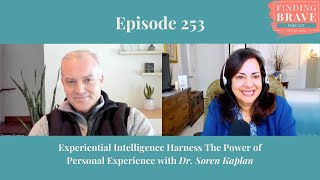
Dr. Soren Kaplan explains experiential intelligence: the knowledge and abilities you gain from your life and work. Your experiences shape your strengths and blind spots. He shares how a Fortune 1000 company used story-sharing workshops to build better leaders and teams.
Chapters
We're really ready for a new way to look at what makes us smart and intelligent and experiential. Intelligence in combination with your intellect and your emotional intelligence is really ripe to transform recruiting and talent into organizations because we see people for more than their resumes.
Hello everyone, this is Kathy Caprino and welcome to my podcast, Finding Brave. I've created this show for everyone who longs to create something bold and brave in their life, to rise up, speak up and stand up for who they are and to reach their highest and biggest visions. Each week I'll be speaking with inspiring guests from all walks of business, leadership, entertainment, the creative arts and the entrepreneurial world. And they'll be sharing their intimate stories of finding grave and offer their best strategies for building your most rewarding, joyful and meaningful life, business and career. Here we are. Hello everybody. Welcome to another episode of Finding Brave. Kathy Caprino here once again. I know you hear this every time and this is probably episode two, two something, two sixty something. But I am so grateful and excited to have our guest today, Soren Kaplan. Soren, thank you for being here, making the time, all the way from Seattle. I appreciate it. And you know, you folks hear me interview people who are brilliant experts in a wide array of topics from careers, leadership, personal growth, all of it mental health. But very rarely, I think would I say that the work of my guest overlaps scarily close to, you know, my latest work, but still from a very different perspective, you know, so it, it's, I'm so excited to dig into what we're talking about, which is experiential intelligence, harness the power of personal experience. We were just talking earlier that, you know, I would say that in leadership today and career growth. And some of this has to do with how coaches are trained and consultants to work and to not go deep, frankly, maybe because they don't feel they're trained or whatever. I do think that so much of what is being shared about how to build a life and leadership of impact and significance that matters to you does not go deep enough. And one thing you said, and we're going to jump right in, is basically that a statement I've made that you are a person when you show up to your professional life, they're inextricably linked. How could you possibly try to disconnect them? And that's all about what you talk about. So let me tell you about Soren Soren. Dr. Soren Kaplan is an award winning author, founder of three Silicon Valley startups. What? A columnist for Inc. Magazine and an affiliate at the center for Effective Organizations at the University of Southern California and and a former corporate executive. So that's where all your world comes from. I'm sure you saw what was missing. He is the author of Experiential Intelligence, Harness the Power of Experience for Personal and Business Breakthroughs and two other books as well, an international keynote speaker and has led professional development programs for thousands of executives around the world, including at Disney, NBCUniversal, Visa, PayPal, Colgate, Palmolive, Kimberly Clark goes on and on many others. You can read all about this in the show Notes too. His work is appeared in Harvard Business Review, Psychology Today, Forbes, Fast Company, cnbc, npr, and many other academic and popular business media. So again, welcome to the show and let us dig in.
Sounds good. Kathy. Thanks for having me here.
Oh, my pleasure. So the very first thing is what is experiential intelligence? What is it?
Yeah, experiential intelligence. We all have it. It's the smarts essentially that we get from our life experience and our professional experience, but that's really all the same. And part of what I think has been missing is the notion that we've thought that IQ leads to success. And then we got the notion that emotional intelligence is important, but where's the concept of experience? And in today's disruptive world, things are changing fast, you know, faster than ever. How do we recognize the experiences that we have? The street smarts we all get as enablers and giving us strengths, but also maybe, you know, things to overcome because they left us with some challenges that we need to address. And so experiential intelligence is kind of overcoming some of the challenges that might have, you know, stuck with you, but also recognizing that we all have strengths from the experiences that we have. And so that's really what experiential intelligence is. It's your mindsets, your abilities and your know how that you've gained from your life experience.
When you say it like that, it's such a glaring gap. I don't understand. And, and you know, we've talked about how my book is about the seven damaging power gaps. So. And those are all from your experience because we are, it's the nature nurture question. Sure, we have a lot of genetic abilities or liabilities, but whatever field you're, whatever side you're on, I feel that nurture shapes it more. It's unbelievable that this hasn't been scientifically in other, in other ways discussed the way you're discussing in your book, isn't it? It's, it's it's kind of unbelievable.
It's unbelievable and it's one of those things that such a intuitive no brainer that's been hiding in plain sight that it's, it's just as we, as we talk about it, it just seems so blindingly obvious now. I did not come up with the term experiential intelligence. It came from the former president of the American Psychological Association. It's just that it's never really caught on. And I think that's really the question. And maybe because it's not as quantifiable as an IQ score and there haven't been instruments like emotional intelligence, but it's the third leg of the stool that really makes us us and gives us our unique fingerprint and allows us to succeed. And I think we just need to start recognizing it and figuring out how to weave it into all of how we look at ourselves, talent and organizations, leadership and more.
I couldn't agree more. You know what's coming up for me? I work with a lot of people in a lot of different capacities. And because I spent a little time as a marriage and family therapist, which was the most transformative ever experience, sometimes what I'm working on with people, and I may not say it this way, but I'm interested in your thoughts, is actually their personality. So for instance, we've got narcissists. Narcissists proliferate in high levels. Academia, entertainment, business, politics and you know, something like a personality disorder like narcissism is often formed through experiences in childhood. But do you, how, how would you say personality formation and experience, experiential intelligence connect. What is your thought here? I didn't prep you on this, people. I'm just winging it here.
So yeah, you blindsided me, but I'll just say it's absolutely connected and let me, let me bring it to life. So one of the reasons I wrote this book is because I've had a lot of observations over the past 25 years about leadership around the world and people I've worked with. But I also had a childhood where I grew up. When I was three, my mother developed a pretty significant mental illness and my father was rarely around and he was focused on his spiritual pursuits and just hardly home working multiple jobs. And by the time I was 15 years old, we had moved 16 times. So the same things that really traumatized me as a kid, I had to, you know, live with a lot of uncertainty. I didn't know if I was getting picked up at times. I had to make decisions with Very little data. It was really a difficult upbringing that I had over time, I realized, and it took me a little while, but I started doing things like running startups where you had to pivot really quickly and you had to live with uncertainty and you had to make data with very little. You know, you had to make decisions with very little data. And so the same things that traumatized me actually gave me strengths. Now they also gave me things I had to overcome, like, you know, certain, you know, challenges around feeling like I wasn't worthy of recognition, which led to a lot of over, you know, kind of, kind of a driver trying to accomplish a lot and imbalance. But as I healed from those things and I'm still working, there's life is a, you know, I'm still work in progress. But as I worked on those things, I was able to see those strengths in a new light and I was able to recognize that I can leverage them in a new way. So the healing, the other side of healing is growth. And so those two things are experiential intelligence. Now, the same street smarts we develop can outsmart us later in life if we rely on them as coping mechanisms and don't realize that maybe we need to overcome some of those smarts and then leverage the other smarts we got. So that's how I kind of look at personality development. In relation to your question, I have.
So much to ask you. How are we going to do this in a half hour? You know, what I'm really picking up here is your and my work come together in that I really believe, you know, there's strengths finders, you know, an incredible tool. There's a lot of people in our work that are helping people identify the strengths and expand them. And I think you and I are also saying that's great, but if the healing hasn't happened, you're going to be very limited in your growth. Would you agree with that?
I would agree with that. I think that the strengths are great and sometimes it's more comfortable to sit in strengths, which is fine. And you're going to miss other strengths unless you look at the healing side. And you're going to have things, I call them knee jerks. They're the things that kind of are your triggers that you're not aware of that will undermine some of your strengths if you're not aware of them. So the healing and the strengths go hand in hand. And so I've personally experienced it. And then I've also seen leaders who want to focus on the strengths and miss the other stuff. And they're just not as effective as leaders. And they also aren't able to draw forth from their teams and others. They're working with their real strengths, you know, kind of their full potential as well.
What an important area of work. Can I ask you a question again? I didn't prepare you. Do you see a difference in gender, in how receptive leaders are to your this work?
You know, it's hard to really qualify that. But what I would say is that in our U.S. culture, I think men have a harder time getting to that vulnerable place that is sometimes needed to go deeper. What I do find, however, is being a male myself and identifying as male, I can role model the vulnerability and show up in a way that allows for other men to go places that they don't always go. And my hope is that that's a positive feedback loop. And so as I see more and more men getting more comfortable with vulnerability, it's a positive cycle. And so I think it's going to be changing. But I kind of lean to answering your question is I think men have a harder time with it, but I think that more and more are becoming more comfortable and seeing the benefits of it as well.
What a fantastic question. You know, almost every episode I, I refer back to an interview I did with Mark Green. Do you know Mark remaking manhood? And he talks about man box culture. And you know, there's a lot in my world, I'm always talking about how women have been programmed to be a certain thing, but there's a flip side to that. And the man box culture is so terribly hard where you're not supposed to be vulnerable, men not vulnerable, not emotional, etc. But the fact that you can embody that vulnerability for other men, I think what a gift that is. I love it. So now tell me about what are the steps like when you go in and do training now? You've trained thousands. Is it around this framework? Is it around how can we bring out and amplify your experiential intelligence? Is that what you're training now?
Now it is. Historically it's been about innovation. How do you get more innovation in your team and kind of take risks and so forth. But what I was realizing is that until you're taking risks with yourself, you're not able to really help your organization, your teams take risks. So yes, it is much more about experiential intelligence, getting in touch with that for yourself and your teams and your organization, because a lot of that does shape culture as well.
Would you agree with the statement that I say that you can't really lead anything well if you don't lead your own life, if you don't have self mastery. Do you agree with that?
I, I agree with that, yeah.
Oh, good to know. All right, so what steps can we take? Let's say we are all the listeners are part of your training. And you know, where do you begin with people? What do you have them do?
Yeah, so I just did. I'll give you an example. I was just working with a Fortune 1000 organization. It was right after, it was probably about nine months ago, and they had 100 people in this department with kind of three different units. And they hadn't met for two years since COVID And there had actually a lot of new people who had never met in person. And they wanted to really figure out how do they plan for the next year and really leverage the strengths that everyone's bringing to the party. So we, we all got together. It was a face to face meeting and the leader was very intentional. She, she said, I believe that the whole self comes to work and I want to tap into that whole, you know, kind of the whole of who you are. So that was a great, you know, sponsor kind of framing. And then what we did is we had everyone think about the top three most poignant stories in their lives. Inside work or outside work that's really shaped them and made them who they are. And we had a little bit of a strengths based lens on it, but really what we did is we had people walk in and then we had different tables, tables of about six people. And we paired people up, just pairs of two. And we said, share your story and talk about the mindsets, the abilities and the know how that that was the line of sight from the story to what you ended up doing in life and kind of how that shaped you. And some of the stories were painful stories, some of them were really joyous stories, some of them were sort of neutral. But everyone shared and they got to know each other at a much deeper level. And then after the pair shared, groups of six shared each other's stories and.
Under and identified, stood up and shared.
Well, they did share individual stories, but as a group of six, they kind of extrapolated the abilities in that little table and how people are thinking and what their kind of meta abilities are and skills. And then each table then shared an example of a story to illustrate it with the, you know, here's the abilities our table has sitting here right now. And you had that times about eight or nine. And then we kind of looked at the themes, and we really understood from this department of about 100 people, here are the. Here are the real capabilities and assets that this group has and can leverage to meet its goals in the future. And then we talked about, where does it need to go, you know, next year? And how do we tap into these, you know, the strengths of this group based on these personal and professional stories. And everyone felt really energized and focused, and it really brought the group together in a half a day. It was a really, you know, powerful session. Wow.
Fantastic. I have to tell you, the whole self issue. Ten years ago, I had the chance to teach a graduate program in the human resource management department of nyu, and it was online, and nobody. I mean, I'd never even. What am I doing? Moving people to chat rooms? I'm like, so over my head. Thank God for Zoom. But they didn't have Zoom back then. But. Okay, but here's the thing. I assumed that everyone would want to bring their whole self to work. So I said it as a statement, and there were, like, three guys out of 12 people. One guy said, heck, no. It's the last thing I want to do is bring my whole self. And I was so floored because I assumed it was a fact. So he went off, came back the next week and said, I asked 10 of my guy friends, none of us want to bring our whole self to work. Now, that was 10 years ago. But do you feel. See any of that pushback today? That. No, don't start with whole self. Do you see?
Oh, yeah.
Yeah.
I absolutely see it. Yeah.
And then do you have to teach around that? Let me tell you what you're not. What do you do with that?
Yeah. So let's. Let's just kind of set the frame. And you and I probably, I think, see it the same way.
We.
Whether we're walking in the home office door or the office door, we are bringing our whole selves to work.
Right? That's.
That's what's happening.
Whether you like it or not, you're doing it right.
So to. To think that you can leave part of yourself somewhere else, that tells you a lot about what might be missing from that individual or that team itself. And so part of helping to make the case for the value of this is through examples. And I know that you have a musical background. I. I asked one of my clients as I was writing this book. Her name's Santi, and she was just named by. By Forbes as one of the top 40 chief marketing officers in the world. She was at Hershey. She ran international business as a CMO at Hershey. And I asked her, what do you. What led to your success that might be outside of your resume on, you know, that you might have given to Hershey when you got your job? And she said, it's easy. It's the fact that I play violin and I play violin in an, you know, in an orchestra. And she said, it's because I have to have intense focus. I have to really make sure I, you know, I'm the best at what I do, but I also play with other people. I know when to lead. I know when to pull back. And she's. And so she was talking about her abilities and her mindsets related to something totally outside of work. If you don't create room to bring that to the party and share those types of experiences and have other people say, you know what? Those are assets that you do bring, let's look at them and how we can even leverage that more. You're just leaving a lot on the table that you. You're not leveraging for your goals and your success. And so sharing stories like that and giving illustrations and trying to help people see themselves in a safe way to draw out abilities that maybe they. That are kind of on that other personal side and really look at how those are leading to their success today that they might not even be aware of.
How beautiful. I just need to say for listeners, you know, my book is about seven damaging paragraphs, and the first one is not recognizing your special talents, abilities, and gifts. I mean, I work with doctors, lawyers, you know, and anesthesiologists saying, I don't have any special talents. So I say this to everyone when they say that, I'm like, can I go do your job? And she said, probably not. And I said, could I kill someone in the first week of your job? Yeah. So I think one of the challenges is, I mean, in this, your friend, she recognized how those experiences are so helpful in life. So many women in particular, but men too, if. If something comes very easily to you, you often don't see it as a talent. Or for women, they're very afraid of sounding like a braggart if they say those same things. So I just want everyone to understand that. But let me ask you and. And about the whole self, I just need to say this. What the men said 10 years ago was they assumed whole self meant being vulnerable, where they said wearing the heart on the sleeve. So I'm pretty sure you would Agree with this. We're not talking about that. We're talking about every aspect of who you are that makes your life unique. I think that's what we're talking about. Right?
That's what we're talking about. Yeah. It's, it's not that you have to wear your heart on your sleeve, but it has, it's, it's that you're in touch with what's in your heart and you let it out when you want to let it out. You don't when you don't. And it's, it's, it's, it's about being, you know, that self awareness really is what it was about.
So can we talk about that? In your book you talk about decoding mindsets. Can you? You don't have a therapeutic background. Right. But you speak like you do.
Well, I, I have a PhD in Organizational Psychology.
Well, that's it. I'm sorry. Of course. So that's not therapy, but it could be. I mean.
Well, I, I also have done a lot of. Yeah, but you know, I, I've done a lot of work myself. I've done just a lot of work. And you kind of, you know, I've had experiences myself and with my family and in a men's group. I mean, it's like I've gone deep in my own ways. So I have an understanding of it academically as well as through personal experience to hear it.
So tell us how we have to decode our mindsets, what's involved.
Yeah, so we all have experiences in life and some of them can be big and they can be traumas or they can be really high point experiences and then they can be little things also. And so decoding one's mindset, the way I've articulated it is you look at a lot of the little things as well as the big things that you've experienced that you have memories around and maybe some feelings around also brings up kind of a visceral memory. And looking at what were the messages that I heard and internalized from those experiences. So I gave a couple examples around my father not being around and kind of internalizing that I wasn't worthy of focus and attention. And, and then I also had some high point experiences. I traveled to India right after college in the early 1990s and it blew my mind. And I had some messages like, wow, there's not just one right way to do things. And so that cross cultural experience. So what you can do is you can look at those experiences. You look at the messages that you internalized from them. And then you can look at, based on those messages, what are my attitudes and beliefs or my mindsets that were shaped from them, and how do I understand what might be getting in my way as well as what might be enabling me? You know, from my experience, risk taking has been a very positive thing, kind of the safe risk taking, I guess. But as you look at those things, then you can say, here's what's serving me and here's what's not. And then there's a. There's a great tool. It's not mine. It's called the primal World Beliefs. It comes out of the field of positive psychology, and it's out of the University of Pennsylvania. And it was created by a guy named Jeremy Clifton. And it's a list of kind of the global beliefs that people can hold.
Oh, my.
And it's an amazing tool because as you inventory kind of what you believe your own beliefs are, they can give you clues as to maybe what beliefs you hold. And then they have kind of a positive and negative spin to them. So if something's not serving you well, you can look at it and you can flip it around and say, well, this is the opposite of this belief. Can I. How do I get to that? So it's really a powerful kind of combo to look at your experiences and then those beliefs that kind of globally we seem to hold as human beings.
Wow. I have a question. I. I do want. I want to talk to you about other steps that we can take right now. Right. But I have another question. Again, I didn't prep you, but you mentioned, you know, in your bio and today that your dad pursued a lot of spiritual pursuits. I would love to know as a little background. I really. I'm not a religious person. I'm a spiritual person. And I believe that a lot of the work I'm we're doing is helping each individual person's spirit come to life. To life. And in a lot of the corporate environments today, you don't use those words. That's. No. But I'm wondering, do you feel that. How do I put it? What you do is of the spirit a little bit.
I know that internally I feel like I'm connected to something bigger than myself.
Beautiful.
I had a very varied religious spiritual background, from my grandfather being a Methodist minister to my great, great uncle being the chief rabbi in France to my father and my mother dropping out of Harvard. And we lived with Ram Dass.
Oh, my.
What? Yes. And then we went to California and my parents joined A spiritual community called Sufism, reoriented in the, in Walnut Creek in the Bay Area. And so I had just such a amalgamation of influences. So I'm not religious, but I do feel like I'm here to, to, to connect to something bigger than me and to provide others with whatever I can bring that is part of me for whatever reason, it's part of me. So I, I don't know if that answered your question there did.
And, and would. Would it suffice to say, I'm guessing, because I've had some religious experience and even Greek Orthodox and then even singing in St Patrick's Cathedral for a year, not being a Catholic. Wow. Would you agree with it and disagree with me? Challenge. But I think what you just described is an exact blueprint of, of your whole work that a lot of that learning has been incredibly expansive and helpful, but some of it was not. I'm guessing.
You'Re talking about my.
The religion. Yes. That some of it needed to be undone, decoded, maybe let go of. Am I right?
Yeah, I think that's true. When I, When I came to recognizing that experiential intelligence was something important that I wanted to share, I got in touch with all of everything that I've done and experienced in life, which is all of that and my professional work and my blind spots that allowed me to be successful without really being as satisfied as I could have been and all of that. And so yeah, is I leveraged all of that and all of the kind of the challenges and the, The, I guess you could say the influences that may have been more constraining around some of the dogmatic religious aspects of things I had to kind of look at. And every single one of those experiences also gave me things. So it's not just one or the other. It's. It's like there's this yin and a yang and a. Both and. And a kind of, you know, all encompassing view of it all. And that's what experiential intelligence to me is all about. How do you hold it all and recognizing that, you know, the bad could be seen as good or the, you know, the good might get in your way, depending on how you've processed it. And really kind of stepping back and just realizing we're all just kind of living in the moment, doing our best and how do we take what we have been given through our experiences and make the most out of it?
I love it. I love your language. I love it so much. This is not in our set of questions. I guess nothing has Been here. But when you speak about it, you make it sound very easy. It's not very easy, I don't think. And boy, would I love to come to your trainings because I think you open the door for it to be not as intimidating and scary and horrible. Not horrible like I, I just had a client yesterday who said, I've done very well not having to look at what hurt me. I don't, I don't. It doesn't feel good. I said, I know it doesn't. And growth is work. It's work, but it's exhilarating. Blah, blah, blah. Here's my question to you, thousands of professionals you've trained. What do you see as one of, or two of the biggest impediments to people doing what you're teaching in this book and what you teach in your. What is, what holds people back from doing this work?
I, I think it's being closed off from experiences that have been difficult.
And that's it in a nutshell. Yeah, I don't want to go there. I don't want to.
Yeah. Something that caused pain, you don't want to experience it again. I mean, that's what, that's what I think gets in the way of a lot of us looking at doing the work because it's, it's hard, it's painful, and you kind of reliving the same feelings you had when you were 4, 5, 12, 18, whatever it is. And it's, it's not pleasure, it's, it's work. And so I think that, that, that's one of the things as you, as we look at experiential intelligence, it's, it's, it's everything. And so how do you embrace the, the pain as well as the, the, the joy of your experience and, and learn from it and grow from it?
Very simply put, I love it. So leave us with soreness. I'm sure you see the way I see the transformation that comes out of this is pretty remarkable. Yes. There are people that, you know, maybe there's an expansive level, but some people bust through and can you give us just, just to help sweeten the pot about why we should do this? What are some of the things you've seen over the years that come from this that are so exciting. Can you share?
Yeah. I think we're really ready for a new way to look at what makes us smart and intelligent and experiential intelligence, in combination with your intellect and your emotional intelligence, I think is really ripe to transform recruiting and talent into organizations. Because we see people for more than their resumes, their life experience and their mindsets abilities and know how it's all, all of those things. So I think there's a real opportunity to reinvent recruiting and talent management and then leadership development also, you know, having a framework to understand experiences in life and work as a way to grow. I think we have opportunities in leadership development and then also, you know, just organizations that want to tap into the best of their people being able to, you know, a lot of people are retiring, we have a whole age wave. And so how do you really consciously pair people up through mentoring or harness best practices from people that go beyond just the training manuals. Like how do we, how do I think, how do I think that leads me to this success? And so there's a lot of practical applications for experiential intelligence that on the surface is kind of like, oh, this, this big idea. But it cascades very quickly into real practical things. Even like 360 assessments, you can quantitatively do it, but you can also get people in a room and have a very generative collaborative conversation where you're really extrapolating strengths and then looking at how to kind of leverage those strengths and projects coming out of the 360 with the people in the room. So there's a lot of different ways in which you can apply it.
How beautiful. And do you have one example of a person you've worked with that did this and something amazing happened. They turned their bit. What do people care about? Yes, the bottom line was shifted, but talent was recruited. That solved a problem that probably couldn't have been solved anything like that, that people can hang their hats.
Yeah, I'll give a personal example. So I run also a software company and one of the kind of a. I got introduced to a young woman, she was about 23 at the time and she hadn't gone to college. And I asked her and she was wanted an internship. And I just said, you know what, give me a little bit of your background. She said, well, I moved to, from, from Berkeley, California to Israel when I was in junior high and I had to figure out how to speak Hebrew and kind of get into the, you know, culture. And then she said, and she spent two years in the Israeli military and, and like, led a battalion of like 20 people. And I said, well, how'd you learn how to do that? And she said, well, I just kind of had to figure it out. Didn't actually have a lot of training. Well, that clued me in that this young woman had, you know, cross cultural collab, team collaboration, leadership. She had a lot of assets that weren't on her resume. And so we hired her into the company and she has led global teams and in a couple years has just been wildly successful. She's a joy to be around and she, she gets leadership, she gets collaboration, and those things were not on her resume. And she has just, you know, thrived as a, in her own growth. And, and so you can look at life experience actually as a direct line of sight to, you know, work success without those traditional measures. And that's, that's a, I think that's a wonderful example of how this can work if you're open to looking at a human being as more than the line items on a resume and their job descriptions.
It's so beautiful. Look at me getting choked up. That's, that's, that to me is of the spirit. You're seeing the whole person more than. And you know, when you talk about resumes, I just want to vomit. People are so worried about what school they went to in the gpa and we are moving away from this. I think we need to move away from these external, in some ways, vanity metrics. I mean, it's like Amazon, how many books you've sold and how many followers you have. It's great stuff. Don't get me wrong. I love my following on LinkedIn, but we are so much more than that and it's time that we embrace that.
Yeah, I couldn't agree more. And they're actually good. There's good news there. The number of companies requiring a college degree to get in for an interview is from 50, 51% to 44% in the last couple years. And what's also fascinating is Gallup did a poll.
The.
I have the stats right here. The percentage of US adults aged 18 to 29 who view college education as, quote, unquote, very important dropped from 74% to 41% in the last six years.
This is it. This. We're not saying college isn't important, but wow, let's. And let's not even use the word measure. Let's assess, evaluate people's skills for how they've already lived and what their potential is.
Yeah, yeah, I think that that's what we're starting to see. A sea change in our collective kind of zeitgeist that college can give you some, you know, give you knowledge and skills and can help you develop and other things can too. And are there ways in which to look at, you know, both. And kind of value, the whole person, even if they don't have that college degree and that there, there's, you know, things that they can still provide, that's of value. So I think we're sort of getting there.
How wonderful. Any last words on experiential intelligence? And what maybe the first step? Anyone listening? Well, first of all, read your book right away. We're linking to it below. Read our Forbes interview. Any, any doable step you'd. You'd suggest for listeners to start with?
Well, I. There's a couple things. My view is everyone has experiential intelligence. We've had it since the dawn of time because we all have experiences from the moment we're born so everyone can access it. Look at the experiences that you've had. Look at how they've led to certain mindsets, your attitudes and beliefs about things, the world, yourself, other people. And then look at the abilities they've helped you develop over time. But like I think you alluded to earlier, sometimes it's hard to see that in ourselves. So an opportunity is to ask someone else what they see in you, and you can then create a dialogue. And you might, we might be surprised because when we create the dialogue and ask for support and insight, a lot of times that person also asks for the same. And it creates a kind of a amplification of it all that I think, you know, benefits everyone. And so it's not something you necessarily need to do alone. There's a lot of value in partnering up and expanding the dialogue.
I love it. I love it. I want you to have the last word, but I have to say this. One really easy way to do this is ask your favorite colleagues in the world for a LinkedIn recommendation and give them one random act of kindness. But what you get back now, sometimes people won't write it because they don't think they can write. But the words can change your life because you didn't recognize that you had that impact. But to your point, when you give it back, you also experience a worthiness that you didn't even think you had. Who am I to give Soren a recommendation? I love it. All right. Where do we learn all about you? Where do we get your trainings? Where do we get your book? Tell us.
You can just go to my personal website, sorenkaplan.com S O-R-E-N-K-A-P L-A-N.com and you can get, you know, the first chapter of my book is right there. You can download it and other stuff as well. So thank you. I appreciate that.
Thank you for being here. So important, really life changing work. Thank you. All right, everybody, you know that we want questions wherever you see this, all over social media, do the work, do that, download that chapter, do the exercise and if you have a question or I don't know how to look at this or I'm stuck, this is what we want to hear because I think it's in the questions that we can help move you forward. We'd love to hear from you. Thank you. I hope you're inspired. I know I am. I can't wait to dig in more. Soren, thank you. All right, everyone, have a wonderful finding brave few weeks and we'll see you next time. Thank you. Hi everyone, Kathy here. Do you run a coaching business that focuses on supporting women? If so, I've got some news. Right now we're opening the enrollment of my coach training program called the Amazing Career Coach Certification, which is a 17 week hands on training program that certifies female coaches in my proprietary 16 step career growth model which is perfect for coaches who want a deeper dive into powerful, proven coaching frameworks, concepts and skills that will help you become far more effective in working with women. And through the program you'll get access to a powerful small business acceleration program called the Rapid Growth Academy, delivered by my friend and colleague, award winning business growth expertise, Matthew Pollard. Through Matthew's program, you'll be taught essential business and sales growth information that will help you grow your business success in the quickest way possible. In my view, there's nothing on the market like this for coaches because it targets the two critical aspects of success, how you support your clients to thrive and just as importantly, how to grow your own business to the next level. For more information, visit certification.amazingcareerproject.com and check out the details. Thanks so much for joining us today and please don't forget to check out findingbrave.org for more programs, resources and tips and tune in next time for your weekly dose of finding brave.
More from Kathy


Elevate Yourself, Elevate Others, and Amplify Good | Chris Cooper | Finding Brave Ep. 334

Finding Brave Epis #333: How Leaders Can Harness AI Without Losing Their Humanity, w/Bennett Borden

Finding Brave Epis 332- How to Stay Brave, Valuable and Visible in the Age of AI, with Raman Rai

Finding Brave Epis 331 - The Power of Positive Disruption, with Dr. Patrick Leddin


Finding Brave Epis 330 - Being 40: Letting Go and Embracing Who You Are, with Stacey Lindsay

Disrupt Career Reinvention with Kathy Caprino - via The Disruption Lab Podcast w/Patrick Leddin

Creating Neurodiversity-Friendly Work Cultures: Simple Workplace Adjustments Matter

Finding Brave Epis 329 - How To Create a Neurodiversity-Friendly Workplace, with Kristen Pressner

Finding Brave Epis. 328: Reclaiming the Power to Trust Your Own Voice, with Dr. Cindy McGovern