254: Building A Successful Business as an Author with Sharon Woodhouse
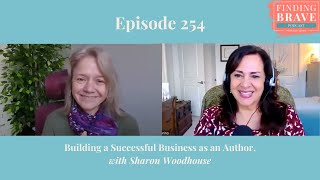
Transcript of a Finding Brave podcast interview (Kathy Caprino with Sharon Woodhouse) about how authors can treat a book as a business. Sharon emphasizes the gap between writing and the outward-facing work that follows (marketing, sales, events), myths about publishing (publisher/author interests, advances, credibility/following), the concept of "defensive entrepreneurship," and practical monetization strategies (events, bulk sales, workshops, alternative retail outlets, systematizing outreach).
Questions this video answers
About 60–70% (per Sharon Woodhouse's comment in the interview).
Chapters
I mean, in some ways I think it's amazing that publishers publish as many books as they do that break even or even lose money. And it's like 70%. So for all of the flack that people give to major publishers in the publishing industry, you know, something like 60 to 70% of their books are just breaking even or losing money.
Hello everyone, this is Kathy Caprino and welcome to my podcast, Finding Brave. I've created this show for everyone who longs to create something bold and brave in their life, to rise up, speak up and stand up for who they are and to reach their highest and biggest visions. Each week I'll be speaking with inspiring guests from all walks of business, leadership, entertainment, the creative arts and the entrepreneurial world. And they'll be sharing their intimate stories of Finding Brave and offer their best strategies for building your most rewarding, joyful and meaningful life, business and career. Foreign welcome to another episode of Finding Brave. This is coming to you end of April, I think right now my wonderful guest and I are in the middle of of winter but we are thinking of you and so excited to talk about this really important and I think under discussed topic with Sharon Woodhouse. Thank you Sharon for coming from Milwaukee, getting ready for a big storm. So grateful. And again we are talking here about building a successful business. As an author, I can't wait to dive in. So Sharon, let me let everybody know about your bio first, what you know, why this is such an important topic for you, how you live and breathe this information every day. And I do love to tell people where I learned of my great guests. And Sharon, I learned of you through the beautiful Octavia Gordima who is on my podcast. And what a beautiful spirit and and what inspiring work she's doing in the world. And boy does she sing your praises. So whenever a friend that I respect says you've got to check out this person, which she did, I know, I know it's going to be an amazing conversation. So here we go. Sharon, let me tell you everybody, all about Sharon. Sharon Woodhouse is the owner of Conspire Creative, which offers coaching, consulting and project management services for authors. She previously ran an indie book publishing company. She found him when she was 25, which I find incredibly remarkable. I don't know what I was doing 25, but it wasn't inspiring. And you ran that for over 25 years. Sharon is a true believer in an advocate of coaching and small business ownership and she specializes in helping authors, often very reluctant entrepreneurs. And a boy have I lived and breathed all of this and you help them at the intersection there of, you know, helping them fold their books into their lives and create sustainable income visibility satisfaction around their books. Experts. That's a big word. Expertise and author status. Sharon also believes in the power and value of defensive entrepreneurship, which I have to tell you I read and thought can't wait to learn more because we typically think of defensiveness as not the most positive thing. So I can't wait to dig into what is defensive entrepreneurship. And there we go. So I want to start with this burning question. Sharon, I do want to learn how did you first become self employed? And I want to go there with you but I also want to understand in your mind what the one I didn't prep you for. This poor guest, they're like how come she didn't tell me she was going to ask that? What do you think is the one most difficult challenge authors have in either getting their book out in a way they feel satisfied with and making money from that. What is the biggest challenge you see over and over in running your book publishing business? In this I can't wait to the.
Biggest challenge is that writing a book and what motivates you to write a book are just so different from the bulk of what comes afterwards. Marketing, sales, promotion. So solitary inner driven activity and then outward facing, outward facing activity in an area that so many of us feel uncomfortable with. Self promotion, sales money and then you know, all this stuff wrapped up with money and worries about that. So that that's number one.
I, I think you're so right because I hear from so many people who are just starting out on every part of the arc, they're just starting out with their first blog post or they have the book proposal and they're looking for an agent and and you I feel like tell me if you disagree with anything I'm saying. But as having written two books I've been on every trajectory in the beginning. I think for many people and I'm in the non fiction world, there's memoir, there's a million other things. But for me, for instance there was the idea like wait a minute, I am when whenever I hear something over and over and over in my own coaching practice, I think it's time for a book because I need, I can't do this one on one only I have to. So then there's the idea. Then there's the vetting of the idea and the researching of the idea. Then you have for me the stats and the to me it has to be very research based but then you have to write it now. Even the sitting down and writing, even though I'm a writer, you know, with thousands of posts, I would have to almost bribe myself, sit down in the chair now. Don't go. Do the laundry. Don't go. Right. So then there's the hard work of writing it. And then you're excited when it comes out because there's buzz. And if you have a reputable publisher, they're doing a little bit of, little bit of the buzz, but then there's a tail, then the buzz dies out.
Yeah.
So do you feel like in dealing with authors all along that trajectory, and you may see a different trajectory, is the part about it's out and it's been out a little and now what? I don't know. Yes, it was featured in blah blah, blah, but now I don't know what to do. Is that the hardest part for authors?
I think it's the whole thing. I think it's just the lack of perspective about what is really involved. And you know, and it's true for whether you're published from a New York publisher, whether you're self published, a university press is the best way is to think about it as it is a new commitment in your life. It is a part of yourself. And I think how I work with people is getting people to integrate that. So you move from this really personal experience of dumping this thing that's so important to you, crafting the words. Now it's a book. However that happened, whether you did it yourself or you got a publisher or an agent helped you, and now it's actually a business. Now it's less about you and it's more about others. It's about the readers, it's about the customers. So readers read books, customers buy books. And those could be individuals or stores or people who buy a thousand for a conference. And then there's sort of the needs of your content. You have this thing to say that you're sharing with the world. What does it need? Where does it need to go? And so it's so outward facing. And. And I think you make it work by saying, okay, what do I want? How can I use this book to forge what I want next? And then you try to find the intersection and that's where the satisfaction comes. But you just have to commit. It's ongoing, it's a long process and you make it part of your life. And I think that's where the money and the satisfaction comes. But it's a long process and no one likes it. No one Wants to hear it, Kathy, Most people will hear it.
Yeah, yeah, go ahead, go ahead, say it. What were you going to say?
Yeah, I mean, no one wants to hear just how involved it is, but if you can turn yourself over to that, you, you can make something wonderful out of it. I mean, it's. Sometimes people only want a new group of friends. They don't realize that they just want interesting friends. They write a book and a book is a great tool to interesting friends. Or they just want a little extra money or they want to get out of the house, or they want to have done something. They want to have just emptied this thing they've been carrying around with them. So sometimes if you know that that's what you want, it's pretty easy to get. But sometimes what you want from your book changes as you go because you've put yourself into it, you're expanding your horizons, you're committing, and all of a sudden new opportunities come that you didn't even think were possible. So it is really different whether you're self published or whether you're someone with an audience, already a thought leader and you're published with an agent in a New York house. But still everyone comes back to the same thing in the end is it's not what I expected. I thought it would take care of itself and it really doesn't. But that's okay. We, you know, figure out how you want to take care of it. And I have all these ideas on how that happens. It really involves building a business and taking an entrepreneurial approach to whether that's a part time endeavor. You know, I'm going to do this for two years, whether I'm going to. I know people have done this for three to ten years. I know people have built a part time business off their book. I know people who've built a full time business. People have quit their jobs once they got into the hang of it for them. And these are all people who are, I'm going to say, are writing modest books. We're not talking about bestsellers.
Right.
And I think that's a path that's available for people if they're willing to trot on it, you know, if they're willing to take the path.
I love every word you say and every word rings. Very true. I want to ask a few things here and then I want to talk about your, your tips on entrepreneurial endeavors here. But I would love to for everyone listening who has a book inside them. And I want to make a caveat. Big words, big capital letters. This is not to discourage you. I always say this to people, like even people who say I, I want to be a coach who makes 100,000 a year and I have no coaching experience, I say these things not to discourage, but to have you have your eyes very wide open about the reality today. So I want to talk about your thoughts on the biggest myths that you have to help authors overcome. And I'm going to give you two that I hear over and over the other day. For instance, I heard from someone who is writing somewhat of a memoir in, and I don't want to give too many details because then it'll give it away on a particular niche that if you don't have credentials and training in that niche and you have other credentials, no publisher, no reputable publisher will publish it. Because when you're talking about this particular niche and many, many others, if you just have some cool ideas, but they have not been vetted at all. And this person called it a memoir. And I think that they really think they're going to be published by reputable publishers. The, the problem, no, it's not going to happen that way, I think because first of all, publishers, the publishing world is imploded and they're looking reputable publishers that we know that give an advance, let's say well known, you know, they're looking for the author to have a following already, that they can sell books. Yeah, they're not going to be selling them for you. They're going to do sometimes the bare minimum. I used to work at a lot of publishing companies, Cambridge University Press. I was the marketing manager for sciences. We did what was on our list to do and that was it. That was our agreement anyway. Number one, they want authors with a following who can sell books just by talking about the book. Number two, they want authors where they're not going to get in trouble. Publishing that author that it's vetted, there's credibility, there's training. So you're not going to be talking about crypto when you know nothing about crypto.
Right.
Thirdly, I think a lot of authors think that they're going to get a big advance and money is going to come. And I think these are the three biggest myths. Like, oh yeah, I'm featured in the Wall Street Journal. What I learned with my first book in 2008 is you can be featured in media. Readers of media are not buyers of books necessarily.
Right.
So those are the three myths that if you all understand that you're not going to be so blindsided and so bloodied in the process, you're going to manage your expectations. What do you think of what I'm saying there, Sharon?
Yeah, I think those are true. I also, there's probably dozens more. I mean, I think another thing is a big myth is that the author and the publisher have the same interests and they don't. A publisher's job is to keep their business going. The author, the author assumes the publisher's job is to sell as many books as possible of their particular book. And that's just not true. If it takes, if it's easier to sell the best selling book and that brings in the resources, salaries, that's where the resources are going. I mean, in some ways I think it's amazing that publishers publish as many books as they do that break even or even lose money. And it's like 70%. So for all of the flack that people give to major publishing publishers in the publishing industry, you know, something like 60 to 70% of their books are just breaking even or losing money. And they have been working with these numbers for years. So that means they are still betting on books that are borderline as a matter of course.
That's a lovely reframe though. You know, it's a reframe of why isn't the publisher doing more? Because they're doing what they have to.
Because it's a tough business to ensure.
That the lights stay on.
You know, the other side of that myth is that if you have interests, then it's your job to represent your interests. And there are plenty of people who can help you do that. But you have to be, I guess, honest about what your interests are. I mean, most authors really want to make money for their books, but they're reluctant to admit it. This is another thing. I think everyone wants to make a living off what they're good at and what they love. There's no shame in that. And I think the other, another myth I encounter a lot is that the success will come whether or not you plan for it. If I'm lucky, if people like my book, then it'll take on a life of its own and then I'll build the business. No, you decide, you decide you want to build a business and then the, the benefits accrue to that. You know, you, you make the choice. You don't, you don't wait to be discovered. You know, you're not the starlet in 1950s in some backwater town, you know, discovered by the movie mogul. You know, you go out and you put the pieces into place. And make it work. And, you know, I think there's a great new trend in business books that might be well aligned for authors. And they're, they're kind of saying they teach you how to build a business without, you know, it's separate from the hustle culture. A lot of them are written by women. And I think it's just a great new support for entrepreneurs. Other perspectives. There are many ways to build a business that fits with your life, and that's what authors will, will be doing. We're not building massive widget companies or software breakthroughs, you know, high tech, any of this. But I do think that another upside of where we're going in a world full of automation and maybe quiet quitting and people looking to see what else is out there is that we can develop the things that we can only do as humans. How can humans serve other humans? And authors are in that category. It's a world of meaning making, high creativity, expression, imagination, information, education, connecting authors are in this space. And I think it's a growing world for entrepreneurs, for artists, creatives and authors should remember that they're in that world. I love it.
Sharon. You know, I want to, just in case it's helpful, talk about for a second, you know, the myths that I got suckered into. And even with my second book, the most Powerful you, I believed in that content and, and early on I created a video course as a companion. And the iron ironic thing is I just thought it would. I think one of the challenges is we love our material so much because we've lived it so much that we can't even imagine it wouldn't be an instant bestseller. We just, we just, you know, it's. I don't think that's necessary narcissism. It's that we love it and we breathed it and believe in it. So doing the course, I kind of thought it would just sell by itself. And it was only when a division of the United nations purchased a few of the memberships for the course. I thought maybe I can get this into organizations, but I even want to share with folks. That hasn't been my world. I haven't been interacting with dei, diversity, equity, inclusion, HR people. My world has been women coming to me directly. So sometimes, as you touched on your book, will take you in directions that you never foresaw. In other words, I'm really wanting the course to be to scale by organizations offering it to a thousand or fifty or, and. And organizations paying for it. So sometimes your beloved book child will take you on A journey, a journey you're not prepared for and maybe you're not even that skilled in. Yeah. But if you love it and that's where you want to go, you decide to do it. So for the past year it's been a lot of outreach for me to the HR world, which is, and you have to have patience, you know. Right. So it's slowly coming to fruition or building. But my goodness, it was a learning journey and nothing about it was instant. Would you want to share anything about that?
Yeah, I think you're right. The habit of outreach I think is one of the most difficult and effective and important things that an author entrepreneur can develop. And I think it's something we can do that's not online even. I mean sometimes we're reaching out online, but I think not everything is number of followers, not everything is social media. And I have found, especially for people who are older and who have lived a life and they have a lot of contacts and experience and talents is reaching out to the people you know and reaching out to media members, reaching out to bookstores, reaching out to HR departments that, you know, the old fashioned picking up the phone or networking, asking for help, asking for a favor, asking for an introduction and making the habit of it. It's yes, I see your face.
It's so hard.
It's.
But my goodness is generative or whatever the word is generated.
That is perfect. It. I still, that is how I build my business too. I do it every day. I reach out to people and that is almost my entire marketing is just reaching out to people, people I know and people I've just met, referrals. And I think it's, it's hard, but it's, it's also hard to build 1000-0500-0010-0000 followers on social media by putting 140 characters of whatever eight times a day. Nothing. It's all hard.
So. Right. You know what your comment brings up for me that you touched on earlier? This is a. How am I going to put it? A hard ask I'm going to make of you people. But I think that when you have the confidence to write a book, you also have a little bit of narcissism. And I mean that a little tongue in cheek. I don't mean we're all narcissists. I mean that sometimes it's all about us. And I think when you come from producing something like a book and it's all about you and you don't have a vision for how it will help others and you don't know how to talk about it as a way to help others. You're going to struggle because the world doesn't care. You're not that important. I'm sorry. I think that really there's no one on the planet that, that it all revolves around them. What do you think about what I'm saying? Is that harsh?
It's harsh and it's true. But you know what? Here's another thing that comes when you reach out to individuals, you. You just learn from them. It's hard, for instance, to talk to a bookstore owner or a reporter, but if you find yourself in those situations or someone who has a capacity to buy 500 copies for gift bags at a conference as an example, or set up an event for you at a local library or to a luncheon club, is how much you learn in those interactions. It's fast learning and fast results. And I think we, we just can't forget it. And I think that it is as effective now as before the social media age as when I first started 20 years ago and 25 years, 30 years ago, and knew nothing. It still works. It still works. The human connections, whether it's email, phone, in person, walking into a store and striking up a conversation. And it gets easier. It does get easier. I just think we are sort of wired for entrepreneurship, but we don't think of it.
Talk to us about that. It's running through my mind, and it's like a listener is saying this, wait a minute now. Can I understand more about what is the business building that I can do? What do I need to understand? Can you tell us some of that?
That is, I mean, I think if we look to any country where people are really living at a subsistence sort of level is people do what they have to to survive. They have a natural instinct to survive. They're creative, they look. How can I serve? What can I do with what I have? These are the same lessons of any entrepreneur. What do I have? How can I build from where I'm at? What are the people around me need? How have I helped others before? And who has responded to that? It's creative, it's expansive, it's connecting, it's serving. I think anyone can tap into those things. It might not feel natural, you might be suspicious and not believe me, but I think it does ring true. And then there's skills, and then you can learn the skills to harness that. And all you have to do is start with where, where you are. You know, you mentioned something to your book group, you mentioned something at work, at church, at your kid's school, you just talk about what interests you and it's okay to talk about your thing. I mean, presumably you're as interested in other people's things as you are your own. And it's just, you start with the conversations, you start with the service you get. I mean it's an ebb and flow right of the. You're inserting yourself into the economy, giving and taking.
I love it. I, you know, when you're speaking, you. I can see so much how you come from the heart. And you know, who wouldn't want to work with you? Because it's a spiritual thing, I think. I don't mean religious. I mean it's up to spir. And I was thinking, I was driving the other day and when my first book came out, it was 2008, my kids were little and they're 25 and 28. And I remember I mentioned it to some neighbors and I think I even came to a soccer game with a copy of the book because it had just arrived and I was so proud and so happy about it. And I do remember some of my. They weren't friends. The friends don't respond like this. But neighbors or soccer mom, they kind of bristled. And I feel like it was like, who does she think she is? Do you ever talk to people about this is what might come. Have you ever heard this comment before that?
Yeah. And it's hard, it's hard to know what it's about because people's communications can mean all sorts of things that have nothing to do with you.
True.
And it might even they might even think, who do you think you are? But that's about them. And I mean it's not. Doesn't make it easier to experience. But I also think that people who live in worlds, for instance, people with corporate jobs that get regular paychecks and follow. Follow the rules of any organization or institution may not really understand how the rest of us are living our lives. We are not. So we may not be so bound up in with specific rules or office politics. We're engaging each other, we're helping each other with stuff and we're putting ourselves out there all the time. It's not easy. And when you're self employed, you don't have a boss that you're not wondering about the annual review or a raise. You have to do it or you're not going to get a paycheck, much less a raise. Right. You have to.
So true.
That's what you're creating.
Somebody once said, you know, I'm a coach, as you know, and a consultant, speaker, blah blah, blah. And somebody in my community referred her friend for coaching. And I do have a friend and family discount. I absolutely do. But you know, I said, here's the rate. I later found out that this friend who referred this person said, oh, she must need the money to charge. She, Kathy, must need the money if she's going to charge. And to your point, I think those of us in the arena of entrepreneurship, it's different, it's different from corporate life. And why do we need you to know that? You know, I, I often say because I was a corporate VP and managed a 30 million dollar budget, I thought moving from that to being a therapist and running a therapy practice, which I did before coaching, it's going to be so easy because I ran. No, right. That was someone else's money. Yes, that was someone else's resources. Of a dramatically different view.
One thing that I never realized before, especially when, when I was younger, I was a workaholic. I worked a lot. I really was only in the book and publishing and small business entrepreneurial world. And only later after I got married. And I live in a building that's filled with professionals and people with corporate jobs. Some people think that you're self employed because you can't get a job. I had never heard of such a thing before. I thought that was hilarious because it's easy to be self employed and some.
People say that to you, like, oh, you had a hard time getting a.
Job, all sorts of insinuations, but it's something I never personally experienced and it's actually probably becoming a parent and meeting people from different walks of life, asking questions that I had never experienced before. And it's really hard to explain if someone doesn't. And you know, we all live in our bubbles, you know, we, we, you know.
And I remember part of the challenge and illness and misery and depression of corporate life was I wanted something else.
Yeah.
And I saw other people have what I wanted. A dear colleague who had her own market research business and was a self made millionaire. I wanted that. But I didn't think I could be that until the universe pushed me out of that corporate job and I said, okay, this is it, it's time that you start. So to me it's, you're brave, you're brave if you're doing this, you take, not that you're not brave if you're in the corporate world, but you're, if you're miserable in your corporate job, then you do need more bravery. Finding brave. This is what we're talking about. You know, it's not easy, but man, the benefits. All right, let's talk about defensive entrepreneurship. What you mean by that? Can we hear about that?
Yeah, I love that phrase. There used to be a website devoted to maybe just the concept, one guy's meanderings about it. And then I never saw it again, but I loved it. And the idea was it's a way of protecting yourself against the uncertainties of the world, the future, the economy. And that is you should always have an enterprise to fall back on. You should have a plan B, C and D. And entrepreneurship and the ability to make money if you need it is an important skill. And I love that. I agree with it. And I even have backup business ideas for myself if this business fails. This is how I'm going to make up the money in two months to. Until I get things sorted out. As an example. So I've got a, I've got a plan. I've got a plan B through Z probably. But I think it's just important for people to realize, I mean, look how many people stay at jobs they don't like. They're, they're physically and they're harmful physically, emotionally, they are affecting their relationships, all of these things, because they're so used to the money, they do not have another way. So defensive entrepreneurship is just a thought that I know how to make a living. I know how to survive without this thing because I've thought about it and I've put some pieces in place and I have enough confidence to do if I need to, or I'm building it on the side as a backup plan so that if I need it, I can ramp it up. I love it. And others can do that because they have something valuable already. Right. They have the book, they have their.
Experience, they have intellectual property that they can leverage. You know, I have a twist on that, which is this. Nothing outside of yourself is secure except what you have to offer the world. And I know that because I, you know, had a very big job and I was promised the moon and I was laid off a month after 9, 11 in a brutal way. Nothing, no job is secure.
Yeah.
Even if you think it is. So it's to your point. Take some time to think about if I lost this job today or if I walked away like I want to. What? And, and of course there's a transition period. It doesn't magically emerge. But I love it. I, I think the, the Exercise. Tell me what you think would be. Take this weekend, when you hear it, to just sit with yourself, devices off and think, if I lost this way of making money today, what would I do? What could I do? And what do I need to put into motion to prepare? So I often tell people, I don't care how happy you are in your job interview. Interview outside of your job. One, you get to know your place in your value in the marketplace, but also you build contacts, you stay fresh. So tell us, let's dig into defensive entrepreneurship. And we're talking about authors and writers. What are ways that most authors are not thinking that they can actually monetize their intellectual property? Sharon, is that something easy you can answer?
Yeah, the. They're not just making money off their books and their book sales. That. So start thinking about what do I have as a, as a person, because I've written this book to offer. So speaking events, workshops, classes, tours, webinars. So in person, online and, and then package deals. Speaking to a group where everyone who shows up for the event also gets a book. I mean, that's a great deal because, I mean, sometimes authors, because they are not business people, are not thinking of the financials behind stuff. Someone they met on Twitter buys a book and they're thrilled. $9. But you talk to a group of 50 people on your topic and they buy a book in advance and you get a speaker's fee. That's 50 times 20, plus your speaker's fee. Maybe you've made 1500 dollars and that's a lot more than nine.
I love it. Obviously, I love it. And also, as people read that book, you might then be able to offer them services. They'll reach out. My gosh. I would like you as a coach, I would like you to come to speak to my group. It. It scales.
It scales, right? And you, you learn after a while, you start using checklists, systematizing. You can just start where you're at. I show up to my local library and I do an event, and then I ask people at the end to take a picture and post it on social media. And then you're like, oh, that's a good idea. Put it on the list. Next time I'm going to bring bookmarks. Put it on the list. Next time I will have bags. Every, every profession, everything you do to professionally enhance your program, it goes on the list. And you are becoming an entrepreneur. You're systematizing, you're improving, you're taking yourself seriously, you're taking endeavor seriously. And then people see it, they feel it and they respond to it. Not only that, the best things an author can do is show up at their local library and do a fantastic event the first time out because people will talk. Then the librarian will get on the library email list and tell everyone in the district, this is a great person to have at your show, at your, at your library. So I think events and volume sales are the two big things. I think another thing I call it vitamins, spaghetti and ships. These are marketing concepts that I, that's what I name them, Vitamins. The things you do every day because they're good for you. I tweet, I reach out to the media, I call a couple stores spaghetti. These are the crazy ideas that you come up with your mind, you throw them against the wall when you have a time, see what sticks. Is it effective? And then the other thing is ships. This is like when rich people back in the day, they, they send ships for faraway lands just as an investment. They invested to say, oh, what's their gold, silver, silks, you know, what big thing can you do? And put a lot of effort and investment to that may pay off. And I've seen authors do create underground dining clubs, stand up routines, theater programs for children's schools, tour bus companies, genealogy companies. So that's the, that's the big ship model, the big investment. I think another thing that authors do not think about is just how many places you can sell a book besides bookstores. So especially for self published authors, gifts. I sold books at gift shops, boutiques, museum stores, nail salons, women's clothing stores, knife sharpening stores, delis, firefighter and police gift shops. You know, there's just more places than you can think. So that's part of that daily outreach, the you working up to reaching out to people. And then there's so many connections. And then there's asking Kathy, who else do you know? Do you have any ideas? These are painless. These are painless questions. What do you think? Who else do you know? What can you recommend?
Holy cow, people top. You're taking notes. What a list. What a list. Yes, I, I, we have so many similar ideas. I learned from Judy Robinette, who's a networking maven, she says when you speak to someone about what you're wanting to do, you say after you have talked to them and hear about, number one, do you have any ideas for me? Which is what you said. Number two, do you know anyone who would be helpful to speak with if you do that? You've just, you know, the circle has just widened. Right. I, I want to leave with this thought and see what you think. There's a book that comes to mind when you talk Sharon E. Myth Revisited by Michael Gerber Jones. When I first read it, and it's about, he talks about the entrepreneurial myth and he talks about the fatal assumption that makes small business. So many small business businesses fail. And it is this. They have the fatal assumption that because I like to do this technical skill or service, I'm going to love running a business that offers it. And he suggests what you said. They're two dramatically different things. And you know, in the story, he talks about a woman who loves to bake and was baking with her grandmother when she was little and she thought that was the world and then she started a bakery and it was so different and she hated it. But the point is, he talked about in that book systematizing as if you're building a franchise. And I remember like chucking that book across the room like the 20 year. What? Gosh, I want you people to read it. It's many years old.
Now a gentler message from that book is work on your business as well as in it. So if you, if you bristle at the systematizing and the franchising, you know, devote an afternoon to say, what am I building here? Just build a vision. That might be a more creative thing.
I love it. The hard news is I was emphasizing what you were saying. It can be systematized.
Yeah.
You don't have to generate all these 50 new ideas a day. It's as you say, you add to your list, oh, next time I'll do this, this and this. So it doesn't have to seem so scary to systematize. It can be just as simple as what you're saying.
And I've seen introverts do all these things. Introverts, people who, people who still think they aren't selling, they tell them a cell phone other story, but they put them, they've put the practices into place and it still works regardless of what they call it.
I love it. Any last words, Sharon, for our listeners? Any, any last wonderful nugget thing is.
That people should know it's possible. It's possible. And you just build from where you're at. You work on your mindset from where you're at. You work on your business skills from where you're at. And this is hard for me and it's something I'm still trying to do. And that's just ask for help.
Help.
Just ask other people for help. You know, I love it. People are glad to give it. Yeah.
I think the first person you should ask for help from is Sharon. So where, where do we soak up all of this? Where do we send people? Tell us.
Yeah, well, my business is conspire creative conspirecreative.com. i'm very findable on LinkedIn, Twitter, other places. So thank you, Kathy.
Oh, thank you so much for joining. Every word is so resonates, but not only in truth, in spirit. You know that you can do this. Yes.
Oh, yeah. I'm a committed believer.
You, I can see it. You're such an advocate. You can do this. You have important messages in the world. The world needs your talents and you have to find brave here now.
Yeah.
This is not for. For the.
No.
The weak.
I'm also a math person, so I think there's 8 billion people on the planet. You don't need that many people to read your book to successful. Right. You don't need that.
I love it.
There's just more people. You just go find them.
Oh, I love it. Oh, Sharon, thank you so much. I really enjoyed it. Loved every word. Thank you so much.
Thanks, Kathy. I'm a fan.
Oh, I'm a fan. Right back. All right, people, you got a lot of actionable steps here. I hope you're inspired. I hope we helped open eyes so that you're not walking in blindly. But I think you know the person to reach out to. If you're a writer or you have intellectual property and you're thinking, you know what, I'm ready. I'm ready to do a little something to start, you know, we don't have to turn the world around. You can do it and the world needs it. So wherever you see this, ask your question. Post or do what what Sharon recommended. Take a screenshot of where you see this on YouTube and post it. Post it and say I loved it. And say what you loved. Share your thought leadership right there in that social media. Share. Start doing it. All right, everyone, hope this was helpful. We'd love to hear from you and have a wonderful few weeks and we'll see you next time. Thank you again, Sharon.
Thank you.
Hi, folks. Kathy here. I'm thrilled to share that I'm offering a new session of my eight week coaching and training course, the Most powerful you. Starting May 10th. In eight powerhouse weeks together, I'll train all about the content of my book, the Most Powerful you. Helping professional women address. What I've seen are the seven most damaging power and confidence gaps that block women from achieving their most exciting goals and their happiest and highest potential and success. This includes imposter syndrome that impacts 75% of executive women today. The course offers eight weekly Zoom coaching calls with me, eight video training modules, a step by step process for boosting your career and confidence. Fantastic additional resources from over 30 of the nation's top experts, a private online support community for members and more. Spots are very limited, so sign up now@mostpowerfulyou.com and when you register as an early bird, you'll save $300 and get eight amazing bonuses. I've delivered aspects of this training to over 50 organizations worldwide and participants have called it transformative and life changing. I'm confident this course will move you forward fast. I hope to see you there. Thanks so much for joining us today. And please don't forget to check out findingbrave.org for more programs, resources and tips. And tune in next time for your weekly dose of finding brave.
More from Kathy


Elevate Yourself, Elevate Others, and Amplify Good | Chris Cooper | Finding Brave Ep. 334

Finding Brave Epis #333: How Leaders Can Harness AI Without Losing Their Humanity, w/Bennett Borden

Finding Brave Epis 332- How to Stay Brave, Valuable and Visible in the Age of AI, with Raman Rai

Finding Brave Epis 331 - The Power of Positive Disruption, with Dr. Patrick Leddin


Finding Brave Epis 330 - Being 40: Letting Go and Embracing Who You Are, with Stacey Lindsay

Disrupt Career Reinvention with Kathy Caprino - via The Disruption Lab Podcast w/Patrick Leddin

Creating Neurodiversity-Friendly Work Cultures: Simple Workplace Adjustments Matter

Finding Brave Epis 329 - How To Create a Neurodiversity-Friendly Workplace, with Kristen Pressner

Finding Brave Epis. 328: Reclaiming the Power to Trust Your Own Voice, with Dr. Cindy McGovern