260: Are You an Anxious Achiever? Turn Your Fears into Your Superpower with Morra Aarons-Mele
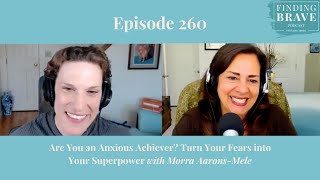
Podcast episode (Finding Brave) in which host Kathy Caprino interviews Morra Aarons-Mele about living with and leading through anxiety. Morra shares decades-long personal experience (clinical anxiety, major depressive episodes, and a diagnosis of bipolar II), critiques how organizations "other" mental health, and promotes naming mental-health experiences, integrating differences into work, and practical steps (identify triggers, practice self-awareness, negotiate workplace accommodations). The conversation includes concrete leadership advice for reducing workplace-triggered anxiety and resources (book, podcast, LinkedIn).
Chapters
So many of us who are perfectionists, right, who work with that model of I'm going to make this okay if I just am good enough, things are going to be okay, right? It is really practicing when to turn down the temperature and lessen that emotional involvement that can be literally life changing for us.
Hello, everyone. This is Kathy Caprino, and welcome to my podcast, Finding Brave. I've created this show for everyone who longs to create something bold and brave in their life, to rise up, speak up, and stand up for who they are and to reach their highest and biggest visions. Each week, I'll be speaking with inspiring guests from all walks of business, leadership, entertainment, the creative arts, and the entrepreneurial world. And they'll be sharing their intimate stories of Finding Brave and offer their best strategies for building your most rewarding, joyful, and meaningful life, business, and career. Hello, everybody. Welcome to another episode of Finding Brave. Kathy Caprino here. So happy you're here. And I have to say, I mean, I think this is true of, of every amazing guest I have, but today we're talking about something that's so vitally important and yet I don't think it's talked about in the way it needs to be and in the way our guest might. Maura Aarons Melee is going to talk about it, really from the heart and from great experience in and we're talking about being the Anxious Achiever and how to turn your fears into a superpower or a standout gift. Maura, thank you for taking the time. I'm so grateful to have you and so excited for this conversation.
Me too. Kathy.
Hi. Hi. Calling from Boston, where my alma mater is. So great to see you. All right, folks, again, we're going to be talking about anxiety in ways I think you may have not heard about it before or understood it before. And I'm going to read Maura's bio because your head's going to explode. I I what you've done in your career, it's so inspiring to me and it's so multifaceted. And of course, I want to dig in with the first question about how you got compelled to write and speak and train about anxiety and being the anxious achiever. But first, everybody, let me tell you about Maura. Maura is the host of the Anxious achiever, a top 10 management podcast. And I looked it up. You're in the top 0.5% of over 3 million podcasts. You know, wow, congratulations. And it helps people rethink the relationship between their mental health and their leadership. Maura founded Women Online and the Mission List, an award winning digital consulting firm and influencer marketing company dedicated to social change in 2010 and sold her business in 2021. She. I love this. She helped Hillary Clinton log on to her first Internet chat. Oh my gosh. And has launched digital campaigns for President Obama, the United nations, the CDC, and a long list of other leading figures and organizations named among LinkedIn's top 10 voices in mental health in 2020. Maura lives outside Boston with her family. I want to tell you, Morris recently published an amazing book, the Anxious Achiever. And we did a Forbes interview in my Forbes block Career bliss recently. And we will link to all of those. And I just watched again your amazing TED Talk, which has over a million views on Three Steps to Stop Remote Work Burnout. I mean, who doesn't want to understand that? Thank you again for coming and let us dig in. Okay. I, I would love to understand if you don't mind sharing. There's a real deep reason why you're compelled to, to write about this and teach about this. And I think in part it stems from what you've experienced in earlier life. Is that right?
Yeah. I mean. Right. They always say write what you know.
So can you talk about that?
Of course. Of course. I have had a decades long relationship with my anxiety, my depression. I, when I was 19 years old went through really my first bout of clinical anxiety and depression. I was a sophomore in college and I really could not function. I'll never forget the time when I was in the library at school and I was having such an intense panic attack. Somehow they found my roommate to come fish me out because I couldn't leave the safety of that little bathroom. So my anxiety has been a traveler with me. In addition, I've had periods of what they call major depressive disorder, which are very, very serious depressions. You know, again, it is really just hard to open your mouth and put some food in it. Right. It is a very dark thing. And I have bipolar 2 disorder. So most days it manifests as sort of like a frenetic energy, a lot of anxiety and periods of hypomania, which actually, you know, anecdotally, if you talk to a lot of entrepreneurs, there's a ton of us out there and creatives.
And artists, the most productive people in the world. Right.
And when we have hypomanic phases, like nothing can stop us. Right. I mean, you know this as a therapist. Right. And, and so my mental health is complex and it is something that I have to actively manage every single day. Through regular therapy, through medic medication and psychiatry, through exercise, through meditation, through being with people I love, through garden, through animals, you know, through routines. And, you know, I just. I always wanted to talk about it. I always wanted to find role models. I came up in a different world. I'm a bit older than, you know, I've been around for a while, and I came up in what I call the pre mentorship era. I'm sure you did, too.
We had them, but we didn't even know to call them that. Mentor sponsors. What we didn't know that was.
No. And I, you know, I. I felt I didn't have a mental health mentor. And so I really set about trying to create material and community so that people can.
Oh, beautiful. Can I ask just a few more questions? And why do I do this? Because I feel that a person's story, the narrative, the what they've experienced. Excuse me, really makes them the expert. I mean, we can learn all we want. We can get 10 PhDs. And don't get me wrong, I'm not diminishing, you know, formalized education. But what you've been through is why I want to listen to you. Because when you look at your career and what you've accomplished, you have overcome, or maybe that's not the word. You've used it in a different way. You've turned it into a different impact for you, and that's why I want to learn from you. But, yeah, I just wanted to say something.
Yeah, I do, because I want to reframe it a little bit. Like, I haven't. I haven't overcome anything. I had a panic attack last week. I, I.
You've over. Would you agree that you've overcome. It's debilitating nature where you don't know how to thrive. Would you say that's true? All right.
No. But I only bring this up not to make people feel hopeless, but to give people hope that you don't have to get cured and that you may manage these issues. But that doesn't stop you. Right. But I also don't want to buy into the narrative that we can imagine it, we can just break free, and everything is going to be just great. There's no magic formula.
Unfortunately, I'm getting choked up, Maura, because those words. And listen to them again, everyone, I think they refer to every single human being on this planet, whether you have anxiety or not, that we want to look at ourselves as broken. And I did want to talk about the stigma of anxiety, and we can go there immediately. But I think all of us, most of us, unless we're narcissistic personality disordered, think we're flawed, and we struggle, and we want to be fixed, and we want it to go away. And we think that if it would go away, miraculously, all would be good. And I think if we listen to you, we realize that's not really the most positive framing of the issues we deal with humanly. Would you agree with that?
It sets us up for disappointment.
Right. And feeling less than kind of every day. All right, thank you for doing that. Thank you for pushing back. So one more question about your childhood, if I could. Did you experience that early on as a very young child in school, or did what you experienced kind of get heightened through the pressures of college? Can I ask that?
No. I mean, looking back, I was an anxious child from 3 years old. I had agoraphobia. I. My mom. My mom will just back me up and say, not only were you always very intense, you were anxious. I had a lot of social problems in school. I was really different. I was really smart, but I didn't really fit in. And I've always just sort of. I always joke. I vibrated. A 12.
Out of a 10 scale.
Yes. And so, yeah.
Although I don't experience you that way, like, in some ways, it's very calming to speak with you.
Yeah. I think that's the product of a lot of work. The inside is not calmed. But, you know, I. So. So I think I was. I was. I was wired that way. I had a rough childhood, and I was really good at achieving and getting the gold stars. And so I'm a little bit of a typical case in that I learned at a young age that being special was a great way to get people to see me, to value me, to talk about me, to feel the bask of my mom's admiration and love for me. And so, yeah, it.
You mean. Wait, I have to understand every word. You mean when you got recognized, mom would then admire you as opposed to. Sometimes it was difficult.
She always loved me very much. But we have a. She's so like all our parents. Right. She's complex and did the best she could, and my father, too. And so, you know, I think that kids learn to either cater to what adults want from them or to just be like, f you. I don't need this.
We either give it or we react to it. Right. It's very rarely something moderately in between. Yeah.
Yeah. And I think for women especially, it's. It's really socialized in us. So I Yeah, I was that girl. I was student. I. My, my husband just found my national merit scholarship letter in a box of papers. He's cleaning out the garage and he's like, oh, honey. And I said, yep, of course.
Oh, why not? Of course. Of course you did. And of course you kept it. All right, thank you for giving us the context. Now, you've been on a lot of podcasts, you have your own podcast, you've talked about your book. Can I ask you this? What is the one thing out of everything society is getting wrong and the workplace is getting wrong, and leadership experts are getting wrong about anxiety? What's the one thing if everyone listening here could get right from your book, from your work, what would that be that we're not getting? I didn't ask you this before, so I'm throwing this at you.
We other it. We other it. We other all of mental health. We.
Don't you mean that's for others?
Yeah, like, oh, you know, that's right. My cousin had this. Or every time I go to, like a big forum on mental health with corporate leaders, and I'm so glad they're having the forum. Don't get me wrong.
Wrong.
It's, you know, it's often the leader talking about, again, a friend, a member of their family. I get personally, oh, my wife really needs your book. I'm like, no, you need my book. Mental health is something we all have. Anxiety is something we all experience at different levels, but we all experience it. And so when I talk to people off the record, they love to tell me all their stories, but it is really hard for me to get people, even now, to go on the record. There's so much shame. Why is there so much shame about something? I mean, the thing I, the thing I hate about leadership culture, although I understand it, is, you know, the content of what I tell people to do, and the content of what a lot of other people tell people to do is it's not that different. They don't name the words.
They won't say anxiety, they won't say.
Anxiety, they won't say depression. They won't say it right. We, we have a lot of euphemisms. And so my huge mission is to get people to say the words if they feel it.
I'm stunned. I mean, what am I thinking? You know, I work primarily with mid to high level professional women. They won't say a lot of words. They won't say, you're being mistreated, you're being sexually harassed, you're being, you know, I was sexually harassed and I didn't even want to use the word. And I deleted the email that proved it. Wow. I mean, I think, I think this is a human condition. Why don't we say it? What is the reason? Just so everyone can hear? Is it because it makes us feel even more, less than that? We're all striving to look good and be good and what is it?
I don't want to pin it on us. We work in systems that don't serve us, that weren't created for us. They're racist, they're patriarchal, they're biased. And you know, why do a lot of women feel anxious? Why do a lot of people of color feel anxious? Because they are in places that aren't welcoming.
It's a natural response to threat.
It's not in your head.
Yeah.
And so a lot of women can't say a lot of things. Let's be honest. You know, there was a study, oh my gosh, recently, I don't know if you saw it, of a bunch of very high level board directors, like fortune, you know, Fortune 50 board directors, women on boards. And the question was not just how you got on the board. How did you get the influence to make the board listen to you? And the gymnastics that these women had to go through, the lang. They. There were words they could not and did not use. To your point.
Such as?
You're wrong. I have a different opinion. Like anything that might seem confrontational. Right. How many women out there. We know how to couch a question. We know if we're going to bring up something that might, you know, send the room in a different direction. You know, I was just thinking. I mean, you know, just bear with me for a sec. Right. So. So, so the point is we can't say a lot of words.
True that, but.
But we need to. Sorry, that was my soapbox rant. I'll stop talking about that.
I'm about to publish a. A Forbes post on how to figure out and talk about how you're unique. I can't talk about that till I talk about why we feel so threatened to talk about why we're. I mean, I know they probably all of them. Them. Who are they? Whatever. Wish I could just get into the steps, but if you don't look at the root of behavior, you're never going to change behavior anyway. That's my soapbox. Thank you for letting me say it. So let's talk about how you have turned anxiety into an ally. How we won't, say, overcome the Challenges. You've, you've incorporated what is your way of being and made it work for you to a tremendous degree. What do we need to know? How do we do this?
I love the word incorporation. Integration is another great word. Or it's a big therapy word. The leaders that I interview, I just interviewed an incredible leader this morning, and he is on the autism spectrum and has tremendous anxiety and is mega successful. And he has to work in a really different way again, because he works in systems. We don't, we don't make systems for the neurodivergent brain. Right. And that's the question I ask everyone I interview. What was the moment where you learned how to make work work for you so that you could achieve everything you wanted?
And what are the majority of answers to that? That they do it their own way?
Well, some of them do, and some of them are in rigid corporate systems that are harder to manipulate. Right. But. But we have some agency, most of us. Right. Certainly by the time we get to be a managerial and leader level. So I really just want to highlight the idea of integrating and incorporating because however, you might be different, whether you're introverted, whether you have anxiety, whether you're on the spectrum, whether you're a caregiver with intense needs, the question is, how can I make work work for me and what do I need to get me there?
You know, I. I think about. I split myself in half when I'm doing these interviews. Part of it is I'm trying to focus intensely on what you're saying, but it's also being filtered through my experience.
Oh, yeah.
And I think that I'm. People would might be surprised to hear this, but I always felt different from early on, from age 10, that what was being told to me, whether that was religious background or what authority figures were saying, didn't make sense to me. And it became very apparent in corporate life and the way I've worked it is. I'm not in corporate life. I have my own business and I can structure it the way I want and I can work with the who I want and I can say what I want generally. But I find it fascinating that there are so many people that are making it work within rigid systems that you would think it would be impossible. So for people listening who, who say, I can't go out on my own and I'm in a patriarchal system or, you know, that's not related to anxiety, but it is. Yes, it is. What am I saying? What, What. How do people. How have you, you know, you were working with the democratic, you know, dnc, right, Doing Internet marketing. How, what are the tips for how do we make this work in systems that don't seem like they're going to be aligned with what we need and want? Does that make sense, that question?
Absolutely. I mean, so, so if you decide you do want to be there because it's always valid to be like you and me and be like, I'm out, it's not working. You, it's really like, I think any other approach to you. Take a strengths based approach. What, what, what are my gifts? Why am I here? What am I really good at? Right. What do I always get the feedback around being good at? What can I do that other people can't? And then you say, is that aligned with the values and expectations of my team, my manager and my organization? Right. Am I here because they want me here and they see value in me? And if the answer to that question is yes, then you have a lot of freedom actually to make room for how you need to work. If the answer to that question is no, they don't value me, they don't pay me, then I suggest maybe it's time to find another job. But if essentially you're in the right place for you, it's just making you anxious, it's making you feel drained, it's making you feel burnt out, what can you work with? What do you need? Some people value rigidity and structure. Some people value knowing exactly what their role is. Some people need alone time. They need flexibility and schedule. They need not to be on camera for zoom. They need to not to have to tell their boss where they are. They need things that actually, and this is my friend Cali Yost's work on this is the best. They need things that actually their boss won't mind giving them. And I think that this is really, really important because people like me, we need independence, but we need team and support. Now if I'm in an organization that values me, I should be able to carve out some of those. But first I have to know what I need. And that's a big part of what I talk about in the book. But I think what a lot of people like you and me help people discover is, you know, what are my strengths and what should I be doing with my time? And then what, what shouldn't I be doing with my time and how do I make that algebra work?
It's so rich, it's so important. You know, I, I remember writing a post about I'm an extrovert and an ambivert, really. But my son's an introvert and I saw that he there was discrimination in college in one of his courses. And I you know, when you're a mom or you're advocating for someone else, you can be like a lioness. So I wrote this post that I had a bias against introversion and didn't know it. And in your TED Talk, you talk about as a manager to help people avoid burnout, like don't be brainstorming on video. Don't make people brainstorm right on video. And I would see when I think back, there would be introverts on my team that when I'd say, come on, what are the marketing strategies that we're not? And one person who was such a great contributor couldn't come up with anything. And I thought, what's going on here? And the next day came with an amazing list of the most and I didn't get it that she thinks differently or processes information differently. So you know what I'd love to do is few more minutes on what people themselves can do to live a richer, happier life, embracing who they are, incorporating who they are fully. And also, you know, half of me when I talk to people on this podcast, I get discouraged because leaders and managers tell me what you think and I know you'll push back. In order to be a great leader, you have to be incredibly self aware and you have to look at what's around you and you have to stop doing things the way you were doing them and stop being narcissistic and stop being challenged by the world has changed and you have to change with it. And I just think so many people are not there yet. Tell, do you understand what I mean? Tell me what you think.
Self awareness is the drum that I bang most frequently. Self awareness is, I think, the biggest key to leadership. I mean, there's been data that supports that. Of course you have to be self aware as a leader. And really what we've just been talking about is actually being self aware. What am I great at? What do I not want to spend my time doing? How can I get help with that? You know, so much of toxic. I'm sure you get this question. People write me every day my workplace is toxic. My manager makes me anxious. I don't know what to do. You know what if people were more self aware and stopped acting out, especially their anxiety on other people, the workplace would be so different. Stop micromanaging, stop trying to control things, stop always having to be right, stop making everybody else on your team anxious. Right. Stop staying late and doing it all yourself because you're scared to release control. And so, yeah, it all comes down to self awareness.
There it is. So you just listed about five things that if you're listening and you manage people, you know, I managed several contractors who I adore, and one of them said, Kathy, you're. How did she put it? Working with you is the least toxic situation I've ever had. And I thought, great, because I know I've not always been that way, but. So you just gave lists for managers. First of all, self awareness. And, and if we need therapeutic help for that, you know, I'm a big fan of therapy. I was it, I did it, I got it. Most of us need therapeutic help at some point in our life and not in many times. Would you agree?
I, I 100%. I actually worked with a startup for a while that was, that was bringing therapy to founders, because I think therapy is the best leadership tool there is.
I love.
Right. It's a tweetable and I, you know, it's, it's, it's, it's hard to access for a lot of us, but it's. A lot of companies, well done. Are making it much more accessible and making it normal. So, yeah, you know what it is? Talk about integration and incorporation. It's. It's the place where you integrate and incorporate all the different threads of your life into the understanding of who I am and what I'm meant to be doing on this planet.
Right.
I mean, I love it.
I love it. Anyway, more now, tell us for those who are listening and are saying, I want to understand what you're saying. I want to incorporate and learn how to make it an ally, but I still don't know how. Can you give us a few more practical steps that listeners can take right away?
Yes. You know, anxiety is an emotion, Right. And we all feel it. And sometimes when we feel it, it's really good because it's like, I'm nervous because I really care. I'm about to go give this presentation or I'm about to do this podcast and I'm kind of nervous. Don't know what the outcome is. I'm anxious, but that's okay. At the far end of the spectrum, right. As we talked about me on the bathroom floor, really anxiety, that is debilitating. And if that's you, please get help. Please get help. You know, and in the middle is like what a lot of us feel all the time now, which is a chronic sort of unease. Right. What's happening? The future feels bad. I'm, I'm really not feeling great. Am I going to get fired at this 5pm meeting? Is my company going to have layoffs? You know, is the planet going to survive? Are we going to have another pandemic? Is my retirement fund going to be okay? Right. It's all the constant ambient worry. And then of course, that taps into our vulnerabilities and the stories that we tell ourselves as, as you and I talked about, I'm not good enough. If I just work hard enough, maybe things will be okay. And so. Right. And so a lot of us feel this way. And so the first step is to say, yeah, I feel this way. This is anxiety. And. Right. And, and, and I'd love to hear your, your therapists, if you want to go back into your back into your chair, as it were.
I will after you tell me more. I love it. Love everyone. Right?
It is to say, yeah, this is how I feel. And, and then I, I really, I encourage people and this has been so instructive for me to really try to figure out. And you can keep it focused to your workday. What specifically? Are there things that are driving your anxiety? Are there things that are causing it to spike? Honestly, the funniest thing is I talk to people all the time, and especially now that so many of us are hybrid. We're on slack, we're on teams, we're on these instant messaging platforms and so many people say, gosh, that makes me anxious. You know, I see the binging Slack bot and I see that the channel has a message for me, and I worry if I didn't respond in time or did I send the right message? Is the tone okay? Is the emoji corre correct? Am I on top of things? I was on zoom. Was I present enough? Right. All these things that happen every day can make us tremendously anxious, and that's such a helpful tool. So I, I would, I would urge you, you know, if you're thinking, gosh, this may be me, to pay attention.
Right.
Pay attention to your body throughout the day because anxiety really shows up in our body. Is your stomach jumping? Is your heart racing? Are you clenching? Are there people who email you who make you anxious? Are there meetings that make you anxious? Is there an upcoming event that is making you anxious that you can't sleep? Really start trying to identify this. So powerful. And then, then we focus on how we react to it.
I love it so much. So the therapist hat in me. I mean, again, I'd love Your thoughts? I. Everything you described. Like, I even have a course member who says, I don't think I can join you when. When we're on, because there's a big layoff, and I might be the one told, you know, Wednesday at nine, there we go. And they're not told the way we used to be told. You know, they're here you go, and you're being walked out. It's so horrible. Anyway, I think that there are so many things that we are now aware of that we're not in control of. We never were in control of them. There could have been a pandemic any moment in our human history, and there were, but now we see. Oh, boy. Okay. And I think that makes us feel, you know, humans want to be in control. So the first thing I would say is we're not in control of a lot, but we are in control of a few things.
Yeah.
And I think when we can focus on that, and if you feel that your work is out of control, try. As you're saying very beautifully, try to pinpoint what is and what isn't. But what. Tell me what you think. I feel that a lot of. Again, I work mostly with women. They hand over. They. They hand over their power and their control. Like many will say, I have to be online all night. Do you. Do you really? No, I do not. I don't have to. Well, then stop.
My anxiety is telling me that I have to. Exactly. And your anxiety lies to you a lot.
Right.
So, again, it's in the reaction to your point. I can't change the fact that my company is having layoffs. I can't change the global pandemic. What can I do? And this is leadership.
That's right.
Leadership is the difficult dance of I can't shape human history or even this company's roadmap. But I can hold us here for half an hour, bring you together, try to answer your questions as best as I can, and we can create a roadmap together. And I think that when you have this sense, it's really healthy. Right. It's what Dr. David Barlow calls the illusion of control that keeps us humans going forward. We need to have some anxiety because it keeps us alive, but we need to have an illusion of control because it keeps us in the game. And that is so empowering. Alone. What can I do? What can I.
And stop playing God. Like you said, I can't shape. I really probably can't shape the direction of my company for the next 10 years, but I can do my best. And I can hold us together for a half hour. That's going to move us forward. I think if we stop trying to be what we cannot.
Yeah.
And embrace our humanness, it helps. I love it. And I know you have to scoot more of it. Can I ask you one other question?
Of course.
I've interviewed a lot of people about all sorts of things, including anxiety. And as you put it, as you're about to do something very big, your first TED Talk, your first whatever, first time on television, we're going to be anxious. It's the healthy response. If you weren't anxious, something would be wrong. Do you have tools or tips for people to assess when anxiety is the healthy right response and when it might be a little too much or something that needs to be addressed because it's not the healthy response? Is that the right wording for it?
Yeah. I mean, I don't, I don't, I don't judge people's response. But. But here's what I do. You know, a lot of us anxious achievers, we are overly emotionally invested in outcomes. And to your point, I can care and be and work until midnight every night, but I cannot change the fact that my giant multinational corporation is going to have a layoff that is not worth my emotional investment and my anxiety. However, if I have a really big presentation in three weeks, that if I nail it, it's going to make my boss look good, make me look good, maybe put me in line for that promotion. That's worth my investment. Sorry, my emotional investment. That is worth me caring about the outcome and that's worth me being anxious about, I think.
And it's worth it also, because you can shape that.
I got this.
I can't shape if, you know the world's going to come to an end in 40 years, I can do my part. I love it.
And, and so many of us who are perfectionists, Right. Who work with that model of I'm going to make this okay if I just am good enough, things are going to be okay. Right. It is really practicing when to turn down the temperature and lessen that emotional involvement that can be literally life changing for us.
I love every word of it. I know you have to Scoop, but I'd love you to come back again.
I'd love to. This was a treat.
Oh, it's very calming. And I feel even more empowered and more self loving, which is, I think, what you help us do. You help us recognize what we used to think was a flaw or something to be ashamed of or something to Hide. Which creates so much anxiety. That imposter. If you only knew me, you would not. Where do we scoop up all of this beautifulness from you? Where do we go? Where do we get your book? Tell us all about it. Give us a few links.
Oh, gosh. You know, I get so anxious when I have to plug myself.
There goes the anxiety meter.
So you can buy my book wherever you like to get your books. Obviously, you can buy it on Amazon and independent booksellers. It is popping up all over airports across the country and people send me photos, and that just, like, makes me so happy. So, yeah, buy the book. You can listen to my podcast wherever you get your podcasts. And if you have a question for me or you want to just. Just talk to me, you can find me on LinkedIn. I will write you back, I promise. So.
Oh, my. There it is. People, I can't thank you enough for the important work you're doing. I think you're. Is it too much to say I think you're saving lives. Maybe not from death, but from a death of hope. Thank you for the work you're doing. Such a joy. All right, people, can we hear from you? I say it every time. You know, Kathy will say it, but we're. I don't feel like I just want to be a talking head. I want this to be impactful. But if it's impactful, you have questions. Can we hear from you? You'll see this on LinkedIn. You know, I respond to every. Almost every question and comment. Can we hear your experience, what you're getting out of this and the biggest question you have? Maura and I will do our best, and I really would love to hear your biggest takeaway from today. Thank you so much for taking the time, Maura. It's such a delight and an honor.
Same here. Thanks, Kathy.
Thank you. All right, everybody, have a wonderful Finding Brave two weeks and we will see you next time. Bye. Hey, folks, Kathy here. Are you ready for a big, positive shift in how you're working and what you're capable of achieving in your career? Let's make that happen for you. While you might know me best as a podcast host and writer, a key focus in my work is helping women achieve greater success in their work in my career and leadership breakthrough, one on one coaching program, I help women get what they want most, which includes more confidence, impact, advancement, financial reward, and fulfillment. And I also help them achieve their most exciting visions for the future. In the past 16 years, I've worked with over 20,000 women across six continents and and before that I served as a therapist and before that I was a corporate VP managing multimillion dollar budgets and global initiatives. I leverage all of that experience to help women build a new chapter where they can reach their highest and happiest potential doing work they love. Check out kathycaprino.com careerbreakthrough and I hope you'll register now. I'd love to support you. Thanks so much for joining us today. And please don't forget to check out Finding Brave dot for more programs, resources and tips. And tune in next time for your weekly dose of Finding Brave.
More from Kathy


Elevate Yourself, Elevate Others, and Amplify Good | Chris Cooper | Finding Brave Ep. 334

Finding Brave Epis #333: How Leaders Can Harness AI Without Losing Their Humanity, w/Bennett Borden

Finding Brave Epis 332- How to Stay Brave, Valuable and Visible in the Age of AI, with Raman Rai

Finding Brave Epis 331 - The Power of Positive Disruption, with Dr. Patrick Leddin


Finding Brave Epis 330 - Being 40: Letting Go and Embracing Who You Are, with Stacey Lindsay

Disrupt Career Reinvention with Kathy Caprino - via The Disruption Lab Podcast w/Patrick Leddin

Creating Neurodiversity-Friendly Work Cultures: Simple Workplace Adjustments Matter

Finding Brave Epis 329 - How To Create a Neurodiversity-Friendly Workplace, with Kristen Pressner

Finding Brave Epis. 328: Reclaiming the Power to Trust Your Own Voice, with Dr. Cindy McGovern