265: Reaching Top Success In Male Dominated Fields & Staying True to Yourself with Manuela Nicolosi
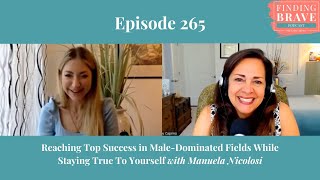
This is a Finding Brave podcast episode (host Kathy Caprino) featuring Manuela Nicolosi, an Italian international soccer referee, speaker and author. The interview traces Manuela’s early love of soccer, entry into refereeing at age 15 when women were first allowed to referee in Italy, and the personal adversity of losing her father at 16 which motivated her. It covers her development through regional matches, tough mentorship, the physical and mental demands of refereeing, and landmark achievements — including refereeing the Women’s World Cup final and becoming the first woman to referee the men’s UEFA Super Cup (Liverpool vs. Chelsea, 2019). The episode also describes her outreach work in middle schools and a children’s book and highlights lessons she teaches about resilience, not taking criticism personally, fitness, decision-making under pressure, communication, and inspiring girls to pursue passions despite social judgment.
Questions this video answers
The UEFA Super Cup (Liverpool vs. Chelsea), 2019.
15 years old.
16 years old.
The final of the FIFA Women’s World Cup (she is described as the first Italian woman to referee the final).
Chapters
So when you referee, you also need to learn if you want to achieve more. Need to learn to. Okay, I made a mistake. Okay, it's over. I will think about that. I will analyze that later. But I need to continue running, continue be focused on again because otherwise I will keep making errors.
Hello, everyone. This is Kathy Caprino, and welcome to my podcast, Finding Brave. I've created this show for everyone who longs to create something bold and brave in their life, to rise up, speak up, and stand up for who they are and to reach their highest and biggest visions. Each week, I'll be speaking with inspiring guests from all walks of business, leadership, entertainment, the creative arts, and the entrepreneurial world. And they'll be sharing their intimate stories of Finding Brave and offer their best strategies for building your most rewarding, joyful and meaningful life, business and career. There we go.
Hello, everybody.
Welcome to another episode of Finding Brave. How are you? It is September, late September. When you see this, it's not that here we're in, we're in summer. But I hope you're doing beautifully. And I am so excited, as I am every, every time I record this podcast, to have an amazing guest who I know is going to be so inspiring to you. Manuela Nicolosi is here from Italy. Thank you for joining, joining Manuela.
Thank you, Kathy. Thank you for inviting me. I'm so excited to be here.
So, so excited. And we are talking about something I think is so important to every single person on the planet. And I will say I think there's special relevance for young girls and young women as well, who have big, big dreams. But there are tough impediments potentially in the way of those dreams. So we're talking about how to achieve our big dreams despite the tough barriers and challenges. And Manuela is, is really a beautiful spokesman about this. So let me tell you a little bit about her. And we're going to dive into the key questions that I know you all have, and I have, too. So Manuela is an international soccer referee, so speaker and entrepreneur. First woman in history, in the history of soccer, to referee a men's European final, the super cup between Liverpool and Chelsea in 2019. She's also the first Italian woman to referee the final of the Women's World Cup. How exciting. And she's a frequent speaker now in schools and organizations. Inspiring, inspiring young girls and women to believe in their dreams and thrive in their highest goals, as well as navigate predominantly male environments, which Manuela is an expert in. So thank you again for being here.
Thank you so Much for your presentation.
Oh, oh, you are so welcome. All right, so can we dive in first, Manuela, with your personal story as a young child, what you dreamt to be and do back then. And then I'd love us to dig into what led you to do these incredibly inspiring things. Now. Can you tell us?
Sure. So when I was a kid, I always loved sport. I always loved challenges. So thanks to my parents, I tried several sports, and I love that. But there was one sport that I was really attracted from, and it was soccer.
Soccer.
So all my family was soccer supporters. So first time I went to the stadium, I was four years old. And I love that, you know, when you have, like, you see something and you say to yourself, I want to do that. I want to become that one. Even if they were men playing.
Yep.
I love that. I don't know if it was because I had a very strong relationship with my dad, and I saw him loving this sport. So I was like, I want to do this sport for my dad. I don't know. I don't remember, because it was very small, very, very young.
Did he, did he play soccer as well as watch it?
No.
I see.
No, no, no, no, no, no. But we went to the stadium every single weekend. And if we didn't, because the, The. The game was not at home, usually on Sunday, we went to my grandmother, all my family. We have a big family because my father had five brother and sisters. Wow. Always kids. So we were all the kids of the family at my grandma. And we were watching on Sunday evening, you know, the, The. The program about soccer. So we were watching the goals and everything. So in my family, they were talking everybody about. So that was my dream, to play.
Soccer at a high level.
Yes. Knee socket in that team. Of course. Because when I want to start something is not. Is that on the top level.
Of course.
So. But then I started playing myself. But my dad say, stop. It's not something for. For girls. So I don't want you to play soccer. He wanted me to. To do everything else except soccer. So.
So wait, let me even understand that there were women's teams, illustrious women's teams.
No, that. Not so many in Italy, you know, it was not that. Wow. Yeah, not so many. I see. So, yeah, but I didn't care. I wanted to. To became a soccer player. But yeah, as I said, my. Yeah. My father didn't want. He kept buying for me, you know, a gift for doing bread, for doing, you know, for girl.
Girly things.
Exactly what I mean. I am a girly person, but still I love soccer, so I can be both. But for him, no, no, no, no, no. It's not something for girls. So I had to do something else. And then when I was 15, because in Italy before, a woman couldn't become a referee. Okay? No, it was not allowed. Only men could be refereeing. I mean, not only in Italy, in several countries in Europe, of course, it was only something for men. And then when I was 15, they decided, the federation decided to open this possibility, this opportunity to women or to girls. So I had my cousin and my uncle that were referees. So they say to my knowing my passion for soccer, they say to my father, what if we suggest her to become a referee because she loves soccer as she can't play? I thought my father agreed. Okay.
And did they referee at a high level? The World Cup?
No, no, no, no. They referred on a regional level.
Wow. So dad said yes to that. You can referee.
Yeah, yeah, yeah, to that one. He said yes. And then I had to study the laws of the games, of course, and then pass an exam. And then I was, you know, the first year that women were allowed to do that. So it was one of the first ones. And I love that because I love the challenges. So in me, it was like, okay, let me show to you, man, that also me as a girl, as a. As a woman, I can do that. So it was like, you know, a challenge for me. So let me show them that I can.
And yeah, and can I ask you, the first game that you came out into a stadium, how did that go? Did you ever get hate about it?
Actually, the first game was like, because, you know, you. You start studying the laws of the games, you pass the fitness test, and then they give you the first. The first game. So you are in the middle of the pitch. Okay, they were kids. Because you start with kids.
I see.
All right, around nine years old, I think. Yeah. So, you know, it's still kids, but it's. It's difficult because for the first time ever, you. You find yourself in the middle of the pitch alone. Because when you, when you start refereeing, you're alone. Okay? You don't have, like, now we are three in the. On the pitch, then we have the fourth official, then we have two bars. So we are many of us, but when you start, you are alone.
Alone one person.
Yeah, one on. Especially one girl. So all the player. All the kids were boys, all the trainers were men, all the staff were men. So I just arrived, me, 15 years old and just doing that, Manuel. But Yeah, but if. Okay, first time, of course, I did many mistakes. It's normal when you start doing something, then you make mistakes because you have to remember also the load of the game that you have studied. You have to apply because the referee does this. I started to love the game. And then every year there is like some changes also in the laws. So you have to study and you have to apply, and so you have to remember the first time. Okay, this is full. Then I have to whistle. I have to give a yellow card, or maybe not, or maybe a red card. So it's.
There's a million decisions within the rules. There's so many nuances that you have to decide in the split second.
And it's not like, you know, when you have to make a, like a judgment that you say, hey, stop, everybody. Let me check.
I'll be back in a minute, what.
I am supposed to do, and then I will come back to you. You can say that players are expect that you just take the decision in. In the immediate moment that you say, it's fall is not full, it's yellow card, it's red card. And if you don't do that immediately, they start complaining. I don't know if it's something typical. In Italy, in the village, my son.
Played soccer and hockey, and, you know, I'm a tennis player. Oh, no, we. We are very vocal about terrible refs, let's face it.
Yeah. So this is a culture. A culture thing everywhere in the world.
I think so.
And it happened. So I was proud of myself because I wanted to show to my father that I could do that. Wow. And then what happened is that the very same year my father died, he had an accident. So he came out in the morning and he never come back. And I was only 16 years old. Oh, I'm sorry. And from that moment, of course, it was very hard for me. I also tried to kill myself because I was very, very attached to my. To my father. So for me, it was a big loss. And then I decided to show him, to keep doing this, to show him that I could do that. I. I promised him I would. Okay. Even if it was already in the sky, but I promised him that I would that become someone he would have been proud of me. I'm sorry, I'm a bit emotional. Oh, it's beautiful. Yeah. So I kept on doing that. And every time I had some, like, difficult moments, I would say I always thought about him and about the promise that I made to him. So. And now looking back at that, I can Say that I did what I wanted to do, I achieved what I wanted my father to see me. I'm sure that he saw me.
I'm sure he did every step of the way. And there's so much to be proud of. What a story. Can I. Can I hear a little bit about. All right, you. You did that first work and it was with children.
Yes.
What happened when. How did you get to the level you're at now to do?
How?
I mean, I'm guessing you're competing against a lot of referees that want to. To referee these types of matches that the entire world is watching. How did that come about?
So I was lucky because I am. At the beginning, as it was like something new, people were supportive. Also in. In the local federation, people were supportive. So they helped me with many games. So I always had someone coming with me and giving me advice, you know, so. But I had also one. One person which. Who is my uncle, who I think that he. He decided to take care of me. So the former referee, he decided to take care of me, maybe because of the loss of my father. So he decided to help me, but it was very hard because he has a very hard, strong character. So he started coming with me every match. And after the match, I thought I had a great game. And he was like, you did this wrong. You did this wrong. You did it wrong. How the hell do you want to become a referee? This was wrong. Why did you move that way? Why you did this?
So you had your own coach in.
Terms of referee, but I mean, if you are not strong, as strong as him, you just decided to quit. Because the. I think that the briefing with him was other than the game, because he was like, you did it wrong. You did it wrong. You don't have to do this. So I was crying back home, but then I said, okay, I will do that next time. I would do that next time. So I think that it was also thanks to him. Yeah. Because I wanted to show him. I will show you that I can do that. So now, that time I was doing what he.
And when he would see that, would he say, now you did it. Now you got it. Would he give you the credit or no, it was pretty much, here's what you're doing wrong.
Yeah. He was much on what I had to improve.
Yeah.
But without telling me. You did it good. And now you have to prove. But tell me what I think I remember. I would never forget one game. That's true. I did very bad in that game. I did very. Yeah, some errors I. I don't know. I was not in the mood. I don't know. You know, sometimes you have. We had games like very early on Sunday morning and like everywhere in the region. So like, maybe we had to leave at 6 in the morning, driving three hours to get there and always getting there alone. Yeah. If I think back about that, I say, wow, I really had this passion. I really wanted to achieve something because every single weekend, every single Sunday morning, waking up at six in the morning, driving, okay, not me, but him, driving three hours and then getting there, go in the dressing room, get changed alone, warming up alone. And then you have also the public that is not very nice with you, especially because you are a woman, like, telling you, what are you doing on a beach? This is not your place. You have to be in the kitchen or everywhere else and not here. And then, you know, now if I think back, come on, it's caring. You are the only woman in the middle of the pitch, surrounded by boys, by men, everywhere you go in the dressing room alone, everybody could enter into the dressing room. So if I think back and I'm like, wow, wow. And, and. But I wasn't scared at that moment. I, I only had one, you know, one goal. I was focused, I wanted to achieve always more and more and more.
Did you have that dream, you know, World cup or super cup or early on?
No, because it was not allowed to women to referee men's international game. So I, Yeah, I mean, my dream. Okay, I didn't dream at the beginning of the final of the World cup, of course, but I was dreaming to be the first one, the first woman to achieve, always more. So I was, for example, the first woman recurring at the highest. The top level in the region of Latium in Italy. So it was the first one. So. And that was, that was very. Yeah, I was very proud of myself. Yeah, I can't.
Can. Just for listeners, I. I would like to hit home about a few things that you said and see if I'm getting it right. You know, this, that's. This episode is called achieving your big dreams. Despite tough barriers and challenges, you had lost your father. Right. And. Which is a shattering experience at any age, but certainly as a young person. But you turn that into inspiration. Like, I want to do this for my father to be proud. Right. But we don't just. We don't just achieve great things. They don't just fall in our lapse. I mean, look at the. Here's what I'm hearing. The commitment, the vision, the discipline. Right. The perseverance a tough skin. I mean, I've been in male dominated organizations and situations and I've had a lot of stuff, harassment, as I know you have. Yes, there's been mistreatment. Yes, there's been, you can't do this. Yes, there's. What makes you think you can, blah, blah, blah. But you, you brought together all of that steely commitment that. And on top of that, your own uncle who loved you to pieces and wanted you to be better, was ripping you down. Look at how you screwed up. You know, how do you even call yourself a ref? A lesser, I won't say lesser or every spirit is gifted and beautiful. But a weaker person, a less committed person, a less dedicated person, a person with a thinner skin would have stopped at age 12. So I applaud you because these are, these are characteristics that we actually need if we want to achieve huge things and not just dream about them. Would you agree with that assessment?
Absolutely. Absolutely. This is why you have a very high rate of young referees that stop that quit in the very first few one to four years because they are alone. They are alone. They go on the beach alone, they are back alone. So they, they are lost. Okay? And also they, they say, why do we have to go there, be alone. Take all the people yelling at me.
Telling me I'm nothing and nothing.
Exactly. For, for what? Yeah, because you don't do that for money, anything. It's not for money that you do that. It's just for your passion of football or just for. I think that refereeing is a very, it is cool, it's very school of understanding, also how to behave, how to manage people, how to adapt, also your communication and especially also how to start, you know, making your decisions without being influenced by other people. Because if you start listening to all the people that telling you, okay, I'm not using bad words, but that was. And what you do here, you make big error. So if you allow them to make you feel bad about that decision or make you focus on the decision that you took five minutes before, then you are no more focused on the rest of the, of the game. So you need. Because this was my mistake. Of course, when you start, but it's normal when you make a mistake and you realize that you make a mistake, or maybe other people telling you there was a red card, you meet the red car, you missed the penalty, and then you continue thinking about that, then you're losing everything ahead of you from the present. So when you referee, you also need to learn if you want to achieve More need to learn to. Okay, I made a mistake. Okay, it's over. I will think about that. I will analyze that later. But I need to continue running, continue be focusing on the game because otherwise I, I'm not. I'm. I will keep making errors. And you have to do this not being sitting on your desk. You're doing this while running. Running, running from. From the. The one side of the beach to the other. Also, you need to take the good vision because it's normally when there is a fall, you need to see between the players to see if there is a fall. Because if you are right in the back, you don't see there is like a holding. Of course you've gotta.
You've gotta have the full view of what's happening between players.
Exactly. So you need to run faster because you have to be in the middle to see and all of these. And while you're running, you need to think. Okay, no, this is good. This is good. Okay, play on. Okay, no, this is foul. I'm gonna give a yellow card for reck. I'm going to give a red card because it causes a goal score opportunity. And you need to think while you're running. So this is why also you have to be very, very fit because otherwise you don't have enough oxygen to your head mind. So you aren't able to take the good decision. Because if you don't have enough oxygen, of course you can take the decision. You just keep running. So you can see when a referee is not enough feet, not because of the body, but because you see what that is missing many incidents or many things. Because it's thinking only about running. And the mind is so to me.
All right, I'm emphasizing what I hear. I hope it's helpful for listeners. Everything you do is. And that's why you're teaching young girls and women and your. And men too. And you're going into organizations. One thing that you said, we all make mistakes. Some of them are glaring, some of them are public, some of them are ridiculous. But what in that moment in soccer, as you said, if you stop and agonize about that, you've lost your ability to contribute at a high level because you're focused on what just happened and how not to do it again. And you're going to be insecure and you're going to repeat. That is exactly the same as managing and leading. Right. We're going to make mistakes. You are. There's no flawless human. But what you learned was in the moment. Yeah, I blew that I will deal with that later and I will correct how I made that mistake. But right now, I've got to deliver. Amazing. And on top of that, you physically have to be fit, which I think is a metaphor. Not everyone is going to be able to run fast. You had to run faster than those boys when you first started out, right? You have to run. You got to catch up, keep up. But for those of us who don't play soccer, I do think that the fitness, the wellness piece is important in leadership as well. If we're drained, if we're stressed, if we're having a manic attack, if we are, you know, depressed, anxious, all of these things, it gets in the way of our communication, our ability to have good boundaries, our ability to be in the moment, our ability not to lose it when someone screams at us. I mean, it is just a complete parallel to leading in organizations. Right? Am I getting it?
Absolutely. And as you said about communication, we also. Because it's not only taking the right decision, being in the right position at the right moment, but it's also communication. Because when you, when you take a decision, most of the time you have players complaining, especially right?
One is going to be complaining about it, okay?
So if they come and scream and you put yourself at the same level as them and you start screaming, also you. It will become a mess. So you also need to manage your stress. So take the decision. You know that you have taken the biggest decision of the match because maybe you have given a red card, you're given a penalty. Maybe you are not 100, sure, but you took that because you feel it. Because after years of experience, you know that and you feel it. And then you have people coming to you telling you, you were wrong, I didn't touch him. What are you doing? And so you, you need to learn to manage your emotions because you need to calm everybody down. You need to manage everybody, I mean, accept, if they want to keep themselves and you leave them doing this, but when they come to you screaming, you need to stay calm and focused and say, stop there. I don't want to talk when you explain. But you. Because the. What's the most natural answer? If someone's screaming to you, you scream back, of course, stop screaming. But then everybody's screaming higher and higher. So you also need to. To calm people down and say, stop, I've taken my decision. He took. He was holding or he did a reckless or whatever, and then go back and of course they will respect you more. But what I'm telling to you is I I've learned years of experience, of course, because at the beginning when you start, nobody tell you, you don't follow as a referee like a mental you. So you learn the laws of the games, you low you, you go and train with other referees. But then everything about mental, about visual visualization, about managing your emotions, it's about you. So it. You have to do this work on, on yourself. So this is why I see, as you said before, many things in common with also it truly is job incorporate because you need to take your decision not with the stress that puts you in a very high situation. High stress situation. And then you're not able to take the decision.
I'm also, I'm also hearing two other elements. We scream back at someone often because in some way we don't have the ultimate trust in our decision and we're defending ourselves in your role. I made the decision, it's done now. I'm not undoing that. So you'll have to live with it. And so what is the purpose of yelling back at the person? It's ridiculous, right?
Correct. It's only. It happens as a natural reaction of the human because the human being wants that you scream. You scream back and say stop screaming. But you're not screaming at me.
No. And you need to rise above that reaction, that human defensive reaction, which is also a part of leading and working well with people. Because if we keep giving each other what we're giving each other, we're going to spiral out of control. And it's. It's fantastic. Oh, I love it.
Now there's one of the best. I'm sorry, just want to add one thing. One of the things that really made me do a big change was stopping taking things personally. I made so many mistakes and I was feeling so bad after each game when I took everything personally.
Every time people's insults, you're terrible, you're stupid, you're whatever.
Exactly. Or you took a wrong decision. And I felt bad because I felt like I wasn't good enough because I took a bad decision. And then when I started with all the work that I did on myself. So when I started then not taking anymore anything personally, anything. So I understand now that if someone tells you about the decision, they are talking about that decision. No, they are talking about that behavior that you had in that situation. They are not talking about you really stopping doing that. It was. Now I am. Wow, it's. But it was very hard because I was taking everything personally. So if you tell me, oh, you were like you answering that Way I was like, why did you say that? Are you saying that that means that one why you. You just say something without any hidden meaning. But then when I stopped that, oh gosh, a life changing.
It is a life changer. You know, there's an amazing book called the Four Agreements by Don Miguel Ruiz about agreements to make with yourself to live the highest, best life you can. And one of them is take nothing personally. And people will say, and I'll teach that. And people will say, really Kathy, really, don't take anything personally. Now we're not narcissists, hopefully most of us. So when there is true remorse that you are feeling for how you behave, you need to, you need to understand your part in it and you need to apologize and make amends, of course. But generally what comes at you is more about that person than you. So maybe it was an unwise decision, but it doesn't mean you're stupid. It doesn't mean you're a terrible person. And I think if we can learn, don't take it personally. Which is an incredibly. It's emotional mastery and self awareness and bravo to you. All right, my dear, I'm dying to live in the moment of when you, when you did the first ever and you walked out on the field. I just want to live that high moment. I hope it was a high moment.
What happened, it was so unexpected because one month before I had achieved dream of my life that was the final of the World cup or the Women's World Cup. And that was we really emotional moment because you know, for a World cup you. So first of all, you need to work five years of selection to be selected for the World Cup. So after every workup, a number of referees from all over the world are pre selected, okay, for the selection process. So four years, you do your games, you do fitness tests, you do seminars. And then the list is became smallest and smallest, okay? And then the final list goes out three months before the, the World Cup. So you imagine these four years, okay, Then I went to the World cup and then at the WhatsApp you are, of course we are all friends between the referees, but of course there is competition, okay, so we all train together. But you need to show also that you are 100 fit to be selected for each game. So it's game after game. So you can imagine after 45 days of the competition and. And then after the quarterfinal, 2/3 of the referees, they went home. So we stayed only. Yeah, we. Because there were only the semi finals and the final. I see. So we Were only six trios of us. And so when they announced it, the name, and so I, of course I started crying. I'm emotional. But I loved it. I leave my emotion. I love that. So I mastered my emotion on the pitch. But I am an emotional person and I love feeling my emotion. So of course I started crying. But in that moment.
You mean when you were accepted to do the finals in the World cup.
Is that they announced. So the. Our boss announced the name of the referee selected for the final. Gosh. And so it was also in France and my family could come. So my mother was there, my daughter was there, my brother was there. So I was. They have ever, ever. So for me, it was the dream of my life, because as a woman, I only could do Women's World Cup. Women's World Cup. So for me, it was, okay, I'm done. I. I'm the ever. Also because the World cup is every four years, so every four years, it only is only one trio of referees. So I was one of the. Of these three of the referees every four years. So for me, okay, I have done. But I was prepared. So we prepared for four years. We had to pass the men's fitness test. So it was prepared. And so then it was, wow, fantastic. I'm the happiest person ever. And then three weeks later, there was this super cup. And then I had this call from the chief of the. The. The weapon and my referees telling me and to the other assistants that we had been selected for refereeing the Super Cup. So many of my colleagues, I started jumping everywhere, calling all my friends, and I was like, wow. And so I had many colleagues telling me, didn't you feel afraid of doing that? You know, because. No, all the, because we had all the pressure because that was the, that was the, you know, the, the, the. The. The war. Because either we did this game well, as we did, and this would have break the wall and then open the opportunity to all the women as it happened, or you blow it.
And that's it for women. See, we shouldn't have had women exactly. Go back in your corner.
Oh, exactly. We gave you the opportunity and you blew it. Exactly. But never because we were so well prepared. For years it was three women that were chosen for the same three women that referenced the Women's World cup final.
Right, but for the men's European final, was it.
Yeah, the same three.
Same three. So much pressure. So much pressure. So much pressure.
Yeah, but I was so. I. The depression was not like, oh, my God. Oh, my God, will I Be able to do that. No, no, no, no, no. Never. I was like, I'm. I can't wait to do that. I can't wait to show them I can do that. Really? That. That was my. And wow. So I. The funny thing was that when I asked because I had never referee a men's international game before. So when I asked you some colleagues, what's your advice? You know, and the advice from all the men where was out there very fast. Because it's true that the English football or the English soccer sure is what. It's fast.
Fast.
But they say that English, they play very fast. But it's not because they play fast. It's because when you whistle at poll, because they are men, the same men that play in the English league, they are also in the French league or the Italian league on the US League. So it's not because they are faster, the men that play there, but it's because in the English football, they complain less. So when you whistle the fold, they put the ball down and they play. So you have very few breaks. Breaks. Okay. Very few. So this is because people think it's faster because they, they play fast. They continue playing. Okay. So they put the ball down and they play. So all the men, the advice was, oh, they play fast. So I. So we were looking with the other colleagues and they would say, this is not an advice. I know they are men. We referee men every weekend. So, okay, it would. It won't be harder than a game of men that could referee every weekend. But all. Everybody were afraid that we weren't able.
To keep up to. To run as fast.
Exactly.
When it's not about running as fast, it's about the fitness required not to have the pauses, not to have the breaks that maybe another.
Exactly. So they were afraid that we. Yeah, we wouldn't keep the track. But I tell you, we didn't only do the normal game. We also had the extra time. Oh my gosh. And went to the. Yeah. To the penalty, though. So this was a very long week. We ended at 1:30 in the morning.
And when you first walked on the field to be the ref, what happened?
I was so much happy to be there. You could see one beautiful thing that if you see the images, because we were. We had cameras everywhere, of course, following us, but you could see the three of us always smiling. Always smiling.
And the crowd. What did the crowd do?
The crowd did very beautiful thing. Because normally when referees go out of the. On the pitch for the warming up before the game. Okay. They normally they are always whistled. Okay.
Whistled, whistle.
They always do, you know, always. In that case, we went out and all the stadium shouted, clapping.
And that makes me cry.
Yeah.
And then all the stadium, all the.
Men, all the women. Yes. Yeah. Because those, because this was so much once that we were appointed for that all the media from all over the world, because it was, you know, the history breaking. So the. Every media in all the world, they say, three women will do the final. Three women will do the finals. Everywhere we had like people from all over the world, it was. This game was watched from I think 1, 2 billions of people. Oh my gosh, look at you. Yeah. Because it was broadcasted everywhere, of course. So. And I realized that when we arrived at the stadium, when we arrived at the stadium and there was all. And so sorry, all this people outside the stadium there, I started feeling like, wow, we are there, we are doing that.
Congratulations, my dear. You did so many. Speaking of barriers, you broke so many barriers here. And it warms my heart that in that high pitched moment, people showed who they really can be. That they're welcoming three women to do this in a traditionally male role until just a few years before. It's so heartwarming. Bravo to you, my dear. We have only a little bit of time left, but I want to. What I'm the one that asked you 52 questions, but I want to make sure we talk about. You have a book, a children's book out. I want to make sure too that organizations who would love you to come and speak know where to find you and you can tell us a little bit about that work you're doing. So would you guide us through that? What kinds of organizations and schools, et cetera, you know, what kinds of programs are having you come speak so that if anyone is listening, they can say, oh, oh, we need, we need.
Tell us about that school. I normally do go into middle schools. Okay. Yeah. Because this station, they found out that today teenagers, they, they don't have passions, they don't know what they want to do or they, they think that maybe think are too hard, you know, because if you want to become taught to, to career in sports, you have to train, you have to be consistent, you have to commit. So, and that was for me, very strange to go in middle schools. And then of course they, especially boys, when they know that they are a soccer referee. So they are like, oh, can you explain that rule? Can you explain that rule? Do you know that player? Do you know that player? So that's funny. But girls, they speak Very, very few. So they. They don't say. They don't ask many questions. They don't say. And when I ask them, which is your passion? 90 of girls, they just answer, I don't know. I don't have any passion. And I'm like, come on, really? What do you like doing? What do you like playing? What do you like? I don't know. And they're like, I don't know. I don't have any passion. But then when the all this presentation is done, then they come to me and then they say, you know, I would love to do that. I would love to do that. And I'm like, why didn't you say that? Because of the voice. And they're like, because I'm afraid of judgment. Oh, boy, there we go.
Do you know that the research shows that by age 13, something like 20 to 30% of girls confidence disappears and it's because of all the socialization girls have. I'm so grateful to you for going and going and speaking and igniting and igniting passion and helping girls realize I do have passion. You know, I think also, I think sports are so good for girls. I was a tennis player. I was number one on the team in high school. Went to the States in New York. And boys would call me, hey, Kathy, do you want to play? Because they wanted. They weren't on the team. They wanted to beat the number one girl and say, I. And they never did. I wiped the court with them. And I'm like, okay, Fred, see you next week.
See you at school.
And they slumped off. I think it's. And I had so many guys who were friends and I was comfortable and I wanted mastery and I wanted competition. It's beautiful.
And I think. I think we girls, they are afraid of competition. I think they are. They are not teached that it's good to be competitors. It's good.
My mother, God rest her soul, she said, don't beat the boys. I said, why not?
She goes, they won't.
She goes, they won't like you. I'm like, but I think that's an outmoded but very common belief. Don't beat the boys.
But what you said before about the boys calling you remind me about me doing the fitness test with the voice. And every time I double a voice, I. I heard the boy.
I can't live with myself if I.
Lose this for them. It's like, oh, my God, this can't happen. I. It can't happen. So, yeah, they did the same. They started running faster, only after double them. Because they didn't want to be doubled by me. Not buy another. Another.
That's right. Oh, how do I love it?
But I wasn't afraid of judgment. I mean, I know, I mean, I know it's hurtful, but what is hurtful for me now, it's listening to all these girls afraid of judgment already at 30 years old, 5 years old, so. And not believing yourself or not having passion because they are afraid of what other, the voice or other people are thinking. So I'm trying to. Telling them, to all of them. I tell them, write me on dm, on Instagram or whatever, or write, tell your parents to write me if they don't want to bring you to the training or whatever. Because I want to talk with them. I tell them. But I think they need someone, you know, to, to give them, to inspire them because otherwise they are like, no, it's better not. So it's themselves that put the limits, say, no, no.
But society contributes to that. And we, you know, what is the outcome? You know, I'm working with mid to high level professional women, thousands of them. The outcome is a very bland, very unsatisfying, very unengaged life. If you cut yourself off at the knees and you don't want to strive and you don't want to ignite your passion and you're afraid of judgment, it doesn't end well. So I'm hoping. I know I sound fervently, you know, activated here, but if any parents are listening, please encourage your girls and of course your boys. This is not only to talk about girls, but encourage them to follow what they love. Yes, they're going to fail. Yes, it's going to be hard. Yes, they're going to be made fun of. And so what?
They will learn.
They will learn. Just like you in the drive home with your uncle. You blew it. You blew it 52 times. Well, next time I'll blow it 30 times. And next time I won't blow it. Yes, please, let's. Oh, how wonderful. So where do we learn about your book? Where do we go to, you know, hire you to speak? Where do we, where do we send people.
To? For the children's book or for my book? Okay, so for the children's book is on Amazon. I will give you the link. So beautiful.
We'll link to it below.
And for my book, the same.
Oh, my dear, I can't thank you enough for coming. Your story is so inspiring and I do think this title is it. Despite the tough barriers, despite your losses, despite Your beloved father saying, I'm sorry you can't do what you love. You found a way to do something and break barriers that wouldn't have even been possible had you followed the other direction. Is that true? So wonderful. It's so inspiring. Thank you for joining me. Thank you for being here. So appreciate it. All right, everybody, I hope you, I hope this ignites you. And even if you're a 50 year old woman or 45 and you hear this, you know a lot of what I help people do is no, maybe you don't want to chuck your career, but you had a passion as a young person that you let go. So for instance, I still play tennis, I still sing because those things make me happy. So if you're listening and you're not a young girl, but you're anyone else, but you've let those passions go, I hope those are ignited for you too, because it changes us to pursue those passions because our heart is on the line with those. And when your heart is on the line and your spirit's on the line, it enlivens everything. So please, wherever you see this, please like it. Please ask us a question. Manuela will answer it on LinkedIn, Instagram. Wherever you find this, please let us hear from you. We'd love to hear what you got from it. I hope you're inspired and I wish you a wonderful finding grade. Two weeks and we will see you soon. Thank you. Hi friends. Kathy here. I'm excited to share info on something I've never done before, but I hope it's really helpful. I've developed and taught two different courses over the past years. My 16 week amazing career project course and my 8 week the most Powerful you course. Both offer video training, a transformative career growth curriculum, tons of great resources, plus weekly live coaching calls with me this fall. I've decided to promote them both at the same time. So you can choose which course is best for you now or you can take them both at the same time. The Most Powerful you teaches women how to dramatically build their confidence, impact, self esteem and strength so that they can reach their highest potential in any career direction. The Amazing Career Project walks Women through the 16 most essential steps to building a happier and more rewarding career they love. Click the links below in the show notes for a description of both and choose the one that's best for you. This is information that every professional needs to know if they want to reach their highest success and happiness. Both courses start the week of September 25th and I can't wait to See you then. Thank you. Thanks so much for joining us today. And please don't forget to check out findingbrave. Org for more programs, resources and tips. And tune in next time for your weekly dose of finding Brave.
More from Kathy


Elevate Yourself, Elevate Others, and Amplify Good | Chris Cooper | Finding Brave Ep. 334

Finding Brave Epis #333: How Leaders Can Harness AI Without Losing Their Humanity, w/Bennett Borden

Finding Brave Epis 332- How to Stay Brave, Valuable and Visible in the Age of AI, with Raman Rai

Finding Brave Epis 331 - The Power of Positive Disruption, with Dr. Patrick Leddin


Finding Brave Epis 330 - Being 40: Letting Go and Embracing Who You Are, with Stacey Lindsay

Disrupt Career Reinvention with Kathy Caprino - via The Disruption Lab Podcast w/Patrick Leddin

Creating Neurodiversity-Friendly Work Cultures: Simple Workplace Adjustments Matter

Finding Brave Epis 329 - How To Create a Neurodiversity-Friendly Workplace, with Kristen Pressner

Finding Brave Epis. 328: Reclaiming the Power to Trust Your Own Voice, with Dr. Cindy McGovern