280 Networking Is More Effective Than Traditional Job Search- How To Make It Easier ft Austin Belcak
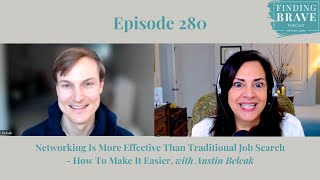
Austin Belcak went from a 2.58 GPA and 300+ rejected applications to landing tech jobs through networking. Instead of applying online, he researched people who made successful transitions, interviewed them, then built Cultivated Culture to teach others his system: add value first, reframe rejection as data, and let visible projects attract connections.
Questions this video answers
April 4, 2024
2.58 GPA
Over 300 places
2016
LinkedIn (posts), the Dream Job System podcast, and cultivatedculture.com
Chapters
When we kind of buy into the system that we're sort of told is the right way to go, it can be really hard to keep going and going and going because you're not doing it because you believe it's the best way to do it. You're doing it because other people have told you that it's the best way to do it, or other people have just you feel that it's the only option that's out there. And I think it's hard to be successful when you're operating in that environment.
Hello, everyone, this is Kathy Caprino and welcome to my podcast, Finding Brave. I've created this show for everyone who longs to create something bold and brave in their life, to rise up, speak up, and stand up for who they are and to reach their highest and biggest visions. Each week, I'll be speaking with inspiring guests from all walks of business, leadership, entertainment, the creative arts, and the entrepreneurial world. And they'll be sharing their intimate stories of Finding Brave and offer their best strategies for building your most rewarding, joyful, and meaningful life, business and career. Hey, folks, Kathy here. Are you ready for a big positive shift in how you're working and what you're capable of achieving in your career? Let's make that happen for you. While you might know me best as a podcast host and writer, a key focus in my work is helping women achieve greater success in their work. In my career and leadership breakthrough, one on one coaching program, I help women get what they want most, which includes more confidence in impact, advancement, financial reward and fulfillment. And I also help them achieve their most exciting visions for the future. In the past 16 years, I've worked with over 20,000 women across six continents. And before that I served as a therapist. And before that I was a corporate VP managing multimillion dollar budgets and global initiatives. I leverage all of that experience to help women build a new chapter where they can reach their highest and happiest potential doing work they love. Check out Kathy Caprino.com CareerBreakthrough and I hope you'll register now. I'd love to support you. Hello, everybody. Welcome to another episode of Finding Brave. I got a big smile on my face. I think I probably do every episode, but maybe this one's a tad bigger in that I have such. We have such an amazing guest here, Austin Belsack. Austin, you are such an inspiration to me and I. We were talking just before you came on my show on episode five, and we are. What are we at? 280 or something. So that was back in 2018. So I just can't thank you enough for being a supporter and all the help you've given me. You know, even your tips or the two second tips make a big difference in my business and my life. So thank you for joining me today.
Well, thank you for having me back, Kathy. I mean, it's, it's one thing to have somebody on a podcast once, but totally different ball game to be invited back. So I'm grateful that the first episode warranted around two, and I'm here for it. So thank you for inviting me.
You are so welcome. And that first one was how to land your dream job at a salary you deserve. Holy cow. And here you are, 1.3 million LinkedIn followers later. You have built your business so, so inspiringly. But folks, let me tell you what we're talking about. We are going to be talking about networking, which is a topic both Austin and I hear about kind of constantly. And we're talking about how networking is more effective than traditional job search. Way more. And how to make it easier, which is the key word. So many people struggle with this. So many people don't understand what it is, think you have to be an extreme extrovert to do it, and you're here to tell us everything about it. But before you do that, I want to tell everybody all about you. So Austin is the founder of Cultivated Culture. I never asked you how you came up with that. Someday I'll ask you where he helps people land jobs they love without traditional experience and without applying online. You know, full stop right there. Everyone despises applying online because they don't hear back. And it's a horrifically, seemingly disrespecting, devaluing experience for so many. Anyway, Austin's job search system stems from his personal experience transitioning from being a new grad with a biology degree and a 2.58 GPA. I love how you put that in. And a job in healthcare. To landing interviews at Microsoft, Google and Twitter X, resulting in a five plus year career at Microsoft, where he was promoted multiple times. His strategies have been featured in Forbes, including in my posts about you, Business Insider, Fast Company and Inc. And he has helped thousands of job seekers land amazing jobs at places like Microsoft, Google, Amazon, Apple, Facebook, Salesforce, LinkedIn, Tesla Space. Oh my gosh. It goes on and on. We're gonna, we're gonna link to your bio below. You also have an amazing podcast, the Dream Job System podcast, where he shares bite sized, highly actionable career advice. Five minutes to 15 minutes. That's a feat. I can't do that. You know, I'd love to have you on for 100 hours. And there it is. There's much more. But thank you again for joining me, Austin, and let us dive in. You know, first of all, that story that you told on episode number five, you know, you were in such a different place even back then, but certainly when you just graduated from college. Would you mind telling everybody the Cliff Notes version of how did you go from that bio degree to what you're doing now in your business? Can you give us that?
Yeah, certainly. It's a long journey, so I'll try to sum it up as best I can, but really, um, you know, in. In college, I. I didn't have any real direction. I think, you know, one thing that sort of frustrates me when I look back on my educational experience and having worked with so many people who, you know, are in that experience or have just graduated, I think there's. There's a lot to be desired when it comes to preparing people for the real world. In. In school throughout, you know, we're. We're sort of taught that you follow this plan, you study, and then you show up and you take the test and you get good grades. And all of that is very, very different than the way that the real world operates. And I sort of found myself gravitating to or seeing myself gravitating to more of what I saw working in the real world. And I really struggled on the academic side, and so that made school kind of tough for me. I never did well because I didn't really study. And the other piece of that, though, is then I didn't really have any guidance on how to get a job, how to job search, and how to go about that process or even really getting clarity on my career path. And so I landed on being a doctor. That was what I originally wanted to do because it made everybody else in my life happy. You know, my parents, my friends, they would all kind of give their nod of approval, and, you know, I would hear my parents telling other friends of theirs that, oh, Austin decided he wanted to be a doctor and all that. And so I sort of made that decision based on what other people wanted versus what I wanted. And that typically doesn't work out when we do that. So I got to college. I failed a couple of classes my first year. That didn't bode well for my. My med school prospects. And then I just continued to kind of coast through college. I didn't, you know, feel very, very Yeah, I didn't feel very excited about academia or studying or a lot of the classes I had to take. And so I went all the way through. I didn't have very good grades. And then it came time to get a job and so I had to try to scrape something together, which I did via. I got an internship somewhere. They offered me a job at the end of the summer. I said yes to that. And so I graduated. And I didn't have, I didn't apply anywhere else, I didn't interview anywhere else. I didn't really even job search. I just kind of took this thing that was in my lap and that turned out to be a pretty rude awakening. You know, my salary was, was below what I needed to kind of get by my cost of living and expenses were more than I was making from this job. I didn't have a very good boss, you know, he didn't really treat me super well. And you know, the environment was, was not great. And I think most of all, it just wasn't really what I wanted to do. I had a very different idea of what I wanted to be doing with my life versus what this job offered. And so I decided that I wanted to make a change. And when I looked at where I wanted to go, I wanted to go to all these brand name, brand name companies, you know, Google, Facebook, at the time, Microsoft, et cetera. But to, to, you know, the intro, the points in the intro, you, you called out. My grades were bad, you know, 2, 5, 8 GPA, that was in biology. So not necessarily the most transferable thing. My current job was in healthcare. And so I, I had to figure out a way to bridge that gap. And I tried doing the traditional process. I went to the same people that we always go to for advice. Our friends, our families, you know, parents, career services. And they all told me the same thing, which was effectively the traditional search, right? You head to a job board, you look for some jobs, you update your resume, you write a cover letter and you apply and you just kind of rinse and repeat, rinse and repeat until hopefully somebody gets back to you. And that process did not really work for me. I applied to over 300 places. I didn't get any results. And so I had to find a different path to getting a job. So we'll dive deeper into it. We can save some of these details for later. But essentially I took a very different approach to job searching and that sort of became the system that we teach our clients today. But a lot of it was rooted in networking and A lot of it was rooted in relationships rather than applications. And that ended up working really well for me. I was able to build relationships and get in the door at Twitter, I guess, you know, now X and Google and Microsoft and Uber and a couple of other places. And I eventually got that job at Microsoft. And so shortly after I started, a number of people, especially from college, reached out to me. They sort of knew my study habits, my academic habits in college, and I think they were surprised maybe that I ended up, How'd you do?
So good.
Yeah, exactly, exactly. Which, you know, is. Is a fair. A fair assessment based off of, you know, the person that I was back then. And so they reached out and they kind of shared that they were struggling to, you know, with a job search and these different things. And after about the, the, you know, 15th or 20th person reached out, I sort of realized that there might be something to this. And so I wrote up my whole strategy in an article and I published it and I did a little bit of promotion, and that picked up a lot of steam. And so that was back in 2016. And then we just built stuff out from there. And then, you know, to your point, we met a couple of years later and everything has just kind of grown since then. So that's the super small nutshell version of, you know, the last 10 plus years.
Oh, my God, it's so inspiring. And, you know, you are one of the most humble people I know. There's so much about what you did that is truly inspiring that I want to break down. But then we're really going to talk about exactly the heart of this. It's the people that, you know that I wish I had learned that. I Wish it wasn't 40 years since, you know, that I struggled, that I didn't understand. I mean, people told me, it's the relationships you have, you need other people. But I was like, I don't understand. So, you know, networking, it's almost become a word that people just groan about. It's almost become cliche, you know, like networking. They think it's handing out business cards in a big conference. You know, hi, I'm Kathy Caprino. So I want to talk all about it the way you see it, but I do have to ask this. You went through this hard time seeing that it didn't work. What about you made you say, you know, this is just not working? I am going to try this new approach. Have you always been kind of a different kind of thinker?
I guess I would say that I've always had Trouble accepting stupid rules. Yeah, generally accepted processes for the, for the sake of, of accepting them. You know, I, I always, that's why I struggled with school because, you know, people told me, hey, you have to go take this, these courses that are completely unrelated to your interest in your degree and everything else because we want you to be more well rounded. And of course, you know, as, as a 33 year old, it's easier to look back and say, all right, you know, I guess, you know, I could have maybe taken a different approach to that and maybe there was some value in it. But at the time, you know, those types of things where anytime I was put in a situation where you were supposed to do things a certain way and if you didn't do them that way, then you, you know, reprimanded or. Yeah, yeah, exactly. I always struggled with that. And so when it came to the job search, you know, that, that, that same principle held true. And I just, I, I couldn't wrap my head around the fact that all these people were telling me to do this process that I so clearly saw wasn't working for me. And I also at the same time knew what I was, was good at. At least on a, on a, you know, in a level of intuition, I would say I hadn't done a lot with my professional career, but I kind of understood that if I could do things in this particular way, or at least in a way that, that aligned with what I felt I was good at, I just felt that I would have more success. And, and so that was really the, you know, the impetus for taking a step back from the traditional search and kind of going and figuring out my own route now. It took a lot of time. It took tons of trial and error. There are a lot of projections, a lot of failure, a lot of mistakes. Like all of that is baked into the process for sure. And it wasn't, you know, all of a sudden, a month later, I had figured it all out. It took about a year plus to really refine it, but every step of the way it was doing things in a way that I felt was better aligned with my strengths and better aligned with the way that I felt that I could approach the system. And so that made it easier to slog through stuff where I think when we kind of buy into the system that we're sort of told is the right way to go, it can be really hard to keep going and going and going because you're not doing it because you believe it's the best way to do it. You're doing it because other people have told you that it's the best way to do it, or other people have just kind of, you feel that it's the only option that's out there. And I think it's hard to be successful when you're operating in that environment.
I mean, this. If you get nothing people from this, except this, this is it. I think that is. Is a recipe for a happier life. We are told a lot of things, from our political views to what we should be, how we should be speaking, how we should be dressing, how we should be thinking, what books we should be reading. If it doesn't fit for you, don't break, don't bloody your head against it, come up with another way. But as you so wonderfully point out, Austin, it's not easy. It's not a walk in the park to come up with your own way because you have to systematize it and research it and vet it. And there's aspects of how you did it that didn't work, that you weren't. Wouldn't recommend to other people, I'm guessing. But I just love the, in a gem of this that we're told and taught a lot in this world. And if it, if you really don't fit this mold, it's not going to work. Find the mold that fits you. Would you agree with that synopsis?
Absolutely.
Now, let me, let me ask you this. If I remember from your other episode, didn't you start by this, this new journey that you said, let me find out how other people have gotten amazing jobs. So. And you interviewed them. And I want to know, did you. Did you know these people or networking is how you knew it. You asked your friend Sam and he goes, well, I actually, my cousin's at Microsoft. Is that how you did it? And the other thing I want to amplify is I think you have kind of a research bent, like I do. You have a curiosity bent. Is that right? Like, you decided, well, this is not working. Let me ask 20 people who it has worked for them. Is that right? Am I getting it?
Exactly. Yeah. So. So when I'd gone through the process for about three months, I'd applied to 300 places. I hadn't gotten any traction. And that's when I decided to make the shift. And the first, the kind of catalyst for the way that I made the shift was talking to somebody who was an alumnus of, you know, my alma mater, Wake Forest University in North Carolina. I found this guy who was working at Uber. He was based in Charlotte the same city that I was based out of. I just asked him to grab a coffee and he, he essentially told me, you know, look, you, you're, you're struggling because you're taking advice from all these people who mean well but, but haven't been in your situation or walked the path that you're walking. Right. You know, my parents hadn't job searched in this in yeah, decades. My friends were all in finance, they weren't in, you know, health care, trying to change industries and career services. You know, they were trying to be as helpful as they could, but they didn't really understand my situation. And so all these people I was going to advice for, they wanted to help, they were well meaning, but they didn't really get my situation. And so I went home and I made a list of criteria. You know, here, what do I want in my job, in this dream job if I landed it? Like what are the couple of things? And so I landed on working at one of those types of companies, Google, Facebook, at the time, Microsoft, et cetera. I wanted to be making six figures.
Excuse me, because they were innovative, because they were doing, having an impact in areas you cared about or because they were well known names.
I wish I had like a really like noble, eloquent like reason for why. It was really because like everybody knew their names. They were, they made the most money, they were the most well respected. And I also knew that, you know, from everything I'd read, you know, they pay their employees well, they treat their employees well. And so it was much more of a shallow. Yeah, it's not the way we recommend that our clients go about it now. So I, I like have to admit that. But that was, that was it. Those types of companies, six figures, major city in the US and then I went out and I tried to find those people who had gotten those roles from coming from a non traditional background. So I tried to find people who met all those criteria but started out in a similar place to where I was. And so I found a bunch of them and I reached out to them and it wasn't, you know, anything crazy. I just kind of reached out and said, you know, look, I'm the, here's the situation that I'm in. I came across your profile because I was looking for people who'd been successful in this and you know, I'd love to just ask you some questions and learn about your journey. And a surprising amount of people said yes, I think.
And they were strangers, Austin. And you found them not through another person who knew Them. But you found them on LinkedIn or something?
Yeah, complete strangers, for the most part. You know, there were a few people who, you know, were also alumni or, you know, were introductions via, you know, friends and stuff like that. But that was maybe like three or four of the people I talked to, and I talked to about 15 or 20 of them. And that. That. That was a big, you know, to the point of your question, that was a big eye opener for me was one, how willing people were to help and two, how willing complete strangers were to help if, you know, there was a little bit of a point of common ground there. And so that allowed me to understand a lot about the journey that I would be going on, how to position my experience, what experience I was missing, what mistakes to avoid. All of that came out of those conversations, but also just the validation that I didn't have to know people before reaching out to them, and I didn't have to have this deep connection for people to be willing to help me and go to bat for me. Both of those things combined really made for, like, the foundation of my job search system going forward.
It's so inspiring. All right, now from them. So we have. I'm so happy we have that backstory. Tell us what. Given that this is about networking, this episode, what do we not understand? I mean, you are in the same boat as I, that we're hearing from hundreds and thousands of people and out of our mouths is typically coming a lot of the same content and training because people don't understand. There's huge misconceptions. What, you know, what are the. I didn't prep you on this question, but what are the things you find that you're teaching and training over and over? The majority of people do not come with an understanding of what you teach. And what are those things about networking? What. What do we not know?
Yeah, I think, you know, the first. The first step, there's kind of a couple of steps along the path, and I think the first one is the just the level of comfort that comes with networking. It's a really uncomfortable thing to do. And I think a lot of people say, you know, I'm bad at networking, or I'm not, you know, an innate relationship builder, or I'm not an extrovert. And we say all these things sort of as a way to kind of avoid the fact that networking is really uncomfortable and we don't really want to face that discomfort. And frankly, that's a lot of life. Right? I think a lot of the things that we want to do are uncomfortable, which is why we typically don't do many of them. And so I think the first piece is getting. Getting comfortable with that discomfort. And for me, the way that I did that in my personal journey was. Was using data. So I tried to kind of gamify the process where I just tracked everything. Every email I sent, every conversation I had, I tracked all of it. And so now if somebody said no to me, rather than that being sort of a personal rejection, it was a data point that I could use to improve the next time and be better the next time. And that really helped me view rejections as a positive piece of information rather than a negative piece. But no matter how you go about it, I think accepting that rejection is part of the process. Knowing that you're going to be rejected and, you know, ignored a lot more than you're going to get. Yeses, like those expectations are key as well, and just finding ways to step outside of the comfort zone. But once you step outside the comfort zone, the next step then is, I think people get stuck on this idea of adding value. You know, they hear a lot from me or you or anybody else. Like, you got to add value to the other person. You got to make it about the other person. And I think people haven't really grasped the idea of how they can do that. I think a lot of people feel that they have to create this game changing insight or introduction or something that's just so massive for the other person when in reality, there are a lot of easier ways to go about this. And so just by when we can talk in more detail about these. But one example, I remember to share a funny story. There's a guy out there, his name's John Lee Dumas and he has a podcast called Entrepreneur on Fire.
Talk to John.
Yeah, yeah, John's a great guy. And this was back when I was learning how to network. I didn't quite know what to do. And I remember emailing John and he was kind enough to give me a piece of advice. He was. He basically said, like, hey, if you want somebody to kind of, you know, get on board with something that you're doing, it's helpful to offer up something that. That they're interested in as well. And so at the time I was like, oh, great. Well, maybe I could, like, if you came on this virtual summit, maybe I could buy, you know, coffee for your whole team for like a week or something. And I thought that was a great idea at the time. Then a couple weeks later, I saw he didn't say yes to our summit. And a couple weeks later I saw him say yes to another summit. And I was wondering how that happened. And I went and did some research and turns out he had a book coming out and they were willing to promote the book. And I was like, that is clearly a much more valuable thing than offering to buy coffee. And so these are the learning experiences. But we don't even have to go that far, I think even to go back to the story I told earlier, showing somebody that their advice is valuable and kind of positioning them as an expert. So many people gain value out of teaching others and seeing that their expertise and their knowledge is valued and recognizing people for the hard work that they did. I think a big reason why so many people replied to my emails that we were talking about earlier was because I reached out to them and said, hey, you made this. You did this really hard thing. Like you started at this totally unrelated place and you got into Google or Microsoft or whatever. And I know how hard that is. I'm going through it and I just want to recognize how cool it is that you did that. People love to be recognized for stuff that they've worked on. And so there are a lot of ways that we can add value to people that I think are easier and more approachable. But as networkers, in terms of the average job seeker, I think we either don't think about those things or we don't view them as the right level of value. And so shifting our expectations and understanding that relationships are really more like a bank account where if we have no social capital invested in a relationship but we try to withdraw out of it, we're going to overdraft our account, we're not going to get what we want. Whereas if we make these small incremental deposits into the relationship over time, we eventually build up a large enough balance to make that withdrawal. And so it's not about one 30 minute coffee, it's not about one 30 minute Zoom or introducing somebody to a life changing contact, but instead it's more, how can I kind of stay on this person's radar in a positive way in small consistent increments and slowly increase the amount of connection and the amount of exposure and the amount of capital I have invested in this relationship. And that sounds like a long term prospect, but it doesn't have to take that long if you do it correctly. So I think that's the second piece is understanding what value looks like as well.
I love it. Can I add something to that?
Sure.
When you talk about that let me throw some things out. We'll chew on them. First of all, one of my first kind of sponsors, the way I understand sponsorship, which is a mentor who also has clout and can open doors for you, was Judy Robinette. And I interviewed her for my Forbes blog. Not knowing her, she came on board with someone else to talk about entrepreneurship for women. And I loved her and we stayed in touch. And she had this way of. She would just write me an email. You know, I just was in Europe visiting with the Prince of Blip, blah, blah, blah. It was amazing. What's up with you? What do you need? And I would, I'd never gotten an email like that. What do you mean, what do I need? And I knew I better figure it out. And I knew because if I asked her for help, she was going to follow up with me. Don't waste the, you know. But the point is it. I really relate to people who think, well, what can I do for this person? Now, I did feature in my Forbes blog, so there was a nice thing there. But I really thought I, you know, she's going to give me names of really amazing people that I could support, blah, blah. So I want to offer this tip. I didn't know how to help her, but we were on the phone, she's giving me these names, and I said, I want to help you, but I have no idea how. What do I do? She goes, you're a writer, right? I go, huh? She said, I need a new bio. And I'm, I don't like to write and I need it for a workshop I'm doing next week. And I'm like, I can write that in five minutes. And I wrote it in five minutes. So I think that when we don't know how to help, ask how we can help. And, you know, maybe John might have said, I do have a new book out now. He probably, you know, we, we often want to be promoted by people who have large followings. That's who we're going to go with because, you know, in one fell swoop, they're going to reach a million people, whereas someone else is going to reach five people. Right. But I think what I'm saying is we often don't know how we can help this individual. We have to ask, what do you need the most right now? And then see if we can match up our skill with what they need. Do you agree?
Yeah, definitely, definitely. And I think, you know, for, yeah, for, for a lot of folks out there, it's, it's really just Being intentional about it. One thing that we have all of our clients do is, is research the person that they're, that they want to network with. And we have them create an engagement plan which is essentially a three step process of how we might, might get in the door with them. And so it could be anything from engaging with them on LinkedIn to then making a mutually beneficial introduction, to asking them about a career change or any of these things. And the process, if you do the research first, you can then personalize things up front. But also it gives you a range of opportunities to get in the door because, you know, so often we, we try to network with people and it doesn't work the first time and then we just give up on it because we assume, well, they didn't want to talk to me or they're too busy or whatever. And you know, so many of the people that I've built really strong friendships with, you know, I didn't hear from them multiple times and then eventually, you know, the timing was right and I showed up one more time. And I think that's another big part of it too is, is just, you know, not viewing, going back to the rejection piece, you know, not viewing that as a personal attack or an indictment, but rather using best intentions potentially and just saying, you know, hey, I think, you know, this person's really busy. That's one of the reasons I want to connect with them, is because of how awesome they are. I'm sure a million other people want to connect with them and they have a ton on their plate. And so I just know if I keep showing up and I have a genuine intention to try to be helpful, you know, that's going to get recognized at some point. And so that was the other thing too, is just being persistent with that help. And if it doesn't work out the first time, that doesn't mean that the relationship is over. It just means that we may need to go back to the drawing board and find another way in. And oftentimes these relationships kind of progress very slowly at first and then they ramp up once you find, you know, that sort of that point of confluence where the timing is right and the thing that you need is right and you identified it. But that doesn't always happen on the first try.
This is so good. I mean, you have dimensionalized it so deeply. I'd love to throw some thoughts out, see what you think in vis a vis what you just shared. Yeah, A lot of people say to me, for instance, I'm a big advocate of asking for recommendations and giving them both, not just one, but they'll say, I did ask and they didn't get back to me. As someone who gets a hundred emails, you know, a hundred LinkedIn somethings, requests, pitches, a, a week, sometimes a day when you don't hear back, what I want you to do is not internalize that you're a loser. You, most people go to the place c, they didn't even respond. I'm terrible. I'm not worthy of a recommendation. I'm not worthy of connecting. Do not do that. We're all overwhelmed. We're all beleaguered, you know, So a follow up to what you're saying is, yes, do find a new way in. But what I want to throw in is this other piece, which is I think about myself and networking and I don't have the trepidation other people do. I love it. I love it and I probably always loved it. Now I have a big following, so people are a little more open to talking, you know, strangers. So I admit that. But I think what I want to hit home about here is the reason I love it and the reason I love doing this podcast is that I'm in. This is not bragging. I'm intensely curious. And I think when you bring. It's not like I'm worried about what to say. Just be curious. And first of all, people love talking about themselves. They adore it. So if you say just what you said in a little while ago, I'm so inspired and interested in your trajectory, how you went from, you know, engineering to blah, blah, blah. Would you mind sharing a little bit about how you did that and what, what allowed you to do that within you? Who's not going to want to talk about themselves?
So.
But I think that the majority of people I speak with don't approach conversations with curiosity, but you can have an hour conversation with someone and say nothing and just accept your curious questions. What do you think about that whole thing I just said?
Yeah, yeah, no, that, that's exactly it. I think there's. There's two things there. One to your point. Yes. Like too many people, especially job seekers, that's who we mainly work with. They come into the conversation transactionally. They want the job. Yeah. And they tell us, you know, oh, this feels so transactional. Everybody knows, like what's going on here and what I want and, you know, sure, if you make it that way, that's the case. I think one thing that I found is that, you know, I did that when I started job searching. But when I kind of moved from that and more towards a mindset of let me find people who are, yes, you know, meeting the criteria that I'm looking for, but also that I would just benefit from having in my network regardless of a job offer or not, that really changed the game for me because I actually weirdly found that I got more out of the whole process once you kind of let go of that. But the second piece that you mentioned, I mean, you mentioned, you know, having a big following and people being more likely to connect. Sure. But you had to build that following on your own. And so I think the biggest thing that I've seen with networking is that people are way more ready to invest in other folks who are already investing in themselves. And that's the number one thing so many people when they struggle to know what value to add in networking because they're not actively working on something interesting or finding channels to create that value. And so, you know, you have this podcast, right, or the Forbes column, and it's, you know, people are like, oh, well, Kathy has the Forbes column, so she could network with whoever she wants by asking that, well, okay, yeah, like, that is a great networking tool. Anybody can start a podcast. And so one thing we like, I've recommended this in some posts, and a couple of people have done it. Definitely not the majority by any stretch, but, you know, if people are wanting to get into a new field or whether it's, you know, an entrepreneurial field or a job, start a podcast and then just go start interviewing people who are in that field. And now all of a sudden, you know, what did you want with your original ask of reaching out to them? You know, probably a conversation. Well, here, you got it. And now it's under the guise of a podcast, and they're much more willing to share. Or maybe you're creating content, you know, on a blog or LinkedIn content, and you, you know, offer to quote somebody or feature them or, you know, write, like, interview them and write it up. I mean, these are types of things that anybody can be doing. But when you're actively creating something that other people find interesting or makes other people feel seen and recognized, it's going to be so much easier to network. And so I actually don't really buy into the whole kind of excuse of like, oh, well, Kathy had, like, of course, if you, you know, were, you know, handed whatever, and didn't have to work for it, that's a different story. But for people who have built up their audience's followings, podcasts Whatever else, like, of course it's easier for them to network because they put in the sweat equity into channels to make it easier to network. And there's no reason that the person saying that can't do that as well. It's just that they've either view it as too much work or too uncomfortable or some other reason that they feel is not allowing them to do it. And so I think that's a big takeaway is if you want, you know, if you want people to invest in you, start investing in yourself. Start building interesting things. And that's just going to, you know, be that magnet that attracts the other folks.
It's so deep and so good. And, you know, I know you have to go, we have a hard stop, but I will. I'd like to say this. It's only going to be transactional if all you care about is getting a job or moving ahead. How about building yourself up, learning and growing the. That's the kind of person who's interesting to talk to. But if it's only, I want this job at Microsoft and I see that you could help me get it. We sense it. Everything, everything in life is energy, and we sense it the minute we get on the phone with you. And if that's all you want, you're going to have a lot of limitation in moving forward. So I'm asking you to be more, Be more. Think about what would be fascinating to learn. How do I need to grow and, and who can help? Who can inspire me because they're growing. I couldn't agree more with that beautiful, beautiful statement. All right, I gotta let you go. Darn it. Come back again. But where do we soak up everything you have, Austin? Where do we go?
Yeah, Yeah. I mean, I, I post content pretty much every day on LinkedIn. That's a great place to, to, to find me. You mentioned our podcast, the Dream Job System podcast. You can get pretty much anywhere you, you listen to, to this. And then outside of that, Our website is cultivatedculture.com so those are all great resources for folks. But Kathy, I really appreciate you having me back for round two. And it's always wonderful to catch up.
Love it. Thank you so much, Austin. You're a very special human being and I'm so glad you have a platform where you can really share that specialness and help other people share their own and develop their own uniqueness and specialness. Ah, thank you. Come back again and enjoy that beautiful family of yours. All right, people. You know, I say this every time. What am I about to say. I'm about to say that if you do not have a question on this, we're not doing our job because Austin makes it sound incredibly easy. Maybe I do too. Well, you're going to have pitfalls. You're going to cough up a hairball the first time you talk to someone who's out of your sphere and it makes you very nervous. Of course you are. You're human. But we want your questions. So wherever you see this, LinkedIn is our happy place. Post a question and we'll do our best to answer it, either one of us. But please dive into this. Embrace networking. It's not that gross icky thing. It really is life changing. I think both Austin and I are living examples of that. Thank you again everyone. Thank you Austen. Have a wonderful Finding Brave two weeks and we will see you next time. Hi folks, Kathy here. So are you thinking about launching a new podcast or have you been at it a while and recognize it's time for more or better production help to create the best podcast you can? I totally understand. I've been podcasting for over six years and I know how challenging it can be. That's why I'm really excited to share some key information about the great production team I'm using now called We Edit Podcasts. I've been working with them for well over a year and I've been so happy with the results. They're a full service production agency and their services give me access to a wonderful team of seasoned audio engineers and editors who help create a polished professional sound, and they work hard to ensure that my particular podcasting approach and style comes through in every episode. They also help me make sure that my guests are reflected in the best possible light through the creation of terrific show notes, which is an important part of the show for me. Their process is easy and streamlined, and their responsiveness and customer service is terrific too. If you're ready for better production help, definitely check them out and take advantage of their free trial episode, allowing you to sample their processing quality to see if it's a great fit for you. I'm confident you'll love them. Just go to the link weeditpodcasts.com Finding Brave that's my special link for you and book your free call today. Happy podcasting. Thanks so much for joining us today and please don't forget to check out Finding for more programs, resources and tips. And tune in next time for your weekly dose of Finding Brave.
More from Kathy


Elevate Yourself, Elevate Others, and Amplify Good | Chris Cooper | Finding Brave Ep. 334

Finding Brave Epis #333: How Leaders Can Harness AI Without Losing Their Humanity, w/Bennett Borden

Finding Brave Epis 332- How to Stay Brave, Valuable and Visible in the Age of AI, with Raman Rai

Finding Brave Epis 331 - The Power of Positive Disruption, with Dr. Patrick Leddin


Finding Brave Epis 330 - Being 40: Letting Go and Embracing Who You Are, with Stacey Lindsay

Disrupt Career Reinvention with Kathy Caprino - via The Disruption Lab Podcast w/Patrick Leddin

Creating Neurodiversity-Friendly Work Cultures: Simple Workplace Adjustments Matter

Finding Brave Epis 329 - How To Create a Neurodiversity-Friendly Workplace, with Kristen Pressner

Finding Brave Epis. 328: Reclaiming the Power to Trust Your Own Voice, with Dr. Cindy McGovern