281: The New Rules of Attachment - What to Know and Do To Help Heal Your Life, with Dr. Judy Ho
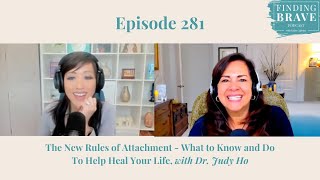
This is a Finding Brave podcast episode (host Kathy Caprino) featuring Dr. Judy Ho discussing attachment theory and practical healing strategies based on Dr. Ho's new book, The New Rules of Attachment. Dr. Ho explains attachment as the early emotional bonds with caregivers that form core beliefs, reports research suggesting about 75% of people show some form of insecure attachment, and describes four attachment styles: secure, avoidant ("fiercely independent"), anxious ("worried worriers"), and disorganized ("surveillance specialist"). The episode includes prototypical self-statements for each style, trauma links (especially to disorganized attachment), actionable exercises (use secure-attachment affirmations/visualization), and parent guidance (hone intuition, show up mindfully, 80/20 rule). The guest’s credentials, book title, and where to find resources are provided.
Questions this video answers
About 75% (research suggests ~75% have some form of insecure attachment).
The New Rules of Attachment: How to Heal Your Relationships, Reparent Your Inner Child and Secure Your Life Vision.
drjudyho.com
Chapters
Allow yourself to start adopting the typical self talk of the securely attached person. So the securely attached person doesn't just have the perfect life. That's ridiculous. No, they have problems just like everyone else, but they tend to have a healthy and stable self concept and they're more confident to navigate life's challenges.
Hello everyone, this is Kathy Caprino and welcome to my podcast, Finding Brave. I've created the show for everyone who longs to create something bold and brave in their life. To rise up, speaker up and stand up for who they are and to reach their highest and biggest visions. Each week I'll be speaking with inspiring guests from all walks of business, leadership, entertainment, the creative arts and the entrepreneurial world. And they'll be sharing their intimate stories of Finding Brave and offer their best strategies for building your most rewarding, joyful and meaningful life, business and career. Hey folks, Kathy here. Are you ready to elevate your career to new heights? Join me as I guide you through proven steps and strategies to unlock your fullest career potential. And for a limited time only, take advantage of my exclusive 25% discount off both my 6 session private career and leadership breakthrough coaching program and my most powerful you video training program that helps you address and close the seven most damaging power and confidence gaps that negatively impact a staggering 98% of professional women today, keeping them from the success and reward they deserve. And you can participate in both of these programs from the comfort of your own home, at your own pace, transform your career trajectory now and become the leader you dream to be. Go ahead, grab the 25% discount and let's work together to help you build a much brighter future. See the show notes below for details, discount code and the links to register. I can't wait to work with you.
Hello everybody. Welcome to another episode of Finding Brave. Kathy Caprino here. I feel like it's been quite a long time since I've actually engaged with you. It hasn't, but I think that's what time is doing. It's like taffy these days for me anyway. And I'm so excited to have our very, very special guest, Dr. Judy Ho, with us today from Los Angeles. Judy, thank you for taking the time in between parenting, launching your book, your practice. Thank you for being here. I'm so, so grateful and excited.
Oh Kathy, it's great for me to be with you. I love your work. Thank you so much for supporting especially women careers, helping us be better leaders. I just think that it would be so helpful if there was more of that type of confidence building and skills building earlier on for so many of the women I mentor as a professor, just seeing how much of a need there is for that.
Thank you for saying that. And right back at you in terms of what you're doing, which we're going to dive in on. So we are talking about Judy's new book which you know, some, some of you know, I was a former therapist, marriage and family therapist, very different from what Judy does. But when I saw the notice of your book and delved in, I thought everyone needs this book because per your statistics, 75% have an insecure attachment or attachment issues that affect their life. So we are going to dive in about, I'm calling this the new rules of attachment. This episode, what to know and do to help heal your life. Because I think if you follow what Judy's talking about, it will heal almost every aspect, if not all of it. So is that right? Let me tell you folks about Judy, then we're going to dive in. I have a million questions, but I know you're going to answer them all in, in 30 minutes. So Dr. Judy Ho is a triple board certified and licensed clinical and forensic neuropsychologist, a tenured associate professor at Pepperdine University, television and podcast host and a published Author. Holy crow. Dr. Judy conducts neuropsychological and psychodiagnostic. These are all tongue twisters. Evaluations. Serves an expert witness in legal cases, conducts clinical research, provides expert commentary to the media and is a sought after public speaker. And I understand you just did a TED tedx talk. My goodness. And your amazing new book is just out called the new Rules of attachment. How to heal your relationships, reparent your inner child and secure your life vision. All right, Judy, my dear, let's, let's dig in here. I'd love to know first of all, why this book? Now I believe this is your second book, is that right?
Yes, it's my second book. Yes. And I wrote Stop Self Sabotage. I felt like that was such a huge core message. I wanted to get out there that this is a universal phenomenon and that everybody, even really successful people will do it sometimes in some aspect of their life and trying to find a solution to that. And I had a lot of readers, a lot of people who interface with the material and ask me, well, what's next? You know, what's next? What's that deeper level? And something that I've always knew is that although I was a here and now psychologist, I love talking about practical solutions. Obviously that's important to solve the problems. Now if you don't go into the past to understand why you formed these patterns in the first place, then you're just going to be continuing to be in the same cycle over and over again. Yes, you might have better coping skills, but you're going to find yourself doing the same missteps from time to time, especially when you're under stress, when some new situations coming up that you don't know how to deal with, or when you have a trigger from something that did happen in the past and it's creating these patterns now. So, so what does it all go back to? It goes back to those first emotional bonds we have with our primary caregivers and what that taught us about the world, what that taught us about ourselves, and whether or not we feel secure and safe so that we can self actualize into those bigger things that we see for ourselves, the things that we really want in our life. Ah.
I want to punctuate every single thing you said and let me just give my perspective. You know, yes, I was a therapist, but now in coaching, you know, I say this frequently. Coaches are trained that if you're talking about the past, it's therapy. I don't believe that. I believe that we are what our childhood taught us to be unless we recognized it, learned it, unlearned it, overcame it. And, and we understand how that's working for us or against us. So I believe that every person on the planet needs to understand what you're, what you're sharing. To build the other piece is to build a happier life. Don't you find that when we're struggling with something, if we can get to the root of it and pull up the root, it allows the garden to grow differently than if we're really trying to tackle a challenge up here when the, when there's a deeper root. Would you agree with that?
I love that analogy. Kind of, you know, doing things on the surface, watering the plant, clipping the plant, trimming the plant, thinking that you're doing everything that you can. But then if the roots are problematic and you haven't addressed that, then you're just constantly going to be clipping at that plant.
You're going to wonder what the heck is going on there.
Yeah.
In your garden that isn't flourishing. All right, now before we get into strategies, and I think you might even, maybe you can take me through an exercise because I certainly could benefit from sitting in your chair across from you getting psychoanalytic or psychotherapeutic help, but can you tell us what attachment really is? And you know, I, I certainly know it from my perspective, but I don't think people really understand when we hear you have a, an attachment disorder, or what is it exactly? What does it mean?
So attachment at its most basic level is that first emotional connection you have with the people who generally are responsible for taking care of you and meeting your needs on a consistent and a regular basis. And those bonds contribute to these first thoughts that you have about how the world works. Because we come into the world ready to absorb everything about what's happening around us. And so through a series of interactions and experiences, especially with our primary caregivers, because we got to stay close to them at that age, we can't fend for ourselves, right? So we have to look to these adults who are around us and through interactions with them, we start to learn how to communicate our needs, how they respond to us. And in general, whether or not you feel emotionally and physically safe. Experiences that are repeated over time, that are reinforced over time, create emotional imprints that then go into the development of your core beliefs. So these are ideas that are generalized that you apply to all different situations, even as you grow up, even when your circumstances have changed, because it came at a time when imprinting was so crucial. And so these things stick with us, they're more tacky. And then you start to apply these same rules to how you interact with others, how you respond to challenges, and ultimately how you feel about yourself.
And you describe it so beautifully. I interviewed a fellow, David Jurassic, a therapist, and he said something that has really stuck with me, that if as an infant you are responded to with disgust, if you're crying, you know, and of course these are not fully conscious, you're an infant newborn. But if disgust is what you get, if you're screaming out and you're not getting any attention, any help, any love, it will form, you know, kind of a set point of how I think, tell me if I'm getting the words right, but your worthiness, your safety, your sense that you, you, you belong in the world, I mean, it's that deep, isn't it?
Yes, absolutely. And it makes sense why it would be that way. Because those first years are so crucial in terms of our brain development and also our knowledge acquisition, just like everything is being soaked up at that time. And so if you have a one off experience, of course that's not going to necessarily stick, maybe even two times in my gnostic. But once you have a pattern where you feel unsupported, unloved, uncared for, like your Needs don't matter. That's going to be carried with you throughout life because your, your little brain as a child tries to figure out how to cope with that. And so in many ways some of our coping strategies that maybe aren't actually the best for us and the most helpful anymore, they come from a time when you were little and you had less skills. And so sometimes people have a lot of self shame and blame and they have a lack of self compassion for themselves for utilizing coping strategies that maybe overall aren't the healthiest for them. But you have to remember that a lot of those came from a time where you were a three year old and you're thinking how does a three year old cope when they feel like they don't matter in this world? Right.
So how important? Thank you for giving that kind of foundational understanding. Now 75% of the population fill in the blank. There is what has it an attachment style that is not serving them. Is that what you're finding?
So the research suggests that about 75% of people have some form of insecure attachment. And I would say that those are only the people who are being honest about it. There may be some people who are saying I have secure attachment and really they don't. But I would also say that sometimes people think attachment is something that if they're insecurely attached and that might affect every single aspect of their life. That can be true. But you could also be that person who insecure attachment only affects your work and your romantic relationships. But otherwise, not really. Otherwise you behave like a securely attached person. That can be a very, very common combination that could happen. I also think that there are some people who might be afraid to admit that they have attachment difficulties because it just is such a deep wound that by acknowledging it you're kind of saying, okay, you're giving. Maybe people think that you're giving power to it, but you're not. You know, by acknowledging it, that's when you can address the problem. And the, and the, the truth is you can heal your attachment at any point in your life, no matter how old you are, no matter what stage of life you're in, and whether or not the people are in your life that are still important to you or the ones that matter the most when you were a child, whether they're available to do the work with you, you don't need to wait for them to do your own self development. If we were doing that, nobod would move forward. Right? Because not everybody wants to do these things ever or at the same time, usually.
What, what's also coming to my mind is, and you're going to dive into what these four styles are. That, that, yeah. And what we can do and tell me if I'm on the right track. You know, my work is also seeing where we're breaking down and how we can execute what we want. Our visions, our goals, our loving relationships. And a lot of that is boundaries, people pleasing, insecurity, overdoing. I call it perfectionistic, over functioning, all of which, you know, in spades. So wouldn't, would you agree with this statement? I don't think people know what attachment is. I don't think we use that terminology, that I have healthy attachment. I think they don't even recognize. Typically I didn't, I mean, I had everything we're about to talk about, I think. And it's interesting that you say, like I, I felt very secure as a mom, as a family person. It was in my work environment, as a director and a vice president, it all kind of fell apart. I was successful, but insecure. But what I'm saying here is I think that we're in the water and we don't see it, that we're insecure, we're frightened, we don't believe in ourselves. We, we have imposter syndrome. So isn't it hard for people to really recognize, wow, this all stems from an attachment problem and insecurity? Would you agree with that?
I definitely agree and I think that it's because most of us, and it makes sense, especially goal oriented people, they, they want to move forward, right? They're saying, okay, well, some terrible things happened to me in my childhood or some things that I prefer not, you know, not to have happened, but this is me now. I want to know what I can do to secure my future, to better my future. So you can understand why sometimes people would have a little bit of a resistance to having to go back in the past a little bit. But I think the goal and the reward though is if you're willing to do that and take a look, then you're dealing with those roots. As you just mentioned, Kathy, you're dealing with the roots so that then you're not going to just be trying to bandage something every time it comes up, you're going to just have those things come up less or maybe not come up at all. And, and I think that, that, that's a tough challenge though, because also there's the realistic piece of it, which is if you're in crisis now, if you're dealing with some big problem. Now you're stressed out about something. There's probably a part of you that says, well, I don't have time to go and think about deeper insight right now. I just need to solve this problem, you know, so. I understand that, but the idea is that you don't have to do all the work all at once. It's just about taking pieces of it at a time. And it's like a little puzzle that like, eventually it's like one day or, you know, you do two or three pieces, the next day, you do five pieces, the next day, you're super busy, only add one piece. But it's all going to come together and it's going to form a holistic view of yourself that's going to serve you so much better in all of these different goals.
You have such a calming way, calming voice, and calming way to look at this.
I hope you too. I feel like I'm emulating you right now. Kathy's making me so calm.
Oh, thank you. I think it's you that's setting the tone. But I hope you hear that, people. We're not asking you to revise everything today. And it is a journey. Even if you did revise everything today, it. We change over time and our. And what we're coping with changes. So let's get into these four attachment styles. Can you give us the hallmarks of them, what they look like? And I am going to have you, you know, walk us through a practical strategy because we need those, those strategies. Tell us what are the styles we should be aware of here?
Absolutely. So there are four styles, Three insecure attached styles and one securely attached style. So if you had primary caregivers who were generally attentive to your needs, consistently showed up in ways you wanted, especially during stressful times, you most likely develop secure attachment. People with secure attachment are more likely to hold themselves in relative high esteem, have satisfactory and lasting relationships, pursue individual goals while staying meaningfully connected with others in their life, and also believe that they have worth and deserve good things in life. If you have one of the three insecure attachment styles overall. In general, insecure attachment tends to lead to lower self esteem and more of a shaky sense of identity. People might find that they have trouble with consistent goal attainment and they tend to have more doubts about self worth and whether even they can have loving and symbiotic relationships with people in their life. But one of the first primary styles of insecure attachment, I think gets a lot of press, especially among leaders, perfectionists, type A individuals, people who are go getters is the avoidant attachment style. So these individuals I call fiercely independent in my book, they prefer extreme self sufficiency, and they may sometimes feel very uncomfortable with emotional intimacy or emotional expression. And generally they tend to minimize the importance of relationships when they're under stress. They tend to go into themselves more. They tend to actually disconnect from others because they may think that expressing those needs would suggest that they have a weakness. Sometimes during stress, they work even harder. They get even more perfectionistic. And I think that this is a tough one to deal with because in many ways, these behaviors are admirable in our society. Like, oh my gosh, you get so much done. Wow, you're doing so many things workaholic. That's almost like a badge of honor. But obviously you're missing out on a lot of other important things, like being able to connect with people as a source of support, not being able to really be in tune with your emotions all the time. So that's a big style that I talk to, you know, when I work with my patients who again, they just. They have gotten so much done. They're high achievers, but this is sort of that blind spot that they have.
Wow. Wow. And the avoidant. Are you able to see this kind of parenting behavior leads exactly to this style. Is the research that specific?
Yeah, I would say that the research is probably not quite that specific, but we do see some trends associated with this attachment style and how it developed. So a lot of times the child from an early age were highly reinforced for their accomplishments. It may have even been a reason why all the family got together. Like all the family got together to watch this person's soccer game or to see, you know, their speech and debate presentations. And it was like a way for them to actually keep the family together. They oftentimes were the star child of the family, perhaps even parentified at a young age. So they were asked to take care of other people's needs way earlier than really they should have because they're children. So then they start to think, okay, well, you know what? Like, what reinforces me in this world, in this life, is me doing amazing things. And if I ever communicate my emotions, my parents might actually say, well, just don't feel bad about that. Or, well, don't complain. Your life is amazing. So parents who might be dismissive of emotional expressions that could lead to avoidant attachment.
This is so fascinating, my head spinning. And do we avoid then because.
A.
Non avoidant style is you're going to Feel more. You're going to probably have to have more empathy. If you have good relationships, you're going to have to feel for the other person. You're going to have to feel yourself for the, for this personality or approach that just slows the, the competence down, doesn't it? I mean, not literally, but they feel like I don't, I can't, I can't do it.
Exactly. It's so, it's so draining for them energetically, you know, and maybe they've remembered certain aspects of their childhood where they had to be that person all the time and now they don't want to do it anymore. So they prefer to get their reinforcement through just their own achievements, things that they can control themselves. It makes a lot of sense at the, at the under, at the underbelly of the avoidantly attached individual. I think it's really about a sense of control over their environment.
And can you tell us. So we have. I know this is like the intense Cliff Notes version. Everyone read this book for the depth and the richness. But can we talk about, you know, the one or two biggest downsides, what we're missing in life? I mean, people might be hearing this and saying, yeah, that's me, but I've done a lot. I've, you know, written five books. I'm very helpful to the world. Okay. And somebody I interviewed said there's. This is different. It's such an extreme, extreme introvert that they live with their spouse and sometimes they don't even talk to their spouse for five days. Now that's. He called it introversion. But what would you say the biggest downside of this style is?
What are we missing?
Yeah. So, you know, in my research and my work with patients, what I found is that every person with a secure or insecure attachment style, they have their own prototypical self talk that tends to be sort of a pattern for them. And I think the downsides for the avoidantly attached is that some of their self talk sounds like one or more of these statements. I'm only as good as my last achievement. I must be in control at all times. I keep others at arm's length. When the going gets tough, I go it alone. So you can see that there are these negative repercussions for having these kinds of ideas and beliefs. You know, chasing after the next achievement for your own self validation, wanting to be in control at all times, that's going to cause a lot of conflict, not only in your relationships, but you're going to burn out keeping others at arms Length, you don't get the satisfaction and the enjoyment and fulfillment of an actually connected relationship. And then when the going gets tough, I go it alone. Even if you say you're a proverbial lone wolf and you don't care at the base level, because of our biology and evolutionary benefits, we are all social animals, doesn't mean that you want to be best friends with a hundred people, but you need to feel like somebody gets you. So because of these self statements, you. You essentially deprive yourself of these other important aspects that would really create a full life.
I listen to this and I get.
Tears in my eyes. So. And I have a feeling that maybe the avoidant is more of what I have than others, but I have a feeling I'm going to get tears in my eyes with all of them. Is it possible to have all of the styles?
Yeah, you know, that was actually an interesting question that I got from a few people at my TED Talk. And I was telling them that, yeah, it is possible because we have usually more than one primary caregiver that we bonded to. It could even be a family friend, an extended family member, like a grandparent, or even like a much older sibling. Right. And maybe because your bonding and your relationship was different with each of them, they made different imprints in your life and you may express different elements of each of the styles at different times.
That is a hundred percent me. My two parents were very different in their style. And what I got. Oh, okay. I think we got, we got the picture of avoidant. What's next? Wow.
Let's talk about anxious attachment. So these are what I call the worried worriers. Very, very interesting statistic. But there was a study that was done at Penn State University, and they asked chronic worriers to write down their worries for 10 days. Then they asked them to review their list of worries every evening for a month to see if any of them came true. And the result was that 91.4% of these worries were false alarms. They never materialize. But these individuals spend so much time worrying about, you know, what could happen and what might not happen. And this is really a hallmark of the anxiously attached individual. Anxiously attached people tend to crave closeness and reassurance in relationships, but they also worry excessively about abandonment and rejection. And this leads to sometimes clingy or overly dependent behaviors, even a proneness to more of a codependency with the people in their life. And people who have anxious attachment, their prototypical self statements sounds like one or more of these four statements. I'M not as worthy as others. I need to rescue everyone. I fear being on my own. I have to analyze everything so you can see how these types of beliefs can really hold you back. Not only from developing, you know, not only from developing a strong self concept that's rooted in something internal rather than all the reactions you're getting on a day to day basis and having to switch and change all the time based on what you think other people are thinking about you. But also there's just this feeling of if I stop analyzing, something horrible is going to happen. But as I just cited in this study, no, most of it doesn't happen. But it's like they've convinced themselves that that's what they have to do and that takes them away from more helpful and more proactive things that they could be doing instead to better their life.
So the rescuing piece is interesting to me. Does this mean, and I know we're simplifying here, everything doesn't go in a nice perfect box.
It's all.
But it sounds to me like at a very young age it was a really insta in unstable parenting situation and they had to rescue and they had to be vigilant in ways that were way beyond their years. Is that what was going on there?
Yeah, definitely, definitely. And I think if your parents, your primary caregivers, responded to you in a way that seemed like they were overwhelmed whenever you communicated a need, that is also going to be something that probably results in anxious attachment. As you mentioned, parents who might be inconsistent showed up in unhelpful ways. Maybe you really just needed a hug. And they're like, well, I don't have time for a hug right now. I'm too upset, you know. So then it makes it feel like what you can get is predicated on what other people are feeling. So then you start to put their needs first. And that's a big foundation of what develops. Anxious attachment.
Holy crow, I gotta read every word.
Of this book again. What does, what hits home for me here, maybe it'll help is, you know, there are many ways you can. You learn to be who you are. But I always have been really good at reading other people, like early on. And I think it was part of the statement you just made. I could sense in a minute when what I needed was overwhelming to one of my parents and therefore I didn't want to be overwhelming. So I, I realized I can't be kind of my true self.
Right.
Okay, I got number two. What's number three?
Okay, number three. So this is Disorganized. Disorganized attachment. So this is what I describe in my book as surveillance specialist. I mean, if you can imagine that it's somebody who's almost constantly in a state of fight or flight, always looking around, seeing if there's danger lurking so they can protect themselves. And so as a result they have struggles regulating their emotions and they might then unconsciously replicate some of the chaos they often experience as children. If you develop this type and the operating system that the self talk of these individuals typically includes one of these statements, or maybe more than one. I deserve to suffer. I hate you. Don't leave me. I can't control my emotions and my life is in constant chaos.
Does, does I know a few people, a few clients, others who've had really serious physical and emotional abuse as children? Is this, are there any attachment disorders that show up more in those situations?
Yeah. So disorganized attachment is the one most associated with some type of trauma or abuse in childhood. The trauma and the abuse could have come from your parents, you know, for example, parents who were abusive in different ways. But it could also come from experiencing near death experiences with one of your parents. I've seen this style develop when a parent had a very severe and chronic illness so that they just weren't available because of their medical concerns. This can also happen if somebody outside of the family hurts you. You know, it's terrible that we see a bit more of that I think now than we ever did. But you know, sadly, like school teachers and coaches who are abusive with students. And so even though the trauma didn't happen in the home, of course as a child, you're still feeling like, well, nobody was there to protect me. Right. And that changes your relationship with your primary caregivers. I hear that a lot from my patients where maybe they did experience abuse from another adult in their life and it just consequently changed their whole relationship with their parent. You know, whether that's okay or not, whether that, that they deserve that or not. It's like, well, now I just don't trust anybody, including my own parents, because in their own child mind they're thinking, well, why did my parents not protect me from this, us?
I've, I've talked to quite a number of people who've been assaulted, violated by their religious figures and their parents didn't believe them, didn't want to believe them. Yes, that's going to shatter every darn aspect of hope and trust that you have. You know, if your own parents aren't going to believe you, it's so sad. Wow. Holy crow. All right, number four, did we talk about a secure attachment? Did we talk about that yet? Yeah.
So we haven't talked about the self statements of the securely attached. And I think this is one of those things where, you know, kind of connecting to something that you can start to do today is really starting to let yourself allow yourself to start adopting the typical self talk of the securely attached person. So the securely attached person doesn't just have like the perfect life. That's ridiculous. No, they have problems just like everyone else, but they tend to have a healthy and stable self concept and they're more confident to navigate life's challenges. And when they're going through challenging times, they still feel like they can get through it and they feel like they can still connect with others. And that's really the goal. So I would like to challenge you all to select one of these four statements as your affirmation today. You should write this down, post it in a visible place, look in the mirror and say it to yourself while visualizing embodying these qualities. So I believe in and like myself, I can handle what comes my way. I can affect positive outcomes in my life. I can be independent and rely on others too.
They're so, I just feel very calm when I hear those. They're laden with many ripples of self advocacy, self love, self agency, that despite this very scary world, I have what it takes to cope. And if I don't have what it takes, I'll go get help to have what it takes. I mean, wow. They're very simple, but very powerful. I love them. I love them. Now I, I'm aware of our time. We only have a few more minutes. You know, having been a marriage and family therapist, it was a lot about what the parents were bringing and they were bringing in their children saying, he's the problem, she's the problem. And you know, just like you, we look at the system, not one individual is the problem. The system is creating or sustaining or exacerbating. Right, Right. But I, I grew to be a little bit frustrated with parents who often just would not look at what could I be doing that would be bringing on a tantrum every four minutes.
Right.
What, what could I be doing? Can you give a few tips for parents? They're about to have a child. They have a 3 year old, a 1 year old, a 10 year old, a 15 year old. Tell us what we need to do better as parents so that our children can form healthy attachments that benefit their lives.
Yeah, great. Great question. I think that, of course, there's lots of parenting books out there. Everybody wants to give you advice. Everybody comes out of the woodworks when you have kids. They think that they know better. Like, that's all. That's all fine and good. Most of the times it's well intentioned. But it's most important just to really understand and hone your own intuition as a parent. Intuition is not something that's just a feeling. It's actually based in your brain. Intuition is based in a part of your brain that really focuses and emphasizes experience. Not only just your personal experience, but the collective experience of us as human beings and what we've learned throughout centuries and centuries of time, and that unconscious collective that's in all of us. And it's just a part of your brain, though, that isn't sophisticated in languaging. And so that's why sometimes when you have a feeling in your gut and you're saying, this doesn't feel right, or it does feel right, but you can't put words to it, that's because it's in a more primordial part of your brain that isn't the part that really is focused on language. So honing your own intuition and really adhering to your highest values when it comes to parenting is the most important piece. And then just showing up every day, looking at your child and thinking to yourself, what do they need in this moment? Something that worked yesterday, may not work today, may not work tomorrow, but if you can show up as a mindful parent, just being available to help them tackle what's going on, even if you don't have all the answers, even just sitting with them and admitting you don't have the answers, but saying, I'm here with you, that is so powerful for a child. Your child does not expect you to have all the answers, but your child does want and desire that you are in their experience with them. They want to feel like they're a team member. They want to feel like you're there for them to figure it out together if you don't have the answers. And sometimes parents think, well, I have to hide my distress from my child. I don't think that that's actually necessary. You can share with your child that you're having a tough day, but the next step is not going to be, well, I'm having a tough day. Leave me alone. You know, it's more because that makes them feel responsible for your feelings. It's more, I'm having a tough day. Well, mama's Trying to think a little bit about what she can do to feel better. In the meantime, can you do this instead or do you want to help, you know, us focus on a different project? Maybe that'll, you know, that'll be good for me to take my mind off it and we can do something fun, right? You don't want to make your child feel responsible for taking care of your feelings. And then finally, I would just say the 8020 rule applies here. If 80% of the time you're showing up, you're trying to be a good model, you're not perfect, but you're there and you're present, your child's going to do great. Even if you make mistakes, 20% of the time, you know you accidentally yelled them because you were so frustrated at your wit's end. That's not going to create horrible, insecure attachment in your child just because every once in a while you weren't able to show up the way you wanted.
Oh, I love it all.
It's doable. There's doable. Hopefully.
There's one other thing I want to ask you, and then we're going to ask you where we can soak up all this amazing information. You know, in writing my book, it's about the seven damaging power and confidence gaps that sadly, 98% of professional women have. At least one in 75% of three or more. What I see is one of the strongest contributors to struggling in life is when you are raised by parents who focus rabidly on being the best. Because what happens then is the feelings are you're not loved. If you are not going to Harvard, getting, you know, straight A's, becoming a doctor, lawyer, there's all these permutations around what I feel is best for you. So I'm going to add something here which is parents might think that's the best for their children. No, I'm driving them to play an instrument, be the best in soccer, go to the Olympics, you know, and teach at Harvard. That's what's going to be best. No, not necessarily people. No, every individual is different. And what I'm going to ask and make a hard ask of you is stop a rabidly over attachment to being the best and think about what your child is and needs. And it may not be that they want to be a doctor. It may be that they want to, you know, be a musician and a painter and.
Or whatever.
Right.
Do you see, do you see any of what I'm talking about infusing attachment disorders here?
Oh, absolutely. And I think sometimes, you know, with your children, of course, course it makes sense. You kind of want to do certain things over. You're trying to help them live a better life. But is that your idea of what a better life is or is it their idea? Right. That's a good thing to ask. And I think that that was really clear in what you just mentioned and what a great piece of advice.
Thank you, my dear. Or where do we soak up everything? Where do we see your upcoming talk? Where do we get your book? Tell us where to go.
Absolutely. My website is Dr. Judy ho.com. i have lots of free resources there. You can also see sign up with my newsletter and I send out free resources through that avenue as well. I'm also on most social media platforms at Dr. Judy Ho.
Thank you so much, Judy. I learned so much, you know, really, I have so much more to grow in every area that you discuss. Thank you for joining us in the middle of your book launch. I so appreciate it.
Oh, thank you. I appreciate you.
All right, everybody, questions. You know, I love to hear your questions. Wherever you see this, please post. Judy will do her best to answer. We'll address it. But if you don't have questions here, we're not doing our jobs. And I hope this is inspiring and enlivening to you and thank you for listening and being part of the Finding Brave community. Means so much and we will see you in two weeks. Thank you.
Hi folks. Kathy here. So are you thinking about launching a new podcast or have you been at.
It a while and recognize it's time.
For more more or better production help to create the best podcast you can. I totally understand. I've been podcasting for over six years and I know how challenging it can be. That's why I'm really excited to share some key information about the great production team I'm using now called We Edit Podcasts. I've been working with them for well over a year and I've been so happy with the results. They're a full service production agency and their services give me access to a wonderful team of seasoned audio engineers and editors who help create a polished professional sound. And they work hard to ensure that my particular podcasting approach and style comes through in every episode. They also help me make sure that my guests are reflected in the best possible light through the creation of terrific show notes, which is an important part of the show for me. Their process is easy and streamlined, and their responsiveness and customer service is terrific too. If you're ready for better production help. Definitely check them out and take advantage of their free trial episode, allowing you to sample their processing quality to see if it's a great fit for you. I'm confident you'll love them, just go to the link we edit podcasts.com finding brave. That's my special link for you and book your free call today. Happy podcasting. Thanks so much for joining us today. And please don't forget to check out findingbrave.org for more programs, resources and tips. And tune in next time for your weekly dose of Finding Brave.
More from Kathy


Elevate Yourself, Elevate Others, and Amplify Good | Chris Cooper | Finding Brave Ep. 334

Finding Brave Epis #333: How Leaders Can Harness AI Without Losing Their Humanity, w/Bennett Borden

Finding Brave Epis 332- How to Stay Brave, Valuable and Visible in the Age of AI, with Raman Rai

Finding Brave Epis 331 - The Power of Positive Disruption, with Dr. Patrick Leddin


Finding Brave Epis 330 - Being 40: Letting Go and Embracing Who You Are, with Stacey Lindsay

Disrupt Career Reinvention with Kathy Caprino - via The Disruption Lab Podcast w/Patrick Leddin

Creating Neurodiversity-Friendly Work Cultures: Simple Workplace Adjustments Matter

Finding Brave Epis 329 - How To Create a Neurodiversity-Friendly Workplace, with Kristen Pressner

Finding Brave Epis. 328: Reclaiming the Power to Trust Your Own Voice, with Dr. Cindy McGovern