290: How to Land a TEDX Talk and Rock It
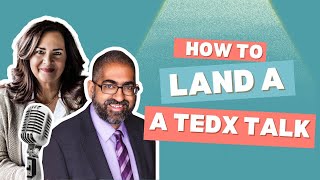
This content was created by Kathy Caprino. This content was uploaded by Kathy Caprino. This is a YouTube video titled "290: How to Land a TEDX Talk and Rock It" created on September 5, 2024. It features a conversation between Kathy Caprino and Bobby Umar discussing strategies for landing and delivering impactful TEDx talks. They cover topics such as the importance of having a strong story, the process of applying for a TEDx talk, and the significance of authenticity and vulnerability in presentations. The discussion also touches on the challenges and pitfalls of TEDx talks, emphasizing the need to avoid self-promotion and focus on delivering a meaningful message.
Chapters
We're trying to serve the audience, serve the people that we know will resonate with what we're talking about. So whether I talk about business or whether I talk about my challenge of parenting or I talk about my weight loss and binge eating stuff, these are things I know that will impact a lot of people. At the same time, though, it's also important for us to have a rudder that steers the ship that we're guiding.
Hello everyone, this is Kathy Caprino and welcome to my podcast, Finding Brave. I've created this show for everyone who longs to create something bold and brave in their life, rise up, speak up, and stand up for who they are and to reach their highest and biggest visions. Each week, I'll be speaking with inspiring guests from all walks of business, leadership, entertainment, the creative arts, and the entrepreneurial world. And they'll be sharing their intimate stories of Finding Brave and offer their best strategies for building your most rewarding, joyful and meaningful life, business and career. Hi everyone, it's Kathy. I'm thrilled you're here today because I have something truly exciting to share. My eight week live course, the Most Powerful you, is now open for early bird enrollment. The course kicks off October 3rd, and if you register by September 25th, you'll save $300 and unlock seven exclusive bonuses. This course is the perfect companion to my book, the Most Powerful you, and I can confidently say there's nothing else like it out there. Over our eight weeks together, I'll personally guide you through critical steps to close the seven most damaging power and confidence gaps that hold women back from creating a fulfilling, impactful, and successful career. What's the ultimate outcome? By closing these gaps, you'll completely transform how you see yourself and how you communicate, lead and engage with others. This profound shift empowers you to finally overcome those lingering, difficult challenges so you can make the impact you've always dreamed of. Don't miss out. Spots are limited, so Register today@mostpowerfulyou.com to claim your $300 savings and bonuses. I can't wait to start this transformative journey with you on October 3rd. See you there. Good. Hello everybody. Welcome to another episode of Finding Brave. It's Monday here, but you're seeing this around Sep. Early September. I hope you're doing well. Summer would be over by then. I'm not ready to even think about that because we're right in the middle of early summer, which is my happy, happy time. But hope you're doing well and I'm so, so, so, so, so excited to welcome our guest, Bobby. And I'm not even going to say your last name because I butcher it. Bobby, please say it for us.
It's Bobby Umer Umar.
Why can't I do it? There we go. But I'm, I'm admitting my foibles and flaws. There you go. I'm being very open about that. Bobby, we connected. We had such a ball connecting and I correct me if I'm wrong, I think you commented on something that I posted. Or was it the other way around? Because I have just become a LinkedIn top voice. I think you've been a top voice for a long time. But there's a. No. You're.
No. This year. This year.
This year too.
Yeah.
I think that's why Inaugural Memphis. Oh, maybe. But we're in this fun group of top voices.
Right, Right.
Which is inspiring. Like you could sit all day looking at these people. But that's how we connect. And do you remember, I think it was a comment you made.
Yeah. I think I was looking at the different LinkedIn top voices and I saw a comment, I was like, okay, that's interesting. About, about speaking. And since I love speaking, I said, let's talk, let's talk and let's meet up.
Oh, there we go. See people, this is how networking goes. And now I have you on my podcast and we are talking about all things how to land a TEDx talk and how to rock it. And I've done one and my gosh, it could have been the one of the most challenging professional things I've ever done. We talked about that and you have so many points that made me really go. Really. For instance, I think you say, well, you talk about can anyone do a TEDx talk? So we're going to dive in, let's just dive in. But I'm going to tell you all what you need to know about Bobby because it's impressive as all heck. Bobby is a five times GOSH, TEDx speaker and Inc. Magazine Top 100 Leadership Speaker. Bobby is also an inspirational speaker and coach who champions authentic connection and heart based leadership. And I have to just say, you know, you can really tell a lot, not everything about a person in terms of how they interact with you on social media, on via email. You can see so much about their heart, about their self awareness and you're at the top of the list there, Bobbi. Really? What did I say here? You've spoken TEDx at TEDx five times. You've delivered over 1,000 keynotes and workshops across four continents over the past 20 years with over 650,000 social media followers. You're a recognized. I was recognized digital influencer and thought leader in networking, social media and personal branding. And as we said, you're a LinkedIn top voice and founder of the thought leadership Branding club. We've got to hear more about that. Thank you again for being here from Toronto. I'm so excited.
Me too.
Can we dig in? The. The thing I want to start with is why is doing a TEDx talk important in your view, having done thousands of them, hundreds, five of them, teaching many people how to do it. Why? Why?
Well, I think all of us are trying to elevate our career, business in some way. You know, we all do different things, right? We do community service, we write a book, we do have programs, we, we, we mentor people, we do TEDx talks, we speak on panels, we show up on media. And what I would say is that the TEDx is the best way to have the most impact with the shortest amount of time spent on doing so. And so I think that to me is really like, I've written a book, but that was a long, long process to do. I've done a TedX talk and it was a shorter process, but the impact of thousands or even millions of views, position yourself as an authority, as a storyteller, as an expert, as a coach, as a consultant, are really, really huge. And so whether you have a career where you're trying to grow in the career and you know, get more leads or opportunities, or maybe a promotion or, or you have a business, you're trying to build impact and build more trust and authority and credibility. The TEDx talk is significant in terms of 10xing your thought leadership, your brand and your ability to be seen in the space and people coming to you as well. So there's lots of reasons why a TEDx talk can be good for anybody.
I love that. Can I add something and see what you think here? The reason it was so challenging for me is that number one, when you've written a few books, when you've written thousands of articles, there's a lot of thought leadership there. And you have, is it 19 minutes, 12 minutes?
What's it, 18 minutes total?
18 minutes? The hardest thing for me was choosing if I have one, if I had only one chance to do this, what is the message I want to deliver? That's totally so hard. But on, on top of that, you know, I'm used to 80, 90 minute webinars. I'm used to three hour workshops where I can really dive in and you can in 18 minutes. It has to be incredibly succinct. And the points that you make in the illustrations that you have have to be right on the money. You lost people. And thirdly, I am not, I'm not typically a keynote speaker where I'm a talking head. I interact. I always say in a workshop, you know, you're going to do more talking than I'm doing. And so, you know, I'm a former therapist as well, so I love so to just stand there and not be able to, you know, really engage. I mean, in an interact. How do I say this? Of course you're engaging with your audience, but not the way I'm typically used to. Those three things were so hard.
So.
So I think it's also an incredibly stretching experience that is comfortable for a lot of us who are very frequent speakers.
I can tell the exact same thing. So they said to me, bobby, give us the biggest idea of your life. Dive deep in your personal story, use minimal slides. Which. And I'm a sort of super PowerPoint guy. I love my PowerPoint and do it in 18 minutes.
Right.
Holy cow. Right? I mean, that was intimidating, right? Because for me, I'm not a good memorizer. So it's like, okay, well, how do I do this thing? I just had to rehearse it it 30 times, you know, before I delivered the.
Did you say 30 times or three times?
I delivered 30 times, which for me is a huge anomaly because for me, when I put together, I've done so many, you know, my PowerPoint, I know exactly what I'm going to say. I'm good. But with this one, with no power, with less PowerPoint or just, you know, a few words and images, I had to have a script and I scripted it. And I remember rehearsing for this thing 30 times before and every single time something went wrong. Like it was never perfect.
Good dress rehearsal, let it all get wrong.
So yeah, yeah, so it was very nerve wracking. And especially the first one because I knew how impactful it could be. But yeah, for sure it is, it is very daunting. But you know, for some people, the hard part is getting the TEDx talk. And then the second hardest part is now how do I put together a TEDx talk that is really relevant? And the third piece is okay, now that I have the TEDx talk, how can I leverage it for my brand and my career and my business?
Let's see. That's so important too. You know, like a lot of coaches and others that Come to me. They forget that. Yes, we want that 18 minutes to be incredibly impactful, but there's. You want ripple effects from that?
Yes.
I mean, if we're in business and we have a brand, we're hoping we're engaging them in the brand, and they're going to want to listen to our podcast or get our newsletter. So there's things you have to do as well, and you're going to walk through all of it. But I'm really curious, of the five you've done, was there one that stood out as, wow, that was either the most stretching experience or the most exciting or the most daunting? Was there the most out of. You know what I mean? Was 1. Does it stand out? Can I hear about that?
I mean, you know, they all were different for different reasons. I mean, the first one was probably the most daunting because it was the first one and I knew why I had to do a good job. And it was early in my speaking career. Right. So I was like, this is very, very early. So I want to make sure I do a good job. And then I know that I also host one, too, as the mc, I found that to be incredibly difficult. That was the third. Third one that I did. I found that very hard. Well, because the thing is, when you do your speech, you're practicing your speech, and then you're ready for it and you deliver, and then you're done. As mc, you have to deliver a speech and you have to be on listening every single speech, come up with your two or three points about it in transition to the next one. So I was on the whole day, and that was very, very exhausting.
I see.
And then the fourth one was the one that I was like, okay, this is the one. I'm going to totally nail it. It's going to be amazing. It's going to be on the Ted.com site. And then I screwed up because I put Super Grover in the slide, so the intellectual property piece kind of foiled.
What did you put in the slide?
I put Super Grover from Sesame street in my slides and that note. And then the fifth one was the best one because it's the first one that got on the Ted.com site. But also I had a very, very profound experience with that one because it was a talk I had in my back pocket for many, many years. But then the other thing that happened during the event was when this TEDx started, I stopped the talk. Like I, you know, like I stopped it a minute and a half or two minutes.
In, like, getting tears in my eyes. I don't know why.
Well, I stopped it because everything was wrong. Like, they. The slides were not working, and I was. And I said, listen, I need to stop this and start over. We need to fix these slides because it's a huge part of my presentation.
And it was their problem that the organization.
Yeah. And so they stopped it, went backstage, and there was a big huddle and muddle for like 10, 15 minutes, and they actually couldn't fix the slides. There was. There was. It was cut off on the side. Maybe about 20% of it was cut off. And I was like, okay, this is really sucks, but. And they didn't give me one of those, you know, monitors in front of me, which I was like, okay, this sucks. Okay, now I have to look at. Look back at this thing. And so the tech was a little bit off, but what happened? But then I delivered the talk and it's still made to the Ted.com site, but. Oh, gosh. But what a lot of people told me was like, bobby, I'm so glad you did this, because in the first half, I was so glad that you had the courage to stop it, because none of us did. We all had, you know, really terrible slides that didn't work. And you said. I said, look, I came here because I want a good video and I want to deliver for the audience. And if I don't have my slides and the images and stuff that I have there, it's going to take with what I'm doing. So as a speaker, because I was one of the few professional speakers, I was like, no, no, I need to have this the way I want to be. And for the audience. And so that was a very, very profound but scary thing to say. But I was like, yeah, two minutes in. In your head. Like, I'm like, we need to stop this. I'm sorry. We can stop this.
And I said, I mean, I'm just gonna. I'm gonna punctuate that. Sometimes the things that happen to us are so dreaded, are so scary. But how we deal with them shows so much about, for instance, your self worth. I'm not standing here doing this like this. Why would I? This is a precious piece of my, you know, my material, and I've worked hard on it, and I deserve that. This is better. Go fix it, people. And, you know, that will be what is remembered by that audience. Probably.
Okay, yeah.
More than. More than anything else, because not many people would do that. So do you see, people, how everything we do shows everything that we are, even though it's not going the way we dreamed. Wow, that's powerful. Thank you for sharing. All right, I want the next question answered. Can anyone do a TEDx talk?
Yes. I mean, so for the most, for the most part, it's not based on experience, it's based on your story. So there are 10 year olds who've done TEDx talks. Why? Because they either have a story or they have an idea that can change lives or impact the world. So really, to me, whenever I work with people, TEDx is like, look, what's your story? What's your idea? That's the two biggest things you got to figure out. And so it doesn't really matter your experience or where you are, where you come from. Every one of us has a story. Everyone, everyone. We actually have multiple stories and multiple messages that we learn in our lives we can share with the world. And there's always going to be someone that's impacted by something you have to share. So if you're willing to share it and put it out there, you and anyone else can do a TedX talk.
I love it. I want to push back on something. Tell me what you think. You know, I hear from a lot of people, a lot of people, particularly now with the LinkedIn top voice thing and people, you know, I have people reaching out. They say, hi, how do you have so many followers? That's their outreach.
Right.
Of course I won't respond to that, you know, because. And what's the point? They only want to reach out to help themselves. It's only about what can I get from Kathy or Bobby. And I notice that when people want talks or they want a book published or they want to so often they're looking at it in the wrong way. And that's really going to cut off their opportunities. They're looking at, how can I get over, how can I make another a hundred thousand in my business? How, how, how? Me, me, me. I don't think that's the way to look at delivering anything. I think it's what have I gone through that I believe and not the pretty varnish version of it. The real life thing that I believe others can learn from. How do I turn my mess into a message? That's what I suggest people start thinking about. What do you think about what I just said?
Well, I think at the end of the day, you know, people who are speakers, for example, or even people who are thought leaders have a message for the world. And so we're trying to serve the audience, serve the People that we know will resonate with what we're talking about. So whether I talk about business or whether I talk about my. My challenge of parenting or I talk about my weight loss and binge eating stuff, you know, these are things I know that will impact a lot of people. At the same time, though, you know, it's also important for us to have a rudder that steers a ship that we're guiding. So strategy and knowing what we're doing, where we're trying to go, I think also matters too. So you have to find the balance between those two things. Have this, have strategy to move you forward and get the results that you want, the outcomes you want. At the same time, knowing who you serve and delivering on that service.
I love that when I think of my only TEDx talk, you're making me want to do another one. I'm going to hire you to help me. It was 2016 and it was called time to brave up. That was before my book, the most powerful you was even a twinkle in my eye. So that goes to show you that there is stuff percolating inside that truly is a part of you. Yeah. That you can then leverage into a book, into, you know, podcast, et cetera. I love it.
Absolutely.
Thank you. Now, let's start with landing one. What do we do? How do we land one?
Well, I think the most important piece to landing a TEDx talk is having a really good idea, topic and title. That's. And story. Like, what exactly is that? Every time I talk to people and, you know, I do webinars and things like that, and say, okay, tell me your idea. And most of them are very, very vague. I want to talk about sales. I want to talk about love. I want to talk about mental health. I want to talk about self esteem and imposter syndrome. Okay, great. These are very, very broad, generic topics. You need to have something very specific, usually tied to an idea, which is how to. So for example, a famous TED Talk, how to properly tie a shoelace. I mean, that was something that, that became a famous TEDx talk. The other one is more around the story. Right. So overcoming some sort of adversity or things like that, but it's usually around some sort of story. So a lot of people to. Having the right idea, topic and title to me is the primary thing that you need to do versus the first piece, which is getting over the mindset piece. Right. So once you realize you do have a message, I do deserve to be here. I can speak on stage. Then getting the right topic, idea and title. That's the first piece. The second piece is to know the right process and structure and who to talk to and where to go, because a lot of people don't know about that. And then the third piece is putting together really good applications application that convinces the TEDx organizers that you are the one they need to have on their stage.
Okay, can we dig in a little more about. Yeah, please give away your secrets. You know, when people. I've written two books and I have to say, writing the book proposal was almost harder than writing the book. You know, it's 50 pages. Why me? Why now? What is the competitive landscape? What are you doing differently that right. When people pitch a TEDX talk, should they have the deck ready? Is it like that book publishing process? You show me what your. What your ideas should they have that.
Well, I would say not necessarily. I mean, if you, if you found out about a TEDX doc application that's happening next week, you can quickly put together an application and pitch it. But what I would say though, is that for me, my process is let's dive into your story. Let's extract the best TEDx type ideas. I always think, I always say you should have three. And then let's put together a really good application template for all those ideas so you can answer every single question that comes up. So that way you can pitch much more frequently and much more broadly so that you increase your chance of getting a TEDX doc. So everything you do is about increasing the chances, but you could do it without it, and that's fine. But is that what you want to wait for? You want to wait for the opportunity to show up, or do you want to actually go after the opportunity with a plan and, and really spread your wings as much as possible to increase your chances to 100%.
Oh my gosh. I love it. As you're talking, I'm, I'm remembering some of my most favorite like Brene Browns.
Sure.
A genius. My friend Shawn AOR the Happy secret to better.
Yeah, yeah.
Nancy Duarte, who I've.
Oh yeah, love that one.
We'll. We'll list all of these. She analyzes the arc of the he's it all the time in the world.
I know Lincoln all the time.
You do? Oh, yeah. Oh, I know. She's amazing. Okay, I'm getting it now. Can you just give us one or two tips about. I mean, people truly have no idea where they can go and find who's where is the event. Where is the theme of the event going to match what I talk about how do I reach, where do they go Just for that information. Can I ask you?
Yeah, sure. Well, the general, the general way is you go to the Ted.com site and there's a list of all the TedX events that are there. However, some of these links are a little bit outdated. So the other way to do it is really honestly Google searching. Because you can search, you can search basically TEDx plus the city or TEDx plus the neighborhood, TEDx plus the university or college. And things will, things will pop up. And the other place to go is on LinkedIn or YouTube or Twitter because those are places when people are running events or when they actually have a TEDx event, they typically will post on those three platforms, mostly LinkedIn, YouTube and what? Twitter.
Twitter, yeah, because.
Yeah, because in the moment people are. Well, because if you do a story, if you do a story, it disappears. Whereas on Twitter, if you tweet about, hey, we're doing this thing, it's there forever. So you'll more likely see it there. And then there are more sophisticated ways to, in tactical ways to that I teach from an advanced standpoint. But those are the first ways to get going on it.
Love it. And, and I think we can also search in LinkedIn for TEDx organizers, right?
Absolutely, absolutely.
And you know, I went to Atlanta. It was TEDx Centennial Women. Oh gosh, that's not the perfect title. I'll, I'll definitely post it. But you know, it was a wonderful colleague of mine and I saw that she was sponsoring it or the organizer. And yeah, it was in Atlanta five months from that from now. So you can also think about, you know, it doesn't need to be in your area. Can hop on a plane or a train, right?
Absolutely.
Go where the event is.
Yeah, I did my, my fifth TEDx talk. I took a four hour train ride to Windsor, Ontario, Canada and delivered my talk there. But it, it came my way because someone actually told me about it and said, hey Bobby, their, their theme is Parf Connection. And that's the hashtag used, isn't it? I'm like, yeah, it is. And so I just. And that, and there's an example where I got it. I pitched it with a video the next day and I got it in 24 hours. So that's a very.
Your first one.
Your. The fifth one. The fifth one. I mean, I've actually, I've actually been accepted to eight TEDx talks. I've actually rejected three of them.
You have. And why do you mind sharing?
They're disorganized. Don't have a good video system in place. It's important to have for my alma. One of my alma maters sent me stuff and I was like, guys, you have no organization. I don't want to be part of a terrible show. Like, I want to be part of something that's organized. To me, one of the big reasons of doing TEDx talk is I want the video. So of the five TEDx talks that I have done, two of them, I have no videos because they screwed up and I didn't know. So I learned my lesson. Now it's like, okay, how organize you. What's your video system which is a three camera, one camera. What are you doing? Like, I want to know before I commit to it.
Should we bring our own videographer? Have you ever done that?
Yes. So I didn't back then, but now I tell every all my clients, make sure you have a tripod with a video. And I'll tell you a quick story too. One of my clients who landed Tennis Talk, he was like, oh my God, I'm so excited. Atlanta stock really quickly, like you know, two and a half months. And then I said, make sure you bring a tripod. And then on the day it was like, he's like, well, you know, I was going to but. But I forgot, I forgot. Hopefully it's okay. And then what happened? Delays, delays, delays. And he's like, oh man, I wish I brought, I was like, I told you bring a tripod, man. And he, he had to wait like, you know, two or three extra months and he wanted to, to share his TEDx talk. He finally got it. But I was like, you know, it.
Was just, oh, delays for them giving the, the final video edited video.
Yeah.
Okay, there you go. Fantastic. All right, now we're understanding how to connect with organizers or the right themes. That's so important. You know, if you're writing about connection and it's about, you know, the best pet to have, you're not. It's not going to work. Okay, tell us what are the biggest pitfalls and challenges in. I think landing one is. Is a more is a simpler process. It's pretty straightforward. It I think. But let me ask you, how do I want to put it? You know, when you're writing a book, for instance, the size of your following is in. Is very important because the publisher can only do so much in terms of marketing and promotion and they're hoping, hoping the author and their reach is going to sell books. Is it the same with TEDx stuff that people who have half a million followers probably will get it over someone without a following. Do they look at that as much?
Absolutely. So the way I position it, when I talk to people, it's like, look, everything you have is an asset, right? So if you're able to speak very comfortable the way you and I are, and we share a video with them, that's an asset. If you send a video thing, hi, I'd like to do a TEDx talk. Well, you know, that's a, that's a huge distraction. So being a good speaker is an asset. Having a strong following or being an influencer is an asset. So you should be working on all your assets. And so for me, when I work with people and I have a whole process on how to land tennis talk, I say build your thought leadership, put your story out there, talk to people. Because all these things are asset. Your network is an asset. So build your assets as best you can. And if you can, build thought leadership, yeah, they're more likely to come your way.
Can I amplify that and hear what you think? Sure. I think a lot of people think, and I see this, I have something called a career path assessment for every client who comes who wants career and leadership help. And at the end it says, you know, what do you dream? What are the biggest dreams you've had? They don't have to be realistic. What have you dreamed, dreamt of? And they will say, writing a book, sailing around the world, starting a fashion brand. You know, it's all over the place. And I'll often this, I digress. But let me make a point. I'll often look at the 13 pages of the assessment. If, and if, for instance, they say they'd love to write a book, but they've never written a word in their life, there's a disconnect there. Or if they want to start a fashion brand and they don't care about fashion and never did, then it's usually a sign that they're projecting onto that thing, something that, that they want, that they think that thing will give them. I think TEDx talks are similar as our books, that a lot of people think I want to do it for what it's going to give to me. And I think that if you want to write a book or do a talk, you need to look at it the other way, that you need to start demonstrating that you are a speaker now or you are a thought leader now, not wait for the TEDx talk to have you arrive as a thought leader. Does this make sense to you, in other words, if you don't have a following, if you've never shared anything on LinkedIn or Instagram or Twitter and you're not sharing your thought leadership, you're not showing up in a way that people can learn from you, now that's going to hold you back. I think it is.
Although, although I'm going to count you a little bit, which is there are people who are, for example, subject matter expertise experts who deliver training, but they don't really have a large following up there. They don't actually, let's say, leverage the social media, but they're still, they have a successful business, they had some of the great stories, are sharing some great insights. I mean, that person should not be discouraged from applying for a TEDx talk because they have expertise and they probably have a great story, they can still apply and get a TEDx talk. Which is, which is why I formulate the whole idea of your network and your thought leadership and your content. These are all assets.
I see.
They are nice to have and they definitely add a far greater chance for you. But for someone who's a 10 year old child or someone who's just a subject matter expert that does training, you know, virtually and has never actually been on a public stage, they can put together an amazing idea and a great pitch and build a relationship and they can land a TEDx talk.
I see. I love it. And you know, I love that you would challenge. I think where I'm going is if you say to yourself, I want to be a speaker, I want to be a thought leader, but you're waiting for an event like a TEDx talk. I think you're, you're missing some things.
Yeah. So thought leaders are people that are. Yeah.
Thought leaders who are leading with thought.
They're going out there, they're driving conversations stations.
Right, right.
So they're showing up on stage, they're, they're putting content out there. That's a, to me, a huge part of thought leadership is. Well, there's three parts of it for me. One is. Which is connections. Right. So broad connections, deep connections, followers, which, which I call influence. Then there's putting ideas out there, which is basically subject matter expertise and then there's a whole idea of communication. So speaking, writing, all that kind of stuff. That's what thought leaders are doing. And so that's a big, big piece of it.
Perfect. I love it. That's why you're the expert. Why do you think your process, you've had a lot of success. What, what's the number you've had thousands of people land TEDx talks from your, from working with you, is that not right?
Well, no, that's not true, actually. Let me be, let me be clear on that, please. So what I tell people is like, look, I've worked with hundreds and thousands of people on different things, but what I can tell you is that every single person that I've worked with on TedX and has followed my signature methodology, they've all landed the TEDx talk. That's, that's what I say. So it's a smaller number, just to be clear.
Thank you for that. Thank you for being so honest. And why do you think your process is so good? Why do you think the results are so strong? What?
Yeah, well, I think. Well, I think, I think when the first, well, the first time I started really guaranteeing a TEDx talk was when it started happening and people started doing it and they just said, bobby, I'm just, I just did what you said. And it initially was for getting People Speak paid speaking gigs, but then it turned to TedX talks and I'm like, okay, this is great, let me keep trying this with people. And it worked every time. Everyone who did the work, they got to do the work.
Of course, right?
It takes about 30 to 50 hours of work to get a TEDx talk. So the ones that did the work, great, you know, like, they, they can land the TEDx talk. I think the reason why it works is because over. I started doing this about two years ago, and I keep getting feedback and evolving the process and adding more and more stuff. So now what I have is far more comprehensive than what I had before. But, and the process has evolved too. So now it's focused on a life story. It's focused on the idea topic, the process and the application. And so for me, the way I've kind of framed it is based on the story, the brand, the content, the thought leadership, all these things coming together and coming. And I've taken all the different processes as well as all the different assets to maximize people's chances. So when they do all that stuff, yeah, I feel really comfortable laying them a text talk and guaranteeing that result.
I love it so much. I want to leave with two things because I'm aware of our time. Can you tell us the biggest blunder, mistake, error, lack of judgment that you've seen? And so it's not going to be with people who follow your process because you're going to help them avoid that. But if you've even seen a TED TEDx talk or you've. And they're not going to make it on the TED TED website if they're terrible. But I'm sure you've seen a lot of talks that really missed the mark. What would you say the two biggest. Really, you know, this is for people.
Who actually do a TEDx talk, is that what you mean?
Yes, that's what I mean.
Well, I think the number one biggest, the number one biggest thing is when they promote or sell their service. Like it's, it could be directly or indirectly, but that's what they're doing. You know, they'll say, in my business, you know, like in my business, in my, with my clients. I know I said that here in the, in the, in the podcast, but on a TEDx TEDx stage, you definitely don't want to do that. And that's a huge, huge no, no. So I think to me, that is probably one of the big, the one of the biggest ones.
Can you spell it? Do you have time to spell it out for us? I know the answer to this, I believe, but I'd love to hear it from you. Why is that a terrible. No, no. People are going to listen and go, but, but why, why can't I say.
TedX says very clearly in their rules and guidelines that you're not to sell your product or service. And so when you do that, they definitely frown upon that. And it's a big issue. They just want you to share an idea that's going to change the world. That's it. That's your goal. And so it's an honor to be on the text. So take note of that. And I also think there's a huge opportunity, again, the TED.com stage because, you know, Brandy Brown did a TEDx talk which land on the TED.com stage and she took off. Simon Sing did a TEDx talk with a grainy video and a flip chart that land on the Ted.com stage and his career took off. So you have to respect the, the brand of TEDx and the rules of it and try to do the best you can.
So let me ask if, if I were getting up there and you know, it. Interesting. I knew enough not to do that in 2016, but if I, if the idea I had was from working with 20,000 people in 20 years. Yeah. And I wanted people to know I'm not making this up. This is research that I've done, what would be the right way to share that?
Well, you can share the research by saying, here's what's happened here's 20,000 people, here's what they've been through. You don't have to mention that, you know, my business did this and my business has success and my business has real. And here's a, here's a testimonial like that. That would not, that would not go right. You just share the data. There, there are people.
Nothing.
Yeah, nothing promotional. And then the second thing I think is the biggest challenge is that I think, and this is one that's more me and I'm telling a lot of my clients says like people really want to talk about their work or their business. And I don't think that really is what you should be doing. I think you should. I think the better TED talks are, are a personal story that shows vulnerability and authenticity and, and drives home a, an important life lesson for yourself. Because when you do that, you create more heart based connection relatability. The audience will resonate with you that the video that when it goes out will have far more virality to it because people want to share that and that builds trust, likability, authority and they're still going to want to work with you. Even if, like if I told, if I did a text talk about my binge eating disorder and the challenges that I've had, I think, would people want to work with me as a speaker and a trainer? I think so. In fact, probably more so because like, oh, he's human, he's a regular guy. We love what he had to say and it's so real. So I think being able to share the personal, vulnerable, authentic story is far, far more impactful than the one about your business or career which most people want to do.
Gosh, those are such important tips. Give us two others, two things that you're saying day in and day out to people who come to you for all this help, social media, branding that, you know, there are some for me as a career coach, like, you know, I'd be a millionaire if I had a penny for every time I've said you are what your childhood taught you to be. Unless you unlearned it, there it is. That's negative, positive, whatever you wanted to think, but you are that person. Are there a few of those that will leave people with that? You find yourself saying this one was amazing what you just shared, you know, make it an authentic story that changed your life, what happened? Don't talk about your work and your business. Are there any two other things that you find yourself saying over and over to people who desperately want a talk that you wish Everyone understood. I know I didn't prep you for this.
Yeah. So I think that the first thing that comes to mind is something I say all the time, which is dive into your personal brand. Dive into it, into your personal brand. Understand who you are, how people experience you, how they remember you, what your vision, your values, beliefs, attitudes are, what your traits are, what your interests, skills, and aptitudes are, who your target audience is. Because when you do that work, a lot of people think of personal branding as it means to stand out, which is true. But the really big benefit of personal branding is clarity, purpose, and direction on who you are, who you serve, and the path to move forward. Because the moment you find out what you want to do with the rest of your life to make the world a better place and make yourself a better person, you want to start that day, that life, right away. It's very, very exciting. It's very, very empowering. And so I think a lot of people don't do the work because it's work. Doing the deep dive of personal brand work is important. But are you willing to invest, you know, 50 to 100 hours of your time for 500,000 hours of passion, fulfillment, alignment, joy, and impact? Then you should invest your personal brand and not try to skip it. So that's the first thing I would say, the sec. The second thing I would say is that every single one of you has a story that's going to matter to somebody else. So if you had an issue with binge eating like I have, when I share that story, even if one person resonates with it, that makes a huge impact. If you had a story where you overcame adversity, or you had a. Had a troubled childhood, or you had a mixed marriage, or you had a broken home or whatever it might be, problems, challenges, you share that story. Every single one of you has stories, multiple stories. And if you're willing to share that story, you can impact not just one, but many people. So own that story, share with the world, and truly make an impact.
Bobby. I love it. I mean, to me, all right, people, you might think I'm too. Woo woo. It's a. It's a spiritual endeavor. Use your spirit. I have a new series out. Trust your soul. Let the soul shine out. That's what's going to make the difference. Yes, we have to run businesses and run the P and L and do the right thing, but dig deep and give people, you know, what they're craving for, which is realness and.
Absolutely.
And let's turn our mess into A message. I love it. Bobby, where do we soak up everything you've got? Where do people learn about working with you? Tell us where to go. Tell me where to go.
Yeah, I mean, I'm everywhere on social media. I mean, I have my main websites of course, are the first place, but then of course in different platforms like LinkedIn, Instagram, Twitter. I'm on all the different, different platforms, of course. And then, you know, I'm often running things all the time. So I run my TEDX Mastery program. It's a six month program. I run it usually every four months that with different cohorts. And then of course I have my five day super, super workshop challenge which are usually every two, three months. And then of course I'm always on social media doing regular weekly audio rooms and monthly live streams. So, you know, you can find me, you can find me across the board.
You're so busy and so prolific. Thank you for joining me. I what a fantastic niche that you have and so enlivening. I'm sure every day when somebody you work with has come forward and shared their story.
Thanks, Kathy. And I love your energy and vibe. You're doing a great job here.
This is fantastic, my dear. Thank you. Come back again.
Absolutely.
All right, people, I'm going to say it again. This is what I say. If you don't have a question here, I don't think we're doing our jobs. I mean, Bobby, you're very, very clear. But I want this to, you know, pique your interest and make you nervous and say, oh no, am I ready? I think I am ready. But if you have a question, Bobby's everywhere on social media. He'll share this. I'm sharing this. Please ask a question. Right? I think I know.
Yeah, Yeah. I mean, anyone who comments on my post, which is a very rare thing, but ask a question. I answer everything. People just don't do it. But you just have to ask.
I love it. All right, people, I'm looking for you to do that because we'd all love to see you share your message and we'd love to share your next TEDx talk. We can't wait. Thank you. Thank you. Have a Finding Brave two weeks and Bobbi, come back again. Thank you for your time.
Thank you.
Thanks so much for joining us today. And please don't forget to check out findingbrave.org for more programs, resources and tips. And tune in next time for your weekly dose of Finding Brave.
More from Kathy


Elevate Yourself, Elevate Others, and Amplify Good | Chris Cooper | Finding Brave Ep. 334

Finding Brave Epis #333: How Leaders Can Harness AI Without Losing Their Humanity, w/Bennett Borden

Finding Brave Epis 332- How to Stay Brave, Valuable and Visible in the Age of AI, with Raman Rai

Finding Brave Epis 331 - The Power of Positive Disruption, with Dr. Patrick Leddin


Finding Brave Epis 330 - Being 40: Letting Go and Embracing Who You Are, with Stacey Lindsay

Disrupt Career Reinvention with Kathy Caprino - via The Disruption Lab Podcast w/Patrick Leddin

Creating Neurodiversity-Friendly Work Cultures: Simple Workplace Adjustments Matter

Finding Brave Epis 329 - How To Create a Neurodiversity-Friendly Workplace, with Kristen Pressner

Finding Brave Epis. 328: Reclaiming the Power to Trust Your Own Voice, with Dr. Cindy McGovern