292: Use the 50% Rule To Compete In a League Of Your Own
Podcast episode (Finding Brave) featuring Aaron Hatzikostas on authenticity at work and the 50% Rule. Hatzikostas reframes authenticity as a purposeful, strategic action: "exposing who you are when people least expect it, in the service of others." He argues leaders can use authenticity to build trust, differentiate, and attract talent. He shares personal results from his CEO tenure (three-year turnaround) and presents research linking workplace authenticity to higher trust and engagement. Practical entry points include small experiments (storytelling in meetings, changing out-of-office messages). The 50% Rule: when adopting playbooks/advice, take ~50% that fits and substitute the other half with your own, combining the familiar with original ideas to create a unique, authentic approach.
Questions this video answers
October 1 (year not restated in the chunk).
Three years.
Tripled earnings and employee engagement increased by 12 percentage points (over the three-year period).
Trust increased roughly fourfold (cited as 400%).
Executives (higher desire than non-executive managers and individual contributors).
Chapters
How can I go into a meeting and instead of giving a stuffy run of the show, whatever, tell a story that sort of gives them a feeling about how I want to set the state? What happens when you start doing authentic is you can start to collect data. And that data is addictive.
Hello everyone, this is Kathy Caprino and welcome to my podcast, Finding Brave. I've created the show for everyone who longs to create something bold and brave in their life. To rise up, speak up and stand up for who they are and to reach their highest and biggest visions. Each week I'll be speaking with inspiring guests from all walks of business, leadership, entertainment, the creative arts and the entrepreneurial world. And they'll be sharing their intimate stories of finding grave and offer their best strategies for building your most rewarding, joyful and meaningful life, business and career. Hey folks, is it finally time to make a big change in your career? But you just can't.
You can't figure out how to do it.
It's time for help and time to invest in yourself and finally understand and shift what hasn't been working for you. Join me as I coach and guide you through powerful, proven steps that will unlock your fullest and happiest potential.
I've worked with thousands of professionals across.
Six continents and the results have been transformative for them.
For a limited time.
Also take advantage of my 10% discount for you.
My amazing finding brave listeners save 10% off my one on one succession career and leadership breakthrough program and my most powerful you video training course that helps.
You close the seven most damaging power.
And confidence gaps that are in the.
Way of your ultimate success and happiness. You can work with me in both.
Of these programs for the comfort of.
Your own home, at your own pace. Now's the time. Don't wait.
Build the career you're ready for.
Check out the show notes below for details and I can't wait to support you.
Hello everybody.
Welcome to another episode of Finding Brave. Oh, I'm a little bit that. Bear with me. I hope that gets better. And I am so excited to see you and so excited to have our amazing guest, Aaron Hotzig. Oh, no, don't tell me I can't say it. I'm half Greek and that can't be. We're going to do it again. Aaron Hotzi Costas.
Nailed it.
I would love you to say it so everyone can hear from you. Your last name.
Well, the American way is Aaron Hats Acostas, but Aaron Hatzicosta Hasti Costa.
Beautiful, beautiful Aaron. I'm thrilled to Speak with you. You are an expert. I'm going to tell everyone your amazing bio in something I think, and you'll, you'll probably agree we don't quite get, we don't quite understand, we don't quite see, see the depth of it. And that is authenticity. And so many of us want it, so many of us struggle to have it, but you have a way of framing it that I think is just going to make everybody feel so excited to embrace it. So thank you for being here.
Oh, my pleasure.
All right, everyone, let me tell you about Aaron. So inspiring. Aaron is a former corporate CEO turned professional pot stirrer. Even your bio, you know, it's, it just reeks with authenticity. And that's what we love. Erin is an internationally recognized leader on the impact of authenticity in the workplace. She is a global keynote speaker, author of two books, you do you ish and the 50% rule, the co host of the podcast Because Work doesn't have to Suck.
Ah.
And Coach Sultan, I love it. Her TEDx talk, which I just watched, again, fabulous. I recommend it highly. There's a link in the show. Notes was one of the top 20 globally most viewed TEDx talks released in 2021. That is no small feat and it is not an easy thing to do. A great TEDX talk. Bravo to you. And her next book, latest book, just out October 1st, is the 50% rule. And we're going to hear all about that right now. So let us dive in. Aaron, the very first thing is authenticity. Can you, can we start there and can you tell us, is that the place to start? What we're getting wrong about it? How are we misunderstanding it and embodying it in ways that is not, are not, you know, pushing us forward the way we want. Tell us all about it.
Yeah, I mean, I think most people hear authenticity, especially as it relates to work, and they're like, oh, hell yes. Like, I want it, I want to be it. And then, and then they're like, but wait, does that mean everybody else is going to, like, walk into work like themselves? That's not going to work out very well. And I think thing we get wrong is that first of all that we think it's synonymous with being yourself or, or even transparency. And it's not. And the, the Greek root of the word, of course is a Greek root, is authenticos. And authenticos means to be genuine, but it also means to be original and authoritative. And you know what I realized and what I try to teach people is that actually authenticity, especially in the Business world can be a strategy. It can be purposeful. In fact, it has to be purposeful because the workplace largely has this like river and it's flowing so fast in the inauthentic direction.
Right.
It's just we, you know, we have board meetings and we have talking points and we, this is how we write emails and, and so to do it you actually have to, you have to, it takes work to do it. And so the definition that I use with my clients is authenticity is exposing who you are when people least expect it, in the service of others. And that last piece is so important when you realize that you being authentic is not about you. It's actually about the connection and the trust and a little bit of like intrigue and even differentiation that it creates when you have the guts to swim upstream against the normal and, and give people what they're all craving, which is some humility, some humanness, some imperfection, some real talk. It really, it changes everything. It's, it's not a self serving prophecy. It's actually something you do for other people. And then of course the rewards all come back to you as you gain that immediate connection, trust and intrigue.
I have so many questions, so many questions. Let me, I hope they're helpful. Let me start first. The way you describe it, I think of each individual hearing you, you're encouraging each of us to do it, but to embrace what you're talking about. But there was something in what you said that made me also think you were talking to the C suite, to managers. That, because I think it was this when you said we all think we know what it means, let's be ourselves. But then we're thinking, is everyone else going to be that? Be there? I forget how you put it, but that sounds to me like a manager or a CEO fearing what the heck is going to run loose in the zoo of humanity. Tell me, did I get that right or you.
You totally did. And, and my, with my background being that I was the CEO of you know, of thousand person company, let me just be honest, like I had no idea what I was doing. And I also remember thinking like when am I going to be found out? Not because of imposter syndrome per se, but more I wasn't sacrificing as much as my peers. I wasn't on a plane every week, I wasn't giving up all my vacations when, you know, stuff went sideways at work. I didn't move my family like my friends. I still married. I didn't have a heart attack under My belt. And really what happened was, you know, I led this company for three years. We were in totally in the pooper when I took it over, meaning earnings have been flat for four years, which means you can't reinvest in your products. Your people. People were miserable because people want to win and they weren't winning. Right. Employee engagement was really low. And in the. Just the three years that I was CEO, we tripled earnings and employee engagement up 12 percentage points. And when I decided I was itching for something new and decided sort of to leave, which I hadn't figured out yet, this was what it was. But people kept saying, we're going to miss your authentic leadership. And I wasn't surprised. They called me authentic. But I was. It wasn't a badge that, like on the, on the daily. That people were giving me. And once I collected, you know, so many badges, I had this epiphany. And it was. This was it. It was that I wasn't going to be found out. I was actually playing a different game than every other leader. And that game was authenticity. And if you. And then I reverse engineered and I was like, well, I had some really important negotiations that were important for our financial sort of first turnaround that I totally used authenticity at executives. My, you know, my executive suite in the parent company had a lot of trust in me. Why? Because I would go to quarterly business reviews and not BS them. I would tell stories, I would admit where we were read. You know, I wouldn't be like, everything's green and yellow. And probably most importantly, I got the best freaking talent. Because word got out on the street that I was different than other leaders. And guess what? People wanted to come work for me. So, yes, I am, like, bullhorning it into, you know, executives, into leaders, into. That's why I, when in my first book I talk about it, the biggest epiphany I think I had, and it took me sitting down to write the book, right? You collect all this stuff. And then I was like, holy crap. Authenticity is actually a strategy. And that sounds disingenuous, but when you realize it is not just simply be yourself, that it is something that you have to work at doing. You have to buck the norm. You have to set aside your ego to actually execute it in turn, you know, the other way from the flowing river, you'll realize that. That it is a strategy and it is having such a moment right now. Kathy and I won't get political, but it does not take a genius to, To. To scream like, what is the strategy of one of the campaigns right now. They are absolutely using authenticity as a strategy. So yeah, I am talking to them. There's about results.
Oh my gosh. All right, I, I want everyone to read your book and I am going to ask a few questions. You may or may not have covered that. That I think people, I can. I have this spidey sense of listeners are like, yeah, wait a minute. So I'm going to throw two things out. When I was watching your great TEDx talk. You know, I'm a former corporate VP, then therapist, so I can't lobotomize myself. That's part of the authenticity. I'm going to tell you what I really think at a deeper level. Not you, but my clients, et cetera. Well, yeah, everyone. How do I want to put this really concisely? I can't even speak today. I think that, you know, in I think your TED Talk you said people go, really authenticity. I can't really be myself. I think that strategies can be effective and work only when the ecosystem is ready and strong enough to support those strategies. So I want to. Okay, let me ask you the question.
Yeah, yeah.
I have been that person now, that was 20 years, but I was authentically me. And that was not wanted you told. And, and I'm a person of integrity. I don't lie. I'm everything you talked about. But the ecosystem was sick and toxic. Sexual harassment, gender bias, gender discrimination. So sick. So I want to just make a caveat, if you wouldn't mind, that if you are doing what your book and your TEDx talk, et cetera are talking about and it's being pushed back in a sick, toxic way. What do you say? What do you.
Yeah, well. So first of all, I want to recognize, you know, your situation. I know I was very quick to say I disagree.
Right.
There are absolutely places where it won't work. The truth is nothing will work at those places because they're so screwed up.
And unless you sliver of person that.
Fits that for the time being. And a lot of times those slivers come and go. Right. Their time comes and goes to even, even the bad people.
Right, right.
At the same time, there's a huge risk at sort of believing that, you know, you could easily talk yourself into. But not at my company, but not with my leader. And I will, I will tell you, I'll tell you a couple stories. I'll tell you a story and I'll tell you some data points. So first of all, when I became CEO, I had. So it was CEO of a subsidiary company. I had a parent company, right. So I was, I wasn't straight up to the board. I had an executive, I had a boss. And this boss was on the authentic realm, maybe a two at best. A woman, actually. And I remember when I first started doing my thing and I was just, I couldn't help but do what I did because I had collected data. I didn't know it, but I had been collecting, collecting data for so long that that was what worked for me. I just never had time until I left to like go back and reverse engineering. And I know at first she thought I was crazy. Just little things like some of the negotiations we did and the way she pushed back at me. But here's what I want to tell people.
Love it.
Yes. If you're in a, you know, 10 out of 10, 9 out of 10 toxic culture, get the frick out.
Because no, nothing's gonna work. Yeah.
But most people are sitting in the four to eight, right. And unfortunately. But they are. And what I will tell you is your boss is not only they, they won't care once they see results. So my whole thing with my boss was. Yeah, for a month or so, she probably thought I was going to fail. I was actually interim CEO. So like, she's probably like, oh yeah, we're not going to pick her. But as soon as I started getting results, right, it was that negotiation turned around and I could come to a monthly operating review and say, okay, we're back on, you know, our forecast is back on plan. Or once they saw, you know, engagement results were going up, most of your leaders should not and do not care so much. They, they, they care about results, not how you get there. As long as it's integral and as long as they're not a 9 or 10 on the toxicity. So that's the first thing I would say because so many people and, and I'll tell you another story that I think is really important. I was doing a workshop with some executive folks from a major consulting firm a couple years ago. It was right around the holidays, Thanksgiving, and it was a two part workshop and we met before Thanksgiving and I mean, people were, you know, drinking the Kool Aid. And we're going through the workshop and talking about the tangible things that they could start doing. I especially this one guy, he was like, total believer, right? We have Thanksgiving, we come back and our next session was a little more designed to like debrief and have them, you know, talk and less of me lecturing. And about five minutes in my Biggest support. He was like, yeah, but, Aaron, you just don't get it. Which I think is funny, because I used to be in their shoes. I get it. We often meet with, you know, C suite executives, CEOs, that we don't know, like, what they want in terms of authenticity, and. And so we. We can't do that. And before I could respond with my own story as a rebuttal, his colleague, I could see her. Her face light up, and she was like, wait a minute, I have to tell a story. So she tells us the story about the week prior. It's the Wednesday before Thanksgiving. She said, I finally had this meeting with this CEO prospect that I've been trying to get for years and. Or whatever, months. And she said, and the CEO is very. And she, like, curses her lips, right? She basically shows that this is, like, the stodgiest of the stodgy. And she said, so we have a meeting. It's scheduled for, like, one o' clock on Wednesday before Thanksgiving, which, of course.
Right.
That's the only time he has. And you're just, you know, you just want to glide into the holidays. And she said, the challenge, the biggest problem was my mom was in town, and my mom's a former pastry chef, and she was trying out two new recipes for her pies, one with Kahlua and one with Bailey's. Were like. And she said, and my mom had to run to the store. So at the very moment, of course, she asked me to take out the pies, the timer was set such that the same time she had to be on the call with the CEO was the time she had to take out the pies. So she's like, oh, my pie. CEO pie. We're all like, take the pies out. She said, I took the pies. And then I ran and I, like, slid into my chair. And she said, I was on time, but I wasn't early. And because I had no time to think, I immediately said, sorry, was Lee. I was taking out my mother's pies from the oven or whatever. And she goes. His face immediately, like, lifted. And she said, next thing you know, we are talking about his grandmother's pies and mine. And by the end of the conversation, he said, you know, you better put those pies in the proposal you guys are doing for us.
Right?
And it was such a great story about how we. We don't. We have to unlock others, and our data actually shows that. So for the first couple years, I was doing this, I was making stuff up. And then we Decided to do research and wanted to look at what is the impact to things like employee retention, trust, results, et cetera from authenticity in the workplace. And most of the results were like mind blowing. They were what we expected, but mind blowing, right? Like organizations, you know, trust is up for four times, 400%, et cetera. But there were two findings that we were like, holy crap, that's not what we expected. And the first was we asked people in a couple different ways and both of them showed in the same direction, like how important is authenticity to you? Or do you want authenticity in the workplace? And then we looked at it based on title. So we said individual contributor. We had non executive managers and executives. And the group that wants authenticity the most is actually the executives. And it goes down from there.
Wow.
And here's what's I think important to hear. If you've ever met with an executive one on one, even maybe a team meeting, you're like, yeah, they're totally, they're totally authentic. But then if you ask the rest of the company, they'd be like, oh no, not at all. Why? Because they largely have handlers, as I call them, right. They have their corporate comms teams, they have their chief of staff. And so when they present out in board meetings, town halls, videos, emails, it's this inauthentic, buzzwordy, you know, these people trying to self preserve their job. Right. And so we see a different version and they, that's why authenticity is work. As a C suite executive, you have to have the guts. Like I had a corporate comm one time, he sent it to me, I went to redline it. I couldn't, I couldn't understand a freaking word he said. And I said, you know what, we're not going to run this. I'm gonna write my own email. I'm gonna take my picture off the top. My team knows my advice. So that was one result. And then the other thing that's really interesting, somewhat correlated was so many people assume that Gen Z or the younger folks are like, they're like, they're not gonna put up with this crap. They're gonna, they're the ones, they have to have authenticity. It's, you know, it's something we have to do. So we asked that same question and looked at the data based on age and we found that the, that the generation that wants authenticity the most are the boomers.
Yeah.
And it went down from there. So it was literally anti correlated with what intuition says. And the explanation for that is that unfortunately people like us, I'm Gen X. But boomers, right? We've been, we've been around for so long that so many people have just like waved the white flag. They're like, eh, I give up, this is just the way business is. But that doesn't mean that the desire, in fact their desire is even more because they've spent 25, 30, 40 years dealing with BS. So, you know, it's both. It's both. You know, you have to do experiments, right? I'm not saying that you walk in and you, you completely reinvent yourself, but I can guarantee you if you start to do little experiments, not only will your boss, that's maybe stodgy tolerate it, but they'll actually be inspired by it. I had, I had one of my boss's boss who went to a conference, had spent a month and a half with corporate comms putting together the perfect presentation deck and all the talking points for her and after she saw me speak, who I just like told a story from the night before and you know, didn't. She walked up the podium and she said, you know what, I'm going to scrap all this stuff and just talk to you. And so inspiration doesn't just go downhill. It's a circular reference and you can inspire more people than you think.
I love every word. All right, one more question then we've got to get to the 50% rule and really tease out authenticity. I wonder if your research reflects similar things that mine does about the seven most damaging power gaps that I see. Professional women and men have them too. My survey shows 98 of women have at least one of these gaps and 75% have three or more. And when you have three or more, you're not going to thrive. You can be successful, you can make a lot of money, be a leader, but you're not thriving internally. And the very first one is not recognizing your special talents, abilities and gifts. Yeah, then it's communicating from fear, not strength, reluctant to ask for what you want, isolating from influential support, etc. I'm dying to know from you. I think that if I asked the 850,000 followers I have on LinkedIn and I'm gonna do a poll maybe, and, and sag you in it. Do you even know what being authentic in your life would look like? The people that come to me for help, mid to high level professionals would say, I don't, I don't even. Because first I think we have to recognize who we really are at our most authentic. So I'm sure you have ideas about this but is part of your work helping people understand? Like, I know we're going to talk about your 50 rule, which I think is half normal, half authentic, or. But do you see that people actually don't know who they really are because they haven't really nurtured it and let it out?
You know what I would say to that is back to what you said towards the very beginning. You said people might not even know what being authentic. And this is really corny. But I would say more importantly, they need to know what doing authentic is. And I think it's an action verb. And I think when we get caught up in my authentic self or what is being my, then it's about us versus them. And it's hard to change your addiction when you're trying to just do something for yourself. Instead. If you say, how can I do more authentic things? Things, for example, at work, how can I go into a meeting and instead of giving a stuffy run of the show, whatever, tell a story that sort of, you know, gives them a feeling about how I want to set the state? What happens when you start doing authentic is you can start to collect data. And that data is addicting, right? So what I mean by that is you can start seeing, oh, my God, these people are normally, like, on their phones, not paying attention. And I watch their face. These people in this meeting normally don't talk at all. It's very one. You know, everybody has a thing. There's not a lot of. And you're like, when I told the story, I did that. So I personally spend. And I say this, even in my first book, if you had 10 hours to spend on either figuring out who you are or who you want to be, I would actually say spend nine of those on the ladder and start to collect the data. Start to collect the data. What happens if I be the, you know, and do a more authentic version of whatever it is, make it more tangible? Then you can start to change your addiction because you're going to get that feedback and you're going to get people to pay attention and get the sale. You're going to get somebody opening the email. You're going to get executives smiling during a meeting. And then, like, eventually, and I always say this like, I don't want anybody to need me forever. Then you're just going to start doing what I did, which is go on autopilot. Because you're like, oh, crap, when I do X, I get Y and my addiction changes.
So am I getting it right? I think what people think when they hear the word authentic is, I've got to figure out the real me and let that out. What I'm hearing you say is you might not even be doing, you might not even be what your future authentic self wishes to be and you might.
Not even, you might not even want to do the thing. I mean, I, I, it goes back to authenticity is not about you. So if I go to a meeting and my mindset is how do I act so that I am my authentic self, it's very self serving about me and it's hard to know if that's going to translate. Instead, if I go to the meeting and I go, okay, what are people sick of, including myself. They're sick of the big words and the boring stuff. They're sick of a 42 page PowerPoint when all we need to do is discuss three issues like how do I do that? And so I, I spend more time on people using an infusing authenticity to create that connection and trust and also make their lives better than I do on this. I hate to say it, I'm just being honest. There's nothing wrong with it. But this soul searching, self serving process to bring your authenticity, if that, does that make sense?
It makes sense. It makes sense. And you know, I'll give you the flip side of it. When I think about what is my authentic doing? A lot of it is asking questions. A lot of it is what this podcast is. A lot of it is I hear what everyone is saying we're supposed to do, but I have a really big question here and it's the question that half the group never even thought of and the other half is thinking, this is the dumbest thing they're presenting. They never even answered this question. So either no one's thinking of it or no one wants to say it. So mine will be the saying of the thing that's the elephant of the room. That. And would you say that's yes, that's how we're going to do authentic.
Yeah. And to bring it a little bit over to the 50% rule, here's my challenge to you, right? Over the next couple weeks, I want you to find situations in which you can do that superpower of yours, which is ask big questions that you don't normally do. So podcast, of course. Coaching, of course.
Right.
Maybe you're on the board of a nonprofit, maybe that's not what you focus, maybe it's with your children. It's not. So I challenge you to do it, but also do it in a place where it's not habitual, but it's actually really needed and really powerful.
Love it.
And other people aren't necessarily doing it.
So tell us, tell us one more thing about, you know, your, your hack, about how do we do authenticity in service of others. You just gave me one. Is there one more tip for people going, gosh, I don't even know where I'd begin to be honest. I'm so tamped down.
Yeah. So the, you know, I always tell people I don't change people, I change their addiction. And the gateway drug to that addiction change is, it's honestly, it's changing your out of office message. People freaking love this one. It's, it's a 101. But it really gets you going. So especially in the corporate workplace, people, everybody's like, I will be out in the office. I will respond as soon as I can. If you have.
Right.
And it's such a missed opportunity for connection. First of all, you're probably sending like 100 out a day of those, unfortunately.
Right.
Because people are buzzing you a million times. And if you just, I mean, just start with like telling the truth. You don't even have to be cute and funny like, hey, I'm out of the office on a three day, you know, hockey tournament, binger. Staying at, don't be jealous. Staying at Springwood Suites and you know, New Jersey. I'll get back to you. Once my, you know, once my, you could be kind of fun. Right? Like once my headaches died down and blah blah, blah, then you're going to.
Get so much connection.
So much connection. I, I get people. I have this one executive from that same meeting I told you about, the PI. One different executive in that group. He's like, he's retiring in the spring. He's late 60s. He sends me every out of office. He does. He's so proud and so excited by the responses and the connection. And it's such a great opportunity, whether it's internal even, you know, if you're business development, sales, like what a great way to start a conversation. So that's. That' that's my gateway drug to doing authenticity.
I mean I noticed that even, you know, I've got a big thing going on on LinkedIn. But now I'm, I'm focusing a little on Instagram. It's the personal stuff. Me with my kids, me with, you know, whatever playing tennis. That's what gets people excited. And yes, it does connect to. Well, let's see what this woman has to say. She looks like she's Having a ball at her 64th birthday party with a boa on. You know, you're, you're saying, be real, be the real you. Be the connective you.
In the places where you would least expect it, right? It goes back to exposing who you are when people least expect it, in the service of others.
Beautiful, beautiful, beautiful. Now give us the 50 rule. Is it, is it in? Baked in that. What do we not know about.
Oh, so I love this rule so much. So here's the sort of bridge. So I was, you know, out doing my thing, doing the TED talk, writing the book, crushing it, leaving, you know, so much of my message at the same time. I was a new entrepreneur. I know you can relate to this as, you know, former corporate person too. And so I was learning how to be an entrepreneur in this space. And so there's a million, right, Playbooks, gurus, masterminds. And I was sitting part, I was part of Brand Builders group, a group that helps you sort of build your brand. And we were in Tennessee, Nashville, and it was a two day session and they like, it was two. I think it was on building your speaking. Speaking business or something. It was something very focused for two days. But they had like an 87 page PowerPoint beautiful document that basically was like, here you go, here's the keys to the castle. You don't have to figure this crap out. You don't have to stumble like we. And I should have been thrilled. And I was freaking paralyzed. And I remember kind of, of course, first you beat yourself up and you're like, have I lost my gusto and I've sprinted too much, right? And like, am I lazy? And then I sort of whispered to myself, what if you 50% rule it? And the 50% rule was I. I used to use it for another reason. It was how I sort of coach people to take risks in their career. So I sort of like dusted it off. And what it meant to me in that moment was, what if you give yourself permission to only take about half of what they're teaching you and throw out the half that feels inauthentic, that feels slimy, that feels like it doesn't work anymore, maybe it's even too hard. But then have that, make room for your own ideas. What would you plug in? What is the intent? Like, curate your own thing. So as soon as I did that, I not only did I get unstuck, I was like, really excited. And there's research behind this. I talk about it in the book, the self determination Theory. Like, we are Way more motivated when we have autonomy and input. So that happened. Got through it. Then for maybe the next year, I, I kept using it, but it was always, you know, I would struggle through something for like weeks. And then I was like, you dummy, like, break out. Why don't you 50 rule it? And then what happened is, you know, coaching clients, consulting clients, friends would have an issue and I just, every time, like I felt like everything that come up, I'd be like, well, why don't you 50% rule it? And they would be like, huh? And I would tell them and they would light up. Or I was using it with my team, I have a couple team members. So we would be like working on our next thing. And I'm like, Rachel, 50% rule it. She's like, oh, yeah, right.
And give us the definition of it. If we, if everyone's listening, going, I.
Think, yeah, 50% rule basically is, you know, anytime you're doing something new, taking advice, listening to something, only take about half of what they teach you and then curate your own other half. But here's the thing, like, all that's amazing and not enough for a book. Like, it's to me, like, that's about half the 50% of the story. It's really powerful. Is. Then I started to see the 50% rule everywhere. I went to see Hamilton and I was sitting there and I was like, oh my God, lin Manuel Miranda. 50% ruled Broadway. That's why it's so successful, because it's such a mashup of old, like normal and new or Weird Al Yankovic, who is a terrible singer but is a superstar. I'm like, he 50% ruled music. And I saw it with the Savannah Bananas and John Madden and his broadcasting career. And I started seeing all these things. And so what was just this sort of self help, get over your crap tool actually turned into, wait a minute. This is like the formula for kind of going from underdog to unmatched without having to just like work harder and do more and be better. And that's why, like, I, I love this rule so much. I love this book because I get to tell so many stories, metaphorical, real, of so many people that, that mostly didn't know it. But I also tell stories of real people too, who 50% ruled it not only to get over their shit, but also to have.
I love it in about 500 ways. Can I just amplify for a minute how I hear it?
Yeah.
And don't you love it when you read a framework that you realize in Some way you've been doing, but you never really crystallized it. And crystallizing it moves it forward in an ex. In a way that explains it better. But I will say, when people say, you know, I want to start a coaching business, and usually they think it's just Joy sitting on the phone or on Zoom helping people, I'm like, oh, God, no. You know, it's a business. But I'll say, I'll start by saying, look at 50 websites of people crushing it in your field and you're going to feel probably the way you felt with the 82 page thing. Holy shit, what am I thinking? I can't do this. And I said, what I want you to look at is not how. How everything intimidates you. What don't you agree with?
Yes.
What don't you think is right? That's your edge.
Love it.
It's exactly the same, isn't it? Because as you said, when we. When we're presented with something that's half baked, now, we're going to go for it because we can bake it in our own way, in our own oven with our own topping, but when it all comes to you, this is how you need to do it. Any kind of authenticity is going to go right under the ground, you know?
Yeah. And it's overwhelming, right? And then you're like, I don't.
Not good enough.
There's a whole chapter I write called sleep running syndrome. It's like, we're running so fast, but we're sleeping. We're just taking all the advice. And then we, you know, there's all these symptoms that come with it. And, you know, you know, you eventually, you get to, like, copy and calluses and perfection pain. And basically we go through this whole cycle and then we're like, well, we're just like. Your clients might think, well, they just gutted it out more. They were more disciplined, they had more followers.
They were better than me.
They were better than me. And when. That's why the subtitle of the book is throw out half the playbook to start competing in a league of your own. This is all about doing it so that you're no longer competing. You're not copying, you're not comparing. Because you. It's like Weird Al. He didn't have any competition. He was the only one doing, you know, parody of music. And so he didn't have to sit back and go, oh, God, my. You know, my voice just is not as good as, you know, Michael Jackson's or whoever. And that's what I want for people. I want them not only to have success, but do in a way where you're, you're just, you're, you're just like, I'm just, I'm in my, my own league and there's no, there's no copying. There's, there's inspiration. But at the end of the day, I'm just going to keep going and doing it half my way.
I so love it. You know, it reminds me, I hear from a lot of people on LinkedIn and some guy wrote last month, not hello, not I like what you're doing. This is what he wrote. And we're not connected. Dear Kathy, how did you get so many followers on LinkedIn? I can't tell you how that frustrates me. I don't know who you are. And it's the opposite of doing authentic because he just wants to know how can all about him. So people there is the opposite of the feeling Aaron is talking about.
Yeah, absolutely.
And a lot of people are, whether they feel full of lack, full of desperation. They're really. So let's, can we just. I know you have to go soon. Another podcast. Can we leave people with something uplifting here? And the other thing I want to say that I admire about you, you're a storyteller. It sounds like you tell stories, you observe something. If the. And what I love. Tell me if I'm wrong. The observation goes, makes you go, huh, I think there's something here. So you try it a little more and when it really shows, then you say, well, let me vet it with research. Then you vet it. And most, most often the, the results are even going to be bigger than you imagine. But to me, you're one of your authenticity gems is you share information through story. Does. Do you feel like that is one of your, your big points of differentiation?
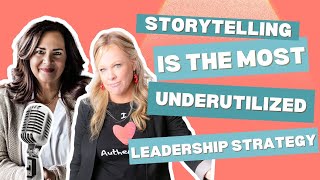
Yeah. And it's actually in you. Do you. Ish. And my normal authenticity talks, I have a framework called humans and helps you start to swim in the other direction in that. In that river. And N stands for narrating, which is storytelling. And storytelling is the most underutilized.
It's true.
Authentic authenticity, authentic leadership strategy ever. Because people remember stories 22 times more than facts and figures. And so it takes work, right, to catalog stories and tell them. But the more people can do it. So yeah. Yeah. Storytelling is a big part of not just me, but I think anyone where you're like, oh, they're so authentic, there's probably a big storytelling component or narration.
I mean, from History from the bards of, of many, many years ago. This is how we uplifted others and shared critical information. All right, now where do we soak this all up, Aaron? Where do we get your book? Where do we see your talks? Where do we work with you? Where do we send people?
Yeah, I mean, I think the best place. A couple things. One, if you're a, you know, podcast listener, I always recommend once you're done, you know, binging, finding Brave, because work doesn't have to suck, is a good place to go. And you just kind of hear from me and my co host and me and my guests. So it's just the letter B. And then, you know, there's so many. I have a website, obviously, but I would say go to LinkedIn. That's where I'm a human. I'm, you know, I'm interactive all the time. You can find my website and, and peruse, you know, the things that you like best. So I always say, if you can spell my name, you can find me. I'm the only Aaron Hatsy Costa in the world. You just have to spell. I love it.
Well, of course we'll spell it all out below. Thank you for what you do. It's so enlivening. Like my head is. The pistons are exploding. There's so much there and there's so much stretching that I think you're pointing to.
And to me, that's the most exciting.
Information if it's everything we already know in a tiny little tweak. Okay, but you're asking us to think differently about ourselves and be different and do different in service of others. I mean, what more can you ask for? Thank you so much.
Thank you, thank you.
I hope you have questions, you know, if you have a challenge like my very first thing out of my mouth that I think the ecosystem is in part involved. If you say no, that won't work. We'd both love to hear from you. And if Aaron isn't too busy selling her best selling book, you know, find us where you see this anywhere on LinkedIn. Write a question. We'll both do our best to help you on your journey, but I don't think you can go wrong with this. I think it's enlivening both personally, professionally, and for everyone you interact with. I hope you will take some of these tips that Aaron shares, reader book, and let us know what you think. I hope it really enlivens you. All right. Thank you again, Aaron, for taking your time here in your crushing book launch. Not crushing joyful. It's joyful, isn't it? And sometimes crushing. All right, everybody, have a wonderful two weeks and we will see you next time.
Thanks so much for joining us today. And please don't forget to check out findingbrave.com for more programs, resources and tips. And tune in next time for your weekly dose of finding Brave.
More from Kathy


Elevate Yourself, Elevate Others, and Amplify Good | Chris Cooper | Finding Brave Ep. 334

Finding Brave Epis #333: How Leaders Can Harness AI Without Losing Their Humanity, w/Bennett Borden

Finding Brave Epis 332- How to Stay Brave, Valuable and Visible in the Age of AI, with Raman Rai

Finding Brave Epis 331 - The Power of Positive Disruption, with Dr. Patrick Leddin


Finding Brave Epis 330 - Being 40: Letting Go and Embracing Who You Are, with Stacey Lindsay

Disrupt Career Reinvention with Kathy Caprino - via The Disruption Lab Podcast w/Patrick Leddin

Creating Neurodiversity-Friendly Work Cultures: Simple Workplace Adjustments Matter

Finding Brave Epis 329 - How To Create a Neurodiversity-Friendly Workplace, with Kristen Pressner

Finding Brave Epis. 328: Reclaiming the Power to Trust Your Own Voice, with Dr. Cindy McGovern