301: Justice, Love and Facilitating Organizational Healing with Ora Grodsky
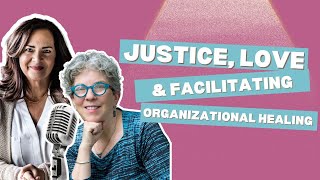
Transcript of a Finding Brave podcast episode (host Kathy Caprino) featuring Ora Grodsky discussing her book Justice, Love and Organizational Healing and her approach to transformational consulting. Key themes: integrating spirituality and Chinese medicine perspectives (acupuncture) into organizational development; transformational/process consulting vs. expert or pair-of-hands consulting; levers for organizational change (leadership modeling, culture, clarity of values/goals, non-punitive accountability); the role of urgency and white supremacy patterns; and the importance of self-connection as a foundation for collective change.
Chapters
So this comes from the Talmud, the Jewish text. It is a combination of two different sages wisdom put together and it says do not be daunted by the enormity of the world's grief. Do justly now, love, mercy now, walk humbly now. You are not obligated to complete the work, but neither are you free to abandon it. And yeah, it gives me tears too.
Hello everyone, this is Kathy Caprino and welcome to my podcast, Finding Brave. I've created this show for everyone who longs to create something bold and brave in their life. To rise up, speak up, and stand up for who they are and to reach their highest and biggest visions. Each week I'll be speaking with inspiring guests from all walks of business, leadership, entertainment, the creative arts and the entrepreneurial world. And they'll be sharing their intimate stories of Finding Brave and offer their best strategies for building your most rewarding, joyful and meaningful life, business and career. Hey everyone. Kathy here. I am thrilled to announce that my eight week live course, the Most Powerful you is now open for early enrollment. We kick off the course on February 27th and if you register by February 21st, you'll save $300 on the full price and receive nine incredible bonuses, including free access to my brand new digital career coaching tool. Kathy Cabrino, AI this transformational course is the perfect companion to my book, the Most Powerful you. Seven Bravery Boosting Paths to Career Bliss and over eight weeks together, I'll personally guide you through steps to boost your confidence, step into your leadership power, build effective networks and allies, speak up for what you want and get it, Share your talents in compelling ways and make the career changes and pivots you been dreaming of. By closing the seven damaging power and confidence gaps that we focus on, you'll transform how you see yourself, how others see you, and what's possible for your career and your life. Spots are limited, so don't wait. Head to mostpowerfulyou.com to claim your 300 early bird savings and nine bonuses before February 21st. I can't wait to support your growth and help you create the career and the life you truly deserve. Let's do this together. I'll see you in the course. Hello everybody. Welcome to another episode of Finding Brave. This is coming to you, I believe in early February, but we're doing it a little earlier than that and I'm hoping your new year has been off to a wonderful start so far. I am so excited you hear this every time that we start the show, but I mean it every time. I am so Honored and excited to have our guest Ora Grodsky here today. Aura, thank you for joining me in the middle of your book launch which is for many of us some of the most exciting days. Thank you for being here. I cannot wait to dive into your book and your meaningful consulting work and your your special lens. Can't wait. Thank you for being here.
Thank you. Thank you, Kathy.
Now we are talking about and I can't wait to tell you about Aura. Let me read her bio which is so impressive. But we also have a fun little backstory which kind of has several different layers. Actually can't wait to share that. But let me tell you about Aura and what we're talking about. Need my glasses for this. Aura is a mission driven organizational development consulting with over 25 years of experience working with hundreds of social justice oriented organizations. Drawing on her diverse expertise in acupuncture, nonprofit management and organizational development. What a mix. Aura takes a holistic approach to facilitating transformational change with a deep commitment to compassion and justice. She partners with organizations that are shaping a more equitable and sustainable world. Aura lives in in Massachusetts with her husband and her their feisty cat. Are we going see your cat Scoop by Wonderful and is the proud mother of two amazing women whom I know and can testify to their amazingness. And Aura has a new book out or coming out, Justice, Love and Organizational Healing. And that is what we're going to talk about. Love. How about that in the context of organizations. So thank you again. Let us dive in. But first, again, lots of folks love to know how do you learn of these amazing guests?
So.
Or tell me what you remember about how we met because you seem to have a photographic memory or you remember details. Can you tell us?
Yes. We met on the first day of both of our older child's college when they were assigned roommates to each other and we met in their dorm. And I remember how kind your daughter Julia we were a little later getting there and she called Sasha and said which side of the room would you prefer thoughtful human being?
Look at what you remember.
Yeah. And then we. We discovered that we lived in the same dorm at Boston University at the same time but on different floors and we didn't know each other.
I wish we had or I would have. I would have had a hell of a lot more fun my first year. What a crazy. And you even remembered the floor numbers? Yeah, I said 15 and you. Right. And you were. What did. I don't even remember.
But you think you were on 15 and I was on 16. But the thing you know about getting older, Kathy, I used to have. I have a great memory for anything that happened 30 or 40 years ago, but I don't know where my car keys are. So you know how that goes. Do.
It's awful. Or names, they don't come so quickly. Well, what an amazing, amazing coincidence. And I remember at their graduation they had a party at the house. And I remember we did know what each other did for a living. But we got talking and I said this is an incredible lens that you have an incredible gift you're giving to organizations. So here we are with your book, so let's dive in and I've gotten your permission to do this, but there was a quote early on page XX of your book that I, I got tears in my eyes reading it. And I'm. I'm really sure it's at the heart of your work. Would you read it for us and tell us why you included that quote and what it means to you?
Yes. Thank you, Kathy. So this comes from the Talmud, the Jewish text. And it is a combination of two different sages wisdom put together. And it says, do not be daunted by the enormity of the world's grief. Do justly now. Love mercy. Love mercy now. Walk humbly now. You are not obligated to complete the work, but neither are you free to abandon it.
And yeah, why can I not hear that without crying? I have to figure that out. But will you tell me what that means to you in the context of this book in your work?
Yeah. Thank you. Well, we've. Humans have always lived in difficult and challenging and reef inducing times. This tells us that and this is our time on the planet. This is our time to create justice just in the world. And it's not going to be in our lifetime. And we, we can't be looking for instant results. But we need to lay the pathway as human beings have been doing forever to, to. To. To carry that work of what can it be? What can human beings be for each other? How can human society be. And even in a time like this where there's so much fear and grief around that we still, we're not free to abandon it. It's our work now, but we're carrying the work of generations forward.
How beautiful. Love mercy. Now that hits my heart. And you are not obligated to complete the work. Can you just talk a little bit about what that means to you as well? Why do we need to remember that? Do you think humans are thinking they have expectations that they're Completing it. Why do we need to be reminded of mercy, love and that?
Yeah, I think because. And particularly I think in the US Context. I know I grew up believing we. We've arrived in a place. It's. It's our time and, you know, watching the song, watching the world wake up from history like we've arrived someplace. And sometimes we can think if we don't have immediate results, we haven't fixed a problem that we actually maybe haven't done anything. But we're here, moving the needle forward, moving the dial, and that's our work to do. To orient ourselves in the direction of love, compassion, mercy, but not to expect an immediate result from it. Because this is long, long arc work.
I love it. And I think another piece I love about it is it smacks us when we have a little hubris that we think we're the answ.
Exactly.
When we're not quite the answer. We're contributors. We're shaping the future. But I think when we think I have. Every time I think I have the next best thing since sliced bread, I usually have a little bit of a rude awakening. I can be excited. Like as we talked, I have a new clone out. I just think expectations are important. I think that's right managing them. What do you think?
Well, I do. And I think the part that it couples with is neither are you free to abandon it, to think, well, I've done enough. You know, I gave this amount to this charity that I've done enough that actually we're in the work fully within the tension of. This is our work. We take it seriously. We. We do everything we can and we don't expect the immediate result necessarily. It's. It's human work of, of generations and certainly of our lifetime.
Isn't that what an. An amazing quote does for us?
It's.
It's volumes of information. Oh, how beautiful. Thank you for letting me do that. Now, we have questions here. I have a lot of questions, but one thing I want to make sure folks understand and I want to understand you have a series of influences in your. That have framed your, your perspective. And I'm, I'm interested. I didn't prep you on this, but, you know, if I use the word love in the work I'm doing, and, and my work is primarily with mid to high level professional women. A lot of people get it, A lot of people don't get it. And you know, I, I feel I'm grounded in a spirituality of sorts. Not religiosity spirituality, but I don't Use those words because people have a lot of assumptions about. But you have influences, including Chinese medicine. Is that not right? True.
Yeah.
Acupuncture. Can you just, before we dive in about why you wrote this book now, and you know, there's so much we can talk about and we will. What it, what is it to be a transformational consultant? And I looked at your chapters and I want to touch on how do we shape systems and what are the levers for change that are your chapters and holding space. But before all that, can you tell us how has, you know, all of these influences shaped who you are today and how you consult? That's really fascinating to me.
So after we, we first didn't meet when we were freshmen at BU in the late 70s, I went to acupuncture school after college, and because I was interested in how do we heal, that's always been an interest of mine. And I went to an acupuncturist and had a profound experience. So I went to acupuncture school at.
Such a young age.
Yeah.
Yeah. 22.
Wow. 23.
23. Wow.
I really understood a holistic framework for seeing things, for seeing things as part of systems and seeing bodies as part of systems. And, and that's really helped influence me to see organizations as systems, as holistic entities with each component influencing each other. While I was graduating from acupuncture school, I became kind of freakishly the academic dean of the New England School of Acupuncture. And I did that for six years. And that got me very interested, more interested in organizations and systems and less interested in elbows and knees, which are the things that acupuncturists really need to care about. And I went back to graduate school to really study how do we come together in groups of people, in organizations, in different kinds of systems, and do good work that creates justice, that creates sustainability in ways that are life giving for the people who work in the organizations. And so that's really been the question that's motivated me for these many, many years is how do we do good work externally as we do good work for ourselves as individuals and in relationships and in teams and organizations?
How fascinating. Or it sounds like we've had other lives together, because I just want to amplify what you're saying here or add to it. You know, I became a marriage and family therapist after leaving a very damaged corporate life. And marriage and family therapy is not about marriage and family necessarily, it's about systems. And I remember first learning the first week of that that therapists in that genre, do not look at a person, one individual needing to be fixed. So if a child, the parents think the child is the problem, you have to bring in the family. You have to see the systemic. It is really life changing, isn't it? To understand that the system piece, systems piece is so, so important. So what a fantastically interesting thing. Now tell. Can we start with where kind of your book starts about how to be a transformational consultant? I know, you know, this is worth 10 years of you talking, but what are the key things people need to understand? Anyone who is working with organizations or even with individuals, it's, it's so related what, what we can look at it as. What do you see missing in other consultants that aren't generated? That, that sounds negative. I don't mean to, but what do you think is necessary in a consultant's perspective and approach that brings about or helps bring about transformation?
Yeah. So let me start by saying Edgar Schein differentiates three different kinds of consulting. There are expert consultants who like know how to do the technical thing. Like you want your IT done, you want, you know, whatever done. These people have the expertise and they come in and they look at your thing and they say here, here's what you need to do.
Okay.
And so there's a lot of organizational experts as well.
Okay.
Second type of consulting is a pair of hands. That's when we need someone to do this task. We don't have a staff person to do it. We could, if we had the resource, we could bring in a staff person. But we're going to bring you in to do this discrete task, pair of hands. And the third is what he calls process consulting and what I call transformational consulting, which is helping to guide processes together with people. And what is transformation is really a fair question to ask at this point. What are we even talking about?
Yeah, right.
And I think about transformation as being what my dear friend and colleague Joyce Shabazz calls widening our aperture so that as human beings we get, we get very tunnel vision focused and only seeing a slice of what's in front of us. But when we widen the aperture about the world and the system we're in and about ourselves and ground more deeply in who we are. And you've talked several times about kind of a spiritual perspective about what is it from inside of us that is our core humanity that's guiding us. So, so, so really coming to a refreshed place of connection with self, seeing a wider view of the world and come and coming into deeper relationship allows the Possibility of us making different choices with what we do. We're going to design strategy very differently if we're coming from that place. And that's how I see transformational consulting is creating spaces within which people can have the kind of process where they deeply connect to self, deeply connect to each other and see a wider view of the system that they're in and how we got here.
I got questions, piles of questions. As someone said to me today, piles do. And I'm, you know, my lens is going to be, you know, revealed here as well. Are you able to come in when an organization doesn't know you? I mean, maybe someone's referred you so they kind of know of you or they've read. Are you able to say those words when you are being vetted to be. To come in as a consultant? I think what I'm getting at, if I can be transparent, you're speaking my language. I'd hire you in two seconds. I do see some residual, a lot of resistance to, I don't want to put words in your mouth. A resistance to a focus on humanity, a focus on love and justice. And I think that the resistance I'm assuming is happening is so many organizations are floundering and they want the bottom line addressed. It's about. I remember I interviewed Sean Acor, who was, oh my gosh, what a dear. And he talked about happiness as an advantage. And his company showed the business case of doing work, helping employees become happier. And there it was. And sometimes I want to spit when I think about, we always have to show the business case when it's obvious what the business case is. There's going to be more engagement, more productivity, more trust, more. Yes, loyalty. What do you need, people. But is there ever resistance to what you just said?
Yeah, well, you know, you talked about. As consultants and potential clients are vetting us. I'm also vetting my clients. So I, I can only work with folks who have an interest in, you know, share shared values around. Why are we here to do work. So, yes, we need to sustain ourselves as we do the work. But the point of organizations is not to sustain the organization. It's to do work, good work in the world. And so if you're just looking at a single bottom line, that's not my interest. Because I believe, yes, we need to keep going as long as we're doing good work, not just for its own sake, but I think creating structures, creating policy, creating organizations and products only looking at the single bottom line of where's profit is, what has gotten us to the verge of potentialist extinction with climate disaster because we're looking for cheaper and faster. And as long as we're looking for cheaper and faster and we're leaving human needs out and human beings out and the health of the planet out, we are not going to be here for too long.
So if I can paraphrase your. You, I love it. You're not just looking to make a buck. You're also looking to be of service to organizations that will be a joy and rewarding and fulfilling for you to serve and for you to further their, their impact. So it's, it's a marriage partnership.
It's surely a partnership. And that's another thing about transformational consulting because I don't come in and say, well here's what you need to do because I don't believe that that really creates, that human beings mostly will, will create change, will, will do things differently when they're coming in told what to do. But when we're in partnership together creating a process together that I'm working with my clients to design and to hold and to help them be accountable to and to help them explore and solutions, sometimes that means bringing in some expert things, but that, that they are creating the change themselves then then yes, they're going to find solutions that work for them, that work for other human beings in the planet. And yes, that is a great joy to work with people who have that aspiration and way of being in the world.
Oh, fantastic. You know, in a simpler, simple way to, or silly way to say it. You know, coaches often have a much greater effect when they're half baking an idea. I mean if we come in with it fully baked and try to push it on you, first you're going to resist what we resist persists. But secondly, the idea is going to be better when it's collaborative. You know, we know a lot as outsiders but we, you know, it has to be done exactly in the way you're talking. I love it, love it. So let's talk about. Can you give us an example so people can really understand what might be a problem that an organization is bringing you in to help transform or solve or address a common one that you work on. And I'm interested in both the levers of change that your book talks about and how do we shape a system? How do you come in and you're working. Is it mostly non profits or it's and small big. I'm sure it's a huge array of organizations.
It's largely nonprofits. I Also do a lot of work with municipal, local municipal government and occasionally for, you know, folks who are s Corps or ethical businesses, mostly in the fair trade space.
Yeah, so interesting. Yeah.
Yeah. So that. So. So the kinds of problems that I come in to help with, people are in some kind of pain or have some kind of aspiration. Either something's not working. Well, there's some. There's conflict. They're stuck in some way. They have a sense they could be doing more. There's leadership transitions, those kinds of things.
And who reaches out to you? Always the head or, or.
Who reaches out. Sometimes it's a board chair, sometimes it's an executive director, sometimes it's someone who's been tasked with finding a consultant to help us out.
And yeah, so they're ready for change. They acknowledge change is essential.
Well, and they're also still human. So like, yeah, we need to do something different. And most humans, myself included, are not great lovers of change. You know, we get comfortable where we are. Scary, fear, loss. Yeah. And so even if, when people say, well, we need to, you know, create a new plan, we need to rethink this thing, there's still, you know, we come up against our own resistance. People do for sure have resistance.
I see. All right, so there's pain, there's areas of conflict.
There's just needing a new plan, a new direction. There's needing to get everybody on the same page about what the. What they're doing.
And so for anyone listening who would. Would say, oh boy, we need aura or they're thinking for themselves about their own organization and they want to learn from your book. And you, what are the biggest levers of change in your, in your experience? Where do we start?
I think it's often really important to start with leadership and to look at what leaders believe. I'm thinking particularly around doing work around anti racism in organizations where people will say, well, those other people need the thing and we don't need the thing, but, you know, our staff needs the thing. And it's really important that people model by example. And I believe it work in working with people at all levels of an organization. But I do believe, as the crass saying goes, a fish rots from the head. And so what leaders do models throughout the organization. I think there's also power and leadership throughout organizations, and people have a lot more ability to create things often than they think. But I think people with positional power, it's really important to look at what they're doing and, and how they're doing what they're doing. It's important to look at what are the. What's the culture of an organization? What are kind of the spoken and unspoken rules in an organization? What's working about the culture? What's not working, what people and people themselves creating what's the culture that we want and identifying that. It's really important to have clear, shared goals, expectations, values, so people know what they're doing and why. And it's incredibly important. Another lever of change is of course, having measures of accountability that are not punitive, but so that we all know what we're responsible for, we're clear on what we're doing and why we're doing it, and what we're accountable to so that we can all inside of an organization, work to our best and with our own personal leadership. So those are some things.
Oh, I have questions, Piles.
Okay.
You know, sadly, I. I have been hired by lots of organizations in the past and often they want to fix an employee. And invariably that employee is not what.
Needs to be fixed.
Right, Invariably. And I am continually stunned by what HR does in the guise of being supportive. What performance improvement plans are, you know, ostensibly trying to do, when in fact in many cases, then it's not at all what is intended. Do you understand what I mean? Can't even talk about it. But can you do that? You're so. Just even talking to you or you're so. It's a meditative experience. I mean, who wouldn't want you sitting at a conflict ridden table? You calm us all down. So you might resist this. But when you talk about the fish rotting from the head, and by the way, does a fish rot from the head?
I was wondering that myself recently. True. I don't know.
Well, I digress.
Yeah.
But talking about it as a metaphor or a truth, I'm interested because as a therapist, a former therapist, I learned about narcissistic personality disorder and it literally changed my life. Because much of the pain I've experienced from people has been from narcissists who, you know, in. We all know, most of us know some of this, but it's a spectrum disorder. Right. And it can be, you know, 1 to 10, let's say. But if you're an extreme narcissist, no empathy, no, no, no ability to hold challenge. Will not be accountable. Thinks they're entitled. It can be incredibly toxic and damaging and traumatic.
That's true.
But I'm wondering, in all the organizations you've worked with, what kinds of things are the hardest to change? I'm Guessing. I mean, I can feel the impact that you have in your heart and your soul. But there, let's face it, this is human reality. Not everybody will change in ways they need to. What. What is the hardest thing you've ever come up against? Where it's almost intractable? Can I ask that?
Yeah. Give me a moment to think.
Yeah. I didn't prep you people. I don't prep my guests.
Yeah, let me think for a second. One thing that comes to mind right away, of course, is thinking about patterns of urgency and how they're is so even if you want to go slow, make thoughtful choices in most organizations, there's so much pressure and so much urgency to get it done, and so helping people to move from that. And what I've learned over many years, and particularly in Tema Kun's seminal article about white supremacy and patterns of behavior and white supremacy supremacy, is that urgency is really often something that comes with an attitude of dominance and subjugation, which I think is the root of white supremacy is the idea that some people deserve to have and deserve resource and deserve to be human, and some people don't. And so that dominance and subjugation ideology that is the root of white supremacy is a lot of times what drives urgency. We need to be better, we need to accumulate more, we need to do better, better, faster, faster. And there's so much pressure from that in the world for everyone that letting go of that urgency is really hard. And the messages that continue to come at us that we need to behave in that urgency. But I'm thinking about, wow, Stephen covey in the 7 Habits of Highly Effective People, where he's got his four quadrants of what's important and what's urgent, and some things are important and urgent, and some things are not important and not urgent, and some things are urgent but not important. And, and, and, and that, that's really what we see is a lot of false urgency because we're supposed to behaving and this be behaving in a particular way and accumulating and, and producing and not slowing down to really look at what is the human and environmental cost of our work. And it's hard to do that. So that's a lot.
Oh, wow. I did not expect any of that. Can I ask a question that's ignorant, but I'm open to being ignorant? When you say it's shaped by white supremacy.
Yes.
Do you mean that our whole culture has been shaped in this way or that sometimes you'll see it in an individual like you Know, my world is helping women deal with patriarchy. This is not to bash men. Men and women are hurt in strict, rigid, patriarchal organizations. So I'm sure it's similar.
Yes.
But I do have to educate what it's like for women in a patriarchal world. And men have educated me about the incredible trauma and harm that patriarch, strict, you know, rigid gender stereotypes are doing to men and women. But are we saying here that the white supremacy views and tenets have been absorbed by all of us in white dominated organizations or, or cultures? Or is it one individual you're dealing with?
No.
The CEO who. No, I didn't. I knew that wasn't.
Yeah, I wanted to clarify. So, so, so if you think about, you know, patriarchy is this idea that one group of people should have domination over another group of people.
Right.
And that has what has perpetuated the oppression of women and as you're pointing out, the oppression of men. Because they have to play a role in, in continuing this cycle of dehumanization and subjugation. And it's very much the same with, with racism and the idea that this country was founded on, really, that some people deserve to have. We're going to come here and take. This land is baked in. And so it's been going on for forever. And so it's not surprising to see manifestations of it in organizations and in how we're all impacted and we all suffer from it. It's not that one group of people is better than another or should have or whatever, but how do we create a world in which we're not looking to keep a group of people as less than and another group of people as having. And that shows up in organizations all the time in the tiniest ways of who gets promoted and who gets hired and who gets to have voice. And so we have to look at that not to, not, not to dehumanize anybody, but to me, because it's unconscious.
These are so much of it.
So it's what we were born into. It's the system we were born into. And so that's part of understanding that, that we can see our way. If we can see the system, we can make choices to not recreate things that, that cause suffering.
You know, not to be glib, but there's another fish metaphor that this is the water we're swimming in and we're the fish and we don't see water.
That's right.
So, you know, that's a loving, loving way. Oh my God, I could keep you on forever because this is like a master's class. Have you taught all this in, in institutions? Oh, my goodness, they have.
There are a lot of people, not just me, a lot of people who, who are trying to help people see the system that we're in and how it impacts our daily lives.
So I, I'm, I know I'm keeping you a little late in, in the end, there's so much everyone read or his new book. We'll, we'll link to it below. And your, your comments remind me I interviewed an amazing individual on what's the name of her book? It's amazing what your black friends won't tell you. It's. It's incredibly powerful and the book really is life changing. And we'll link to that below. But here's. I didn't prep you for this and this is hard of everything you do. Like, let me flip it if someone said to me, kathy, what is your point of differentiation in how you coach? What do you do differently? You know, we could talk for hours about that for me, and this is not an ad for me. But. And a lot of people would not agree. A lot of coaches don't do this, aren't trained to do it, don't want to do it, don't think you need to do it. But I have an assessment that it's 12 pages of questions I wish someone had asked me 40 years ago. And if I'd answered these questions honestly, I don't think I would have made a lot of the mistakes I made in my career. So I've seen thousands of these. And I look at this and the person emerges to me. I see their wants, their challenges, the challenges they think they have, the challenges I think they have. I see how their childhood impacted them. And everyone is impacted by their childhood. You know, some for positive, some for negative. I don't even see it that way. But I think the difference is I see the totality of the individual. And in the very first session, I give them a brain dump and tell them what I see. I don't need to be right. They're the expert in their life. I'm the expert in change. But if I am on the, on the right path, we just save six months of coaching.
Yes.
Because now we're going to focus on what we need to focus on.
Yes.
I would say that that is a big point of difference. Differentiation, that I know how to do that.
Yeah.
And then I know how to guide transformation in a way that's doable for them.
Yeah. That's beautiful.
Thank you. Let. Thank you for letting me say that. Yeah, I'd love to know. For anyone who says, gosh, I have to have Aura here, we need her. What would you say is a lot of people are doing amazing consulting work, you know, and they're writing books that change our lives. How, what would you say your big point of differentiation is? And how do you approach this work? You know, in, in a 10 sentence description, what do you do that you think others don't? Is that possible to answer? Is that helpful to answer?
Well, let me try, let me try. So I, I think as you, you said earlier, the intersection of what I bring of a holistic understanding of systems and energy and how energy moves through systems. A spiritual perspective about the value and dignity of all human beings. A real commitment to process and rigor in, in really with integrity laying out telling the truth about where we are. The assessment piece that you talked about, like really being on the same page about that and then helping people to dream and where do we want to be now that we know what we're grounded in and what's true, where do we want to be? And then this is a model that comes from Interaction Institute for Social Change. But then how do we get there? Once we know where we are, what's true, where we want to be and how we get there and telling the truth about all those things, really creating an environment within which people can hear truth, speak truth and be inauthentic, work together.
And honestly, you know, just sitting with you in this way, my energy shifts. Like I. I think that you have an innate beautiful capability of helping people feel safe.
That kind. Kathy. Thank you.
So I can feel it. So let's leave people with this. If they get only one thing from your book. I know it's hard. I wish I'd prepped you. What would you dream?
That one thing would be that we connect with ourselves. That we really honor our own humanity and be kind to ourselves on behalf of the whole and the whole system. So that, you know, what happens inside of us is what we bring outside. So that we are coming from a place of always deep self connection and deep and love for ourselves. But there's so much more. That's where I.
Well, I mean, I think everything starts with that.
Yes.
I was saying to my son, who you've met, we talk a lot. I really have seen that how we operate with others is an exact mirror to how we feel about ourselves. If you are loving to yourself, you're not hateful to others. It just doesn't happen. Yes, and if you're hateful and judgmental and critical of others, there is no way you're sitting in self love. So would you agree with that?
I totally would.
So what you're talking about is the absolute way to start within a framework of, yes, we have a limited time and we're going to focus on the system and we have to make change because that's why we're here. Oh, I love it. All right, where does everyone soak up your book? Where do we send them? And you know, I'm going to link to everything, but thank you, thank you.
Bookshop.Org all, all the other platforms. It's there now, hopefully in bookstores March 1, but available for preorder now. So, yeah, and you can find me at justworks Consulting. That's the name of my consulting practice.
Oh, thank you so much for the work you're doing.
Thank you.
Oh, I feel just, I feel like I'm levitating people. I say this every time. You know, again, the reason I love this show is I only have on guests who I want to learn from and who I know I have a lot to learn from. And so to me, it's like a master's class in business, in learning life, in self leadership. And I, this episode is no different. And I do love to say this. You know, we were talking earlier about ChatGPT and, and generative AI. Great. AI always asks a question after it poses an answer to your question. So I, I realize I, in part I'm similar to that. I don't think we can hear this and not have a question. I don't think we can hear this. Deeply, deeply what you're really saying and all the layers of it that we can't get in a 40 minute podcast. So wherever you see this people, please ask a question. You know, I will link to or on LinkedIn. And I know you're crashingly busy with your book launch, but one of us will try to get back to you with an answer or more resources. We would love to hear your questions because it doesn't end here, this conversation. So please do that for us. And I hope you found this is engaging and in some ways very calming that there are people in the world that can do this kind of help. We're not alone from around in the woods in the dark we're not alone Here we are. All right, everyone, I hope you found it helpful and I wish you a wonderful few weeks or a thank you again.
Kathy, thank you so much. What a pleasure.
Such a joy. All right. Everyone have a wonderful finding Brave two weeks and we will see you next time. Hey friends, thank you for tuning in today and I am over the moon to share with you about the recent release of my new career coaching digital tool, Kathy Caprino AI and offer you the first month free. This tool brings my career growth, teachings, advice and answers to your most pressing questions directly to you 24 7. With a subscription you get unlimited access and can message or audio chat with my clone anytime you need help. Drawing on 40 plus years of experience from my corporate work, my time as a therapist and in career and leadership coaching thousands of folks, along with writing and speaking across six continents, I've trained Kathy AI using over 2.5 million words of my content that over 41 million people have seen. There are two affordable tiers, with tier two offering some great bonuses including free monthly coaching calls with me, a private consultation, exclusive discounts on my courses and programs, free LinkedIn support and more. It also makes a fantastic tool for your teams and employees who want to thrive and grow professionally. So check it out@kathy caprino.com Kathya.
More from Kathy


Elevate Yourself, Elevate Others, and Amplify Good | Chris Cooper | Finding Brave Ep. 334

Finding Brave Epis #333: How Leaders Can Harness AI Without Losing Their Humanity, w/Bennett Borden

Finding Brave Epis 332- How to Stay Brave, Valuable and Visible in the Age of AI, with Raman Rai

Finding Brave Epis 331 - The Power of Positive Disruption, with Dr. Patrick Leddin


Finding Brave Epis 330 - Being 40: Letting Go and Embracing Who You Are, with Stacey Lindsay

Disrupt Career Reinvention with Kathy Caprino - via The Disruption Lab Podcast w/Patrick Leddin

Creating Neurodiversity-Friendly Work Cultures: Simple Workplace Adjustments Matter

Finding Brave Epis 329 - How To Create a Neurodiversity-Friendly Workplace, with Kristen Pressner

Finding Brave Epis. 328: Reclaiming the Power to Trust Your Own Voice, with Dr. Cindy McGovern