303: How Validation Transforms Our Relationships, Lives, and Influence
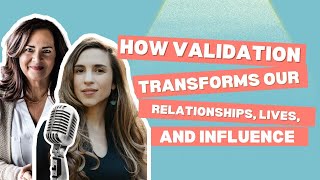
Dr. Caroline Fleck explains validation as a teachable skill from therapy that shows you're present, you understand, and you care. She breaks it into eight concrete techniques: two for presence, three for understanding, three for conveying care. A CEO validates a team member who exploded; a parent validates her daughter facing cancer.
Chapters
The first thing you need is mindfulness. You need to be attending, paying attention non judgmentally. Through that process you will. You're going to say, no, I won't. I promise you will start to understand some part of that person's experience, be it their thoughts, their emotions or their behavior. You will see the kernel of truth, the validity in something there.
Hello everyone, this is Kathy Caprino and welcome to my podcast, Finding Brave. I've created this show for everyone who longs to create something bold and brave in their life, to rise up, speak up and stand up for who they are and to reach their highest and biggest visions. Each week I'll be speaking with inspiring guests from all walks of business, leadership, entertainment, the creative arts and the entrepreneurial world. And they'll be sharing their intimate stories of Finding Brave and offer their best strategies for building your most rewarding, joyful and meaningful life, business and career.
Hey friends, thank you for tuning in today and I am over the moon to share with you about the recent release of my new career coaching digital tool, Kathy Caprino AI and offer you the first month free. This tool brings my career growth teachings, advice and answers to your most pressing questions directly to you 24 7. With a subscription, you get unlimited access and can message or audio chat with my clone anytime you need help. Drawing on 40 plus years of experience from my corporate work, my time as a therapist and in career and leadership coaching thousands of folks, along with writing and speaking across six continents, I've trained Kathy AI using over 2.5 million words of my content that over 41 million people have seen. There are two affordable tiers with tier two offering some great bonuses including free monthly coaching calls with me, a private consultation, exclusive discounts on my courses and programs, free LinkedIn support, and more. It also makes a fantastic tool for your teams and employees who want to thrive and grow professionally. So check it out@kathy caprino.com kathya and get your first month free with the coupon code KC free trial AI. Let me know what you think. I truly hope it becomes a game changer for you. Hello everybody. Welcome to another episode of Finding Brave. I have to tell you, I am beyond excited to talk with our amazing guest today about her brand new book. Look, I'm already crying. Everyone who listens knows I cry half the time. What an amazing book. This is about validation and what we need to understand. I think that this. You know, we often read something or hear something or a friend tells us something in it can actually change our lives in a minute. Not often, but sometimes I really believe this book can do that for you, and I think our conversation just might, too. So please welcome Dr. Caroline Fleck. Caroline, thank you for. And your book launched yesterday. You're all seeing this a little later, but I am so grateful and honored that you're taking the time to join me today. Thank you so much.
Of course. It's really a pleasure to be here. I'm thrilled.
Thank you so much. All right, everybody, let me tell you first about Caroline, and then we're going to launch into everything we can Talk about in 45 minutes about this amazing book. Caroline is a licensed psychologist, corporate consultant, and adjunct clinical instructor at Stanford University. She's a respected voice in psychology and has been featured in national media outlets. And a lot more coming up right now due to your book.
Wow.
Including the New York Times, Good Morning America, and the Huff Huffington Post. She's just published, as we said, her first book, Validation, how the skill set that revolutionized psychology will transform your relationships, increase your influence, and change your life. All right. And I love how you. You shared in the book. That's a big promise, right? And we hear a lot of these big promises, like, every day. But I really believe your book delivers. I really do. So there's so much to start with. But let's start with and. And you know what? We talked about this for a second. Having been a corporate person and then sometime as a marriage and family therapist, I want to start with this little story, and I have a feeling it's going to really amplify why Validation, why your book, why your work is so important. But let me see. Long story short, when I was an intern 20 years ago in marriage and family therapy, I. I dealt with clients who were dealing with rape, incest, pedophilia, suicidality, drug addiction, and I wasn't prepared. I'll have to say the Master's was great. It was in mft great. But I was kind of a sheltered person, and I wasn't prepared. And a fellow. I could cry. A fellow came in who was mandated to work with a therapist, and he was beating his daughter, hitting his daughter.
Oh.
And I went to my supervisor and I said, I don't think I can do this. I. I can't do it.
Yeah.
And what she said as I remembered it, and I'd love to hear if you think this. Pretty sure it does touch on all your themes. She said, because I was judging him, I was hating him. She said, if you cannot find something in this individual to connect with. And then she went further to love you. Cannot help him because we don't help people when we're judging.
That is so solid, boy, I want to shake her hand.
I know. And I went, love, what are you talking. No, no. But I thought about it. I mold on it next session. I mustered it. And what happened is he shared why he hit her, which is he didn't feel respected. And that opened the door for educating that, you know, hitting doesn't lead to respect. And of course, his father had hit him.
Exactly.
Yeah.
Yeah.
Can you riff on that and talk about why you wrote this book? What you say it. That you think it. And I love your kind of snarky, funny way, but you say it's absurd that we need an. An advanced degree or many years of training not to know what validation is. And you have a different definition. But can you riff on why this book, how you define validation and any thoughts you have on that story? I'd love to.
Well, you know, first and foremost, I applaud you for. For doing that work and sticking with that client. That is an incredibly difficult plat population and does. It takes a lot out of you. It requires a lot of you. And so I thank you for that. And that story really resonates with me in part because in my career, like, literally from the onset of my training, when I started graduate school, I was really interested in the folks that nobody wanted to work with. The really difficult.
What made you. Here we go, Kathy. Therapist. What. What drew you to that? Can I ask?
Okay, so now I've got. I'm already getting into disclosure, and this is a weird one. So people are going to dislike me right off the bat. I've always. I've always been interested, even in like. Like serial killers. I want to know how you get from point A to point Q. Like, what happened there?
That's a fascinating topic.
Very validating. Thank you.
Well, thank goodness people are doing that work. Otherwise there's no help for people who have behavior that we are afraid of and can't understand. And that's right.
That's right. So like mentally, cognitively, I've been interested in like, okay, what's the chain of cause and effect? Right? What are the links that get us there? And then kind of. I don't want to say spiritually, but why not? Let's say, yeah, kind of spiritually it is. I want to know, is there still a person in there that I could connect with? You kind of see all this stuff that they're doing, all this dust that they're kicking up, and it's Blinding. You almost can't see the person through it. You know what I mean? And I've always enjoyed, honestly found peace in the process of. Of sitting, kind of observing long enough for the dust to come down. And the type of treatment I ended up kind of becoming an expert in is dialectical behavior therapy. And that treatment was designed for treating a condition known as borderline personality disorder, which is a condition that's really stigmatized in. In mental health care because these clients are often so difficult to treat and have a lot of behaviors that are threatening to therapists and everyone around them. And so, yeah, already this is going.
To be a five hour podcast. Can I just ask two things? I think the word you used was you've always been interested. Is there a person in there that I can connect with? Have you ever found that there isn't?
No. And so here's the thing. Here's the thing. There was one case. This was back when I was working in the va and this person was as close to like a psychopath as anyone I've ever worked with. I think his diagnosis was psychopathy, but it was just on the border. And I'm a huge animal lover. I just kind of, you know, everybody knows this about me. I would talk about it, and he had worked in a factory farm once upon a time, and he would just kind of delight in telling these stories that he knew because this would be like in a group setting, and he would just have something to share and.
It would just happen, something horrible about.
What he did to animals or what he'd seen done. And it was just kind of. He would just kind of sit there and watching me swirl.
Trying to get a rise out of you.
Yeah, yeah. And it felt so ugly and so horrible. And yet, you know, I was. I was again, kind of oddly drawn to that person. You know what I mean? Like, I'm like, where is the human in there? And I recall at one point we had a conversation kind of one on one, him and I, and we talked for like an hour. And out of nowhere he says, you know what was always really hard for me about working in the factory farms was the chicks, the little baby chicks. And I was like, okay, what? Where is this coming from? And what are you saying? And he was like, you know, Dr. Fleck, they'd have them in these containers where they were all just on top of each other, and basically they'd be urinating, whatever, on top of each other. And that was just their existence.
He had empathy for that.
He said, it just wasn't Right. And that was it. That was the only glimmer of humanity I ever saw in him. But it came on the heels of I'd had to have a conversation with him about basically drinking before group. And so that had led to this hour long discussion. And it was. It was through this discussion that we just. There was a sense of connection. And that came at the end of the conversation. Again, he just kind of offered it up. It didn't pertain to anything we were talking about, but it felt like a real olive print, you know, like just.
That's vulnerable. He's sharing with you something that upset.
Him and he knew it would resonate with me. And he wanted me, I think, to feel. To see that part of him. And you could argue he did it to be manipulative, to do this or whatever. I don't know. That wasn't the feel of it, is what I would say.
Yeah, and we will. We could talk. This show could be about people with extreme disorders. And what you see is the common. There is obviously, I think, not obviously, I'm guessing a common, common denominator, common thread. But we digress. But that is so fascinating. I would love to come to you and talk to you more to help me help others. But tell me about the crux of this book and what you feel people don't understand, you know, if they don't have an advanced degree. And I know we only have a little time, but tell me, why this book? Why now?
Yeah. So it was in seeking expertise in a treatment for folks who were very hard. Right. So as part of dbt, as part of that training, this is an intervention that focuses on behaviorism, which most people are aware of, things like positive reinforcement and skill building. But it was the first intervention, behavioral intervention, to emphasize acceptance. And not just that it's important for people to feel accepted, but rather, it was important for me as the therapist to be able to consistently and reliably show, communicate that I accept people as they are while simultaneously trying to help them change. Okay. That is the whole focus of therapy is to help them. Right. And I was like, how the heck are you supposed to balance these two messages? And for the acceptance piece, DBT outlined and developed a set of skills, validation skills to help therapists communicate. Validation.
Communicate validation. Interesting.
And that was balanced with all of the change stuff. But my perspective was, as I learned this, why, as I said in the book, why aren't we teaching this in high school? Exactly.
Like, you know, kindergarten.
Kindergarten. No, seriously, seriously. Elementary school, like, it's unbelievable to Me that it took seeking expertise for a severe, popular, very niche thing that I would have the opportunity to learn this material.
I have a question. And then I want you to please tell us if we were taking a course with you right now for our children, parents listening, because this really impacts your, the whole realm of your life, your work, your influence, your leadership. What was the question I had? I have to ask you this. I feel like we can learn the skills of validation. This is a spiritual idea, but if we don't actually feel it, it's just going to be a manipulative, manipulated skill. In all your training, I'm sure you teach it the way it needs to be taught, but did you ever feel like, okay, this is all well and good to try to do, but I'm sitting in front of a serial killer, I can't do it. Was there ever that piece or people got the degree, but they really weren't? I mean, you don't want to cast dispersion on your colleagues.
But no, no. I think that's what's the beautiful thing about these skills and really this method is that first of all, validation must be authentic. So if it is not, then you're not validating the other person, you're not doing it. Yeah, you can call that whatever you want, but it's not validation. And so that's a pretty important takeaway. The second is that we talk about like degrees of validation. So I've just like, it is. It absolutely is. So at the lowest level, you know, if you're sitting from across from your fiercest political opponent, the least you can do is engage and be mindful. And we've got two validation skills that show us how to attend and be mindful in a way that communicates kind of non judgment and acceptance. Now here's the thing in using those skills, if you're just using those two skills with someone, you will start to cultivate some degree of understanding. It might be logically, you can see where they're coming from, or emotionally you can empathize with them. As soon as you have that, you can use one of the either understanding or empathy skills.
What were those two things that we need?
Yeah. So you need. The first thing you need is kind of mindfulness. You need to be attending, paying attention, non judgmentally. Wow. Through that process you will. You're gonna say no, I won't. I promise you will start to understand some part of that person's experience, be it their thoughts, their emotions or their behavior. You will see the kernel of truth, the validity in something there. Okay. And then you might be able to maybe communicate understanding, you know, via the understanding skills or, or empathy via those two skills.
I see. So thank you for that. So you know why, if, if you wouldn't mind, could you read the eight skills?
Yeah.
And maybe we can have you focus on teaching us the three or so that aren't talked enough. Enough about that. How would we know to do this? Would you mind? And of course, everyone go to the book. That would be really helpful.
Sure. It might help if I kind of offer a definition of validation because I feel like it's so commonly misunderstood.
I'd love that.
So we academics have our kind of academic definition, which is that mindfulness is a way of communicating that you're mindful, you're paying attention, you understand and you empathize with some part of a person's experience, thereby accepting it as valid.
That's what validation is.
That is the definition. Now I simplify that to validation just shows that you're there, you get it and you care.
Okay. Wow.
If you don't get it and you don't care, then the least you can do is show that you're there, that.
You'Re paying attention, you're there, you get it and you care.
Yeah. That's what you're going for. And I've got two skills to help you show that you're there, three to help you show that you get it, and three to help you show that you care.
Yeah.
Communicate, all of that, great. But if you can only do a little bit, that's fine. So at the most basic level, showing you're there. Right. Non judgmentally paying attention, probably. You know, there's two really powerful ones here, but I think the best one to lead with is attending. Just, just paying attention in a certain way, in a way that shows engagement and non judgment, which is remarkably hard, I have found. It's remarkably hard.
Even an eye raised eyebrow. I'll even see it in a recording of mine. Like, okay, you let out that you weren't quite on board with that.
And that is why I said this has to be genuine. Because if you are not authentically like non judgment or observing, you are going to let it slip. It's going to be obvious.
Everything is energy, isn't it?
It's right. That's right. So what I use in attending as this skill of asking myself, what's this person's point? As I'm listening to someone, I'm trying to figure out what's their point? What's their point? Why does it matter to them? And how could I make that point better? How could I do a better job of making that argument or even just stating whatever it is that they're trying to say?
Okay, better meaning you echo it back.
Nope, I don't even have to say anything. This is a sudoku. This is something I'm doing. Just like in my head, a little quiet solitaire where I'm trying to figure out if I had to speak for this person, how would I, you know, what's their point and how would I do it? Like, just to improve upon it. A little sharper, which seems weird. It seems almost judgmental. You're saying they're not doing a good job. On the contrary, it's acknowledging that anyone at any given time is just doing the best they can in that moment. Right. They're just kind of freestyling it. And so if you were to slow down a little bit, given that you're the listener and you have the space to do that, what might you say or do to kind of like, how might you reframe that a little bit to make the argument tighter? And as soon as you start thinking about or approaching the conversation from that way, you immediately start having. You'll have questions in order to help you flesh that out a little bit. Okay. Oh, so wait, what does that mean? And da, da, da, da. Right? To help you come up with that argument. And that means you're not focused on your rebuttal, Right. You're not getting distracted and trying to figure out what's going on, you know, in season two of severance or whatever. And while you're listening, you are actually paying attention. If you watch great late night show hosts, you'll see that they are all kind of doing this.
No way.
Based on how they're asking questions, you can see that they are trying to help this person along, right. In making a sharp, tight story or anecdote so that they're kind of joined in that process because they want, they want to help them. They want a good interview. Right. That is.
You know what I love about this? If I'm sitting listening to you and let's say you're a client or you're my spouse or my child who's making me nuts.
Yeah, yeah.
I'm looking for what is the point? You're trying to make the argument the point, and how can I make it better? I'm immediately meshing with them in a way that's trying to help.
That's right. It puts you in. It's like a Gear shift. I mean, I used to drive a stick shift. I'm dating myself. But like it, that's how it feels to me is that like my brain literally goes into a different gear. And as a therapist, this is incredibly helpful because as a therapist you gotta listen to a lot of boring stories about things you don't particularly care about. So and so is Now a level 7 at Google or what? I'm like, I don't know what that means, I don't care. But I've got to figure it out.
But I also relate to it. I was just talking to a branding friend of mine yesterday and I was kind of all worked up and, and we only had 10 minutes. And I know that what I was saying wasn't the heart of really. It wasn't really good information for him to act on because I was all over the place because.
Yeah, yeah, yeah, yeah, yeah, yeah, yeah.
So it's so helpful because I think a lot of us are in that state of overdrive where we don't. We're not really quite sure what we're saying.
Absolutely. Especially with our kind of like, you know, clickbait culture where we're just kind of like all over the place. Wow. So streamline that. Yeah, that's. So that's attending.
That's attending. Give. Give us a few others that you. And you know, before I have you do that, what have you seen are the most common kind of miraculous shifts that happen when we are able to do this just so we tease people in so they're like, why am I doing all this? What does this approach generate that if without it we probably can't.
I mean, you know, I always want to go with the extreme examples from. I mean this stuff came out of a treatment for folks who are suicidal and self harming. And we did not have a way to treat them, we did not have a way to get them to stop. And I have seen people not only stop that behavior, but build lives worth living through this, this dialogue. And you know, but personally as a parent, I think and also in the corporate sector, I think this is so much more like it's a lot of the small wins that are I think equally important. So for instance, I talk about this in the book, but I was diagnosed with cancer shortly after writing the book. I just completed it and I was diagnosed with breast cancer. I had to undergo chemo and radiation and the whole nine yards. My daughter was nine, 10 years old. It's now been a year. But she really feels like I'm a different person. Now, okay. Yeah. It's like, not even like. Like a body switch situation. Like, she feels like since my hair disappeared, since I lost my hair, I became different to her. Like, I'm not the same mom.
And does that evoke emotions for her? Of course it does. I mean, let's rephrase. What emotions is that? If you don't mind sharing a while.
It was a lot of anger, and it kind of oscillates between anger and sadness. And the hard thing for me is that I'll feel like, oh, we're back. We're good again. And then out of nowhere, like last week, she said, oh, I just want my old mom back. And this wasn't in a mean moment. This was in a very tender. We were cuddling, and she said, you know, she doesn't want to. She turned her head, didn't want to look at me because she likes to remember me with long hair. And she said, can you try and talk like my old mom did?
And we don't want, you know, to reveal too much. But in a nutshell, what. What word would you give for how you were different? More fun, more what. What did.
She can't describe it. And nobody else sees it. And mind you, I mean, this is also a kid who's. Who's developing in this time, right? And so there's a little bit of separation, and so who knows what's what? But my reaction in that moment is a visceral. I'm the same person, right? I'm the same person, which, unfortunately, despite having written the book on validation, this is not validating what I said in that moment. I'm the same person, babe. And she got frustrated, and the moment kind of passed and she was shut down. Now, I followed up with her the next night and said, hey, yesterday when you said, I'm not your mom, that. And I said, yes, I am, basically. That was pretty invalidating of me. It must feel to you, actually. Like, you must feel so alone with that. You're the only one who sees this difference. Everybody else keeps telling you it's not there. And for you, it's almost like you're like, mourning, like, when the cat died or something, right? Like this thing has passed and nobody else is recognizing it. And she immediately started crying and just talking and talking and talking. And so in terms of what can validation do? It's in those moments, right, where, like, what would have otherwise been a wedge, just a little one, you know, it's just. It was just one night. I just said this one thing, but in Coming back to her and invalidating her experience. This became a point of connection. I also reinforced her being honest with her emotions. With her coming to me, I showed her that her emotions are real rather than invalidating them, which she may very well then internalize and start to do herself for her own emotions. So that's the type of.
That's the kind of transformation.
Yeah, yeah, yeah.
You know, what a story. Wow. And there's so much emotion there. She's so lucky to have you. And you're. You're lucky to have her. She's brave.
Yeah, that's right.
You know, it brings up quickly. You know, I meet with a lot of people as you do, thousands and thousands. And I'm not always my highest self. And I said something yesterday on a client call. It was sharp. It was sharper than I wanted in. In going through LinkedIn profile. And, you know.
Yeah, yeah, yeah.
And this individual pushed back and said, I actually know what you're saying to me. I know that information, but next time, can you do it differently? Can you give me examples of what you would want to see differently?
Wow.
She was 100% right on. And I was proud that I sat back in my chair and went to, you know that quick dialogue you have. I'm moving too fast, trying to help her. Too fast. It's too sharp. And how lucky I am that she said something, because saying something is helping me revise, helping me stay connected with her and giving me another chance.
Well, that's pretty impressive, though. What's impressive there is that you stayed just. Of course, the therapist and me. You stayed very focused on your own behavior. So you said, I'm going too fast. Not I'm pushy, interesting. I'm always trying to make my point. I can't shut up. Right. That's kind of the character assassination we often do when people point out things we need to work on or change. And instead you focused on your behavior, which is something that you can totally work on, and it's not devastating to address. Right.
Is that a part of one of these eight skills where.
Well, what I'm trying to. Part of the function of validation. Part of the reason it's so transformative for folks, especially folks with a lot of who have big emotions, is that it helps you. Even though it's about communicating acceptance, it makes it easier to work on change because you're able to accept that your emotions are. Are valid. Right. Like, whatever you were feeling in that moment, you wanted to help. You were eager, you were tired, you were whatever. All of that makes perfect sense. That's all valid. But your behavior there wasn't super effective. Okay. So we're kind of pulling apart. And when you can do that and when you can start to validate yourself, you're able to also look at yourself more honestly and more directly. Okay. Because you're not like afraid that what you, you know, when you look at it, it's going to be revealed that you're a bad person, which is what we're all afraid we're going to see.
I wish that everyone would go back and listen to what you just said in how you analyzed what I did. Because what I hear is there was no judgment. There was a statement of fact in a way.
That's right, that's right.
But the fact statement allowed me not to recriminate. What is that the word?
Internal. Like you weren't really. Yeah. You didn't spiral into self loathing, self hatred. Because once that happens, guess what? You are not going to work on yourself. Why would you. You're a bad person. There's nothing you can do or.
I didn't spin it like a narcissist would that. Well, you just don't want to listen.
And you know, just a variation of I feel bad about myself. Right. As soon as we feel called out, you either internalize it or you flip it. Screw them. Who needs that? There's so much.
I love it. So trying to rein us in because really I'm learning. It's like a class. Can you give us, you know, whatever you think we need to know that the book is going to be. I mean, promise me people, it's eye opening from date, minute one. But what else? Two other things. You think nobody really is taught this and it's hard, you know.
Yeah, yeah. In terms of like skills, would that.
Be whatever you think, Whatever. As you're writing it, you were thinking. Yeah. Nobody that I know. And maybe even therapists you meet.
Oh yeah.
Oh, I happen to know a lot of therapists. Some of them are the most unempathic people I've ever met.
Well, that's again, another one.
I get it.
Like this validation stuff, I only learned because I was learning this very specific treatment. And so there's plenty of clinicians who don't, who don't specialize in this stuff. Right. This isn't taught as like therapy 101.
Right, right, right. It's a specialization.
Yeah, specialization. So. Yes. So what do I think is most important there? I mean, apart from the fact that it's a. That acceptance really is a pathway to change, which I think we're so resistant to. Another really important point, and I hit on this just for a second, but I want to double click on it, is that, like I said, you only have to validate the validation. And again, that might be a person.
Know more about that.
Yeah. It could be their thoughts, it could be their emotions, it could be their behavior. It doesn't have to be the whole thing. So for instance.
Yeah, tell us.
Let me think if I have a.
Real, like a real non valid thing.
I. Yeah, yeah, yeah. I'm trying to think of an example from the past week. I had, Okay. I had a CEO that I was consulting with and he had an issue in a meeting this past week where one of his kind of right hand man lost it and was really ineffective. And ineffective is the term we, the non judgmental term we therapists use to.
Say it was that bad. Huh. Did he lose it at everybody or just at this?
He, he started basically railing against somebody who wasn't there. Okay. And so, and it was in like a, you know, a closed meeting and it was just ugly. And so the CEO, you know, cancels. We're not doing this. All right? And so now he has to figure out what to do with this person who lost it. Okay. And the inclination, of course, is to go in and focus on all of the bad behavior, because that's the thing we want to change. Right. And it's not valid like the, the behavior. It's not valid in the sense that it's not effective, it's counterproductive, it hurts the group culture, not good. Instead, he had to try and figure out what was reasonable or valid in this guy's perspective. He didn't think the behavior was effective, frankly. He didn't agree with the person's thoughts. Right. He's thinking that this person who's not there is like really bad for the company and just wants to get his. And all these other things that he said. My client didn't agree with that perspective. However. However, okay, if he did think that way, like if, if, if I thought that you were really bad for the company and bringing us down and you're not in this meeting. So now's my opportunity maybe to, to, you know, open this up to discussion. I can understand those emotions. I can understand that desire to right the ship, and I can understand the sense of urgency he must feel, the frustration he must feel, the threat he must feel. So when they met my client, the CEO's task is to validate the emotions, to open with what's valid. Listen, this feels really urgent to you that we. Course correct. Um, and. And you must have been sitting in that meeting just thinking, like, we only have so much time left and blah, blah, blah. So I have him focusing on the validity of that person's experience, which, mind you, is not what this guy's expecting. Right. When he's called in to speak with this.
He thinks he's getting fired or something.
Yeah, yeah. He's. He thinks it's going to be bad, and it is. We are absolutely going to talk about his behavior. We absolutely need to work on changing what's problematic. However, you're just not going to be effective at getting there if you only see that part of it. If you open with what's valid and if you see some part of the other person, they're going to be much more open and receptive to collaborating, to working with you, and to changing.
Ultimately kind of harkens back to that first story I shared that you have to find. It's a simplified way of saying what you're saying, but you've got to find something there that is right. Something to accept something.
That's right. That's right. That's right.
Otherwise you have nothing. You have. You will not have a connection. But can I ask you this?
Yeah.
Have you ever worked with someone, let's say you were the CEO and had to talk to this person?
Yeah.
Have you ever scoured your mind and can't find anything valid? Like let's say that person's a raging narcissist. So everything.
I love working with narcissists. Yeah. Because there's so much just fear and insecurity.
Are you.
And so what I need to do. What I need to do there is. Is speak to that. Right. Like that. That's what's driving so much of what's ineffective again. There's so much dust kicked up in front of them because of all the.
Trouble you find you can get to. Wow, you're afraid, aren't you?
Oh, yeah, yeah, yeah, yeah, yeah, yeah.
You're a magician.
No, I just know these skills. That's the thing. I am not a magician.
Amazing.
I am not a magician. Anybody can master this.
So what ended so people just. Just to give you a guidebook here, we've learned how you can change your parenting approach. You can change your relationships, you can change your leadership, you can change the way you communicate. What I love is it's about changing you in the process of interacting with other human beings. It's not how do I get over. How do I get what I want? How do I get my spouse to do more around the house?
Right.
You're really changing you first, right?
That's right. Because as soon as you see. Once you just, like, just that moment when you see that other person, like, as soon as the CEO shifted from, like. Let me. Okay. I get those emotions. Right. Your. Your attitude towards that person change. Your motivation kind of changes. You know what I mean? You're not feeling threatened and you feel safer.
I was going to say, when we don't feel safe, we scared to death of change. Did it go well with that conversation?
Really well. Really well. But that's how this stuff tends. I mean, I knew that it would because that is how it works. That's how. I mean, we've got a lot of evidence, you know, we've got 30 years to suggest that that's what's going to happen. Yeah.
So do you work with people in relationships, too? Or is it mostly.
I do couple teens, adults, and then corporate. Yeah.
So can we. I know you have to go, but can we offer one more amazing example? You're so good at this. You're giving us real world examples where people. What would be the biggest problem we think we have in the world here? Is it relating to. I don't even want to go to work. Yeah. I don't. I'm over it. That's flip. I don't mean to be flip.
I can validate that. I can validate that. I'm over it.
Love it. How about with our spouse? Mm. Do you have one that you, you know, need to write another book on just having to do with, you know, marital relations? What's the biggest thing you're dealing with that helping people?
Well, I don't even know if I would say so. There's. There's. Yes. There's a whole series of books I could write on this, but one that I've been thinking about, I've thought about for a long time. Do you. Have you ever heard of this concept of love languages? Yes.
The five love languages.
Yeah, yeah, yeah, yeah.
I love it.
It's based on zero research. Okay. Yet it really resonates, and I think there's something very valuable there. And what I have found in my work, again, I talk about these, like, eight different levels of validation. And generally, you kind of. You want to move from mindfulness to understanding to empathy. But what you'll find is that within those eight skills, there tends to be one or two that really resonate with our partners. And it Might not be the ones that resonate with us. And so, for instance, we talk about taking action is a validation skill. It's where I would actually intervene, you know, on your behalf to, you know, help the situation and somehow, like, if a client of mine, I don't know, needs to get housing or something, and I could intervene in that situation and give a note, that would be a way to validate, like, yep, I take this seriously.
I see.
If your partner is really looking for that type of functional validation for you to step in and do stuff, but you tend to validate by attending like I described earlier. Right. There's going to be a disconnect. And so what I often find is that people are speaking two different languages. And as a result, they don't realize, they don't see that their partner is making efforts to connect and see, but it's just not what they are looking for. And so I want folks to both not only be aware which skill works with, you know, just resonates with your partner, which skills resonate with you, and then just communicate about that in the same way that we do with love languages. We say, like, you know, my love language is words of affirmation.
Right.
And then once someone knows that, they're going to be more effective at speaking your language, perhaps, or they won't feel so hurt when you're not speaking there. They just know that that's not how you, you know, roll.
That is so powerful. Do you know what it brings to mind? This may be a little cliche, but I have never met a woman who hasn't felt that when I go and tell my spouse a problem I'm having, they want to fix it. Typically, men, they want to fix it for me. And so many people are frustrated with that. And. And often, you know, I've even had to say, I'm not coming to you to fix it. I have fixing skills. I'm coming because I'm emotionally upset, and I would love you to just listen. Is it similar to what you're saying here?
I mean, this is the language in our house. And so I talk about this in the book. We say, like, in my head, are you looking for validation or problem solving.
Or to each other, you'll say it?
Absolutely.
All right, Fred, what do you need in here?
Yeah, yeah, I'll be doing one thing. I'll be problem solving. And Matt will say, I appreciate it. My husband. I'm just looking for validation. Right. And if you have that language, it doesn't come off as you're doing it. Wrong. I know it could sound that way, but it's more of just like a course corrector. I'm like, ah, shoot, I'm in the wrong lane. Okay. And if you have the skills, we're great at problem solving. That's why we default to it that. I mean, our culture revolves around problem solving skills.
Yeah. We're not so great at just sitting with someone's emotion.
Don't have any skills for just validating. And so no wonder everybody defaults to problem solving. But two thirds of the time when we go to people with our problems, we just want to see, be heard and see that they're valid and that we're taken seriously. Right.
I get choked up on that. And so I want to loop back and then ask where everyone can soak up all your genius. Why that hits me hard is I don't mean to sound like I'm complaining, but a lot of people in the world in my life come to talk to me, and I think what they get is that they're heard and they feel better. Yet not a lot of people mirror that back.
You don't have as much of that. Yes.
They don't know how that.
And that's right. And that is.
And they're uncomfortable, like, they want to fix. Because they're uncomfortable with you being uncomfortable with seeing discomfort or emotion.
And I think that's really important for. I resonate with that. And I've had to just like, really tell myself, like, they're problem solving because it hurts them to see that I'm hurting and they want to take that away. That's right. You know, and they don't. We haven't. Society hasn't given people license to just say, I don't have to take it away. Let's just let it be. And that is. That is the license I'm hoping to give with this book. And you know, spoiler alert, in so doing, you will most likely end up changing how the person feels in the end.
And I think your book also helps us. We don't have to fix it, but we have to be comfortable in the realm of it.
That's right. Yeah.
And that is what I think people can learn through your book as well, that if you really want to be there for people, your children, your spouse, your friends, your family, your. You will have to change a little bit.
That's absolutely true.
I don't know any human being that couldn't benefit from a little bit of growth.
That's something we should all aspire to. Right. I think the minute you stop, you lose hope in your potential to grow. You start to feel like you're old and dying. Right. Like the trajectory should be up and onward.
I could speak to you for I'm learning so much. I can't thank you enough and your book. People run to buy this book. I guarantee you it'll change how you see yourself, how you grow, how you can help others in your life. I mean, most of us really want to be helpful to our kids, to our spouses, to our friends. This is, this will help you. It's your hands on guide. So where do we soak it all up, Caroline?
Where do we go so you can get this book? Wherever you get books, you know books are sold. Yeah. Where books are sold. I've got the, this I'm just dipping my toe into social media stuff and then I've got resources on my website as well. Dr. Caroline fleck.com and we'll see you on.
We just connected on LinkedIn but maybe Instagram possibly.
Yes, I'm on Instagram and TikTok and all the.
So we'll share all those. It's fun. That's a new arena for you, I'm sure. And thank you again for the important work you're doing. You're so passionate about it and we're so grateful. Thank you.
Thank you.
All right, people, you know I say this, please ask a question where you see this. I mean look at all. I have another thousand questions I could ask Caroline right now. So, so I'm sure that you're going to have questions after you read the book. So find Caroline, ask a question any way that you can manage it or to your team or wherever you see it and I'll, we'll both help you on our, your journey any way we can. Thank you for tuning in. This is kind of the definition of finding Brave. It's such a perfect fit for this theme in this show. Thank you everyone. Thank you for being in our community and have a wonderful to Finding Brave weeks. See you next time. Thank you again, Caroline.
Yes, thank you.
Thanks so much for joining us today. And please don't forget to check out findingbrave.org for more programs, resources and tips and tune in next time for your weekly dose of Finding Brave.
More from Kathy


Elevate Yourself, Elevate Others, and Amplify Good | Chris Cooper | Finding Brave Ep. 334

Finding Brave Epis #333: How Leaders Can Harness AI Without Losing Their Humanity, w/Bennett Borden

Finding Brave Epis 332- How to Stay Brave, Valuable and Visible in the Age of AI, with Raman Rai

Finding Brave Epis 331 - The Power of Positive Disruption, with Dr. Patrick Leddin


Finding Brave Epis 330 - Being 40: Letting Go and Embracing Who You Are, with Stacey Lindsay

Disrupt Career Reinvention with Kathy Caprino - via The Disruption Lab Podcast w/Patrick Leddin

Creating Neurodiversity-Friendly Work Cultures: Simple Workplace Adjustments Matter

Finding Brave Epis 329 - How To Create a Neurodiversity-Friendly Workplace, with Kristen Pressner

Finding Brave Epis. 328: Reclaiming the Power to Trust Your Own Voice, with Dr. Cindy McGovern