304: Conflict Resilience Negotiating Conflict without Giving Up or Giving In
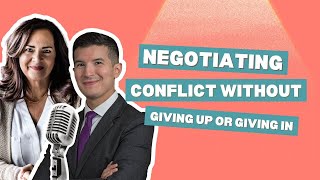
This is a recorded episode of Kathy Caprino’s Finding Brave podcast featuring Dr. Joelle Salinas (behavioral neurologist and author). The conversation centers on the book Conflict Resilience (co-authored by Joelle Salinas and Bob Bourdone) and promotes a mindset of agency: conflict itself isn’t the enemy—fear of discomfort is. Key takeaways include distinguishing resolution from resilience, assessing whether the other party is acting in good faith (stay vs. go), building skills (deep listening + effective assertion), using physiological regulation (pause, cyclic-sigh breathing) to enable deliberative thinking, preparing for difficult conversations (avoid alcohol, pick timing), and identifying a ‘BBO’ (bigger-better offer) to motivate engagement. Host Kathy also promotes her Kathy Caprino AI career-coaching tool (first month free; coupon mentioned). The episode includes examples (friend vegetarian remark, family/political conflicts), cautions about abuse/bad-faith actors, and where to find more information (ConflictResilienceBook.com; joellesalinasmd.com).
Questions this video answers
Conflict Resilience (subtitle: Negotiating disagreement without giving up or giving in).
Bob Bourdone (co-author with Dr. Joelle Salinas).
ConflictResilienceBook.com.
joellesalinasmd.com; social handle mentioned as joellesalinasmd.
Cyclic sighing (deep nasal inhale with a top-off inhale, then a slow exhale through the mouth; emphasis on longer exhale).
Chapters
We want to take a stance that's a little bit more about agency and empowerment and really starting with what you have control over with your own relationship with conflict and learning kind of that mindset and the skill set around conflict resilience. And we spend a lot more time with this in the latter part of the book around this question of whether you stay or go.
Hello everyone, this is Kathy Caprino and welcome to my podcast Finding Brave. I've created this show for everyone who longs to create something bold and brave in their life, to rise up, speak up and stand up for who they are and to reach their highest and biggest visions. Each week I'll be speaking with inspiring guests from all walks of business, leadership, entertainment, the creative arts and the entrepreneurial world and they'll be sharing their intimate stories of finding Grave and offer their best strategies for building your most rewarding, joyful and meaningful meaningful life, business and career. Hey friends, thank you for tuning in today and I am over the moon to share with you about the recent release of my new career coaching digital tool, Kathy Caprino AI and offer you the first month free. This tool brings my career growth teachings, advice and answers to your most pressing questions directly to you 24. 7. With the subscription you get unlimited access and can message or audio chat with my clone any anytime you need help. Drawing on 40 plus years of experience from my corporate work, my time as a therapist and in career and leadership coaching thousands of folks along with writing and speaking across six continents, I've trained Kathy AI using over 2.5 million words of my content that over 41 million people have seen. There are two affordable tiers with tier two offering some great bonuses including free monthly coaching calls with me, a private consultation, exclusive discounts on my courses and programs, free LinkedIn support and more. It also makes a fantastic tool for your teams and employees who want to thrive and grow professionally. So check it out@kathy caprino.com kathya and get your first month free with the coupon code KC free trial AI. Let me know what you think. I truly hope it becomes a game changer for you. Foreign welcome to another episode of Finding Brave. I'm so happy you are here and we are recording this only a few weeks before you hear it, which is is a wonderful thing because we're having the same kinds of weather probably. Well, depends on where you live. Anyway, I hope you're doing wonderfully and we are talking about something that's so important today with our guest who has so much to share that I think we all really need to hear today more than ever. So I hope you will welcome Dr. Joelle Salinas calling from New York City here. Thank you so much for being here. And we're talking about your new book, which you have co authored with your wonderful colleague. And let me tell you a little bit about Joelle. I need the glasses and get ready, because I think that if we do this correctly, it's going to perturb our systems a little bit in that we're going to be able to see that we can shape the outcome of what we think is conflict in very dramatic ways or very powerful ways that I think we probably didn't know. Would you agree with that?
I agree.
All right, off we go. Let me tell you about Joel. Dr. Salinas is a behavioral neurologist, scientist, and clinical associate professor. Yeah, clinical associate professor of neurology at the new. At the NYU Grossman School of Medicine. Is that right on the campus of nyu?
It is midtown, so it's in the Murray Hill area.
I see. Because I did spend a summer learning at nyu and I didn't remember it being there. Well, because it wasn't right there on that. Thank you. Anyway, back to your bio. Founder and chief medical officer at Isaac Health and former Harvard Medical School faculty. He's the author of the new book Conflict Resilience. Note, not resolution. Resilience. Negotiating disagreement without giving up or giving in. And also the author of the Mirror Touch, A Memoir of Synesthesia. Am I pronouncing that correctly?
Perfect.
And the Secret Life of the Brain. What a fascinating field you're an expert in, Joelle. Thank you for joining us. So, you know people, you hear me say this. My wonderful guests send me a little completed prep form. And we don't follow that, you know, to the letter, but it's helpful. And there were three key bullets you shared that I want to share to frame this conversation. I need to breathe and do the exers. Not that we're having a conflict here. It is, number one, conflict isn't the enemy. Our fear of discomfort is. Wow. Number two, you can rewire your brain to handle conflict better. And number three, the key to managing conflict is not resolution, it's resilience. Okay, questions galore. Let's start.
Yeah, bring them on.
Here they are. First of all, you could probably have written 20 different books about 20 different topics. Is that right? You know, as an analogist.
Possibly. Possibly.
Can you share why you and your co author chose this topic? What? I didn't prep you for that question. But what made you say this is It. And this is now. Yeah, I'd love to hear.
My research has been on understanding how social relationships influence our brain health, and over the last several years, and this is kind of played out in the. In the literature, is that we have rising levels of social isolation and loneliness. And there haven't been really great interventions to help to mitigate that situation, which is. Which is hard to really grapple with because out of all the different medical conditions that they're out there that we don't have cures for, we do have a cure for loneliness. And, you know, sometimes I say if we all the lonely people got together, we may be a little bit less lonely. And I was digging into why is it that we have all this social isolation and loneliness? And at the time, I had become friends with my co author Bob, who is in the field of negotiation, alternative dispute resolution, mediation. And a lot of our conversations were starting to overlap around what leads to a lot of difficulty of people forming connection. And a common thread is really, is that how conflict was so important for that connection? You. You really cannot have connection without conflict.
Oh, wait a minute. Say that again. Say it again for us.
You cannot have connection without conflict.
Is that true? Because it's not true. Connection. Tell us more. Let me not jump in and answer your question. Tell us more about this.
I mean, part of it is just the how you can't really have an authentic relationship with somebody unless you're coming across and really sorting through these differences. That we have these different. It's. It's impossible to have one to one the exact same desires and interests and.
Contexts and values and mindsets and beliefs.
Exactly. Where there is more than one person, there will be conflict. And we have conflict within ourselves too, to boot. But it's when we actually are able to engage with that conflict in a way that's productive, do we end up developing more authentic and stronger relationships? And there is a lot of research to really support that. Organizations and teams where people are able to engage in disagreement and conflict in a way that's productive are much more likely to be collaborative and innovative. And I think that ties to that first kind of key takeaway that you brought up, which is that conflict isn't the enemy. Our fear of discomfort is. And one of the things that we want to really kind of promote up front is that oftentimes we will experience conflict or think of conflict as a sign of failure, that something's broken just not working as something really negative and bad. And that tends to lead to these feelings that make us want to avoid it, or like, come, like, plow through that conflict with a battering ram. And we miss out on a lot of really valid opportunities to really get to know the other person, to really let our needs be articulated and to let really great ideas be. Be brought to. Brought to the surface. That can actually help to bring value. We leave a lot of value on the table when we can't engage in really genuine conflict productively.
I have 700 questions, but let me just start with one here. Yeah, I mean, I'm interested in. Do you. There's a lot of ways I could phrase this question without leading the witness. Do you think that the. The isolation, social isolation epidemic, which I'm guessing started or was catalyzed by Covid, where we got used to being more by ourselves? Maybe, I don't know. You'll tell me. But do you see this issue that we're conflict avoidant, growing and contributing to social isolation in ways it hadn't before?
That's the hypothesis here, is that it is part of what's really driving things. And we've had an increase in polarization over the last several decades. We have seen trends in increasing isolation, loneliness, especially younger people and also kind of the older adult population. Um, and those two may not necessarily be fully related, but it's hard to deny that there isn't some relationship there. I see. And Bob, in his work, he was just seeing this come up more and more, working with law students and with other groups, and just seeing that the conversations that were really contentious in the classroom were. Were not happening. People were finding ways to avoid them. In the book, we talked about this example of leading this lawyer as mediator course at the Harvard Law School and how these law students who spent months really engaging in this coursework to become really great mediators. And they brought in groups of people that had a lot of potential, things that they could talk about that were really, really difficult to manage. And there was one specific example where we had someone who was a police officer, somebody who was a black woman, and we had another kind of a professional that they had kind of brought in and they reviewed what topics to talk about. And someone said, you know, I want to talk about racism. And the person said, I want to talk about law enforcement and the rule of law. And somebody else said, I want to talk about love in the community. And there was a lot of opportunity to really engage in a really. In a topic that would be really fruitful. And this law student decided to choose love as the topic. And at the end, you could Kind of see, and this is kind of from. From Bob's story. People looked a little disappointed, and at the end, they felt like they. They covered this topic of love, but they missed out on an opportunity to talk about things that were really important to them, too.
Like love, wasn't it?
Yeah.
Changed my life. Love. We don't need that. We need how to. Wow. Interesting.
It's just, I think people. People feeling that there's a lot more fear around, engaging around difficult things is related to the consequences that can come from saying something that may be offensive or you're afraid of being offensive. And also just people becoming more and more sensitized to disagreements and having opportunities. Like, you see this in social media, right? Where people find it way too easy to go into these cocoons of comfort where they find people who can kind of just agree with their point of view. And rather than engaging with somebody else, unless they're, like stuck in an elevator, they'll easily move away. And we think that that's. That's.
You're so right. You are so right. And let me ask one other question. Then we've got to dive into your incredible content. I was reading through the book, reading through all your material, and having been a marriage and family therapist, you know, what you're doing is working with couples and families. And what for anyone who doesn't know, you know, it's often more fruitful to work with the system because if either spouse comes in or partner, you're going to get one view of the situation, right? And typically the other's view is very different, sometimes dramatically different. But what I kept thinking to myself was, and half of me doesn't even believe what I'm about to say, but half of me does, so we got to go there. Tell me what you feel when people, I'm guessing, push back at you and say, I can do all this. I can be conflict, resilient. But if the person I'm facing is not, and. And I work with a lot of adult children of narcissists, and I've had narcissism in my life, you know, senior people, sexual harassment. I've had the gamut. But I feel like we can do this work and it's going to make a difference, but we are not in total control of the way the conversation goes. What do you say to that argument? It doesn't mean. I'm not saying we shouldn't do anything. Everything humanly and spiritually we can. But what happens when you're facing someone who hates conflict and hates that you're being conflicting with them. What do you do with that?
Yeah. I mean, this is one of the things that we really open the book with, which is appreciating that when we are in a conflict situation, it's. It's far too easy. And it's just very common that our first reaction is to see the other person as the problem. To say, you know, they're obstinate, they're not being cooperative, they don't.
Yelling at me, and it makes me scared. All of that.
Yeah. Yeah. And we want to take a stance that's a little bit more about agency and empowerment and really starting with what you have control over with your own relationship with conflict and learning kind of that mindset and the skill set around conflict resilience. And we spend a lot more time of this in the latter part of the book around this question of whether you stay or go, whether you stay or decide not to engage in the dialogue. Wow. And it's a tricky. It's a tricky thing, and it really depends a lot on context in the situation. But one of the ways that we think can be easy to understand kind of the philosophy here is to really try to appreciate whether the other party is acting in good faith or not.
What is that? How do you define that?
If the other person is genuinely wanting to. I mean, whatever the purpose of that dialogue is, and that. That is another really important thing is what is the purpose of this, of this, of this engagement?
Right. Am I trying to be right and change your mind politically, or am I trying to understand and connect? And there's a million reasons we talk. Right?
Exactly. Exactly. And so if, depending on the purposes, but if the other. The other party is really looking to cause harm, to be disruptive, that is. That is one indicator that you may want to say no to the situation and set a hard boundary and move away. I mean, maybe it's something that can be potentially salvaged, and that's another part of it. But you want to be able to be really clear for yourself kind of whether it's that you're just uncomfortable in the situation, or is it the big skill gap, or is this person acting in bad faith. Wow. And there are certain ways to be able to diffuse kind of the intensity of a situation, but we certainly don't want people and think this is like, really, really important with conflict resilience is that we don't want people to think that conflict resilience is about exposing yourself to harm or an abusive situation. That is. I mean, I think in those really challenging situations. It's really important to get the support of friends, family, trusted persons, professionals, and other resources to be able to manage that. And it's very complex. I mean, speaking from someone who's been through intimate partner violence myself, I know it's very, very complicated. And we want people to really focus more so in developing these skills at a level that's easier to develop. Kind of like how. And this will be a big shift here in tone, but really think about it like going to the gym, where you don't walk into a gym to become a weightlifter and just start lifting the heaviest weights. Right? You good man. You want us. You want to start with a level of distress or discomfort that you can manage, and you can start to implement some of these skills. And you can. I mean, awareness, I think, is more than half the battle here. It's just being aware of your own physical experience of the conflict. How, like, what situations do you find are trickier for you to engage in? Sometimes it's. For some people, it's working with your boss can be really, really challenging. For others, it's a romantic relationship. It's really, really intense. For some, it's their parents or a sibling. And you want to find those situations where it's a little bit easier to manage the distress. So that way you can start to bring in those skills and progressively with petitions and bringing that kind of awareness into the situation, you can build up, you can engage in those more challenging conflicts. We don't want. Get into the most difficult conflict of your life all at once. Love it.
And I love this differentiation. So what I'm hearing you also say here is, please, people, don't think we're saying you need to accept everything that comes your way. You need to be malleable. You need to be, you know, not powerful. That isn't it at all. Is that it? We're not asking you to put yourself in dangerous situations that are not in your best interest or not productive.
Exactly. Yeah. And there's these two specific concepts that we or kind of skills I would say that we talk about is deep listening and effective assertion. And those two go hand in hand because you cannot be assertive and effective without having done the deep listening part first.
Is that I want everyone to know right before the week, two weeks before this comes out. Is Dr. Caroline Fleck on validation? I am 100% sure validation is. Is an important theme, whether that's the term you use or not. But talk to us about. How did you call it?
What did you term it deep listening assertion.
Can you tell us how to do those things in five minutes?
Yeah. Yeah. So with deep listening, there a lot of it has to do with the orientation to which you approach listening. I think you have to have a real genuine curiosity about the perspective or understanding or emotions or experience of the other person, knowing that by doing so you are not endorsing their point of view. I think that difficult.
It's balance, isn't it?
Yeah. And there's been a lot of really great research around listening. And I, I've done some research in this, this area as well around kind of the benefits of listening for, for brain health. But we, we talk through how there's three kind of tenets to good listening that I have been actually been studied. And the first is going to reduce distractions, both internal and external. So making sure that the environment is set up for listening. So you don't want to be doing it when you've got like five kids running around or you're, you're in the middle of managing a crisis. You also want to be aware of your own thought process. So if you are constantly listening to find how you're going to object, that is going to make for very poor listening. And so you want to be able to turn down that internal voice about, you know, what am I going to say next while the person's talking.
Yeah.
The second tenet is about being able to reflect some degree of understanding about the person's point of view. So some people call it paraphrasing. Well, key thing is that you're not parroting and it's being able to kind of repeat back to some degree what the person has told you. And ask them at the end, did I get that right? Did I miss that? Because I really want to make sure that I understand what you're trying to say here and where you're coming from. And then the third piece is having a positioning that is positive without negative judgment really towards the other person. Meaning that this is kind of where this genuine curiosity comes, is that you generally aren't listening to punish them. Right. And you're not listening to tell them how bad or negative they are. They may be doing things or believing things that you disagree with, but you want to be able to come at it from the place of empathy and compassion to understand that they are human also and they have their own experiences and information that they're working and the resources that they're working with that led them to some kind of headline in their head. And in that listening process, you're exploring kind of what is leading up to that headline, past experiences, something they heard, and asking really, really thoughtful questions that aren't kind of like aha questions. There's this.
That are not aha questions, like gotcha questions.
I mean.
Oh, okay.
Gotcha question. Gotcha questions. There's this really great quote from Krissa Tippett that a really generous question begets a generous response to that effect. It's making sure that you're asking questions with the intent of understanding and not questions to harm the other person or put them down or to kind of be overly defensive, to shut the other person down. And that can just be so much more productive. And at the same time, in that listening, it's not easy. At the same time is that effective assertion piece. Right? You have to see and be seen. Art.
I don't mean to say that you're. Can you give us an example of. Let's say you and I are having a conversation. Can you give us an example? I don't want to say doing it in the right way, but I'm going to say that in the way that is in the spirit of what you're saying and doing it in maybe a way you hear on the street or among people when you're sitting at a coffee shop or your friends and you're thinking, oh, no, oh boy, we're devolving into a disaster. Can you give us an example? Can we do it so we can illustrate it?
I can give you an example. Let's say you're talking to your friend and you're trying to figure out. Let me just find a more straightforward situation. You're trying to figure out, where do you want to go to eat? And you say that you want. You want a vegetarian option because you're a vegetarian. And your friend kind of replies with, oh, that again, this is such a phase. Oh, boy, Immediately contentious, right? An immediate reaction, you know, here we go, Here we go. The immediate response to that might be, you're awful, you're disrespectful. Why are you doing this? Why would you say that about me? And that tends to escalate the situation more. Right? Escalation is so easy within conflict, that doesn't take much effort. Right. I think one. One way to approach a situation would be to potentially even. We talk about kind of like the conversation about the conversation, which is. And this might be awkward at first, and it's important to sometimes say this upfront, say to that friend, I'm going to say something that's going to come Across a bit awkward. But I want to say this because our relationship, our friendship is important to me is. I've noticed that whenever I mention that I'm vegetarian the last, like, XYZ times, you've said that it's a phase. And when I hear that, that makes me feel really hurt because I don't see it as a phase. It's a part of my diet. It keeps me healthy, and my health is important to me. I want to understand what's behind that. Right. And they might respond with like, you know, why are you so serious? Or, I'm just joking, I'm just kidding. But I think pushing on, trying to understand kind of like what's motivating that and being open about the awkwardness of it can be really helpful to get into this really difficult topic. And understanding this is kind of goes back to this resolution versus resilience piece, which is at the end of that conversation. The goal isn't necessarily going to be that you're going to walk away feeling like, yep, that's taken care of. It's really more to be able to make sure that your perspective on the situation is seen and that you have a better understanding of the perspective of the other person with a specific purpose in mind. And if your purpose is to have a stronger friendship because you really like this person, they're really funny. They've been a witness to your life, and you want to preserve that relationship, engaging in that conflict will be in support of that.
It's such a. Oh, it's so rich and deep. I'm. I'm thinking about. I'd love to run this by you and see if I'm getting it. Different language.
Yeah.
In my marriage and family therapy training, one thing that stuck out is, you know, there's the content of what's going on, but the process of it as well. And often if we attend to the process, we get a deeper understanding of what's going on. Right. So the content of that is. Oh, here, here you go again with that. That phase. That's the content of the words. But the process is, I heard your wish and I just demeaned it by, you know, and maybe it's not even conscious that they did that. Right. But I remember I was on a call, I give, I run a course and free calls, et cetera. And someone had said they engaged in a behavior and it was job searching and something that they did. I won't go into it. But what they did wasn't going to help them get the outcome they wanted. And so they asked me, you know, should I have not done that? And I not, you know, I was too caffeinated, which happens. And I went, yeah, no, not, not the best thing. And then I went, oh no, I just shamed this person. And I caught myself. And I was about to say why? And I love your thoughts here, but why typically puts people on the defensive. So Joelle, why did you write this book? Why did you think you needed to write this book?
Yeah. Huh.
So I caught myself and I said, can I understand? Just so I get it, the thinking that led you to do that.
Yeah.
And then she gave a really logical, you know, assumption she was making that wasn't a perfect fit to this situation, but we all understood how she would make that assumption. I'm not saying I'm perfect at communication, but wow, that question, let it go in a direction that it was not going to go in.
Absolutely. Yeah.
Kind of what you're talking about.
Yeah, these, these generous questions, being genuinely curious, you just learn so much more about a person. Person and the context of your relationship. I mean, and even if the, you know, if, if this is not a great friendship. Right. That doesn't really align with their values, by engaging in that conflict, you will learn that information much faster.
So from all your research, when we try these two tactics, I'd love to know, I don't know the, you know, the labs that you've done it in, but I would love your thoughts on, let's say you're really doing the work, you're really trying to do what your book is talking about. If you study, I'm putting you on the spot. 10,000 interactions that are from all different things, the friend, the spouse, the person who's not a friend. But you know, how many times does that one person saying, you know, I'm interested in, in what goes into why you say that it's a phase. I don't feel it's a phase, but I'm interested in, in not why, but what, what leads you to that? How many times does the person come.
Back.
Open to having that discussion rather than defensive and argumentative?
We don't know. We don't know. And I think this is part of the uncertainty that we grapple with, with conflict. Right. We, we want certainty. I mean, our brains evolved to be fortune telling machines. You know, it takes all of our past experiences and memories to make predictions about what's going to happen. And we use as much those predictions to make choices and take on action that'll help to help us survive and avoid Danger and that, you know, out in the savannah. Right. That could have been really helpful when you hear a rustling in the, in, in the bush, you can avoid a saber toothed tiger. But it can be really tricky when your, your brain is telling you that interacting with somebody across lines of difference is a threat. So your, your brain starts to take on that really triggers these alarm systems that then makes, when we talk about these, like the 5F's default reactions to conflict, like the fight, flight, freeze, fawn, investor, these are all just the default reactions. These are behaviors that your brain has learned in the past in different contexts, different situations to make the bad feeling of conflict feel less bad. And in the short term it can be helpful, but in the long term, it doesn't necessarily align with what you're looking for. Because if you're avoiding, if you're avoiding the situation, it's, it could eventually it'll blow up or it'll cause a problem.
Right. Or you'll feel, or you'll isolate because you can't feel the way you want to feel with this person.
Exactly.
And I think, to answer my own question, we don't know the answer to that, but I can say in my own life, trying what you're talking about dramatically improves the chances that you're gonna have something more productive than if you didn't.
100%.
And that's what we're going for, right?
Exactly.
All right, more tips and strategies from your great book and work. What else? I know there's a lot of myths around conflict. I think you've nailed those. What else do we need to do differently?
I think one thing that can be really helpful is when you're confronted with the potential conflict is really to start with the pause and a breath potentially. So as our brain really starts to kick off these kind of alert systems, Right. That are meant to protect us, it becomes much harder for us to make use of these parts of our brain, the frontal parietal systems, for judgment, planning, organization, deliberative thinking. And so by taking a moment to pause and really zoom out and sometimes even to breathe, to kind of slow the heart rate, slow the respiratory rate, relax the muscles a little bit more, lower the blood pressure, that'll help to bring in more of that deliberative thinking. So that way you can sort through the situation in a way that is aligned with what you want out of it, as opposed to an immediate reaction that it might make the discomfort go away quickly or relieve that tension, but it won't necessarily help you out. We, we give an Example of this one breath that has some good evidence behind it called cyclic sighing. Oh, let's do it. Yeah. So it's been, it's been studied compared to other breathing techniques. Some, some people might be familiar with box breathing, which is the in four, four count, hold for four, count out for four, count whole for four. But this one, what I really like is it was even studied against mindfulness meditation and actually seemed to be pretty effective at reducing stress and symptoms anxiety. So what it is is a deep breath in through your nose and at the top you take a little bit of a top off inhale and then a slow exhale through the mouth. And if any of the viewers or listeners here are going to try this, make sure to start out doing it seated because you might get lightheaded, but doing that.
Can I ask you. I'm a singer and what we just all automatically do, many places where I sing in the warm up is say four in and then six beats out and then four in and 12 beats out. And what I've heard is make sure the out is longer. And I, I have two questions I've heard and read that it's almost like a way of hijacking that reptilian brain because if we are breathing more calmly, then it tells the brain you're not in a flight situation. It isn't the lion in the den. Is that true? Is it hijacking?
You're totally in line with the research when it comes to the exhale. Yeah. So the long, it's that long exhale that seems to be more potent at reducing that physiologic reactive brings online our parasympathetic nervous system.
Okay.
So that long exhale is really, really great. And the point that you make about kind of the, these parts of a brain that people call a reptilian brain, but they're, they really are this like limbic and their paralymbic systems, they're all about detecting threats and kind of triggering that alarm system and telling you how negative or positive things are and being able to reduce the, the kind of level of arousal as we call it in research, that, that kind of like, oh, that alarm makes it easier for these other brain systems to come online, to come, to come back online to kind of really rest control back in your more conscious, more deliberative thinking.
So is it a bit of a hijack where I'm very aroused and I'm angry, let me breathe. And that does tell the brain that, yeah, you're not in as much threat.
It, it helps, it doesn't make it go away, but it helps to regulate the odds in your favor that you'll. That you'll be a little bit more regulated through it. I mean, these. These areas of the brain that relate to kind of people think about detecting threats and how negative and positive things are. Things related to sacred beliefs tend to associate with these areas being active. So we just become much more concrete. It's more of that survival, like, I need to make very quick decisions. Yes, no, or good, bad. Whereas this more deliberative thinking is what we really want because it's more able to see the nuances between situations.
It's fascinating. Can I fire at you five more questions?
Yeah, yeah, go for it.
I'm watching this show that was from 2019 to whatever, madam Secretary. And oh, my gosh. And one of the main characters is an ethics professor. And when you watch him, he's not interrogating, he's asking questions of potential terrorists. Whatever. Wow. I know he's acting, but the way he goes about it is kind of just what you're talking about. Trying to understand why you would want to bomb the, you know, White House, whatever it is. What a show, people. I love it, but. Oh, there was a question there. What was it? Hang on. Oh, I don't want to get political here. That's not going to work. But I do see among people I'm connected with that when there are deeply held values that we feel the other side and we. That's religious, political, spiritual, whatever the heck you want to think about. When we feel that the very nature of what a person is saying is in direct opposition to a deeply held value, my guess is these practices will work, but maybe we also need a little boost of something else in your. In your efforts, you know, your too efficacy toolbox. Can you help us? Because I think we're in the middle of that right now.
Yeah. We do spend some time talking about this in the book. When the person across from you is saying something that is just so counter to who you are to your under. You could say, kathy, what this person's saying makes absolutely no sense whatsoever. It's just complete fiction. And in situations like that, we try to reorient our focus less on how wrong the other person is and more on kind of what is driving this human across from you. Like what. What is. What is their emotional experience? What is their past experience of coming in here again, not with endorsing.
Right.
Not endorsing their point of view, but trying to figure out what is the purpose of this engagement if there, if there is a purpose and if that is to build a strong relationship or pick the example of like, like a sister, for example. Right. You, you're. Let's say you and your sister have diametrically opposed viewpoints about the world. You know, you might say that you can't, you don't agree with her, but you also can't not be her sister. Right. You may, you may have family reunions, you may have holidays together. And so if your purpose there is so that way you can spend time with their parents together, having these really challenging conversations, even if they don't agree with you completely, can have the goal of at least figuring out how you can talk through or navigate those, those situations. So that way you can be a little bit more at peace together or have some kind of bounds around you have those conversations again, kind of that conversation about the conversation piece.
So I'm aware of our time and I know you have a hard stop soon. Can you give us two strategies for that? I know, I can't imagine anyone is listening. Can't relate to what you just said very deeply. And I have friends and colleagues and clients who've said, I can't get together with my family. It devolves into, you know, just a horrific shouting match. Can you give us an example of. Not again, not to talk politics or whatever, but let's say it is your sister, your brother, your father, you. And they're on the other side, way deeply on the other side, and they, they want to talk about why they feel they're right. And you have an intention that you want to preserve a loving relationship. How would you, how would you address. How would you be conflict, resilient in that? I mean, what some people have said is, I cannot be in the room when you're talking about this. I can't do it with you.
Yeah.
Could we not talk about it? But what many people tell me is they try, but it comes up, especially after a drink or two over, you know, Christmas dinner.
No.
What do you suggest when it's really volatile, if. Or so hurtful and difficult, when the two viewpoints are so, so different.
Yeah. There are two things that I'll mention here. One, first is kind of going back to this point about the purposes, I think, really understanding what for yourself, really. And you have to really believe in this for yourselves. It's like, what is the, what we call the bbo? What is the bigger, better offer in engaging in this relationship or in this dialogue? Because I think the immediate response might be to say, let's agree to disagree or I can't even, let's not talk about this or no politics at all and really think about what is, what is at stake, what are the consequences of not engaging in that, in that conversation. And for each person, it's going to be different, but for some, for some people, they can mean corrosion of the relationship, right? Losing. Losing somebody who you deeply care about, who you really love at some level. Right. They may have different politics than you, but you both really enjoy kind of your walks together or you really enjoy having your kids together. And so understanding that BPO really helps to kind of break that mental cycle of just trying to kind of make yourself feel better by not engaging with it and can help to align your reward and reinforcement pathways to say, okay, this is going to be hard, but I have this one very specific thing that I really want from this engagement. And so I'm going to kind of bring on the listening and the assertion to get through it. So that way we can get to get to that. And it might not, it might not work, right? It might not work.
Can I, can I ask a question in that, that sounds like the bbo. It sounds like what you're saying is if you simply say, listen, we cannot talk about this. We just can't, you risk losing more than that 20 minute conversation 100%. You risk that that person doesn't feel loved, doesn't feel connected to you, feels alienated. Is that it? Exactly.
Yeah. Yeah. And same thing with just like even thinking about, like the difficult conversation around asking for a raise, right? There's, there's a part of you, right, that wants to advocate for yourself and there's a part of you that wants to be a good team player and doesn't want to cause trouble. And it can be helpful to find that BPO that kind of. What is that? What is the consequence or what the risk of me not engaging in this conversation?
That's really what you just said. There, I think, is the crux of this show. It's finding Brave.
It's.
Yeah, we can ignore it, we can pretend the elephant isn't right there, but there's going to be a lot that stews up and gets agitated because you're not talking, because you don't have a commitment to connect. Oh, I love it. And there was a second thing you.
Were going to say. The second thing I would say is a little bit more, almost more logistical for those people that are very process oriented, like myself, which is really preparing for these conversations. So like you mentioned the point about alcohol. So if having a really difficult exchange is something that you want to engage in and alcohol makes it worse, you're going to want to have to have a. Conversate that conversation in a different, a different, different meeting, a different time without the alcohol or. What we're saying is you don't have to just engage in every conflict, like right in the moment, right?
Let's get it all out. And people do that, don't they, Joel? And by the way, you made me so mad 72 years ago when you did that. Oh, no. My father always used to say, let's not talk about the past because, you know, sometimes we have to. But anyway, I cut you off.
No, no, just like similar with like in the workplace, right? You, a big meeting ends and then somebody says, well, that was a bad idea. You know, engaging in the conflict right there with like, as everybody's heading out in a crowded room, probably not the best time to really engage in really productive dialogue. But you, you want to bookmark that to say, like, let's have a conversation about that afterward. Because if you disagree with that point. And I want to, I want to learn more, I want to make sure that we're making the right decisions.
I love every word you're sharing. And I'm going to say, tell me what you think. This requires growth. It requires self awareness. It requires bravery to face head on what isn't working. If this is part of my whole book, actually, it's two things. It's bravery to face head on what isn't working and taking accountability for what you can change. But I also say that's not enough. What you need is power. And in this case, I think it's access to your own internal power. You can do this. This matters.
Yeah.
What do you think?
I totally agree. And part of building this, this mindset and skill set is a process of reprogramming and rewiring your brain. Like figuring out what do I need to unlearn or potentially relearn. Right. When we're, when we're, when we're kids, we're so much more forceful about kind of advocating for our interests. Right?
I want this, mommy.
Yeah. So really, really becoming more aware of how your brain works and how it might be tricky and not necessarily like helping you out. And how can you get your brain back on your side?
What fantastic tips. And I know this is just the tip of the iceberg. Where does everyone soak all of this up, Joel? Where do they learn more about you and your, and your co author Tell us his name so we can look him up too.
Yes. So my co author, his name is Bob Bourdone and the name of the book is Conflict Resilience. You can find a book anywhere books are sold, including independent booksellers. You can go to Conflict Resilience book dot com.
Wow.
And if you want to learn more about me, you can go to my website, joellesalinasmd.com and I'm also on social under joellesenasmd.
Oh, I just what an important book and message. I don't, I really can't imagine anything more needed right in this moment. And I'm so grateful to you and Bob for, for the work that you're doing and helping us understand what we can do to take the reins. I mean, we're not going to take control of every piece of a relationship with another person, but we certainly can do more than I think we're doing now in a lot of cases. Thank you so much. Thank you. People. Questions.
Look at me.
I fight you. You must want to go take a nap now. Joelle, I fired at you 52 questions. I we would love to hear from you wherever. I know you're in the middle of a book launch so you're not going to be on LinkedIn scrolling with the comments, but can we hear from you what works, what makes sense, what do you struggle with? You know, do you want this bpo? Is that what we're calling it? Bbo, your better offer. I think that that is such a huge takeaway. What is that takeaway? Bigger, better offer? What are we, what are we going to achieve and feel and experience and create when we can do this work? I think it's worth it. All right everybody, thanks again, Joelle. So appreciate you being here. And folks, I hope this is helpful in in these ever changing times. That can be scary, anxiety provoking, confusing. Hope it's helpful. Check out the book and we will see you next time. Have a wonderful to Finding Brave weeks. Thanks everyone. Bye. Thanks so much for joining us today. And please don't forget to check out findingbrave.org for more programs, resources and tips. And tune in next time for your weekly dose of Finding Brave.
More from Kathy


Elevate Yourself, Elevate Others, and Amplify Good | Chris Cooper | Finding Brave Ep. 334

Finding Brave Epis #333: How Leaders Can Harness AI Without Losing Their Humanity, w/Bennett Borden

Finding Brave Epis 332- How to Stay Brave, Valuable and Visible in the Age of AI, with Raman Rai

Finding Brave Epis 331 - The Power of Positive Disruption, with Dr. Patrick Leddin


Finding Brave Epis 330 - Being 40: Letting Go and Embracing Who You Are, with Stacey Lindsay

Disrupt Career Reinvention with Kathy Caprino - via The Disruption Lab Podcast w/Patrick Leddin

Creating Neurodiversity-Friendly Work Cultures: Simple Workplace Adjustments Matter

Finding Brave Epis 329 - How To Create a Neurodiversity-Friendly Workplace, with Kristen Pressner

Finding Brave Epis. 328: Reclaiming the Power to Trust Your Own Voice, with Dr. Cindy McGovern