Episode 204: How To Be a Better Ally at Work And Build an Inclusive Culture, with Karen Catlin
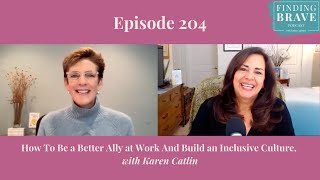
Karen Catlin, former VP of engineering at Adobe, talks about everyday allyship at work. She defines privilege as unearned benefits that shape your experience, offers concrete actions like calling out jokes and refusing all-white panels, and distinguishes between mentors and sponsors. Her free PDF lists about 50 workplace privileges.
Questions this video answers
Episode 204, created/uploaded December 2, 2021.
BetterAllies.com (free download and resource links).
Chapters
Hello Kathy here and thank you so much for tuning into today's episode. One quick thing I'd love to share is about my new digital training course the Most Powerful youl, which is the companion to my book the Most Powerful seven Bravery Boosting Paths to Career Bliss. I'm so thrilled that recently a division of the largest intergovernmental agency in the world sponsored several memberships to the Most Powerful U course for members of their staff. And what a powerful move that is in terms of bringing real world effective training to both men and women to help them thrive in the workforce. Coaching so many people, as I do each year, I see that leadership and career growth training programs today are so often not effective because they simply don't go deep enough to address what really holds us back from thriving. Believing in ourselves, understanding our talents and abilities, communicating effectively, asking for what we need, need and deserve, networking to build a great support community and making the impact we long to so I'd love to make an ask of you and that is to briefly take a look at what I'm teaching in the Most Powerful you course and you can find that@mostpowerful you.com and if you feel that the content about the seven damaging power gaps and how to close those for good would be helpful for you and people at your organization, I hope you'll ask your supervisors, HR leaders, and diversity and inclusion managers to sponsor memberships of this course for you and other staff so that you can all thrive at the highest level in your roles and organizations. Thank you so much. And here's to you becoming the most powerful you.
When we don't take action, we become complicit, right? Complicit with the status quo. Meaning we are okay with how things are going on. You know, how things are unfolding here, how our culture is. We become complicit. So that's why it's important to realize that we do all have a role to play. To stand up, to move from being a bystander of something to an upstander for what we believe is right.
Hello everyone, this is Kathy Caprino and welcome to my podcast, Finding Brave. I've created the show for everyone who longs to create something, something bold and brave in their life. To rise up, speak up and stand up for who they are and to reach their highest and biggest visions. Each week I'll be speaking with inspiring guests from all walks of business, leadership, entertainment, the creative arts and the entrepreneurial world. And they'll be sharing their intimate stories of Finding Brave and offer their best Strategies for building your most rewarding, joyful and meaningful life, business and career. Hello, everybody. Welcome to another episode of Finding Brave. How are you? This is coming to you right after Thanksgiving, I believe, I hope for those who celebrate it, you had a lovely holiday. And I am so excited to have our guest today, Karen Catlin. You know, I want to tell you, we are talking about how to be a big better ally to build inclusive work cultures. And we were just sharing, as we always do before we hit record, that you know, when you're in a field a long, long time and you're interviewing other people and you're writing books as Karen has, sometimes there's not a lot of aha's that make you go, oh, wow. But in pouring over Karen's material. And we're going to talk about one particular resource that we'll of course link to about, how do you title it? 50 potential privileges in the Workplace that I challenge everybody to read because I think we're going to see ourselves in these areas of privilege that we just weren't aware of. And that's what privilege often is. We're not aware. So we're going to dive in. How do we be a better ally? But let me tell you about Karen and thank you for being here, Karen. I know you're crashingly busy. All right. After spending 25 years building software products and serving as a vice president engineer at Adobe Adobe.
Wow.
Karen Catlin witnessed a sharp decline in the number of women working in tech. Frustrated but galvanized, she knew it was time to switch gears. Today, Karen is a leadership coach and highly acclaimed author and speaker high on inclusive workplaces. She's the author of three books. That's impressive, including Better Allies, which we see right behind you everyday. Actions to Create Inclusive, Engaging Workplaces, which we're going to be digging into in depth. And we just did a Forbes interview on my blog on 5 mistakes managers make when giving feedback. Check that out. I mean, I think you're going to have a lot of ahas like I did. So, Karen, here we go. Can I dig in here? And since you've written three books, can you tell us what is the backstory of Better Allies? What prompted it?
Yeah, Kathy, thank you for asking. And thank you for having me on your show. It is such a pleasure to be here. Really. I'm looking forward to this whole conversation. So the backstory, first of all, briefly, I worked in tech. I worked in tech for 25 years. I used to write code for a living. I'm a software engineer and over time I moved into leadership roles. Most recently I was a vice president of engineering at Adobe. Now you've probably heard of tech. Tech is very male dominated, as are other industries. And so I was a minority working in my field. However, I'm a white woman. So what's interesting is I have a lot of privilege as a result of that. And I was an executive, so I had power, respect, privilege in my workplace. And I realized there was a decline happening in gender diversity. And so I wanted to do something for my industry and my company while I'm still working in tech. I mentored a lot of women and I started our women's employee resource group and all sorts of things. But I have to tell you, Kathy, I love doing that kind of mentoring and advocacy work for women a lot more over time than being a VP of engineering. So I started my own business going back about 10 years ago now as a leadership coach for women who work in tech. And you and I have a lot of commonality in the work we do in supporting women and caring about women, women's growth. And that's when I realized, oh my gosh, I can coach women and I love coaching women. I do it today still. But the real problem that they're facing isn't with their own leadership skills or lack thereof or anything. It's that they were all working in tech companies where the closer you got to the C suite to that CEO, the maler and paler it got. And with all due respect to your listeners who are male and or pale, it's just that's what demographics are like. This isn't going to be about shaming and blaming anyone. But just like that's what the demographics revealed is that these companies aren't the true meritocracies I think that most companies think they are. That you get ahead on your merit because men were getting ahead, especially white men, at a faster pace than women. So that's when I decided, Kathy, like, I need to start looking at how to make the industry more inclusive. And that led me to this whole exploration into allyship and allyship being these everyday actions people can take to sponsor, support, be more inclusive in the meetings they attend, the hallway conversations, virtual hallway conversations in this pandemic era, feedback that they're giving to employees, whether they are a manager or a peer. There are so many examples of exclusionary behavior that is almost insidious and visible. And I wanted to shine a light on all of that and give people ideas of things they could do to be more inclusive. So a big vision is let's make all of tech more inclusive. And it's expanded since then to more than tech and frankly, beyond just gender diversity. I focus now on companies and organizations around the world, how they can be more inclusive, and not just inclusive of women, but based on sexual orientation or identity, abilities, ages and so forth. Race, ethnicity, of course, too. So that's the backstory of how I started working on Allyship and coming to write my book. I'll stop talking now.
Wow, it's so. I have a million questions, but it's such important work and, you know, often my listeners know this. I tear up when I hear my guests speak and then I have to, while you're talking, split my head in half and say, brain, why are you choking up? And usually it's because it hits a chord where I feel, look at me getting choked up. Shame or pain, or I'm feeling the shame or pain of the individual, which is not the case. You're not feeling shame and pain now, but when you're speaking, and I'm saying this to you all people, because I know if you listen to this podcast, you have heart, you have spirit, you. You want to do better in life and as a manager, and I can. And I definitely want to talk to you about how I thought, how I think I needed an ally in some particular situations and I didn't have. And what would have happened had I. I would love your thoughts. But to stop rambling, I want you all to listen carefully because it is in these everyday moments, it doesn't have to be this cataclysmic revolt. I mean, we can have that too, but it is in the everyday actions that we take. And it's also in what you don't choose to stand up for.
Exactly. And Kathy, when we don't stand up for something, when we don't say something, when we hear maybe an offensive joke or slightly off color joke, when we don't take action, we become complicit. Complicit with the status quo. Meaning we are okay with how things are going on, how things are unfolding here, how our culture is. We become complicit. That's why it's important to realize that we do all have a role to play, to stand up, to move from being a bystander of something to an upstander for what we believe is right.
Love it. And I know you know, because we chatted about this and I want to say this and get your thoughts. There are people in our world that are supporting non dominant groups in, in corporate America, women, you know, particular racial and, and other. Yeah, other groups. And you know, a few times people have said to me, when I write a book on which I just did the seven damaging power gaps that 90 of women have now 90% of the men I've studied have them too. But I think that might be skewed because the men that follow me might already have a penchant for, you know, for believing and understanding that they're gap too. But 98% have these gaps when you have these gaps. And number five is acquiescing instead of saying stop to mistreatment. When you have these gaps, you cannot thrive. You might be successful on the outside, but you're not successful internally. So I do want to ask your thoughts about, about this because some people occasionally have said, I think you're blaming the victim. And I meaning you're saying that women need to change. And I say this, I am not blaming the victim. I am trying to uplift you out of victimhood. And where I rub up against what folks say and your comment a little bit is when we do this work of becoming more powerful, there is so much within our control that we can change. And where I resist certain movements, it's not all about we have to change society. It's individuals who change society. So I like to work together with. You are working in the organizational front, I am working with the individuals. It has to happen both ways. What do you think?
Okay, so some things I agree with you and some things I disagree with you. So this is good. So what I agree with you on is I believe that there are top down initiatives, whether that's in a society or within a company, top down initiatives to be more inclusive, to be more equitable and so forth. In addition, we need the grassroots, we need the individuals to start changing behavior to create a more inclusive society or company. So I think those things work in conjunction. We're in agreement there, although I phrased it a little bit differently. So hopefully that we're still in agreement. I'm thinking about what you're saying, so.
Can I just understand. So where you're pushing back is when I said it's individuals who change society, you're pushing back on that in that there can be big initiatives that the organization or societal change or law or policy can impact. But wouldn't you agree that there's an individual behind that? Usually they don't pop out of nowhere.
Oh sure. So a champion or a lobbyist or.
Somebody said, damn it, this has to change.
Sure. But Kathy, I want to So I guess we're in violent agreement. Yet there are systemic things that need to be addressed in a different way than any single individual can do on their own. So. So I think that I just want to emphasize that it's more of an and than a But yeah, there's an individual at the top, maybe that policy change or of an organization who can start advocating for something. But then it's like how you roll that out and get that broad systemic impact you want is a whole different thing. It doesn't take one person, it takes a lot of people to get that done. So there are systemic things that we need to address in our society as well as in organizations.
100%.
Yet my focus, and it's a very clear, specific focus, is I'm focused on individuals working in companies and not what they can change about themselves because they have been oppressed or harassed or excluded. I'm talking about everyone else around them who is part of the majority, who can start making changes to be more inclusive. Love it.
I can be in agreement with that. I don't think they're oppositional.
You know, I think people who are.
Doing helping work intervene at levels that speak to them. I intervene to help mid to high level professional women take control of their lives because I was out of control. I didn't have the power. So we all do what we, you know, passionately care about. I love it. Okay, now let's talk about privilege. I think that, would it be accurate to say that it's very diff. You know, when I was a therapist, what we learned is greater awareness equals greater choice. You can't really change the thing you have no awareness of. Right? So is, is that one reason that you teach about privilege so that we. When you're in it, when you're swimming in the water, you don't see the water. You don't see that you're privileged. Can you tell us more about this?
Exactly. We don't see the privilege when we just have it. It is invisible to us when we, when we have it because we just assume everyone else is experiencing life in a similar way. Yet when we have our privilege pointed out, we often get defensive. And I think that's because we think that when someone says, oh, you have so much privilege or you're privileged, we equate that to them calling us lazy, that we've never had to work hard undeserving everything handed to us on a silver platter. But that's not what it's about. It's simply that it's A set of unearned benefits you have because you're part of a social group. Yeah, I'll just call it a social group. Generally speaking, it's unearned benefits you have that help you navigate life in a very different way. And I do think it's important for people to realize not everyone is going to experience the workplace in the same way you are because of your privilege. I mean, just one example of. Let's think about this pandemic lifestyle where most of us are living in right now. We have privilege if we can work from home. We have privilege if we have high speed Internet. We have privilege if we have a decent quiet space in our home to be doing our work from. Not everyone has that. It's so important. I think back on the beginning of the pandemic, people who were, I talked to people who were living in small apartments with roommates and didn't even have a desk in their bedroom, like, how am I going to work from home without these, you know, without this key part of working. So there's a lot of privilege as we think about just even our recent work style. But of course, so much more. Now, at the very beginning, you mentioned this list of 50 ways you might have privilege in the workplace. It's from my book Better Allies, but it's also a free download PDF from my website. And I bet you're going to link to it from the show now for sure.
Sure. Yeah.
So people can take a look at that and explore and try to understand where they fall on how much privilege they might have in the workplace and start realizing that not everyone's going to have all that privilege.
I love it. Can I, can I dig deep on that for one second? You are so right that, I mean, I grew up, if someone said things came, some things came very easily to me, some didn't, of course, but if someone said, well, that came easily to Kathy, I would get so defensive and I didn't even know why, but, but it's because I didn't want people to think I didn't deserve it and didn't earn it. And so what I would ask people to do is definitely look at this list right away. Just look. And I mean, because I'm in this field, a lot of these weren't a surprise. But 20 years ago, if I had looked at it as a corporate vp, I would have, I mean, I have most of these. And so what I'd ask you to do, I always, again, what I learned in therapy is, you know, you look at the content of what's going on in your life, but also the process as you're reading this and maybe highlight where you're privileged that you didn't realize it. Look at your emotions. Does it make you feel angry, defensive? Well, justifying. Because unless you work on that awareness that those emotions, it's going to be hard for you to do this work to, to be an ally. In other words, if you're resisting that, you, what you, how you called it, unearned. Yeah, benefits. That doesn't mean, you know you're a bad person, doesn't mean you're hurting people. It means you were born by no effort of your own into a situation. So can I tell you the few that surprised me and hear what you think?
Yes. Yes.
So again, people pull this out and look at it when you're, when you're listening. But number 11, you don't receive. Oh, before I do this, can I tell you something, Karen, and tell everybody I hadn't experienced full on what bias against a person is until it was about 20. Was it 25 years ago, a young woman was in our employ and she had grown up in a very difficult situation and she, you know, dressed differently and spoke differently. I didn't see it. I, you know, really, I didn't see what other people saw. But at one point she called and said, I have to tell you, I've been living in my car and my car's been impounded and I went to get. I can't even say this without crying. I went to get it and the guy who owns the auto repair won't let me into my car. And it's everything that I have. I said, stay there, I'm coming down. And this is where privilege can be a benefit. I walked in to the place and I, I could see how this shop owner looked at her and I could see how he looked at me. I don't even know how to describe it. And I was not sweet. I said, hand the keys over, we're getting in the car. And he hand, yes, ma'.
Am.
I think he even said, ma'. Am. And I want to tell you, I was so shaken. I even called my mother, who's now 97, she was probably what, 77. And I burst into tears because I had never seen how, through no fault of her own, how society looks at her.
Thank you for sharing that, Kathy. Thank you. I think. Look at the way that comes bleeds in from society into the workplace. Look at that example of the privilege that you have compared to that colleague in terms of having a home to go to, to have safe place to store your stuff, to have a dry roof over your house.
I'm sorry, go ahead.
A dry roof over your head. I mean, sorry, go ahead. Yeah.
And I noticed the power I had just by how I look and sound. Ah, hello. Kathy here. With the new year coming up, it's the perfect time to start taking steps towards your business's financial future. If you'd like to grow your business as a coach or consultant, but the thought of figuring out how to do that stresses you out, I want to share something that will give you real peace of mind. Brave by Design has created a digital calculator that shows you how you can double your revenue in 2022. I've used it myself and I love how easy it is to plan out your year and see where the money will come in. It's free and available@bravebydesign.net calculator Brave by Design founder Laura Kahlil has been on Finding Brave twice, most recently discussing the three key questions you need to ask yourself if you want to grow your business now. And I know you'll find the revenue calculator helpful and a great complimentary resource to that episode. If you're ready to make 2022 the best year yet, grab your free Download today@brave by design.net calculator all right, let me tell you the ones that surprised me, and if there's anything that anyone would learn, I'd love to hear. 11. You don't receive comments about your accent or the way you pronounce your words. Let me stop there. So the people that you've worked with that have this as a challenge, what goes on for them? What do people say to them?
Yeah, so first of all, they might be doing some extra heavy lifting in terms of code switching. So if it is someone who is black, who speaks more of an American, African American vernacular English at home and with their friends, and they have to code switch when they come into the office to turn that accent off, to turn that way of speaking. It's almost like a separate dialect. And they turn it off because they probably have gotten the message that they're going to be more successful if they.
Speak without it, is it unconscious? Or in the people that you've worked with, do they consciously say, I know I can't say these words?
I think it becomes conscious. But perhaps for some people it's unconscious. You know, they don't even realize they're doing it? Definitely.
Which I think females have in terms of being what they think is more masculine. And I put that in quotes, you know. Right.
Well, look at Elizabeth Holmes, the founder of Theranos. She has trained herself to lower her voice, to sound more masculine and more in charge. It's chilling to think about that. So that's one thing that happens. But then also, people who aren't doing the code switching necessarily, perhaps they've come from another country. They get comments in terms of, well, where are you from? Well, I live in New York or whatever it might be now. Where are you really from? Where are you really from? Just wondering about how different they are as opposed to maybe focusing on what they're going to be doing for the business. They might be excluded from certain meetings because I just don't think the client's going to connect with them because they have that different accent. They are potentially excluded from just going out socially and building up those relationships that we know are so important with team members. They might be excluded because they're so different from us. So there are things that happen because of that.
Do you. I got a question. I'm a curious person, and so I often ask people, what do you do for a living? And a lot of people hate that word because they think. I mean, hate that question because they think I'm prying for how, what, you know, socioeconomic class you're in or how much money. And I'm not. I'm a career coach, so I'm interested. And I think people sense that I'm curious. Not that I'm going to judge, but I do often, if it's an Uber driver or a person I'm meeting in a line waiting and they're speaking to me, I'll say, not. Not a complete stranger, But I might say, oh, where are you from? I'm so interested. And no one ever has seemed to bristle. And I'm hoping it's. Or feel offended, and I hope it's because they sense I'm not going to the judgy place and putting them in a box. Oh, you're from the Dominican Republic. Oh, but do you think that that is a question we should be careful to ask?
I do. I do. Now, there can be maybe a subtle difference, and I'm trying to think of what that might look like in this situation. You hear someone who clearly has an accent, perhaps a driver or someone in line that you are just exchanging niceties with, how's your day going? Or asking something more about that. Will doesn't assume that they come from another country or any kind of judgy stuff. So More along the lines of, have you lived in this. You know, have you lived here? How long have you lived here? Or, you know, I'm wondering if that would be more appropriate.
Or.
Tell me where you spent your childhood. I don't know. I'm trying to think about this, Kathy, as we're talking about.
Yeah. And that. That could sound. Even a lot of it could sound intrusive. Nobody asked. Well, actually, I was gonna say nobody asked me. I get that a lot. Where'd you grow up?
Yeah.
Because I don't tend to have. I'm from upstate New York, and there is an accent there, and I somehow don't have it. All right. It's a lot to think about. I hope people that this is. This is food for thought for you. Let me give you one more. One more. But there were several here. Number 30. When meeting people at professional events, they assume you're attending in a professional role. My goodness. Meaning that's the privilege that they're not assuming you're a partner of someone. Right.
Or a member of the catering staff. Now, I talked to an engineer who wears a turban for his heritage, his religious beliefs, and he told me there's so many times he can point to that he has been at a reception of some sort, whether it's a wedding reception, you know, a personal thing, or a business reception after a conference. And he said it's been more than once that people have come up to him and asked him to like, hey, the cheese board is running low. Can you take care of it? That type of thing. Okay. Or I've heard from people of color who especially, I would say black people, work shopping at Target. And people come up to them, hey, hey, can you tell me where I can get the paper towels? Why do you think I work here? So that's the bias that happens is we see someone, we assume that they are working the event or working the store, working that reception.
Can I tell people you might be listening, going, so what? They got it wrong. I've been on the receiving end of this. Years ago, I lived in a. The top floor of a big music studio in Connecticut. Very big acts would come to get out of New York, bands you've all heard of. And one band, you know, way top of the charts, I won't say who it is, but I lived there, and I was in the kitchen, and they rented out the other. The studio, rented out the other part of the house. So the band members got up in the morning and they wanted coffee, and I'm in the Kitchen. And they say to me, I mean, it was, you know, claim to fame, but this person said, you know, could, could we have some coffee? Some, could you make some more coffee? And I remember being offended and said, I live here, so, you know, I, I, I'll get you some help. And I found someone who would. Or no, maybe I, I forget what I said, but make it yourself is what I wanted to say. I mean, it's a coffee pot. But why it's so upsetting to you is there is a instant inference or instant assumption. She's a woman and she's standing in the kitchen, and you're assuming I work to make your coffee. So maybe it sounds like, well, so what? They got it wrong. But when you experience it, you feel, what are the words, Karen? What are the words we feel?
Yeah, Excluded. And let's imagine more of that professional setting. It's like, really, once again, I don't look like I belong. Once again, I'm getting this message. I am different. Once again, people are making the wrong assumption about me, about my talent, about what I could bring to a conversation. If it's a networking kind of situation, once again, this is happening. And I read someone explaining this, how it, how it builds up over time. It's like, imagine riding the subway and one day someone steps on your toe. Yeah, big deal. You can, yeah, big deal. It happened. Maybe, whatever, you can talk yourself and just explain it away. Like, ah, it happens. But if it happens, every day starts.
To get, you're gonna get mad. You're gonna get. It's so unfair and it's so wrong. So helpful. So helpful. And I'm aware of our time. I have a million more questions, but let's go here. I want to talk about. And you know, again, in my book, I, I talked to former federal prosecutor Tom Spiggle, who now supports women who've been wrongly treated at work or wrongly fired. And, and he gives some great advice. But I've been sexually harassed. And it was. There are no words when, when you're being treated in a way that impacts your very livelihood. And, and there is no one you can tell because they're all. The word is cahoots that comes to mind. I know for a fact had I gone to senior management, I would have been fired. There's just no question. So what I do talk about in the book is after I was laid off with 100 people, I did go to a lawyer. But interestingly, I want to say this not about the sexual harassment, because I deleted the smoking gun. I Deleted the email where he said, we're having a party. I'd love to see you naked in the pool.
I'm so sorry.
I deleted it and I talk about why did you delete that? Which is part of the oppression. Which is, which is I1, I didn't want to be unfair. Unfair and come after him after the fact. I should have spoken up. This is how I felt guilt. And number two, I wanted it behind me. But I think this is so I'd love your thoughts about, you know, I think we talk a lot about what to do when you're being harassed or you know, sexual bias, gender bias. What should the ally do?
Yeah.
Talk to us about being the ally to that.
Yeah. So let's say there was one other person, if not more on that email that you received. Just one person. That one person should have stood up, should have stood up to the, the boss who said I want to see you naked in the pool. And said something like, hey, that's not cool. We don't do that here. I don't think that's funny. There's so many things that someone could do instead of being a bystander to be an upstander for what they believe is right. Of course they could also report it to HR and provide that trail of evidence that this is not acceptable. So just one person could have stood up and said something. Same thing happens in any kind of situation where maybe there's an off color joke that is being said. Even if someone in the circle, within hearing distance isn't maybe going to be personally offended, still someone should stand up and just say, hey, I don't get the joke. Can you explain it to me? To get someone, the person who's delivering that message, that harassment, that offensive joke, to get them to confront their biases. And when you're asked to explain a joke, it usually makes it fall flat. So it's a great way to deliver that. Or just say something like ouch, that one word. If you can't think of anything else. When you hear something that's biased or demeaning or offensive, harassing, saying the word ouch, maybe think of what else you want to follow that up with.
I love it. Now I'm going to ask a confronting question because it's coming up for me. This is where you have to find brave doing. So when you said, you know, one person should have said, hey buddy, this is not right in that work culture, Karen. No one would succeed by doing that. So this is the most powerful you concept sometimes. And, and this is privileged to even say this. But sometimes if you have to sell your soul for your job, if you have to give up who you are, you need to find another job. Now, some people can't. I get it. But a lot of us can. And what I didn't do for two years, even though I was offered other jobs elsewhere, you know, it was good money. I didn't do it. So this is the. The most powerful you part. Only you can control. Do I want to stay at a company, make a lot of money where I'm treated like this and where it's allowed to treat people like this? This is where. And I get it, there's privilege even in that concept that you can just get another job. I get that. But a lot of the people listening here are tolerating things that they can actually stop tolerating.
Love it.
Do you agree?
Yeah, absolutely. If you have some privilege, explore that in terms of how. How easy is it going to be for me to find another job? Or one of the privileges is you've got enough money in the bank to make sure that you could support yourself without a paycheck for a while. Maybe you have a visa or citizenship so that you can work here in the United States and you're not relying on your employer for any kind of work permit. These things are all privileges that allow you to stand up a little bit more for what you think is right, not only for yourself, but for the organization you're making a stand.
I love it. And there's one other thing that I want to ask you about and then talk about something I saw on your LinkedIn profile, which I love. But we were talking earlier, you know, has there been a time where I didn't have an ally and that the sexual harassment was. But there's one thing that I struggled to even think how I could have handled it differently. And I wonder what being an ally, what you would have done if, if you, you know, what you could have recommended to me back then. And it was briefly, it was the same company that was very toxic. And it had gone through a large shareholder litigation the year before. But the president, who I liked, who liked me, said, called me in and said, we're aware that your boss is floundering. And what I'd like you to do is basically report to me regularly. Basically spy. We. I want you to tell me what he's doing, what he isn't doing. And I was 41 years old and are 40. And I said, I'm not doing that. And he said, what do you mean you're not doing that? And I said, first of all, he hired me, and I'm not going to be a rat. That is not what I'm doing here. Number two, it's very clear he can't do his job. Get. You don't need me to tell you that. I said this at age 40, and I said, give him a project and tell him he can't use his three vice presidents that you, you know, you. You'd like to see him execute this without the vice presidents. And he was furious, Karen. And it definitely put a wedge in our relationship until he was removed. What now? I'm talking to the president of the company. There's no ally that's higher than him. So I'm guessing allies. You want allies with power, you don't. And women tend not to do that. They isolate from influential support. Apparently, the research Sundays women have three times as many mentors as men. But men have twice as many sponsors. Sponsors are allies with clout. But what would you do if I were your client and I said to you this is. And I want to tell you I started to cry because when I'm backed in the corner, I cry. And you never want to cry at work. What would you do if I were your client coming to you?
Yeah. What would you tell me? So what I really want to do is coach the CEO. That's what I want to do. I want to dive in and start coaching the CEO. You know, there's a whole concept called stay interviews. Stay interviews are the opposite of exit interviews. Exit interviews, I think we all know, are things that HR tends to do when someone has resigned and is on their way out, out the door. Like, you know, tell us about your experience or a few questions they might ask. A stay interview is the opposite. A stay interview is maybe like, hey, our engagement survey just revealed these things about the organization. I want to touch base with you on how you're feeling about these different dimensions and basically explore what it's going to take for you to stay somewhere so good. That's what I'd want the CEO to be having a conversation with you about. What's it going to take for you to stay here, not spy on your boss, but give us some feedback. How are things going that you. You feel like you're thriving? What are some of the things that are getting in your way? And how can I be a better ally for you?
I mean, there was never one conversation in, you know, ever like that. I love it. Now, let me leave with this question. I noticed that you say it's on LinkedIn. I think right there, I won't speak on all white panels. Leave us with this. Tell us what, what's going on with that and why. And I love it.
Okay. So I first started learning about something a little bit different, which is called the mantle. The mantle is the all male panel, the all male panel of experts at some professional event that are talking about the latest research or industry trends or whatever it might be. And it doesn't just have to be a panel at a conference. It could be the speaker lineup when they are advertising that event, an all male speaker lineup. And of course, the message that it sends is only men have the anything to say, something to say in the background. What's happening is the conference organizers are tapping into their network. Who has spoken in the past about this? Who do I know that I can ask and pull a favor and get them to agree to this event? It's the old boys network at play. So that's the all male panel. But for us white people, we have a lot of privilege because of our race. We also should be on the lookout for the all white speaker lineup, all white panels. And so as a white woman, I put in my social media profiles, LinkedIn, Twitter, my website says this. I will not speak on all white panels. And so when I am asked to speak at a conference, the first, not one of the, one of the first questions is what is your goal? What are your goals for diversifying the speaker lineup and making sure you have a nice diverse speaker lineup? Because I am not going to speak on an all white panel. Or I know it's, it's rare for me to have to push back on an all women panel, but it's more an all white panel. So that's why I put it right out there to send the message not only about me, that this is how I'm going to show up, but hopefully to be a small role model for other people who feel the same way and want to put it out there that they will not as a public speaker be part of a homogenous speaking lineup.
What I so brave. I just applaud. You have. What is the most stunning remark you've gotten in response to that?
You know that one? Most people say, oh yeah. I feel like either they're speaking very quickly, quickly on their feet or they've already thought about it. I do feel that that's been okay. Now, what's interesting, Kathy, is a corollary thing I just started doing and I'll share with you, it's before I agreed to be on your podcast is I now say no to podcast requests unless the podcast host provides a transcript of the recording. And that is because there are many people who can't basically learn from hearing. They need to either be able to read the words because they have a hearing disability or because of some audio processing disability. When I do get a request to be on a podcast, I ask first, do you provide transcripts? And I don't know if you do or not, because you and I talked about this a while ago before I started having this new policy of my own.
I will have the guests do it because it's a cost. So I can send you the, you know, the recording and you can create the transcript in two seconds, you know, But I love it. I love it.
But I'll tell you one, one thing that happened recently is I explained this to someone who invited me on a podcast and they said, no, we don't do transcripts. I said, I'm sorry, then I am going to decline. And they came back a couple weeks later and said, we are going to make a transcript.
Please do. I came out of the gate having them, but people weren't clicking the download. They. They weren't going for them. But you. I mean, the whole overarching theme of today is, in my opinion, there is so much what we're. That we're not aware of that gives us that benefit that you're talking about. And the more we can even look at these seemingly small things. How do people learn? How do people speak? How do people even. I remember my, My ex husband. Now, he's a professional jazz percussionist, and he had a lot of bands and even the concept of time. Be here at 9 for the gig. Other cultures perceive time differently. I learned that in my multicultural training as a therapist. You know, what time is, what life is, what God is, God or not, you know, so it's, it's asking us to understand that it's an enormously diverse world. And the more we can recognize and embrace that and not judge it and not push it away, the better we are. Would you say that's a good summary?
I love the way you've just phrased that. Absolutely.
Karen, where do we learn about you? Where do we get the book? Of course we'll link to all of it. But where, where do we scoop up everything you've got and this wonderful 50 ways you have privilege that you're not aware of?
It's all on my website, better allies.com and you can find all these Resources we're talking about purchase links to my book, as well as a free newsletter I send out every week called five Ally Actions. And the reason I send out that newsletter, I'll just say, is this stuff is complex and I am learning more about it every week myself. And I love sharing what I've learned. So I share what I learned in my newsletter and help other people come along with me on this journey to be a better ally.
I adore that. If you said to me, I'm an expert and I know everything there is to know about this, I'd say, have you read your own book? I mean, no, you don't. None of us do. It's a journey and the more diverse we become. You know, I read a quote, I gotta let you go. I know I read a quote in a book, journey of Souls, which is a spiritual book, but they talked about this individual talked about that. The diversity on our planet is so difficult because our mental development has not caught up with it. We don't have the mental development because our brain is still that amygdala, fear, primitive brain. So there we go. Lots of food for thought people. I hope you feel. I hope you feel this is food for thought and it inspires you to take action. That's what I love about your work. It's all well and good to say we're having diversity and equity and inclusion initiatives, but if each of us doesn't take some responsibility for that and serve as allies, we're slowing down the whole process. So let us know wherever you see this. I have a feeling Karen will hop on and respond to any question you have. There will be questions. You know, how do I do this? Did I do something that was hurtful to someone I don't know? Please let us hear from you. We'd love to. We'd love to. Hope this is helpful. Thanks again, Karen. I hope you'll come back.
Oh, Kathy, it'd be a pleasure. Thank you.
Thank you. All right, everybody, have a wonderful week and we will see you next time. Hi, Kathy here. And I wanted to share some information about my new digital newsletter, your Path to Career Bliss. This monthly newsletter explores one key career, leadership, or personal growth topic that is essential for building a happier, more successful career or business. Every issue offers a selection of the most read articles that I've ever written, along with riveting podcast interviews with some of the nation's top experts, as well as career assessments, resource recommendations, a subscriber highlight section and an Ask Kathy column, and more. We've made it as affordable as possible with two tiers to choose from. And the first month is completely free and you can cancel at any time. I hope you'll join me in this program now. Check it out@kathy caprino.com newsletter and get your free issue today. Thank you. And here's to your path to career bliss. Thanks so much for joining us today. And please don't forget to check out findinggrave.org for more programs, resources and tips. And tune in next time for your weekly dose.
More from Kathy


Elevate Yourself, Elevate Others, and Amplify Good | Chris Cooper | Finding Brave Ep. 334

Finding Brave Epis #333: How Leaders Can Harness AI Without Losing Their Humanity, w/Bennett Borden

Finding Brave Epis 332- How to Stay Brave, Valuable and Visible in the Age of AI, with Raman Rai

Finding Brave Epis 331 - The Power of Positive Disruption, with Dr. Patrick Leddin


Finding Brave Epis 330 - Being 40: Letting Go and Embracing Who You Are, with Stacey Lindsay

Disrupt Career Reinvention with Kathy Caprino - via The Disruption Lab Podcast w/Patrick Leddin

Creating Neurodiversity-Friendly Work Cultures: Simple Workplace Adjustments Matter

Finding Brave Epis 329 - How To Create a Neurodiversity-Friendly Workplace, with Kristen Pressner

Finding Brave Epis. 328: Reclaiming the Power to Trust Your Own Voice, with Dr. Cindy McGovern