Finding Brave 100: Top 5 Lessons Learned From Publishing 100 Podcast Episodes
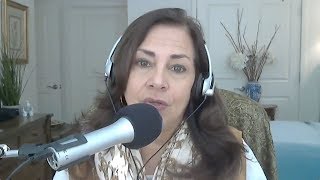
Kathy Caprino celebrates the 100th episode of her podcast Finding Brave and distills five practical lessons for aspiring podcasters and thought leaders: (1) treat podcasting as a serious investment of time, money and planning; (2) create consistent, engaging content within a focused niche and iterate using audience metrics; (3) choose collaborators and guests carefully because partners shape the project’s energy and longevity; (4) having famous guests or running promotional summits won’t automatically grow your audience—sustained quality and clear thought leadership matter; and (5) monetization is possible but often indirect (speaking gigs, coaching, workshops); ensure the work enriches you and aligns with your values. Kathy also shares concrete stats and personal metrics and urges realistic expectations and perseverance.
Questions this video answers
About 700,000 active podcasts.
About 29 million episodes in 100 languages.
Approximately 1,000–1,500 downloads per episode.
About 115,000 total downloads.
Matt Mawinney (Pod Assist).
Chapters
Hello, everybody. Welcome to the hundredth episode of Finding Brave. I am so Kathy Caprino here. I'm so, so excited to be here with you on this milestone of a day. It kind of, I kind of can't even believe it that, you know, you, you have this little twinkle in your eye of an idea. Hey, wouldn't it be cool to start a podcast? And wouldn't it be cool to call it Finding Brave? And what would we talk about? What would we do? And then we're talking about a hundred episodes later. So first of all, big, big hug and thank you to all of you who listen in, who give me comments and feedback and write a review. And if you haven't, if you're liking the podcast and haven't written a review, I'd be so, so grateful for a positive review on Apple podcasts. That would be just amazing. And, you know, just the whole process of doing this and putting yourself out in the world and engaging with people and doing your best to give them content that they like that they find enjoyable and entertaining and useful. It's just an amazing experience. So what I want to talk about today, for anyone who's considering a podcast or working to be a thought leader or an influencer or, you know, producing content that's helpful, I want to talk about the five lessons from reaching the this milestone of 100 episodes. There's a lot of learning. There's more than five lessons, that's for sure. But I'm going to try to distill it down and share my view now. Little caveat, I'm going to share things that other podcasters would never say and don't believe. So so you know, you know me by now. I'm going to tell it to you the way I see it. And I'm also not going to be snarky, maybe, but I'm going to share some things that I see that are sending people in the wrong direction and kind of misleading them and misguiding them in terms of woohoo. It's so easy to do a podcast and hit a million downloads. And I'm going to tell you, what I've seen doesn't mean it's set in stone, doesn't mean it's absolute fact, but it's my experience. And a lot of this comes from being in the media. For how long have I been writing on forbes now with 32 million views since September 2011. So I am working with a lot of the most celebrated renowned writers and thought leaders and trainers and speakers. And so a lot of what I share also is just not my thought, but what we're talking about in terms of the challenges and the highs and the lows of being a thought leader and putting out content. All right, so let's talk. The very first thing I want to say here is, you know, and you're going to hear me talk about a podcast as well as life, because they're inextricably linked. Oh, and excuse my. If you're watching it, sun comes streaming in my apartment here, and it's hard for me to block it out. All right, I love. One of the most instrumental books I've ever read is the Energy of Money by Maria Nemeth. It's. It's like a bible for life. It is so fantastic, and it talks about your relationship with money and how it was formed, but it's so much more than that. It's about how you approach life. How do you get things done? Monkey mind, which gets in the way of getting things done. It's really fantastic. If you haven't read it, read it, it read it over the holidays or anytime you are listening to this. But what she talks about, and she's a heck of a lot more eloquent about this than I am, but she talks about the idea that when you have an idea, like, oh, I'm going to start a podcast, or I'm going to write a book, or, you know, I'm going to develop a program, because it's in the metaphysical world, because it's just an idea. The energy is so light and so enlivening. It's just lightness. Then when you move forward to bring this idea into life, the energy is very different. It's dense energy. It's hard. So anyone who says doing something like this for a hundred episodes is easy breezy, they're just full of nonsense. It's not easy breezy. It's work. But if you, if you do some of these things that I'm going to talk about, it's very enlivening and rewarding and valuable, and you get a lot out of it. It's not just giving, giving, giving and beleaguering yourself and exhausting yourself. You get so much out of it. So part of this is understanding what is it that you want to get out of it. But the idea is this. Be prepared. If you think it's easy in a snap and it doesn't require any time and energy, you're. You're going to be devastated. And so a lot of what I talk about in life work Career coaching, leadership training. Your expectations, your frame of mind, your mindset are going to shape your emotions and how you're approaching this and how you're operating it. So make sure that your expectations are realistic about this. Now, can miracles happen? Can something unbelievable happen? And you can like, you know, truthfully, on my Forbes blog, I do think a miracle happened and I think it literally, I'm going to be a little woo woo here. My dad had just passed away and somebody told me this was, well, this was in 2013, he passed away, but somebody told me, you watch, you're going to get this amazing gift from your father who you adored, and he adored you. Since he's passed away, look for it. And I thought, well, that's a beautiful, beautiful idea. Okay. And it was, I think not even six months later that a post of mine on forbes went viral. 8 million views. It's at now. And it's so fascinating to watch something go viral. It's just like nothing else. Like you post it and, oh, 100 views, that's nice. Oh, thousand. And then you're watching it as it's a thousand to ten thousand in five minutes. It's so crazy. So can these things happen with your podcast, with your book? Sure they can. But if that is your expectation, you're gonna have a hard time because so often we don't hit that kind of viral, that viral buzz. So do it not to be a viral sensation. Do it because it fits all these other things we're gonna talk about. All right, so that was, that was lesson number one. But that's a bonus. Now we're going to start with the top five lessons. So the first thing is it's an investment. It's a serious investment of maybe it's not going to be costly for you, but you know, I have a team. For instance, a wonderful podcast editor, Matt Mawinney, who's just the best. Pod Assist is his company. He has a great team. So there's an editor, there's. I have a social media and kind of communications expert, Amy, who helps me. So very rarely do youth do these things alone. If you're really going to get it out there, you have help. So it's a serious investment of money, of time, of commitment, of patience, of planning. So you don't want to jump in. Woohoo. Let me do a podcast without understanding what's involved. In fact, I would. I did not do this with my first podcast, which I did with Mo Fall, but I did do this much more with this Finding Brave podcast. I Did a business plan. What is it? What am I doing here? What is the goal? How am I going to reach that goal? What's it going to cost? What are the expenses? What's going to come in? What do I need from this? You know, I did a whole business plan for this, so I just want to give you some statistics. And we're going to link to where I got these numbers below. But this is what I've read. There are estimated. There are an estimated 700,000 active podcasts right now. In 2019, there are 29 million episodes in 100 languages. So thing number one here, you know, there's a lot of competition. You, you're launching into a world where there's a lot going on and a lot of these podcasts. You know, my son, for instance, listens to a sports podcast, Barstool, I think he calls it. You know, there's a million different podcasts. There's celebrities, there's sports, there's every niche you can imagine. There's cooking, there's dog sitting. There's everything you can imag. So you're launching into a very full arena. That's something important to know. I was looking up some interesting stats on. They call it pod fade, the fail rate and one article. And again, I'll link to it below from Amplify Media says that the fail rate seems to be over 50%. There's so many interesting stats. I also looked at how many downloads makes successful podcast, and this is from Small Biz Genius. Again, the link is below. So this is what they say. The most successful podcast episode had around 50,000 downloads in only 30 days. Well, I'd like to know what that one is. I don't have the answer. If you know, let me know. Write me an episode with 9,000 downloads. Now we're talking about one episode earns a place in the top 5% of podcasts. And 30, if you get 3,400 downloads of an episode, that puts you in the top 10 of all of these podcasts. 700,000 active podcasts. However, the average podcast racks up 141 downloads in the first 30 days. I'm going to be transparent and share with you. The average episode now for me is anywhere from 1000 to 1500 downloads. I think we are at something like 115,000 downloads since it started January of 2018. So I'm proud of that. That's a lot of downloads. That's a lot of people listening. Of course, you know, numbers are important, and of course I want to reach more and more people. But I want you to understand these numbers. And you know, because I'm an author and a writer and I'm looking at stats, stats are important, but we can't be obsessed about those as the only benchmark for success. You know, I know so many people have written their first book and I made this mistake 10 years ago with my book Breakdown. Breakthrough paid a lot of money for pr and then it was featured in the Wall Street Journal and I thought, woohoo, best selling author. Well, not necessarily. It can be featured in the New York Times and it's not necessarily going to be a New York Times bestseller. So expectations is everything. But understand that it's a serious investment to get this thing off the ground. So what you need to think about, and I'm looking at my notes here, what is the return on investment that you want? Do you. A lot of people, you know, I'm on YouTube and have some activity going on there and I take ads there. You know, truthfully, I'm not monetizing that in any, in any way, shape or form. So a lot of people think, woohoo, I'll get on YouTube and I'll make $1,000 a month. You have to be, you have to have million of views going on to monetize in a big way. So think about what your return on investment is. Think about what your goals are. Why are you doing this? Are you doing it to get famous? Are you doing it to be validated? What are your goals? And then I want you to rethink those goals. If it's all about me, me, me, what am I going to get from it? You're going to have a hard time. It should be an act of joy and an act of giving as well as what you're going to get. If you're not getting anything back in your heart from it, it's going to be a hard slog. Think about what will have to happen for you to consider this a success. Write it all down. Do a business plan for your podcast. What am I looking at? How many downloads? What else is it going to do for me? And I'll talk about that later. How are you going to make your stand out? You know, when you do any kind of business plan, it's why now? Why this book or this podcast or this program? Why you? How is it different? How is it going to stack up? So if you were to do a podcast on leadership, you're going to search on the leadership podcast and look at everything that everyone's got going on it's pretty amazing. How is yours going to be different if you don't think of that now? If you don't understand what your niche is and who you want to serve, and if you don't evolve that content, that strategy, you don't want to just stay static. You know, I've evolved over a lot of years. Career coaching, leadership coaching, leadership training, executive coaching. I've done spiritual work. I've done, you know, Live youe True Spirit. I've done a lot of stuff and I evolve it, I hone it. What is feeding me now, what is right for me now? What's the niche? So think about that and think about how you're going to make your stand apart and what value will you give and what value will you derive? Don't launch this thing till you have this pretty well mapped out. You know, I've also looked at and thought about why do podcasts fail? And there's a great article. Stefan Stewart, Stefan Spencer, I think is his name. The link is below. Why do podcasts fail? One, they don't have a replicatable or replicable formula, meaning what are you offering every week? And it needs to be regular. And this is just. This is true of any thought leader. If you have a newsletter, but you don't write to people except once a month or once every three months and they don't know when it's coming, forget needs to be consistent and replicable. So you're going to have guests that fill this niche, that fit that niche. It can't be dog sitting one day, knitting one day, herbal supplements one day. It's got to hold together and you've got to be able to replicate it. Another reason podcasts fail is they're pitching too hard, they're pushing too hard. So I'm going to share my little pet peeve. I don't want to be sold to when I'm listening to content that so turns me off. Don't get me wrong, I do, you know, free webinars, and they funnel to programs. And my belief is my job is to give you content that moves you forward, that creates breakthrough. That's my job. Now, at the end, I certainly will do a little pitch. But I keep, I try to keep it brief, I try to be respectful. But if you're on the call with me, you're on the podcast, you're probably interested in something else I'm offering. So of course I'll give a little pitch. But I have listened to podcasts, webinars, you know, free webinar, 60 minutes. And the whole damn thing is a sell job. I can't stand that. And it's not going to be successful, people. You know, you have to think long and hard about how you're going to pitch and push. And frankly, pitching and pushing I don't think belongs in an information program except in a limited way. That it's not intrusive, it's not offensive, it doesn't make you want to go take a shower afterwards. Giving up too easily and quickly. This is what I think happens. I think I read somewhere that many podcasts end after the seventh episode. They just can't keep going. Well, if you really want to do this, you got to push through the hard stuff. And there is hard stuff if you're going to record every week. I spoke to, oh, no, John Dumas, John Lee Dumas, big podcaster, a while ago, years ago, and, you know, he batches his. His stuff, so on one day he'll do quite a number of recordings. That doesn't work for me. I get tired. And to me it's like you're on, it's performing. You can't just slog to your desk and do it. I mean, he's very high energy. He seems to have no problem with it. I can't do that. So I have to plan it very planfully. I have to schedule it planfully. If there are too many in one day, I move one. But the point is, there are days you show up to do it and you're tired. In fact, I have cup of coffee right here. Hitting 100 episodes is a lot of work, but you don't want to give up. You want to keep. You have to have perseverance and commitment. What do you commit to here? Don't give up. Another reason podcasts fail is the quality is poor. Either the recording equipment isn't what it needs to be, it's hard to hear, you can't access it on devices, or the content itself is not at a high level and people aren't going to listen. And number five is boring, boring content. I mean, we all know we all give something about three seconds, right? If I'm reading something now, if it doesn't have headers and break up the content so that it's digestible, I'm out. I can't read. I can't. I can't process hundreds of pages of content without a way to digest it. A kind of, what do you call it, Formatting that makes it easy to digest. I think that's really true of podcasts, too. We're not going to sit there and be bored. So think about all of these things as you are planning for it. Really create a business plan for it. Lesson number two, know what makes a great podcast and hone and update your strategy. So, you know, we're talking about boring versus great content. So what makes a great podcast, and I sure hope you all think this one is, but what I do try to do is make it different and interesting, but still within a unified theme. So, you know, it's called Finding Brave. And you know that I work with professionals who want more, different or better. So it's, to me, it's got to be within the realm of helping professionals do that, build a happier career, make a difference, that they want to come forward, close their power gaps. And so the theme for me is, how do we do that and how is that done? Through Finding Brave every day. So the guests that I love have a message about that. Either they've done it or they've overcome incredible odds, or they have an incredible story, a personal, riveting story, or their content is so inspiring and motivating. Or, you know, it could be as simple as I read their book or I read their post and fell off my chair. It's what interests me and what I realize is. And I learned this when I was in market research a lot of years ago, 20 years ago in the corporate world. And I listened to my first focus group moderator who said, everybody's idea has value because each of you represents thousands like you. Ooh, I will never forget that. And that's really true. What I found is if I'm really interested in it, thousands are interested in it. That's what I see because of the following that I have and the people I hear from. So another thing that makes not boring content and good content, I think, is it's not just me talking. It's not just me every episode talking. Now, I know some podcasts do this. I don't find that engaging too much. Even if it's a celebrity that I really admire, I want to hear kind of. I want to hear them converse. I want to hear them talking to someone else. What makes them interested in someone else, and what are they attuning to tuning into when they're talking to someone else? So for me, it's not just me talking head. It's. It's conversation, not overly promotional. Another way to make sure your content is good is ask your audience, how are you liking this? What do I need to do differently? What topics do you want? And, you know, I was a marketing person. So numbers. I don't make decisions without numbers. And it's very clear after 20 episodes who's downloading what, which ones are most popular. Now, sometimes when you're doing Facebook promotions or whatever on an episode, you're going to get a spike, and that's not going to be necessarily organic feedback, but look at the numbers. Oh, they really loved this one on leading. They loved this one on narcissism. They loved this one on life purpose, but they didn't really like this, this, this, this. Now, sometimes there's an important enough topic that you're going to talk about it, even though maybe it doesn't have the widest appeal. But do this consciously. Look at the numbers. Ask your audience what are the topics you're desperate to know more about. Don't just do this in a vacuum. I think this will be fun. Ask the people that you're serving and look at the numbers. My platform is Libsyn, and they have amazing stats there. I'm looking at all sorts of things all the time. Okay, lesson number three. Pick your podcast partners and all business partners very, very carefully. I cannot emphasize this enough. I've been burned in the 15 years of doing this work as an entrepreneur, small business owner. I've been burned in my corporate life. Who you partner with is going to shape the whole experience. Don't do this on a whim. Don't just meet someone and go, yeah, let's do a podcast together. Don't do that. It's a business endeavor, and partners, good partners, are going to stay with you a long time. And I would say on the flip side, it's very hard to extricate from the wrong partner. And there can be the wrong partner for a lot of different reasons. And this is people that help you, like your podcast editor. It's people who work with with you, for you. It's people that you do the podcast with. It's your guests. You know, I can tell you in a hundred episodes, I think I don't know how many have been solo of me, just me speaking, maybe seven. The vast majority of people I've chosen to interview are so amazing and so giving and so I'm so grateful. Like one who comes to mind is John Maxwell, who's, you know, the top leadership expert in the country by a number of. Awarded that by a number of top organizations. And what a. What a doll and what an amazing person. At the end of it, we hung up from the call and he said, you know, I'm a friend now. What can I do for you? Oh, but I've also, I'll be really honest, a few of the, A few of the guests are not like that. It's all about them. They don't really want to talk to you, they don't really want to converse. They just are about getting their PR out and I really don't want that. I don't want podcast guests like that. But sometimes you make a mistake. But I'm asking you to be very judicious on anybody you partner with, anyone that trying to get away from the sun here in my, in my screen, anyone that's going to help you because their energy is going to color your energy and the energy of this project. If you've gotten involved with someone in the podcast planning or editing or social media sharing or guests or whatever it is that are negative, are narcissistic, it's going to come out. So choose the right people to be with you on this journey because it is a journey of growth. Lesson four, just because you have famous people on the show doesn't mean you'll grow your audience. Are you ready to be a thought leader? So I have lots to talk about here. You know, I still see it very, very regularly when I was just starting out as a coach, so 15 years ago, you know what I heard? Constantly. Here's how you get a huge following. Do a summit where you have 20 people who are famous, who have a big list and have them be a part of your training summit. So let's say you're going to talk about career change. Okay, you'll get Kathy and nine other people and they have a big list, 50,000 people or 10,000 people. Make sure they have a certain size list, make sure that they agree to promote this for you. And woohoo, you'll have 50,000 new people on your list and off you go to the races. None of that is accurate. None of that is accurate. Email response rates, email signup rates have plummeted. Just because you have 10 people who have a huge list doesn't mean they'll become part of your list. And what are you going to do when you serve them anyway? What are you going to do to serve them once you have these new people on your list? Once your summit is done, what are you going to do for these people if you don't have great content, what are you going to do with these new signups? None of this is right yet. I'm going to literally asked, I'm not going to exaggerate. Maybe 10 times a month to do these kinds of summits with people that probably just find my name and say, you know, you're doing great work. Will you join my summit? These are not the ways to build thought leadership. This doesn't work. I really don't. When you don't have a following and you don't have content and then you do this summit and then disappear, it doesn't work. Well, I think in some ways the same thing is with a podcast. Yeah, you might know a few celebrities, you might know a few influencers so you get them on the show. But if your show isn't good, if you can't continually deliver great stuff, it doesn't matter. It's like my, my book which was good, a breakdown breakthrough. It appeared in Wall Street Journal. Feature, big feature. Did it. Did I become an Amazon bestseller? No, because that doesn't necessarily translate into downloads or purchases. Right. Great content doesn't necessarily mean what you're hoping it's going to mean that all of a sudden you're going to have a million followers. So are you ready to be a thought leader? And a thought leader, you know, even these, the show barstool that I've heard a little. These people are fascinating to listen to and they have a lot to say. So I call them thought leaders. I don't mean it in the, in the formal sense of the word that you have to be a best selling author, but you have to have someone that leads with your thought that has something interesting to say that is not saying the same thing. And you know, I have a lot of resources on what it is to be a thought leader and what it isn't. And we're linking below to my page. Kathycabreno.com Thought leadership but I did do a post and a really fun interview with Jason Miller who at the time, and I think he still is, is the co founder of Peaceful Media, really great marketing agency for top thought leaders. And we talked about wannabes versus real thought leaders. So go to that page and read the article and watch the webinar is fun. He's so interesting and enlivening and funny. But I have come up with 10 questions to help you determine if you're truly a thought leader and maybe you're not rocking it on all of these levels and that's okay. But if you have none of these, I think that's going to be a challenge for you to have content that's going to grab people and hold them. Question number one. Have I developed a clear model for change and a well articulated teachable point of view that I'm able to take people through, or am I just showing up? Okay. Number two, is this model for change tested in research? Now, you don't need that for a podcast per se, but you do need some well defined ideas, right? You can't just show up and have nothing going on about what you're presenting. Right? Number three, have I done the inner work with myself and on myself to understand my true motives for wanting to do this? So why is it that you want a successful podcast? Is it to be of help or is it to feel better? Is it to vindicate yourself? What is it? Do you know why? Because you got to look at those reasons. Number four, am I undergoing a process of stretching myself every day, or am I still afraid of getting out there? If you feel insecure about doing this, if you feel like, I don't know if I'm good enough or smart enough to even do this, it's going to show up in the results. So have you done the work to say, look, you know, I might not be the smartest person in the world or the top thought leader, but, boy, I have something to say? And you're confident in that. Number five, do I care about moving the needle on this topic? So if your topic is marketing, digital marketing, if your topic is design, if your topic is career coaching, if your topic is management, do you care about moving the needle forward here? If so, what has to happen? What do you have to be talking about to make a difference in that area? Number six, do I incorporate and build on other people's thought leadership? You know, there's a lot of narcissism in the media, meaning people think they know it all. And, you know, I had a little of that when I wrote my first book, Breakdown Breakthrough, 10 years ago. I really thought, I know everything there is about challenge for women in the professional world. How ridiculous. I didn't. And one great, great top editor said to me, editorial consultant Janet Goldstein, she said, look, you got a great idea here, but this is not it yet. You need to do research. And I thought, what does she mean, I need to do research? What is she talking about? What kind of research? And I cried. I remember it was, we had a meeting in the Algonquin Hotel in New York City. I left, I cried in the middle of the street in New York. But the next day, I'm driving to my therapy practice, and it occurred to me, oh, I actually know what she means. I used to do market research. Why don't I research a hundred women across the country who aren't my friends. So it's not going to be a self selected pool who can say that they face professional crisis and overcome it. Let me just learn. And oh my gosh, that was a year of learning. And what I saw was how much I had to learn. So do you build on other people's knowledge? Number seven, Am I addressing my emotional fears and challenges about being seen, challenged, and critiqued? Because when you show up, let me tell you, you're gonna get critiqued. You're gonna get your ass kicked. You're gonna. You know, I don't get that on the podcast at all, but I have gotten it on Forbes. You don't know anything. Shut up, you dumb C word. Oh, I've been. You know, you get your ass pummeled when you're saying something and they all say if you're not getting pushback, if you're not perturbing somebody, you're not really saying anything of value. But are you ready for that? Not everybody's gonna love you, boy. Is that true? Number eight, Am I willing to be of service a hundred different ways and a hundred times longer than I expected before I ever receive one iota of recognition or money, you've got to be of service here. Number nine, do I regularly ask for feedback, critique and help and constructive criticism? Am I continuing to get it and incorporate it? And 10, is there evidence that my work and ideas have a positive impact? Finally, you know, ask yourself, is this work I can't not do? So is this podcast the thing I cannot not do? Then do it. Do it. Do it, do it. All right, lesson number five here. I went way over here in time. Does it enliven you and give you joy and value to do this? So let's talk for a minute about money. A lot of people think it's going to be easy to monetize. Well, it isn't. I can tell you that. And I'm. I'm sharing a great article on castos.com I think that's how you pronounce it on how you can monetize. You can sell ads, you can get sponsorships, you can sell premium episodes, you can create YouTube video snippets from the show, you can repurpose and sell that content. You can do all that. There's a lot of ways. For me personally, the podcast monetizes because I get speaking gigs, I get coaching clients, I get executive clients, I get workshops from it. And that monetizes in a big, much bigger way than YouTube ads would for Me. And, you know, the podcast is a great way for people to see you in action. They hear you. It's. They can tell what they're gonna get if they hire you for 15,000 to speak. So that's how it monetizes for me. I am. Now that we're at the hundredth episode and I'm. It's kind of rocking. Moving along. I am going to pursue some sponsorships. I just did one today. Reaching out to providers and platforms that I love and would be happy to do a little pitch, short, little ad, you know, at the end or in the middle of the podcast that I would really feel good about. I'm pursuing that. But there's a lot of ways for you to get value above and below, beyond monetizing. But there are great ways to monetize, too. But don't. Gosh, I got. I gotta tell you a story. I. I don't take ads, my Kathy Caprino site or my Finding Brave site right now, but I dabbled in it. And we hired a Google Ad partner, all legit. We had to upload a new cloud platform. Holy cow. We choose the categories of ads we want and don't want and rocking and rolling. Well. It slowed my sight down tremendously. And I'm not kidding. I look one day at Finding Brave and I see an ad for beautiful Chinese women. I literally almost fell off my chair. My high blood pressure went through the roof. I call my guy. I said, what the hell is this? And he lackadaisically said, sorry, we somehow didn't uncheck a category of ads for you. I said, take the whole thing down. Take it down. I cannot have that, you know, can you imagine? So for me, I am very careful about the content on my site, and I, at this juncture, am not able to control the ads in the way that I want to. It does not work for me. It. It may work for you perfectly, but we all have our different approach. I'm going to monetize things very differently. I can't have ads that are against my values and against everything I believe running on my website. So think about it. So think about how you want to monetize it, what's right for you. Don't listen to all the gurus that are saying, you're going to make a million dollars from this. Don't get duped, because there's a lot of marketing, podcast marketers, webinar marketers that are duping you. They're making money off of our naivete. Make sure that this thing feeds Your heart, feed your soul. Yes. Feed your business. Of course you want there to be a return on investment, but make sure it's an amazing experience for you that is sustainable, that you're gonna love doing, that's gonna move the needle, that it's gonna enrich you and, you know, understand that it's a business venture, but also it's. It's a venture from your heart and pursue it that way. And I really, I really want to encourage you. I hope this hasn't discouraged you. I hope this has helped you have eyes wide open about what's involved so that you can have it be an incredible success that you're so proud of, like I am of finding Brave and, you know, really, where there's a will, there's a way and where you're open to understanding what's involved and you're ready for that. Why can't you have an incredible success with your podcast? I'd love to hear what you think. I'd love to hear what other topics you want to learn about. I'd love to hear. If you have any questions from this, I would really love to hear from you. And thank you at the for making this show, because without you, there is no show. And helping me celebrate the hundredth anniversary. Hundredth episode. Not anniversary. Good grief. Hundredth episode. And here's to you having an incredibly wonderful, successful time launching and running your podcast. Okay, everybody, have a fantastic week. Thank you for being here, and I'll see you soon. Bye. Bye.
More from Kathy


Elevate Yourself, Elevate Others, and Amplify Good | Chris Cooper | Finding Brave Ep. 334

Finding Brave Epis #333: How Leaders Can Harness AI Without Losing Their Humanity, w/Bennett Borden

Finding Brave Epis 332- How to Stay Brave, Valuable and Visible in the Age of AI, with Raman Rai

Finding Brave Epis 331 - The Power of Positive Disruption, with Dr. Patrick Leddin


Finding Brave Epis 330 - Being 40: Letting Go and Embracing Who You Are, with Stacey Lindsay

Disrupt Career Reinvention with Kathy Caprino - via The Disruption Lab Podcast w/Patrick Leddin

Creating Neurodiversity-Friendly Work Cultures: Simple Workplace Adjustments Matter

Finding Brave Epis 329 - How To Create a Neurodiversity-Friendly Workplace, with Kristen Pressner

Finding Brave Epis. 328: Reclaiming the Power to Trust Your Own Voice, with Dr. Cindy McGovern